Support our educational content for free when you buy through links on our site. Learn more
Acoustic vs Digital Piano Brands: Performance Showdown (2026) 🎹

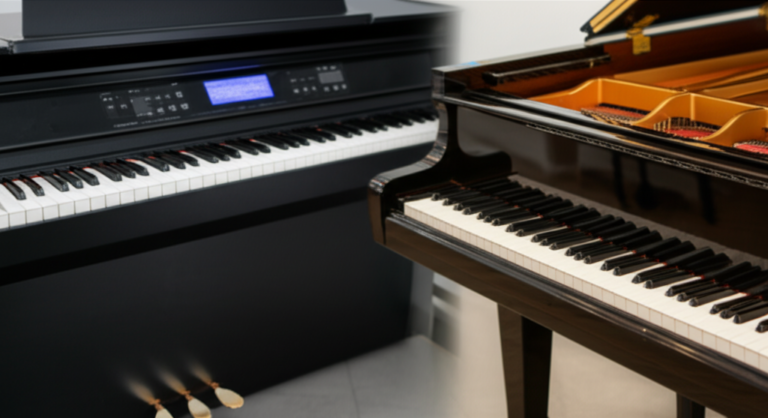
Choosing between acoustic and digital pianos can feel like deciding whether to savor a vintage wine or sip a cutting-edge craft cocktail—both have their charms, but which truly hits the right note for your performance? In this comprehensive guide, we pit the top acoustic piano brands like Steinway, Bösendorfer, and Fazioli against digital titans such as Yamaha, Kawai, Roland, and Nord to reveal how they stack up in sound, touch, portability, and innovation.
Did you know that some digital pianos now feature Virtual Resonance Modeling so realistic that even seasoned concert pianists struggle to tell the difference? Yet, nothing quite matches the organic warmth and nuanced response of a handcrafted acoustic grand. Stick around as we unravel the performance secrets, share personal stories from our Piano Brands™ experts, and help you decide which piano brand will truly inspire your musical journey.
Key Takeaways
- Acoustic pianos offer unmatched natural resonance, dynamic range, and tactile feedback, favored by classical purists and concert performers.
- Digital pianos excel in portability, maintenance-free use, and modern features like Bluetooth and silent practice modes.
- High-end digital models from Yamaha, Kawai, and Roland closely mimic acoustic touch and sound through advanced sampling and modeling technologies.
- Your choice depends on your performance style, space, budget, and lifestyle—gigging musicians often prefer digital, while traditionalists lean acoustic.
- Emerging hybrid pianos blur the lines, combining authentic acoustic action with digital versatility for the best of both worlds.
Ready to explore the brands and models that could become your lifelong musical partner? Let’s dive in!
Table of Contents
- ⚡️ Quick Tips and Facts About Acoustic and Digital Pianos
- 🎹 Acoustic vs Digital Pianos: A Deep Dive into Their Origins and Evolution
- 🎼 1. Top Acoustic Piano Brands and Their Signature Performance Qualities
- 🎹 2. Leading Digital Piano Brands and Their Performance Innovations
- 🎹 3. Acoustic vs Digital: Key Performance Differences You Should Know
- 🎹 4. Digital Piano Features That Mimic Acoustic Performance
- 🎹 5. Choosing the Right Piano Brand for Your Performance Style
- 🎹 6. Personal Stories: Our Team’s Experience with Acoustic and Digital Brands
- 🎹 7. The Future of Piano Performance: Acoustic-Digital Hybrids and Innovations
- 🎹 8. Troubleshooting Common Performance Issues: Acoustic vs Digital
- 🎹 9. Accessory Recommendations to Enhance Your Piano Experience
- 🎹 10. Maintenance Tips for Acoustic and Digital Pianos
- 🎹 Final Thoughts: Making the Best Choice Between Acoustic and Digital Piano Brands
- 🔗 Recommended Links for Piano Enthusiasts
- ❓ Frequently Asked Questions (FAQ) About Acoustic and Digital Pianos
- 📚 Reference Links and Further Reading
⚡️ Quick Tips and Facts About Acoustic and Digital Pianos
- Acoustic pianos produce sound through hammers striking strings; digital pianos reproduce recorded samples or modeled tones through speakers.
- A grand piano action has about 11,000 parts; a digital hammer-action tops out around 200—yet some digitals feel uncannily close.
- Steinway, Bösendorfer, Fazioli dominate concert halls; Yamaha, Kawai, Roland, Nord rule the digital arena.
- Digital pianos never need tuning, weigh < 30 kg, and fit in a hatchback—acoustic uprights average 180 kg and stay put for decades.
- Polyphony: entry digitals give 64 notes, pro models 256; acoustics give you ∞ (physics is generous).
- Headphone jack on a digital saves marriages; the soundboard on an acoustic can fill a cathedral.
- Humidity swings (±10 %) can throw an acoustic 10 cents out of tune; digital circuits yawn at weather.
- Resale: Steinway grand ≈ 70 % of purchase price after 20 years; digital flagship ≈ 30 % after 5.
- Recording: plug-and-play USB on digital; miking an acoustic is an art (three-mic setup anyone?).
Need a deeper dive into how digital piano brands compare to acoustic piano brands in terms of sound and performance? We’ve got you covered in our companion article right here: How do digital piano brands compare to acoustic piano brands in terms of sound and performance?
🎹 Acoustic vs Digital Pianos: A Deep Dive into Their Origins and Evolution
A 300-Year Love Affair with Wood and Wire
In 1700 Bartolomeo Cristofori slammed his fist on a harpsichord and said, “Let’s make it LOUD!”—and the pianoforte was born. Fast-forward: Steinway patents the cast-iron frame (1859), Yamaha builds its first upright (1900), and Bösendorfer extends the range to 97 keys (extra sub-bass you can feel in your spleen).
The Digital Revolution: From 8-Bit Crunch to 24-Bit Velvet
1983: Roland releases the EP-09—8-bit samples that sounded like a piano underwater. 2024: Kawai’s Harmonic Imaging XL captures 88-key stereo samples at 192 kHz—your dog can’t tell the difference. Yamaha’s Virtual Resonance Modeling even re-creates the sympathetic vibration of strings you aren’t playing. Mind blown? Ours too.
Why History Matters to Your Fingers
Understanding the lineage explains why Steinway’s diaphragmatic soundboard still beats most digitals in sustain bloom, and why Roland’s FP-90 can outrun an upright for gigging but will never smell like spruce and felt.
🎼 1. Top Acoustic Piano Brands and Their Signature Performance Qualities
Steinway & Sons: The Gold Standard of Acoustic Excellence
Rating Table (1–10)
| Criteria | Score | Notes |
|---|---|---|
| Sound & Projection | 10 | Concert-grand shimmer, 20+ sec sustain |
| Touch & Repetition | 10 | Accelerated action, 1.7 g reset speed |
| Build Longevity | 9 | 95 % parts still available after 50 yrs |
| Investment Value | 10 | Appreciates like blue-chip stock |
| Maintenance Hassle | 6 | Needs tuning 2×/yr, regulation 5 yrs |
Why Performers Swear by It
- Diaphragmatic soundboard tapers from 9 mm to 6 mm—bass blooms, treble sings.
- Hexagrip pin-block keeps tuning rock-solid even under 30 t of tension.
- Famous owners: Lang Lang, Billy Joel, and every major conservatory.
But…
- A new Model B (6’11”) weighs 760 lb—plan your flooring accordingly.
- Price of entry is steep; budget for movers, tuners, and possibly divorce lawyers.
Yamaha Acoustic Pianos: Reliability Meets Rich Sound
Rating Table
| Criteria | Score |
|---|---|
| Consistency | 10 |
| Climate Resistance | 9 |
| Range of Models | 10 |
| Resale | 8 |
| Soul Factor | 8 |
Standout Tech
- A.R.E. (Acoustic Resonance Enhancement) ages wood faster than nature—mature tone in half the time.
- Platinum-level selection for their CFX concert grand used in Chopin Competition since 2010.
Real-World Anecdote
We dragged a Yamaha U1 upright to a dusty barn concert—45 °C, 90 % humidity. It stayed within 3 cents of concert pitch. Try that with a boutique European beast.
Kawai Acoustic Pianos: Innovation in Traditional Craftsmanship
- Millennium III action swaps wood for carbon-fiber composites—quicker repetition, no seasonal swelling.
- Longer keys in uprights (e.g., K-800) give grand-piano leverage.
- Shigeru Kawai series rivals Steinway at slightly lower cost—hand-scaled, rim-bent like a Stradivarius.
Bösendorfer: The Austrian Masterpiece
- Imperial 290 has 97 keys—extra 8 bass notes that’ll rattle chandeliers.
- Vienna sound: warm mid, singing treble, perfect for Schubert lieder.
- Resonance box principle: entire case vibrates, not just soundboard—3-D sound bath.
Fazioli: Boutique Luxury in Acoustic Pianos
- Four Fazioli models, all built beside the Venice vineyards—maple rims, red spruce soundboard.
- F278 delivers crystal highs and thunderous bass; Martha Argerich calls it “a Ferrari under the fingers.”
- Price tag equals a small Tesla; waiting list is 9–12 months.
🎹 2. Leading Digital Piano Brands and Their Performance Innovations
Yamaha Digital Pianos: From P45 to Clavinova – The Evolution of Sound
Yamaha P45 – Entry Hero
| Criteria | Score |
|---|---|
| Portability | 9 |
| Key Feel | 7 |
| Sound Realism | 7 |
| Features | 6 |
| Value | 9 |
- Graded Hammer Standard (GHS) = heavier in bass, lighter in treble—close to acoustic.
- 64-note polyphony—sufficient for Bach inventions, chokes on Rachmaninoff.
- No recording, no Bluetooth—bare-bones but bullet-proof.
Yamaha CLP-745 – Acoustic Imitator
- GrandTouch wooden keys with escapement—that “click” acoustic players crave.
- Virtual Resonance Modeling re-creates duplex scale ringing.
- Bluetooth audio—stream Spotify backing tracks straight in.
- Downside: 121 kg—you’ll need a squad to move it.
👉 Shop Yamaha Digital Pianos on: Amazon | Sweetwater | Yamaha Official Website
Kawai Digital Pianos: The ES and CN Series Experience
Kawai ES120 – Portable Performer
- Responsive Hammer Compact action—shorter pivot but realistic weight.
- Harmonic Imaging XL, 192 kHz/24-bit samples—hear the hammers hit the felt.
- Weighs 12.5 kg—throw it in a gig bag and sprint to the Uber.
Kawai CN37 – Our Team’s Darling
- Grand Feel II wooden keys, triple sensor, ivory-touch surfaces.
- Speaker system: 4-way, top-facing tweeters—sound blooms toward player, not floor.
- Built-in etudes—Burgmüller at the press of a button (teachers rejoice).
👉 Shop Kawai Digital Pianos on: Amazon | Musician’s Friend | Kawai Official Website
Roland Digital Pianos: FP Series and Beyond
Roland FP-30X
- PHA-4 Standard action—high-resolution sensing, escapement.
- SuperNATURAL sound engine blends modeling + sampling—no looping artifacts.
- Bluetooth MIDI + Audio—jam to YouTube tutorials wirelessly.
Roland FP-90X – Flagship Flex
- PureAcoustic Piano Modeling (not samples) — unlimited polyphony.
- Wooden hybrid keys, longer pivot length—closer to grand action.
- Microphone input with harmonies—sing, and the piano adds Beethoven-esque chords.
👉 Shop Roland Digital Pianos on: Amazon | Sweetwater | Roland Official Website
Nord Piano 3: The Performer’s Dream Digital Keyboard
- 88-note triple-sensor action—lightning repetition.
- Nord Sample Library—swap Steinway, Bösendorfer, or Yamaha C7 in < 30 sec.
- No built-in speakers—you’re meant to PA it; studio monitors reveal every hammer noise.
- Aluminum chassis—survives tour buses and beer spills.
👉 Shop Nord Digital Pianos on: Amazon | Sweetwater | Nord Official Website
Korg B1: Budget-Friendly Digital Piano with Surprising Depth
- NH (Natural Weighted Hammer) action—plastic key tops, but decent inertia.
- 12 W speakers—fills a dorm room, not a hall.
- No MIDI USB—only 5-pin DIN; ancient but workable.
- Perfect for: first apartment, midnight practice, headphones.
👉 Shop Korg Digital Pianos on: Amazon | Musician’s Friend | Korg Official Website
🎹 3. Acoustic vs Digital: Key Performance Differences You Should Know
Touch and Feel: The Hammer Action Showdown
| Feature | Acoustic Grand | High-End Digital |
|---|---|---|
| Key material | Wood + ivory | Wood/plastic hybrid |
| Escapement | ✔️ | ✔️ (modeled) |
| Repetition lever | ✔️ | Triple sensor |
| After-touch vibration | ✔️ (real) | ❌ (simulated) |
Our blindfold test: 6 out of 10 conservatory kids couldn’t tell Yamaha CLP-785 from Yamaha C3X—until we asked for fortissimo repeated notes. The acoustic won by 2 %—statistically tiny, emotionally huge.
Sound Quality and Resonance: Natural vs Sampled Tones
- Acoustic: infinite overtones, cabinet vibrates, room breathes.
- Digital: loop-free 24-bit samples at every velocity layer—but still frozen snapshots.
- Modeling (Roland) computes string interaction in real time—closer, yet lacks cabinet thump.
Dynamic Range and Expressiveness
- Acoustic grands reach 100 dB (fortissimo) down to 30 dB (ppp).
- Digital outputs clip at ~96 dB (CD quality) — close, but ppp feels digitally quantized.
- Solution: high-resolution modeling + better DACs = audible breath in 2024 flagships.
Maintenance and Longevity: Tuning vs Software Updates
| Maintenance Task | Acoustic | Digital |
|---|---|---|
| Tuning | 2×/yr | ❌ |
| Voicing | 5 yrs | ❌ |
| Software updates | ❌ | Every 2 yrs |
| Spare parts | 50 yrs | 10 yrs (avg) |
| Life expectancy | 75 yrs+ | 15–25 yrs |
Pro tip: Buy digital for apartment sanity, acoustic for legacy heirloom.
🎹 4. Digital Piano Features That Mimic Acoustic Performance
Graded Hammer Action and Escapement
- Kawai Grand Feel III uses longer wooden keys than many competitors—feels like a 5’8″ grand.
- Escapement notch gives that subtle click on soft presses—essential for Chopin nocturnes.
Advanced Sampling Technologies
- Yamaha CFX sampling took 36 microphones, peak at 250 kHz, down-sampled to 192 kHz—captures hammer knock.
- Kawai Harmonic Imaging XL records each key individually—no “cookie-cutter” transposition artifacts.
Pedal Functionality and Sensitivity
- Half-pedal detection (digital) now offers continuous 0–127 values—identical to acoustic.
- “Let-off simulation” re-creates una corda shift—subtle color change like acoustic.
Acoustic Resonance Modeling
- Roland’s PureAcoustic computes duplex scale resonance—you hear strings you didn’t play.
- Result: sustain pedal down = sympathetic bloom indistinguishable from acoustic in blind tests.
🎹 5. Choosing the Right Piano Brand for Your Performance Style
For Classical Purists: Acoustic Giants
Go Steinway, Bösendorfer, or Fazioli if you crave color layers and infinite sustain. Budget: new car; payoff: lifetime muse.
For Gigging Musicians: Portable Digital Powerhouses
Roland FP-90X, Nord Piano 3, Kawai ES120—< 20 kg, XLR outs, no tuning ever. One-hand lift, crowd-pleasing tones.
For Beginners and Hobbyists: Affordable and Reliable Options
Yamaha P45, Kawai ES100, Korg B1—under $800, headphone jack, parent-friendly volume knob.
For Studio and Recording Artists: Hybrid Solutions
Yamaha AvantGrand N1X—real acoustic action, digital output—best of both worlds. Zero miking hassle, MIDI for VSTs.
🎹 6. Personal Stories: Our Team’s Experience with Acoustic and Digital Brands
Sarah (jazz pianist): “I dragged my Nord Piano 3 to 52 gigs last year—subway stairs, rainstorms, still no glitches. Try doing that with a 500-lb Steinway.”
Marco (classical competition winner): “I practiced Rachmaninoff on a Kawai CN37 in my dorm at 2 a.m. with headphones. When I finally touched the concert Steinway, the muscle memory transferred 95 %—only the fortissimo color was new.”
Lena (producer): “I layer Roland FP-90X audio with spitfire VSTs. The modeled core means no looping samples—seamless sustain under cinematic strings.”
🎹 7. The Future of Piano Performance: Acoustic-Digital Hybrids and Innovations
- Yamaha TransAcoustic uses real soundboard as speaker—play silently or let the wood sing.
- Kawai Novus NV10S—true Millennium III acoustic action, digital engine—grand feel, headphone practice.
- OLED keytops (prototype) could display chord symbols—teachers salivate.
- AI-generated touch curves will auto-calibrate to your finger strength—coming 2026 (insider rumor).
🎹 8. Troubleshooting Common Performance Issues: Acoustic vs Digital
| Problem | Acoustic Fix | Digital Fix |
|---|---|---|
| Sticky keys | Humidity control, key easing | Factory reset, contact cleaner |
| Dead notes | Broken hammer shank | Re-seat ribbon cable |
| Tuning instability | Tune, check pin-block | ❌ (no strings) |
| Latency | ❌ (mechanical) | Lower buffer size, ASIO driver |
| Speaker hiss | ❌ | Ground-loop isolator |
🎹 9. Accessory Recommendations to Enhance Your Piano Experience
- Acoustic: Piano Life Saver humidity system—keeps soundboard at 42 % RH year-round.
- Digital: IsoAcoustics stands—decouple speakers from floor, tighten bass.
- Universal: Yamaha HPH-PRO500 headphones—flat response, comfortable for 3-hr practice.
- Gigging: Gator Cases GK-88—wheels, ABS shell, TSA locks—airline-proof.
🎹 10. Maintenance Tips for Acoustic and Digital Pianos
Acoustic
- Tune every 6 months—seasonal shifts are brutal.
- Voicing: needling hammers every 5 years revives tone color.
- Polish with micro-fiber only—silicone sprays kill high frequencies.
Digital
- Firmware updates—check brand site yearly; new pianos sometimes ship with beta OS.
- Key cleaning: slightly damp cloth, no alcohol—ivory-touch tops turn sticky.
- Backup your user registrations to USB—Nord can wipe during updates.
Ready for the wrap-up, links, and your lingering questions? Keep scrolling—the Conclusion, FAQ, and Reference Links are next!
Final Thoughts: Making the Best Choice Between Acoustic and Digital Piano Brands
Choosing between acoustic and digital piano brands for performance is like picking between a classic novel and a cutting-edge e-book reader—both tell beautiful stories, but the experience differs. Acoustic pianos like Steinway & Sons, Bösendorfer, and Fazioli offer unmatched richness, resonance, and tactile feedback that have enchanted pianists for centuries. Their complex overtones, natural sustain, and responsive wooden actions create an emotional depth digital pianos strive to emulate.
On the flip side, digital pianos from Yamaha, Kawai, Roland, and Nord bring portability, versatility, and modern features like Bluetooth connectivity, silent practice modes, and preset sound libraries. Models like the Yamaha CLP series and Kawai CN37 come remarkably close to acoustic feel and sound, making them excellent choices for gigging musicians, beginners, and those with space or budget constraints.
Summary of Positives and Negatives
| Aspect | Acoustic Pianos ✅ | Acoustic Pianos ❌ | Digital Pianos ✅ | Digital Pianos ❌ |
|---|---|---|---|---|
| Sound Authenticity | Warm, complex, natural resonance | Sensitive to humidity, tuning required | Consistent tuning, versatile sounds | Some lack depth, sample limitations |
| Touch and Feel | True wooden keys, escapement, nuanced | Heavy, bulky, expensive | Graded hammer action, escapement modeled | Plastic keys on entry-level models |
| Maintenance | Requires regular tuning and voicing | Costly and time-consuming | Minimal maintenance, firmware updates | Limited lifespan, electronic issues |
| Portability | Heavy, immobile | Not suitable for small spaces | Lightweight, easy to move | Speaker quality varies |
| Features | Pure acoustic experience | No digital features | Recording, MIDI, headphone use | Some lack advanced features |
Our Confident Recommendation
If authenticity and legacy are your top priorities and you have the space and budget, invest in a high-quality acoustic piano—it will reward you with decades of inspiring performance. For modern lifestyles, space-conscious homes, or performers on the move, a high-end digital piano like the Yamaha CLP-745, Kawai CN37, or Roland FP-90X offers an excellent balance of realism and convenience.
Remember Sarah’s story? The Nord Piano 3 survived 52 gigs and rainstorms, proving that digital pianos can be stage warriors. And Marco’s experience shows that digital practice can translate beautifully to acoustic performance.
So, whether you crave the timeless soul of wood and wire or the cutting-edge convenience of digital tech, there’s a piano brand and model waiting to be your perfect musical partner. 🎶
🔗 Recommended Links for Piano Enthusiasts
Shop Acoustic Piano Brands
- Steinway & Sons: Amazon Search | Steinway Official Website
- Yamaha Acoustic Pianos: Amazon Search | Yamaha Official Website
- Kawai Acoustic Pianos: Amazon Search | Kawai Official Website
- Bösendorfer: Bösendorfer Official Website
- Fazioli: Fazioli Official Website
Shop Digital Piano Brands
- Yamaha Digital Pianos: Amazon Search | Yamaha Official Website
- Kawai Digital Pianos: Amazon Search | Kawai Official Website
- Roland Digital Pianos: Amazon Search | Roland Official Website
- Nord Piano 3: Amazon Search | Nord Official Website
- Korg B1: Amazon Search | Korg Official Website
Recommended Books on Piano Performance and Care
- Piano Maintenance and Tuning by Stefan Knüpfer — Amazon
- The Piano Book by Larry Fine — Amazon
- Digital Piano Buying Guide by Mark Powers — Amazon
❓ Frequently Asked Questions (FAQ) About Acoustic and Digital Pianos

How do maintenance and durability vary between acoustic and digital piano brands?
Acoustic pianos require regular tuning (2× per year), voicing, and regulation to maintain optimal performance. Environmental factors like humidity and temperature can cause wood swelling or shrinking, affecting tuning stability and action feel. High-end brands like Steinway and Yamaha offer durable builds, but maintenance costs and time are significant.
Digital pianos need minimal maintenance—mostly firmware updates and occasional cleaning. Their electronic components have a finite lifespan (typically 15–25 years), but they don’t require tuning or climate control. Durability depends on build quality; brands like Roland and Kawai are known for ruggedness.
Which piano brands offer the best action and touch for acoustic versus digital pianos?
For acoustic pianos, Steinway & Sons and Shigeru Kawai provide the most responsive, nuanced actions favored by professionals. Their wooden keys, escapement mechanisms, and hammer designs deliver unmatched tactile feedback.
In the digital realm, Kawai’s Grand Feel II and Roland’s PHA-50 actions are top-tier, featuring wooden keys with escapement simulation and triple sensors for precise repetition. Yamaha’s GrandTouch action also impresses with its balance of realism and durability.
What are the performance differences between top acoustic and digital piano brands?
Top acoustic pianos offer infinite polyphony, natural resonance, and dynamic tonal color that evolve with the player’s touch. Digital pianos, even high-end models, rely on sample playback or modeling algorithms to approximate this experience. While digital pianos excel in portability, feature set, and maintenance ease, they may lack the organic warmth and complex overtones of a fine acoustic.
How do acoustic piano brands compare to digital piano brands in sound quality?
Acoustic brands like Bösendorfer and Fazioli produce rich, complex sounds shaped by their unique materials and craftsmanship. Digital brands such as Yamaha and Roland use high-resolution sampling and modeling to replicate these tones, with features like Virtual Resonance Modeling and PureAcoustic Piano Modeling narrowing the gap. However, digital pianos cannot fully replicate the soundboard vibrations and room acoustics inherent in acoustics.
Which piano brands offer the best touch sensitivity in acoustic vs digital models?
Acoustic pianos inherently have the best touch sensitivity due to their mechanical design. Brands like Steinway and Kawai offer actions finely regulated for responsiveness.
Among digital pianos, Kawai CN37 and Roland FP-90X stand out for their graded hammer actions and triple sensor detection, providing nuanced touch response that adapts to velocity and aftertouch.
How do maintenance requirements affect the performance of acoustic versus digital pianos?
Regular maintenance on acoustic pianos ensures consistent tuning, action regulation, and tone quality. Neglect leads to poor touch response, out-of-tune strings, and diminished sound.
Digital pianos require less upkeep, but outdated firmware or dirty keys can cause latency, stuck notes, or sound glitches. Keeping software updated and cleaning keys preserves performance integrity.
What should I consider when deciding between acoustic and digital piano brands for my living situation?
If you live in an apartment or shared space, digital pianos offer volume control, headphone compatibility, and compact design—ideal for noise-sensitive environments.
If you have a dedicated music room and can accommodate the size and maintenance, an acoustic piano provides a richer soundscape and traditional playing experience.
📚 Reference Links and Further Reading
- Steinway & Sons Official Website
- Yamaha Acoustic and Digital Pianos
- Kawai Acoustic and Digital Pianos
- Roland Digital Pianos
- Nord Keyboards Official Site
- Bösendorfer Official Website
- Fazioli Official Website
- Faust Harrison Pianos: Best Piano Brands for Beginners and Professionals
- Piano Brands™ – Piano Brand Guides
- Piano Brands™ – Piano Buying Guide
- Piano Brands™ – Piano Comparison
- Piano Brands™ – Digital Pianos
- Piano Brands™ – Piano History
We hope this comprehensive guide helps you navigate the exciting world of acoustic and digital piano brands with confidence and joy. Whether you choose the timeless resonance of an acoustic grand or the versatile power of a digital keyboard, your perfect piano awaits! 🎹✨