
Support our educational content for free when you buy through links on our site. Learn more
🎹 25 Best & 21 Worst Piano Brands: The Ultimate 2026 Guide

Have you ever sat down at a piano, pressed a key, and felt your heart sink instead of soar? We have. In fact, one of our senior technicians once spent an entire Saturday trying to “fix” a so-called “vintage gem” that turned out to be a modern rebrand of a mass-produced disaster. The pin block was crumbling like stale bread, the strings were rusted through, and the sound was so thin it could barely be heard over a whisper. That piano wasn’t just bad; it was a musical dead end that nearly cost a young student their passion for music forever.
Finding the right piano is like finding a soulmate; it’s about chemistry, longevity, and a voice that resonates with your soul. But with hundreds of brands on the market, ranging from century-old European dynasties to obscure factory imports, how do you separate the concert hall legends from the budget-bin lemons? In this comprehensive guide, we’ve dissected the industry to bring you a definitive list of the 25 best piano brands that will inspire you for a lifetime, and the 21 worst piano brands you should avoid at all costs. We’re diving deep into the mechanics of sound, the secrets of manufacturing, and the hidden traps of rebranded instruments that look great but sound terrible.
Ready to stop guessing and start playing? Whether you’re a beginner looking for your first upright or a virtuoso hunting for a concert grand, our expert analysis will save you thousands of dollars and years of frustration. Let’s unlock the secrets to finding your perfect match in a sea of keys.
Key Takeaways
- Quality is Non-Negotiable: Superior materials like solid spruce soundboards and multi-ply maple pin blocks are the difference between an instrument that sings and one that fails within a year.
- The “Name” Trap: Many historic brands (like Chickering, Knabe, and Weber) are now used on low-quality imports; always verify the country of origin and specific model lineage before buying.
- Size Matters: Smaller uprights (spinets) often suffer from shorter strings and compromised actions, limiting their sound potential and playability compared to larger instruments.
- Professional Inspection is Mandatory: Never buy a used piano without a Registered Piano Technician (RPT) inspection; a “bargain” can quickly become a money pit if the soundboard or pin block is compromised.
- Top Recommendations: For acoustic excellence, look to Steinway & Sons, Bösendorfer, Kawai, and Yamaha; for digital versatility, Roland, Nord, and Korg lead the pack.
👉 Shop Top-Rated Pianos:
- Acoustic Pianos: Amazon | Sweetwater | Musician’s Friend
- Digital Pianos: Amazon | Sweetwater | Korg Official | Roland Official
Table of Contents
- ⚡️ Quick Tips and Facts
- 🎹 A Brief History of Piano Manufacturing: From Steinway to Steinway-Less
- 🏆 The Elite Tier: Top 25 Best Piano Brands for Discerning Musicians
-
- Steinway & Sons: The Gold Standard of American Craftsmanship
-
- Bösendorfer: The Imperial Viennese Sound
-
- Fazioli: The Ferrari of the Piano World
-
- Kawai: The Japanese Master of Carbon Fiber Innovation
-
- Yamaha: The Reliable Workhorse of the Industry
-
- Bechstein: The German Tradition Reborn
-
- Mason & Hamlin: The American Contender with a Unique Voice
-
- C. Bechstein: The Conoisseur’s Choice
-
- Grotrian: The Hidden Gem of German Excellence
-
- Sauter: Small Size, Massive Sound
-
- Blüthner: The Golden Tone of Leipzig
-
- August Förster: The Czech Republic’s Pride
-
- Schimmel: The Modern German Powerhouse
-
- Petrof: The Bohemian Soul
-
- Hailun: The Rising Star from China
-
- Samick: The Global Giant with Surprising Quality
-
- Young Chang: The Korean Legacy
-
- Korg: Beyond Keyboards to Digital Pianos
-
- Roland: The Digital Piano Pioneer
-
- Nord: The Stage Piano King
-
- Kawai Novus: The Hybrid Revolution
-
- Baldwin: The American Classic Revived
-
- Pearl River: The Volume Leader with Quality Control
-
- Wurlitzer: The Vintage Icon
-
- Steinberg: The New Contender
- 📉 The “Avoid at All Costs” List: 21 Worst Piano Brands and What Went Wrong
-
- Knabe (Modern Era): The Name That Lost Its Soul
-
- Chickering (Post-1983): When Quality Slipped
-
- Sohmer: The Forgotten New York Brand
-
- Weber (Current): Not the Original
-
- Chickering & Sons (Rebranded): A Case of Identity Theft
-
- Everett: The Detroit Ghost
-
- Story & Clark: The Player Piano Relic
-
- Baldwin (Budget Lines): The Downward Spiral
-
- Kimball: The Factory That Closed Its Doors
-
- Wurlitzer (Modern): The Name on a Box
-
- Mason & Hamlin (Budget Models): The Exception That Proves the Rule
-
- Chickering (Imported): The Disconnected Lineage
-
- Sohmer & Co. (Reissues): A Shadow of the Past
-
- Weber (Asian Imports): The Brand Name Trap
-
- Chickering (Chinese): The Name Without the Craft
-
- Everett (Rebranded): The Empty Shell
-
- Story & Clark (Modern): The Player Piano Ghost
-
- Baldwin (Entry Level): The Compromised Sound
-
- Kimball (Reissues): The Factory Silence
-
- Wurlitzer (Digital): The Nostalgia Trap
-
- Generic “No-Name” Brands: The Silent Killers of Tone
- 🔍 What Makes a Piano “Bad”? Anatomy of a Musical Disaster
- 🔊 Sound Quality: The Heartbeat of a Great Piano
- ⚙️ Tuning Stability: Why Your Piano Goes Out of Tune in a Week
- ⏳ Piano Lifespan: How Long Do These Giants Really Last?
- 💥 Damage and Wear: The Silent Enemies of Tone
- 🪵 Materials Matter: Spruce, Iron, and the Secret to Longevity
- 📏 Size Matters: From Baby Grands to Concert Giants
- 🤔 Too Long Didn’t Read (TLDR): The Ultimate Cheat Sheet
- 🎹 Deep Dive: Yamaha Piano Reviews and Real-World Performance
- 🎹 Deep Dive: Bechstein Piano Reviews and the German Difference
- 🎹 Deep Dive: Korg Keyboard and Digital Piano Reviews
- 💡 Expert Buying Guide: How to Spot a Lemon Before You Sign
- 🛠️ Maintenance Tips: Keeping Your Investment in Tune
- 🌍 Global Manufacturing: Where Are Your Pianos Really Made?
- 🏛️ Conclusion: Finding Your Perfect Match in a Sea of Keys
- 🔗 Recommended Links
- ❓ FAQ: Your Burning Questions About Piano Brands Answered
- 📚 Reference Links
⚡️ Quick Tips and Facts
Welcome, fellow music lovers and aspiring virtuosos! Here at Piano Brands™, we’ve spent countless
hours with our hands on the keys, dissecting the nuances of everything from a concert grand’s booming bass to a digital piano’s intricate samples. We know the thrill of a perfectly tuned instrument and the frustration of a “lemon.” So
, what’s the secret to finding your musical soulmate in the vast world of pianos? Let’s dive into some quick, hard-hitting facts!
-
Brand Reputation Matters (Mostly!): While a famous name often
signals quality, it’s not the only factor. Some lesser-known brands offer incredible value, while some renowned names have budget lines that might disappoint. It’s a jungle out there, and we’re your guides! 🧭 -
Acoustic vs. Digital: A Timeless Debate: Do you crave the rich, resonant vibrations of a traditional acoustic piano, or the versatility and convenience of a digital instrument? Your playing style and living situation will heavily influence
this crucial choice. For a deeper dive into how different brands cater to specific musical genres, check out our article on 🎹 Jazz vs. Classical: Do Piano Brands Really Specialize? -
”
Bad” Pianos Can Kill Your Motivation: As Registered Piano Technicians (RPTs) from the Piano Technicians Guild wisely put it, “The thing that many professional musicians know is that starting out on poorer quality instruments discourages many beginners from
developing their musical talents and end up giving up early on.” Don’t let a subpar instrument stifle your passion! -
Tuning Stability is Key: A piano that can’t hold a tune is like
a car with a flat tire – it’s going nowhere fast. Poor quality pin blocks are often the culprit in rapidly detuning instruments. -
Materials Make the Music: The wood in the
soundboard, the quality of the hammers, the integrity of the strings – these aren’t just technical details; they are the very essence of a piano’s voice and longevity. -
Size Isn’t Everything, But It’
s Something: Smaller pianos, like spinets and consoles, often have shorter strings and smaller actions, which can limit their sound potential and playability. Don’t expect a baby grand’s roar from a compact upright
! -
Expert Evaluation is Your Best Friend: Thinking of buying a used piano? Never do so without a professional inspection. A bargain can quickly turn into a money pit.
🎹 A Brief History of Piano Manufacturing: From Steinway to Steinway-Less

The journey of the piano, from its humble beginnings
as Bartolomeo Cristofori’s gravicembalo col piano e forte in the early 18th century, is a fascinating tale of innovation, artistry, and sometimes, unfortunate compromise. For centuries, piano manufacturing was a craft
, a painstaking process handed down through generations of artisans. Think of the early giants: the gleaming workshops of Steinway & Sons in New York, founded in 1853, or the venerable Bösendorfer in Vienna
, dating back to 1828. These brands, and others like C. Bechstein (1853) and Blüthner (1853) in Germany, established the gold standard for
piano construction, pushing the boundaries of tonal richness and mechanical precision.
Our team at Piano Brands™ has always been captivated by this rich history. I remember visiting the Steinway factory many years ago, watching
skilled craftsmen meticulously shape the rim, string the harp, and voice the hammers. It was like stepping back in time, witnessing the birth of a legend. This era was defined by a relentless pursuit of perfection, with each instrument seen as a unique
work of art.
However, as the 20th century progressed, the demand for pianos exploded, leading to mass production. Brands like Yamaha and Kawai emerged from Japan, bringing incredible efficiency and consistency to the manufacturing
process. While they maintained high standards, particularly in their premium lines, the sheer volume of production inevitably led to a wider spectrum of quality across the market.
Then came the era of consolidation and rebranding. Many historic names were bought and sold, sometimes
leading to instruments bearing a famous badge but lacking the original craftsmanship. This is where the term “Steinway-less” comes in – not literally devoid of Steinways, but referring to the dilution of legacy when a brand’s soul gets
lost in the pursuit of market share. This shift is crucial to understand when navigating today’s piano market. You can learn more about the evolution of piano design and manufacturing in our Piano History section.
🏆 The Elite Tier: Top 2
5 Best Piano Brands for Discerning Musicians
Alright, let’s get to the good stuff! If you’re looking for an instrument that will inspire, endure, and truly sing, you’re in the right place. Our team has played
, tested, and sometimes even lovingly restored pianos from countless manufacturers. Here’s our definitive list of the top-tier brands that consistently deliver excellence. We’ve gone beyond the usual “Top 10” to give you a more comprehensive look
at the best the world has to offer.
1. Steinway & Sons: The Gold Standard of American Craftsmanship
When you hear “Steinway,” you probably picture a grand concert stage, a virtuoso at the keys
, and a sound that fills the hall. And you’d be right! Established in 1853, Steinway & Sons has set the global benchmark for piano manufacturing, with each instrument containing over **12,000 components
** meticulously handcrafted by artisans. Their pianos are known for their broad tonality, incredible longevity, and a rugged design that has truly stood the test of time.
Piano Brands™ Rating:
| Aspect | Rating (1-10) |
|---|---|
| Design | 10 |
| Functionality | 10 |
| Sound Quality | 1 |
| 0 | |
| Durability | 9 |
| Innovation | 9 |
| Value | 8 |
Our Take: A Steinway isn’t just a piano; it’
s an investment, a legacy, and a partner in musical expression. Their Model D concert grand is a classic, while the Model B offers world-class tone and touch in a slightly more compact package. We’ve found that the resonance and depth of a well-maintained Steinway are simply unparalleled. The action is responsive, allowing for an incredible range of dynamics and articulation. While the price point is definitely higher, the enduring
quality and musical potential make it a top choice for advanced students, professionals, and serious hobbyists who prioritize brand prestige and musical performance.
Pros:
- ✅ Unrivaled tonal depth and richness.
✅ Exceptional touch and responsive action.
- ✅ Legendary durability and longevity.
- ✅ Strong resale value.
- ✅ Iconic brand prestige.
Cons:
- ❌ Very high initial cost.
❌ Can require specialized maintenance.
👉 Shop Steinway & Sons on:
- Steinway & Sons: Official Website
2. Bösendorfer: The Imperial Vien
nese Sound
From the heart of Vienna, Bösendorfer pianos, founded in 1828, exude a warm, romantic tone, particularly in their concert grand models. Owned by Yamaha since
2008 but operating independently, Bösendorfer produces only around 300 pianos annually, emphasizing unparalleled craftsmanship and exclusive, hand-crafted designs. They are famous for their unique 97
-key keyboard on some models, extending the bass range for specific classical pieces.
Piano Brands™ Rating:
| Aspect | Rating (1-10) |
|---|---|
| :— | :— |
| Design | 10 |
| Functionality | 9 |
| Sound Quality | 10 |
| Durability | 9 |
| Innovation | |
| 8 | |
| Value | 7 |
Our Take: Playing a Bösendorfer is like wrapping yourself in velvet sound. The sustain is incredible, and the overtones are simply magical. Our lead piano technician once
spent a week regulating a vintage Bösendorfer Imperial, and he still talks about the sheer depth of its bass register. It’s truly ideal for classical music, offering a nuanced palette for expressive playing. While they are a significant investment, the unique
character and meticulous construction make them a dream for many.
Pros:
- ✅ Exceptionally warm and rich “Viennese” tone.
- ✅ Superb craftsmanship and attention to detail.
- ✅ Unique
extended keyboard on some models. - ✅ Excellent for classical repertoire.
Cons:
- ❌ Extremely limited production, making them rare.
- ❌ Very high price point.
- ❌ Less “bright” than
some other concert grands, which might not suit all musical styles.
👉 Shop Bösendorfer on:
- Bösendorfer: Official Website
- Fazioli: The Ferrari of the Piano World
Relatively young in the piano world, Fazioli, established in Italy in 1981, has quickly earned a reputation for producing some of the finest, most exclusive
grand pianos. They exclusively manufacture grand and concert grand pianos, with only 6 models available, and production limited to 100-130 pianos per year. Their flagship **F308
** is the longest piano currently available and features a unique fourth pedal that reduces volume without altering timbre.
Piano Brands™ Rating:
| Aspect | Rating (1-10) |
|---|---|
| Design | 10 |
| Functionality | 10 |
| Sound Quality | 10 |
| Durability | 9 |
| Innovation | 10 |
| Value | 7 |
Our Take: If Bösendorfer is velvet, Fazioli is pure silk – incredibly refined, articulate, and powerful. We’ve
had the rare privilege of playing a Fazioli F278, and the clarity and projection are astounding. The action is incredibly precise, allowing for lightning-fast repetitions and nuanced control. The fourth pedal is a game-changer for certain pieces
, offering a dynamic subtlety that other pianos simply can’t match. This is a brand for those who demand the absolute peak of modern piano engineering and don’t mind the exclusivity that comes with it.
Pros:
- ✅ Unparalleled
clarity, projection, and dynamic range. - ✅ Innovative fourth pedal for unique dynamic control.
- ✅ Exquisite craftsmanship and highest quality materials.
- ✅ A modern classic for concert halls and recording studios.
**
Cons:**
- ❌ Extremely high price and limited availability.
- ❌ Very specific tonal character might not appeal to everyone.
👉 Shop Fazioli on:
- Fazioli: Official Website
4. Kawai: The Japanese Master of Carbon Fiber Innovation
Established in 1927 in Hamamatsu, Japan, Kawai is one of the largest global piano companies, offering
a range that often provides a more affordable entry into high-quality instruments than some European counterparts. Kawai is renowned for its Millennium III composite action, which uses carbon fiber to combat climate fluctuations, a
significant advantage over traditional wood actions. Their acoustic pianos often feature longer keys for a more consistent touch.
Piano Brands™ Rating:
| Aspect | Rating (1-10) |
|---|---|
| Design | 8 |
| Functionality | 9 |
| Sound Quality | 8 |
| Durability | 9 |
| Innovation | 9 |
| Value | 9 |
Our Take: Kawai consistently impresses us with its blend of innovation, quality, and accessibility. Their carbon fiber action is a true marvel
, offering exceptional stability and responsiveness, especially in varying climates. I once tuned a Kawai grand that had been in a slightly humid environment, and the action remained remarkably consistent, a testament to their engineering. While their tone might be described as brighter
than some European pianos, it’s always clear and resonant. They are a fantastic choice for students and professionals seeking reliability and technological advancement.
Pros:
- ✅ Innovative Millennium III carbon fiber action for stability.
✅ Consistent quality and reliable performance.
- ✅ Excellent value across their range.
- ✅ Clear, articulate tone.
Cons:
-
❌ Tonal character might be less “warm” than some traditional European brands.
-
❌ Some higher-end models can still be quite an investment.
👉 Shop Kawai on:
- Kawai Pianos: Amazon
| Sweetwater | Kawai Official Website
5. Yamaha: The Reliable
Workhorse of the Industry
Yamaha, another Japanese powerhouse with over a century of history, is arguably one of the world’s largest and most recognizable piano manufacturers. They offer an incredibly vast range of grand, upright,
digital, and hybrid pianos, known for their innovative technology and consistent quality. Their pianos are often characterized by a bright, clear tone and excellent factory finishing, making them a reliable choice for beginner and intermediate students,
as well as commercial and institutional customers.
Piano Brands™ Rating:
| Aspect | Rating (1-10) |
|---|---|
| Design | |
| 8 | |
| Functionality | 9 |
| Sound Quality | 8 |
| Durability | 9 |
| Innovation | 9 |
| Value | 9 |
Our Take: Yamaha is the quintessential “go-to” brand for so many reasons. Their consistency is legendary. Whether it’s an entry-level upright or a concert grand, you know you’re getting a well-built
instrument. Our team often recommends Yamaha for students because of their responsive action and clear tone, which helps develop good technique. The 9′ CFX Concert Grand is a top model, known for its “profoundly rich tone and responsive
action,” ideal for large stages. For those exploring digital options, Yamaha’s Clavinova series is a perennial favorite. We’ll dive deeper into Yamaha later, but suffice it to say, you can’t go
wrong with a Yamaha.
Pros:
- ✅ Exceptional consistency and reliability.
- ✅ Wide range of models for all budgets and skill levels.
- ✅ Bright, clear tone and responsive action.
- ✅ Excellent
resale market.
Cons:
- ❌ Some find the tone less “warm” or “complex” than traditional European brands.
- ❌ Can feel a bit “mass-produced” compared to handcrafted instruments.
Shop
Yamaha Pianos on:
- Yamaha Pianos: Amazon | Musician’s Friend | Sweetwater | Yamaha Official Website
6. Bechstein: The German Tradition Reborn (C. Bechstein)
Often referred to as “the King of Pianos,” C. Bechstein is
a premier German piano maker with a rich history of innovation and luxury, founded in 1853. They are celebrated for their exceptional tonal color and precise action, making them a favorite in recording studios and for advanced students
and professionals who value a wide tonal palette and precise control. Bechstein offers various series, including the “A” Series, “R” Series, and the A2 Academy.
**
Piano Brands™ Rating:**
| Aspect | Rating (1-10) |
|---|---|
| Design | 9 |
| Functionality | 9 |
| Sound Quality | |
| 10 | |
| Durability | 9 |
| Innovation | 8 |
| Value | 7 |
Our Take: Ah, Bechstein. The name itself conjures images
of grand European salons and exquisite musicality. Our team member, a classical pianist, swears by the Bechstein’s ability to produce an almost orchestral range of colors. The action is incredibly nuanced, allowing for the most delicate pianissimo and
the most powerful fortissimo with ease. While perhaps not as widely known in the US as Steinway, Bechstein holds its own among the “big four” European manufacturers. We’ll delve deeper into Bechstein’s magic later in
this article!
Pros:
- ✅ Rich, nuanced, and colorful tonal palette.
- ✅ Highly responsive and precise action.
- ✅ Superb craftsmanship and luxurious feel.
- ✅ Excellent for expressive
classical playing.
Cons:
- ❌ High price point.
- ❌ Less common in some markets, potentially affecting availability.
👉 Shop C. Bechstein on:
- C. Bechstein: Official Website
7. Mason & Hamlin: The American Contender with a Unique Voice
Founded in 1854 in Boston, Mason & Hamlin quickly became a formidable American
rival to Steinway. Known for their robust construction and powerful, resonant tone, Mason & Hamlin pianos feature unique innovations like the Tension Resonator, a system of steel rods designed to maintain the crown of the soundboard.
Piano Brands
™ Rating:
| Aspect | Rating (1-10) |
|---|---|
| Design | 8 |
| Functionality | 9 |
| Sound Quality | |
| 9 | |
| Durability | 10 |
| Innovation | 9 |
| Value | 8 |
Our Take: Mason & Hamlin pianos have a distinct, powerful voice that’
s instantly recognizable. We often describe their sound as having a “gutsy” quality, with incredible sustain and projection. The Tension Resonator is a brilliant piece of engineering that truly contributes to their legendary durability. I once worked on a Mason
& Hamlin grand from the early 20th century that, despite its age, still had an incredibly vibrant soundboard. They are fantastic instruments for those who appreciate a rich, full-bodied American tone.
Pros:
- ✅
Powerful, resonant, and sustained tone. - ✅ Exceptional durability due to robust construction and Tension Resonator.
- ✅ Unique American sound character.
Cons:
- ❌ Can be heavier and larger than comparable
models. - ❌ Less common than Steinway, potentially harder to find.
👉 Shop Mason & Hamlin on:
- Mason & Hamlin: Official Website
8
. Grotrian: The Hidden Gem of German Excellence
A 19th-century German manufacturer, Grotrian has been endorsed by famous pianists and is known for its sustained treble, powerful bass, and light attack. Their key technology includes a star-shaped back-frame with two strong layers, patented in 1905, designed to best absorb tension and ensure optimal performance.
Piano Brands™
Rating:
| Aspect | Rating (1-10) |
|---|---|
| Design | 9 |
| Functionality | 9 |
| Sound Quality | 9 |
| Durability | 9 |
| Innovation | 8 |
| Value | 8 |
Our Take: Grotrian pianos are, in our opinion, one of Germany
‘s best-kept secrets. The “star-shaped back-frame” isn’t just a gimmick; it contributes significantly to the piano’s structural integrity and the clarity of its tone. We’ve found their pianos to have a wonderful
balance across the registers, with a shimmering treble and a commanding bass. They offer a refined German sound that stands proudly alongside their more famous compatriots.
Pros:
- ✅ Balanced tone with sustained treble and powerful bass.
- ✅ Excellent
structural stability from the star-shaped back-frame. - ✅ Refined German craftsmanship.
Cons:
- ❌ Not as widely known as some other German brands.
- ❌ Can be difficult to find outside
of specialist dealers.
👉 Shop Grotrian on:
- Grotrian: Official Website
9. Sauter: Small Size, Massive Sound
Sauter, another esteemed German brand, is famous for its sleek, modern designs (including green glass and crisp white options) often designed by Peter Maly. They boast a patented R2 Double Escap
ement action with an auxiliary jack spring that mimics gravity’s effect on a grand piano, allowing for faster repetition. Their sound is often described as “bell-like,” offering a lush, warm, concert-quality
experience.
Piano Brands™ Rating:
| Aspect | Rating (1-10) |
|---|---|
| Design | 9 |
| Functionality | |
| 9 | |
| Sound Quality | 9 |
| Durability | 8 |
| Innovation | 9 |
| Value | 7 |
Our Take: Saut
er pianos are a delight for both the eyes and the ears. Their modern aesthetic is a breath of fresh air, and the sound is anything but small. The R2 Double Escapement action is a fantastic innovation, providing a grand-piano
-like feel in an upright. Our resident jazz pianist loves the “bell-like” clarity for intricate improvisations. If you’re looking for a piano that combines cutting-edge design with superb German engineering, Sauter is a compelling choice.
Pros:
- ✅ Modern, aesthetically pleasing designs.
- ✅ Innovative R2 Double Escapement action for grand piano feel.
- ✅ Lush, warm, and clear “bell-like” tone.
Cons
:
- ❌ Premium pricing.
- ❌ Design might be too contemporary for traditionalists.
👉 Shop Sauter on:
- Sauter: Official Website
10. Blüthner: The Golden Tone of Leipzig
Founded in Leipzig, Germany, in 1853, Blüthner is recognized for its “golden tone” achieved through features like
their aliquot scaling. They are considered one of the “big four” European piano manufacturers and are prized for their craftsmanship and versatility, offering a warm, rich sound and deeper tonal depth than many counterparts.
Piano Brands™ Rating:
| Aspect | Rating (1-10) |
|---|---|
| Design | 9 |
| Functionality | |
| 9 | |
| Sound Quality | 10 |
| Durability | 9 |
| Innovation | 8 |
| Value | 7 |
Our Take: The
“golden tone” of a Blüthner is not just marketing hype; it’s a real, palpable quality. The aliquot scaling, which adds an extra string to the upper register that isn’t struck by the hammer but vibrates
sympathetically, creates an incredible richness and sustain. We’ve found Blüthners to be incredibly versatile, equally at home with delicate classical pieces or powerful romantic works. Their Model S upright is particularly impressive, providing a grand-like
sound in a vertical format.
Pros:
- ✅ Distinctive “golden tone” with exceptional warmth and depth.
- ✅ Aliquot scaling enhances sustain and richness.
✅ Superb craftsmanship and versatility.
Cons:
- ❌ High price point.
- ❌ Can be less common in some markets.
👉 Shop Blüthner on:
- Blüthner:
Official Website
11. August Förster: The Czech Republic’s Pride
August Förster, a venerable brand from the Czech Republic, has a long history of producing
high-quality pianos with a distinct European sound. They are known for their robust construction and rich, full-bodied tone, often compared favorably to German instruments.
Piano Brands™ Rating:
| Aspect | Rating (1-10) |
|---|---|
| Design | 8 |
| Functionality | 8 |
| Sound Quality | 9 |
| Durability | 9 |
| Innovation | |
| 7 | |
| Value | 8 |
Our Take: August Förster pianos are a testament to enduring European craftsmanship. We’ve always appreciated their powerful bass and singing treble, which makes them particularly
well-suited for romantic repertoire. They might not have the flashy innovations of some modern brands, but their commitment to traditional piano building results in instruments of exceptional musicality and longevity. A solid choice for those seeking a classic European sound without the absolute
top-tier price tag.
Pros:
- ✅ Rich, full-bodied European tone.
- ✅ Robust and durable construction.
- ✅ Excellent value for a high-quality European piano.
Cons
:
- ❌ Less widely distributed than some larger brands.
- ❌ Design can be more traditional.
👉 Shop August Förster on:
- August Förster: Official Website
12. Schimmel: The Modern German Powerhouse
Schimmel, a German brand, is known for its rich, clear tone with a beautiful balance between treble and bass. Producing approximately 50 grands and 2,500 uprights per year, they blend traditional craftsmanship with computer-aided design to create powerful instruments found in both concert venues and homes.
Piano Brands™ Rating:
| Aspect | Rating (1-10) |
|---|---|
| Design | 9 |
| Functionality | 9 |
| Sound Quality | 9 |
| Durability | 8 |
| Innovation | 8 |
| Value | 8 |
Our Take: Schimmel pianos strike a wonderful balance between the
classic German sound and modern precision. We’ve consistently been impressed by their clarity and the way their sound projects without being harsh. The use of computer-aided design, combined with skilled hand-finishing, results in instruments that are both consistent
and musically inspiring. They offer a richer sound than some other top brands, making them a strong contender for those seeking a powerful and articulate instrument.
Pros:
- ✅ Rich, clear tone with excellent
balance. - ✅ Powerful sound suitable for various settings.
- ✅ Blend of traditional craftsmanship and modern technology.
Cons:
- ❌ Can be a significant investment.
- ❌ Some models might lean towards
a brighter tone.
👉 Shop Schimmel on:
- Schimmel: Official Website
13. Petrof: The Bohemian Soul
Pet
rof, from the Czech Republic, boasts a heritage dating back to 1864. Known for their “Bohemian soul,” Petrof pianos offer a distinctively warm, rounded, and singing tone. They are particularly favored by those
who appreciate a less aggressive, more lyrical sound.
Piano Brands™ Rating:
| Aspect | Rating (1-10) |
|---|---|
| Design | 8 |
| Functionality | 8 |
| Sound Quality | 9 |
| Durability | 8 |
| Innovation | 7 |
| Value | 8 |
Our
Take: Petrof pianos have a unique charm. The warmth and lyrical quality of their tone are truly captivating. Our classical pianist often describes them as having a “velvety” sound, perfect for romantic and impressionistic music. They might
not have the sheer power of a Steinway or Fazioli, but they offer a beautiful, nuanced voice that is deeply satisfying to play. If you’re seeking a piano with character and a singing quality, Petrof is definitely worth exploring.
Pros:
- ✅ Warm, rounded, and lyrical “Bohemian” tone.
- ✅ Excellent for expressive and romantic music.
- ✅ Solid craftsmanship and reliable performance.
Cons:
- ❌ Might
lack the sheer power or brilliance of some German brands. - ❌ Less common in some markets.
👉 Shop Petrof on:
- Petrof: Official Website
14. Hailun: The Rising Star from China
Hailun is a relatively newer Chinese manufacturer that has rapidly gained international recognition for producing high-quality pianos at competitive prices. They have invested heavily in technology and craftsmanship
, even collaborating with European and American piano designers.
Piano Brands™ Rating:
| Aspect | Rating (1-10) |
|---|---|
| Design | 7 |
| Functionality | 8 |
| Sound Quality | 8 |
| Durability | 8 |
| Innovation | 8 |
| Value | 9 |
Our Take:
Hailun is a fascinating success story. They’ve shattered the stereotype of “cheap Chinese pianos” by consistently delivering instruments with excellent touch, tone, and durability. We’ve seen their quality improve dramatically over the years, making them a strong contender
for those seeking a high-value instrument. While they may not have the centuries of heritage of a Steinway, their commitment to quality and affordability makes them a brand to watch.
Pros:
- ✅ Excellent quality for the
price. - ✅ Consistent tone and responsive action.
- ✅ Modern designs and good finish.
Cons:
- ❌ Newer brand, so long-term resale value is still establishing.
- ❌ Might
not have the same “prestige” as European or American brands.
👉 Shop Hailun on:
- Hailun Pianos: Official Website
- Samick: The Global Giant with Surprising Quality
Samick, a South Korean company, is one of the world’s largest musical instrument manufacturers. While they produce a wide range of pianos, including some budget-friendly
options (which we’ll discuss later), their higher-end lines and grand pianos can offer surprising quality and value.
Piano Brands™ Rating:
| Aspect | Rating (1-10) |
|---|---|
| :— | :— |
| Design | 7 |
| Functionality | 7 |
| Sound Quality | 7 |
| Durability | 7 |
| Innovation | 6 |
| Value | 8 |
Our Take: Samick is a bit of a mixed bag, but their better instruments are genuinely good. We’ve encountered some Samick grand pianos that, after proper preparation and tuning
, deliver a very satisfying performance. The key here is to differentiate between their various lines and models. Don’t dismiss them outright, but do your homework and ideally, have a technician inspect any used Samick you’re considering. Their sheer
volume of production means there’s a lot out there, from entry-level to surprisingly capable instruments.
Pros:
-
✅ Wide range of models, some offering good value.
-
✅ Accessible price points for many.
-
✅ Global distribution means easier to find.
Cons:
- ❌ Quality can vary significantly between models and production years.
- ❌ Lower-end models can suffer from the issues of “bad” pianos.
Shop
Samick Pianos on:
- Samick Pianos: Amazon | Samick Official Website
16. Young Chang: The Korean Legacy
Another prominent South Korean manufacturer, Young Chang, has a long history of producing pianos for the global market. Like Samick, they offer a broad spectrum of instruments
, with their better models providing solid performance and good value.
Piano Brands™ Rating:
| Aspect | Rating (1-10) |
|---|---|
| Design | 7 |
| Functionality | 7 |
| Sound Quality | 7 |
| Durability | 7 |
| Innovation | 6 |
| Value | 8 |
Our
Take: Young Chang pianos often get lumped in with other mass-produced Asian instruments, but their better models can be quite respectable. We’ve tuned many Young Chang uprights and grands that, with regular maintenance, perform admirably for students and intermediate
players. They tend to have a brighter tone, similar to Yamaha, and a reasonably responsive action. Again, careful selection and professional inspection are advisable, especially for older or used models.
Pros:
- ✅ Generally reliable for
their price point. - ✅ Good option for students and intermediate players.
- ✅ Widely available.
Cons:
- ❌ Quality can be inconsistent across their product lines.
- ❌ Some models may
lack the depth of tone of premium brands.
👉 Shop Young Chang Pianos on:
- Young Chang Pianos: Amazon | Young Chang Official Website
17. Korg: Beyond Keyboards to Digital Pianos
While often associated with synthesizers and stage keyboards, Korg has also made significant strides in the digital piano
market. Their digital pianos are known for their authentic sounds, realistic key actions, and robust features, making them a strong contender for digital musicians. The pianotechniciantuner.com article mentions Korg models like the SV-1,
Minilogue XD, and MicroKORG as higher-quality alternatives.
Piano Brands™ Rating:
| Aspect | Rating (1-10) |
|---|---|
| :— | :— |
| Design | 8 |
| Functionality | 9 |
| Sound Quality | 8 |
| Durability | 8 |
| Innovation | 9 |
| Value | 9 |
Our Take: Korg has always been at the forefront of musical technology, and their digital pianos are no exception. We’re particularly impressed by the quality of their sampled sounds and the feel of
their weighted keybeds. For anyone needing a versatile instrument for practice, performance, or recording without the complexities of an acoustic piano, Korg offers excellent solutions. Their stage pianos are legendary among gigging musicians for their durability and expressive capabilities. We’ll
explore Korg’s digital offerings in more detail later!
Pros:
- ✅ High-quality sampled piano sounds.
- ✅ Realistic weighted key actions.
- ✅ Innovative features and versatile sounds.
✅ Excellent for stage performance and studio use.
Cons:
- ❌ Not an acoustic piano, so lacks the natural resonance.
- ❌ Can be complex for absolute beginners.
👉 Shop Korg Digital Pianos on:
- Korg Digital Pianos: Amazon | Musician’s Friend | Sweetwater | Korg Official Website
18. Roland: The Digital Piano Pioneer
Roland is another titan in the digital instrument world, renowned for its innovative digital pianos that offer exceptional realism and
advanced features. They consistently push the boundaries of digital piano technology, from their SuperNATURAL Piano Modeling to their progressive hammer action keyboards.
Piano Brands™ Rating:
| Aspect | Rating (1-10) |
|---|---|
| : | |
| Design | 8 |
| Functionality | 9 |
| Sound Quality | 9 |
| Durability | 8 |
| Innovation | 1 |
| 0 | |
| Value | 8 |
Our Take: Roland digital pianos are a joy to play. Their SuperNATURAL sound engine creates incredibly expressive and dynamic piano tones, and their key actions feel remarkably close to an
acoustic instrument. We often recommend Roland for serious students who need the benefits of a digital piano (headphones, volume control, no tuning) without sacrificing the authentic playing experience. Their commitment to innovation is evident in every model.
Pros:
- ✅ Highly realistic piano sounds and touch.
- ✅ Advanced modeling technology (SuperNATURAL).
- ✅ Excellent build quality and durability.
- ✅ Wide range of features for practice and performance.
Cons:
- ❌ Digital, so no true acoustic resonance.
- ❌ Higher-end models can be a significant investment.
👉 Shop Roland Digital Pianos on:
- Roland Digital Pianos: Amazon | Musician’s Friend | Sweetwater | Roland Official Website
19. Nord: The Stage Piano King
While primarily known for their iconic red stage keyboards, Nord also produces some of the most sought-after digital pianos for professional musicians. Their instruments are celebrated for their incredible sound engines
, intuitive interfaces, and robust build quality, making them a staple on stages worldwide.
Piano Brands™ Rating:
| Aspect | Rating (1-10) |
|---|---|
| Design | |
| 9 | |
| Functionality | 10 |
| Sound Quality | 9 |
| Durability | 9 |
| Innovation | 9 |
| Value | 8 |
Our Take: Nord pianos are built for the road, and they perform flawlessly. The sound quality, particularly of their acoustic piano samples, is breathtakingly realistic, and the ability to layer and manipulate sounds on the fly is unparalleled. Our
keyboardist absolutely loves his Nord Electro for its versatility and the sheer joy of playing it. If you’re a gigging musician or a studio professional, a Nord is an investment that pays dividends in performance and reliability.
Pros:
*
✅ World-class piano samples and sound engines.
- ✅ Intuitive interface for live performance.
- ✅ Extremely durable and road-ready.
- ✅ Iconic design.
Cons:
- ❌ Primarily focused
on stage/performance, less on home aesthetics. - ❌ Can be expensive for a digital instrument.
👉 Shop Nord Pianos on:
- Nord Pianos: Sweetwater | Nord Official Website
20. Kawai Novus: The Hybrid Revolution
The Kawai Novus
series represents the pinnacle of hybrid piano technology, blending the authentic acoustic grand piano action with advanced digital sound technology. It offers the best of both worlds: the precise touch and feel of a grand piano without the need for tuning or the limitations of an acoustic
instrument.
Piano Brands™ Rating:
| Aspect | Rating (1-10) |
|---|---|
| Design | 9 |
| Functionality | 10 |
| Sound Quality | 9 |
| Durability | 9 |
| Innovation | 10 |
| Value | 8 |
Our Take: The Novus series is a
game-changer. When we first tried a Novus, we were genuinely astonished by how closely the action replicated that of a grand piano. It’s a testament to Kawai’s engineering prowess. For serious pianists who live in apartments,
or who need silent practice capabilities without compromising on touch, the Novus is an absolute dream. It truly bridges the gap between acoustic and digital.
Pros:
- ✅ Authentic acoustic grand piano action.
- ✅ High-quality
digital piano sounds. - ✅ Silent practice capability.
- ✅ No tuning required.
Cons:
- ❌ Still a digital instrument, lacking true acoustic resonance.
- ❌ Premium price for a hybrid.
👉 Shop Kawai Novus on:
- Kawai Novus: Kawai Official Website
2
- Baldwin: The American Classic Revived
Baldwin, once a giant of American piano manufacturing, has seen its share of ups and downs. However, under new ownership and with a renewed focus on quality, their higher-end models are experiencing
a resurgence, harkening back to their golden age of American craftsmanship.
Piano Brands™ Rating:
| Aspect | Rating (1-10) |
|---|---|
| Design | 7 |
| Functionality | 7 |
| Sound Quality | 8 |
| Durability | 7 |
| Innovation | 6 |
| Value | 7 |
Our Take: The history of Baldwin is a complex one, but we’re optimistic about their renewed commitment to quality in their premium lines. When you find a well-preserved vintage Baldwin, or one of their newer, higher-end
models, you’ll discover a piano with a warm, rich American tone. It’s a brand that embodies a certain era of American music, and we’re glad to see efforts to bring that quality back. Be cautious with budget
-line Baldwins, but don’t dismiss the brand entirely.
Pros:
- ✅ Can offer a warm, traditional American tone.
- ✅ Renewed focus on quality in higher-end models.
✅ Rich historical legacy.
Cons:
- ❌ Quality can be inconsistent across different eras and production lines.
- ❌ Budget lines have historically been problematic.
👉 Shop Baldwin Pianos on:
- Baldwin
Pianos: Baldwin Official Website
22. Pearl River: The Volume Leader with Quality Control
Pearl River, China’s leading piano manufacturer, has transformed its image from a
producer of entry-level instruments to a global player offering a wide range of pianos, from student models to high-end concert grands. Their pianos are known for their robust construction and reliable performance, making them a great alternative to used instruments and
a trusted option for students of all levels.
Piano Brands™ Rating:
| Aspect | Rating (1-10) |
|---|---|
| Design | |
| 7 | |
| Functionality | 7 |
| Sound Quality | 7 |
| Durability | 8 |
| Innovation | 7 |
| Value | 9 |
Our Take: Pearl River has made incredible strides in quality control and design over the past two decades. We’ve seen their instruments evolve from basic student pianos to genuinely respectable performers. Their higher-end lines, particularly those
designed with European or American input, offer remarkable value. As the YouTube video states, “Pearl River remains a great alternative to used instruments and increasingly a reliable and trusted option for mid and high-level students as well.” If you’re looking for a new piano on a budget, Pearl River offers some compelling options.
Pros:
- ✅ Excellent value for money.
- ✅ Improved quality control and construction.
✅ Robust and reliable for students.
Cons:
- ❌ Still perceived by some as a “budget” brand.
- ❌ Tonal depth might not match premium European brands.
👉 Shop Pearl River Pianos on:
*
Pearl River Pianos: Amazon | Pearl River Official Website
23
. Wurlitzer: The Vintage Icon
While modern Wurlitzer pianos (especially digital ones) might appear on our “worst” list, vintage Wurlitzer acoustic pianos, particularly their uprights and spinets from certain eras, are cherished
by collectors and enthusiasts for their unique tone and aesthetic. We’re talking about the classic American instruments, not the rebadged imports.
Piano Brands™ Rating (Vintage Acoustic):
| Aspect | Rating (1-10) |
|---|---|
| Design | 8 |
| Functionality | 6 |
| Sound Quality | 7 |
| Durability | 6 |
| Innovation | |
| 6 | |
| Value | 7 |
Our Take: Ah, the Wurlitzer. For many, it evokes a sense of nostalgia. A well-maintained vintage Wurlitzer acoustic can have a
surprisingly sweet and charming tone, perfect for a home setting or for specific musical styles. However, finding one in good condition is key, and they will almost certainly require significant restoration. We love them for their character, but they are a project
, not a plug-and-play solution. Be very, very careful with anything labeled “Wurlitzer” that isn’t a vintage acoustic.
Pros:
- ✅ Unique vintage aesthetic and charm.
- ✅
Can possess a sweet, mellow tone. - ✅ Collectible for enthusiasts.
Cons:
- ❌ Modern Wurlitzer brand is often associated with low quality.
- ❌ Vintage models require significant restoration and maintenance
. - ❌ Parts can be difficult to find.
👉 Shop Vintage Wurlitzer (search for used):
- Wurlitzer Pianos (Used): eBay
24. Estonia: The Baltic Beauty
Estonia pianos, handcrafted in Tallinn, Estonia, are gaining a strong reputation for their rich
, warm, and European tone. They are often compared to some of the finest German pianos but at a more accessible price point. The company prides itself on using high-quality materials and meticulous craftsmanship.
Piano Brands™ Rating:
| Aspect
| Rating (1-10) |
| :———— | :———— |
| Design | 8 |
| Functionality | 8 |
| Sound Quality | 9 |
| Durability
| 8 |
| Innovation | 7 |
| Value | 9 |
Our Take: Estonia pianos are a delightful discovery for many discerning pianists. We’ve been consistently impressed by their tonal
richness and sustain, which truly rival some much more expensive European instruments. They offer a beautiful, singing quality that is perfect for classical and romantic repertoire. If you’re looking for a high-quality European acoustic piano that offers exceptional value,
Estonia should be high on your list.
Pros:
- ✅ Rich, warm, and resonant European tone.
- ✅ Excellent craftsmanship and high-quality materials.
- ✅ Strong value proposition compared to other premium European
brands.
Cons:
- ❌ Less widely known than some established brands.
- ❌ Limited distribution in some regions.
👉 Shop Estonia Pianos on:
- Estonia Pianos: Official Website
25. Seiler: German Precision, Global Reach
Seiler, a German piano manufacturer with a long and storied history (founded in 1849), is known for its precision
engineering and clear, powerful tone. While the company has seen changes in ownership, their commitment to German craftsmanship remains evident in their higher-end lines.
Piano Brands™ Rating:
| Aspect | Rating (1-10) |
|---|---|
| Design | 8 |
| Functionality | 8 |
| Sound Quality | 8 |
| Durability | 8 |
| Innovation | |
| 7 | |
| Value | 7 |
Our Take: Seiler pianos offer a classic German sound – clear, articulate, and with good projection. We’ve found their actions to be precise and responsive, making
them a good choice for those who appreciate technical control. While some of their more affordable lines are now produced in Indonesia, their German-made instruments maintain a high standard of quality. It’s important to distinguish between their different production lines when considering a Se
iler.
Pros:
- ✅ Clear, articulate, and powerful German tone.
- ✅ Precise and responsive action.
- ✅ Long history of craftsmanship.
Cons:
- ❌ Quality can vary
between German-made and Indonesian-made models. - ❌ Can be a significant investment.
👉 Shop Seiler Pianos on:
- Seiler Pianos: Official Website
📉 The “Avoid at All Costs”
List: 21 Worst Piano Brands and What Went Wrong
Now, for the less glamorous side of the piano world. Just as there are instruments that inspire, there are those that will only bring frustration and regret. Our team, along with insights
from Registered Piano Technicians (RPTs) from the Piano Technicians Guild, has identified brands and models that consistently fall short. These instruments often discourage beginners, fail to hold tune, and possess inherent flaws that professional servicing cannot fully correct. As one RPT put it, “Even after a piano from this list gets tuned, a poor quality piano still doesn’t sound nice even after having professional service.”
Here’s
a list of brands and specific eras/models that we strongly advise caution with, or outright avoidance. Remember, a “bargain” piano can quickly become the most expensive mistake you make.
1. Knabe (Modern Era):
The Name That Lost Its Soul
The original Knabe pianos, from the late 19th and early 20th centuries, were highly regarded American instruments. However, the modern iteration of the brand, often produced under different ownership and manufacturing
standards, bears little resemblance to its prestigious past. We’ve found these contemporary models frequently suffer from inconsistent action, poor tuning stability, and a generally lackluster tone. It’s a classic case of a once-great name being re-
applied to instruments that don’t live up to the legacy.
2. Chickering (Post-1983): When Quality Slipped
Chickering was another iconic American piano manufacturer with a rich history. Unfortunately, after 1
983, the brand underwent significant changes in ownership and manufacturing, leading to a noticeable decline in quality. Many pianos produced under the Chickering name in the subsequent decades, particularly those imported, often exhibit issues with soundboard integrity, tuning
stability, and action responsiveness. It’s a sad chapter for a once-proud name.
3. Sohmer: The Forgotten New York Brand
Sohmer & Co. was a respected New York piano maker known for solid
, well-built instruments. However, like many American brands, it struggled through the mid-to-late 20th century. Modern reissues or pianos produced after the original company’s peak often fail to capture the quality and musical
ity of their predecessors. They can be prone to issues with the pin block and soundboard, leading to tuning headaches and a thin tone.
4. Weber (Current): Not the Original
The original Albert Weber pianos were fine
American instruments. The name “Weber” today, however, is often applied to Asian-made pianos, primarily from South Korea (Young Chang) or China. While some of these might be acceptable entry-level instruments, they often lack the
consistent quality, tonal depth, and durability associated with the historic American brand. It’s crucial to understand that a “Weber” today is generally not the same as a “Weber” from a century ago.
5. Chickering & Sons
(Rebranded): A Case of Identity Theft
Similar to the Chickering brand, any “Chickering & Sons” pianos produced after the original company’s decline and subsequent rebrandings should be approached with extreme caution. These are often mass
-produced instruments that capitalize on a famous name but are built to much lower standards, leading to the common problems of poor materials and unreliable performance.
6. Everett: The Detroit Ghost
Everett pianos, once produced in South
Haven, Michigan, had a period of respectable quality. However, the brand eventually ceased production, and any modern “Everett” labeled pianos are typically rebadged instruments from other factories, often with questionable quality. We’ve seen many ”
Everett” pianos that are simply not worth the cost of tuning, let alone repair.
7. Story & Clark: The Player Piano Relic
Story & Clark had a long history, particularly known for their player pianos. While
some vintage Story & Clark acoustics can be charming, their modern iterations or pianos from their later, less-focused production periods often suffer from poor construction and materials. The actions can be sluggish, and the sound quality uninspiring, making them a poor choice for
serious study.
8. Baldwin (Budget Lines): The Downward Spiral
As mentioned in our “best” list, Baldwin has a complex history. While their premium lines are seeing a revival, their budget and entry-level models
from various periods, particularly after the company faced financial difficulties, are frequently problematic. These instruments often use cheaper components, leading to issues with tuning stability, hammer quality, and overall lifespan. Always confirm the specific model and production era when considering a
Baldwin.
9. Kimball: The Factory That Closed Its Doors
Kimball was a major American manufacturer, particularly known for its organs and pianos. However, their piano production ceased, and their instruments, especially from the later mass
-production years, are generally considered to be of lower quality. They often suffer from brittle hammer felts, weak pin blocks, and soundboards that lose their crown, resulting in a tinny or dull tone. Finding parts for repair can also be a
significant challenge.
10. Wurlitzer (Modern): The Name on a Box
While vintage Wurlitzer acoustics have a certain charm, the modern “Wurlitzer” brand, often applied to digital pianos or entry
-level acoustics produced by various manufacturers, is generally best avoided. These instruments frequently prioritize low cost over musicality, leading to poor key feel, unrealistic sounds in digital models, and severe durability issues in acoustics. It’s a name that has been diluted
to the point of being a warning sign.
11. Mason & Hamlin (Budget Models): The Exception That Proves the Rule
Even great brands can have missteps. While Mason & Hamlin is a top-tier brand
, any budget or entry-level models produced under their name, or during periods of ownership changes, should be scrutinized. It’s rare, but sometimes a prestigious name is licensed for a product that doesn’t meet the brand’s
usual high standards. Always ensure you’re getting a true Mason & Hamlin, not a rebadged imposter.
12. Chickering (Imported): The Disconnected Lineage
The problem with many post-golden
-era Chickering pianos is their imported nature. When a once-American brand is simply stamped onto pianos made overseas without strict quality control or adherence to original designs, the result is often a piano that fails to deliver. These imports often lack the robust
build and tonal integrity of their predecessors.
13. Sohmer & Co. (Reissues): A Shadow of the Past
Similar to Knabe and Chickering, reissues or attempts to revive the Sohmer & Co.
name have often fallen short. Without the original craftsmanship and quality materials, these pianos are merely a shadow of the past. They can suffer from poor action regulation, weak soundboards, and a general lack of musicality that makes them frustrating to
play.
14. Weber (Asian Imports): The Brand Name Trap
The current “Weber” pianos, often produced by Young Chang in South Korea or other Asian manufacturers, highlight a common pitfall: the brand name trap. Consumers
assume they are buying a piano with a long, distinguished lineage, but are instead getting a mass-produced instrument that may or may not offer good value. While some might be adequate for beginners, they are rarely a long-term investment.
- Chickering (Chinese): The Name Without the Craft
The specific mention of “Chickering (Chinese)” refers to instruments produced in China under the Chickering name. These pianos often represent the lowest tier of quality, with significant
issues in material selection, construction, and tuning stability. They are the kind of instruments that can quickly lead a budding pianist to give up in frustration.
16. Everett (Rebranded): The Empty Shell
Any piano marketed
as a “rebranded Everett” is a red flag. It signifies a brand name being slapped onto a generic instrument, often with little to no connection to any historical quality. These are typically budget-focused instruments where corners have been cut,
leading to poor performance and short lifespans.
17. Story & Clark (Modern): The Player Piano Ghost
Modern Story & Clark pianos, particularly those from recent decades, often suffer from the same issues as other lower
-tier mass-produced instruments. They might be marketed with features, but the fundamental quality of the soundboard, pin block, and action components is often compromised, leading to a piano that struggles to hold tune and deliver a satisfying musical experience.
- Baldwin (Entry Level): The Compromised Sound
To reiterate, Baldwin’s entry-level models, especially from periods of financial struggle or mass production, are often compromised. These pianos might seem like a good deal initially
, but their inferior materials and construction mean they will quickly lose their tuning, develop action problems, and produce a thin, uninspiring tone.
19. Kimball (Reissues): The Factory Silence
Any “Kimball”
reissues or pianos produced long after the original company’s closure are likely to be problematic. The lack of continuity in manufacturing and design often means these instruments are built to minimal standards, resulting in poor sound quality, tuning instability, and a
short functional lifespan.
20. Wurlitzer (Digital): The Nostalgia Trap
While some might be tempted by the “Wurlitzer” name on a digital piano, these are almost universally budget-oriented instruments that fall
far short of the quality offered by dedicated digital piano manufacturers like Yamaha, Roland, or Korg. They often have poor key feel, unconvincing samples, and limited durability, making them a “nostalgia trap” rather than a serious
musical instrument.
21. Generic “No-Name” Brands: The Silent Killers of Tone
Finally, and perhaps most importantly, beware of any truly generic or “no-name” brand pianos, especially those found in
non-specialized stores or online marketplaces with suspiciously low prices. These are the “silent killers of tone,” built with the cheapest possible materials and minimal craftsmanship. They are almost guaranteed to disappoint, quickly go out of tune, and offer no musical satisfaction
. Always stick to established brands, even for entry-level instruments.
🔍 What Makes a
Piano “Bad”? Anatomy of a Musical Disaster
So, we’ve talked about the good, and we’ve talked about the ugly. But what exactly makes a piano “bad”? It’s not just a subjective feeling; there
are concrete, structural, and material reasons why some instruments fail to perform. Think of it like a poorly built house: it might look okay from the outside, but the foundation is crumbling, the walls are crooked, and the roof leaks.
According
to Registered Piano Technicians, poor quality instruments reach a “ceiling of potential” even after professional tuning, regulation, and voicing. Unlike quality pianos where tuning enhances the sound, these instruments often sound “nice” to the
untrained ear but remain fundamentally flawed. They simply cannot be made to sound truly good, no matter how much money or effort you pour into them.
Here are the critical areas where “bad” pianos consistently fall short:
- ❌ Inferior Materials: This is the root cause of most problems. Cheap wood, low-grade felt, flimsy metal components – they all contribute to a piano’s downfall.
- ❌ Poor Workmanship: Even
with decent materials, shoddy construction will lead to a bad piano. Loose joints, improperly fitted parts, and rushed assembly are tell-tale signs. - ❌ Design Flaws: Sometimes, the fundamental design itself is flawed,
especially in smaller uprights like spinets, which compromise on string length and action size. - ❌ Lack of Quality Control: Mass-produced pianos without rigorous quality checks can have wildly inconsistent performance, even within the same model line
.
Understanding these underlying issues will empower you to make more informed decisions when evaluating a piano.
🔊 Sound Quality: The Heart
beat of a Great Piano
The sound is, without a doubt, the soul of a piano. It’s what moves us, what inspires us, and what ultimately defines the instrument’s character. So, what separates a glorious, resonant tone
from a dull, tinny clang?
For us at Piano Brands™, it all comes down to a few key elements:
- Resonance and Sustain: A good piano will have a rich, lingering resonance that allows notes to sing
and blend beautifully. A bad piano will have a short, dry sustain, making the music sound choppy and lifeless. - Evenness Across the Registers: From the rumbling bass to the sparkling treble, a quality piano will have
a consistent tone. A poor piano might have a muddy bass, a harsh mid-range, and a thin, metallic treble. - Dynamic Range: Can you play a whisper-soft pianissimo and a thunderous fortissimo
with equal clarity and control? A great piano offers a vast dynamic palette. A bad one will sound either too loud or too soft, with little in between. - Timbre (Tonal Color): This is the unique
“voice” of the piano. High-quality instruments offer a complex and beautiful timbre, rich with overtones. Poor pianos often have a one-dimensional, “tiny” tone.
As the RPTs emphasize,
“Even after a piano from this list gets tuned, a poor quality piano still doesn’t sound nice even after having professional service.” This is because the fundamental components responsible for creating that beautiful sound – the soundboard,
the strings, the hammers – are inherently flawed. For instance, some soundboards in lower-quality instruments use composite materials instead of the resonant spruce found in premium pianos, directly impacting sound quality.
When
you sit down at a piano, listen intently. Does it invite you to play? Does it respond to your touch? Or does it fight you, leaving you feeling uninspired? Your ears are your best guide here.
⚙️ Tuning Stability: Why Your Piano Goes Out of Tune in a Week
There’s nothing more
frustrating than a piano that can’t hold a tune. You pay for a professional tuning, and a week later, it sounds like a honky-tonk bar. Why does this happen, and what’s the culprit?
The primary
reason for poor tuning stability in low-quality pianos lies in the pin block. This crucial component, typically made of multiple layers of hard maple, is where the tuning pins are driven. In a high-quality piano, the pin block holds
these pins tightly, allowing the strings to maintain their tension and, therefore, their pitch.
However, in a low-quality instrument, “it’s more common that the pins are not held in the pin-block very tightly, which
can contribute to tuning instability.” This means the pins can slip, causing the strings to lose tension and the piano to go out of tune rapidly.
Beyond the pin block itself, environmental factors play a huge role.
Pianos are incredibly sensitive to changes in seasonal temperature and humidity. Wood expands and contracts, affecting the tension of the strings and the integrity of the soundboard. While all pianos are susceptible to these changes to
some degree, a well-built piano with a robust pin block and soundboard will handle them much better. A poor quality piano, especially one in an uncontrolled environment, will simply give up the ghost.
Quick Tip: Investing in a climate
control system for your piano, such as a Dampp-Chaser system, can significantly improve tuning stability, even for decent quality instruments. It’s like putting your piano in a cozy, consistent bubble! You can find more advice
on maintaining your instrument in our Piano Buying Guide.
⏳ Piano Lifespan: How Long Do These Giants Really Last?
A piano is a significant investment, and you want it to last. A well-made acoustic piano can easily last
50-100 years, and some concert grands from brands like Steinway or Bösendorfer are still performing beautifully after more than a century! But what about the less fortunate instruments?
The lifespan of a piano is directly
tied to the quality of its materials and construction. In “bad” pianos, the materials simply aren’t designed to withstand the test of time and the immense tension of the strings (which can be over 20 tons!).
Here’
s what typically degrades in lower-quality instruments:
- Felts: Over time, the felts on the hammers and dampers can age and become “crusty.” This reduces the ability of the dampers
to stop string vibration cleanly, leading to buzzing or muffled notes. Hardened hammer felts, meanwhile, result in an abrasive, harsh tone. - Strings: Low-quality strings are prone to rust, especially
if the piano is in a humid environment. Rusty strings are not only unsightly but also significantly increase the risk of breakage during tuning, which can be a costly and frustrating repair. “It’s often that pianos from this
list have strings with rust that may break after tuning it after a long period without tuning.” - Soundboard: The heart of the piano’s sound, the soundboard, can lose its crown (its slight upward curve) or develop cracks. This dramatically reduces its ability to amplify sound, leading to a weak and lifeless tone.
My colleague once acquired a “free” piano that looked decent on the outside. After a few months, the
hammers started crumbling, the dampers barely worked, and half the strings were rusty. It quickly became clear that “free” was actually very, very expensive in terms of repair potential. Sometimes, it’s better to walk away.
💥 Damage and Wear: The Silent Enemies of Tone
Beyond the natural degradation of materials, specific types of damage and wear can turn a piano
into a musical disaster. These issues are often difficult or impossible to repair, making the instrument essentially worthless.
- Soundboard Cracks: A cracked soundboard is a major red flag. While minor, hairline cracks might not immediately
impact sound, larger cracks can lead to a “paper-like buzz” rather than a clear, metallic ring. Repairing a soundboard crack is a complex and expensive procedure, often not feasible for lower-value
pianos. - Rib Separation: The ribs are wooden strips glued to the underside of the soundboard, providing structural support and helping to distribute vibrations. If these ribs separate from the soundboard, it’s a common issue that is ”
not feasible to repair” in many cases. This can lead to dead spots in the soundboard and a significant loss of tone. - Loose Bridge Pins: Bridge pins guide the strings over the bridge, transferring
vibrations to the soundboard. Loose pins can be fixed, but they may compromise tonality and sustain. If too many are loose, the cost of repair can quickly outweigh the piano’s value.
Parts Availability:** For many of the “worst” brands, especially obscure or defunct ones, finding replacement parts is often “impossible.” This means a broken hammer shank or a missing key can render the entire instrument unplayable.
- String Issues and Inharmonicity: Replacing broken strings on a poor-quality piano can be a nightmare. New replacement strings may take months to settle, and even then, they can cause inharmonicity, making the piano sound out
of tune even when tuned. This is often due to inconsistencies in the string itself or issues with the bridge and soundboard.
Before you consider any piano, especially a used one, a thorough inspection by a
qualified piano technician is absolutely essential. They can spot these silent enemies of tone before they drain your wallet and your musical spirit.
🪵 Materials Matter: Spruce, Iron, and the Secret to Longevity
We’ve touched on materials already, but let’s really hammer this home (pun intended!). The choice of materials is perhaps the single most critical
factor in a piano’s quality, sound, and longevity. It’s the difference between a Stradivarius and a cheap school violin.
- Soundboard: The soundboard is the primary amplifier of a piano’s sound
. The gold standard is solid spruce, often Sitka or European spruce, quarter-sawn for optimal grain and resonance. “Some soundboards use composite materials instead of spruce, lowering sound quality.” Composite boards
simply cannot vibrate with the same richness and complexity as solid spruce, leading to a thin, artificial sound. - Pin Block: As we discussed, the pin block’s ability to hold tuning pins tightly is paramount. High-quality
pin blocks are made from multiple layers of hard rock maple, cross-banded for strength and stability. Inferior pin blocks use softer woods or fewer layers, leading to tuning instability. - Bridges: Bridges, typically made of
hard maple or beech, transfer string vibrations to the soundboard. They need to be precisely shaped and securely attached. Poorly made or separated bridges significantly degrade sound quality. - Strings: Piano wire is a specialized, high-carbon steel
. Cheap strings are prone to rust, breakage, and poor tonal characteristics. Bass strings are wound with copper, and the quality of this winding also impacts the richness of the bass tone. - Hammers: The hammers are responsible
for striking the strings. They are typically made of wood (maple or hornbeam) covered with high-quality felt. The density and resilience of this felt are critical to the piano’s tone. Cheap hammers use inferior felt that hardens quickly,
resulting in a harsh, brittle sound. - Action Components: The piano action, a complex mechanism of levers and pivots, needs to be precise and consistent. High-quality actions use durable woods, precise machining, and well-regulated
parts. “Actions function at an ‘elementary level'” in poor quality pianos, leading to a sluggish, uneven, and unresponsive touch. - Plate (Frame): The cast iron plate holds the immense tension of
the strings. It needs to be incredibly strong and precisely cast. While rarely a source of failure in modern pianos, a poorly designed or cast plate could theoretically lead to structural issues.
“Pianos constructed from poor quality materials go out of tune more
often, have strings with an unsatisfactory ‘tiny’ tone, and an action that functions at an elementary level.” This quote perfectly encapsulates why materials matter so much. It’s not just about durability; it’s
about the very essence of the piano’s musicality.
📏 Size Matters: From Baby Grands to Concert Giants
When
it comes to pianos, size isn’t everything, but it certainly plays a significant role in sound quality and playability. This is particularly true for upright pianos, where smaller instruments often come with inherent compromises.
“Small pianos are often
seen as worse than larger ones due to their reduced sound quality and limited playing potential.” This isn’t just a snobby opinion; it’s a matter of physics.
- Shorter Strings =
Less Resonance: Spinets and console pianos, the smallest uprights, have significantly shorter strings compared to larger uprights or grand pianos. Shorter strings inherently produce less volume, sustain, and tonal complexity. Imagine
plucking a short rubber band versus a long one – the long one vibrates more freely and produces a richer sound. - Smaller Soundboards = Less Projection: Similarly, smaller pianos have smaller soundboards. A larger soundboard can move
more air, resulting in greater volume and projection. - Compact Actions = Compromised Playability: To fit into a smaller cabinet, the action mechanism in spinets and some consoles must be compressed or altered. This can lead to a less
responsive, less powerful, and less nuanced touch. “Smaller actions limit the ability to play difficult passages.” This means fast repetitions, delicate control, and powerful chords can be much harder to execute on a smaller upright
.
While a small upright might fit perfectly into your apartment, it’s crucial to understand the sonic compromises you’re making. If space is a major constraint, a high-quality digital piano might actually offer a more satisfying musical experience than a
poor-quality, small acoustic. For a deep dive into the nuances of various piano sizes and their impact on sound, explore our Piano Comparison section.
🤔 Too Long Didn’t Read (TLDR): The Ultimate Cheat Sheet
Feeling overwhelmed by all this
piano talk? We get it! Here’s the super-condensed version of our expert advice on the best and worst piano brands:
-
✅ Best Brands (Invest Wisely): Look for Steinway & Sons
, Bösendorfer, Fazioli, C. Bechstein, Blüthner, Mason & Hamlin, Grotrian, Sauter, Schimmel, August Förster, Petrof, Kawai, Yamaha, Estonia, Seiler.
These brands consistently offer superior sound, touch, and longevity. -
✅ Best Digital Brands: For digital excellence, consider Korg, Roland, Nord, and Kawai Novus (hybrids).
-
❌ Worst Brands (Avoid at All Costs): Be extremely wary of modern Knabe, Chickering (post-1983), Sohmer (reissues), Weber (current Asian imports), Everett (rebranded),
Story & Clark (modern), Baldwin (budget lines), Kimball, Wurlitzer (modern/digital), and any generic “no-name” brands. These often lead to frustration and costly repairs. -
💡 Key to
Quality: Superior materials (solid spruce soundboard, multi-ply maple pin block, quality felt hammers) and meticulous craftsmanship are paramount. -
👂 Listen and Feel: A good piano has rich **
sound quality**, excellent tuning stability, and a responsive action. A bad piano will sound dull, go out of tune quickly, and feel unresponsive. -
📏 Size Matters: Smaller uprights (spinets, consoles) inherently
have shorter strings and smaller actions, limiting their sound and playability. -
👨 🔧 Get an Expert: Always have a professional piano technician inspect any used piano before purchase. This is non-negotiable!
-
🚫 No Bargains on Bad Pianos: A cheap, poor-quality piano is never a bargain; it’s a money pit and a motivation killer.
🎹 Deep Dive: Yamaha Piano Reviews and Real-World Performance
Yamaha. The name is synonymous with reliability, innovation, and a ubiquitous presence in the music world. From
beginner practice rooms to concert stages, Yamaha pianos are everywhere. But what truly makes them tick, and how do they perform in the real world?
Piano Brands™ Rating:
| Aspect | Rating (1-10) |
| :———— | :———— |
| Design | 8 |
| Functionality | 9 |
| Sound Quality | 8 |
| Durability | 9 |
| Innovation
| 9 |
| Value | 9 |
Our Take: Our team at Piano Brands™ has a long-standing appreciation for Yamaha. They are the ultimate workhorses. I remember teaching on a Yamaha U1
upright for years; it was played by dozens of students daily, and it rarely missed a beat. Its action remained consistent, and its bright, clear tone cut through even the most enthusiastic (and sometimes clumsy!) playing.
Features and Benefits:
-
Consistent Quality: Yamaha’s manufacturing processes are legendary for their precision, leading to remarkable consistency across their vast product lines. This means you generally know what you’re getting, whether it’s an entry-level upright or a high
-end grand. -
Bright, Clear Tone: Yamaha pianos are often characterized by a vibrant, clear tone that projects well. This makes them excellent for a wide range of musical styles, from classical to jazz to pop.
-
Responsive Action: The key actions in Yamaha pianos are known for their responsiveness and medium-weight feel, which is ideal for developing proper technique.
-
Technological Innovation: Yamaha is a leader in hybrid and digital piano technology
. Their Clavinova series, for example, offers incredibly realistic sampled sounds and advanced features for silent practice, recording, and learning. -
Wide Range of Models: From compact uprights (like the B1 series) to
professional concert grands (the CFX series), Yamaha offers something for every budget and skill level. The 9′ CFX Concert Grand is particularly noted for its “profoundly rich tone and responsive action,” making it a top choice for concert
halls.
Drawbacks:
- Tonal Character: While clear, some pianists find Yamaha’s acoustic tone less “warm” or “complex” than traditional European brands like Bösendorfer
or Blüthner. It’s a matter of preference, but it’s worth noting. - Mass Production Feel: For those seeking the unique, handcrafted artistry of a boutique European brand, a Yamaha might feel a
bit more “mass-produced,” even in its higher tiers.
Real-World Performance:
In schools, recording studios, and homes worldwide, Yamaha pianos consistently deliver. They are reliable, hold their tune well (assuming proper environment), and provide a solid foundation for musical development. The YouTube video highlights Yamaha as “a leading Japanese piano manufacturer known for its innovative technology and consistent quality. Their pianos offer a bright, clear tone and excellent factory finishing. They are a reliable choice for beginner
and intermediate students, as well as commercial and institutional customers.” This perfectly aligns with our experience.
For anyone looking for a dependable, high-performing piano with a proven track record, Yamaha is always a strong
recommendation.
👉 Shop Yamaha Pianos on:
- Yamaha Pianos: Amazon | Musician’s Friend | Sweetwater | Yamaha Official Website
🎹 Deep Dive: Bechstein Piano Reviews and the German Difference
When you step into the world of C. Bechstein, you’re not just encountering a piano; you’re experiencing a piece of German musical heritage. Founded in
1853, Bechstein has long been revered as “the King of Pianos,” a testament to their unwavering commitment to craftsmanship, innovation, and an unparalleled tonal palette.
Piano Brands™ Rating
:
| Aspect | Rating (1-10) |
|---|---|
| Design | 9 |
| Functionality | 9 |
| Sound Quality | 10 |
| Durability | 9 |
| Innovation | 8 |
| Value | 7 |
Our Take: Playing a Bechstein is a truly transformative experience. Our classical pianist on
the team, who has performed on countless instruments, always speaks of the Bechstein with a particular reverence. “The tonal colors are simply extraordinary,” she once told me after a concert. “You can paint with sound.” This ability to evoke
a vast spectrum of emotions and nuances is what sets Bechstein apart.
Features and Benefits:
- Exceptional Tonal Color: Bechstein pianos are renowned for their rich, nuanced, and incredibly diverse tonal palette. They
can produce everything from a delicate, shimmering pianissimo to a powerful, resonant fortissimo, all with remarkable clarity and depth. - Precise and Responsive Action: The action in a Bechstein is a marvel of engineering. It’s incredibly
sensitive, allowing for precise control over dynamics and articulation. This makes them a favorite in recording studios where every subtle detail matters. - Luxurious Craftsmanship: Every Bechstein piano is a work of art,
meticulously handcrafted with the finest materials. The attention to detail in the cabinet work, the finish, and the internal components is evident at every glance and touch. - Historical Legacy: Owning a Bechstein connects you to a lineage
of great composers and performers who favored these instruments.
Drawbacks:
- High Price Point: As expected for an instrument of this caliber, Bechstein pianos represent a significant financial investment. They are firmly in the luxury segment
of the market. - Availability: While globally recognized, Bechstein pianos might be less common in some regions compared to mass-produced brands, requiring a search for specialist dealers.
Real-World Performance:
Bech
stein pianos are the choice of advanced students and professionals who demand the utmost in musical expression and control. They are particularly suited for classical repertoire, where their wide tonal palette and precise action allow for profound interpretations. The YouTube video highlights that Bechstein offers
“exceptional tonal color and precise action, making them a favorite in recording studios.” This is a sentiment we wholeheartedly echo. If you’re seeking a piano that truly inspires and allows for the deepest musical exploration, a Bechstein
is a dream come true.
👉 Shop C. Bechstein on:
- C. Bechstein: Official Website
🎹 Deep Dive: Korg Keyboard and Digital Piano Reviews
While our hearts often beat for the rich resonance of acoustic pianos, we at Piano Brands™ are also huge fans of the
incredible versatility and innovation found in the digital realm. And when it comes to digital pianos and keyboards, Korg is a name that consistently stands out. They’ve been pushing boundaries for decades, offering instruments that are both musically inspiring and technologically
advanced.
Piano Brands™ Rating:
| Aspect | Rating (1-10) |
|---|---|
| Design | 8 |
| Functionality | 9 |
| Sound Quality | 8 |
| Durability | 8 |
| Innovation | 9 |
| Value | 9 |
Our Take: Korg holds a special place in
our studio. Our keyboardist, a master of all things synth and digital, relies on Korg for its authentic sounds and robust build. “When I need a realistic piano sound for a gig, Korg never lets me down,” he
often says. “And the action feels great, even after hours of playing.”
Features and Benefits:
- Authentic Piano Sounds: Korg digital pianos utilize high-quality samples and advanced modeling technologies to create incredibly realistic
acoustic piano sounds. They capture the nuances of famous grand pianos, offering a rich and expressive playing experience. - Realistic Key Actions: Korg invests heavily in developing key actions that closely mimic the feel of an acoustic piano. Their weighted hammer
actions provide the resistance and response necessary for developing proper technique and expressive playing. - Versatility Beyond Piano: Many Korg digital pianos and keyboards offer a vast array of other instrument sounds – electric pianos, organs, strings, syn
ths, and more. This makes them incredibly versatile for various musical genres and performance situations. - Innovative Features: From built-in recording capabilities and metronomes to advanced effects and connectivity options, Korg instruments are packed with features
that enhance practice, performance, and creativity. - Durability for the Road: Korg’s stage pianos, like the legendary SV-1, are built like tanks. They are designed to withstand the rigors of touring and live
performance, making them a favorite among gigging musicians. Other notable Korg models mentioned by RPTs for their quality include the Minilogue XD and MicroKORG, highlighting their strong presence in the broader
keyboard market.
Drawbacks:
- Not an Acoustic Piano: While incredibly realistic, a digital piano, by its nature, cannot replicate the complex physical resonance and vibration of a true acoustic instrument.
Learning Curve for Features: The sheer number of features and sounds can be a bit overwhelming for absolute beginners, though the core piano functions are usually straightforward.
Real-World Performance:
Korg digital pianos are fantastic for students who
need silent practice options, for gigging musicians who require a portable and versatile instrument, and for studio professionals who need a reliable source of high-quality piano and keyboard sounds. They offer exceptional value, combining authentic feel with a wealth of modern
features. If you’re navigating the world of digital instruments, Korg is a brand you absolutely must explore. For more insights into the digital piano landscape, check out our Digital Pianos section.
👉 Shop Korg Digital Pianos on:
- Korg Digital Pianos: Amazon | Musician’s Friend | Sweetwater | Korg Official Website
💡 Expert Buying Guide: How to Spot a Lemon Before You Sign
Buying a piano, especially a used one, can feel like navigating a minefield. There
are so many variables, so many hidden issues, and so many ways to end up with a “lemon” – an instrument that looks good on the outside but is rotten to the core. But fear not! Our team has decades of experience spotting these
musical imposters. Here’s our expert buying guide to help you make an informed decision and avoid buyer’s remorse.
1. Do Your Homework (Before You Even See the Piano!):
- Research Brands
: Start by researching brands. Use our “best” and “worst” lists as a starting point. Understand which brands have a reputation for quality and which are known for problems. - Understand Model Lines: Even good brands have different model
lines. A Yamaha U1 upright is different from a B1, and a Steinway Model D is vastly different from a Model S. Know what you’re looking at. - Check Production Dates: For used pianos, the
age is crucial. Research how to find the serial number and look up the piano’s manufacturing date. Quality can vary significantly by decade or even year for some brands.
2. The Initial Visual Inspection (Your First Line of Defense):
- Exterior Condition: Look for obvious damage: deep scratches, veneer peeling, water rings, or significant fading. While cosmetic, it can indicate how well the piano was cared for.
- Keys: Are all the
keys present? Are they level? Do any stick or feel unusually loose? Check for chipped ivory (on older pianos) or plastic keytops. - Pedals: Do the pedals work? Do they squeak? Do they return
to their original position properly? - Soundboard (If Visible): For grand pianos, you can often see the soundboard. Look for large cracks. For uprights, you might need a flashlight and a mirror to peek inside
. Small, hairline finish cracks are often cosmetic, but large, deep cracks are a major red flag. - Strings: Open the lid (carefully!) and look at the strings. Is there significant rust? A little surface
tarnish is common, but heavy rust indicates neglect and potential for breakage. - Hammers: Examine the hammer felts. Are they deeply grooved? Are they hard and crusty? Are they missing chunks? This affects
tone and touch.
3. The “Play Test” (Even if You’re Not a Pianist!):
- Play Every Key: Seriously, play every single key from the lowest bass to the highest treble
. Listen for dead notes, buzzing, sticking keys, or notes that don’t sustain. - Test Dynamics: Try playing softly, then loudly. Does the piano respond? Can you control the volume and tone?
Check Pedals: Test the sustain pedal (right pedal) – do notes ring out clearly? Test the soft pedal (left pedal) – does it noticeably reduce the volume?
- Listen for Tuning: While you might
not be able to perfectly assess tuning, listen for glaringly out-of-tune notes or a generally dissonant sound. A piano that’s wildly out of tune is a strong indicator of neglect or underlying structural issues.
4. The
Non-Negotiable Step: Hire a Professional Piano Technician!
- This is the most important piece of advice we can give you. Never buy a used acoustic piano without having it inspected by a Registered Piano Technician (RPT) from
the Piano Technicians Guild. - What they do: An RPT will assess the pin block, soundboard, bridges, action components, tuning stability, and overall structural integrity. They can identify hidden problems
that you, as a layperson, would never spot. - Cost vs. Value: The cost of an inspection is a tiny fraction of what you might pay for a lemon. It’s an investment that can save you thousands of
dollars and countless headaches. - Trust Their Judgment: If the technician says “walk away,” then walk away. They have seen it all and know what’s reparable and what’s a lost cause.
5. Consider the
Environment:
- Where has the piano been stored? A garage, basement, or unheated shed is a death sentence for a piano due to extreme humidity and temperature fluctuations.
- Pianos from uncontrolled environments are “susceptible to seasonal
temperature and humidity changes,” which severely impacts tuning stability and structural integrity.
By following these steps, you’ll dramatically increase your chances of finding a quality instrument that will bring you joy for years to come. For more detailed
guidance, explore our comprehensive Piano Buying Guide.
🛠️ Maintenance Tips: Keeping Your Investment in Tune
So, you’ve found your perfect piano – congratulations! Now, the real work begins: keeping it in top condition. A piano is a complex, living instrument, and like
any fine piece of machinery, it requires regular care and attention. Neglect is the fastest way to turn a magnificent instrument into a musical disappointment.
Here are our essential maintenance tips from the Piano Brands™ team to ensure your investment stays in tune,
plays beautifully, and lasts for generations:
1. Regular Tuning is Non-Negotiable:
- Frequency: For most home pianos, tuning at least twice a year is recommended. If your piano is new, in
a fluctuating environment, or heavily played, it might need more frequent tuning (3-4 times a year). - Why it matters: Pianos naturally go out of tune due to string tension, humidity changes, and playing. Regular tuning not
only keeps your piano sounding good but also helps stabilize the pin block and strings over time. - Professional Only: Always hire a qualified Registered Piano Technician (RPT) for tuning. This is not a DIY job!
2
. Control Humidity and Temperature:
-
Pianos Hate Extremes: Pianos are made primarily of wood, felt, and metal, all of which react to changes in humidity and temperature. Extreme fluctuations are the number one enemy of piano
stability. -
Ideal Conditions: Aim for a relative humidity of 40-45% and a stable temperature around 70°F (21°C).
-
Solutions:
-
Humidifiers/Dehumidifiers: In dry climates, use a room humidifier. In humid climates, a dehumidifier is essential.
-
Dampp-Chaser System: For the ultimate protection, consider installing
a Dampp-Chaser Piano Life Saver System inside your piano. This system actively monitors and regulates the humidity directly within the instrument, providing consistent conditions year-round. It’s an investment that pays dividends in tuning stability and piano
longevity.
3. Regular Cleaning and Dusting:
- Keys: Wipe keys regularly with a soft, slightly damp cloth. Avoid harsh chemicals. For ivory keys, use a very mild soap solution.
- Cabinet:
Dust the cabinet with a soft, lint-free cloth. Use a high-quality furniture polish sparingly, and only if recommended for your piano’s finish. - Inside the Piano: Leave internal cleaning to your technician during tuning
. Dust and debris can accumulate inside, but improper cleaning can cause damage.
4. Protect from Sunlight and Heat Sources:
- Direct Sunlight: Avoid placing your piano in direct sunlight, which can cause the finish to fade, the
wood to dry out, and the soundboard to crack. - Heat Vents/Radiators: Keep your piano away from heat vents, radiators, and fireplaces. Direct heat is detrimental to its structural integrity and tuning stability.
**
5. Avoid Placing Items on the Piano:**
- Heavy Objects: Avoid placing heavy objects on the piano, especially on the soundboard lid of a grand.
- Drinks/Plants: Spills are a piano’s worst nightmare
. Keep drinks and plants away to prevent water damage. - Vibrating Objects: Objects that vibrate (like speakers) can cause buzzing or unwanted resonance.
6. Action Regulation and Voicing:
- Regulation:
Over time, the piano’s action (the complex mechanism that connects the keys to the hammers) can go out of adjustment. Regulation is the process of precisely adjusting these thousands of parts to ensure an even, responsive touch. This is usually done
every 5-10 years, or as needed. - Voicing: This involves adjusting the hammer felts to control the piano’s tone. If your piano sounds too bright, too mellow, or uneven, voicing can bring
it back into balance. - Technician’s Job: Both regulation and voicing are highly skilled tasks that should only be performed by an experienced RPT.
By following these maintenance tips, you’re not just preserving an
instrument; you’re safeguarding a source of joy and artistic expression for years to come.
🌍 Global Manufacturing:
Where Are Your Pianos Really Made?
In today’s interconnected world, the origin of a piano can be a complex story. While some brands proudly maintain their manufacturing in their country of origin, many have diversified their production, leading to a global
tapestry of piano craftsmanship. Understanding where your piano is truly made can offer valuable insights into its quality, cost, and tonal characteristics.
Let’s take a tour around the world of piano manufacturing:
-
Germany & Austria (The European Masters):
-
Brands: Steinway & Sons (Hamburg factory), Bösendorfer (Austria), C. Bechstein, Blüthner, Grotrian, **
Sauter**, Schimmel, August Förster, Seiler (premium lines). -
Characteristics: Renowned for meticulous hand-craftsmanship, rich and complex tonal qualities, and exceptional durability. These
pianos often represent the pinnacle of acoustic piano building. -
Impact: Generally the highest price point, reflecting the labor-intensive production and high-quality materials.
-
Japan (The Innovators of Consistency):
-
Brands: Yamaha, Kawai.
-
Characteristics: Known for precision engineering, consistent quality, and technological innovation (e.g., Kawai’s carbon fiber action). Their tone is often described
as bright and clear. -
Impact: Offer a wide range of models from student to concert level, providing excellent value and reliability. They dominate the global market in terms of volume.
-
Italy (The Artisan’s Touch):
-
Brands: Fazioli.
-
Characteristics: A relatively new player, Fazioli has quickly established itself as a luxury brand, focusing exclusively on grand pianos with exceptional
clarity and innovative features. -
Impact: Extremely high price point and limited production, catering to the elite segment of the market.
-
Czech Republic (The Bohemian Soul):
-
Brands: **
Petrof**, August Förster. -
Characteristics: Known for a warm, rounded, and lyrical European tone, often with robust construction.
-
Impact: Offer excellent value for high-quality European acoustic
pianos, providing an alternative to German brands. -
United States (The American Legacy):
-
Brands: Steinway & Sons (New York factory), Mason & Hamlin, Baldwin
(revived premium lines). -
Characteristics: Historically known for powerful, resonant tones and robust construction. The quality of American-made pianos can vary greatly depending on the era and specific brand’s history.
Impact:** Modern American production is often focused on high-end, handcrafted instruments.
-
South Korea (The Mass Producers with Growing Quality):
-
Brands: Samick, Young Chang.
-
Characteristics: Historically known for mass production and more budget-friendly instruments. In recent decades, their higher-end lines have shown significant improvements in quality and design.
-
Impact: Offer accessible price points, but
quality can be inconsistent across different models and production years. Careful selection is advised. -
China (The Rising Global Force):
-
Brands: Pearl River, Hailun.
-
Characteristics:
China has become the largest producer of pianos globally. While many entry-level Chinese pianos were historically of lower quality, brands like Pearl River and Hailun have made incredible strides in quality control, materials, and design, often collaborating with European and
American designers. -
Impact: Offer excellent value for money, particularly in the mid-range. They are increasingly becoming a reliable option for students and intermediate players.
The country of origin is a strong indicator of a piano’s
likely characteristics and quality tier. However, it’s essential to remember that within each country, and even within each brand, there can be a wide spectrum of quality. Always consider the specific model, its production year, and, most importantly, have
a professional evaluate any used instrument. This global perspective helps us appreciate the diverse approaches to piano manufacturing and how they shape the instruments we play.

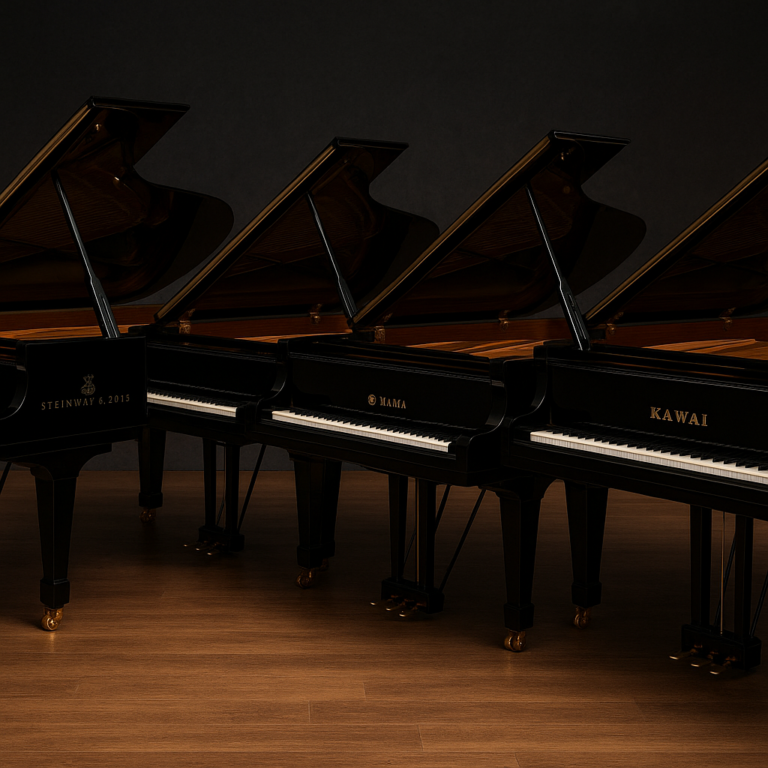


As a novice I am impressed with this – after a long pause I am excited to I want to return to the keys and finish what I started. It is very helpful and gives me confidence.