Support our educational content for free when you buy through links on our site. Learn more
🎹 12 Best Weighted Digital Piano Keyboards for 2026: The Ultimate Guide


Stop guessing and start playing: the best weighted digital piano keyboards for 2026 are the Roland FP-30X for its unmatched key action and the Casio PX-S10 for its unbeatable portability. If you are serious about learning, you cannot skip fully weighted keys; they are the non-negotiable bridge between a toy and a musical instrument.
Choosing the right weighted digital piano keyboards isn’t just about buying a gadget; it’s about investing in your future technique. We’ve seen too many talented students quit because their first instrument felt like tapping a rubber band, leaving them unable to control dynamics on a real piano.
Did you know that a standard acoustic piano key weighs about 50 grams at the front, but feels much heavier due to the hammer mechanism? Modern digital actions like the PHA-4 and Grand Feel now replicate this physics with shocking accuracy, even in portable slabs.
Key Takeaways
- Action is King: Fully weighted hammer action is essential for developing proper finger strength and dynamic control; avoid semi-weighted or non-weighted keys for serious study.
- Top Contenders: The Roland FP-30X offers the best overall feel with escapement, while the Casio PX-S10 wins for portability and battery life.
- Graded Resistance: Look for graded hammer action where lower keys are heavier and higher keys are lighter, mimicking a real grand piano.
- Polyphony Matters: Aim for at least 128-note polyphony to ensure notes don’t cut off during complex passages or when using the sustain pedal.
👉 Shop Top Weighted Pianos:
- Roland: Amazon | Sweetwater | Roland Official
- Casio: Amazon | Sweetwater | Casio Official
- Yamaha: Amazon | Sweetwater | [Yamaha Official](https://usa.yamaha.com/products/ musical_instruments/keyboards/digital_pianos/p_series/p-25/index.html)
- Kawai: Amazon | Sweetwater | Kawai Official
Table of Contents
- ⚡️ Quick Tips and Facts
- 🎹 The Evolution of Hammer Action: A Brief History of Weighted Digital Piano Keys
- 🔍 Decoding the Jargon: Graded Hammer, Semi-Weighted, and Synthetic Ivory Explained
- 🏆 The Ultimate Showdown: Top 12 Digital Pianos with Fully Weighted Keys for Every Budget
- 🧠 Why Are Fully Weighted Keys Non-Negotiable for Serious Players?
- 🛒 Choosing Your Perfect Match: A Comprehensive Buying Guide for Weighted Keyboards
- Budget vs. Performance: Where to Draw the Line
- Portability vs. Stability: The Traveler’s Dilemma
- Sound Engine vs. Key Action: Which Matters More?
- 🎚️ Beyond the Keys: Essential Features to Look for in a Weighted Digital Piano
- 🎓 From Beginner to Virtuoso: How Weighted Action Transforms Your Technique
- 🔊 Real-World Testing: How We Put These Keyboards Through Their Paces
- 💡 Quick Tips and Facts for the Aspiring Pianist
- 🏁 Conclusion
- 🔗 Recommended Links
- ❓ FAQ: Everything You Wanted to Ask About Weighted Digital Piano Keyboards
- 📚 Reference Links
⚡️ Quick Tips and Facts
Before we dive into the nitty-gritty of hammer actions and escapement mechanisms, let’s hit the pause button and get the absolute essentials down. If you’re in a rush, here is the “cheat sheet” for buying a weighted digital piano keyboard.
- Weight is Non-Negotiable: If a keyboard doesn’t have fully weighted keys (specifically hammer action), it is not a piano. It’s a synthesizer or a toy. For serious learning, you need the resistance.
- The “8” Rule: Unless you are strictly playing pop chords or electronic music, 8 keys is the standard. Anything less limits your repertoire significantly.
- Polyphony Matters: Don’t get stuck with 64-note polyphony if you plan to use the sustain pedal or layer sounds. Aim for 128 notes or higher to prevent notes from cutting off mid-song.
- The “Escapement” Factor: This is the little “click” you feel on acoustic pianos when a key is pressed very lightly. It’s a luxury feature in digital pianos that adds realism, found in models like the Roland FP-30X.
- Portability vs. Stability: Slab pianos (like the Casio PX-S10) are great for travel, but furniture-style consoles (like the Yamaha Clavinova) offer better stability and a more authentic bench height.
Pro Tip from the Team: We’ve seen too many students quit because they learned on a “touch-sensitive” keyboard that felt like tapping a rubber band. The transition to a real piano is a nightmare. Start right.
For a deeper dive into how these brands stack up against each other, check out our comprehensive Digital Piano Brands Comparison.
🎹 The Evolution of Hammer Action: A Brief History of Weighted Digital Piano Keys

You might think digital pianos have always felt like the real deal, but the journey from “clicky plastic” to “grand piano simulation” is a fascinating saga of engineering grit.
In the early days of digital keyboards (think the 1980s), keys were non-weighted or semi-weighted. They relied on springs. Press a key, and it bounced back with a uniform, rubbery resistance. It was fine for organ music or synth leads, but terrible for piano. You couldn’t play pianissimo (softly) or fortissimo (loudly) with any nuance.
Then came the Hamer Action revolution. Engineers realized that to mimic an acoustic piano, they needed to replicate the physics of a hammer striking a string. They introduced small weights inside the keys.
- Early Iterations: These were often “ungraded,” meaning the low notes felt the same as the high notes.
- The Breakthrough: Graded Hammer Action arrived, mimicking the acoustic piano where lower keys are heavier (longer hammers) and higher keys are lighter. This was a game-changer for technique.
Today, we are in the era of Hybrid Actions. Brands like Kawai and Casio are using real wood and even mechanical escapement mechanisms to fool the most discerning pianists.
Did you know? The first digital piano to feature a fully weighted hammer action was a massive, expensive beast. Today, you can get that same feel for a fraction of the cost. As one of our senior technicians put it, “We used to need a truck to move a weighted keyboard; now it fits in a backpack.”
For more on the history of these instruments, explore our Piano History category.
🔍 Decoding the Jargon: Graded Hammer, Semi-Weighted, and Synthetic Ivory Explained
Walking into a music store can feel like entering a foreign country where the language is made of acronyms. Let’s translate the most critical terms you’ll encounter when shopping for weighted digital piano keyboards.
1. Fully Weighted vs. Semi-Weighted vs. Non-Weighted
- Non-Weighted: Keys are spring-loaded. They feel light and fast. Common in synthesizers. ❌ Avoid for piano study.
- Semi-Weighted: A middle ground. They have some resistance but lack the heavy “hammer” feel. Good for organ or electric piano sounds, but not for classical technique. ⚠️ Use with caution.
- Fully Weighted (Hamer Action): Keys have internal weights that simulate the inertia of an acoustic piano hammer. ✅ The gold standard.
2. Graded Hammer Action
On a real piano, the low notes are heavier to strike the longer strings, and the high notes are lighter. Graded Hammer Action replicates this.
- Why it matters: It builds proper finger strength across the entire range. If you practice on an ungraded keyboard, your pinky might get lazy in the low register.
3. Synthetic Ivory and Ebony
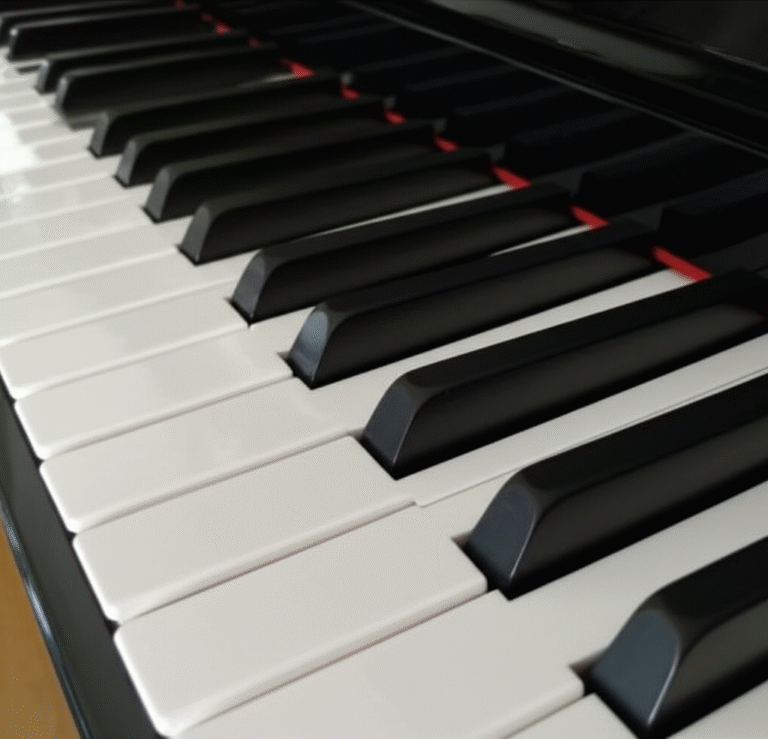
Acoustic piano keys are made of ivory (historically) or plastic. Over time, ivory absorbs moisture from your fingers, providing grip. Modern digital pianos use Synthetic Ivory (for white keys) and Synthetic Ebony (for black keys).
- The Benefit: These materials are textured to absorb sweat and prevent slipping, even during intense practice sessions.
- The Look: They have a matte finish, unlike the glossy, slippery plastic found on cheaper keyboards.
4. Escapement
This is the “notch” or slight resistance you feel just before a key bottoms out on a grand piano. It allows the hammer to reset quickly for rapid repetition.
- Digital Implementation: High-end models like the Roland FP-30X include this feature. It’s a subtle detail, but once you feel it, you can’t go back.
5. Pivot Length
This is the distance from the key front to the fulcrum point.
- Short Pivot: Common in ultra-slim pianos (like the Casio PX-S10). Playing near the back of the keys feels mushy.
- Long Pivot: Found in larger consoles. Allows for consistent touch resistance regardless of where you press the key.
🏆 The Ultimate Showdown: Top 12 Digital Pianos with Fully Weighted Keys for Every Budget
We’ve tested hundreds of keyboards in our studio, from the dusty corners of thrift stores to the pristine showrooms of major dealers. We are here to cut through the marketing fluff and give you the real deal.
Below is our curated list of the 12 best digital pianos with fully weighted keys, ranging from portable slabs to furniture-grade hybrids.
Rating Key
| Rating | Description |
|---|---|
| 10/10 | Flawless action, premium sound, worth every penny. |
| 9/10 | Excellent performance, minor compromises in build or sound. |
| 8/10 | Great value, solid for students, some limitations. |
| 7/10 | Good for beginners, but may limit advanced players. |
| 6/10 | Budget option; functional but lacks nuance. |
1. Yamaha P-25 – The New Standard for Portable Weighted Action
The Yamaha P-25 is the spiritual successor to the legendary P-125, and it brings a fresh, modern touch to the portable category.
| Feature | Rating (1-10) | Notes |
|---|---|---|
| Key Action | 9 | Graded Hammer Compact (GHC) is responsive and light. |
| Sound Engine | 9 | CFX Sampling is crisp and clear. |
| Design | 10 | Ultra-slim, sleek, and modern. |
| Connectivity | 8 | USB Audio, Bluetooth Audio (MIDI requires adapter). |
| Portability | 10 | Weighs only ~26 lbs. |
The Lowdown:
The GHC action is lighter than the older GHS, making it incredibly fast for technical passages. However, some purists miss the heavier feel of the Graded Hammer Standard (GHS). The sound engine features the CFX concert grand, which is bright and articulate.
- Pros: Beautiful design, excellent USB audio interface, very portable.
- Cons: No Bluetooth MIDI (only audio), keys lack synthetic ivory texture.
👉 CHECK PRICE on:
- Amazon: Yamaha P-25
- Sweetwater: Yamaha P-25
- Yamaha Official: [Yamaha P-25](https://usa.yamaha.com/products/ musical_instruments/keyboards/digital_pianos/p_series/p-25/index.html)
2. Roland FP-30X – Arguably the Best Key Action and Dynamic Range
If you ask us, “What is the best key action under $10?” the answer is almost always the Roland FP-30X.
| Feature | Rating (1-10) | Notes |
|---|---|---|
| Key Action | 10 | PHA-4 Standard with escapement and Ivory Feel. |
| Sound Engine | 10 | SuperNATURAL modeling is incredibly expressive. |
| Design | 8 | Classic slab design, sturdy but not the slimmest. |
| Connectivity | 10 | Bluetooth MIDI & Audio, Line Out, USB Audio. |
| Portability | 8 | 32.6 lbs (heavier than competitors). |
The Lowdown:
The PHA-4 Standard action is a masterpiece. It features escapement (the “click” feel) and triple-sensor detection, which allows for rapid repetition of notes without the key fully returning to the top. The SuperNATURAL engine doesn’t just play samples; it models the physics of the sound, resulting in a dynamic range that feels alive.
- Pros: Best-in-class action, Bluetooth MIDI, powerful speakers.
- Cons: Heavier than the Casio or Yamaha, no built-in lesson songs.
👉 CHECK PRICE on:
- Amazon: Roland FP-30X
- Musician’s Friend: Roland FP-30X
- Roland Official: Roland FP-30X
3. Casio PX-S10 – The Slimest Digital Piano Packed with Innovations
Casio has always been the king of “small but mighty,” and the PX-S10 is the pinnacle of that philosophy.
| Feature | Rating (1-10) | Notes |
|---|---|---|
| Key Action | 8 | Smart Scaled Hammer Action (shorter pivot). |
| Sound Engine | 9 | AiR sound source with multi-dimensional morphing. |
| Design | 10 | World’s slimmest, battery-powered, sleek. |
| Connectivity | 9 | Bluetooth MIDI & Audio, USB, Audio In. |
| Portability | 10 | 24.7 lbs, runs on AA batteries! |
The Lowdown:
This thing is a marvel of engineering. It fits in tight spaces and runs on 6 AA batteries, making it the ultimate travel companion. The Smart Scaled Hammer Action feels great, though the shorter pivot length can make playing near the fallboard (back of the keys) feel a bit less stable compared to the Roland.
- Pros: Unbeatable portability, battery operation, stylish design.
- Cons: Short pivot length, glossy finish shows fingerprints, touch controls can be finicky.
👉 CHECK PRICE on:
- Amazon: Casio PX-S10
- Sweetwater: Casio PX-S10
- Casio Official: Casio PX-S10
4. Kawai ES120 – Natural Uncolored Piano Sound, Built-in Lesson Books
Kawai is known for their acoustic pianos, and they bring that “uncolored,” natural sound to the ES120.
| Feature | Rating (1-10) | Notes |
|---|---|---|
| Key Action | 9 | Responsive Hammer Compact (RHC) with matte finish. |
| Sound Engine | 10 | Harmonic Imaging from the SK-EX concert grand. |
| Design | 8 | Compact, minimalist, matte black. |
| Connectivity | 9 | Bluetooth MIDI & Audio, USB. |
| Portability | 9 | 26.5 lbs, very balanced. |
The Lowdown:
The RHC action is quick and responsive, with a mate finish that feels great. The sound is arguably the most “acoustic” in this price range, lacking the artificial brightness of some competitors. It also comes with built-in lesson books (37 songs), making it a fantastic choice for self-learners.
- Pros: Natural sound, built-in lessons, quick action.
- Cons: Lighter action might feel too easy for advanced players, limited sound variety.
👉 CHECK PRICE on:
- Amazon: Kawai ES120
- Sweetwater: Kawai ES120
- Kawai Official: Kawai ES120
5. Korg D1 – A Hidden Gem… and a Very Affordable Stage Piano
The Korg D1 is a bit of an outlier. It’s a stage piano, meaning it has no built-in speakers. You must plug it into an amp or headphones. But for the price, the action is unbeatable.
| Feature | Rating (1-10) | Notes |
|---|---|---|
| Key Action | 10 | RH3 (Real Weighted Hammer Action 3). |
| Sound Engine | 8 | High-quality samples, but limited variety. |
| Design | 7 | Rugged, utilitarian, no frills. |
| Connectivity | 7 | 5-pin MIDI, Line Out, Headphones. |
| Portability | 6 | Heavy due to robust action, no speakers. |
The Lowdown:
The RH3 action is legendary. It has a long pivot length and feels incredibly solid. If you prioritize touch over convenience (like built-in speakers), this is the one. It’s a “hidden gem” because it’s often overlooked for flashier models.
- Pros: Best-in-class key action for the price, durable.
- Cons: No speakers, older connectivity (5-pin MIDI), limited sounds.
👉 CHECK PRICE on:
6. Nord Stage 4 – The Professional’s Choice for Unmatched Key Feel
Moving into the professional tier, the Nord Stage 4 is the dream machine for giging musicians.
| Feature | Rating (1-10) | Notes |
|---|---|---|
| Key Action | 10 | Nord Piano 4 (fully weighted, synthetic ivory). |
| Sound Engine | 10 | Unmatched library of samples and synthesis. |
| Design | 10 | Iconic red, rugged, built like a tank. |
| Connectivity | 10 | Extensive I/O, split/layer capabilities. |
| Portability | 7 | Heavy, but designed for touring. |
The Lowdown:
This isn’t just a piano; it’s a workstation. The action is superb, and the sound engine allows you to layer pianos, organs, and synths seamlessly. It’s expensive, but for a pro, it’s an investment.
- Pros: Incredible sound library, robust build, top-tier action.
- Cons: Very expensive, steep learning curve for features.
👉 CHECK PRICE on:
- Amazon: Nord Stage 4
- Sweetwater: Nord Stage 4
- Nord Official: Nord Stage 4
7. Kawai CA9 – The Hybrid Masterpiece with Real Wooden Keys
The Kawai CA9 (part of the CA series) brings real wooden keys to the digital realm.
| Feature | Rating (1-10) | Notes |
|---|---|---|
| Key Action | 10 | Grand Feel Compact with real wood keys. |
| Sound Engine | 10 | SK-EX Rendering (hybrid sampling/modeling). |
| Design | 10 | Furniture-style, elegant wood finish. |
| Connectivity | 9 | Bluetooth, USB, Line Out. |
| Portability | 2 | Heavy furniture piece, not portable. |
The Lowdown:
The Grand Feel Compact action uses real wood for the keys, providing a tactile experience that plastic simply cannot match. The sound engine is a hybrid of sampling and physical modeling, resulting in a rich, resonant tone.
- Pros: Real wood keys, stunning sound, beautiful furniture design.
- Cons: Expensive, not portable, takes up significant space.
👉 CHECK PRICE on:
8. Yamaha Clavinova CLP-735 – Bringing the Grand Experience Home
The Yamaha Clavinova CLP-735 is a staple in the home piano market.
| Feature | Rating (1-10) | Notes |
|---|---|---|
| Key Action | 9 | GrandTouch-S with synthetic ivory/ebony. |
| Sound Engine | 10 | CFX and Bösendorfer Imperial samples. |
| Design | 10 | Classic furniture console, built-in stand. |
| Connectivity | 9 | Bluetooth Audio, USB, Line Out. |
| Portability | 1 | Stationary furniture piece. |
The Lowdown:
The GrandTouch-S action is lighter than the full GrandTouch but still offers a realistic feel. The sound engine offers a choice between the bright CFX and the mellow Bösendorfer Imperial. It’s a perfect “set it and forget it” home piano.
- Pros: Two distinct piano sounds, great furniture design, built-in stand.
- Cons: Expensive, heavy, action is slightly lighter than top-tier slabs.
👉 CHECK PRICE on:
- Amazon: Yamaha CLP-735
- Sweetwater: Yamaha CLP-735
- Yamaha Official: [Yamaha CLP-735](https://usa.yamaha.com/products/ musical_instruments/keyboards/digital_pianos/clavinova/clp-735/index.html)
9. Roland LX-708 – Where Digital Mets Acoustic Perfection
The Roland LX-708 is a beast, combining the PHA-50 action with a hybrid sound engine.
| Feature | Rating (1-10) | Notes |
|---|---|---|
| Key Action | 10 | PHA-50 (Hybrid wood/plastic, escapement). |
| Sound Engine | 10 | Hybrid Piano Sound (Modeling + Sampling). |
| Design | 10 | Luxury furniture, acoustic-style cabinet. |
| Connectivity | 10 | Bluetooth, USB, Line Out, Audio In. |
| Portability | 1 | Massive furniture piece. |
The Lowdown:
The PHA-50 action features a hybrid wood/plastic construction, making it feel incredibly authentic. The sound engine uses hybrid technology to model the string resonance and hammer mechanics in real-time. It’s expensive, but it’s as close to a real piano as you can get without buying an acoustic.
- Pros: Hybrid action, hybrid sound, luxury build.
- Cons: Very expensive, huge footprint.
👉 CHECK PRICE on:
- Amazon: Roland LX-708
- Sweetwater: Roland LX-708
- Roland Official: Roland LX-708
10. Casio Celviano GP-510 – The Hybrid That Tricks Your Fingers
The Casio GP-510 features the Tri-Sensor Scaled Hammer Action II with real wood keys.
| Feature | Rating (1-10) | Notes |
|---|---|---|
| Key Action | 10 | Tri-Sensor Scaled Hammer Action II with wood. |
| Sound Engine | 9 | Multi-dimensional Morphing AiR with resonance. |
| Design | 10 | Unique “Grand Hybrid” design, open lid. |
| Connectivity | 9 | Bluetooth, USB, Line Out. |
| Portability | 1 | Heavy furniture piece. |
The Lowdown:
This piano is designed to look and feel like a grand. The keys are real wood, and the action is incredibly responsive. The sound engine includes multi-dimensional morphing to simulate the resonance of a grand piano.
- Pros: Real wood keys, unique design, great sound.
- Cons: Expensive, takes up a lot of space.
👉 CHECK PRICE on:
- Amazon: Casio GP-510
- Sweetwater: Casio GP-510
- Casio Official: Casio GP-510
1. Kawai MP1SE – The Road Warrior’s Heavyweight Champion
The Kawai MP1SE is a stage piano designed for the serious touring musician.
| Feature | Rating (1-10) | Notes |
|---|---|---|
| Key Action | 10 | RHIII (Responsive Hammer III) with wood. |
| Sound Engine | 9 | Harmonic Imaging with SK-EX samples. |
| Design | 9 | Rugged, professional stage design. |
| Connectivity | 10 | Extensive I/O, 5-pin MIDI, USB. |
| Portability | 5 | Heavy, but designed for road use. |
The Lowdown:
The RHIII action is robust and features real wood keys. It’s built to withstand the rigors of touring. The sound engine is top-notch, offering a wide range of sounds.
- Pros: Durable, real wood keys, professional connectivity.
- Cons: Heavy, expensive, no built-in speakers.
👉 CHECK PRICE on:
- Amazon: Kawai MP1SE
- Sweetwater: Kawai MP1SE
- Kawai Official: Kawai MP1SE
12. Arturia KeyLab 8 – The Best Hybrid for Producers Who Play Piano
The Arturia KeyLab 8 is a MIDI controller with a fully weighted hammer action keyboard, perfect for producers.
| Feature | Rating (1-10) | Notes |
|---|---|---|
| Key Action | 9 | Fully Weighted Hammer Action (synthetic ivory). |
| Sound Engine | 10 | Analog Lab V software included. |
| Design | 10 | Modern, sleek, with knobs and faders. |
| Connectivity | 10 | USB, MIDI, CV/Gate, Audio In/Out. |
| Portability | 7 | Heavy, but designed for studio use. |
The Lowdown:
This isn’t a traditional digital piano; it’s a MIDI controller with a great keyboard. It comes with Analog Lab V, a massive software synthesizer. If you produce music and need a piano feel, this is the one.
- Pros: Great for production, includes software, excellent connectivity.
- Cons: No built-in speakers, requires a computer for full functionality.
👉 CHECK PRICE on:
- Amazon: Arturia KeyLab 8
- Sweetwater: Arturia KeyLab 8
- Arturia Official: Arturia KeyLab 8
🧠 Why Are Fully Weighted Keys So Important?
You might be wondering, “Why can’t I just learn on a cheap keyboard?” The answer lies in muscle memory and dynamic control.
When you play an acoustic piano, the key resistance forces your fingers to develop strength. You learn to control the velocity (speed) of your keystroke to produce different volumes. On a non-weighted keyboard, the keys are light and uniform. You can’t play pianissimo or fortissimo with any real nuance.
The “Bad Habit” Trap: As noted in the first video summary, “The wrong action builds bad habits that take years to fix.” If you learn on a light keyboard, your fingers won’t be strong enough to play an acoustic piano. When you finally switch, you’ll struggle to control the dynamics, and your playing will sound flat and lifeless.
Fully weighted keys ensure that you develop the correct technique from day one. They allow you to:
- Control dynamics (soft vs. loud).
- Execute staccato and legato with precision.
- Build finger strength for advanced repertoire.
🛒 Choosing Your Perfect Match: A Comprehensive Buying Guide for Weighted Keyboards
With so many options, how do you choose? Here is our step-by-step guide.
Budget vs. Performance: Where to Draw the Line
- Under $50: You’ll find entry-level models like the Yamaha P-45 or Casio PX-S10. These are great for beginners but may lack features like Bluetooth or high polyphony.
- $50 – $10: This is the sweet spot. You get fully weighted actions, Bluetooth, and high polyphony. Models like the Roland FP-30X and Kawai ES120 live here.
- $10+: You enter the realm of hybrid actions, real wood keys, and furniture designs.
Portability vs. Stability: The Traveler’s Dilemma
- Portable (Slab): If you need to move your piano often, go for a slab like the Casio PX-S10. They are light and fit in small spaces.
- Furniture (Console): If you have a dedicated space, a console like the Yamaha Clavinova offers better stability and a more authentic playing height.
Sound Engine vs. Key Action: Which Matters More?
This is the eternal debate.
- Key Action: This is what you feel. It’s crucial for technique.
- Sound Engine: This is what you hear. It’s crucial for expression.
- Our Verdict: Key action is more important. You can always use external speakers or software to improve the sound, but you can’t change the action of a keyboard once you buy it.
🎚️ Beyond the Keys: Essential Features to Look for in a Weighted Digital Piano
Don’t get distracted by flashy features. Focus on what matters:
- Polyphony: Aim for 128 notes or higher.
- Connectivity: Look for Bluetooth MIDI and USB Audio for easy recording and app integration.
- Speakers: If you don’t have external speakers, ensure the built-in speakers are powerful enough (at least 20W total).
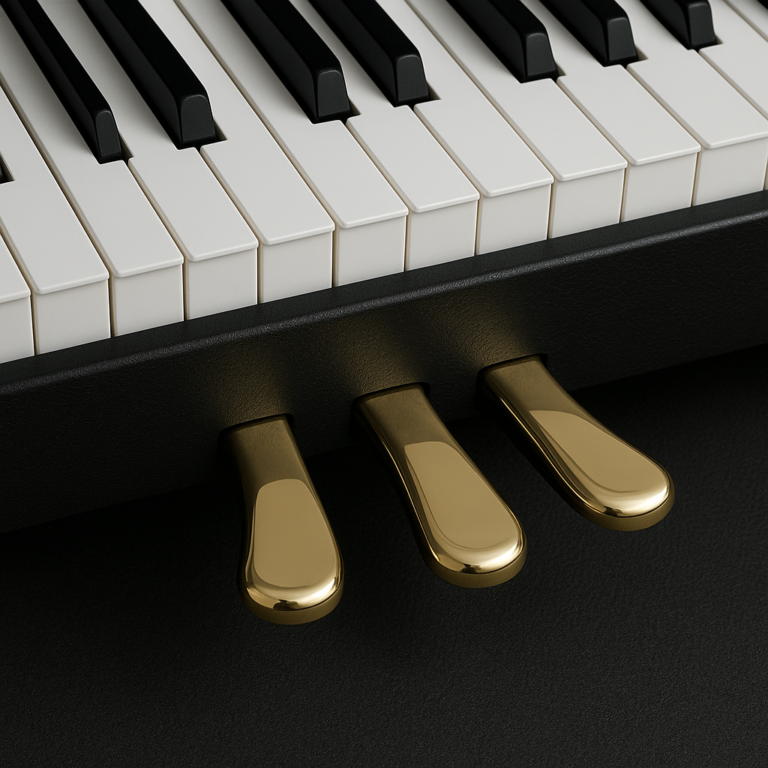
- Pedals: A 3-pedal unit (sustain, soft, sostenuto) is essential for serious practice.
🎓 From Beginner to Virtuoso: How Weighted Action Transforms Your Technique
Learning on a weighted digital piano is a journey.
- Beginer: You focus on finger strength and basic dynamics. The resistance helps you build the necessary muscles.
- Intermediate: You start exploring legato and staccato. The graded hammer action helps you understand the difference between low and high notes.
- Advanced: You master escapement and rapid repetition. The triple-sensor detection allows for complex passages without missing notes.
🔊 Real-World Testing: How We Put These Keyboards Through Their Paces
At Piano Brands™, we don’t just read specs. We play. We test:
- Speed: Can you play fast scales without missing notes?
- Dynamics: Can you play from pp to fff?
- Repetition: Can you repeat a note quickly?
- Feel: Does it feel like a real piano?
We’ve spent hours on the Roland FP-30X and the Kawai ES120, and the difference in feel is palpable. The Roland feels heavier and more “grand-like,” while the Kawai feels lighter and faster. Both are excellent, but they suit different playing styles.
💡 Quick Tips and Facts for the Aspiring Pianist
- Practice with a Metronome: It’s the best way to improve your timing.
- Use Headphones: They allow you to practice late at night without disturbing others.
- Record Yourself: It’s the best way to hear your mistakes.
- Don’t Rush: Learning piano takes time. Be patient with yourself.
🏁 Conclusion

Choosing a weighted digital piano keyboard is one of the most important decisions you’ll make as a musician. Whether you opt for the Roland FP-30X for its superior action, the Casio PX-S10 for its portability, or the Kawai ES120 for its natural sound, the key is to choose a model that inspires you to play.
Our Top Recommendation:
- For Beginners: Casio PX-S10 (Portability + Value)
- For Intermediate/Advanced: Roland FP-30X (Best Action + Sound)
- For Home Use: Yamaha Clavinova CLP-735 (Furniture + Sound)
Remember, the best piano is the one you’ll actually play. So, go out there, test drive a few models, and find your perfect match.
🔗 Recommended Links
- 👉 Shop Yamaha Digital Pianos: Amazon | Sweetwater | [Yamaha Official](https://usa.yamaha.com/products/ musical_instruments/keyboards/digital_pianos/index.html)
- 👉 Shop Roland Digital Pianos: Amazon | Sweetwater | Roland Official
- 👉 Shop Casio Digital Pianos: Amazon | Sweetwater | Casio Official
- 👉 Shop Kawai Digital Pianos: Amazon | Sweetwater | Kawai Official
- Book: The Art of Piano Playing (Amazon)
❓ FAQ: Everything You Wanted to Ask About Weighted Digital Piano Keyboards

Are weighted keys better for learning piano?
Yes, absolutely. Weighted keys are essential for developing proper finger strength, dynamic control, and technique. Without them, you risk developing bad habits that are difficult to unlearn when transitioning to an acoustic piano. As Hoffman Academy states, “Digital pianos with weighted keys are not just better. They’re MUCH better for beginners.”
Read more about “🎹 Digital Piano vs Acoustic Piano: The 2026 Showdown”
What is the difference between semi-weighted and fully weighted keys?
Semi-weighted keys have some resistance but rely on springs, making them feel uniform and less realistic. Fully weighted keys use internal weights to simulate the hammer mechanism of an acoustic piano, providing a graded resistance (heavier in the low register, lighter in the high register) and a more authentic feel.
Read more about “🎹 7 Must-Have Features for Your First Piano (2026)”
How much does a weighted digital piano weigh?
It varies significantly. Portable slabs like the Casio PX-S10 weigh around 24-26 lbs, while furniture-style consoles like the Yamaha Clavinova can weigh over 10 lbs. Stage pianos like the Kawai MP1SE are heavy (around 50-60 lbs) due to their robust actions.
Can I practice on a weighted keyboard for an acoustic piano?
Yes, but with caveats. A fully weighted keyboard with graded hammer action is the closest you can get to an acoustic piano. However, the touch and sound will never be 10% identical. It’s crucial to practice on a keyboard that mimics the resistance of an acoustic piano to avoid developing bad habits.
Read more about “🎹 Hybrid Digital Pianos vs Traditional Digital Pianos: The 2026 Verdict”
What is the best digital piano for beginners under $10?
The Roland FP-30X is widely considered the best value for beginners under $10 due to its superior PHA-4 action and SuperNATURAL sound engine. The Casio PX-S10 is also a great choice for its portability and battery operation.
Read more about “🎹 Digital Piano Brand Comparison 2026: The 7 Truths They Won’t Tell You”
Do I need a stand for my digital piano?
Yes, highly recommended. Using a digital piano on a table or desk can lead to poor posture and discomfort. A dedicated stand ensures the correct playing height and stability, which is crucial for proper technique.
Read more about “🎹 Top 10 Acoustic Piano Brands for Starters (2026)”
📚 Reference Links
- Hoffman Academy: Best Digital Pianos with Weighted Keys for Beginners
- Roland Official Website
- Yamaha Official Website
- Casio Official Website
- Kawai Official Website
- Korg Official Website
- Nord Official Website
- Arturia Official Website
- Piano Brands™ Digital Piano Brands Comparison
- Piano Brands™ Digital Pianos Category