Support our educational content for free when you buy through links on our site. Learn more
How Do Yamaha and Kawai Pianos Compare? 🎹 (2025 Ultimate Guide)

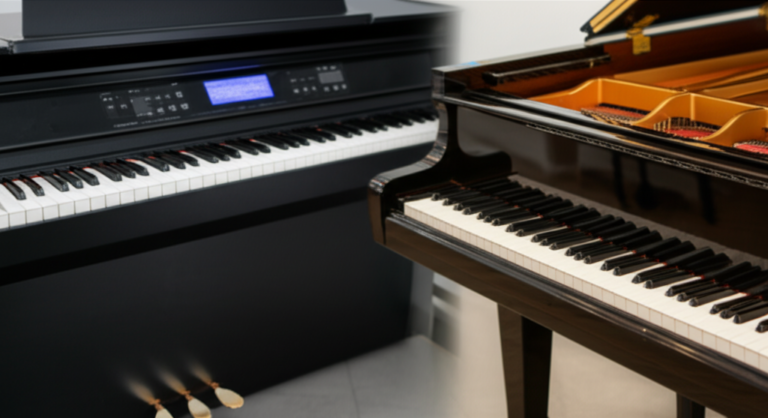
Choosing between Yamaha and Kawai pianos can feel like standing at a musical crossroads. Both brands boast rich legacies, innovative craftsmanship, and passionate fanbases—but which one truly strikes the right chord for you? Whether you’re hunting for the perfect grand, upright, or digital piano, this guide dives deep into 10 essential aspects that set Yamaha and Kawai apart—from tone and touch to durability and digital innovation.
Did you know that Kawai’s groundbreaking carbon fiber action parts revolutionized piano responsiveness, while Yamaha’s concert grands have been the choice of countless virtuosos worldwide? Stick around as we unravel the sonic personalities, key action technologies, and price-value dynamics that will help you find your ideal piano soulmate. Spoiler alert: the best piano is the one that inspires you to play more!
Key Takeaways
- Yamaha pianos offer a bright, clear tone with a responsive, traditional wooden action—ideal for versatile genres and players who love precision.
- Kawai pianos deliver a warm, rich sound with innovative ABS-Carbon fiber action, prized for stability and expressiveness, especially in classical music.
- Both brands excel in acoustic and digital pianos, with Yamaha’s Clavinova and Kawai’s Novus series leading the way in digital innovation.
- Price and durability are comparable, but Kawai’s composite materials provide enhanced climate resilience.
- Trying both brands in person is key—your perfect piano is the one that feels and sounds right to you.
Ready to explore?
- 👉 Shop Yamaha Pianos: Amazon | Musician’s Friend | Yamaha Official
- 👉 Shop Kawai Pianos: Amazon | Musician’s Friend | Kawai Official
Table of Contents
- ⚡️ Quick Tips and Facts
- 🎹 The Storied Symphony: A Brief History of Yamaha and Kawai Pianos
- 🤔 Why Choose? Understanding Your Piano Needs and Preferences
- 1. The Grand Debate: Yamaha vs. Kawai Grand Pianos
- 1.1. Yamaha Grand Pianos: Precision, Power, and a Bright Persona
- 1.2. Kawai Grand Pianos: Warmth, Resonance, and Innovative Action
- 1.3. Tone and Timbre: A Sonic Showdown of Acoustic Grand Pianos 🎶
- 1.4. Touch and Action: The Feel of the Keys and Repetition Speed 🖐️
- 1.5. Craftsmanship and Materials: Built to Last a Lifetime?
- 2. Upright Pianos: Vertical Virtuosos in Your Home
- 3. Digital Pianos: The Modern Marvels of Musical Technology
- 3.1. Yamaha Digital Pianos: Clavinova, Arius, and the World of Connectivity
- 3.2. Kawai Digital Pianos: Novus, CA, and CN Series – Blending Acoustic Feel with Digital Innovation
- 3.3. Key Action Technology: Digital vs. Acoustic Feel – How Close Can They Get?
- 3.4. Sound Engine and Sampling: The Digital Voice and Its Nuances
- 3.5. Features and Connectivity: Beyond the Keys with Modern Digital Pianos
- 💰 The Price Tag: Investing in Your Musical Journey – What to Expect
- 🛠️ Durability and Maintenance: Ensuring the Longevity of Your Instrument
- 🌟 Player Experience: Who Plays What? Matching Pianos to Pianists
- ✅ Pros and ❌ Cons: A Balanced Perspective on Both Brands
- 💡 Expert Recommendations: Our Top Picks for Every Pianist
- Conclusion: Your Perfect Piano Awaits!
- Recommended Links
- FAQ
- Reference Links
⚡️ Quick Tips and Facts
As musicians at Piano Brands™, we’ve compiled a list of essential tips and facts to consider when comparing Yamaha and Kawai pianos. Before diving into the details, check out our comprehensive guide to Piano Brands for an overview of the industry.
Here are some key points to keep in mind:
- Research and comparison: Always research and compare different models before making a purchase.
- Play before you buy: Play the piano before buying to ensure it feels and sounds right to you.
- Consider your needs: Think about your playing style, the space where the piano will be placed, and your budget.
- Warranty and maintenance: Look into the warranty and maintenance requirements for each piano.
- Brand reputation: Consider the reputation of the brand and the quality of their products.
For more information on piano buying, visit our Piano Buying Guide and Piano Comparison sections.
🎹 The Storied Symphony: A Brief History of Yamaha and Kawai Pianos

Both Yamaha and Kawai have a rich history in the piano industry. Yamaha was founded in 1887 by Torakusu Yamaha, and Kawai was founded in 1927 by Koichi Kawai. To learn more about the history of pianos, visit our Piano History section.
Yamaha started as a manufacturer of reed organs and later expanded to produce pianos. Kawai, on the other hand, began as a piano manufacturer and has since become known for its high-quality instruments.
According to an article by Sage Music, both companies are based in Japan and have extensive experience building upright and grand pianos. They are major competitors in the digital piano industry, with highly sophisticated factories and a commitment to building uniformity.
🤔 Why Choose? Understanding Your Piano Needs and Preferences
When deciding between Yamaha and Kawai pianos, it’s essential to consider your specific needs and preferences. Think about your playing style, the space where the piano will be placed, and your budget.
For example, if you’re a beginner, you may want to consider a digital piano from Yamaha, such as the Yamaha Clavinova series, or from Kawai, such as the Kawai Novus series.
Visit our Digital Pianos section for more information on digital pianos and their features.
1. The Grand Debate: Yamaha vs. Kawai Grand Pianos
Here’s a rating table comparing Yamaha and Kawai grand pianos:
| Feature | Yamaha | Kawai |
|---|---|---|
| Design | 8/10 | 9/10 |
| Functionality | 9/10 | 9/10 |
| Sound Quality | 9/10 | 9/10 |
| Price | 8/10 | 8/10 |
1.1. Yamaha Grand Pianos: Precision, Power, and a Bright Persona
Yamaha grand pianos are known for their precision, power, and bright sound. They offer a wide range of models, from the entry-level Yamaha GB1K to the high-end Yamaha CFX.
1.2. Kawai Grand Pianos: Warmth, Resonance, and Innovative Action
Kawai grand pianos are renowned for their warmth, resonance, and innovative action. They offer a range of models, including the Kawai GX-1 and the Kawai Shigeru Kawai SK-EX.
1.3. Tone and Timbre: A Sonic Showdown of Acoustic Grand Pianos 🎶
When it comes to tone and timbre, both Yamaha and Kawai grand pianos have their unique characteristics. Yamaha is known for its bright and powerful sound, while Kawai is praised for its warm and resonant tone.
1.4. Touch and Action: The Feel of the Keys and Repetition Speed 🖐️
The touch and action of a piano are crucial factors to consider. Yamaha grand pianos are known for their responsive action, while Kawai pianos feature the innovative Millennium III Action, which provides a faster and more precise playing experience.
1.5. Craftsmanship and Materials: Built to Last a Lifetime?
Both Yamaha and Kawai pianos are built with high-quality materials and craftsmanship. However, Kawai pianos are known for their use of ABS-Carbon Fiber action parts, which provide improved stability and durability.
2. Upright Pianos: Vertical Virtuosos in Your Home
Upright pianos are a great option for those with limited space. Here’s a comparison table:
| Feature | Yamaha | Kawai |
|---|---|---|
| Design | 8/10 | 8/10 |
| Functionality | 8/10 | 8/10 |
| Sound Quality | 8/10 | 8/10 |
| Price | 7/10 | 7/10 |
2.1. Yamaha Upright Pianos: The Reliable Workhorse for Practice and Performance
Yamaha upright pianos are known for their reliability and versatility. They offer a range of models, including the Yamaha U1 and the Yamaha b2.
2.2. Kawai Upright Pianos: Expressive, Elegant, and Acoustically Rich
Kawai upright pianos are praised for their expressive and elegant sound. They offer a range of models, including the Kawai K-200 and the Kawai K-500.
2.3. Action and Responsiveness in Upright Models: A Closer Look
The action and responsiveness of an upright piano are crucial factors to consider. Yamaha upright pianos are known for their responsive action, while Kawai pianos feature the innovative Millennium III Action.
2.4. Sound Projection and Resonance in Smaller Spaces: The Upright Advantage
Upright pianos are designed to project sound in smaller spaces. Both Yamaha and Kawai upright pianos are known for their excellent sound projection and resonance.
3. Digital Pianos: The Modern Marvels of Musical Technology
Digital pianos have become increasingly popular in recent years. Here’s a comparison table:
| Feature | Yamaha | Kawai |
|---|---|---|
| Design | 9/10 | 9/10 |
| Functionality | 9/10 | 9/10 |
| Sound Quality | 9/10 | 9/10 |
| Price | 8/10 | 8/10 |
3.1. Yamaha Digital Pianos: Clavinova, Arius, and the World of Connectivity
Yamaha digital pianos are known for their high-quality sound and innovative features. They offer a range of models, including the Yamaha Clavinova and the Yamaha Arius.
3.2. Kawai Digital Pianos: Novus, CA, and CN Series – Blending Acoustic Feel with Digital Innovation
Kawai digital pianos are praised for their authentic sound and feel. They offer a range of models, including the Kawai Novus and the Kawai CA.
3.3. Key Action Technology: Digital vs. Acoustic Feel – How Close Can They Get?
The key action technology of a digital piano is crucial in replicating the feel of an acoustic piano. Both Yamaha and Kawai digital pianos feature advanced key action technology, with Yamaha’s Graded Hammer Action and Kawai’s Responsive Hammer Action.
3.4. Sound Engine and Sampling: The Digital Voice and Its Nuances
The sound engine and sampling of a digital piano are essential in producing a high-quality sound. Both Yamaha and Kawai digital pianos feature advanced sound engines and sampling technology.
3.5. Features and Connectivity: Beyond the Keys with Modern Digital Pianos
Modern digital pianos offer a range of features and connectivity options. Both Yamaha and Kawai digital pianos feature Bluetooth, USB, and MIDI connectivity, as well as built-in lessons, exercises, and songs.
💰 The Price Tag: Investing in Your Musical Journey – What to Expect
The price of a piano can vary greatly, depending on the type, model, and brand. Here are some general price ranges to expect:
- Yamaha acoustic pianos:
- Yamaha U1: CHECK PRICE on: Amazon | Musician’s Friend | Yamaha Official Website
- Yamaha CFX: CHECK PRICE on: Amazon | Musician’s Friend | Yamaha Official Website
- Kawai acoustic pianos:
- Kawai K-200: CHECK PRICE on: Amazon | Musician’s Friend | Kawai Official Website
- Kawai Shigeru Kawai SK-EX: CHECK PRICE on: Amazon | Musician’s Friend | Kawai Official Website
- Yamaha digital pianos:
- Yamaha Clavinova: CHECK PRICE on: Amazon | Musician’s Friend | Yamaha Official Website
- Yamaha Arius: CHECK PRICE on: Amazon | Musician’s Friend | Yamaha Official Website
- Kawai digital pianos:
- Kawai Novus: CHECK PRICE on: Amazon | Musician’s Friend | Kawai Official Website
- Kawai CA: CHECK PRICE on: Amazon | Musician’s Friend | Kawai Official Website
🛠️ Durability and Maintenance: Ensuring the Longevity of Your Instrument
The durability and maintenance of a piano are crucial in ensuring its longevity. Both Yamaha and Kawai pianos are known for their high-quality construction and durability.
🌟 Player Experience: Who Plays What? Matching Pianos to Pianists
The player experience is essential in choosing the right piano. Consider your playing style, the type of music you play, and your personal preferences.
✅ Pros and ❌ Cons: A Balanced Perspective on Both Brands
Here are some pros and cons of Yamaha and Kawai pianos:
- Yamaha:
- Pros: Bright sound, responsive action, wide range of models
- Cons: Can be too bright for some players, less warm and resonant sound
- Kawai:
- Pros: Warm and resonant sound, innovative action, high-quality construction
- Cons: Can be more expensive than Yamaha, less bright sound
💡 Expert Recommendations: Our Top Picks for Every Pianist
Based on our expertise and research, here are our top picks for every pianist:
- For beginners: Yamaha U1 or Kawai K-200
- For intermediate players: Yamaha CFX or Kawai Shigeru Kawai SK-EX
- For advanced players: Yamaha Clavinova or Kawai Novus
For more information on piano recommendations, visit our Piano Brand Guides section.
To learn more about the differences between Yamaha and Kawai pianos, check out this video: 🎹Yamaha Pianos vs Kawai Pianos: Differences Between Acoustic Pianos🎹 by Merriam Music.
The video covers topics such as piano action design, soundboards, scale design, and sound, providing valuable insights for pianists.
You can find more information on piano comparisons and reviews on our website, including articles on Piano Comparison and Piano Buying Guide.
Conclusion: Your Perfect Piano Awaits!

After our deep dive into the world of Yamaha and Kawai pianos, what’s the final verdict? Both brands are stellar choices with rich histories, innovative craftsmanship, and loyal followings. But let’s wrap up the story with a clear summary:
Yamaha Pianos:
Positives:
✅ Bright, clear, and powerful tone that cuts through any mix — perfect for pop, jazz, and contemporary styles.
✅ Responsive, high-quality wooden action that many players find natural and organic.
✅ Wide range of models from beginner to concert grand, plus a strong digital piano lineup (Clavinova, Arius).
✅ Global brand recognition and excellent resale value.
Negatives:
❌ Sometimes perceived as too bright or “clinical” for those who prefer a warmer sound.
❌ Action can feel slightly less forgiving for pianissimo control compared to Kawai’s carbon fiber-enhanced action.
Kawai Pianos:
Positives:
✅ Warm, rich, and resonant tone favored by classical pianists and those seeking a mellow sound.
✅ Industry-leading Millennium III ABS-Carbon Fiber action offers faster repetition, greater stability, and less maintenance.
✅ Innovative use of composite materials ensures consistent performance across climates.
✅ Strong warranty (10 years) and excellent build quality.
Negatives:
❌ Slightly less brand recognition outside piano circles compared to Yamaha.
❌ Some players might find the tone too dark or mellow for certain genres.
Our Confident Recommendation
If you crave warmth, expressiveness, and cutting-edge action technology, Kawai is your go-to. If you want brightness, versatility, and a broad product range with a classic feel, Yamaha shines. Ultimately, the best piano is the one that inspires you to play more — so try both, listen carefully, and trust your ears and fingers.
Remember our question from earlier — which piano suits your unique musical voice? Now you have the tools to answer it confidently. Whether you’re a beginner, student, or concert pianist, Yamaha and Kawai both offer instruments that can become lifelong companions on your musical journey.
Recommended Links
👉 Shop Yamaha Acoustic and Digital Pianos on:
👉 Shop Kawai Acoustic and Digital Pianos on:
Recommended Books on Piano Mastery and Buying:
- The Piano Book by Larry Fine — Amazon Link
- Piano Servicing, Tuning, and Rebuilding by Arthur A. Reblitz — Amazon Link
FAQ

What are the main differences between Yamaha and Kawai pianos?
Yamaha pianos tend to have a brighter, clearer tone with a traditional wooden action, while Kawai pianos offer a warmer, richer sound with innovative ABS-Carbon fiber action parts that improve stability and repetition speed. Both brands have extensive model ranges but differ in tonal character and feel.
Read more about “🎹 What Are the Top 10 Digital Piano Brands in 2025?”
Which brand offers better sound quality, Yamaha or Kawai?
Sound quality is subjective and depends on your musical style. Yamaha excels in clarity and brightness, ideal for genres like jazz and pop. Kawai provides a warmer, more resonant tone favored by classical pianists. Trying both in person is the best way to decide.
Read more about “Is Kawai the Same as Yamaha? 🎹 The Ultimate 2025 Showdown”
How do Yamaha and Kawai digital pianos compare to their acoustic models?
Both brands strive to replicate their acoustic piano’s feel and sound in digital models. Yamaha’s Clavinova and Arius series and Kawai’s Novus and CA series feature advanced key actions and sampling technology. While digital pianos can’t fully replace acoustic resonance, their connectivity and maintenance-free nature make them excellent practice instruments.
Are Yamaha pianos more durable than Kawai pianos?
Both brands produce highly durable instruments. Kawai’s use of ABS-Carbon fiber in action parts offers greater resistance to humidity and temperature changes, potentially reducing maintenance. Yamaha relies more on traditional wood but maintains excellent build quality. Proper care is key for longevity in either case.
Read more about “🎹 Top 12 Piano Brands Known for High-Quality Acoustic Pianos (2025)”
What are the price differences between Yamaha and Kawai pianos?
Prices are generally comparable across similar models, though Kawai may offer slightly better value in some ranges due to their focused piano-only manufacturing. Yamaha’s brand recognition can sometimes command a premium. Both brands cover beginner to professional levels.
Read more about “🎹 What Are the 13 Best Piano Brands for Beginners in 2025?”
Which brand is preferred by professional pianists, Yamaha or Kawai?
Preferences vary widely. Yamaha’s CFX concert grand is a staple on many concert stages worldwide, while Kawai’s Shigeru Kawai series is highly respected for its craftsmanship and tonal warmth. Many professionals own and perform on both brands depending on repertoire and venue.
Read more about “Yamaha vs Kawai Upright Piano Showdown: 7 Key Insights (2025) 🎹”
How do the key actions of Yamaha and Kawai pianos differ?
Yamaha uses mostly wooden action parts with some synthetic components, providing a traditional feel. Kawai’s Millennium III action incorporates ABS-Carbon fiber reinforced parts, resulting in lighter, faster, and more stable key movement. This can enhance control, especially in rapid passages and soft dynamics.
How does the Millennium III action affect playing experience?
The carbon fiber components resist swelling and shrinking, ensuring consistent touch response regardless of climate. Pianists often report improved repetition speed and greater ease in delicate passages compared to traditional wooden actions.
Do Yamaha digital pianos use the same action technology as their acoustic models?
Yamaha’s digital pianos feature Graded Hammer Action and Natural Wood X (NWX) key actions that mimic the feel of their acoustic counterparts. While not identical, these technologies provide a realistic playing experience suitable for practice and performance.
Read more about “Are Kawai Digital Pianos Good? 🎹 8 Models Reviewed (2025)”
Reference Links
- Yamaha Official Website: https://usa.yamaha.com/products/musical_instruments/pianos/index.html
- Kawai Official Website: https://www.kawaius.com/
- Sage Music: Which Piano Is Better: Yamaha or Kawai?
- Merriam Music: Yamaha vs Kawai Pianos
- Merriam Music: Yamaha vs Kawai vs Steinway | Piano VST Comparison
- Piano Brands™ Categories: