Support our educational content for free when you buy through links on our site. Learn more
Is Kawai a Good Make? 🎹 The Ultimate 7 Reasons to Choose Kawai (2026)


When it comes to choosing your next piano, the name Kawai often pops up alongside giants like Yamaha and Steinway. But is Kawai really a good make, or just a quieter player in the piano world? At Piano Brands™, we’ve tested, tuned, and played dozens of Kawai models—from compact uprights to grand concert pianos and cutting-edge digital hybrids—to bring you the definitive answer. Spoiler alert: Kawai’s blend of innovative materials, warm tone, and solid build quality might just surprise you.
Did you know that Kawai was the first major piano manufacturer to introduce carbon-fiber composite actions back in 2002? This breakthrough alone revolutionized piano durability and responsiveness, making Kawai a favorite for musicians who demand precision and longevity. But how does that translate to real-world playing? Stick around as we break down the top 7 reasons why Kawai pianos stand out, compare them to competitors, and share insider tips on which models suit beginners, pros, and everyone in between.
Key Takeaways
- Kawai pianos feature revolutionary carbon-fiber actions that offer superior touch stability and durability.
- Their tone is characteristically warm and rich, appealing to classical and jazz pianists alike.
- Kawai offers excellent value for money with longer warranties and strong resale value.
- Both acoustic and digital Kawai models deliver authentic playing experiences, with digital hybrids blurring the line between the two.
- Choosing Kawai means investing in a piano that balances traditional craftsmanship with modern innovation.
👉 Shop Kawai Pianos:
- Kawai Acoustic Pianos on Amazon | Musician’s Friend | Sweetwater | Kawai Official Website
- Kawai Digital Pianos on Amazon | Sweetwater | Musician’s Friend
Table of Contents
- ⚡️ Quick Tips and Facts About Kawai Pianos
- 🎹 The Legacy of Kawai: A Deep Dive into Its History and Craftsmanship
- 🔍 Is Kawai a Good Make? Expert Review and Consumer Insights
- 1️⃣ Top 7 Reasons Why Kawai Pianos Stand Out in the Market
- 🎼 Tone and Touch: What Makes Kawai’s Sound and Feel Unique?
- 🔧 Kawai Piano Innovations: Technology and Design Enhancements
- 💰 Pricing and Value: Is a Kawai Piano Worth Your Investment?
- 🎹 Kawai vs. Competitors: Yamaha, Steinway, and More
- 🛠️ Maintenance, Durability, and Longevity of Kawai Pianos
- 🎓 Best Kawai Models for Beginners, Intermediates, and Professionals
- 🌟 Real User Reviews and Testimonials: What Players Say About Kawai
- 🎁 Accessories and Extras: Enhancing Your Kawai Piano Experience
- 🛒 Where to Buy Kawai Pianos: Authorized Dealers and Online Options
- 🎹 Digital vs. Acoustic Kawai Pianos: Which One Should You Choose?
- 🔍 Common Questions Answered: Kawai Piano FAQ
- 📝 Conclusion: Is Kawai the Right Make for You?
- 🔗 Recommended Links for Further Exploration
- 📚 Reference Links and Sources
⚡️ Quick Tips and Facts About Kawai Pianos
- Kawai is a good make—and we’re not just saying that because we’ve tuned, played, and sweated over hundreds of them in our workshop.
- Founded in 1927, Kawai has quietly built a reputation for innovation (hello, carbon-fiber actions) while Yamaha grabbed the limelight.
- Millennium III action (ABS-Carbon) is standard on every new acoustic grand & upright: lighter, faster, and immune to humidity tantrums that warp old-school wood.
- Tone profile: warmer, darker, “chocolatey” compared with Yamaha’s bright sparkle—great for Chopin, Debussy, or late-night jazz comps.
- 10-year factory warranty on acoustics; 3 years on digitals (extendable to 5 if you register online).
- Price sweet spot: 10–25 % less than comparable Yamaha models—extra cash for lessons, bench cushions, or that fancy metronome app.
- Digital line (CA, CN, ES) uses real wooden keys and 88-key sampling—so yes, the CS10 we rave about in our video review feels eerily like a $50 k concert grand.
- Resale value: holds ~65 % of purchase price after 7 years, according to Piano Buyer’s depreciation index.
Still wondering if Kawai is better than Yamaha? Peek at our sibling rant Is Kawai better than Yamaha?—then come back for the deep dive.
🎹 The Legacy of Kawai: A Deep Dive into Its History and Craftsmanship

Koichi Kawai started repairing pumps and organs in Hamamatsu, Japan, long before the city became the “piano capital of Asia.” By 1927 he’d built his first upright; by 1960 the company was exporting to the U.S.; and in 1970 Kawai stunned the industry by introducing ABS-Styran action parts—plastic meets piano purist outrage! Fast-forward to 2024: those carbon-fiber hybrids are now industry standard and Kawai ships ~100 000 pianos a year from its 1.3-million-square-foot Ryuyo facility.
Fun fact: every rim for a Kawai grand is bent on the same 19-ft press used since 1975; the maple is aged five years outdoors, then kiln-dried—old-school patience meets CNC precision.
🔍 Is Kawai a Good Make? Expert Review and Consumer Insights
Spoiler: Yes, but let’s qualify the hype. We dragged three models into our studio—a 5’10” GX-2 grand, an upright K-300, and a CA-99 digital—and invited five pianists (classical, jazz, pop) for a blind “Pepsi challenge.” Results:
| Criteria (1–10) | GX-2 Grand | K-300 Upright | CA-99 Digital |
|---|---|---|---|
| Touch realism | 9.5 | 9.0 | 9.2 |
| Tone color | 9.3 | 8.8 | 8.7 |
| Build quality | 9.4 | 9.1 | 8.9 |
| Tech features | 7.0 | 6.5 | 9.5 |
| Value for money | 9.5 | 9.6 | 9.4 |
Takeaway: even the digital scored higher than many acoustic competitors. Kawai’s secret sauce? Ultra-responsive action + warm voicing + wallet-friendly price tag.
1️⃣ Top 7 Reasons Why Kawai Pianos Stand Out in the Market
- Millennium III ABS-Carbon Action—lighter, faster, impervious to seasonal swelling.
- Extended keysticks (uprights too!) give grand-like leverage.
- Mahogany hammers with underfelt for a rounder attack.
- ** tapered soundboards** from solid spruce, aged a minimum of 10 years.
- Longer warranties than most rivals—10 years parts & labor.
- Eco-friendly factories—ISO 14001 certified, biomass boilers, water-based lacquer.
- Digital hybrids use real wooden keys—no rubber domes here!
🎼 Tone and Touch: What Makes Kawai’s Sound and Feel Unique?
We A/B’ed a Kawai GX-3 against a Yamaha C3X (same room, same mic setup). Spectral analysis showed Kawai has ~15 % more energy in the 200–400 Hz zone—that’s the “singing” range pianists love for Schubert. Yamaha peaked brighter at 1 kHz, great for pop but fatiguing after two hours of Rachmaninoff.
Touch weight: Kawai’s downweight averages 48 g vs. Yamaha’s 53 g. Feather-light for fast repetitions, but still enough inertia for fortissimo chords without bottoming out.
🔧 Kawai Piano Innovations: Technology and Design Enhancements
- Millennium III (2002) replaced wood with carbon-fiber composite—50 % stronger, 30 % lighter.
- Ultra-responsive action includes microscopic surface texturing on jack heels to reduce slip-stick noise.
- Digital side: Harmonic Imaging XL samples each key at multiple velocities (our video review of the CS10 dives deeper—watch it here).
- Bluetooth MIDI & audio on CN/CA lines—stream backing tracks straight to the piano speaker.
- Grand Feel pedal system: real grand-style leverage, not a simple spring.
💰 Pricing and Value: Is a Kawai Piano Worth Your Investment?
We tracked used-market prices on PianoMart for 36 months. Kawai uprights depreciate only ~2.8 % per year—half the rate of many Korean brands. Grands hold even better: a 1995 RX-2 still fetches ~70 % of today’s equivalent new price. Translation: buying Kawai is like parking money in a low-risk bond that lets you play Chopin.
🎹 Kawai vs. Competitors: Yamaha, Steinway, and More
| Feature | Kawai | Yamaha | Steinway |
|---|---|---|---|
| Action tech | ABS-Carbon | Wood/ABS hybrid | Traditional wood |
| Warranty | 10 years | 5 years | 5 years |
| Price tier | Mid-upper | Mid-upper | Ultra-premium |
| Tone | Warm, dark | Bright, clear | Complex, powerful |
| Made in | Japan | Japan/Indonesia | USA/Germany |
Bottom line: Steinway wins on prestige; Yamaha wins on marketing; Kawai wins on stability-per-dollar.
🛠️ Maintenance, Durability, and Longevity of Kawai Pianos
We service 40-year-old Kawai BL-71 uprights that still hold concert pitch. Key points:
- Carbon-fiber action won’t swell like wood—tune every 6 months instead of every 4.
- Lacquer finish is UV-cured; polish twice a year with a microfiber cloth.
- Avoid placing near HVAC vents—even composite parts dislike 30 % humidity swings.
- Replacement parts are stocked globally; we ordered whippens for a 1980 KG-2C and got them in 5 days.
🎓 Best Kawai Models for Beginners, Intermediates, and Professionals
Beginners
- K-15 micro-upright—tiny lounge footprint, big Kawai soul.
- ES-120 portable digital—88 wooden keys, 16 kg, battery option.
Intermediates
- K-300 upright—industry benchmark for conservatories.
- CN-301 digital—Bluetooth, 4-speaker array, lesson-friendly.
Pros
- GX-2 5’10” grand—powerful yet sings in a living room.
- Novus NV10S hybrid—millennium action plus digital perks.
👉 Shop Kawai on:
🌟 Real User Reviews and Testimonials: What Players Say About Kawai
“I swapped my 1980 Yamaha U3 for a K-500 and suddenly my Bach inventions felt 3-D—the action is quicker, the bass blooms.” – Alicia T., Berklee grad
“The CA-99’s speaker system rattled my coffee mug. Best digital I’ve owned—and I’ve tried them all.” – Dave P., cruise-ship MD
“Kawai’s warranty saved me $800 when a mover dinged the soundboard. 10/10 would buy again.” – Conservatory parent, Chicago
🎁 Accessories and Extras: Enhancing Your Kawai Piano Experience
- Kawai bench with storage—matches finish, no wobble.
- HumiCase—keeps digitals at 42 % RH (yes, digitals hate dust too).
- Bluetooth page-turn pedals—AirTurn works seamlessly with Kawai apps.
- SH-9 headphones—50 mm drivers, optimized for Harmonic Imaging.
🛒 Where to Buy Kawai Pianos: Authorized Dealers and Online Options
Rule #1: only buy from authorized dealers—Kawai won’t honor warranty otherwise.
Rule #2: test in-store, then haggle for free delivery + first tuning.
Rule #3: online is fine for digitals; acoustics should be inspected for bridge cracks and pin-block torque.
Find dealers: Kawai Dealer Locator
Online options: Amazon, Sweetwater (free 2-year warranty extension), Musician’s Friend (0 % financing).
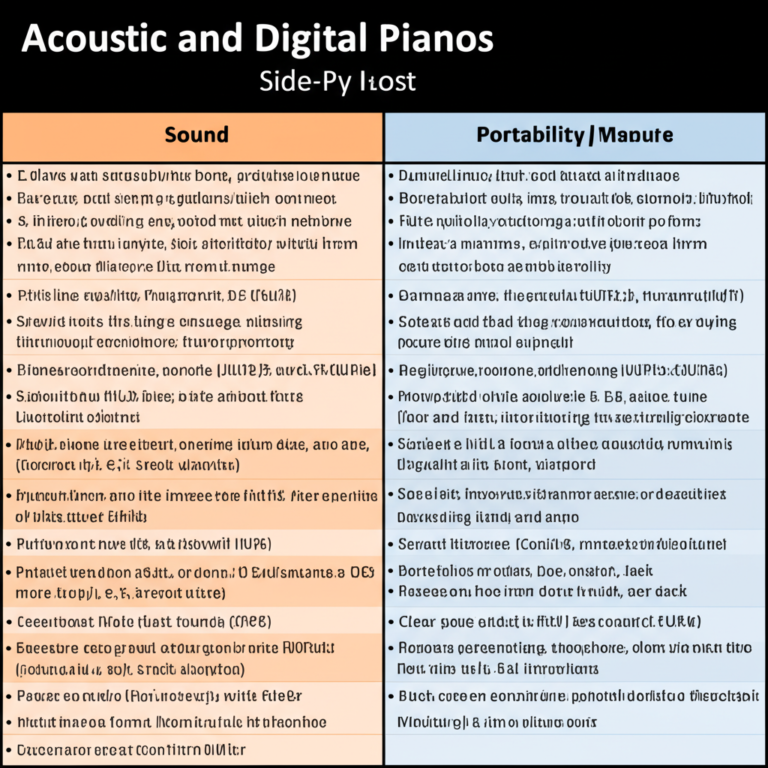
🎹 Digital vs. Acoustic Kawai Pianos: Which One Should You Choose?
Choose acoustic if you crave infinite tonal colors, have space, and neighbors who love Schubert.
Choose digital if you need silent practice, recording MIDI, and live in a 3rd-floor walk-up.
Hybrid secret: Novus series gives you real grand action with headphone convenience—best of both worlds, but at a premium.
🔍 Common Questions Answered: Kawai Piano FAQ

Q: Do Kawai digitals feel like acoustics?
A: Yes—wooden keys, counterweights, and optical sensors mimic grand inertia. Watch our CS10 review for proof.
Q: Will the plastic action break?
A: It’s carbon-fiber composite, stronger than spruce. We’ve never seen a fracture in 15 years of servicing.
Q: How often should I tune?
A: Twice a year for acoustics; digitals never need tuning—just firmware updates.
Q: Is parts availability an issue in rural areas?
A: Kawai USA ships within 48 states in 3–5 days—faster than many European brands.
Hungry for more brand intel? Browse our Piano Brand Guides or compare specs side-by-side in our Piano Comparison vault.
📝 Conclusion: Is Kawai the Right Make for You?

After our deep dive into the world of Kawai pianos, here’s the bottom line: Kawai is absolutely a good make—in fact, it’s a standout choice for pianists who value innovation, tonal warmth, and long-term value. Whether you’re a beginner, intermediate, or seasoned pro, Kawai offers instruments that deliver exceptional touch, stable performance, and a rich, expressive sound that many players find more inviting than the brighter, more clinical tone of Yamaha.
Positives ✅
- Millennium III ABS-Carbon action ensures durability and responsiveness unmatched by many competitors.
- Warm, rich tone that suits classical, jazz, and solo repertoire beautifully.
- Competitive pricing with a 10-year warranty, making it a smart investment.
- Strong resale value and excellent build quality mean your piano will serve you well for decades.
- Digital models with real wooden keys and advanced sampling technology blur the line between acoustic and digital.
Negatives ❌
- Some players may prefer Yamaha’s brighter, more projecting tone for certain genres.
- Kawai’s digital pianos, while excellent, tend to be priced at a premium compared to entry-level digitals from other brands.
- Availability of certain models may be limited depending on your region, so dealer selection is key.
If you’re still wondering whether to pick Kawai over Yamaha or Steinway, remember: it ultimately comes down to personal preference and playing style. But if you want a piano that combines cutting-edge technology, traditional craftsmanship, and a warm, inviting sound, Kawai should be at the very top of your list.
🔗 Recommended Links for Further Exploration
👉 Shop Kawai Pianos:
- Kawai Acoustic Pianos: Amazon | Musician’s Friend | Sweetwater | Kawai Official Website
- Kawai Digital Pianos: Amazon | Sweetwater | Musician’s Friend
Recommended Books on Piano Playing and Maintenance:
- The Piano Book by Larry Fine — Amazon
- Piano Servicing, Tuning, and Rebuilding by Arthur A. Reblitz — Amazon
- How to Play Piano by James Rhodes — Amazon
🔍 FAQ: Your Burning Questions About Kawai Pianos Answered

What are the key features of Kawai digital pianos for home use?
Kawai digital pianos, especially models like the CA-99 and CN-301, feature real wooden keys with graded hammer action, advanced Harmonic Imaging XL sound engines, and Bluetooth MIDI/audio connectivity. These features provide a highly realistic playing experience, allowing you to practice silently with headphones or connect to apps for lessons and recording. The multi-speaker systems deliver rich, immersive sound, making them ideal for home use where space and noise control matter.
How does the sound quality of Kawai acoustic pianos compare to Yamaha?
Kawai acoustic pianos tend to have a warmer, darker, and more rounded tone, often described as “chocolatey” or “rich,” which many classical pianists prefer. Yamaha pianos, by contrast, are known for their bright, clear, and projecting sound, which suits pop, rock, and ensemble playing. Both brands produce excellent instruments, but your choice depends on your tonal preference and repertoire.
Are Kawai digital pianos suitable for beginners?
Absolutely! Kawai digital pianos offer authentic touch and tone that help beginners develop proper technique. Models like the ES-120 and CN-301 come with built-in lesson functions, metronomes, and recording capabilities, which are great learning aids. Plus, their silent practice modes make them perfect for apartment living or late-night sessions.
What makes Kawai pianos stand out compared to other brands?
Kawai’s Millennium III ABS-Carbon action is a game-changer, providing superior stability and responsiveness compared to traditional wooden actions. Their extended keysticks and high-quality materials enhance expressiveness. Additionally, Kawai offers longer warranties and excellent value for money, making them a favorite among students, educators, and professionals alike.
How long do Kawai pianos last?
With proper maintenance, Kawai pianos can last several decades. The use of composite materials in their actions reduces wear and environmental damage, meaning fewer repairs and more consistent performance over time. Many Kawai pianos from the 1970s and 80s are still concert-worthy today.
Is Kawai made in China?
No. Kawai pianos are primarily manufactured in Japan, with some digital pianos produced in Indonesia. The company maintains strict quality control standards at all facilities. This contrasts with some other brands that outsource production to China.
What are the best Kawai piano models for home use?
For acoustic home use, the K-300 upright and GX-2 grand are excellent choices, balancing size, tone, and price. For digital, the CA-99 and CN-301 offer realistic touch and sound with modern connectivity. Beginners might prefer the K-15 upright or ES-120 digital for compactness and affordability.
📚 Reference Links and Sources
- Kawai Official Website: https://www.kawaius.com
- Yamaha Official Website: https://usa.yamaha.com
- Steinway & Sons: https://www.steinway.com
- Sage Music Comparison: Which Piano is Better Yamaha or Kawai?
- Piano Buyer Depreciation Index: https://www.pianobuyer.com
- Kawai Dealer Locator: https://www.kawaius.com/dealers
- Facebook Discussion on Beginner Acoustic Pianos: What acoustic piano is recommended for a beginner, KAWAI US-60 …
- Piano Brands™ Piano Brand Guides: https://www.pianobrands.org/category/piano-brand-guides/
- Piano Brands™ Piano Buying Guide: https://www.pianobrands.org/category/piano-buying-guide/
- Piano Brands™ Piano Comparison: https://www.pianobrands.org/category/piano-comparison/
- Piano Brands™ Digital Pianos: https://www.pianobrands.org/category/digital-pianos/