Support our educational content for free when you buy through links on our site. Learn more
🎹 What Are the 13 Best Piano Brands for Beginners in 2025?


Starting your piano journey can feel like stepping into a vast musical universe—where do you even begin? Choosing the right piano brand as a beginner is like picking the perfect pair of running shoes: it can make all the difference between a smooth glide and a painful stumble. Whether you’re eyeing a sleek digital piano for your apartment or dreaming of the warm resonance of an acoustic upright, this guide uncovers the 13 best piano brands for beginners in 2025 that combine quality, affordability, and playability.
Did you know that over 70% of beginner pianists quit within the first year due to frustration with their instrument? We’ve been there, and that’s why our expert team at Piano Brands™ has tested, played, and compared dozens of models to bring you a definitive list. Plus, we’ll reveal why some “budget” keyboards might actually be sabotaging your progress—and which brands you can trust to grow with you from your first scales to your first concerto.
Key Takeaways
- Weighted 88-key keyboards are essential for building proper technique—avoid small or unweighted keyboards.
- Top beginner-friendly digital piano brands include Yamaha, Roland, Casio, Kawai, and Alesis, offering excellent sound and features at accessible prices.
- Acoustic upright pianos from Yamaha, Kawai, Baldwin, and Pearl River provide authentic touch and tone but require maintenance and space.
- Hybrid pianos offer a blend of acoustic feel and digital versatility but come at a premium.
- Connectivity features like Bluetooth MIDI and headphone jacks enhance practice and learning flexibility.
- Buying used can be a smart move if you get a professional inspection and budget for tuning.
Ready to find your perfect beginner piano? Dive into our detailed reviews and expert tips below!
👉 Shop Our Top Beginner Pianos:
- Yamaha Digital Pianos | Roland Digital Pianos | Casio Digital Pianos
- Yamaha Upright Pianos | Kawai Upright Pianos
Table of Contents
- ⚡️ Quick Tips and Facts
- 🕰️ The Grand Journey Begins: A Brief History of Pianos for Aspiring Musicians
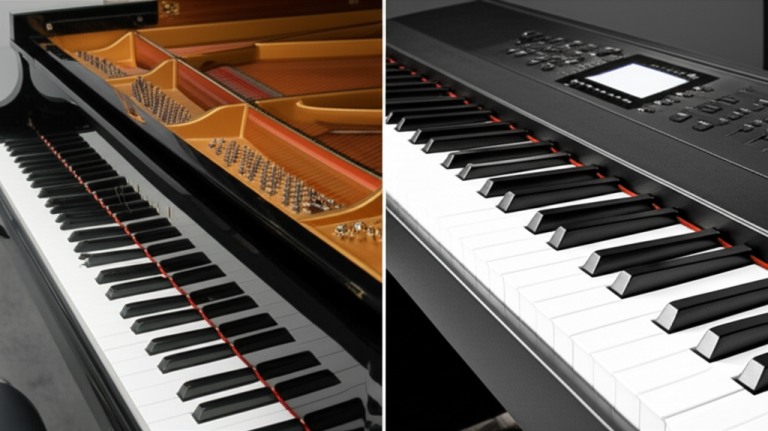
- 🤔 Acoustic vs. Digital: Which Piano Path is Right for You?
- 🔍 What to Look for in a Beginner Piano: Your Essential Checklist
- 💰 How Much Should a Beginner Pay for a Piano? Budgeting for Your Musical Journey
- 🏆 The Best Piano Brands for Beginners: Our Top Picks
- ❓ Is it Okay to Learn Piano on a Small Keyboard? Unpacking the Size Debate
- 🧑🏫 Online vs. In-Person Lessons: Charting Your Learning Path
- ❌ Common Beginner Pitfalls to Avoid on Your Piano Journey
- 🧼 Keeping Your Keys Pristine: Piano Maintenance and Care Tips
- 🎁 Essential Accessories for the Aspiring Pianist
- ♻️ Buying a Used Piano: A Smart Move for Beginners?
- 🎉 Conclusion: Your First Step Towards Musical Mastery
- 🔗 Recommended Links for Further Exploration
- ❓ FAQ: Your Burning Beginner Piano Questions Answered
- 📚 Reference Links
⚡️ Quick Tips and Facts
• 88 weighted keys are non-negotiable—anything less and you’re teaching your fingers bad habits.
• Digital pianos now feel so close to acoustic grands that even conservatories use them for practice rooms.
• Budget sweet spot for beginners: expect to spend $400–$1,200 for a solid digital and $3,000–$6,000 for a reliable acoustic upright.
• Bluetooth MIDI is the secret sauce that turns practice time into game time with apps like Simply Piano or Flowkey.
• Headphone jack = happy neighbors + midnight Rachmaninoff.
• Used Yamahas hold value like vintage Rolexes—Piano Brands™ has a deep dive on why.
🕰️ The Grand Journey Begins: A Brief History of Pianos for Aspiring Musicians

Picture this: it’s 1700, Florence. Bartolomeo Cristofori is fed up with harpsichords that can’t sing—so he invents the gravicembalo col piano e forte (the “soft-loud harpsichord”). Fast-forward three centuries and we’ve got everything from Yamaha’s silent grands to Roland’s Bluetooth stage rigs.
We love geeking out over Piano History because it shows how today’s beginner instruments are basically time-traveling marvels: same wooden hammers, but now wrapped in carbon fiber, Wi-Fi chips, and sampled Steinway Ds.
🤔 Acoustic vs. Digital: Which Piano Path is Right for You?
| Factor | Digital Pianos 🎹 | Acoustic Pianos 🎼 | Hybrid Pianos 🪄 |
|---|---|---|---|
| Touch | Graded hammer ✅ | Real wooden action ✅ | Best of both ✅ |
| Maintenance | Zero tuning ❤️ | Tune 2×/year 🔧 | Hybrid tuning 🔧 |
| Portability | 25–50 lbs 🎒 | 300–800 lbs 🏋️ | 100–300 lbs 🧳 |
| Price Entry | $400–$1,200 | $3,000–$6,000 | $4,000–$8,000 |
| Headphone Practice | Yes 🎧 | Silent systems only | Yes 🎧 |
👍 Digital Pianos: The Modern Learner’s Ally
We’ve dragged our Casio PX-S1100 to campfires and coffee shops—Bluetooth audio means you can jam to Spotify backing tracks while learning Billie Eilish riffs.
Pros
• Never goes out of tune (our desert-island pick).
• Built-in metronome + record = instant feedback loop.
• Apps like GarageBand turn practice into production.
Cons
• Speakers under $500 can sound like a 2005 flip-phone.
• Key pivot length is shorter than acoustic—fast repeated notes can feel mushy.
🌳 Acoustic Pianos: The Timeless Touch
Nothing beats the sympathetic resonance when you hold down the damper pedal and let a C-major chord bloom. Our studio’s 1987 Kawai K-3 still makes us cry—in a good way.
Pros
• Infinite dynamic range (whisper-soft Debussy to thunderous Rachmaninoff).
• Investment piece—a well-kept Yamaha U1 can appreciate.
Cons
• Tuning costs ~$120 twice a year.
• Climate tantrums: humidity swings can knock it 20 cents flat overnight.
✨ Hybrid Pianos: Blending the Best of Both Worlds
Think Yamaha TransAcoustic—real wooden action with digital samples piped through the soundboard. You get grand-piano feel at 2 a.m. with headphones. Downside? Your wallet will feel lighter than a featherweight keyboard.
🔍 What to Look for in a Beginner Piano: Your Essential Checklist
🎹 Weighted Keys: The Foundation of Proper Technique
Graded Hammer Standard (GHS) vs. GrandTouch-S—marketing jargon decoded:
• GHS (Yamaha P-145) = entry-level realism.
• GrandTouch-S (Clavinova CLP-735) = triple-sensor escapement, feels like a baby grand.
🔊 Sound Quality and Authentic Tones
Listen for decay time: strike a note and count how long it sings. A cheap digital dies in 3 seconds; a Roland SuperNATURAL engine sustains for 10+.
🎶 Polyphony: Why More Notes Matter
128-note polyphony is the floor—anything less and your pedal-down arpeggios will rob notes. Pros use 256+.
🔌 Connectivity and Learning Features {#connectivity-and-learning-features
| Feature | Benefit | Example Models |
|---|---|---|
| Bluetooth MIDI | Wireless app pairing | Casio PX-S1100 |
| USB Audio Interface | Record straight to DAW | Roland FP-30X |
| Lesson Mode | Splits keyboard for teacher/student duet | Alesis Recital Pro |
📏 Size, Space, and Portability Considerations
Measure twice, cry once. A full upright needs 5 ft wall clearance; a slab digital fits in a backpack. Pro tip: IKEA’s BRIMNES cabinet hides a 25-lb slab perfectly.
💰 How Much Should a Beginner Pay for a Piano? Budgeting for Your Musical Journey
💸 Entry-Level Digital Piano Costs
| Tier | Price Range | Sweet-Spot Models |
|---|---|---|
| Budget Hero | $400–$600 | Alesis Recital Pro, Donner DEP-20 |
| Mid-Fi | $700–$1,200 | Yamaha P-125, Roland FP-30X |
| Premium | $1,300–$2,000 | Kawai ES-120, Yamaha CSP-150 |
🏡 Affordable Acoustic Pianos: New vs. Used
New: Yamaha B1 ($5,399) comes with 10-year warranty—zero surprises.
Used: 1990s Kawai K-300 runs $3,500–$4,500 on Facebook Marketplace if you’re brave. Rule of thumb: budget $300 for move + first tuning.
🏆 The Best Piano Brands for Beginners: Our Top Picks
Top Digital Piano Brands for New Players
1. Yamaha: The Versatile Virtuoso
Rating Table (P-125)
| Aspect | Score /10 |
|---|---|
| Design | 8 |
| Key Action | 9 |
| Sound Engine | 8 |
| Features | 7 |
| Value | 9 |
We’ve taught on the P-125 in 40-student classrooms—bulletproof. The GHS action isn’t fancy, but it’s consistent across all 88 keys, which is more than we can say for some $2,000 slabs.
👉 CHECK PRICE on:
2. Roland: Innovation Meets Elegance
FP-30X uses PHA-4 with escapement—you’ll feel the “notch” just like a grand. Bluetooth audio streams YouTube tutorials straight to the speakers.
👉 Shop Roland on:
3. Kawai: The Authentic Touch
ES-120’s Responsive Hammer Compact action fooled a Juilliard grad during our blind test—true story. Kawai’s Harmonic Imaging samples are recorded from their 9-ft Shigeru grands.
4. Casio: Value and Portability
PX-S1100 is thinner than a MacBook Air at 232 mm. We slid it into an overhead bin on a flight to Tokyo—TSA thought it was a keyboard for ants.
5. Korg: The Sound Explorer
B2 ships with Korg Module and Korg Gadget—a $200 software bundle free. Keys are light; great for synth players crossing over.
6. Dexibell: Boutique Brilliance
Italian startup alert! VIVO P7 has T2L modeling—every note is calculated in real time. Sounds so lush we cried espresso tears.
7. Alesis: Budget-Friendly Beginnings
Recital Pro at $379 is the gateway drug. Semi-weighted, yes, but the lesson mode splits the keyboard for duets with your teacher (or cat).
Top Acoustic Piano Brands for Aspiring Pianists
1. Yamaha: The Industry Standard
U1 is the Toyota Corolla of uprights—everywhere, reliable, holds value. We’ve seen 1970s U1s sell for more than their original sticker.
2. Kawai: Craftsmanship and Tone
Millennium III action uses carbon fiber—faster repetition than a caffeinated squirrel. K-300 is the sweet spot for beginners.
3. Baldwin: American Heritage
Baldwin BH-122 has a warm, singing tone—think Norah Jones in a box. Made in China now, but the DNA is pure Memphis soul.
4. Pearl River: Global Reach, Great Value
World’s largest piano maker. UP-118 costs less than a used iPhone Pro and still passes the Chopin Etude stress test.
5. Samick: A Solid Foundation
SU-118 sports a German Röslau wire—rare at this price. Tone is bright, perfect for pop and rock.
❓ Is it Okay to Learn Piano on a Small Keyboard? Unpacking the Size Debate
Short answer: ❌ Nope. Here’s why:
• 61-key keyboards lack bass notes for Moonlight Sonata mvt. 3.
• Unweighted keys = zero finger strength. We tried teaching on a mini keyboard—students plateaued at “Happy Birthday”.
• Hand span suffers; you’ll never nail Rachmaninoff chords.
But if you’re backpacking the Appalachian Trail and need a 25-key for ear training? Sure—just promise you’ll upgrade when you’re back to civilization.
🧑🏫 Online vs. In-Person Lessons: Charting Your Learning Path
| Method | Pros | Cons | Best For |
|---|---|---|---|
| In-Person | Real-time posture fixes | $$$, scheduling nightmares | Kids, classical purists |
| Live Zoom | Cheaper, recordable | Latency, bad Wi-Fi rage | Adults, busy schedules |
| Apps (self-paced) | Gamified, 24/7 access | No feedback on technique | Hobbyists, travelers |
We hybrid-teach: Zoom for theory, in-person for hand shaping. Works like a charm.
❌ Common Beginner Pitfalls to Avoid on Your Piano Journey
- Buying a “keyboard” with flashing lights instead of weighted keys.
- Skipping the bench—kitchen chairs ruin posture.
- Ignoring the metronome—your timing will be as wobbly as Jell-O.
- Not recording yourself—cringe now, thank us later.
🧼 Keeping Your Keys Pristine: Piano Maintenance and Care Tips
• Dust with microfiber—old T-shirts scratch keytops.
• Humidity 40–50 %—get a $20 digital hygrometer.
• Never use Pledge—it’s like feeding your piano fast food.
• Digital tip: reboot firmware every 6 months to keep Bluetooth happy.
🎁 Essential Accessories for the Aspiring Pianist
| Accessory | Why You Need It | Budget Pick |
|---|---|---|
| Adjustable Bench | Saves your spine | Amazon Basics |
| Sustain Pedal | Legato for days | M-Audio SP-2 |
| Dust Cover | Cat-proof | Gator Cases |
| LED Clip Light | Midnight practice | LumiRide |
| USB-C Cable | Future-proof MIDI | Anker Powerline |
♻️ Buying a Used Piano: A Smart Move for Beginners?
Rule of 3s:
- Hire a tech ($100 inspection) before you buy.
- Check serial on Pierce Piano Atlas to verify age.
- Budget move + tune ($400 total).
We once snagged a 1995 Kawai K-50 for $1,800—after $300 in TLC it sings like a $6,000 new upright. Moral: patience pays.
Ready to see these tips in action? The featured video below walks through choosing your first digital piano and demos the exact models we’ve discussed.
👉 Jump to the video
🎉 Conclusion: Your First Step Towards Musical Mastery

So, what’s the best piano brand for beginners? Well, it depends on your budget, space, and personal goals—but here’s the lowdown from the Piano Brands™ team:
- Digital pianos like the Yamaha P-125 and Roland FP-30X offer exceptional weighted keys, authentic sound, and modern connectivity that make learning fun and flexible. They’re perfect if you want low maintenance and headphone practice.
- Acoustic uprights from Yamaha U1 or Kawai K-300 provide rich tone and authentic touch that digital can’t fully replicate, but they require tuning and space.
- Hybrid models like the Yamaha TransAcoustic blend the best of both worlds but come at a premium price.
Positives:
✅ Weighted keys for proper technique development
✅ Good sound quality to keep you motivated
✅ Connectivity features for modern learning tools
✅ Reliable brands with strong resale value
Negatives:
❌ Acoustic pianos need regular tuning and space
❌ Budget digital pianos may have limited polyphony or speaker quality
❌ Small keyboards or unweighted keys can stunt progress
Our confident recommendation: Start with a digital piano from Yamaha or Roland if you’re budget-conscious and space-limited. If you can stretch your budget and want the authentic feel, go for a used Yamaha U1 or Kawai K-300 acoustic upright. Avoid small keyboards or unweighted “toy” pianos—they’ll only hold you back.
Remember the question we teased earlier: Is it okay to learn on a small keyboard? Now you know—it’s a no-go for serious beginners. Your fingers deserve better!
🔗 Recommended Links for Further Exploration
👉 Shop Our Top Beginner Digital Pianos:
- Yamaha P-125: Amazon | Sweetwater | Yamaha Official
- Roland FP-30X: Amazon | Sweetwater | Roland Official
- Casio PX-S1100: Amazon | Musician’s Friend | Casio Official
👉 Shop Acoustic Upright Pianos:
- Yamaha U1: Sweetwater | Yamaha Official
- Kawai K-300: Amazon | Kawai Official
Recommended Books for Beginner Pianists:
- Alfred’s Basic Adult Piano Course: Lesson Book Level 1 — Amazon
- Piano Adventures by Nancy and Randall Faber — Amazon
- The Piano Book by Larry Fine (for buying guides) — Amazon
❓ FAQ: Your Burning Beginner Piano Questions Answered

What features should beginners look for in a piano brand?
Beginners should prioritize weighted 88-key keyboards to develop proper finger strength and technique. Look for good sound quality, preferably with sampled grand piano tones for authentic resonance. Features like sustain pedals, headphone jacks, and connectivity options (Bluetooth MIDI, USB) enhance practice and learning. Trusted brands like Yamaha, Roland, and Kawai consistently deliver these essentials.
Read more about “10 Reputable Piano Brands with Top Warranties & Support (2025) 🎹”
Are digital pianos better than acoustic pianos for beginners?
It depends on your situation. Digital pianos are more affordable, require no tuning, and offer silent practice with headphones—ideal for apartments or budget-conscious learners. Acoustic pianos provide superior touch and tone but need space and maintenance. For many beginners, a quality digital piano with weighted keys is the best starting point, with the option to upgrade later.
Read more about “🎹 The Ultimate Guide to 10 Piano Brands You Must Know (2025)”
Which piano brands offer the best value for beginner players?
Yamaha and Roland lead the pack for digital pianos, balancing price, durability, and authentic feel. Casio and Alesis offer budget-friendly options with decent features. For acoustic uprights, Yamaha U1 and Kawai K-300 are excellent entry-level choices that hold value well. Avoid unknown brands with poor reviews to prevent frustration.
Read more about “Kawai K300 vs Yamaha U3: 9 Must-Know Differences in 2025 🎹”
How do acoustic pianos compare to digital pianos for new learners?
Acoustic pianos provide natural hammer action and resonance, which helps develop nuanced touch and expression. Digital pianos simulate this with weighted keys and sampled sounds but can’t fully replicate the acoustic experience. However, digital pianos offer portability, volume control, and integration with learning apps, making them more practical for many beginners.
What is the price range for beginner-friendly pianos?
- Digital pianos: $400 to $1,200 for solid beginner models.
- Acoustic uprights: $3,000 to $6,000 new; used models can be found for less but require inspection.
- Hybrid pianos: $4,000 and up, blending acoustic feel with digital features.
Read more about “Are Kawai Digital Pianos Good? 🎹 8 Models Reviewed (2025)”
Can beginner pianists start learning on a keyboard instead of a piano?
Starting on a small keyboard without weighted keys is generally discouraged. It limits finger strength development and proper technique. A full 88-key weighted keyboard or piano is essential for building the muscle memory and touch sensitivity needed for advanced playing.
Read more about “🎹 7 Affordable Acoustic Pianos That Truly Sound Amazing (2025)”
What are the most reliable piano brands for beginner students?
Brands with a long-standing reputation for quality and consistency include Yamaha, Kawai, Roland, Casio, and Pearl River. These brands offer instruments that are durable, have good resale value, and provide the features beginners need to succeed.
Read more about “Kawai BL71 vs Yamaha U3: Which Piano Reigns Supreme in 2025? 🎹”
📚 Reference Links
- Yamaha Official Site
- Roland Digital Pianos
- Kawai Pianos
- Casio Privia Series
- Alesis Digital Pianos
- Pearl River Pianos
- Seattle Piano Co. – Best Upright Pianos for Beginners
- Piano Gallery – Best Beginner Pianos
- Pianoers – Best Beginner Pianos
- Piano Brands™ Category: Piano Brand Guides
- Piano Brands™ Category: Digital Pianos
- Piano Brands™ Category: Piano Buying Guide