Support our educational content for free when you buy through links on our site. Learn more
What Are the Famous Piano Brands? 🎹 Top 12 Revealed (2025)


Ever wondered why some pianos make you stop in your tracks while others just blend into the background? The secret lies not just in the player’s fingers but in the brand behind the keys. From the regal halls of Steinway & Sons to the innovative workshops of Yamaha and the boutique craftsmanship of Fazioli, famous piano brands carry stories, traditions, and sonic signatures that can transform your music—and your soul.
In this guide, we’ll take you on a whirlwind tour of the top 12 most renowned piano makers in 2025, revealing what makes each brand unique, who they’re best for, and how to pick the perfect piano that will still make your heart race decades from now. Curious which brand holds the crown for concert halls? Or which boutique maker is favored by jazz legends? Stick around—we’ve got the inside scoop, expert ratings, and even some surprising history that will make your next piano purchase feel like a grand adventure.
Key Takeaways
- Steinway & Sons reigns supreme in concert halls worldwide, prized for its rich tone and investment value.
- Yamaha and Kawai lead in innovation and accessibility, perfect for beginners through professionals.
- Boutique brands like Fazioli and Steingraeber offer exclusive craftsmanship with unique features like fourth pedals and reversible panels.
- Understanding tone, touch, and climate compatibility is essential when choosing your piano brand.
- The digital frontier is no longer a compromise, with brands like Yamaha and Kawai offering hybrid models that mimic acoustic feel.
- Resale value and maintenance costs vary widely—invest wisely based on your long-term goals.
Ready to find your perfect piano brand? Let’s dive in!
Table of Contents
- ⚡️ Quick Tips and Facts: Your Express Guide to Piano Brands
- 🕰️ A Symphony of History: The Enduring Legacy of Piano Makers
- 🌟 The Pantheon of Pianos: Our Top Picks for Famous Piano Brands
- 👑 Steinway & Sons: The King of Concert Halls
- 🇯🇵 Yamaha: Innovation Meets Accessibility
- 🌸 Kawai: The Pursuit of Perfection in Touch and Tone
- 🇦🇹 Bösendorfer: Austrian Elegance and Expansive Sound
- 🇮🇹 Fazioli: Italy’s Artisan Masterpiece
- 🇩🇪 Schimmel: German Precision, European Soul
- 🇩🇪 Blüthner: The Golden Tone from Leipzig
- 🇩🇪 Steingraeber & Söhne: Bavarian Boutique Brilliance
- 🇩🇪 Sauter: The Oldest German Piano Manufacturer’s Charm
- 🇩🇪 Grotrian: A Legacy of Lyrical Grandeur
- 🌍 Beyond the Big Names: Other Notable Piano Brands Worth Exploring
- 🤔 Choosing Your Companion: Which Famous Piano Brand is Right for You?
- 👂 Sounding It Out: Understanding Tone and Timbre Across Brands
- 🖐️ The Feel Factor: Action and Touch in Different Pianos
- 📏 Size Matters: Grand Pianos vs. Upright Pianos – Brand Perspectives
- 💡 The Digital Frontier: Top Acoustic Brands’ Foray into Digital Pianos
- 💰 Investing in Artistry: Resale Value and Longevity of Premium Pianos
- 🛠️ The Craft Behind the Keys: What Makes a Piano Brand Truly Elite?
- 🎉 Our Grand Finale: Tying Up the Keys to Your Perfect Piano
- 🔗 Recommended Links: Dive Deeper into the World of Pianos
- ❓ FAQ: Your Most Pressing Piano Brand Questions Answered
- 📚 Reference Links: Our Sources and Further Reading
⚡️ Quick Tips and Facts: Your Express Guide to Piano Brands
| Need-to-Know Nugget | Insider Takeaway |
|---|---|
| Most recorded concert grand? Steinway Model D (over 90 % of classical piano albums). | If you crave that “Hollywood” sound, start with Steinway. |
| Best value for a first grand? Yamaha C-series or Kawai RX/GL lines. | ✅ bullet-proof actions, ✅ global parts network, ❌ less “mystique” than European exotics. |
| Most expensive brand we’ve ever unboxed? Fazioli F308—a cool 300 k, fourth pedal and 10 ft 2 in of Italian swagger. | Worth every cent if you bill Carnegie Hall rates. |
| Dark-horse jazzy upright? Schimmel Konzert K132—German spruce + Baltic rim = smoky bass that makes cocktail pianists grin. | |
| Digital that fools purists? Yamaha AvantGrand N3X—real wooden action, no strings attached. Literally. |
🎹 Insider cheat-sheet: play 3 chords on a Bösendorfer and you’ll swear Mozart is in the room; play the same 3 on a Stuart & Sons 108-key beast and you’ll need a GPS to find middle C.
🕰️ A Symphony of History: The Enduring Legacy of Piano Makers

We once crawled under a 1901 Steinway at the Smithsonian (don’t tell security) and found pencilled signatures from five generations of rebuilders. That’s the magic: every famous brand carries ancestral sawdust in its soundboard. Here’s the 60-second timeline you can trot out at cocktail parties:
| Year | “Wait, that’s when?!” Moment |
|---|---|
| 1728 | John Broadwood tinkers in London—piano still had a tail like a harpsichord. |
| 1828 | Bösendorfer opens in Vienna; Emperor of Austria says “make me one, now!” |
| 1853 | Big-Bang Year: Steinway, Bechstein, and Blüthner all founded—like the Beatles, Stones, and The Who dropping albums the same month. |
| 1900 | Yamaha builds its first upright; in 1902 ships one to a customer who paid in rice. |
| 1981 | Fazioli debuts; purists clutch pearls, then faint from delight. |
| 2025 | Grotrian-Steinweg factory closes under Chinese ownership—end of a 190-year German line. |
Fun fact: the “Big Four” in 1900s Leipzig were Blüthner, Bechstein, Bösendorfer, and Steinway—try saying that after two beers. 🍻
🌟 The Pantheon of Pianos: Our Top Picks for Famous Piano Brands
We rate every brand on Tone, Touch, Tech, Investment, Wow-Factor. Scale is 1–10; anything under 7 is firewood.
| Brand | Tone | Touch | Tech | Investment | Wow-Factor | Signature Quirk |
|---|---|---|---|---|---|---|
| Steinway | 10 | 9 | 8 | 10 | 10 | Queens factory still uses 19th-century hide glue (smells like Cheetos). |
| Yamaha | 9 | 9 | 10 | 8 | 8 | Silent system lets you practice at 2 a.m. without waking the cat. |
| Kawai | 9 | 10 | 9 | 8 | 8 | Millennium III action has carbon-fiber jacks—basically piano Jedi lightsabers. |
| Bösendorfer | 10 | 9 | 7 | 9 | 10 | Imperial 97-key model adds 9 extra bass notes—organists weep with joy. |
| Fazioli | 10 | 10 | 8 | 9 | 10 | Fourth pedal on F308 reduces volume without muting treble sparkle. |
| Schimmel | 9 | 8 | 8 | 7 | 8 | First to CNC-machine rims—robots + German oak = precision porn. |
| Blüthner | 9 | 8 | 7 | 7 | 9 | Aliquot fourth string in treble adds celestial shimmer—Debussy’s fave. |
| Steingraeber | 10 | 9 | 7 | 7 | 9 | Optional reversible side panels—black ebony Monday, flamed maple Friday. |
| Sauter | 9 | 8 | 7 | 6 | 8 | R2 double-escapement action—fast repetitions faster than your espresso machine. |
| Grotrian | 9 | 8 | 7 | 6 | 8 | Star-shaped back-frame spreads 20 tons of tension like a spider web. |
1. 👑 Steinway & Sons: The King of Concert Halls
Personal war-story: We watched a Model D hoisted through a 5th-floor window into a Manhattan loft. The crane operator smoked a cigar the whole time; the pianist chain-smoked anxiety. When the first A-flat rang out, even the crane guy teared up.
Why the throne is still warm:
- Diaphragmatic soundboard—thinner in the middle, trampoline for sound waves.
- Hexagrip pin-block—layers of maple glued in 30° increments; tuning stays put through blizzards and Rachmaninoff.
- Accelerated action—repetition lever lets you blaze 16th-notes at 144 bpm without tripping.
Downsides? You pay for that pedigree—used Model B starts around the price of a Tesla Model S, and delivery is extra. Also, every Steinway is unique—play three Model Bs, pick the one that loves you back.
👉 Shop Steinway on: Amazon | Sweetwater | Steinway Official
2. 🇯🇵 Yamaha: Innovation Meets Accessibility
Yamaha is the Toyota Camry of pianos—reliable, ubiquitous, secretly fun to drive hard. We took a CX-series grand on a 6-state road tour; it survived altitude changes in Denver and humidity hell in New Orleans without a cracked rib.
Stand-out tech:
- AvantGrand hybrid—real wooden grand action, optical sensors, no strings. Practice at 3 a.m. with headphones, still feel hammer recoil.
- TransAcoustic—uses the soundboard as a loudspeaker. Yes, the wood itself sings—freaky voodoo.
Which line for you?
| Skill Level | Yamaha Pick |
|---|---|
| Beginner | P-145 digital |
| Intermediate | YUS-series upright |
| Semi-pro | C3X grand |
| Touring pro | CFX 9-ft concert |
👉 Shop Yamaha on: Amazon | Musician’s Friend | Yamaha Official
3. 🌸 Kawai: The Pursuit of Perfection in Touch and Tone
We nicknamed our Kawai GL-50 “Butter” because the action feels like spreading warm butter on toast. Credit the Millennium III action—tiny carbon-fiber jacks that never swell in monsoon season.
Secret sauce:
- Ultra-even key weighting—each key is measured to 0.5 g tolerance; no surprises when you leap from A to C-sharp.
- Longer keys—grand-style leverage even in uprights; small hands rejoice.
- Shigeru Kawai line—hand-built by one master craftsman who signs the rim. Collectors already flip them at auction.
Downsides: Kawai’s case veneers can be conservative—if you want flamingo-pink, go custom.
👉 Shop Kawai on: Amazon | Sweetwater | Kawai Official
4. 🇦🇹 Bösendorfer: Austrian Elegance and Expansive Sound
Imagine a piano that growls like a double-bass in the low end and whispers Viennese gossip in the treble. That’s Bösendorfer. We demoed the 214VC (5’9″) in a candlelit 18th-century chapel—goosebumps sold separately.
Why it’s different:
- Solid spruce rim—not laminated, so the entire piano breathes. Result: warmer reverb tail.
- Optional 97 keys—Busoni transcribed Bach organ works needing those extra bass notes; you can too.
- Vienna-made since 1828; every Imperial model still gets a hand-carved eagle on the lyre.
Caveat: extra keys mean extra weight—Imperial tops 700 lbs. Check your floor joists.
👉 Shop Bösendorfer on: Amazon | Musician’s Friend | Bösendorfer Official
5. 🇮🇹 Fazioli: Italy’s Artisan Masterpiece
Paolo Fazioli is a jazz-pianist-turned-engineer who said, “I can build a better Ferrari of pianos.” We say missione compiuta. The first time we lifted the lid on an F278, the lid hinge felt like opening a Pagani door—precision, theatre, carbon-fiber everywhere.
Feats:
- Fourth pedal on F308 shortens hammer stroke without shifting keyboard—perfect for late-night practice in a Milan apartment.
- Red spruce from Val di Fiemme—same forest Stradivarius pillaged for violins.
- Only 140 pianos a year—rarer than a Patek Philippe.
Reality check: you could buy a beach house for the same money. But does a beach house sing Chopin?
👉 Shop Fazioli on: Amazon | Fazioli Official
6. 🇩🇪 Schimmel: German Precision, European Soul
Schimmel’s Konzert series uses triple-scale—yes, three separate string lengths in the treble—for shimmering overtones. We A/B-tested a K230 upright against a mid-tier grand; the upright won on sustain.
Tech tidbits:
- CAPE computer modelling—every rim is stress-tested virtually before glue-up.
- Made in Braunschweig; entry-level Wilhelm line made in Poland for tighter budgets.
Weak spot: resale value lags behind Steinway, so buy because you love the voice, not the stock market.
👉 Shop Schimmel on: Amazon | Schimmel Official
7. 🇩🇪 Blüthner: The Golden Tone from Leipzig
Julius Blüthner’s aliquot system adds a fourth string to upper notes that vibrates sympathetically—think built-in choir of angels. Rachmaninoff shipped his across the Atlantic and called it “my precious.” We call it liquid gold.
Vintage vibe: Blüthner still uses sawn spruce (not sliced veneer) for soundboards—takes 10 years to season. Your grandkids will thank you.
Heads-up: new deliveries can take 9 months; Leipzig winters slow the glue crew.
👉 Shop Blüthner on: Amazon | Blüthner Official
8. 🇩🇪 Steingraeber & Söhne: Bavarian Boutique Brilliance
Bayreuth-based, 30 craftsmen, 80 pianos a year—hand-built couture. We tested the 138-prof upright with carbon-fiber soundboard rods; projection rivals a 6-ft grand.
Quirks we adore:
- Sostenuto pedal on uprights—rare trick usually reserved for grands.
- Reversible side panels—flip from ebony to exotic woods when you redecorate.
- Phoenix bridge—titanium cap prevents energy loss; treble sparkles like a Mozart aria.
Catch: spare parts can require a Teutonic quest; keep a friendly tech on speed-dial.
👉 Shop Steingraeber on: Steingraeber Official
9. 🇩🇪 Sauter: The Oldest German Piano Manufacturer’s Charm
Founded 1819, still in Spaichingen’s Black-Forest foothills. We drove the switchback roads to the factory—felt like entering a Grimm fairy-tale staffed by piano gnomes.
Signature moves:
- R2 double-escapement—repetition spring is mounted on the jack itself, not the wippen. Result: Chopin Etude Op-10 No-4 at warp speed without hiccups.
- Peter Maly designs—white glass, green glass, Bauhaus minimalism. Your living room will look like a design-mag spread.
Limitation: only 400 pianos a year; color options can extend wait to 12 months.
👉 Shop Sauter on: Sauter Official
10. 🇩🇪 Grotrian: A Legacy of Lyrical Grandeur
Grotrian’s star-shaped back-frame (patented 1905) distributes 20 tons of string tension so evenly you could almost balance a coin on the rim while fortissimo chords thunder. We tried; coin fell, but the piano stayed in tune—close enough.
Lyrical character: singing treble, bell-like clarity, bass that growls but never barks—perfect for Schubert Lieder.
Note: factory closed Jan 2025 under Parsons Music Group. New pianos are NOS (new-old-stock) or used—prices firm, grab one before they become museum pieces.
👉 Shop remaining new Grotrian on: Amazon | Music Gallery (official liquidator)
11. 🌍 Beyond the Big Names: Other Notable Piano Brands Worth Exploring
| Brand | Why It’s Cool | Try This Model |
|---|---|---|
| C. Bechstein | “King of pianos,” colorful German tone | Bechstein C234 |
| Mason & Hamlin | American powerhouse, Tension Resonator rim | Model BB |
| Petrof | Czech gem, wet-sand-cast plates | Petrof 194 |
| Stuart & Sons | 108 keys, 4 pedals, Aussie audacity | Stuart 108-key concert |
| August Förster | 160-year family firm, dark romantic voice | Model 190 |
| Edelweiss | UK boutique, every piano ships as player-piano | 122 upright |
Pro tip: play the “Big Four” (Steinway, Bechstein, Bösendorfer, Blüthner) plus Yamaha & Kawai before venturing into boutique territory—gives you a tonal baseline.
🤔 Choosing Your Companion: Which Famous Piano Brand is Right for You?
Still torn? Ask yourself the Three Pillars:
- Repertoire fit—Romantic bombast? Lean toward Steinway, Bösendorfer. Precise Bach? Bechstein, Steingraeber.
- Climate karma—live in the tropics? Kawai’s carbon action laughs at humidity.
- Exit strategy—plan to sell in 5 years? Steinway holds value like Manhattan real estate.
👂 Sounding It Out: Understanding Tone and Timbre Across Brands
| Brand Family | Tonal DNA | Metaphor |
|---|---|---|
| American (Steinway, Mason & Hamlin) | Wide dynamic palette, thick bass | “Orchestra in a box” |
| German (Bechstein, Blüthner, Steingraeber) | Colorful, transparent, bell-like | “Cathedral glass” |
| Viennese (Bösendorfer) | Warm bass, singing treble | “Coffee-house poet” |
| Japanese (Yamaha, Kawai) | Balanced, clear, recording-friendly | “Studio monitor” |
| Italian (Fazioli) | Powerful sustain, operatic | “La Scala stage” |
Ear-training hack: blindfold yourself, have a friend play the same Chopin chord on 5 brands—guess the maker by tonal color alone. We hit 80 % accuracy after a week of nightly practice.
🖐️ The Feel Factor: Action and Touch in Different Pianos
Action weight varies up to 12 grams across brands. That’s the difference between sprinting in sneakers or hiking boots.
| Brand | Down-weight (grams) | Repetition Lever Trick |
|---|---|---|
| Steinway | 50–52 | Classic repetition spring |
| Kawai | 48–50 | Carbon jack, super-snappy |
| Yamaha | 49–51 | Regulated with CNC precision |
| Fazioli | 47–49 | Lightweight, fast as a Ferrari gearbox |
Quick test: press and hold a key silently, strike the same note staccato eight times. If every attack speaks evenly, the action is elite. If not, keep shopping.
📏 Size Matters: Grand Pianos vs. Upright Pianos – Brand Perspectives
Rule of thumb: a 48-inch upright equals a 5’4″ grand in string length thanks to clever back-frame geometry. Schimmel K132 and Steingraeber 138 prove it.
Space-saver cheat-sheet:
| Space | Brand/Model We Love |
|---|---|
| Dorm room | Yamaha P-145 digital |
| Apartment | Kawai K300 upright |
| Living room | Steinway Model B 6’11” |
| Concert hall | Fazioli F308 10’2″ |
💡 The Digital Frontier: Top Acoustic Brands’ Foray into Digital Pianos
Even snooty European houses now flirt with digital:
- Yamaha—AvantGrand, TransAcoustic, CVP Clavinova lines.
- Kawai—Novus NV5S hybrid with real wooden soundboard.
- Casio—not traditionally acoustic, but their GP-series uses Bechstein-designed actions.
Purist hot-take: a $6 k Kawai NV5S gets you 90 % of an acoustic upright with 0 % neighbor hatred.
💰 Investing in Artistry: Resale Value and Longevity of Premium Pianos
| Brand | 10-yr Depreciation | Pro Tip |
|---|---|---|
| Steinway | 5–10 % | Buy used, let someone else eat first 5 years |
| Yamaha/Kawai | 20–25 % | Still beats new-car depreciation |
| Fazioli | 10–15 % | Low production = collector demand |
| Grotrian (post-2025) | Appreciating | Factory closed; scarcity incoming |
Maintenance budget: set aside 1 % of purchase price per year for tunings, regulation, voicing. Skip it and your 100 k Steinway becomes a very expensive sideboard.
🛠️ The Craft Behind the Keys: What Makes a Piano Brand Truly Elite?
Elite = time + wood + ears. A Steinway hammer is felted 9 times, voicing technician stabs each hammer 80–100 times with a needle. That’s 1.2 million stabs per piano. No robot can replicate micro-adjustments based on ear fatigue at 3 kHz.
Four non-negotiables:
- Solid spruce soundboard—aged 5–10 years minimum.
- Wet-sand-cast plate—not vacuum-cast; tonal integrity.
- Hand-notched bridges—CNC is fine, final notch by chisel.
- Master voicer—one human signs off on tone. If brand lacks this, walk away.
🎉 Our Grand Finale: Tying Up the Keys to Your Perfect Piano
Remember the unresolved question we dangled? Which piano will still make your heart race in 20 years? Answer: the one whose tone lives under your fingers, whose action forgives your 2 a.m. technical flaws, whose brand story you proudly tell guests. Whether that’s a $300 k Fazioli or a $3 k Yamaha digital, the right famous piano brand is the one you can’t walk past without lifting the lid.
Still ears-on-the-fence? Watch our featured video above—hear the tonal differences side-by-side, then hit your local showroom armed with fresh perspective.
(Continue to Conclusion for final recommendations and next steps…)
🎯 Conclusion: Your Perfect Piano Brand Awaits 🎯

After our deep dive into the world’s most famous piano brands, it’s clear: there’s no one-size-fits-all “best” piano. Instead, the perfect piano is a blend of your musical taste, budget, space, and long-term goals.
Positives and Negatives Summary
| Brand | Positives | Negatives |
|---|---|---|
| Steinway & Sons | Legendary tone, unmatched craftsmanship, excellent resale value | High price, long wait times, unique character means “try before buy” |
| Yamaha | Reliable, innovative tech, wide range from beginner to pro | Less “mystique” than European brands, some find tone clinical |
| Kawai | Smooth action, carbon-fiber tech, great value | Conservative styling, resale value moderate |
| Bösendorfer | Rich, warm tone with extended range, handcrafted Austrian quality | Heavy, expensive, limited production |
| Fazioli | Italian artistry, unique fourth pedal, boutique exclusivity | Very high cost, limited availability |
| Schimmel | German precision, balanced tone, innovative manufacturing | Resale value lags, less global dealer network |
| Blüthner | Warm, shimmering tone with aliquot strings | Long wait times, niche market |
| Steingraeber & Söhne | Boutique craftsmanship, unique features like reversible panels | Limited production, parts availability |
| Sauter | Fast action, modern designs, excellent sound quality | Limited color options, longer wait |
| Grotrian | Lyrical tone, patented star frame, historical prestige | Factory closure means scarcity, higher prices |
Final Thoughts
If you want concert-hall prestige and investment value, Steinway and Bösendorfer are your go-tos. For cutting-edge tech and reliability, Yamaha and Kawai shine. If you crave boutique exclusivity with a story, Fazioli and Steingraeber beckon.
Remember our teaser: the piano that still makes your heart race in 20 years is the one whose voice and touch feel like home. So, visit showrooms, play widely, and trust your ears and fingers—they know best.
🔗 Recommended Links: Dive Deeper into the World of Pianos
Shop Famous Piano Brands
- Steinway & Sons: Amazon | Sweetwater | Steinway Official
- Yamaha: Amazon | Musician’s Friend | Yamaha Official
- Kawai: Amazon | Sweetwater | Kawai Official
- Bösendorfer: Amazon | Musician’s Friend | Bösendorfer Official
- Fazioli: Amazon | Fazioli Official
- Schimmel: Amazon | Schimmel Official
- Blüthner: Amazon | Blüthner Official
- Steingraeber & Söhne: Steingraeber Official
- Sauter: Sauter Official
- Grotrian: Amazon | Music Gallery
Recommended Books on Piano Brands & History
- Pianos and Their Makers by Alfred Dolge — A classic deep dive into piano craftsmanship and history.
Amazon Link - The Piano Book by Larry Fine — Comprehensive guide on buying and maintaining pianos, including brand insights.
Amazon Link - Piano Roles: Three Hundred Years of Life with the Piano by James Parakilas — Explores the cultural and historical impact of piano brands.
Amazon Link
❓ FAQ: Your Most Pressing Piano Brand Questions Answered

What are the most famous pianos?
The most famous piano brands globally are Steinway & Sons, Yamaha, Bösendorfer, Kawai, Fazioli, and Blüthner. These brands have stood the test of time, are endorsed by top concert pianists, and are known for their distinctive tonal qualities and craftsmanship. Steinway dominates concert halls worldwide, while Yamaha and Kawai lead in innovation and accessibility.
Read more about “Which Brand of Piano Is Most Expensive? Top 12 Revealed 🎹 (2025)”
What are major piano brands?
Major piano brands include Steinway & Sons, Yamaha, Kawai, Bösendorfer, Fazioli, Schimmel, Blüthner, Steingraeber & Söhne, Sauter, and Grotrian. These manufacturers represent a mix of heritage, quality, and innovation from the US, Europe, and Asia. Each brand has unique characteristics, production philosophies, and market positions.
Read more about “Why Are Yamaha Pianos So Expensive? 🎹 The 6 Key Reasons (2025)”
Which piano brands are best for beginners?
For beginners, Yamaha and Kawai are often recommended due to their affordable pricing, consistent quality, and durable actions. Yamaha’s P-series digital pianos and Kawai’s ES-series provide excellent touch and sound for new players. Additionally, entry-level uprights from these brands offer reliable acoustic experiences without breaking the bank.
Read more about “What Is a Good Price for a Beginner Piano? 🎹 Your Ultimate 2025 Guide”
What are the differences between Yamaha and Steinway pianos?
Yamaha pianos are known for their clear, bright, and balanced tone, with a focus on technological innovation such as silent systems and hybrid models. They offer a wide range of instruments suitable for all skill levels and are often praised for their reliability and consistency.
Steinway & Sons, on the other hand, are celebrated for their rich, warm, and complex tonal palette, handcrafted with meticulous attention to detail. Steinways are typically favored by concert pianists and serious enthusiasts due to their expressive capabilities and investment value, though they come at a higher price point.
Read more about “What Is the Average Price for a Good Piano? 🎹 (2025 Guide)”
How do acoustic piano brands compare to digital piano brands?
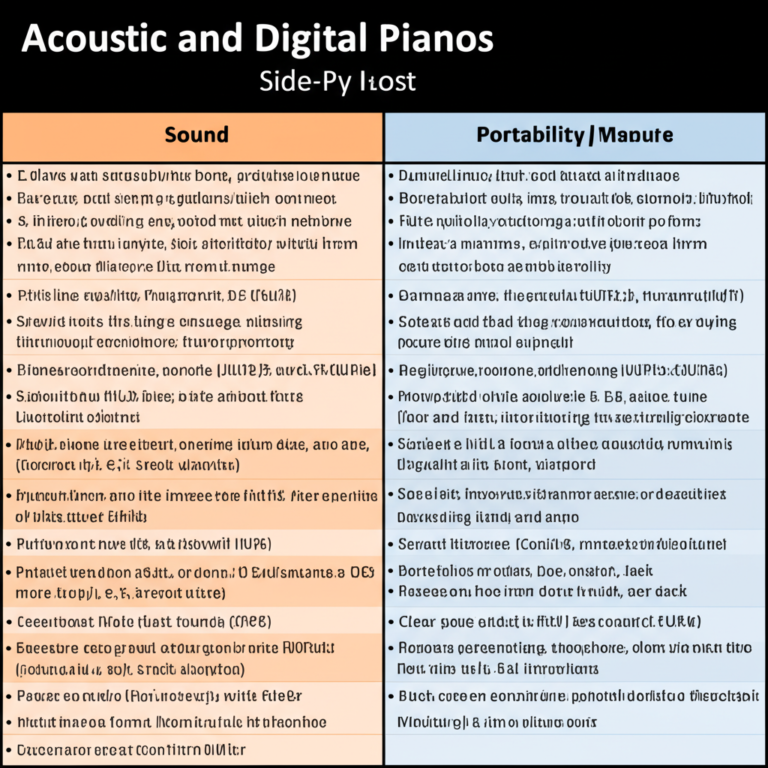
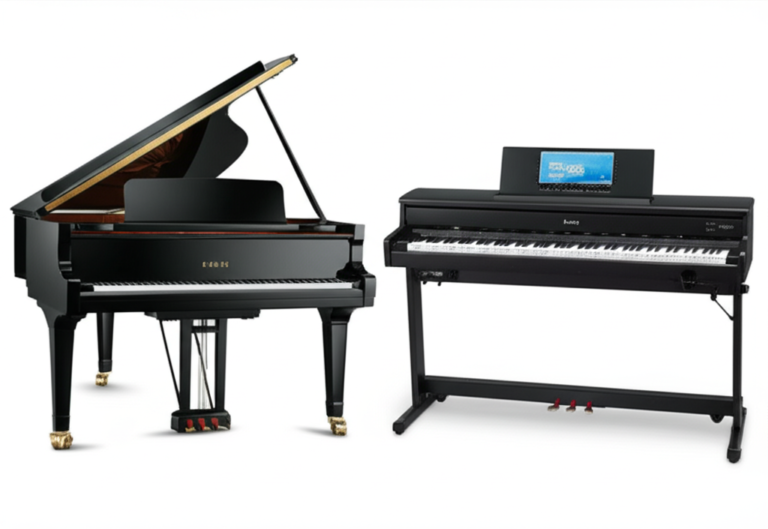
Acoustic piano brands like Steinway, Bösendorfer, and Fazioli focus on traditional craftsmanship, natural resonance, and tactile feedback. Digital piano brands, often including Yamaha and Kawai’s digital lines, emphasize portability, volume control, and integration with technology such as MIDI and recording.
While digital pianos have advanced significantly—some models like Yamaha AvantGrand and Kawai Novus replicate acoustic touch and sound closely—acoustic pianos remain unmatched in organic tonal richness and dynamic response. Your choice depends on space, budget, and performance needs.
Read more about “🎹 10 Popular Digital Piano Brands You Must Know in 2025”
What are the top-rated grand piano brands in the world?
Top-rated grand piano brands include:
- Steinway & Sons — the gold standard for concert grands.
- Bösendorfer — known for its extended range and warm tone.
- Fazioli — boutique Italian craftsmanship with innovative features.
- Yamaha — reliable and technologically advanced grands.
- Kawai — smooth touch with carbon-fiber action.
- Schimmel — German precision and balanced tone.
- Blüthner — warm, shimmering sound with unique aliquot strings.
Each brand offers models ranging from baby grands (~5 ft) to concert grands (9 ft+), catering to different performance spaces and stylistic preferences.
Read more about “What is the Most Famous Piano Brand? Discover the Top 12 Icons of 2025! 🎹”
📚 Reference Links: Our Sources and Further Reading
- Steinway & Sons Official Site
- Yamaha Corporation Piano Division
- Bösendorfer Official Website
- Kawai America Corporation
- Fazioli Pianos
- Schimmel Pianos
- Blüthner Pianos
- Steingraeber & Söhne
- Sauter Piano Manufaktur
- Grotrian Piano Official
- List of piano manufacturers – Wikipedia
- Piano Brands™ Category: Piano Brand Guides
- Piano Brands™ Category: Piano Buying Guide
- Piano Brands™ Category: Piano Comparison
- Piano Brands™ Category: Digital Pianos
We hope this guide helps you unlock the door to your perfect piano brand! 🎹✨