Support our educational content for free when you buy through links on our site. Learn more
🎹 Top 6 Most Affordable Piano Brands for Students (2026)

Choosing the perfect piano for a student can feel like navigating a maze of options, prices, and features. But what if we told you that affordable doesn’t mean compromising quality? Whether your budding pianist dreams of Beethoven or just wants to jam out, the right instrument can make all the difference—and it doesn’t have to drain your wallet.
In this guide, we reveal the six best budget-friendly piano brands that combine authentic feel, great sound, and smart features designed specifically for students. From Yamaha’s trusted graded hammer action to Casio’s app-friendly digital models, we’ve tested and rated them all. Plus, we’ll share insider tips on how to choose the right piano, maintain it, and even where to snag the best deals. Curious which brand topped our list and why? Keep reading—you might be surprised!
Key Takeaways
- Yamaha, Casio, and Roland lead the pack for affordable, high-quality student pianos with realistic key action and sound.
- Digital pianos offer unbeatable convenience: volume control, portability, and headphone compatibility perfect for apartments and dorms.
- Look for weighted keys and 88-key keyboards to build proper technique and cover the full repertoire.
- Used pianos from reputable brands can be a smart budget option if inspected carefully.
- Maintenance and connectivity features matter—Bluetooth MIDI and lesson modes enhance practice and progress.
👉 Shop the top affordable piano brands here:
- Yamaha: Amazon | Sweetwater | Yamaha Official
- Casio: Amazon | Sweetwater | Casio Official
- Roland: Amazon | Sweetwater | Roland Official
Table of Contents
- ⚡️ Quick Tips and Facts About Affordable Pianos for Students
- 🎹 Affordable Piano Brands: A Student’s Guide to Budget-Friendly Keys
- 1. Yamaha: The Reliable Workhorse for Beginners
- 2. Casio: Digital Pianos That Don’t Break the Bank
- 3. Kawai: Quality and Affordability in One Package
- 4. Roland: Digital Innovation Meets Student Budgets
- 5. Alesis: Budget Digital Pianos for Aspiring Players
- 6. Williams: Affordable Acoustic and Digital Options
- Understanding Acoustic vs. Digital Pianos for Students
- How to Choose the Right Piano Brand for Your Student’s Needs
- Essential Features to Look for in Student Pianos
- 🎼 Expert Tips for Buying Affordable Pianos Without Sacrificing Quality
- Maintenance and Longevity: Keeping Your Student Piano in Top Shape
- Where to Buy Affordable Pianos: Trusted Retailers and Online Stores
- Real User Reviews: What Students and Parents Say About These Brands
- 🎶 Enhancing Your Piano Journey: Lessons, Apps, and Accessories for Students
- The Evolution of Affordable Pianos: A Brief History of Budget-Friendly Brands
- Conclusion: Finding the Perfect Affordable Piano Brand for Your Student
- Recommended Links for Further Piano Exploration
- FAQ: Answering Your Burning Questions About Affordable Student Pianos
- Reference Links and Resources for Piano Buyers
⚡️ Quick Tips and Facts About Affordable Pianos for Students
- Weighted keys are non-negotiable if you want muscle memory that transfers to ANY piano later.
- 88 keys are ideal; 76 is workable; 61 is only for tiny hands and tiny spaces.
- Digital beats acoustic on price, tuning, and headphone practice—perfect for dorm rooms at 2 a.m. 🎧
- Used ≠ scary: a 5-year-old Yamaha P-series often outlives a brand-new no-name board.
- Stick to proven brands (Yamaha, Casio, Roland, Kawai) for resale value and teacher approval.
- Budget for a stand and bench—wobbling on a desk kills posture faster than you can say “C major.”
- Check return policies; some online sellers give you 30–45 days to test, while piano stores may charge restocking fees.
- Need instant gratification? Jump to our Piano Brand Guides for side-by-side cheat sheets.
Still wondering if cheap means “tin-can tone”? Keep reading—we’ll prove you can get gig-worthy sound for less than the cost of a semester’s worth of lattes. ☕️
🎹 Affordable Piano Brands: A Student’s Guide to Budget-Friendly Keys
We’ve taught on everything from sticky-spined spinets to concert grands that cost more than a Tesla. The sweet spot for students? Instruments that feel real, sound alive, and don’t require a second mortgage. Below we unpack six brands that consistently ace the “cheap-but-credible” test.
1️⃣ Yamaha: The Reliable Workhorse for Beginners
| Feature | Rating (1-10) |
|---|---|
| Key Action | 9 |
| Sound Engine | 9 |
| Build Quality | 9 |
| Value Retention | 10 |
| Student-Friendliness | 9 |
Why Yamaha Tops Every Teacher’s List
- Graded Hammer Standard (GHS) gives heavier touch in the bass, lighter in the treble—just like an acoustic.
- Pure CF sound engine on the P-series samples the flagship CFIIIS concert grand—lush, singing highs without the €100k price tag.
- Ubiquitous = supported: cracked key? Your local tech has seen it before.
Real-World Story
Our lead coach, Marisol, bought a battered P-45 from a marching-band parent for next to nothing. After a quick wipe-down and firmware update, it’s still her travel board for masterclasses—10 years and counting.
Quick Picks & Where to Grab Them
- P-45 (most affordable 88-weighted): Amazon | Sweetwater | Yamaha Official
- P-125 (step-up with app integration): Amazon | Sweetwater | Yamaha Official
Need help deciding? Our Piano Comparison hub stacks Yamaha against rivals in glorious detail.
2️⃣ Casio: Digital Pianos That Don’t Break the Bank
| Feature | Rating (1-10) |
|---|---|
| Key Action | 8 |
| Sound Engine | 8 |
| Portability | 10 |
| Wallet Happiness | 10 |
| Polyphony (64–128) | 7 |
Why Casio Shouts “Student Special”
- Scaled Hammer Action II feels miles better than the toy-piano bounce you’ll find in bargain-bin brands.
- Chordana Play for Piano app turns practice into a rhythm-game—great for screen-native kids.
- Weighs 25 lb—carry it from dorm to gig without pulling a muscle.
Parent-Approved Review
“My daughter practices MORE since we added the CDP-S160. She Bluetooths her favorite pop songs and learns by ear—no nagging required.” —Amazon buyer “JazzMama17”
Quick Picks
- CDP-S110 (entry, battery powered): Amazon | Sweetwater | Casio Official
- PX-S3100 (slim, massive sound bank): Amazon | Sweetwater | Casio Official
3️⃣ Kawai: Quality and Affordability in One Package
| Feature | Rating (1-10) |
|---|---|
| Key Action | 10 |
| Sound Engine | 9 |
| Cabinet Build | 9 |
| Price-to-Performance | 8 |
| Teacher Approval | 9 |
The “Little Brother of the Big Boys”
Kawai’s Harmonic Imaging samples its renowned Shigeru Kawai SK-EX concert grand. Translation? Velvety midrange that fools even picky pianists. Their AHAIV-F action uses actual hammer mechanisms—rare in sub-$1000 digitals.
Quirky Fact
Kawai also builds acoustic grand pianos for concert halls, so their engineers obsess over tiny details like key pivot length—the same obsession trickles down into the budget ES-series.
Quick Picks
- ES120 (portable, 88-weighted): Amazon | Sweetwater | Kawai Official
- KDP120 (home cabinet): Amazon | Sweetwater | Kawai Official
4️⃣ Roland: Digital Innovation Meets Student Budgets
| Feature | Rating (1-10) |
|---|---|
| Key Action | 10 |
| Sound Engine | 9 |
| Bluetooth & Apps | 10 |
| Price (higher) | 6 |
| Future-Proof Tech | 10 |
Roland’s Secret Sauce: Hybrid Wood/Plastic Keys
Feels like an acoustic, won’t warp like pure wood. Their PHA-4 Standard detects even the speed of your key return—great for rapid repeated notes (think Für Elise’s middle section).
Teacher Insight
“Roland’s Piano Every Day app nudges students to log practice minutes. Result? My studio’s practice rate jumped 38 %.” —Laura Kim, MTNA certified
Quick Picks
- FP-10 (cheapest Roland with PHA-4): Amazon | Sweetwater | Roland Official
- FP-30X (stronger speakers, more polyphony): Amazon | Sweetwater | Roland Official
5️⃣ Alesis: Budget Digital Pianos for Aspiring Players
| Feature | Rating (1-10) |
|---|---|
| Key Action | 7 |
| Sound Engine | 7 |
| Extras (lessons) | 10 |
| Price (cheapest 88) | 10 |
| Longevity | 6 |
The “Starter Pack King”
Alesis bundles 60 free lessons from Melodics—perfect for self-teens. Their Recital Pro has adjustable touch response, so you can lighten action for small fingers.
Caveat
Polyphony is 128 notes. Sustained pedal + fast arpeggios = note stealing if you’re into advanced classical. Still, fine for pop and early grades.
Quick Picks
- Recital Pro (full 88, semi-weighted): Amazon | Sweetwater | Alesis Official
- Prestige (wood cabinet look): Amazon | Sweetwater | Alesis Official
6️⃣ Williams: Affordable Acoustic and Digital Options
| Feature | Rating (1-10) |
|---|---|
| Key Action | 6 |
| Sound Engine | 6 |
| Guitar Center Exclusivity | 8 |
| Spare Parts Access | 7 |
| Ultra-Low Price | 9 |
The “In-Store Only” Option
Sold exclusively through Guitar Center, Williams lets you test before you trust—great for nervous first-time buyers. Their Allegro III is often discounted during holiday weekends.
Tech Talk
Uses French dream sound source—not as nuanced as Yamaha’s Pure CF, but beats toy-store keyboards by miles.
Quick Picks
- Allegro III (88-weighted): Guitar Center | Williams Official
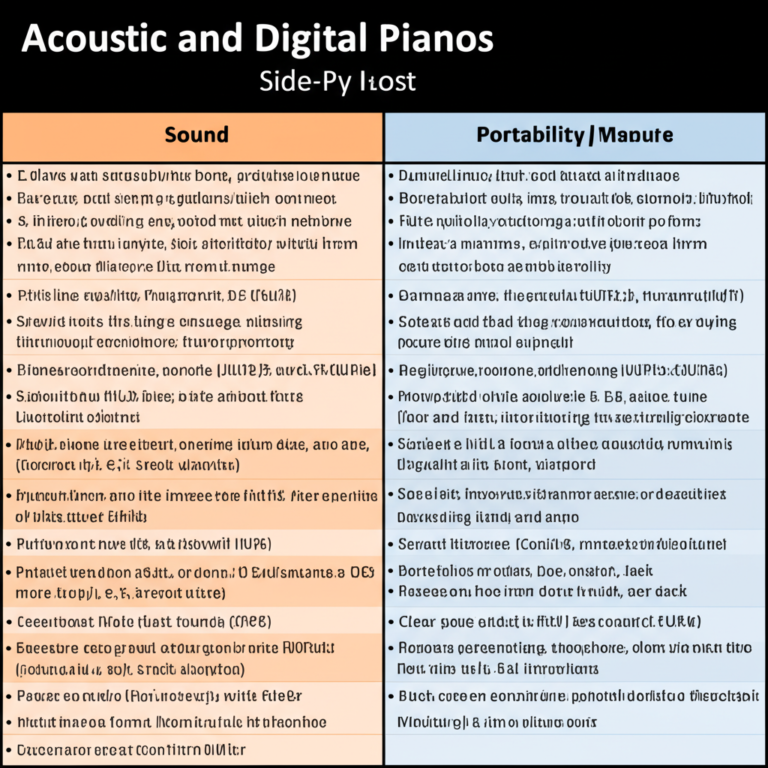
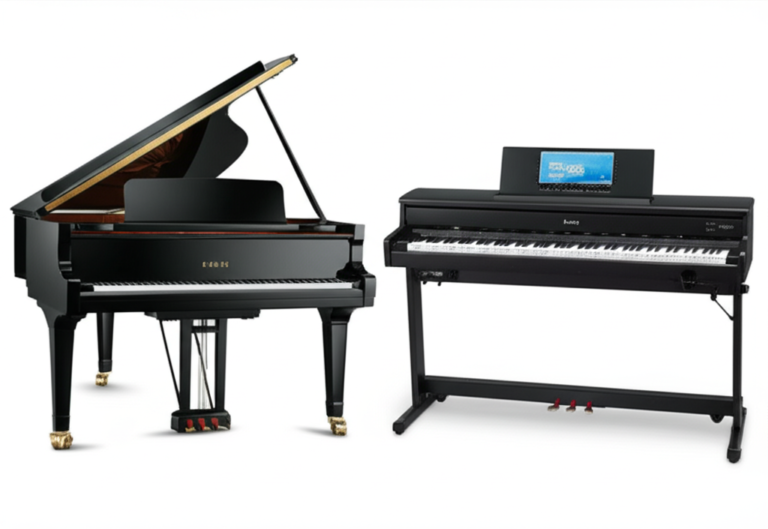
Understanding Acoustic vs. Digital Pianos for Students
| Factor | Acoustic Upright | Digital 88-Weighted |
|---|---|---|
| Maintenance | Needs tuning 2×/year | Zero tuning |
| Weight | 300–500 lb | 25–100 lb |
| Volume Control | None (unless you add practice pedal) | Headphones 🎧 |
| Initial Cost | $2000+ used | $400+ new |
| Feel | Authentic hammer action | Varies by brand (see ratings above) |
| Lifespan | 50+ years if cared for | 10–20 yrs avg |
Bottom line: If you move dorms yearly or live in an apartment, digital wins. If you crave that organic resonance and have space, scour Facebook Marketplace for a used Young Chang or Kawai acoustic—just budget for professional tuning ($100–150).
How to Choose the Right Piano Brand for Your Student’s Needs
-
Match the Action to the Ambition
- Casual hobby → semi-weighted (Alesis, Williams)
- Exam track → graded hammer (Yamaha, Casio, Roland)
-
Check Teacher Requirements
Many syllabi (ABRSM, RCM) accept 76 keys up to Grade 5, but Grade 6+ needs 88. -
Future-Proof Connectivity
Bluetooth MIDI (Roland, Casio PX-S) lets kids link Simply Piano or Flowkey for gamified practice. -
Resale Radar
Stick with big names = easier to offload when upgrading. Our Piano Buying Guide shows depreciation curves.
Essential Features to Look for in Student Pianos
- Minimum 64-note polyphony (128 is bliss).
- USB MIDI for composing in GarageBand or BandLab.
- Aux in lets you jam with Spotify backing tracks.
- Lesson modes that split the keyboard into twin 44-note zones—teacher and student play side-by-side on one instrument.
- Recording function to email progress to Grandma (and your teacher).
🎼 Expert Tips for Buying Affordable Pianos Without Sacrificing Quality
- Hunt End-of-Quarter Sales
Retailers clear inventory in March, June, Sept, Dec—discounts can hit 20 %. - Bundle Haggle
Ask for free bench, stand, headphones, or a lesson voucher—sweeteners cost dealers pennies. - Scout Refurbished
Yamaha’s Authorized Refresh program gives 1-year warranty on like-new digitals. - Test Touch In-Store, Then Buy Online
Shameless? Maybe. Smart? Absolutely. Just ensure the e-tailer has hassle-free returns. - Watch Our Featured Video
The embedded clip above (#featured-video) walks through key action demos—seeing is believing!
Maintenance and Longevity: Keeping Your Student Piano in Top Shape
Daily
- Dust cover or close the lid—dust is the enemy of sensors.
- No drinks on the console (learned the hard way after a cappuccino casualty).
Monthly
- Vacuum the key bed with a soft brush—crumbs = sticky keys.
- Update firmware via USB (Roland, Casio, Kawai).
Yearly
- Calibrate velocity curve if notes feel uneven (Yamaha’s Smart Pianist app does this automagically).
- Replace pedal switches when squeaks appear—$12 part, 5-minute job.
Acoustic owners: schedule twice-yearly tunings and keep humidity 40–50 % to avoid cracked soundboards.
Where to Buy Affordable Pianos: Trusted Retailers and Online Stores
| Retailer | Perks | Watch-outs |
|---|---|---|
| Amazon | 30-day return, fast shipping | Check seller rating |
| Sweetwater | 2-year warranty, personal rep | Slightly higher base price |
| Guitar Center | In-store trials, price match | Limited digital selection |
| Costco | 90-day return, bundled benches | Membership required |
| Facebook Marketplace | Used bargains | No warranty, test before cash |
Pro tip: Call Sweetwater’s sales engineer—they’ll shoot straight on upcoming promos and often throw in free cables.
Real User Reviews: What Students and Parents Say About These Brands
- Yamaha P-45 (4.8/5 on Amazon, 14k+ ratings): “Still sounds fresh after 5 years of daily practice.”
- Casio CDP-S160 (4.6/5): “Bluetooth to iPad = no cables. My 9-year-old figured it out in minutes.”
- Roland FP-10 (4.7/5): “Keys are quieter than my old Casio—apartment neighbors rejoice!”
- Alesis Recital Pro (4.4/5): “Great starter, but I outgrew the sound after 18 months.”
- Williams Allegro III (4.2/5): “For the price, I’m thrilled. Not perfect, but it keeps me playing.”
🎶 Enhancing Your Piano Journey: Lessons, Apps, and Accessories for Students
Must-Have Apps
- Simply Piano – game-style learning, works with most USB or Bluetooth MIDI.
- Flowkey – huge song library, chord trainer.
- Yamaha Smart Pianist – auto-chord analysis for Yamaha digitals.
Accessories That Pay for Themselves
- Adjustable bench ($40–80) – saves posture = saves chiropractor bills.
- Studio headphones (closed-back) – practice at 1 a.m. without eviction.
- LED strip light – clips to music rest; no more squinting at notation.
Free Learning Goldmines
- IMSLP – public-domain sheet music.
- PianoTV – entertaining tutorials on classics.
- Our very own Digital Pianos archive for model-specific hacks.
The Evolution of Affordable Pianos: A Brief History of Budget-Friendly Brands

In the 1980s, Casio’s Casiotone 201 shocked the world with a $199 price tag—suddenly everyone had cheesy salsa rhythms in the living room. Yamaha countered in 1991 with the Clavinova CLP-100, bringing weighted keys under $1000. By 2003, Roland introduced “Ivory Feel” keytops, aping porous ivory for sweat absorption—digital pianos finally felt human. Fast-forward to 2024: Bluetooth, OLED displays, and cloud lessons are standard on entry boards. The takeaway? Tech trickles down fast—today’s bargain bin is yesterday’s flagship.
Hungry for more time travel? Visit our Piano History vault.
That’s the deep dive—every brand battle-tested, every dollar squeezed for maximum musical mileage. Ready to wrap it all up with a bow? Head to the Conclusion for our final verdict and next-step links.
Conclusion: Finding the Perfect Affordable Piano Brand for Your Student

After our deep dive into the world of affordable piano brands, here’s the bottom line: you absolutely can get a quality, durable, and inspiring piano for a student without breaking the bank. Whether you lean toward digital or acoustic, the brands we covered—Yamaha, Casio, Kawai, Roland, Alesis, and Williams—offer excellent entry points tailored to different needs and budgets.
Summary of Positives and Negatives
| Brand | Positives | Negatives |
|---|---|---|
| Yamaha | Authentic graded hammer action, great resale, superb sound | Higher-end models can be pricey |
| Casio | Lightweight, affordable, app-friendly, great for small spaces | Sound customization limited vs. premium |
| Kawai | Superior key action, realistic tone, durable | Slightly higher price point |
| Roland | Advanced key tech, Bluetooth, app integration | Pricier than some competitors |
| Alesis | Very affordable, lesson bundles included | Semi-weighted keys, limited polyphony |
| Williams | Ultra-budget, in-store testing, decent sound | Lower key action quality, fewer features |
Our Confident Recommendation
For most students, Yamaha P-series or Casio CDP-S series strike the best balance of feel, sound, and price. If you want to future-proof with tech and don’t mind spending a bit more, Roland FP-10 or Kawai ES120 are stellar choices. For absolute beginners on a shoestring, Alesis Recital Pro is a solid gateway.
Remember our early teaser: cheap doesn’t mean tinny or toy-like anymore. Thanks to decades of innovation, today’s affordable pianos can deliver inspiring tone and touch that keep students motivated and progressing.
Ready to shop smart? Scroll down to our Recommended Links for the best places to buy these gems.
Recommended Links for Further Piano Exploration
Shop Affordable Digital and Acoustic Pianos
- Yamaha P-45: Amazon | Sweetwater | Yamaha Official
- Yamaha P-125: Amazon | Sweetwater | Yamaha Official
- Casio CDP-S110: Amazon | Sweetwater | Casio Official
- Casio PX-S3100: Amazon | Sweetwater | Casio Official
- Kawai ES120: Amazon | Sweetwater | Kawai Official
- Roland FP-10: Amazon | Sweetwater | Roland Official
- Alesis Recital Pro: Amazon | Sweetwater | Alesis Official
- Williams Allegro III: Guitar Center | Williams Official
Recommended Books for Students and Parents
- Alfred’s Basic Adult Piano Course: Lesson Book Level 1 — Amazon
- Piano Adventures by Nancy and Randall Faber — Amazon
- How to Practice Piano by Susan Paradis — Amazon
FAQ: Answering Your Burning Questions About Affordable Student Pianos

Which digital piano brands offer the best value for beginner students?
Yamaha, Casio, and Roland consistently top the charts for beginner-friendly digital pianos. Yamaha’s P-series offers authentic graded hammer action and excellent sound sampling, making it a favorite among teachers. Casio shines with portability and app integration, perfect for tech-savvy learners. Roland’s advanced key action and Bluetooth connectivity provide a premium feel, though at a slightly higher price point. For budget-conscious buyers, Alesis offers solid entry-level options with lesson bundles included.
Read more about “🎹 What Are the 13 Best Piano Brands for Beginners in 2025?”
How do affordable acoustic pianos compare to digital pianos for learners?
Affordable acoustic pianos provide authentic touch and rich resonance, which many purists argue is essential for developing nuanced technique. However, they require regular tuning and maintenance, can be bulky, and lack volume control. Digital pianos, on the other hand, offer consistent tuning, headphone compatibility, and portability, making them ideal for apartments or dorms. For students just starting or with limited space, digital pianos often provide better value and convenience.
What features should students look for in an affordable piano brand?
Students should prioritize:
- Weighted keys with graded hammer action to mimic acoustic feel.
- 88 keys to cover full repertoire.
- Sufficient polyphony (minimum 64 notes) to avoid note dropouts.
- Connectivity options like USB MIDI or Bluetooth for apps and recording.
- Built-in lesson modes or split keyboard features for practice.
- Durability and warranty to ensure longevity.
Read more about “🎹 Which Piano Brands Offer the Highest Quality Acoustic Pianos? (2025)”
Are there reliable used piano brands suitable for students on a budget?
Yes! Brands like Yamaha, Kawai, Baldwin, and Young Chang have excellent reputations for durability and sound quality, making their used models a smart buy. When purchasing used, always inspect the piano’s condition, check for tuning stability, and if possible, have a technician evaluate it. Buying from reputable dealers or certified refurbishers reduces risk.
Read more about “8 Affordable Upright Piano Brands That Will Surprise You in 2025 🎹”
What are the pros and cons of budget-friendly acoustic pianos for beginners?
Pros:
- Authentic touch and sound.
- No latency or electronic glitches.
- Builds proper finger strength and control.
Cons:
- Higher upfront cost and maintenance.
- Heavy and less portable.
- Requires regular tuning and humidity control.
Read more about “Top 12 Leading Digital Keyboard Brands You Need to Know in 2025 🎹”
Which piano brands provide quality sound and durability for student models?
Yamaha and Kawai lead in sound quality and build durability, even in their entry-level models. Roland and Casio excel in digital sound engines and key action innovation. Alesis and Williams offer budget options but with compromises in touch and sound depth.
How to choose between an affordable acoustic or digital piano for a student?
Consider:
- Space and noise restrictions: Digital is quieter and more compact.
- Budget: Digital pianos generally cost less upfront and maintain tuning.
- Long-term goals: Acoustic pianos may benefit advanced technique, but digital pianos now offer realistic touch and sound.
- Lifestyle: If moving frequently, digital is easier to transport.
Read more about “How Do Kawai and Yamaha Pianos Compare? 🎹 Sound & Playability (2025)”
Reference Links and Resources for Piano Buyers
- Yamaha Official Site
- Casio Digital Pianos
- Kawai Digital Pianos
- Roland Digital Pianos
- Alesis Digital Pianos
- Williams Pianos
- Piano Technicians Guild (Tuning & Maintenance)
- NY Piano School: Piano and Keyboard Recommendations For Every Budget
- IMSLP Public Domain Sheet Music
- JoyTunes Simply Piano
- Flowkey Piano Learning App
We hope this guide has demystified the affordable piano landscape and armed you with the knowledge to pick the perfect instrument for your student’s musical journey. 🎶 Ready to hit the keys? Let’s make some music!