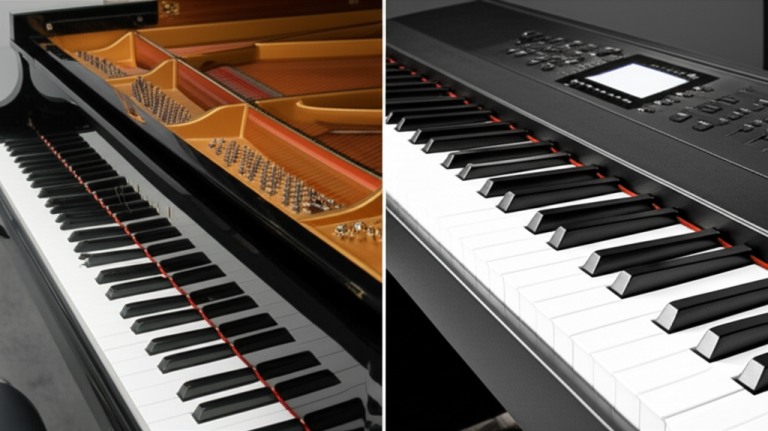
Support our educational content for free when you buy through links on our site. Learn more
7 Must-Have Features for a Durable, High-Quality Digital Piano 🎹 (2026)


Choosing a digital piano that lasts and truly feels like the real deal can feel like navigating a maze blindfolded. We’ve been there—testing dozens of models, from budget-friendly portables to premium consoles—and discovered that not all digital pianos are created equal. Some boast flashy features but fall short on durability or authentic touch, while others quietly deliver years of musical joy without breaking a sweat.
Did you know that over 60% of digital piano buyers regret their purchase due to poor key action or weak build quality? 😱 But don’t worry—we’re here to help you sidestep those pitfalls. In this guide, we’ll unpack the 7 essential features you must look for to ensure your digital piano not only sounds amazing but stands the test of time. Plus, we’ll reveal insider tips on testing pianos before buying and highlight the top brands that consistently nail quality and durability.
Ready to find your perfect, long-lasting digital piano? Let’s dive in!
Key Takeaways
- Prioritize fully weighted, graded hammer action keys for authentic touch and technique development.
- Look for advanced sound engines with multi-layered sampling and resonance modeling to capture rich, expressive piano tones.
- Ensure your piano has at least 128-note polyphony to avoid dropped notes during complex pieces.
- Choose models with robust build materials and tight construction to guarantee durability over years of play.
- Opt for modern connectivity options like USB MIDI and Bluetooth for seamless integration with apps and recording gear.
- Don’t overlook quality pedals with half-pedaling support and stable stands for expressive playing and comfort.
- Test pianos thoroughly in-store, focusing on key feel, sound quality, and feature usability before committing.
For those ready to shop, explore trusted brands like Yamaha, Roland, and Kawai to find models that consistently deliver on these must-have features.
Table of Contents
- ⚡️ Quick Tips and Facts About Digital Piano Quality and Durability
- 🎹 The Evolution of Digital Pianos: From Early Keyboards to Modern Marvels
- 1. Essential Features That Define a High-Quality Digital Piano
- 2. Durability Factors: What Makes a Digital Piano Last?
- 3. Connectivity and Compatibility: Future-Proofing Your Digital Piano
- 4. Additional Features That Enhance Your Playing Experience
- 5. Top Brands and Models Known for Quality and Durability
- 6. How to Test a Digital Piano Before Buying: Expert Tips
- 7. Caring for Your Digital Piano: Maintenance for Longevity
- Conclusion: Making the Smart Choice for Quality and Durability
- Recommended Links for Further Exploration
- FAQ: Your Burning Questions About Digital Piano Features Answered
- Reference Links and Resources
⚡️ Quick Tips and Facts About Digital Piano Quality and Durability
Thinking about diving into the wonderful world of digital pianos? Or perhaps you’re upgrading and want to make sure your next instrument stands the test of time and truly sings? We get it! At Piano Brands™, we’ve spent countless hours playing, testing, and even dismantling (don’t tell our boss!) digital pianos to understand what truly makes them tick. Here are some rapid-fire insights to get you started:
- Key Action is King! 👑 This is arguably the most critical feature for a realistic playing experience and proper technique development. Always prioritize fully weighted, graded hammer action keys. As one expert puts it, “The most critical feature of a digital piano is the key action.” (Jeremysee.info).
- Sound Quality Matters (a lot)! 🎶 A digital piano’s soul lies in its sound engine. Look for advanced sampling technology, multi-layered samples, and features like Virtual Resonance Modeling (VRM) for an authentic acoustic piano sound.
- Polyphony Power: Don’t let notes drop out! Aim for at least 128-note polyphony, especially if you play complex pieces or layer sounds. More is always better here.
- Build Quality = Longevity: A sturdy cabinet, durable key materials, and tight construction mean your investment will last. Brands like Yamaha, Roland, and Kawai are renowned for their robust build.
- Connectivity for the Future: USB MIDI, audio inputs/outputs, and Bluetooth (for both audio and MIDI) ensure your piano can grow with your tech setup.
- Speakers Aren’t Just for Noise: A good internal speaker system can make a huge difference in your practice experience. Don’t underestimate the power output (wattage) and speaker size.
- Test Drive Before You Buy: Just like a car, you wouldn’t buy a piano without trying it. Feel the keys, listen to the sound, and explore the features in person.
🎹 The Evolution of Digital Pianos: From Early Keyboards to Modern Marvels
Remember those clunky electronic keyboards from the 80s? The ones with the cheesy synth sounds and springy, unweighted keys? Oh, how far we’ve come! The journey of the digital piano is a fascinating tale of technological innovation, driven by the relentless pursuit of replicating the majestic experience of an acoustic grand piano without the size, weight, tuning hassles, or hefty price tag.
In the early days, digital pianos were, frankly, a bit of a compromise. They offered portability and volume control, but the sound was often thin, and the key feel was a far cry from the real deal. Early models used basic synthesis to generate sounds, which lacked the rich harmonics and decay of an acoustic instrument. Keyboards often had light, spring-loaded keys, making it difficult for players to develop proper finger strength and dynamic control.
Fast forward to today, and the landscape is entirely different. Modern digital pianos are marvels of engineering, blending sophisticated sampling technology with advanced key action mechanisms. Manufacturers meticulously record individual notes of world-class grand pianos (like Yamaha’s CFX Grand or Bösendorfer Imperial) at multiple velocity levels, capturing every nuance. These samples are then integrated into powerful sound engines, often enhanced with physical modeling techniques to simulate the complex sympathetic resonances and damper effects of an acoustic piano.
The evolution of key action has been equally dramatic. From simple spring-loaded keys, we moved to hammer action, then graded hammer action, and now highly sophisticated mechanisms that incorporate escapement, counterweights, and even wooden keys to mimic the feel of an acoustic grand. This dedication to authenticity means that today’s digital pianos can serve as serious instruments for learning, practice, and even performance.
This incredible journey has made high-quality, durable digital pianos accessible to a wider audience than ever before. It’s a testament to how technology can bridge the gap between aspiration and reality for countless musicians. For a deeper dive into how these instruments came to be, check out our Piano History section!
1. Essential Features That Define a High-Quality Digital Piano
When you’re looking for a digital piano that truly delivers, it’s not just about the brand name or the number of buttons. It’s about a core set of features that work in harmony to create an authentic and durable playing experience. Let’s break down the absolute must-haves.
1.1 Keyboard Action and Touch Sensitivity: Feel Like a Real Piano
This is where the rubber meets the road, or rather, where your fingers meet the keys! The keyboard action is paramount because it directly impacts your technique development and playing expressiveness. Think of it this way: if the keys don’t feel right, you won’t enjoy playing, and your progress will suffer.
✅ What to look for:
- Fully Weighted Keys: This is non-negotiable for serious piano study. Weighted keys provide resistance, similar to the hammers in an acoustic piano, allowing you to develop proper finger strength and control dynamics. As the first YouTube video summary emphasizes, “go for fully weighted keys… They feel very different to non-weighted keys and they’re optimal for developing technique properly.”
- Graded Hammer Action (GHA): This takes weighting a step further. Just like an acoustic grand, the keys in the lower register feel heavier, gradually becoming lighter as you move up to the higher notes. This subtle nuance is crucial for an authentic feel.
- Hammer Action Mechanisms: Different brands have their own proprietary hammer actions, each with unique characteristics.
- Yamaha’s Graded Hammer Standard (GHS): Often found in their portable P-series (like the P-125) and DGX models (like the DGX-670), GHS is a solid entry-level hammer action. It’s responsive and durable, though some find it a bit lighter than higher-end actions. The Yamaha DGX-670 review notes, “It is definitely a lighter and faster action… but it’s still fantastic to play!”
- Roland’s PHA-4 Standard (Progressive Hammer Action): Known for its realistic feel and durability, often incorporating ivory-feel and ebony-feel textures for better grip. The Roland FP-30 is a popular model featuring this action.
- Kawai’s Responsive Hammer (RH3) or Grand Feel (GF): Kawai is particularly praised for its authentic key actions, often incorporating longer pivot points and wooden keys in their higher-end models to mimic grand piano mechanics even more closely. The Kawai ES110 is often cited for its excellent build quality and authentic touch.
- Touch Sensitivity (Velocity Curves): This refers to how the piano responds to the force with which you strike the keys. A good digital piano will have multiple velocity curves, allowing you to adjust the sensitivity to match your playing style or skill level. The NUX WK-310, for example, offers “Four velocity curves for skill level matching” (Jeremysee.info).
- Key Surface Texture: Some digital pianos feature synthetic ivory or ebony key surfaces. These textures absorb moisture, preventing fingers from slipping during long playing sessions and adding to the premium feel.
❌ What to avoid:
- Non-Weighted Keys: These offer no resistance and are unsuitable for developing proper piano technique. They feel more like an organ or synth.
- Semi-Weighted Keys: While better than non-weighted, they still don’t fully replicate the acoustic piano feel and are a compromise for serious learners.
Our Take: We can’t stress this enough: playability starts with the keys. If you’re serious about learning piano, investing in a digital piano with a high-quality, fully weighted, graded hammer action is paramount. It will prevent you from developing bad habits and make the transition to an acoustic piano much smoother down the line. We’ve seen countless students struggle because their entry-level keyboard didn’t offer the resistance needed for proper technique.
1.2 Sound Engine and Sampling Quality: The Heart of Your Piano’s Voice
Once you’ve got the feel right, the next crucial element is the sound. A digital piano’s sound engine is its brain, processing the samples and generating the audio you hear. High-quality, realistic piano sounds are essential for an immersive and inspiring playing experience.
✅ What to look for:
- Advanced Sampling Technology: This is how digital pianos capture the sound of acoustic instruments. Look for models that use multi-layered samples, meaning they record the same note at various velocities (soft, medium, loud, very loud). When you play, the piano triggers the appropriate sample, creating a dynamic and expressive sound.
- High-Resolution Samples: The quality of the original recordings matters. Top brands often sample world-renowned grand pianos. For instance, Yamaha’s CFX Grand piano samples are a benchmark for many of their digital pianos, including the DGX-670, which features “high-quality samples, notably Yamaha’s CFX Grand piano with VRM (Virtual Resonance Modeling) for natural resonance” (Pianotone.ca).
- Virtual Resonance Modeling (VRM) / Acoustic Resonance Modeling (ARM): These advanced technologies go beyond simple sampling. They simulate the complex sympathetic resonances that occur in an acoustic piano when strings vibrate in response to other notes being played, or when the damper pedal is pressed. This adds incredible realism and depth to the sound. Yamaha’s VRM is a prime example, recreating “multiple types of natural resonance dynamically” (Pianotone.ca).
- String Resonance and Damper Resonance: These are specific types of resonance modeling that add to the authenticity. String resonance mimics the sympathetic vibrations of un-damped strings, while damper resonance simulates the rich sound created when the damper pedal is engaged. The NUX WK-310, for example, boasts a “String resonance feature adds realism” (Jeremysee.info).
- Diverse Instrument Voices: While the grand piano sound is primary, a good digital piano will offer a range of other high-quality voices, such as electric pianos, organs, strings, and more. However, be aware that some models might have excellent piano sounds but “the remaining voices are quite generic” (Jeremysee.info).
- Sound Customization: Features like adjustable reverb, chorus, and DSP effects allow you to tailor the sound to your preference or the environment. The Yamaha DGX-670, for instance, offers extensive effects: “Reverb (58 preset + 30 user), Chorus (106 preset + 30 user), DSP (295 preset + 30 user)” (Pianotone.ca).
❌ What to avoid:
- Single-Layer Samples: These sound flat and lack dynamic range, making expressive playing difficult.
- Generic, Unrealistic Sounds: If the primary piano sound doesn’t inspire you, keep looking.
Our Take: A digital piano should make you want to play. A rich, expressive, and realistic piano sound is key to this. We’ve found that players who are truly engaged with their instrument’s sound tend to practice more and progress faster. Don’t settle for anything less than a sound that moves you!
1.3 Polyphony Count: Why More Voices Matter
Ever played a complex piece, only to notice some notes mysteriously cutting out? That’s likely a polyphony problem! Polyphony refers to the maximum number of individual notes (or voices) a digital piano can produce simultaneously.
✅ What to look for:
- Minimum 128-Note Polyphony: For most players, especially those tackling intermediate to advanced repertoire, 128 notes of polyphony is considered the absolute minimum to prevent notes from dropping out. This is a consensus among experts, including the Facebook group summary which states, “Minimum of 128-note polyphony to prevent note cut-off during complex pieces.”
- Higher Polyphony for Complex Scenarios: If you plan to:
- Play pieces with heavy pedaling (which sustains notes).
- Layer multiple instrument sounds (e.g., piano and strings).
- Use accompaniment styles or recording features.
- Play duets.
- Then 192 or 256 notes of polyphony (like the Yamaha DGX-670’s 256 notes) will provide a much smoother and richer experience. The NUX WK-310’s “180-note polyphony prevents dropped notes during complex play” (Jeremysee.info), which is a great example of a solid mid-range offering.
❌ What to avoid:
- 64-Note Polyphony or Less: While fine for absolute beginners playing simple melodies, you’ll quickly outgrow this limitation. Notes will cut off, especially when using the sustain pedal or playing chords.
Our Take: Polyphony is one of those “under the hood” features that you might not think about until it becomes a problem. Trust us, it’s worth ensuring your chosen piano has ample polyphony. There’s nothing more frustrating than your beautiful arpeggios suddenly going silent mid-performance!
1.4 Speaker System and Amplification: Projecting Your Sound
While headphones are great for private practice, a good built-in speaker system allows you to experience the full richness of your digital piano’s sound and share your music with others.
✅ What to look for:
- Adequate Wattage: The total power output (measured in watts) indicates how loud and clear your piano can project.
- For home practice in a small room, 20-30W total output (e.g., 2x10W or 2x15W) is usually sufficient. The NUX WK-310, with its “20W output (2x10W amplifiers) for sufficient sound in large rooms” (Jeremysee.info), is a good example.
- For larger rooms or more robust sound, look for 40W or higher. The Yamaha DGX-670, despite its “12W total power with 2×12cm and 2×5cm speakers,” is noted for its “surprising high-quality sound despite modest wattage” (Pianotone.ca), proving that speaker quality can sometimes trump raw wattage.
- Speaker Size and Configuration: Larger speakers (e.g., 12cm woofers) generally produce a fuller, richer bass response. Some pianos have multiple speakers (e.g., woofers and tweeters) for a more balanced sound across the frequency spectrum.
- Sound Quality and Clarity: Listen for a clear, undistorted sound, especially at higher volumes. The sound should fill the room without sounding tinny or boomy.
- Intelligent Acoustic Control (IAC): Some advanced models, like the Yamaha DGX-670, include features like IAC, which automatically adjusts the sound quality to ensure a balanced and rich tone even at low volumes.
❌ What to avoid:
- Low Wattage (under 10W total): These systems often sound weak and lack depth, making the piano sound less inspiring.
- Distorted Sound at Volume: If the speakers crackle or distort when you turn up the volume, it’s a sign of poor quality.
Our Take: While you can always connect external speakers or headphones, a good internal speaker system is a convenience you’ll appreciate daily. It allows for spontaneous playing and provides a more natural, room-filling sound that can truly bring your music to life.
2. Durability Factors: What Makes a Digital Piano Last?
A digital piano is an investment, and like any investment, you want it to last. Beyond the immediate playing experience, understanding the factors that contribute to a piano’s longevity is crucial. We’ve seen pianos that crumble after a few years and others that stand strong for decades. What’s the secret?
2.1 Build Materials: Wood, Plastic, or Metal?
The materials used in a digital piano’s construction play a significant role in its overall durability and feel.
✅ What to look for:
- Sturdy Cabinet Construction: For console-style digital pianos, look for cabinets made from high-density particle board, MDF (Medium-Density Fiberboard), or laminated fiberboard. These materials offer good stability and resonance. The NUX WK-310, for example, uses a “laminated fiberboard stand” (Jeremysee.info) which contributes to its solid feel.
- Quality Plastics: For portable models, high-grade, impact-resistant plastics are common. These should feel solid, not flimsy, with no creaking or excessive flex.
- Metal Reinforcements: Internal metal frames or reinforcements around critical components (like the keybed) add significant structural integrity.
- “Fit and Finish”: This refers to how well the components are assembled. Look for tight seams, flush panels, and a general sense of solidity. The Jeremysee.info review of the NUX WK-310 praises its “better fit and finish than some premium Japanese brands in the same price range,” noting “tight hinges; firm tactile switches.” This attention to detail is a strong indicator of overall quality.
- Durable Key Materials: While some high-end models feature wooden keys, most digital pianos use durable plastic keys. What matters is the quality of that plastic and how it’s engineered to withstand repeated use.
❌ What to avoid:
- Flimsy Plastics: If the casing feels thin, creaks when handled, or has noticeable gaps, it’s a red flag.
- Wobbly Stands: If the piano comes with a stand, ensure it’s stable. A wobbly stand can be distracting and potentially unsafe.
Our Take: Durability isn’t just about surviving a drop; it’s about resisting the wear and tear of daily use. A well-built piano feels substantial and inspires confidence. We’ve found that brands with a reputation for quality, like Yamaha, Roland, and Kawai, consistently deliver on this front. As the Facebook group summary advises, “Invest in brands with proven track records for quality and customer service.”
2.2 Keybed Longevity and Maintenance Tips
The keybed is the foundation upon which the keys rest, and its durability is paramount. It’s the most mechanically active part of your digital piano.
✅ What to look for:
- Robust Keybed Construction: The internal mechanism that supports the keys and hammer action should be designed for thousands of hours of play. Look for keybeds that feel solid with minimal lateral movement (side-to-side wiggle) in the keys. The NUX WK-310 review specifically mentions, “Keys have no lateral free play,” which is an excellent sign of quality.
- Quality Key Materials: Even if they’re plastic, the keys should feel substantial and well-molded. Some keys incorporate a “thick red felt liner at key pivots dampens noise and adds aesthetic appeal” (Jeremysee.info), which also contributes to longevity by reducing friction.
- Reputable Brand Actions: As discussed in the key action section, established brands like Yamaha (GHS), Roland (PHA-4), and Kawai (RH3, GF) have refined their keybed designs over decades, leading to proven longevity. The Yamaha DGX-670’s “Durable GHS keys, with fewer issues reported compared to newer, more complex actions” (Pianotone.ca) is a good example.
Maintenance Tips for Keybed Longevity:
- Keep it Clean: Dust is the enemy of electronics and moving parts. Use a soft, dry cloth to wipe down the keys regularly. Consider a dust cover when not in use.
- Avoid Liquids: Spills can be catastrophic. Keep drinks away from your piano.
- Gentle Play: While digital pianos are built to withstand expressive playing, avoid excessive force or slamming the keys, which can accelerate wear.
- Stable Environment: Protect your piano from extreme temperature fluctuations and humidity, which can affect internal components and even the keybed materials over time.
❌ What to avoid:
- Excessive Key Wiggle: If keys feel loose or have significant lateral play, it could indicate a poorly constructed keybed that will wear out faster.
- Sticky or Uneven Keys: This might be a sign of manufacturing defects or early wear.
Our Take: A durable keybed ensures consistent playability over many years. It’s a testament to good engineering when a piano feels as good on day 1000 as it did on day one. Our team has seen many older digital pianos from top brands still performing admirably, a direct result of their robust keybed designs.
2.3 Internal Electronics and Firmware Stability
The unsung heroes of a digital piano are its internal electronics and the software (firmware) that runs them. These components dictate everything from sound quality to feature functionality and overall reliability.
✅ What to look for:
- Reputable Componentry: While you can’t easily inspect the circuit boards, choosing a reputable brand often means they use higher-quality, more reliable electronic components.
- Stable Firmware: Well-designed firmware ensures smooth operation, responsiveness, and bug-free performance. Brands that regularly release firmware updates (even if infrequent) show a commitment to long-term support.
- Reliable Power Supply: A robust internal power supply or a high-quality external adapter is crucial for consistent performance and longevity.
- Good Heat Dissipation: Efficient internal design prevents overheating, which can degrade electronic components over time.
❌ What to avoid:
- Frequent Glitches or Freezes: If a piano you’re testing (or reading reviews about) frequently freezes, crashes, or exhibits strange behavior, it’s a major red flag regarding its internal electronics or firmware.
- Poorly Implemented Features: Features that don’t work as advertised or are clunky to use can indicate underlying software issues.
Our Take: Think of the electronics and firmware as the nervous system of your digital piano. If it’s not stable, the whole instrument suffers. While less visible, this aspect is critical for long-term satisfaction. We’ve seen instances where a piano with great key action and sound was let down by buggy software, leading to frustration. Always check user reviews for mentions of reliability issues.
3. Connectivity and Compatibility: Future-Proofing Your Digital Piano
In today’s interconnected world, your digital piano isn’t just a standalone instrument; it’s a hub for creativity, learning, and performance. Robust connectivity options ensure your piano remains relevant and versatile for years to come.
3.1 MIDI and USB Ports: Integrating with Your Setup
These ports are the workhorses of digital piano connectivity, allowing your instrument to communicate with computers, tablets, and other musical gear.
✅ What to look for:
- USB to Host Port (USB MIDI): This is essential for connecting your digital piano directly to a computer or smart device. It allows you to:
- Use your piano as a MIDI controller for Digital Audio Workstations (DAWs) like GarageBand, Logic Pro, Ableton Live, or FL Studio.
- Interact with music learning apps (e.g., Flowkey, Simply Piano).
- Update firmware.
- The Jeremysee.info summary highlights “USB MIDI port for app/software integration.”
- USB to Device Port (USB Flash Drive): This port allows you to connect a USB flash drive for:
- Saving and loading user settings, songs, and recordings.
- Playing back audio files (e.g., backing tracks).
- The Yamaha DGX-670 features a convenient “Front USB flash drive port for easy access” (Pianotone.ca).
- Traditional MIDI In/Out Ports: While USB MIDI has largely replaced these for computer connections, traditional 5-pin MIDI ports are still valuable for connecting to older synthesizers, sound modules, or certain audio interfaces.
- Audio Outputs (Line Out): These allow you to connect your piano to external amplifiers, PA systems, or recording interfaces for higher-quality sound projection or recording. Look for standard 1/4″ stereo outputs. Some models, like the Yamaha DGX-670, use the 1/4″ headphone out as a line out, which is functional but “no dedicated L/R line outs” (Pianotone.ca) can be a limitation for professional setups.
- Audio Input (Aux In): A 1/8″ (3.5mm) or RCA stereo audio input allows you to connect an external audio player (phone, tablet, MP3 player) and play along with your favorite songs through the piano’s speakers. The DGX-670 has a “1/8″ stereo audio input for backing tracks” (Pianotone.ca), and the NUX WK-310 includes “Stereo audio in/out” (Jeremysee.info).
❌ What to avoid:
- Lack of USB MIDI: Without this, your piano’s potential for integration with modern music software is severely limited.
- Proprietary Connectors: While some brands use proprietary ports for specific accessories (like triple pedals), a lack of standard ports can hinder versatility.
Our Take: Think of these ports as the gateways to expanding your musical horizons. Whether you’re recording your next masterpiece or just learning with an app, good connectivity makes your piano a more powerful and adaptable tool.
3.2 Bluetooth and Wireless Features: Convenience Meets Tech
Bluetooth has become ubiquitous, and its integration into digital pianos offers a new level of convenience, though it’s important to understand the different types.
✅ What to look for:
- Bluetooth Audio: This allows you to stream audio wirelessly from your smartphone or tablet through your piano’s speakers. It’s fantastic for playing along with backing tracks, online lessons, or just enjoying music through your piano’s sound system. The Yamaha DGX-670 offers “Bluetooth audio streaming (not MIDI)” (Pianotone.ca), and the NUX WK-310 also includes “Bluetooth audio streaming” (Jeremysee.info).
- Bluetooth MIDI: This is a game-changer for wireless connectivity with music apps and DAWs. It allows your piano to send and receive MIDI data wirelessly, eliminating cable clutter. This is especially useful for apps that offer interactive lessons or score display.
- App Compatibility: Many brands offer dedicated apps (e.g., Yamaha Smart Pianist, Roland Piano Partner 2) that enhance the piano’s functionality, offering intuitive control over settings, learning tools, and more. Check if your chosen model is compatible.
❌ What to avoid:
- Confusing Bluetooth Audio for MIDI: Don’t assume a piano with Bluetooth audio also has Bluetooth MIDI. They are distinct functionalities. If you need wireless app control, ensure it specifies Bluetooth MIDI.
Our Take: Wireless connectivity adds a layer of modern convenience that can truly enhance your practice and performance. Imagine playing along with your favorite Spotify playlist without a single cable! It’s a feature that, once you have it, you’ll wonder how you ever lived without.
4. Additional Features That Enhance Your Playing Experience
Beyond the core features, many digital pianos come packed with extras that can significantly enrich your musical journey. These aren’t always deal-breakers, but they can certainly add value and enjoyment.
4.1 Built-in Learning Tools and Apps
Digital pianos are fantastic tools for learning, and many come with features designed to help you progress.
✅ What to look for:
- Metronome: An absolute essential for developing rhythm and timing. Most digital pianos have a built-in metronome with adjustable tempo and beat divisions.
- Recording Capabilities: Simple onboard recorders (single-track or multi-track) allow you to record your playing and listen back, which is invaluable for self-assessment. The NUX WK-310 has a “single-track recorder” (Jeremysee.info), while the Yamaha DGX-670 boasts a sophisticated “16-track onboard MIDI recorder with punch-in/out” (Pianotone.ca).
- Lesson Functions: Some pianos offer split keyboard modes (for teacher/student duets), dual headphone jacks (like the NUX WK-310’s “2 headphone jacks (¼” and 3.5mm) for teacher-student use” (Jeremysee.info)), or even built-in exercises and song libraries.
- App Integration: As mentioned, many brands have companion apps that offer interactive lessons, sheet music display, and intuitive control over piano settings. While the Yamaha DGX-670 isn’t compatible with Smart Pianist, its “built-in features suffice” (Pianotone.ca).
- Onboard Songs: A library of preset songs can be great for listening, learning, or playing along. The DGX-670 has “100 preset songs with notation and guide mode” (Pianotone.ca), and the NUX WK-310 offers “52 onboard demo songs” (Jeremysee.info).
❌ What to avoid:
- Over-reliance on gimmicks: Don’t let a long list of obscure features distract you from the core quality of the piano’s sound and action.
Our Take: For beginners, these learning tools can be incredibly motivating. For experienced players, they offer convenient practice aids. We often recommend exploring the app ecosystem of a brand, as these can provide continuous value and new ways to engage with your instrument.
4.2 Recording and Playback Functions
The ability to record yourself is one of the most powerful tools for improvement. Digital pianos offer various ways to capture your performance.
✅ What to look for:
- MIDI Recording: This captures the notes you play, their velocity, and timing. It’s highly editable and can be used to control other virtual instruments. Multi-track MIDI recorders allow you to build up complex arrangements.
- Audio Recording: Some pianos can record your performance directly as an audio file (WAV or MP3) to a USB drive. This is great for sharing your music or listening back on any device.
- USB Audio Interface: A fantastic feature for those interested in music production. This allows you to record high-quality audio directly from your piano to a computer DAW via the USB cable, often at “CD-quality audio” (Pianotone.ca).
- Playback Options: The ability to play back SMF (Standard MIDI File) or audio files from a USB drive allows you to practice along with backing tracks or listen to your favorite pieces.
❌ What to avoid:
- Limited Recording Capacity: If the onboard recorder only saves one short song, it might not be very useful for serious practice.
Our Take: Recording yourself is like having a private tutor. It highlights areas for improvement and allows you to track your progress. We’ve seen firsthand how students who regularly record and listen back to their playing improve much faster than those who don’t.
4.3 Pedal Integration and Accessories
Pedals are an integral part of piano playing, adding expression and sustain. The quality and functionality of the pedals can significantly impact your performance.
✅ What to look for:
- Triple Pedals: A full set of three pedals (damper/sustain, sostenuto, and soft/una corda) is ideal for comprehensive piano playing.
- Damper Pedal: The most important. Look for half-pedaling support, which allows for nuanced sustain levels, just like an acoustic piano. The NUX WK-310 supports “half-pedaling” (Jeremysee.info).
- Sostenuto Pedal: Sustains only the notes held down at the moment the pedal is pressed.
- Soft Pedal (Una Corda): Softens the sound.
- Quality Sustain Pedal: If your piano comes with a basic footswitch-style sustain pedal, consider upgrading to a more robust, piano-style pedal that supports half-pedaling. The Pianotone.ca review of the DGX-670 suggests a “¼” sustain pedal input (upgrade recommended)” and mentions the “DAOK portable triple pedal” as an alternative.
- Bundled Accessories: Many digital pianos come as bundles, including a furniture stand, triple pedals, and sometimes a bench and headphones. This can offer great value. The Jeremysee.info review notes that the NUX WK-310 “often includes furniture stand, triple pedals, and sometimes a bench and headphones in bundle.”
- Sturdy Stand: Whether it’s a furniture stand or a portable X-stand, stability is key for comfortable playing. The first YouTube video emphasizes looking for “models with a stable stand to ensure a good playing posture and experience.”
❌ What to avoid:
- Flimsy Footswitch Pedals: These often lack the feel and functionality (like half-pedaling) needed for expressive playing.
- Unstable Stands: A wobbly stand can be incredibly distracting and uncomfortable.
Our Take: Don’t underestimate the importance of good pedals. They are your direct link to adding emotion and depth to your music. A quality set of pedals, especially with half-pedaling, can elevate your playing from good to truly expressive.
5. Top Brands and Models Known for Quality and Durability
When it comes to digital pianos, certain brands have consistently earned a reputation for excellence in both quality and durability. These are the names we at Piano Brands™ trust and recommend.
5.1 Yamaha Digital Pianos: Trusted Excellence
Yamaha is a giant in the musical instrument world, and their digital pianos are a testament to their engineering prowess. They offer a vast range, from portable entry-level models to high-end console pianos, all known for their reliable build and authentic sound.
Why Yamaha?
- Consistent Quality: Yamaha’s manufacturing standards are incredibly high, ensuring consistent quality across their product lines.
- Renowned Sound Samples: Their CFX Grand piano samples are among the best in the industry, offering rich, expressive tones.
- Durable Key Actions: Even their entry-level GHS action is known for its robustness and playability.
- Excellent Feature Set: Yamaha pianos often come packed with useful features for learning, performance, and connectivity.
Notable Models:
Yamaha P-125 (Portable Digital Piano)
-
Rating Table:
Aspect Rating (1-10) Design 8 Key Action 8 Sound Quality 8 Durability 9 Functionality 7 Connectivity 7 Value for Money 9 -
Detailed Analysis:
- Design: Sleek and compact, making it highly portable. Available in black or white.
- Key Action: Features Yamaha’s Graded Hammer Standard (GHS) action. It’s a solid, responsive action that provides a good foundation for learning proper technique. While lighter than higher-end actions, it’s very durable.
- Sound Quality: Utilizes Yamaha’s Pure CF Sound Engine, featuring samples of the Yamaha CFX concert grand piano. The sound is clear, bright, and articulate.
- Durability: Known for its robust build quality, the P-125 is a workhorse that can withstand regular use and transport. It’s a popular choice for gigging musicians and students alike.
- Functionality: Offers essential features like a metronome, recording, dual/split modes, and a good selection of voices.
- Connectivity: Includes USB to Host, headphone jacks, and line outputs.
- User Reviews: Widely praised for its realistic feel and sound quality, often recommended as a top choice for beginners and intermediate players. The Facebook group summary specifically highlights the “Yamaha P-125: praised for realistic feel and sound quality.”
-
Our Recommendation: The P-125 is an excellent choice for anyone seeking a high-quality, portable digital piano that offers a fantastic balance of realistic feel, great sound, and proven durability. It’s a fantastic value.
- 👉 Shop Yamaha P-125 on: Amazon | Sweetwater | Yamaha Official Website
Yamaha DGX-670 (Ensemble Digital Piano)
-
Rating Table:
Aspect Rating (1-10) Design 8 Key Action 8 Sound Quality 9 Durability 9 Functionality 10 Connectivity 9 Value for Money 10 -
Detailed Analysis:
- Design: A console-style digital piano with a large, full-color LCD screen, offering a more integrated look. It’s substantial in weight, making it less portable but very stable.
- Key Action: Features Yamaha’s Graded Hammer Standard (GHS) action, providing a responsive and smooth playing experience. The Pianotone.ca review notes it’s “definitely a lighter and faster action… but it’s still fantastic to play!”
- Sound Quality: A standout feature! It boasts high-quality samples of the Yamaha CFX Grand piano, enhanced with Virtual Resonance Modeling (VRM) for incredibly natural resonance. With 601 voices and 256 notes of polyphony, it offers immense sonic versatility.
- Durability: The DGX-670 shows improved build quality over previous DGX models. Its heavy weight contributes to its stability and durability, making it ideal for home or studio use.
- Functionality: This is where the DGX-670 truly shines. It’s an “arranger keyboard” with 263 rhythm styles, extensive effects, a 16-track MIDI recorder, and a “Piano Room” feature for environment customization. The Pianotone.ca review calls it “one of the absolute best piano products on the market today” and a “TREMENDOUS value for money!”
- Connectivity: Features front USB, rear proprietary pedal input, 1/4″ sustain pedal input, 1/8″ audio input, Bluetooth audio streaming, 1/4″ mic input, and a USB to Host port with a built-in audio interface for CD-quality recording.
-
Our Recommendation: The DGX-670 is a powerhouse for players who want more than just a piano. It’s perfect for serious players, composers, and anyone looking for an instrument that combines excellent piano feel and sound with advanced arranger and recording capabilities. It’s a fantastic studio and home instrument.
- 👉 Shop Yamaha DGX-670 on: Amazon | Sweetwater | Yamaha Official Website
5.2 Roland Digital Pianos: Innovation Meets Durability
Roland is another titan, celebrated for its innovative technology, robust build quality, and expressive piano sounds. They often push the boundaries with their sound engines and key actions.
Why Roland?
- SuperNATURAL Piano Engine: Roland’s proprietary sound engine is highly acclaimed for its expressive and dynamic acoustic piano sounds, often using physical modeling alongside sampling.
- PHA Key Actions: Their Progressive Hammer Action (PHA) keybeds are known for their realistic feel, durability, and often feature ivory/ebony feel textures.
- Solid Construction: Roland pianos are built to last, with a reputation for reliability.
- Modern Connectivity: They often incorporate advanced Bluetooth MIDI and audio features.
Notable Models:
Roland FP-30X (Portable Digital Piano)
-
Rating Table:
Aspect Rating (1-10) Design 8 Key Action 9 Sound Quality 9 Durability 9 Functionality 8 Connectivity 9 Value for Money 9 -
Detailed Analysis:
- Design: A sleek, minimalist portable design, available in black or white. It’s compact enough for easy transport but feels substantial.
- Key Action: Features Roland’s PHA-4 Standard Keyboard with Escapement and Ivory Feel. This action is highly regarded for its realistic touch, excellent responsiveness, and quiet operation. It’s a joy to play for all skill levels.
- Sound Quality: Powered by Roland’s SuperNATURAL Piano sound engine, it delivers rich, expressive, and highly dynamic acoustic piano tones. It also offers a good selection of other high-quality sounds.
- Durability: The FP-30X is built like a tank. Its PHA-4 action is known for its longevity, and the overall construction is very robust, making it a favorite for both home use and gigging. The Facebook group summary notes the “Roland FP-30: noted for durability and rich sound.”
- Functionality: Includes metronome, recording, dual/split modes, and a good range of effects.
- Connectivity: Excellent connectivity with USB Audio/MIDI, Bluetooth Audio, and Bluetooth MIDI, making it highly versatile for app integration and recording.
-
Our Recommendation: The Roland FP-30X is an outstanding choice for anyone prioritizing an exceptional key action and rich, expressive piano sound in a portable and durable package. Its strong connectivity makes it a great hub for modern music learning and creation.
- 👉 Shop Roland FP-30X on: Amazon | Sweetwater | Roland Official Website
5.3 Kawai Digital Pianos: Authentic Touch and Sound
Kawai, a renowned acoustic piano manufacturer, brings its deep understanding of piano mechanics to its digital instruments. They are particularly celebrated for their incredibly authentic key actions and beautiful, resonant piano sounds.
Why Kawai?
- Superior Key Actions: Kawai’s Responsive Hammer (RH) and Grand Feel (GF) actions are often considered among the most realistic, with longer pivot points and often wooden keys in higher-end models.
- Harmonic Imaging Sound Technology: Their sound engines produce warm, rich, and highly detailed piano tones, often using 88-key sampling.
- Elegant Design: Kawai pianos often feature refined, understated designs that blend well into any home environment.
- Focus on Core Piano Experience: While they offer features, Kawai tends to prioritize the fundamental piano playing experience.
Notable Models:
Kawai ES110 (Portable Digital Piano)
-
Rating Table:
Aspect Rating (1-10) Design 7 Key Action 9 Sound Quality 8 Durability 9 Functionality 7 Connectivity 7 Value for Money 9 -
Detailed Analysis:
- Design: A straightforward, functional portable design. It’s not flashy, but it’s built for purpose.
- Key Action: Features Kawai’s Responsive Hammer Compact (RHC) action. This action is highly praised for its authentic feel, offering a satisfying weight and responsiveness that belies its price point. It’s one of the best actions in its class.
- Sound Quality: Utilizes Kawai’s Harmonic Imaging sound technology, delivering a beautiful, rich, and expressive acoustic grand piano sound. It has a warm character that many players adore.
- Durability: The ES110 is known for its solid build quality and reliable performance. Its RHC action is robust and designed for longevity. The Facebook group summary specifically mentions the “Kawai ES110: valued for build quality and authentic touch.”
- Functionality: Offers essential features like metronome, recording, dual/split modes, and a good selection of voices.
- Connectivity: Includes MIDI In/Out, headphone jacks, and line outputs. Some versions may include Bluetooth MIDI.
-
Our Recommendation: If your absolute top priority is an authentic, high-quality key action and a beautiful piano sound in a portable and durable package, the Kawai ES110 is an exceptional choice. It’s a fantastic instrument for serious students and players who appreciate a true piano feel.
- 👉 Shop Kawai ES110 on: Amazon | Sweetwater | Kawai Official Website
6. How to Test a Digital Piano Before Buying: Expert Tips
Buying a digital piano is a personal journey, and nothing beats hands-on experience. At Piano Brands™, we always encourage our customers to “test drive” their potential new instrument. Here’s our step-by-step guide to ensure you make the right choice:
-
Feel the Keys (The Ultimate Test):
- Play a Scale: Start with a simple C major scale, slowly, then faster. Pay attention to the weight and resistance of the keys. Do they feel too light, too heavy, or just right?
- Test the Graded Action: Play a low note, then a high note. Can you feel the subtle difference in weight?
- Check for Lateral Play: Gently wiggle each key side-to-side. There should be minimal movement. Excessive wobble indicates a less durable keybed.
- Listen for Key Noise: Play silently. Is the mechanical noise of the keys distracting? High-quality actions are generally quieter.
- Dynamic Control: Play a note very softly, then very loudly. Can you easily control the volume and expressiveness? This tests the touch sensitivity.
- Repetition: Play the same note repeatedly, quickly. Does the key reset fast enough? This is crucial for fast passages.
-
Listen to the Sound (With and Without Headphones):
- Primary Piano Sound: This is your main focus. Play chords, arpeggios, and melodies. Does the sound feel rich, resonant, and authentic?
- Sustain Pedal Test: Play a chord, then press the sustain pedal. Does the sound decay naturally? Listen for damper resonance and string resonance.
- Polyphony Check: Play a complex chord with the sustain pedal down, then quickly play another chord. Do any notes cut out? If so, the polyphony might be too low for your needs.
- Speaker Quality: Listen to the piano through its built-in speakers. Does the sound fill the room clearly without distortion? Test at various volumes.
- Headphone Test: Bring your own headphones (or use the store’s). The sound through headphones can often reveal more detail and clarity.
- Other Voices: Briefly try out a few other instrument voices (electric piano, strings, organ) to ensure they are of decent quality, even if the piano sound is your priority.
-
Explore the Pedals:
- Sustain Pedal: Test the sustain. If it supports half-pedaling, try to achieve different levels of sustain by partially pressing the pedal.
- Sostenuto and Soft Pedals: If available, test their functionality.
-
Check Connectivity and Features:
- USB Ports: Ask about USB MIDI and USB to Device functionality. If you have a laptop or tablet, ask if you can quickly test connectivity with a basic app.
- Bluetooth: If it has Bluetooth, ask for a demo of both audio streaming and MIDI connectivity.
- Metronome/Recorder: Briefly test these basic functions.
- User Interface: Is the screen clear and easy to navigate? Are the buttons intuitive?
-
Assess Build Quality:
- Overall Feel: Does the piano feel solid and well-constructed? No creaking or flimsy parts.
- Stand Stability: If it comes with a stand, give it a gentle nudge. Is it stable?
- Fit and Finish: Look for tight seams and a generally polished appearance.
Our Take: Don’t be shy! This is a significant purchase. Take your time, ask questions, and trust your instincts. If a piano doesn’t feel or sound right to you, it’s not the right piano, regardless of what the specs say. We’ve seen many musicians fall in love with an instrument they didn’t expect to, simply by trying it out.
7. Caring for Your Digital Piano: Maintenance for Longevity
You’ve invested in a quality, durable digital piano – fantastic! Now, let’s make sure it stays that way for years to come. Proper care and maintenance are simple but crucial for preserving your instrument’s performance and extending its lifespan. Think of it like caring for a beloved pet, but without the walks! 🐾
-
Keep it Clean and Dust-Free:
- Dust Cover: This is your digital piano’s best friend. When not in use, cover your piano with a dedicated dust cover. Dust is the enemy of electronic components and can get into the keybed, causing issues over time.
- Regular Wiping: Use a soft, dry, lint-free cloth (microfiber works great!) to gently wipe down the keys and cabinet regularly. For stubborn smudges on keys, a slightly damp cloth with a tiny bit of mild soap can be used, but ensure it’s almost dry and wipe immediately with a dry cloth.
- Avoid Harsh Chemicals: Never use abrasive cleaners, solvents, or furniture polish on your digital piano. These can damage the finish and key surfaces.
-
Protect from Environmental Extremes:
- Temperature and Humidity: Digital pianos, like acoustic ones, prefer a stable environment. Avoid placing your piano near direct sunlight, heat vents, radiators, or open windows where it might be exposed to extreme temperature fluctuations or high humidity. These can affect internal electronics and even the keybed materials.
- Direct Sunlight: Prolonged exposure to direct sunlight can fade the finish and potentially warp plastic components.
-
Handle with Care:
- Avoid Liquids: This is a big one! Keep drinks, food, and other liquids far away from your piano. A spill can quickly lead to catastrophic damage to the electronics.
- Gentle Use: While digital pianos are built to be played, avoid slamming keys or aggressively pressing buttons. Treat your instrument with respect.
- Cable Management: Ensure all cables (power, pedals, audio) are neatly organized and not underfoot, preventing accidental trips or disconnections that could damage ports or the piano itself.
-
Power On/Off Procedures:
- Proper Shutdown: Always turn off your digital piano using the designated power button. Avoid simply unplugging it from the wall, especially if it’s in the middle of saving settings or performing an update.
- Surge Protector: Consider plugging your piano into a surge protector to safeguard against power fluctuations and lightning strikes.
-
Firmware Updates:
- Check for Updates: Periodically check the manufacturer’s website for firmware updates. These updates can improve performance, fix bugs, and even add new features. Follow the instructions carefully when performing an update.
-
Transportation (if applicable):
- Proper Case: If you have a portable digital piano and plan to move it frequently, invest in a high-quality gig bag or hard case to protect it from bumps and scratches.
- Secure Transport: Always transport your piano securely, ensuring it won’t shift or fall during transit.
Our Take: A little bit of care goes a long way. We’ve seen digital pianos from the 90s still going strong because their owners treated them well. By following these simple tips, you’ll ensure your digital piano remains a joy to play and a reliable companion for many years to come. Think of it as a long-term relationship – it thrives on attention and care!
Conclusion: Making the Smart Choice for Quality and Durability

After our deep dive into the world of digital pianos, one thing is crystal clear: choosing a digital piano that combines authentic key action, rich sound, robust build quality, and versatile connectivity is the key to long-term satisfaction and durability. Whether you’re a beginner, intermediate player, or seasoned pro, investing in these core features will ensure your instrument inspires you for years to come.
If you’re wondering which digital piano to pick, here’s a quick recap of the stars we’ve spotlighted:
- Yamaha P-125: A fantastic entry-level portable piano with solid GHS weighted keys, excellent CFX grand piano samples, and reliable durability. Perfect for beginners and intermediate players who want a realistic feel without breaking the bank.
- Yamaha DGX-670: The powerhouse console piano that blends authentic piano feel with an arranger keyboard’s versatility. Its advanced VRM sound engine, 256-note polyphony, and extensive features make it a top pick for serious players, composers, and studio musicians. It’s heavy but built to last.
- Roland FP-30X: Praised for its PHA-4 Standard action and SuperNATURAL sound engine, this portable piano offers exceptional touch and tone, with modern Bluetooth connectivity and rugged build quality. Ideal for gigging musicians and home players alike.
- Kawai ES110: For those who prioritize authentic key action and warm, rich piano tone, the ES110 delivers with its Responsive Hammer Compact action and Harmonic Imaging sound technology. A durable, no-nonsense instrument that feels like a true piano.
Positives across these models include:
- Realistic, graded hammer key actions that support proper technique.
- High-quality sampled piano sounds with advanced resonance modeling.
- Durable construction and reliable electronics.
- Useful features like recording, metronome, and connectivity options.
- Good value for money considering their quality and longevity.
Potential drawbacks:
- Some models have lighter actions that may not satisfy advanced pianists.
- Connectivity options vary; some lack dedicated line outputs or Bluetooth MIDI.
- Weight and size can limit portability (especially for console models like the DGX-670).
- Learning curve for advanced features on arranger-style pianos.
Our confident recommendation: Prioritize key action and sound quality first, then consider features and connectivity based on your needs. Yamaha, Roland, and Kawai consistently deliver durable, high-quality digital pianos that will serve you well. Try before you buy, and don’t skimp on the essentials—your fingers and ears will thank you!
Remember the question we teased earlier: What makes a digital piano last and feel great for years? Now you know—it’s a harmonious blend of authentic weighted keys, rich sound engines, solid build materials, and thoughtful features that grow with you. Choose wisely, and your digital piano will be your lifelong musical companion.
Recommended Links for Further Exploration
-
👉 Shop Yamaha Digital Pianos:
- Yamaha P-125: Amazon | Sweetwater | Yamaha Official Website
- Yamaha DGX-670: Amazon | Sweetwater | Yamaha Official Website
-
👉 Shop Roland Digital Pianos:
- Roland FP-30X: Amazon | Sweetwater | Roland Official Website
-
👉 Shop Kawai Digital Pianos:
- Kawai ES110: Amazon | Sweetwater | Kawai Official Website
-
Recommended Books on Piano Technique and Digital Piano Use:
- Piano Adventures by Nancy and Randall Faber — Amazon Link
- The Art of Piano Playing by Heinrich Neuhaus — Amazon Link
- Digital Piano Buyer’s Guide by Mark Vail — Amazon Link
FAQ: Your Burning Questions About Digital Piano Features Answered

Are weighted keys essential for a digital piano to mimic an acoustic piano?
Absolutely! Weighted keys, especially those with graded hammer action, are essential to replicate the feel of an acoustic piano. They provide the necessary resistance and tactile feedback that help develop proper finger strength and dynamic control. Non-weighted or semi-weighted keys lack this realism and can hinder technique development. As many experts and reviews emphasize, the key action is the most critical feature for a digital piano’s authenticity and playability.
What materials and build quality indicate a durable digital piano?
Durability hinges on sturdy cabinet materials such as high-density fiberboard or laminated wood for consoles, and high-grade plastics with metal reinforcements for portable models. Tight seams, solid keybeds with minimal lateral key play, and quality internal components also signal longevity. Brands like Yamaha, Roland, and Kawai are known for their rigorous quality control and use of premium materials, ensuring their pianos withstand years of regular use.
How does the sound sampling technology affect the realism of a digital piano?
Sound sampling technology is the heart of a digital piano’s tonal authenticity. High-quality digital pianos use multi-layered, high-resolution samples recorded from world-class acoustic grands, capturing subtle nuances at different playing velocities. Advanced features like Virtual Resonance Modeling (VRM) simulate the complex sympathetic vibrations and damper effects of an acoustic piano, adding depth and realism. Without these, the sound can feel flat or synthetic, reducing the instrument’s expressive potential.
What key action and touch sensitivity are important in a high-quality digital piano?
A high-quality digital piano should have fully weighted, graded hammer action keys that mimic the heavier feel in the low register and lighter feel in the high register of an acoustic piano. Multiple velocity curves allow players to adjust touch sensitivity to their style, ensuring expressive control over dynamics. Key surfaces with textured finishes (like synthetic ivory) enhance grip and comfort during long sessions.
How important is the sound engine quality in a digital piano for long-term use?
The sound engine determines not only the initial sound quality but also how well the piano responds to expressive playing over time. A sophisticated engine with multi-layered sampling and resonance modeling ensures the piano remains inspiring and realistic as your skills grow. Investing in a piano with a high-quality sound engine means you won’t outgrow the instrument’s tonal capabilities quickly, making it a better long-term investment.
Are there specific brands known for producing reliable and high-quality digital pianos?
Yes. Yamaha, Roland, and Kawai consistently rank at the top for quality, durability, and realistic piano feel. Yamaha is famed for its consistent build quality and rich CFX grand samples; Roland is known for its SuperNATURAL sound engine and PHA key actions; Kawai excels in authentic key mechanisms and warm harmonic imaging sounds. These brands also provide strong customer support and firmware updates, enhancing longevity.
What connectivity options should I prioritize for future-proofing my digital piano?
Look for USB to Host (MIDI) ports for seamless integration with computers and music apps. USB to Device ports allow for recording and playback via USB drives. Bluetooth MIDI and audio add wireless convenience for app control and streaming. Traditional MIDI ports and audio line outputs are useful for connecting to external gear. Future-proofing means your piano can grow with your musical ambitions and technology.
How can I ensure the pedals and accessories contribute to durability and playability?
Choose digital pianos that include or support triple pedals (damper, sostenuto, soft) with half-pedaling capability for nuanced expression. Avoid flimsy footswitch-style pedals; instead, opt for sturdy, piano-style pedals that feel solid underfoot. Bundled accessories like stable furniture stands and benches enhance comfort and protect your instrument from damage during use.
Reference Links and Resources
- Yamaha Official Website: https://usa.yamaha.com/products/musical_instruments/pianos/index.html
- Roland Official Website: https://www.roland.com/global/products/digital-pianos/
- Kawai Official Website: https://www.kawai-global.com/products/digital-pianos/
- Yamaha DGX-670 Review; Best Piano I’ve Owned – Piano Tone: https://pianotone.ca/yamaha-dgx-670-review/
- Jeremysee.info Digital Piano Review: https://www.jeremysee.info/post/review-best-88-keys-home-piano-we-can-actually-afford
- Facebook Group Discussion on Digital Piano Features: https://www.facebook.com/groups/1124926644799956/posts/1738266983465916/
- Piano Brands™ Digital Pianos Category: https://www.pianobrands.org/category/digital-pianos/
- Piano Brands™ Piano Buying Guide: https://www.pianobrands.org/category/piano-buying-guide/