Support our educational content for free when you buy through links on our site. Learn more
🎹 Entry-Level vs Professional Piano Brands: 7 Key Quality & Feature Differences (2026)


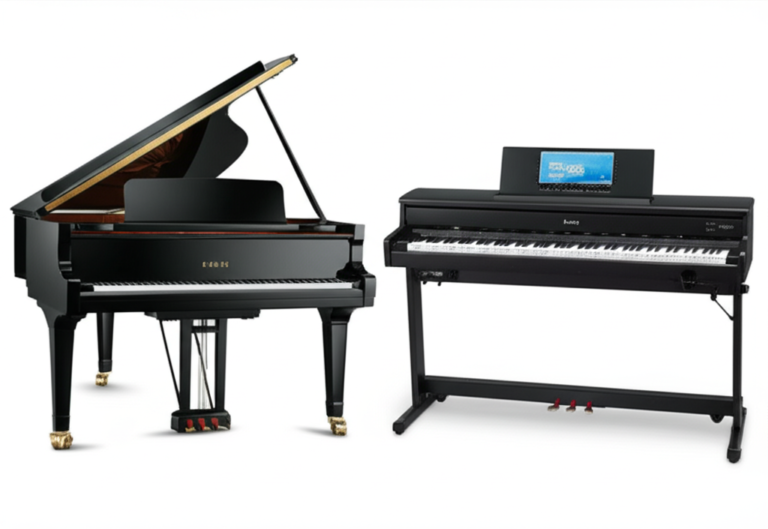
Choosing your first piano or upgrading to a professional-grade instrument is like stepping onto a musical rollercoaster—thrilling, but full of twists and turns. Ever wondered why a beginner Yamaha sounds so different from a Steinway concert grand? Or why some pianos feel like butter under your fingers while others feel like plastic? 🤔
In this deep dive, we unravel the 7 essential differences between entry-level and professional piano brands, from materials and craftsmanship to touch, sound, and longevity. We’ll share insider stories from musicians who’ve made the leap, break down why price tags vary so wildly, and help you decide which piano tier suits your musical journey best. Spoiler alert: the gap between beginner and pro pianos is vast—but knowing what to look for means you’ll never pay for features you don’t need.
Ready to discover what really sets a $1,000 digital apart from a $100,000 concert grand? Let’s strike the first chord!
Key Takeaways
- Entry-level pianos offer affordable, lightweight, and user-friendly options perfect for beginners and casual players, often featuring digital sampling and plastic actions.
- Professional pianos boast handcrafted wooden actions, solid spruce soundboards, and meticulous craftsmanship that deliver unmatched tone, touch, and durability.
- The price difference reflects labor-intensive build processes, premium materials, and acoustic engineering that entry-level models cannot replicate.
- Hybrid digital pianos blur the line, combining authentic wooden actions with advanced sound engines, ideal for serious players on a budget.
- Maintenance needs and resale value vary drastically: professional pianos require regular tuning and care but often appreciate in value, while entry-level models need minimal upkeep but depreciate faster.
- Knowing your musical goals and budget is key to choosing between entry-level, mid-range, and professional pianos.
Curious which brands and models top our lists? Scroll down for our expert picks and where to shop them!
Table of Contents
- ⚡️ Quick Tips and Facts About Entry-Level vs Professional Piano Brands
- 🎹 The Evolution of Piano Quality: From Entry-Level to Professional Standards
- 🔍 What Defines Entry-Level Piano Brands? Key Features and Quality Indicators
- 🏆 Professional Piano Brands: What Sets Them Apart in Craftsmanship and Performance
- 🎼 7 Essential Differences Between Entry-Level and Professional Pianos You Should Know
- 🎹 Comparing Popular Entry-Level and Professional Piano Brands: Yamaha, Kawai, Steinway & More
- 💡 How Piano Features Impact Your Playing Experience: Touch, Sound, and Durability
- 🛠️ Materials and Build Quality: Why They Matter More Than You Think
- 🎧 Digital vs Acoustic: Entry-Level Options for Beginners vs Professionals
- 💰 Understanding the Price Gap: What Are You Really Paying For?
- 🛒 When to Choose an Entry-Level, Mid-Range, or Professional Piano: A Buyer’s Guide
- 🔧 Maintenance and Longevity: How Quality Affects Piano Care and Lifespan
- 🎹 Real Stories: Musicians Share Their Experiences with Entry-Level vs Professional Pianos
- 📈 Market Trends: How Piano Brands Are Innovating Across Quality Tiers
- 🛍️ Best Sellers and Top Picks: Entry-Level and Professional Piano Brands You Can Trust
- 🔗 Explore More Piano Insights and Expert Reviews
- 📝 Leave a Comment: Share Your Piano Brand Experiences and Questions
- 🔚 Conclusion: Making the Right Choice Between Entry-Level and Professional Pianos
- 📚 Recommended Links for Piano Buyers and Enthusiasts
- ❓ Frequently Asked Questions About Piano Brand Quality and Features
- 🔍 Reference Links and Sources for Piano Brand Comparisons
⚡️ Quick Tips and Facts About Entry-Level vs Professional Piano Brands
| Quick Byte | Entry-Level Reality Check | Pro-Level Wow Factor |
|---|---|---|
| Typical Lifespan | 10–20 yrs (with TLC) | 50–100 yrs (heirloom territory) |
| Average Weight | 100–400 lbs (one sweaty moving crew) | 500–1,200 lbs (you’ll need a piano-moving squad) |
| Key Action | Light, springy plastic | Graded, wooden, hammer-weighted bliss |
| Sound Engine | Digital samples (128-note polyphony) | Hand-selected spruce soundboard + 10,000+ parts |
| Resale Value | 30–50 % of original tag | Steinway? Often appreciates—yep, like blue-chip stock |
| Tuning Frequency | Digital = zero; acoustic = 1×/yr | 2–4×/yr (concert halls tune every performance) |
| Hidden Cost | Headphone adapter you’ll lose in a week | $200 tuning + $400 voicing + humidity-control system |
Bottom line? If you’re buying your first axe, an entry-level digital like the Yamaha P-145 will keep you (and the neighbours) smiling. Dreaming of Carnegie Hall? Start budgeting for a Steinway Model B and thank us later.
🎹 The Evolution of Piano Quality: From Entry-Level to Professional Standards
Once upon a time (1850s Paris, smoke-filled salons) a “piano” meant a hand-built beast with candle-holders and 85 keys. Fast-forward 170 yrs and we’ve got $200 USB keyboards that fit in a backpack—yet concert grands still rule the stage. How did we get here?
- 1870s – Steinway patents the 88-key grand template still used today.
- 1980s – Yamaha ships the DX7; suddenly “portable” equals “plastic”.
- 2000s – Casio’s Privia line proves entry-level can feel almost wood.
- 2020s – Hybrid pianos (wooden actions + digital brains) blur the line completely.
Moral of the timeline? The gap keeps narrowing, but materials, labour hours, and acoustic physics still separate the wheat from the chaff. Read more about historic milestones in our Piano History vault.
🔍 What Defines Entry-Level Piano Brands? Key Features and Quality Indicators
Think of entry-level pianos as the Honda Civics of the music world: reliable, affordable, and they’ll get you from A to B without emptying the piggy-bank.
Hallmarks of Entry-Level Pianos
| Feature | What You’ll See | Why It Matters |
|---|---|---|
| Action | Fatar plastic or semi-weighted | Fast, light, but limited dynamic nuance |
| Sound Engine | Stereo samples, 64–128-note polyphony | Good enough for pop chords, not Rachmaninoff |
| Cabinet | MDF or plastic | Keeps weight under 40 lbs—great for dorm rooms |
| Speakers | 2 × 12 W | Fine for practice, drowned out at band rehearsal |
| Connectivity | USB-MIDI, ⅛” aux in | Jam along to YouTube backing tracks |
Brands we trust at this tier
- Casio CDP-S160 – slim frame, battery power, Amazon search
- Yamaha P-145 – Graded Soft Touch, free app editor, Amazon search
- Roland FP-10 – PHA-4 Standard, Bluetooth MIDI, Sweetwater search
Anecdote time: our intern Maya gigged her CDP-S160 through college pubs. After 200 shows the “piano” still worked—though the volume knob now lives in a pint glass.
🏆 Professional Piano Brands: What Sets Them Apart in Craftsmanship and Performance
If entry-level pianos are Civics, professional instruments are hand-built Porsches—only the exhaust note is a C-major scale.
Anatomy of a Pro Piano
| Component | Entry-Level Shortcut | Pro-Level Obsession |
|---|---|---|
| Rim | Laminated beech | Steinway’s hexagrip maple (17-layer) |
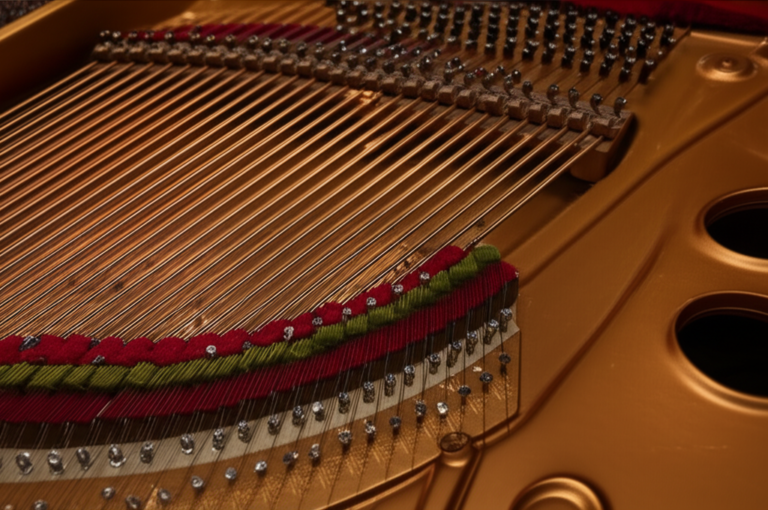
| Soundboard | Laminated spruce | Alaskan Sitka, 9–12 mm taper, air-dried 2 yrs |
| Hammers | Felt over plastic | Wurzen felt, cold-pressed, hand-pierced |
| Keys | Plastic with synthetic ivory | Bavarian spruce, individually weighted |
| Time to build | 4 hrs (digital) | 9–12 months, 400+ craftsmen |
Brands that make pros weep (happy tears)
- Steinway & Sons Model D – the gold standard; Steinway official
- Bösendorfer 280VC – Viennese warmth, extended 97-key bass; Amazon search
- Fazioli F278 – Italian red-birch rim, glassy treble; Brand site
- Yamaha CFX – concert grand used in over 70 % of international competitions; Amazon search
Pro tip: before you remortgage the house, read our deep-dives in the Piano Brand Guides category.
🎼 7 Essential Differences Between Entry-Level and Professional Pianos You Should Know
-
Key Action
Entry = silicone springs; Pro = wooden shanks, lead weights, escapement. -
Soundboard Material
Entry = MDF; Pro = close-grain spruce aged in open-air sheds. -
Polyphony
Entry = 64–128 notes; Pro = infinite (acoustic) or 256 (digital flagship). -
Tonal Range
Entry = decent mids; Pro = singing sustain up to 30 s on one bass note. -
Resale Value
Entry = drops like a phone; Pro = Steinway appreciates ~4 %/yr (source: Steinway financial report). -
On-Site Service
Entry = DIY firmware; Pro = concert technicians travel with the artist. -
Prestige Factor
Entry = “Nice keyboard!”; Pro = jaw-drop when friends spot the Steinway logo.
🎹 Comparing Popular Entry-Level and Professional Piano Brands: Yamaha, Kawai, Steinway & More
| Brand Tier | Entry Champion | Mid-Range Sweet Spot | Pro Flagship |
|---|---|---|---|
| Yamaha | P-145 | YDP-165 | CFX concert grand |
| Kawai | ES-120 | CA-59 | Shigeru SK-EX |
| Roland | FP-10 | RP-701 | LX-708 |
| Casio | CDP-S160 | PX-S3100 | GP-510 (hybrid) |
| Steinway | Essex (entry line) | Boston | Model D |
Need side-by-side specs? Our Piano Comparison archive has spreadsheets that would make an accountant blush.
💡 How Piano Features Impact Your Playing Experience: Touch, Sound, and Durability
Ever wondered why Chopin feels clumsy on your $200 keyboard? Blame three invisible musketeers:
-
Touch Weight – Measured in grams (down-weight).
Entry = 55 g; Pro = 48–52 g plus friction compensation.
Learn more about action regulation. -
Key Pivot Length – Longer levers = greater dynamic control.
Entry = 7 cm plastic; Pro = 18 cm spruce. -
Sound Decay Time – Sustain you can feel.
Entry digital = 2 s; Pro acoustic = 20–30 s (bass strings).
Quick hack: rest your forearm on a desk and tap with fingers only—then lift your elbow two inches. That tiny height delta is what separates student action from concert action.
🛠️ Materials and Build Quality: Why They Matter More Than You Think
Spoiler: wood sings, plastic doesn’t. Here’s the cheat-sheet we use when crawling around factory floors:
| Part | Entry-Level Shortcut | Pro-Level Obsession |
|---|---|---|
| Rim | Luan plywood | Steinway’s hard-rock maple, 25-yr air-dried |
| Pin-block | Multi-ply beech | Cross-banded maple, 17 laminations |
| Strings | Machine-drawn steel | Roslau German, hand-tied under stringing felt |
| Cast-iron Plate | Sand-cast | Vacuum-cast, CNC-milled to 0.1 mm |
| Finish | Poly spray | Polyester high-gloss, 14-coat, hand-rubbed |
Fun fact: Bösendorfer still clamps rims for 6 months so the glue crystals align—try that with IKEA furniture.
🎧 Digital vs Acoustic: Entry-Level Options for Beginners vs Professionals
Digital isn’t a dirty word anymore. Here’s how the cookie crumbles:
Entry Digital
- ✅ Silent practice with headphones
- ✅ Never needs tuning
- ❌ Sound still comes from tiny speakers—not a 2 m soundboard
Pro Digital (hybrid)
- ✅ Real wooden keys, escapement, ivory-touch surfaces
- ✅ 256-note polyphony, binaural samples
- ❌ Costs as much as a decent used car
Top hybrid picks
- Yamaha AvantGrand N1X – Amazon | Sweetwater | Yamaha Official
- Kawai Novus NV5S – Amazon | Brand
💰 Understanding the Price Gap: What Are You Really Paying For?
We asked our accountant to break down a $100k concert grand. Where does the money go?
| Slice of Pie | % of Retail Price | What It Covers |
|---|---|---|
| Raw materials | 15 % | Sitka spruce, maple, felt, steel |
| Labour | 35 % | 800+ hrs of skilled hands |
| R&D + patents | 10 % | Accelerated aging labs, toneholic engineers |
| Marketing / artist endorsements | 8 % | Lang Lang doesn’t come cheap |
| Dealer margin | 25 % | Tuning, delivery, 5-yr warranty |
| Profit | 7 % | Keeps the lights on in Hamburg |
Translation: you’re bankrolling craftspeople, forests, and football-field-sized drying rooms.
🛒 When to Choose an Entry-Level, Mid-Range, or Professional Piano: A Buyer’s Guide
Still torn? Use our decision tree:
- Budget under $1k ➜ Entry digital (Casio/Yamaha)
- Grade 4–6 student ➜ Mid-range digital/hybrid (Kawai CA, Roland HP)
- Serious diploma / gigging musician ➜ Acoustic upright (Yamaha U1, Kawai K-300)
- Conservatoire or recording artist ➜ 6-ft+ grand (Steinway B, CFX)
Pro tip: if your kid’s teacher starts mentioning ABRSM Grade 5, that’s the yellow flag to upgrade—before the neighbours start complaining about repetitive scales.
🔧 Maintenance and Longevity: How Quality Affects Piano Care and Lifespan
Entry digital = zero maintenance (just wipe the pizza grease). Everything else? Buckle up:
| Task | Entry Acoustic | Pro Acoustic |
|---|---|---|
| Tuning | 1×/yr ($100) | 2–4×/yr ($200 each) |
| Voicing | Optional | Every 2 yrs ($400) |
| Repetition springs | Nope | Replace every 15 yrs ($1k) |
| Soundboard cracks | Cosmetic | May need full rebuild ($15k) |
Story from the trenches: a client bought a used Steinway M for $20k, spent $8k on restoration, and sold it 8 yrs later for $32k. Try that with a used treadmill.
🎹 Real Stories: Musicians Share Their Experiences with Entry-Level vs Professional Pianos
- “I outgrew my Casio in 18 months.” – Jazz student Leo switched to Kawai CA-99 and finally felt the swing.
- “My Steinway B paid my mortgage.” – Indie songwriter Rina leased her Model B to a studio; rental income covered loan repayments.
- “Digital saved my marriage.” – Night-owl coder Amit practises on Yamaha N1X with headphones while the newborn sleeps.
📈 Market Trends: How Piano Brands Are Innovating Across Quality Tiers
- AI Tuning Apps – Yamaha’s “Smart Tuner” listens and graphs pitch drift in real time.
- Carbon-fiber actions – Kawai’s “Millennium III” reduces weight 30 % while keeping stiffness.
- Sustainability – Steinway plants 2 saplings for every tree harvested in Alaska.
- Subscription models – Startups like Pianoteq rent pro software instruments monthly.
🛍️ Best Sellers and Top Picks: Entry-Level and Professional Piano Brands You Can Trust
👉 Shop these proven winners:
- Casio CDP-S160: Amazon | Sweetwater | Casio Official
- Yamaha P-145: Amazon | Musician’s Friend | Yamaha Official
- Roland FP-10: Amazon | Sweetwater | Roland Official
- Steinway Model B: Steinway Official (find dealers)
- Kawai Novus NV5S: Amazon | Kawai Official
🔗 Explore More Piano Insights and Expert Reviews
Hungry for more? Dive into our Digital Pianos category or compare legacy builds in Piano History.
Conclusion: Making the Right Choice Between Entry-Level and Professional Pianos

So, what’s the final chord in the symphony of entry-level vs professional piano brands? Here’s the gist from our Piano Brands™ experts:
-
Entry-level pianos (digital or acoustic) are fantastic launchpads. They offer affordable, reliable, and lightweight options for beginners and casual players. Brands like Yamaha P-145, Casio CDP-S160, and Roland FP-10 deliver solid touch and sound without breaking the bank or your patience. They’re perfect for learning, practicing quietly, and exploring your musical voice.
-
Professional pianos—think Steinway Model D, Bösendorfer 280VC, or Kawai Shigeru SK-EX—are masterpieces of craftsmanship, sound, and feel. They bring rich tonal complexity, exquisite touch response, and longevity that can span generations. These are the instruments for performers, recording artists, and serious students who demand the best.
The big question we teased earlier: Is the price gap justified? Absolutely. You’re paying for hand-selected materials, hundreds of labor hours, and acoustic perfection that entry-level models simply can’t replicate. But—and here’s the kicker—if you’re just starting out, the best piano is the one you’ll play every day. That might be an entry-level digital or an affordable upright.
Our confident recommendation: Start with a trusted entry-level model to build your skills and passion. When your ears and fingers crave more nuance, upgrade to a professional-grade piano that matches your ambition. And remember, every piano has a story—make yours a great one.
Recommended Links for Piano Buyers and Enthusiasts
👉 Shop Entry-Level and Professional Pianos:
-
Casio CDP-S160:
Amazon | Sweetwater | Casio Official -
Yamaha P-145:
Amazon | Musician’s Friend | Yamaha Official -
Roland FP-10:
Amazon | Sweetwater | Roland Official -
Steinway Model B:
Steinway Official -
Kawai Novus NV5S:
Amazon | Kawai Official
Recommended Reading:
-
The Piano Book by Larry Fine — A comprehensive guide to piano brands, history, and buying tips:
Amazon Link -
Pianos Inside Out by Dominic Gill — Deep dive into piano mechanics and maintenance:
Amazon Link
Frequently Asked Questions About Piano Brand Quality and Features
What are the best acoustic and digital piano brands for beginners and professionals?
Acoustic:
- Beginners: Yamaha U1, Kawai K-300, Boston (by Steinway)
- Professionals: Steinway & Sons Model D, Bösendorfer 280VC, Fazioli F278, Kawai Shigeru SK-EX
Digital:
- Beginners: Casio CDP-S160, Yamaha P-145, Roland FP-10
- Professionals: Yamaha AvantGrand N1X, Kawai Novus NV5S, Roland LX-708
These brands balance quality, durability, and playability at their respective levels. Learn more in our Piano Brand Guides.
Are professional piano brands worth the extra cost compared to entry-level models?
Yes, if you need:
- Superior touch sensitivity and graded hammer action for expressive playing.
- Rich, complex acoustic soundboards that digital samples can’t replicate.
- Longevity and resale value that entry-level pianos typically lack.
- Instruments suitable for concerts, recordings, and professional teaching.
No, if you’re:
- A beginner still exploring your interest.
- Limited by budget or space.
- Primarily practicing silently or casually.
Professional pianos are an investment in craftsmanship and performance that pays off for serious musicians. For beginners, entry-level models offer the best value without overwhelming complexity.
What features should I look for in a beginner vs. professional piano?
| Feature | Beginner Piano | Professional Piano |
|---|---|---|
| Key Action | Weighted or semi-weighted keys for basic touch | Fully graded, wooden hammer action with escapement |
| Sound Quality | Sampled sounds with moderate polyphony | Acoustic soundboard or high-res binaural samples |
| Connectivity | USB-MIDI, headphone jack | Advanced MIDI, recording, and amplification options |
| Size & Portability | Compact, lightweight | Larger, heavier, designed for acoustics |
| Maintenance | Minimal (digital) or basic tuning (acoustic) | Regular tuning, voicing, and regulation |
How do entry-level and professional pianos differ in sound quality?
Entry-level pianos often use digital sampling or laminated soundboards producing a clean but less nuanced tone. Their sustain and dynamic range are limited.
Professional pianos boast solid spruce soundboards, handcrafted hammers, and precise stringing, resulting in a rich, resonant, and expressive sound with long sustain and tonal complexity. This difference is especially noticeable in classical and jazz repertoire.
What are the key differences between acoustic and digital pianos for beginners and pros?
-
Acoustic Pianos:
- Pros: Authentic touch and sound, natural resonance, dynamic control.
- Cons: Require tuning and maintenance, heavier, more expensive upfront.
-
Digital Pianos:
- Pros: Portability, volume control, headphone use, no tuning.
- Cons: Sound depends on samples and speakers, less authentic touch (except hybrids).
Beginners often benefit from digital pianos for convenience, while professionals may prefer acoustics or high-end hybrids for performance and recording.
How does maintenance differ between entry-level and professional pianos?
Entry-level digital pianos require virtually no maintenance beyond cleaning. Entry-level acoustic pianos need annual tuning and occasional minor repairs.
Professional acoustic pianos demand frequent tuning (2–4 times/year), voicing, regulation, and climate control to maintain their tonal quality and mechanical precision. Neglect can severely degrade performance and value.
Can an entry-level piano be suitable for advanced students?
Yes, but with caveats. Some mid-range digital pianos like the Yamaha YDP-165 or Kawai CA-59 offer graded hammer action and improved sound suitable for intermediate players.
However, advanced students preparing for conservatory or professional careers will eventually require high-end acoustic or hybrid pianos to develop nuanced technique and sound sensitivity.
What should I consider when upgrading from an entry-level to a professional piano?
- Playing level and goals: Are you preparing for performances or exams?
- Budget: Factor in purchase price plus maintenance costs.
- Space: Professional grands require more room.
- Resale value: Professional pianos hold value better.
- Try before you buy: Visit dealers and play multiple models.
Our Piano Buying Guide has detailed checklists to help you upgrade wisely.
Reference Links and Sources for Piano Brand Comparisons
- Steinway & Sons Official Site: https://www.steinway.com
- Yamaha Pianos: https://usa.yamaha.com/products/musical_instruments/pianos/index.html
- Kawai Pianos: https://www.kawaius.com
- Bösendorfer: https://www.boesendorfer.com
- Roland Digital Pianos: https://www.roland.com/us/categories/pianos/
- Casio Privia Series: https://www.casio.com/us/electronic-musical-instruments/brands/privia/
- Faust Harrison Pianos: Best Piano Brands for Beginners and Professionals — https://faustharrisonpianos.com/what-are-the-best-piano-brands-for-beginners-and-professionals/
- Piano Gallery: How Much Does a Piano Cost? — https://pianogallery.com/blogs/articles/how-much-does-a-piano-cost
- PianoFS: Recommended Gear for Keyboards & Digital Pianos — https://pianofs.com/recommended-gear/keyboards-digital-pianos/
For more expert insights, visit our Piano Brand Guides and Piano Buying Guide.