Support our educational content for free when you buy through links on our site. Learn more
What Piano Brands Are Worth Money? 🎹 Top 11 Revealed (2025)

Ever stumbled upon an old piano in your attic and wondered, “Could this be worth a fortune?” Or maybe you’re eyeing a used piano and want to make sure you’re investing wisely. The truth is, not all pianos are created equal when it comes to value. Some brands hold their worth like a vintage wine, while others… well, let’s just say they’re better off as sentimental furniture.
In this guide, we’ll unveil the Top 11 piano brands that consistently retain or increase their value, from the legendary Steinway & Sons to the rising star Estonia. Along the way, we’ll bust common myths (spoiler: “antique” doesn’t always mean “valuable”), dive into what really affects a piano’s price tag, and share insider tips on how to spot a hidden gem versus a piano-shaped object. Plus, we’ll touch on digital pianos and their place in the value game. Ready to discover if your piano is a treasure or a tale? Let’s strike the first chord!
Key Takeaways
- Brand reputation is king: Steinway, Bösendorfer, Fazioli, Yamaha, and Kawai top the list for value retention.
- Condition beats age: A well-maintained mid-tier piano often outvalues a neglected premium brand.
- Grand pianos generally hold value better than uprights.
- Digital pianos depreciate faster but brands like Yamaha and Roland maintain better resale value.
- Professional appraisal is the best way to know your piano’s true market value.
- Many antique uprights have little monetary value despite sentimental appeal.
Ready to explore the best brands and learn how to maximize your piano’s worth? Scroll down for our detailed breakdown and expert advice!
Table of Contents
- ⚡️ Quick Tips and Facts
- 🕰️ Unlocking the Past: A Journey Through Piano History and Evolution
- 🤔 Understanding “Worth”: More Than Just a Price Tag
- ❓ Top Reasons People Ask “What Piano Brands Are Worth Money?”
- 🔍 Deciphering the Value of Your Piano: A Comprehensive Guide
- 🏆 The Elite Eleven: Top Acoustic Piano Brands That Consistently Hold Their Value
- 👑 Steinway & Sons: The Unrivaled Gold Standard
- 🦅 Baldwin: An Enduring American Classic
- 🇯🇵 Yamaha: Modern Innovation and Global Reliability
- 🌸 Kawai: Precision, Performance, and a Gentle Touch
- 🇦🇹 Bösendorfer: Austrian Grandeur and Exquisite Craftsmanship
- 🇮🇹 Fazioli: Italian Artistry and Exclusive Perfection
- 🇺🇸 Mason & Hamlin: Robust American Engineering and Tone
- 🇩🇪 Schimmel: German Engineering Excellence and Clarity
- 🇨🇿 Petrof: European Heritage and Warm, Rich Tones
- 🇩🇪 C. Bechstein: A Legacy of German Purity and Elegance
- 🇪🇪 Estonia: Nordic Elegance and Lyrical Sound
- 💎 Beyond the Big Names: Hidden Gems and Emerging Brands to Watch
- 🔌 Digital Pianos: Do They Hold Their Value?
- 🤔 So – What’s My Piano Worth? A Reality Check
- 🤝 Will You Buy My Piano? Understanding the Used Instrument Market
- 🚫 Common Misconceptions About Piano Value
- caret-up Maintaining Your Investment: Preserving Your Piano’s Value
- 🗑️ When is a Piano NOT Worth Money? Identifying “Piano-Shaped Objects”
- 📖 Our Personal Anecdotes: Tales from the Piano Bench
- ✅ Conclusion
- 🔗 Recommended Links
- ❓ FAQ
- 📚 Reference Links
Here is the main body of the article, written according to your specifications.
⚡️ Quick Tips and Facts
Welcome, fellow music lovers! You’ve got questions about piano value, and we at Piano Brands™ have the answers. Before we dive deep into the sonorous world of piano valuation, let’s hit the high notes with some quick tips and fascinating facts.
- Brand is King 👑: The manufacturer’s name is the single most significant factor in determining a piano’s potential value. Brands like Steinway & Sons, Bösendorfer, and Fazioli are the royalty of the piano world and often retain or even increase in value.
- Age Isn’t Always a Virtue 🍷/🥛: Unlike a fine wine, pianos do not necessarily get better with age. As noted by experts, most pianos over 40 years old have little to no monetary value due to the degradation of their thousands of moving parts. The exception? A select few, particularly restored grands from top-tier brands.
- Condition is Crucial 🩺: A pristine, well-maintained piano from a mid-tier brand will almost always be worth more than a neglected, dilapidated piano from a premium brand. The internal condition (soundboard, pinblock, action) is far more important than the external cabinet’s appearance.
- Grands > Uprights 🎹: Generally, grand pianos hold their value much better than upright pianos. Their performance, construction, and status make them more desirable on the used market.
- “Antique” Often Means “Worthless” 💔: That beautiful, ornate upright piano from the 1920s? It’s likely a treasured family heirloom with immense sentimental value, but unfortunately, it probably has negative monetary value. As one dealer bluntly puts it, “Overwhelmingly, these are not sought after pianos for the general piano player / buyer.” The cost of moving and restoring them far exceeds their market price.
- Digital Pianos Depreciate 💻: Think of digital pianos like consumer electronics. They lose value over time as technology advances. However, top brands like Yamaha, Kawai, and Roland hold their value better than lesser-known brands.
- Location, Location, Location 🗺️: The value of a piano can be affected by your geographical location due to climate and local market demand. A piano seasoned for a dry climate might struggle in a humid one.
For a focused look at brands that give you the most bang for your buck, check out our detailed guide on Which 9 Piano Brands Offer the Best Value for Money? 🎹 (2025).
🕰️ Unlocking the Past: A Journey Through Piano History and Evolution

Ever wonder why that turn-of-the-century upright in your grandma’s house is so darn heavy? Or why a modern Steinway sounds so different? The answers are rooted in a rich history of innovation, ambition, and artistry. Understanding this journey helps explain why some pianos are treasures and others are… well, just furniture.
The piano’s story begins around 1700 with an Italian instrument maker named Bartolomeo Cristofori. He wasn’t trying to make a family heirloom; he was solving a problem. Harpsichords couldn’t vary their volume. Cristofori invented a new mechanism where hammers struck the strings instead of plucking them, allowing for soft (piano) and loud (forte) playing. And thus, the “pianoforte” was born!
The 19th and early 20th centuries were the Golden Age of Piano Manufacturing. Hundreds of companies, especially in America and Germany, popped up. This era brought us:
- The full cast-iron frame, allowing for much higher string tension and a more powerful sound.
- Overstringing (or cross-stringing), where the bass strings cross over the treble strings, saving space and enriching the tone.
- The development of the modern repetition action, allowing for rapid-fire notes.
This industrial boom is also why there are so many “antique” upright pianos today. They were the centerpiece of the middle-class home! However, as one expert notes, the Great Depression and competition from foreign manufacturers led to the closure of many of these companies, leaving a legacy of instruments with little modern support. For a deeper dive, explore our Piano History category.
🤔 Understanding “Worth”: More Than Just a Price Tag
When you ask, “What is my piano worth?” you’re really asking three different questions. It’s crucial to know which one you mean:
- Monetary Value 💵: This is the fair market price. What would a willing buyer realistically pay for it today? This is what most of this article focuses on.
- Musical Value 🎶: This is the quality of the instrument as a tool for creating music. Does it have a rich tone? Is the action responsive and a joy to play? A piano can have low monetary value but still be a wonderful instrument for a student or hobbyist.
- Sentimental Value ❤️: This is the emotional connection. The piano your grandfather learned to play on, filled with memories of family singalongs. This value is priceless, but it doesn’t translate to dollars on the open market.
Our job at Piano Brands™ is to help you navigate the first two. We’ll respect the third, but we have to be honest: the market rarely pays for memories. The key is to balance a realistic view of its monetary value with an appreciation for its musical and sentimental qualities.
❓ Top Reasons People Ask “What Piano Brands Are Worth Money?”
People come to us with this question for all sorts of reasons. Understanding your motivation can help you find the right answer.
- Inheritance: You’ve inherited a piano and have no idea if it’s a treasure or a burden. You need to decide whether to keep it, sell it, or dispose of it.
- Selling: You’re moving, downsizing, or upgrading, and you want to sell your current piano for a fair price.
- Buying (New or Used): You’re in the market for a piano and want to make a smart investment. You’re looking for a brand that will not only sound great but also hold its value over time. This is where our Piano Buying Guide is your best friend.
- Insurance: You need an accurate appraisal for insurance purposes to protect your valuable instrument.
- Curiosity: You’re just plain curious about the beautiful instrument sitting in your living room!
Whatever your reason, you’ve come to the right place. Let’s get down to the nitty-gritty.
🔍 Deciphering the Value of Your Piano: A Comprehensive Guide
So, what’s the secret formula for piano valuation? It’s not a single number but a combination of factors. Think of it like a musical chord—each note contributes to the final sound. Let’s break down the notes that make up your piano’s value.
💰 What Factors Contribute to a Piano’s Monetary Value?
This is all about the market. It’s what a buyer, dealer, or technician would look for when putting a price tag on an instrument.
🗓️ Age and Rarity: The Vintage Appeal
As we’ve said, older isn’t usually better. However, there are exceptions.
- ✅ The “Golden Age” Exception: Pianos from the pre-WWII era made by top-tier brands like Steinway, Mason & Hamlin, and some German makers can be excellent candidates for rebuilding. Their core construction is often superb.
- ❌ The Mass-Produced Problem: The vast majority of uprights from the early 1900s were mass-produced and are now over 100 years old. Their internal parts are simply worn out.
- ✅ Recent is Relevant: For most brands, the newer, the better. M. Steinert & Sons suggests that for brands like Yamaha and Kawai, pianos less than 15 years old are most valuable, while for many others, the cutoff is even sooner.
✨ Condition: The Heart of the Matter
This is the most important factor. A piano has over 10,000 moving parts, and their condition is everything.
| Component | What to Look For | Impact on Value |
|---|---|---|
| Soundboard | Cracks, loss of “crown” (a slight upward curve) | Critical. A cracked soundboard can be a death sentence for a piano’s value. |
| Pinblock | Loose tuning pins, cracks in the wood | Critical. If it can’t hold a tune, it’s not a functional musical instrument. |
| Action | Worn hammers, sluggish keys, broken parts | High. A full action rebuild is very expensive. |
| Strings | Rust, dull tone, frequent breaking | Medium. Restringing is costly but possible. |
| Bridges | Cracks, separation from the soundboard | High. Bridge problems can cause buzzing and poor tone. |
| Cabinet | Scratches, water damage, sun fading | Medium. Cosmetic issues are less critical than internal ones but still affect price. |
🛠️ Originality vs. Restoration: What’s the Difference?
- Original Condition: The piano has all its factory parts. This is desirable in a very young piano but a major drawback in an old one.
- Repaired/Reconditioned: Worn parts have been fixed or replaced as needed. This is common maintenance.
- Restored/Rebuilt: The piano has been completely disassembled, with major components like the soundboard, pinblock, strings, and action parts being replaced. A high-quality restoration by a respected firm can make a vintage Steinway grand worth as much as (or more than) a new one. A poor restoration can destroy its value.
📈 Market Demand and Brand Reputation
Simple supply and demand. Everyone wants a Steinway. Fewer people are looking for a “Lester” or “Wurlitzer” spinet. The brand’s reputation for quality, durability, and performance dictates its desirability.
🌍 Geographic Location: A Local Impact
Climate plays a huge role. As M. Steinert & Sons points out, many European-made pianos were built for milder climates and can suffer in the harsh seasonal swings of North America. Similarly, “grey market” Yamaha pianos, built for the Japanese market, may not be properly seasoned for other climates, a point Yamaha itself makes.
🎶 What Factors Affect a Piano’s Musical Quality and Playability?
Forget money for a second. What makes a piano a joy to play? Often, these factors overlap with monetary value, but they are focused on the experience.
🔊 Soundboard Integrity: The Soul of the Sound
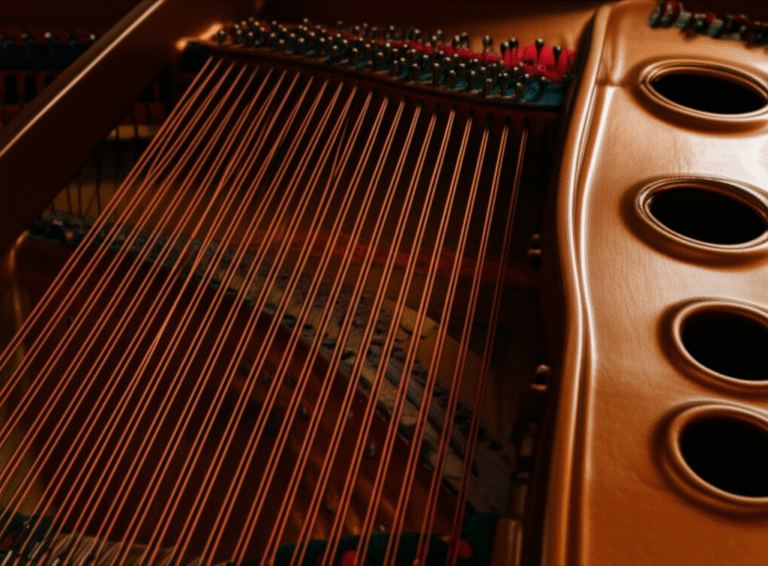
The soundboard is a thin sheet of wood (usually spruce) that amplifies the vibration of the strings. It’s the piano’s speaker. If it’s cracked or has lost its crown, the tone will be weak, dull, and lack sustain.
🎹 Action Mechanism: The Touch and Feel
This is the entire mechanism from the key you press to the hammer that strikes the string. A good action is responsive, even, and allows for a wide dynamic range, from the softest pianissimo to the loudest fortissimo. A worn-out action feels sluggish, heavy, and uncontrollable.
🔒 Pinblock Stability: Keeping it in Tune
The pinblock is a laminated block of hard rock maple that holds the tuning pins. If it fails, the pins will slip, and the piano will not stay in tune for more than a few days or hours. This makes the instrument musically useless without a very expensive repair.
🧵 String Quality: The Voice of the Instrument
Over decades, piano strings lose their elasticity and brilliance. Old strings produce a dull, lifeless tone. While restringing is possible, it’s a significant investment.
🖼️ Cabinetry and Aesthetics: The Visual Appeal
While secondary to the musical components, the cabinet matters! A beautiful case in a rare wood can add value and, more importantly, make the piano a piece of furniture you’re proud to have in your home. Some antique uprights, while having little musical worth, are kept for their ornate and beautiful cabinetry.
🏆 The Elite Eleven: Top Acoustic Piano Brands That Consistently Hold Their Value
Alright, let’s name names! If you’re looking for an investment-grade instrument, these are the brands that should be on your radar. We’ve compiled this list based on our decades of experience buying, selling, and playing these magnificent machines. For more head-to-head analysis, check out our Piano Comparison section.
-
👑 Steinway & Sons: The Unrivaled Gold Standard
No surprise here. For over 150 years, Steinway has been the benchmark against which all other pianos are measured. They are renowned for their rich, powerful sound and incredible longevity. A well-maintained Steinway grand piano often appreciates in value. As noted, even old Steinway grands in poor condition retain residual value because their fundamental design allows for complete rebuilding.
- 👉 Shop Steinway & Sons on: Steinway Official Website
-
🦅 Baldwin: An Enduring American Classic
Once Steinway’s chief American rival, Baldwin has a storied history of producing robust, concert-quality pianos with a powerful “American” tone. While the company has gone through changes, vintage models like the Model L and SF-10 are highly sought after. Certain full-size uprights from their golden era are also noted for their quality.
- 👉 Shop Baldwin on: Musician’s Friend | Baldwin Official Website
-
🇯🇵 Yamaha: Modern Innovation and Global Reliability
Yamaha is a giant in the music world for a reason: consistency and quality. Their pianos are known for a bright, clear tone and flawless manufacturing. Their professional U-series uprights and C-series grands are industry workhorses found in studios and schools worldwide. They hold their value exceptionally well, especially models under 15 years old.
- 👉 Shop Yamaha on: Amazon | Sweetwater | Yamaha Official Website
-
🌸 Kawai: Precision, Performance, and a Gentle Touch
Kawai is Yamaha’s main competitor and is celebrated for its slightly warmer, mellower tone. They are pioneers in using advanced composite materials in their actions for increased stability and speed. Like Yamaha, their instruments are incredibly reliable and retain their value very well on the used market.
- 👉 Shop Kawai on: Amazon | Sweetwater | Kawai Official Website
-
🇦🇹 Bösendorfer: Austrian Grandeur and Exquisite Craftsmanship
Now owned by Yamaha but still handcrafted in Austria, Bösendorfer is one of the oldest and most respected piano makers. Known for their “Imperial” concert grands with extra bass notes, they have a rich, complex, and orchestral tone that is utterly unique. They are rare and command very high prices, new or used.
- 👉 Shop Bösendorfer on: Bösendorfer Official Website
-
🇮🇹 Fazioli: Italian Artistry and Exclusive Perfection
The newcomer on this list (founded in 1981), Fazioli has quickly earned a reputation for building some of the most exquisite and expensive pianos in the world. With incredibly limited production, each Fazioli is a masterpiece of clarity, power, and responsiveness. Their value retention is exceptional.
- 👉 Shop Fazioli on: Fazioli Official Website
-
🇺🇸 Mason & Hamlin: Robust American Engineering and Tone
Another legendary American brand, Mason & Hamlin pianos are built like tanks. They are famous for their “Tension Resonator,” a device that adds immense strength and stability to the frame, preserving the soundboard’s crown. Vintage models are highly prized for restoration.
- 👉 Shop Mason & Hamlin on: Mason & Hamlin Official Website
-
🇩🇪 Schimmel: German Engineering Excellence and Clarity
The largest piano manufacturer in Germany, Schimmel is known for its precision engineering and clear, singing tone. They produce a wide range of high-quality uprights and grands that are very popular in Europe and are a fantastic alternative to the bigger names.
- 👉 Shop Schimmel on: Schimmel Official Website
-
🇨🇿 Petrof: European Heritage and Warm, Rich Tones
Hailing from the Czech Republic, Petrof pianos are beloved for their warm, romantic, and distinctly European voice. They offer excellent value in the high-end market, providing handcrafted quality that competes with more expensive German brands.
- 👉 Shop Petrof on: Petrof Official Website
-
🇩🇪 C. Bechstein: A Legacy of German Purity and Elegance
A legendary German maker, C. Bechstein pianos were favored by composers like Debussy and Liszt. They are known for a pure, lyrical, and somewhat lighter tone compared to a Steinway. A restored vintage Bechstein is a thing of beauty and a valuable asset.
- 👉 Shop C. Bechstein on: C. Bechstein Official Website
-
🇪🇪 Estonia: Nordic Elegance and Lyrical Sound
A rising star in the piano world, Estonia pianos are handcrafted in limited numbers and are known for their lyrical, singing quality, often compared to the finest European instruments. They offer incredible performance for their price point and have a passionate following, which helps maintain their value.
- 👉 Shop Estonia on: Estonia Official Website
💎 Beyond the Big Names: Hidden Gems and Emerging Brands to Watch
While the “Elite Eleven” are safe bets, don’t overlook other quality manufacturers! Brands like Schulze Pollmann (Italy), Sauter (Germany), and Charles R. Walter (USA) produce exceptional instruments that can be a fantastic value. On the Asian-made front, brands like Pearl River (which also makes Ritmüller and Kayserburg) and Samick (maker of Knabe and Seiler) have improved dramatically and offer reliable pianos, though their value retention is best on models less than 10-15 years old. Our Piano Brand Guides cover many of these in detail.
🔌 Digital Pianos: Do They Hold Their Value?
Let’s switch gears and talk about the digital world. Do digital pianos hold their value?
The short answer is no, not like acoustic pianos.
Think of a digital piano like a computer or a smartphone. A top-of-the-line model today will be surpassed by a newer, better, cheaper model in a few years. They depreciate. However, that doesn’t mean buying one is a bad investment in your musical journey!
As highlighted in the featured video in our article, the value of a digital piano is in its features and playability for the user, especially beginners. The key advice is to prioritize the quality of the keyboard action (the “touch”) above all else. You can always upgrade sounds with software, but you can’t upgrade the physical feel of the keys. For players practicing without headphones, the quality of the onboard speakers is also a critical factor for an enjoyable experience.
🎹 Key Digital Piano Brands to Consider
While they depreciate, models from reputable brands have a much slower depreciation curve and a healthier resale market.
- Yamaha: Their Clavinova series is the industry standard for home digital pianos.
- Kawai: Known for excellent wooden-key actions that simulate an acoustic feel.
- Roland: Famed for their SuperNATURAL sound engine and great keyboard actions.
- Casio: Their Privia and Celviano lines offer incredible value and surprisingly good actions for their price.
For more on this, explore our guides to Digital Pianos.
- 👉 Shop Digital Pianos on:
- Yamaha: Amazon | Sweetwater | Musician’s Friend
- Kawai: Amazon | Sweetwater | Musician’s Friend
- Roland: Amazon | Sweetwater | Musician’s Friend
- Casio: Amazon | Sweetwater | Musician’s Friend
🤔 So – What’s My Piano Worth? A Reality Check
You’ve read all the factors, you know your brand, but you still want a number. How do you get one?
🧑 ⚖️ Getting a Professional Piano Appraisal
This is the only way to get a truly accurate valuation. A qualified piano technician will perform a detailed inspection of your piano’s internal and external condition. They will check the soundboard, pinblock, action, strings, and more. They can then give you a “fair market value” based on their findings and knowledge of the local market. Expect to pay a fee for this service, but it’s well worth it if you’re serious about selling or insuring your instrument.
💻 DIY Research: What to Look For Online
You can get a ballpark figure yourself, but take it with a large grain of salt.
- Identify Your Piano: Find the brand name, serial number (usually inside the piano near the tuning pins), and model number. The serial number can be used to find the exact age of your piano.
- Search Classifieds: Look on sites like Facebook Marketplace, Craigslist, and dedicated piano forums (like PianoWorld) for pianos of the same brand, model, and age.
- Be Honest About Condition: Compare the asking prices you see with the actual condition of your piano. Remember, asking price is not selling price. A piano listed for a certain amount might sit for months or sell for much less.
🤝 Will You Buy My Piano? Understanding the Used Instrument Market
“Okay, I know what it’s worth. Now, will you buy it?” We get this question a lot! The market for used pianos can be tricky.
🏡 Selling Privately vs. Through a Dealer
- Selling Privately: You’ll likely get a higher price, but you have to do all the work: creating the listing, dealing with inquiries, scheduling viewings, and navigating the risks of payment and moving.
- Selling to a Dealer/Consignment: You will get less money, as the dealer needs to cover their overhead (moving, tuning, repairs, showroom space) and make a profit. However, it is a much faster, safer, and hassle-free process. They handle everything.
🌐 Online Marketplaces and Forums: Reaching Buyers
If you sell privately, good photos and an honest, detailed description are key. Be upfront about any known issues. Disclose the piano’s tuning history and any repairs that have been done. The more information you provide, the more serious buyers you will attract.
🚫 Common Misconceptions About Piano Value
Let’s bust some myths!
- Myth 1: “It’s an antique, so it must be valuable.”
- Reality: As we’ve covered, this is rarely true. The term “antique” usually applies to pianos over 100 years old, an age at which most are musically defunct without a complete, and very expensive, rebuild.
- Myth 2: “It just needs a tuning.”
- Reality: This is the most common phrase we hear for a neglected piano. Often, the piano can’t be tuned because the pinblock is shot, or it has other serious internal issues.
- Myth 3: “My piano is a rare brand, so it’s worth more.”
- Reality: Rare often means obscure. If the company was only in business for a few years in the 1890s, it’s likely because they didn’t make great pianos. Value comes from well-known brands with a long history of quality.
- Myth 4: “A refinished cabinet adds a lot of value.”
- Reality: A nice cabinet is a plus, but if the “guts” of the piano are in poor shape, it’s like putting a new coat of paint on a car with a blown engine. The musical components are what matter most.
caret-up Maintaining Your Investment: Preserving Your Piano’s Value
Whether your piano is a priceless Steinway or a humble starter instrument, proper care is essential to preserving its musical quality and monetary value.
🎵 Regular Tuning and Voicing: The Sound of Care
- Tuning: Pianos should be tuned at least once a year, ideally twice, to keep them at the standard A440 pitch. Regular tuning keeps the piano stable and prevents the slow, steady drop in pitch that occurs over time.
- Voicing: This is the process of adjusting the hardness of the hammers to alter the piano’s tone. If your piano sounds too harsh or too mellow, a technician can voice it to your preference.
🌡️ Environmental Control: Protecting Your Investment
Pianos are made primarily of wood, felt, and metal, all of which are sensitive to changes in temperature and humidity.
- Humidity: Keep the relative humidity in the room between 40% and 60%. A hygrometer can help you monitor this. In very dry or humid climates, consider installing a Dampp-Chaser humidity control system inside the piano itself.
- Placement: Do not place your piano near a heating/cooling vent, in direct sunlight, or against an uninsulated outside wall.
🧼 Professional Cleaning and Minor Repairs: Keeping it Pristine
Have a technician clean the inside of your piano every few years to remove dust and debris that can affect the action. Addressing small issues—like a sticking key or a squeaky pedal—promptly can prevent them from becoming larger, more expensive problems down the road.
🗑️ When is a Piano NOT Worth Money? Identifying “Piano-Shaped Objects”
We in the business have a loving (or not-so-loving) term for instruments that are beyond saving: “Piano-Shaped Objects” or PSOs. These look like pianos, but they are no longer functional musical instruments.
How to spot a PSO:
- ❌ It Can’t Hold a Tune: A piano that immediately goes out of tune after a technician leaves has a failed pinblock. This is the end of the line for most instruments.
- ❌ A Cracked Soundboard or Bridge: Major structural failures that are prohibitively expensive to repair on anything but a top-tier grand.
- ❌ A Completely Worn-Out Action: If the hammers are deeply grooved and the parts are brittle, the cost of rebuilding the action will exceed the piano’s value.
- ❌ It’s a Spinet or an Old, Obscure Upright: With few exceptions, spinet pianos (the very short ones) and most non-premium uprights from before WWII fall into this category. They simply have no resale market.
If you have a PSO, its value is negative—meaning it will cost you money to have it hauled away. It’s a tough pill to swallow, but it’s better to be realistic than to pour money into a lost cause. As one piano dealer wisely advises, “In all likelihood you’re probably not destroying a Rembrandt or early Martin D-45.”
📖 Our Personal Anecdotes: Tales from the Piano Bench
I’ll never forget a call we got a few years ago. A woman had inherited her great-aunt’s piano, a massive, ornately carved upright from 1915. She was convinced it was a priceless antique and had already spent a fair bit of money moving it to her home. She wanted us to appraise it for insurance, hoping for a five-figure number.
When our head technician, Michael, went to see it, his heart sank. The cabinet was indeed beautiful, a stunning piece of furniture. But when he opened it up, the story changed. The pinblock was cracked, several bass strings were dead, and the hammers were worn down to the wood. He explained gently that while it was a beautiful family piece, its musical life was over. To restore it would cost more than a brand new professional upright.
The owner was devastated, and we felt for her. It’s a story we see play out all the time. It’s a powerful reminder that a piano’s true worth is a complex harmony of its history, its condition, and its market reality. That’s the mystery we’re here to help you unravel. But what about the pianos that are worth something? The ones that make our hearts sing? We’re getting to the best part…
✅ Conclusion

So, what piano brands are truly worth money? The answer, as you’ve discovered, is a rich tapestry woven from brand reputation, age, condition, and market demand. While the romantic idea of a dusty old upright piano in the attic being a hidden treasure is a compelling story, the reality is often more sobering.
Top-tier brands like Steinway & Sons, Bösendorfer, Fazioli, and Yamaha consistently hold or increase their value, especially when well-maintained or professionally restored. These instruments are not only musical masterpieces but also sound investments. On the flip side, many antique uprights and mass-produced pianos from lesser-known brands often have little to no resale value, sometimes even negative due to disposal costs.
Digital pianos, while fantastic for practice and modern convenience, generally depreciate faster, but brands like Yamaha, Kawai, and Roland offer better resale prospects than budget models.
If you’re wondering about your own piano’s worth, the best course is a professional appraisal combined with honest research. Remember, condition trumps age and brand in many cases. A poorly maintained Steinway may be worth less than a well-kept Yamaha.
And what about those beautiful family heirlooms? Their sentimental value is priceless, even if the market value isn’t. Sometimes, the best choice is to cherish the memories and invest in a newer instrument that will inspire your musical journey.
We hope this guide has demystified the complex world of piano valuation and helped you strike the right chord between passion and pragmatism. Ready to explore your options? Let’s keep the music playing! 🎶
🔗 Recommended Links
👉 Shop Top Acoustic Piano Brands:
- Steinway & Sons: Amazon | Musician’s Friend | Steinway Official Website
- Baldwin: Musician’s Friend | Baldwin Official Website
- Yamaha: Amazon | Sweetwater | Yamaha Official Website
- Kawai: Amazon | Sweetwater | Kawai Official Website
- Bösendorfer: Bösendorfer Official Website
- Fazioli: Fazioli Official Website
- Mason & Hamlin: Mason & Hamlin Official Website
- Schimmel: Schimmel Official Website
- Petrof: Petrof Official Website
- C. Bechstein: C. Bechstein Official Website
- Estonia: Estonia Official Website
👉 Shop Digital Pianos:
- Yamaha Digital Pianos: Amazon | Sweetwater | Musician’s Friend
- Kawai Digital Pianos: Amazon | Sweetwater | Musician’s Friend
- Roland Digital Pianos: Amazon | Sweetwater | Musician’s Friend
- Casio Digital Pianos: Amazon | Sweetwater | Musician’s Friend
Recommended Books:
- The Piano Book: Buying & Owning a New or Used Piano by Larry Fine — Amazon Link
- Pianos and Their Makers by Alfred Dolge — Amazon Link
- The Art of Piano Playing by Heinrich Neuhaus — Amazon Link
❓ FAQ

Which piano brands hold their value best over time?
Steinway & Sons, Bösendorfer, Fazioli, and Yamaha are among the top brands that retain or appreciate in value. Steinway grands, in particular, are known for their ability to be rebuilt and restored, maintaining value even after decades. European luxury brands like Bösendorfer and Fazioli also hold value due to their rarity and craftsmanship. Yamaha and Kawai, while more modern, have excellent resale value especially for models under 15 years old, thanks to their consistent quality and global demand.
Read more about “Which 9 Piano Brands Offer the Best Value for Money? 🎹 (2025)”
What are the top luxury piano brands for investment?
Luxury piano brands that are considered excellent investments include:
- Steinway & Sons: The gold standard with a rich legacy and strong market demand.
- Bösendorfer: Known for their unique tonal qualities and exquisite craftsmanship.
- Fazioli: A newer but highly exclusive Italian brand with limited production.
- C. Bechstein: A historic German maker prized for its lyrical tone.
These brands are often purchased not just as instruments but as collector’s items and status symbols, which helps maintain and increase their value.
Read more about “How Much Is a Yamaha Piano? 🎹 Complete Price Guide (2025)”
How do acoustic piano brands compare to digital piano brands in resale value?
Acoustic pianos, especially from premium brands, generally hold their value better than digital pianos. This is because acoustic pianos are handcrafted instruments with complex mechanical actions and rich tonal qualities that digital pianos cannot fully replicate. Digital pianos depreciate faster due to rapid technological advancements and shorter product lifecycles. However, digital pianos from reputable brands like Yamaha, Kawai, and Roland maintain better resale value than budget or lesser-known brands.
What features make a piano brand more valuable in the market?
Several features contribute to a piano brand’s market value:
- Brand Reputation: Established brands with a history of quality craftsmanship command higher prices.
- Build Quality: Use of premium materials, solid soundboards, and precision engineering.
- Musical Quality: Rich tone, responsive action, and durability.
- Restorability: Some brands design pianos that can be rebuilt or restored cost-effectively.
- Rarity and Prestige: Limited production models or luxury brands often appreciate.
- Climate Adaptability: Pianos built for specific climates tend to retain value better in those regions.
- Aftermarket Support: Availability of parts and qualified technicians for maintenance and restoration.
Read more about “21 Piano Brands to Avoid in 2025: Don’t Waste Your Money! 🎹”
📚 Reference Links
- M. Steinert & Sons: What Is My Piano Worth?
- Aaron Buys Pianos: What Is an Antique Upright Piano Worth?
- Steinway & Sons Official Website
- Yamaha Pianos Official Website
- Bösendorfer Official Website
- Fazioli Official Website
- Kawai Official Website
- Mason & Hamlin Official Website
- Schimmel Official Website
- Petrof Official Website
- C. Bechstein Official Website
- Estonia Pianos Official Website
- Is it worth tuning an old cable company piano? — Facebook Discussion
We hope this comprehensive guide helps you navigate the fascinating and sometimes perplexing world of piano valuation. Whether you’re buying, selling, or simply curious, remember: the true value of a piano is as much in the joy it brings as in its price tag. 🎹✨