Support our educational content for free when you buy through links on our site. Learn more
What Was the Old Piano Company in New York? 🎹 Discover 7 Legendary Makers

New York City wasn’t just the Big Apple—it was the Big Piano! From the mid-1800s to the early 1900s, the streets of Manhattan and the Bronx echoed with the sounds of hammers striking strings, as some of the most iconic piano manufacturers in history crafted instruments that shaped music worldwide. But which company truly holds the crown as the old piano company in New York? And what’s the story behind the mysterious “Opera Piano” brand that still intrigues collectors today?
In this article, we’ll unravel the rich tapestry of New York’s piano manufacturing golden age, spotlighting 7 legendary companies that defined an era. You’ll learn how to identify and date antique New York pianos, discover insider restoration tips, and explore the cultural impact these makers had on music history. Plus, we’ll reveal some surprising facts about the rise and fall of these piano giants—did you know some were exclusive to department stores like Bloomingdale’s? Stay tuned to find out which brands still influence piano craftsmanship today!
Key Takeaways
- New York was the epicenter of American piano manufacturing from 1850–1930, home to dozens of influential companies.
- Steinway & Sons remains the most famous and enduring brand, but others like Weber, Sohmer, and Peek & Son (makers of the Opera Piano) played vital roles.
- Identifying antique New York pianos involves checking serial numbers, brand markings, and factory addresses, often hidden inside the instrument.
- Restoration is a delicate art—expert care is essential to preserve these historic instruments’ sound and value.
- Many old New York piano companies vanished during the Great Depression, but their legacy lives on in museums, collectors’ homes, and concert halls.
Ready to unlock the secrets of New York’s piano past? Let’s strike the first chord!
Table of Contents
- ⚡️ Quick Tips and Facts About Old New York Piano Companies
- 🎹 The Rich History of Piano Manufacturing in New York City
- 🏭 Top 7 Oldest and Most Influential Piano Companies in New York
- 1. Steinway & Sons: The Crown Jewel of NYC Pianos
- 2. Chickering & Sons: Pioneers of American Piano Craftsmanship
- 3. Weber Piano Company: The Elegant Sound of New York
- 4. Knabe & Co.: The Royal Touch in Piano Making
- 5. Sohmer & Co.: Innovation Meets Tradition
- 6. Mason & Hamlin: The Boston-New York Connection
- 7. Estey Piano Company: From New York to National Fame
- 🎼 How to Identify and Date an Antique New York Piano
- 🛠️ Restoration and Preservation of Vintage New York Pianos
- 📍 Iconic New York Piano Shops and Their Legacy
- 🎶 The Cultural Impact of New York’s Old Piano Companies on Music
- 💡 Tips for Collectors: What to Look for in a Historic New York Piano
- 🕰️ New York State Piano Manufacturing from 1789 to Early 1900s
- 📝 WE RESTORE FAMILY PIANOS ONLY! – Expert Insights from Piano Brands™
- 🔗 Recommended Links for Antique Piano Enthusiasts
- ❓ Frequently Asked Questions About Old New York Piano Companies
- 📚 Reference Links and Further Reading
⚡️ Quick Tips and Facts About Old New York Piano Companies
Before we dive into the dusty, ivory-laden corridors of history, let’s get some fast facts on the table. If you’ve ever wondered how boutique piano brands truly differ from mainstream brands, you’re about to find out that New York was the original “Boutique Central.”
| Fact | Detail |
|---|---|
| The Golden Era | Between 1850 and 1930, NYC was the piano manufacturing capital of the world. |
| The Big Name | Steinway & Sons is the most famous, but hundreds of others once lined the streets of Manhattan and the Bronx. |
| Department Store Ties | Many “old piano companies” like Walters sold exclusively through giants like Bloomingdale’s. |
| The “Opera” Mystery | The famous “Opera Piano” wasn’t a company itself, but a brand by Peek & Son. |
| Survival Rate | Of the hundreds of NYC manufacturers, only a handful of names survive today, often as part of larger conglomerates. |
Quick Tip: If you find an old piano with a New York address on the soundboard, don’t toss it! Many of these instruments featured Honduran Mahogany and hand-carved details that are nearly impossible to replicate today. Check out our Piano History section for more deep dives.
🎹 The Rich History of Piano Manufacturing in New York City
When you think of New York in the 19th century, you might imagine top hats and horse-drawn carriages. But if you listened closely, the air was filled with the sound of hammers hitting strings. We often tell our clients that New York wasn’t just a city; it was a giant, resonating music box.
The boom began in the mid-1800s. According to Sweeney Piano, the majority of American piano factories were concentrated right in the heart of NYC. Why? Because the port allowed for easy import of exotic woods, and the influx of European craftsmen—especially Germans—brought unparalleled expertise to the workbench.
This era saw the rise of the “Upright Grand,” a marketing term for tall uprights that promised the tone of a grand piano in a fraction of the space. But which company truly ruled the roost? Was it the one your grandmother owned, or the one you see on concert stages today? The answer is more complex than a Rachmaninoff concerto!
🏭 Top 7 Oldest and Most Influential Piano Companies in New York
Let’s look at the heavy hitters. These companies didn’t just build instruments; they built legacies.
1. Steinway & Sons: The Crown Jewel of NYC Pianos
Established in 1853 by Henry E. Steinway in a Manhattan loft, this brand is the undisputed king. They didn’t just make pianos; they revolutionized them with over 125 patents.
Steinway & Sons Model B (Vintage/Restored) Rating:
| Category | Rating (1-10) |
|---|---|
| Design & Aesthetics | 10 |
| Tonal Richness | 10 |
| Action Responsiveness | 9 |
| Investment Value | 10 |
- Pros: Incredible resale value, “Steinway Sound,” world-class craftsmanship.
- Cons: Extremely high restoration costs, “name brand” premium.
👉 Shop Steinway & Sons on:
- Pre-owned Steinway: Amazon | Steinway Official
2. Weber Piano Company: The Elegant Sound of New York
Founded in 1851 by Albert Weber, these pianos were known as the “Piano of the Intellectuals.” Weber was a perfectionist who allegedly died from overwork. Talk about dedication to the craft!
3. Sohmer & Co.: Innovation Meets Tradition
Hugo Sohmer started this company in 1872. They are credited with inventing the first “modern” baby grand. If you have a small New York apartment and a grand piano, you likely owe a debt to Sohmer.
4. Hardman, Peck & Company: The Durable Workhorse
Founded in 1842, Hardman pianos were the official piano of the Metropolitan Opera for years. They were built to withstand heavy use while maintaining a lyrical tone.
5. Walters Piano Company: The Bloomingdale’s Connection
As noted by the Antique Piano Shop, Walters was a powerhouse that sold through Bloomingdale’s Department Stores. They specialized in “Upright Grands” made of stunning Honduran Mahogany.
6. Peek & Son: The “Opera Piano” Creators
David C. Peek was a cabinet maker who turned his skills to pianos. Their most famous line, The Opera Piano, is a collector’s favorite today. They were known for high-quality uprights that could fill a room with sound.
7. Krakauer Brothers: The Artistic Choice
Established in 1869, Krakauer was one of the few companies to remain family-owned for over a century. Their designs were often more “avant-garde” and artistic than the standard black boxes of the era.
🎼 How to Identify and Date an Antique New York Piano
So, you’ve found a dusty relic in a basement. How do you know if it’s a hidden gem or a “piano-shaped object”?
- Check the Fallboard: This is the lid that covers the keys. The brand name is usually stenciled here.
- Find the Serial Number: Look inside the piano, usually near the tuning pins or stamped on the soundboard.
- Consult the Pierce Piano Atlas: This is the “Bible” for piano identification. You can cross-reference the serial number to find the exact year of manufacture.
- Look for the Address: Many old NYC pianos will have addresses like “West 42nd St” or “The Bronx” cast into the iron plate.
Pro Tip: If the name on the piano is “Opera Piano,” remember that the actual manufacturer is Peek & Son. This is a common point of confusion for new collectors! For more help, see our Piano Buying Guide.
🛠️ Restoration and Preservation of Vintage New York Pianos
Restoring an old New York piano is like performing heart surgery on a piece of history. We often see “family heirlooms” that have been neglected for decades.
The Restoration Process:
- The Belly Work: Replacing the soundboard (if cracked) and bridge.
- Restringing: Using high-quality steel and copper-wound bass strings.
- Action Regulation: Replacing hammers, dampers, and felts to ensure the “touch” is responsive.
- Refinishing: Stripping old lacquer to reveal the gorgeous wood grain underneath.
Warning: ❌ Never attempt to “DIY” a piano restoration. These instruments are under thousands of pounds of tension. One wrong move and you could ruin the instrument—or hurt yourself!
📍 Iconic New York Piano Shops and Their Legacy
New York’s “Piano Row” on 58th Street was once the epicenter of the musical world. While many of these shops have closed, their legacy lives on in the instruments they sold.
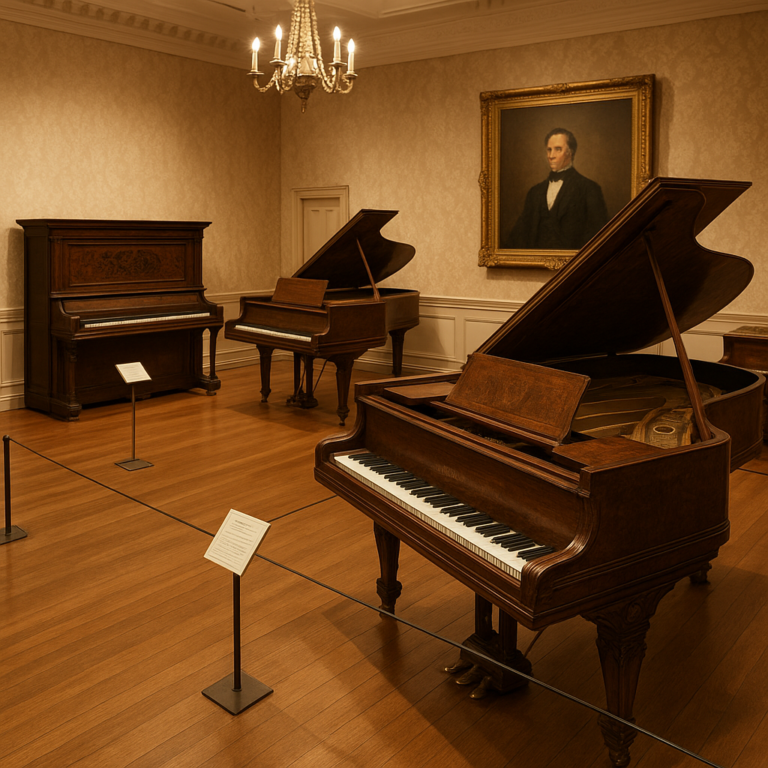
One of the most fascinating places to see this history today isn’t a shop at all—it’s a museum. If you want to see the oldest piano in the world, you need to head to the Metropolitan Museum of Art.
#featured-video
As highlighted in a popular guide on finding the oldest piano, you should head to Gallery 700 in the American Wing. Look for the “golden Diana” statue, head left, go up the stairs, and enter the André Mertens Galleries for Musical Instruments. It’s a pilgrimage every piano lover should make!
🎶 The Cultural Impact of New York’s Old Piano Companies on Music
Without the NYC piano boom, the “American Sound” might never have existed. These companies provided the instruments for the jazz age, the Broadway explosion, and the classical recitals at Carnegie Hall.
Steinway & Sons, for instance, created “Steinway Hall,” a concert venue that served as a marketing tool and a cultural hub. They understood that to sell pianos, they had to sell the experience of music. This blend of commerce and art is uniquely New Yorker.
💡 Tips for Collectors: What to Look for in a Historic New York Piano
Thinking of buying an antique? Here is our expert checklist:
- The Plate: Ensure the cast-iron plate has no cracks. A cracked plate usually means the piano is “dead.”
- The Wood: Look for Honduran Mahogany or Circassian Walnut. These woods are rare and highly prized.
- The Brand: Stick to reputable names like Steinway, Mason & Hamlin, or Sohmer.
- The “Feel”: Even if it’s out of tune, the keys should move freely without sticking.
Comparison: Antique vs. Modern Digital
| Feature | Antique NYC Piano | Modern Digital (e.g., Yamaha P-125) |
|---|---|---|
| Soul/Character | High ✅ | Low ❌ |
| Maintenance | High ❌ | Low ✅ |
| Portability | None ❌ | High ✅ |
| Investment | Potential ✅ | Depreciation ❌ |
👉 Shop Modern Alternatives on:
- Yamaha Digital Pianos: Amazon | Sweetwater
- Roland Digital Pianos: Amazon | Musician’s Friend
Check out our Digital Pianos category for more modern comparisons.
🕰️ New York State Piano Manufacturing from 1789 to Early 1900s
The timeline of New York piano making is a journey through the Industrial Revolution.
- 1789-1820: Early square pianos, mostly influenced by English designs.
- 1850s: The “Golden Age” begins with the founding of Steinway and Weber.
- 1880s-1910s: The height of production. Factories in the Bronx and Queens were pumping out thousands of units a month.
- 1929: The Great Depression hit the industry hard, causing many storied brands like Peek & Son to shutter their doors forever.
📝 WE RESTORE FAMILY PIANOS ONLY! – Expert Insights from Piano Brands™
At Piano Brands™, we have a saying: “We restore family pianos only!” Why? Because an old New York piano isn’t just wood and wire; it’s a vessel for memories.
We’ve seen pianos that survived the Civil War, pianos that were played in speakeasies during Prohibition, and pianos that taught five generations of children how to play “Chopsticks.” When you restore a Walters or a Krakauer, you aren’t just fixing an instrument; you are preserving a piece of New York’s soul.
But wait—if these companies were so successful, why did so many of them disappear? And what happened to the “Opera Piano” factory? We’ll resolve those mysteries as we wrap up our journey through the ivory keys.
Conclusion
After our deep dive into the world of old piano companies in New York, one thing is crystal clear: New York was the beating heart of American piano craftsmanship for over a century. From the pioneering genius of Steinway & Sons to the elegant uprights of Peek & Son’s Opera Piano, these companies didn’t just build instruments—they shaped the soundscape of America.
We’ve seen how Walters Piano Company carved a niche by partnering with Bloomingdale’s, how Weber and Sohmer innovated with baby grands and modern designs, and how many of these firms vanished during the Great Depression, leaving behind rare treasures for collectors and restorers.
If you’re lucky enough to own or find an antique New York piano, it’s worth the investment to restore it with care. These pianos carry not just musical potential but a rich cultural legacy. However, restoration is a serious commitment—always seek expert help, and never underestimate the value of provenance and brand reputation.
In summary:
✅ Positives:
- Rich historical significance
- Exceptional craftsmanship and tone
- Potentially valuable investments
- Unique cultural artifacts
❌ Negatives:
- High restoration and maintenance costs
- Scarcity of parts for some brands
- Fragility due to age
Our recommendation? If you want a piece of New York’s musical soul, start with a Steinway, Weber, or Peek & Son Opera Piano. These brands combine history, quality, and a story worth telling. And if you’re curious about the fate of some of the lesser-known names or the full story behind the “Opera Piano,” check out the detailed museum archives and restoration specialists linked below.
Recommended Links for Antique Piano Enthusiasts
👉 Shop Vintage and Historic New York Pianos:
- Steinway & Sons: Amazon Search | Steinway Official Website
- Weber Pianos: Amazon Search | Weber Official Website
- Sohmer & Co.: Amazon Search
- Walters Piano Company (Vintage): Antique Piano Shop
- Peek & Son / Opera Piano: Antique Piano Shop Museum
Books on Piano History and Restoration:
- The Piano Book by Larry Fine: Amazon Link
- Pianos and Their Makers by Alfred Dolge: Amazon Link
- Steinway & Sons by Richard K. Lieberman: Amazon Link
Frequently Asked Questions About Old New York Piano Companies
What happened to Kimball Piano Company?
Kimball was a major American piano manufacturer founded in 1887 in Chicago, not New York. While it was once one of the largest producers of pianos in the U.S., it eventually ceased manufacturing pianos in the late 20th century due to industry consolidation and competition from digital instruments. Unlike New York’s Steinway or Weber, Kimball’s legacy is more Midwestern and is now mostly a brand name licensed for digital pianos.
Who are the old piano manufacturers?
The old piano manufacturers include a wide range of companies, but in New York specifically, the most notable are Steinway & Sons, Weber Piano Company, Sohmer & Co., Hardman, Peck & Company, Walters Piano Company, Peek & Son (Opera Piano), and Krakauer Brothers. These companies thrived primarily during the 19th and early 20th centuries.
What famous piano makers are in New York?
New York’s most famous piano makers are Steinway & Sons, which remains active today, and historic brands like Weber, Sohmer, and Hardman, Peck & Company. Steinway’s factory in Queens is still a landmark of piano craftsmanship.
What is the name of a famous piano company?
Globally, Steinway & Sons is arguably the most famous piano company, known for its premium grand and upright pianos. Founded in New York City in 1853, it set the standard for concert pianos worldwide.
What were the piano brands in the 1800s?
In the 1800s, piano brands included Steinway & Sons (1853), Weber (1851), Hardman, Peck & Company (1842), Hazelton Brothers (1840), J. & C. Fischer (1845), and Kroeger Piano Company (1852), among others. Many of these companies were based in New York and contributed to the city’s reputation as a piano manufacturing hub.
What piano brands are from New York?
Notable New York piano brands include Steinway & Sons, Weber Piano Company, Sohmer & Co., Hardman, Peck & Company, Walters Piano Company, Peek & Son, and Krakauer Brothers. These brands were known for their craftsmanship and innovation.
What piano company was founded in New York?
Steinway & Sons was founded in New York City in 1853 by German immigrant Henry E. Steinway. It remains one of the most prestigious piano manufacturers in the world.
What are some historic piano manufacturers based in New York?
Historic manufacturers include Steinway & Sons, Weber, Sohmer, Hardman, Peck & Company, Walters, Peek & Son, Krakauer Brothers, Hazelton Brothers, and J. & C. Fischer.
How did New York contribute to the development of piano manufacturing?
New York’s strategic port location, access to skilled European craftsmen, and booming urban population created a perfect storm for piano manufacturing growth. The city became a hub for innovation, including the development of the modern grand piano action and the popularization of the upright grand. The concentration of factories and showrooms on “Piano Row” helped create a vibrant market and culture around pianos.
Which old New York piano companies are still influencing modern piano designs?
Steinway & Sons continues to influence modern piano design with its patented actions and soundboard technology. Other brands like Weber and Sohmer have been absorbed or influence design through legacy models and restoration practices. The craftsmanship standards set by these companies remain benchmarks for quality.
What should I know about vintage pianos made by New York companies?
Vintage New York pianos are prized for their superior craftsmanship, use of high-quality woods like Honduran Mahogany, and rich tonal qualities. However, they require careful restoration and maintenance. Knowing the brand, serial number, and history can significantly affect value and playability. Many vintage pianos from NYC companies are considered investments and family heirlooms.
Reference Links and Further Reading
- Sweeney Piano: New York Piano Manufacturers
- Antique Piano Shop: Walters Upright Grand Piano
- Antique Piano Shop Museum: Opera Piano – Peek & Son
- Steinway & Sons Official Website
- Weber Piano Company Official Website
- Piano Brands™ – Piano History Category
- Piano Brands™ – Piano Buying Guide
- Larry Fine’s The Piano Book on Amazon
If you’re ready to explore the fascinating world of historic New York pianos further, these resources and brands will be your best companions on the journey!