Support our educational content for free when you buy through links on our site. Learn more
🎹 Top 12 Piano Brands Known for High-Quality Acoustic Pianos (2025)


Ever wondered which piano brands truly deliver that rich, resonant sound and impeccable craftsmanship that professional pianists swear by? Whether you’re a seasoned performer or an aspiring musician, choosing the right acoustic piano can feel like navigating a labyrinth of options. From the legendary Steinway & Sons to innovative Japanese makers like Yamaha and Kawai, this guide uncovers the top 12 piano brands renowned for their superior quality and timeless appeal.
Did you know that some handcrafted grand pianos take over 300 hours to build, with thousands of parts meticulously assembled by expert artisans? Later in this article, we’ll reveal how these brands differ in tone, touch, and durability — and help you find the perfect piano that matches your style and space. Ready to strike the perfect chord? Let’s dive in!
Key Takeaways
- Steinway & Sons, Bösendorfer, Fazioli, and Blüthner are among the most prestigious brands known for exquisite tone and craftsmanship.
- Japanese brands Yamaha and Kawai offer innovative, reliable, and more accessible acoustic pianos without compromising quality.
- German manufacturers like Schimmel, Sauter, and Grotrian combine precision engineering with rich tonal character.
- Choosing the right piano depends on your playing style, space, and budget, with grand and upright options available across all top brands.
- Investing in a high-quality acoustic piano means embracing an instrument that can last generations and inspire your musical journey.
👉 Shop Acoustic Pianos from Top Brands:
- Steinway & Sons: Amazon Steinway Pianos | Steinway Official
- Yamaha Acoustic Pianos: Amazon Yamaha Pianos | Yamaha Official
- Kawai Acoustic Pianos: Amazon Kawai Pianos | Kawai Official
Table of Contents
- ⚡️ Quick Tips and Facts
- 🎶 The Enduring Legacy: A Brief History of Acoustic Piano Craftsmanship
- 🤔 Why High-Quality Acoustic Pianos Matter: The Heart of Your Music
- 🏆 The Maestros of the Keys: Top Acoustic Piano Brands Renowned for Excellence
- 1. 👑 Steinway & Sons: The Gold Standard of Grand Pianos
- 2. 🇯🇵 Yamaha: Innovation Meets Tradition
- 3. 🇯🇵 Kawai: The Art of the Action
- 4. 🇦🇹 Bösendorfer: Austrian Elegance and Unrivaled Depth
- 5. 🇮🇹 Fazioli: The Italian Masterpiece
- 6. 🇩🇪 Schimmel: German Precision and Lyrical Tone
- 7. 🇩🇪 Steingraeber & Söhne: Handcrafted Heritage
- 8. 🇩🇪 Blüthner: The Golden Tone
- 9. 🇩🇪 Sauter: German Engineering with a Soul
- 10. 🇩🇪 Grotrian: A Legacy of Rich Sound
- 11. 🇨🇿 Petrof: Eastern European Craftsmanship
- ✨ Other Notable High-Quality Acoustic Piano Brands
- 🧐 Decoding the Differences: What Makes an Acoustic Piano “High-Quality”?
- 🏡 Grand vs. Upright: Choosing the Right High-Quality Acoustic Piano for Your Space
- 💰 Investing in Excellence: Understanding the Value of a Premium Acoustic Piano
- 🛠️ Maintaining Your Masterpiece: Care Tips for High-Quality Acoustic Pianos
- ❓ Which High-Quality Acoustic Piano Maker Is Right for You? Finding Your Perfect Match
- ✅ Our Expert Recommendations & Personal Anecdotes
- 💡 Quick Buying Guide: What to Look For in a Premium Acoustic Piano
- 🔚 Conclusion: Your Journey to Acoustic Piano Perfection
- 🔗 Recommended Links
- ❓ FAQ: Your Acoustic Piano Questions Answered
- 📚 Reference Links
Here at Piano Brands™, we’ve spent countless hours with these magnificent instruments. We’ve tuned them, played them, and yes, even argued passionately about them over coffee. So, let’s pull back the curtain and dive into the world of high-quality acoustic pianos. Which brands truly hit the high notes? Let’s find out!
⚡️ Quick Tips and Facts
In a hurry? Here’s the condensed score!
- The “Big Four”: When people talk about the pinnacle of piano craftsmanship, four names often come up: Steinway & Sons, Bösendorfer, Fazioli, and Blüthner. These are the titans of the industry.
- German Engineering is King 🇩🇪: A significant number of the world’s most revered piano brands hail from Germany, including Schimmel, Sauter, Grotrian, and Steingraeber & Söhne. Their reputation for precision is well-earned.
- Japanese Innovation 🇯🇵: Don’t count out Japan! Yamaha and Kawai are giants known for exceptional quality, consistency, and technological advancements, often at a more accessible price point.
- It’s All in the Action: The “action” is the complex mechanism that translates your touch into sound. Brands like Kawai are famous for their innovative Millennium III action, which uses ABS-carbon composites for stability.
- Size Matters (Sometimes): A tall, high-quality upright piano can often produce a richer, more powerful sound than a small, entry-level baby grand piano.
- Handmade vs. Factory-Made: The most expensive pianos are almost entirely handmade, with some C. Bechstein models taking over 300 hours of skilled labor to complete. This meticulous process contributes to their unique character and longevity.
🎶 The Enduring Legacy: A Brief History of Acoustic Piano Craftsmanship
The piano’s journey from a simple harpsichord-like instrument to the concert grands we see today is a story of passion and relentless innovation. It all started around 1700 with Bartolomeo Cristofori in Italy, but it was the 19th and early 20th centuries that saw the birth of the legendary brands we revere. For a deeper dive, check out our guides on Piano History.
German immigrant Heinrich Engelhard Steinweg, who later became Henry E. Steinway, founded Steinway & Sons in New York City in 1853, setting a new standard for the instrument. Around the same time in Germany and Austria, names like Julius Blüthner (1853), Carl Bechstein (1853), and Ignaz Bösendorfer (1828) were establishing their own legacies of unparalleled craftsmanship. These weren’t just businesses; they were dynasties built on wood, wire, and a deep love for music.
🤔 Why High-Quality Acoustic Pianos Matter: The Heart of Your Music
In an age of incredible Digital Pianos, why do we still obsess over these acoustic behemoths? Simple: it’s the feeling. A true acoustic piano is a living, breathing thing. As one source puts it, digital instruments simply can’t replicate the “exquisite jumble of sympathetic resonances” that occur when a hammer strikes a string and the entire wooden body of the piano vibrates with it.
A high-quality acoustic piano offers:
- ✅ Unmatched Dynamic Range: The control you have from the softest pianissimo to the most thunderous fortissimo is unparalleled.
- ✅ Superior Tonal Complexity: The sound is rich, organic, and full of subtle overtones that digital samples can’t fully capture.
- ✅ A Tactile Connection: The physical feedback through the keys and the vibrations you feel as you play create an intimate connection between you and the music.
- ✅ A Lifelong Investment: A well-maintained premium piano can last for generations, often becoming a cherished family heirloom.
❌ The drawbacks? They’re heavy, require regular tuning and maintenance, and are sensitive to their environment. But for those who seek the ultimate musical expression, there is no substitute.
🏆 The Maestros of the Keys: Top Acoustic Piano Brands Renowned for Excellence
Alright, let’s get to the main event! We’re ranking the best of the best. This isn’t just about specs; it’s about soul, character, and that indefinable magic that makes an instrument special. For more head-to-head analyses, browse our Piano Comparison guides.
1. 👑 Steinway & Sons: The Gold Standard of Grand Pianos
If you ask a random person to name a famous piano brand, they’ll probably say “Steinway.” There’s a reason for that. For over a century, they’ve been the benchmark against which all others are measured.
| Feature | Rating (1-10) |
|---|---|
| Tone Quality | 10 |
| Action & Touch | 10 |
| Craftsmanship | 10 |
| Resale Value | 10 |
| Innovation | 9 |
Handcrafted with over 12,000 individual parts, a Steinway is described as a “true masterpiece.” They are renowned for their powerful, rich tone and incredibly responsive action. Playing a Steinway feels like driving a luxury sports car—the power is effortlessly under your control. Their uprights, like the K-52, are legendary, featuring a soundboard larger than many baby grands, which contributes to its resonant voice.
- Pros: Iconic and powerful sound, exceptional touch, incredible investment value.
- Cons: Among the most expensive pianos on the market.
👉 Shop Steinway & Sons on:
- Pre-owned Steinway Pianos: Merriam Music
- **Stein
🔚 Conclusion: Your Journey to Acoustic Piano Perfection
So, after our deep dive into the world of high-quality acoustic pianos, what have we learned? The landscape is rich, varied, and full of incredible craftsmanship that spans centuries and continents. Whether it’s the timeless elegance of Steinway & Sons, the innovative precision of Yamaha and Kawai, or the handcrafted artistry of Bösendorfer, Fazioli, and Schimmel, there’s a perfect piano out there for every player’s taste and space.
Positives of High-Quality Acoustic Pianos:
- Unrivaled sound richness and dynamic control that digital pianos still strive to emulate.
- Exceptional craftsmanship and durability, often lasting generations.
- A tactile, expressive connection that inspires musicianship and creativity.
- Resale value and investment potential, especially with iconic brands.
Negatives to Consider:
- They require regular maintenance and tuning.
- They are heavy and require professional moving.
- The initial investment can be significant, especially for premium models.
If you’re serious about your music and want an instrument that grows with you, an acoustic piano from one of these renowned brands is a confident recommendation. It’s not just a purchase; it’s an investment in your musical journey and legacy.
Remember that the “best” piano is the one that feels right to you. Try before you buy, listen carefully, and consider your space, budget, and playing style. The perfect acoustic piano awaits — and it’s worth every note.
🔗 Recommended Links
👉 Shop Top Acoustic Piano Brands:
- Steinway & Sons: Amazon Steinway Search | Steinway Official Website
- Yamaha Acoustic Pianos: Amazon Yamaha Pianos | Yamaha Official Website
- Kawai Acoustic Pianos: Amazon Kawai Pianos | Kawai Official Website
- Bösendorfer: Amazon Bösendorfer Search | Bösendorfer Official Website
- Fazioli: Fazioli Official Website
- Schimmel: Schimmel Official Website
- Blüthner: Blüthner Official Website
- Sauter: Sauter Official Website
- Grotrian: Grotrian Official Website
- Steingraeber & Söhne: Steingraeber Official Website
Recommended Books on Piano Craftsmanship and History:
- The Piano Book by Larry Fine — Amazon Link
- Pianos and Their Makers by Alfred Dolge — Amazon Link
- The Art of Piano Playing by Heinrich Neuhaus — Amazon Link
❓ FAQ: Your Acoustic Piano Questions Answered
What are the top-rated acoustic piano brands for beginners?
For beginners, brands like Yamaha and Kawai stand out due to their consistent quality, durability, and affordability. Models like the Yamaha U1 or Kawai K-300 offer excellent touch and tone without overwhelming new players. These brands also provide good resale value and easier maintenance, making them smart starter choices.
How do high-quality acoustic pianos compare to digital pianos?
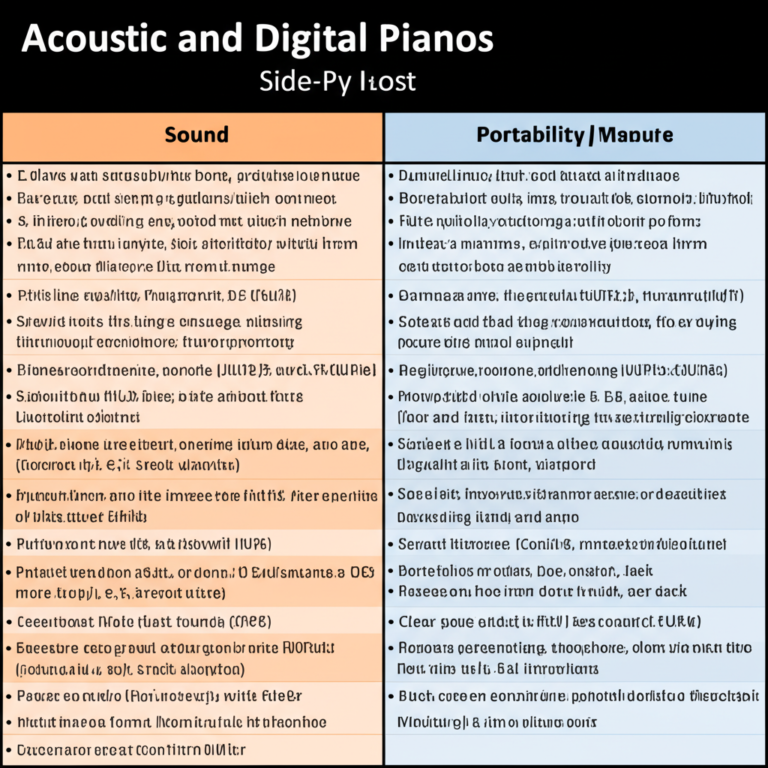
While digital pianos have made huge strides in replicating the sound and feel of acoustic pianos, nothing quite matches the organic resonance and tactile feedback of a high-quality acoustic piano. Acoustic pianos produce complex sympathetic vibrations and tonal nuances that digital sampling can only approximate. However, digital pianos offer portability, volume control, and maintenance-free operation, which can be advantageous in certain contexts.
Which piano brands offer the best value for professional musicians?
Professional musicians often gravitate toward Steinway & Sons, Bösendorfer, and Fazioli for their unmatched tonal quality and craftsmanship. However, Schimmel and Blüthner also provide excellent performance at slightly more accessible price points. For those seeking innovation with reliability, Yamaha’s CFX concert grand and Kawai’s Shigeru Kawai series are also highly regarded.
What features should I look for in a high-quality acoustic piano?
Look for:
- Solid spruce soundboard for rich resonance.
- Handcrafted action with responsive, even touch.
- High-quality materials like hard rock maple for pinblocks and premium hammers.
- Durability and reputation for longevity.
- Size and design that fit your space and musical needs.
- Optional features like silent practice systems or fourth pedals (e.g., Fazioli’s unique soft pedal).
How do Yamaha and Steinway acoustic pianos differ in sound and build?
Yamaha pianos tend to have a brighter, clearer tone with a more consistent touch, thanks to modern manufacturing and composite materials in their actions. They are known for reliability and versatility across genres.
Steinway & Sons pianos offer a warmer, richer, and more complex tonal palette, with handcrafted components and a traditional wooden action that many professionals swear by. Steinways are often described as having a more “organic” feel but require more maintenance.
Are there affordable acoustic piano brands known for durability?
Yes! Brands like Yamaha, Kawai, and Pearl River (China’s largest piano manufacturer) offer durable, well-built instruments at more accessible price points. These brands use modern manufacturing techniques to ensure consistent quality and longevity, making them excellent choices for students and intermediate players.
What are the benefits of choosing a well-known acoustic piano brand?
- Proven quality and craftsmanship backed by decades or centuries of experience.
- Better resale value due to brand recognition.
- Access to authorized service and parts, ensuring easier maintenance.
- Greater consistency in manufacturing, reducing surprises.
- Prestige and confidence in owning an instrument respected by professionals worldwide.
📚 Reference Links
- Steinway & Sons Official Site
- Yamaha Acoustic Pianos
- Kawai Official Website
- Bösendorfer Official Website
- Fazioli Official Website
- Schimmel Pianos
- Blüthner Pianos
- Sauter Pianos
- Grotrian Pianos
- Steingraeber & Söhne
- Guide to the World’s Best Acoustic Piano Brands to Buy
- MusicRadar: Best Acoustic Pianos
- Muex: Top 10 World’s Best Piano Brands
We hope this guide helps you strike the perfect chord in your piano search! 🎹✨