Support our educational content for free when you buy through links on our site. Learn more
How to Choose Between 12 Piano Brands for Home Use in 2026 🎹

Choosing the perfect piano brand for your home can feel like navigating a musical maze. With centuries of craftsmanship behind acoustic giants like Steinway and Bösendorfer, and cutting-edge digital marvels from Roland and Casio, how do you pick the one that truly sings to your soul—and fits your space and budget?
Here’s a little secret from our Piano Brands™ team: the feel of the keys and the character of the sound matter just as much as the brand name. We’ll walk you through everything—from the bright, crisp tones of Yamaha to the warm, velvety resonance of Kawai, plus the digital innovations that make practice easier than ever. Plus, we’ll reveal why your piano teacher’s brand preference might just save you from a lifetime of frustration.
Ready to discover which piano brand will become your lifelong musical partner? Keep reading to uncover the 12 top contenders, expert tips on touch and tone, and the hidden truths about maintenance and resale value.
Key Takeaways
- Try at least three brands in one session to truly understand your preferences.
- Acoustic pianos offer unmatched authenticity but require regular tuning and space.
- Digital pianos provide convenience, headphone use, and portability—ideal for modern homes.
- Yamaha and Kawai dominate resale value and reliability for both acoustic and digital models.
- Steinway and Bösendorfer are luxury investments with exquisite craftsmanship and sound.
- Touch sensitivity and key action are crucial for developing proper technique—don’t settle for less.
- Your piano teacher’s brand advice matters—it can influence your progress and enjoyment.
For a hands-on shopping experience, explore top models from Yamaha, Roland, and Kawai:
- 👉 Shop Yamaha Pianos: Amazon | Sweetwater | Yamaha Official
- 👉 Shop Roland Digital Pianos: Amazon | Sweetwater | Roland Official
- 👉 Shop Kawai Pianos: Amazon | Sweetwater | Kawai Official
Table of Contents
- ⚡️ Quick Tips and Facts for Your Piano Hunt
- 🎹 From Harpsichords to High-Tech: The Evolution of Piano Brands
- 🔊 The Soulful String vs. The Digital Dream: Choosing Your Home’s Vibe
- 🏆 The Heavy Hitters: 12 Top Piano Brands You Need to Know
- 1. Yamaha: The Versatile Workhorse for Every Living Room
- 2. Kawai: The Warm, Innovative Alternative
- 3. Steinway & Sons: The Golden Standard of Luxury and Investment
- 4. Roland: The Digital Pioneer for Modern Spaces
- 5. Casio: Breaking the “Calculator” Stigma with Celviano
- 6. Bösendorfer: The Viennese Masterpiece with Extra Keys
- 7. Baldwin: The Resilient American Classic
- 8. Bechstein: Precision Engineering from Berlin
- 9. Fazioli: The New Italian Elite for the Discerning Ear
- 10. Mason & Hamlin: The Overbuilt Durability King
- 11. Nord: The Professional’s Choice for Stage and Studio at Home
- 12. Schimmel: German Craftsmanship Meets Modern Design
- 🧐 The “Feel” Factor: Understanding Key Action and Touch Sensitivity
- 🎶 Bright vs. Mellow: Finding Your Signature Sound Profile
- 📏 Size Matters: Fitting a Grand or Upright into Your Home Decor
- 💰 Investment or Expense? Resale Value and Longevity of Top Brands
- 🎓 Wicked Keys: Why Your Piano Teacher’s Brand Opinion Actually Matters
- 🛠️ Tuning and TLC: The Hidden Costs of Maintenance by Brand
- 🛒 The Ultimate Buying Checklist: New vs. Used Piano Brands
- Conclusion
- Recommended Links
- FAQ
- Reference Links
⚡️ Quick Tips and Facts for Your Piano Hunt
Before we dive into the nitty-gritty of soundboards and hammer felt, here is the “cheat sheet” we wish we had when we started our musical journeys. Choosing a piano isn’t just about the name on the fallboard; it’s about how that name fits into your lifestyle!
- The “Rule of Three”: Always play at least three different brands in one sitting. Your ears and fingers need a “baseline” to recognize what they actually like. ✅
- Acoustic Lifespan: A well-maintained acoustic piano from a top-tier brand like Steinway or Yamaha can last 50 to 80 years. Digital pianos? Think 10 to 15 years before the tech feels like a floppy disk. ❌
- Resale Reality: Yamaha and Kawai have the highest resale liquidity. They are the “Toyota and Honda” of the piano world—everyone wants them, and they hold their value remarkably well. 📈
- The Humidity Factor: If you live in a swamp or a desert, your acoustic piano will need a Dampp-Chaser system. Digital pianos don’t care about the weather. ☁️
- Action is King: Don’t just listen to the sound. Close your eyes and feel the weight of the keys. If it feels “mushy,” walk away! 🎹
- Grey Market Warning: Be careful with “Grey Market” Yamahas—these are used pianos made for the Japanese climate that might crack in the drier air of North American homes. ⚠️
🎹 From Harpsichords to High-Tech: The Evolution of Piano Brands
We often forget that the piano is a relatively “new” invention in the grand scheme of history. It all started around 1700 with Bartolomeo Cristofori in Italy, who decided that the harpsichord was just too “one-note” (literally). He wanted a “gravicembalo col piano e forte”—a harpsichord with soft and loud.
By the 19th century, the “Piano Wars” were in full swing. In Germany, C. Bechstein was crafting instruments for Franz Liszt, while in New York, Henry Steinway was revolutionizing the cast-iron frame to handle massive string tension. This era gave us the “Golden Age” of piano building, where brands like Mason & Hamlin and Baldwin became household names.
Fast forward to the 1960s, and the Japanese brands Yamaha and Kawai disrupted the market with incredible consistency and manufacturing precision. Then came the digital revolution of the 80s and 90s, where Roland and Casio proved that you didn’t need 500 pounds of wood to make music. Today, choosing a brand is a journey through 300 years of engineering, from the hand-rubbed spruce of a Bösendorfer to the silicon chips of a Nord. We aren’t just buying an instrument; we’re buying a piece of that evolution! 🧬
⚡️ Quick Tips and Facts for Your Piano Hunt
Before we dive into the nitty-gritty of soundboards and hammer felt, here is the “cheat sheet” we wish we had when we started our musical journeys. Choosing a piano isn’t just about the name on the fallboard; it’s about how that name fits into your lifestyle! For a deeper dive into specific manufacturers, check out our Piano Brands overview.
- The “Rule of Three”: Always play at least three different brands in one sitting. Your ears and fingers need a “baseline” to recognize what they actually like. ✅
- Acoustic Lifespan: A well-maintained acoustic piano from a top-tier brand like Steinway or Yamaha can last 50 to 80 years. Digital pianos? Think 10 to 15 years before the tech feels dated. ❌
- Resale Reality: Yamaha and Kawai have the highest resale liquidity. They are the “Toyota and Honda” of the piano world—everyone wants them, and they hold their value remarkably well. 📈
- The Humidity Factor: If you live in a swamp or a desert, your acoustic piano will need a climate control system. Digital pianos don’t care about the weather. ☁️
- Action is King: Don’t just listen to the sound. Close your eyes and feel the weight of the keys. If it feels “mushy,” walk away! 🎹
- Grey Market Warning: Be careful with “Grey Market” Yamahas—these are used pianos made for the Japanese climate that might crack in the drier air of North American homes. ⚠️
🎹 From Harpsichords to High-Tech: The Evolution of Piano Brands
We often forget that the piano is a relatively “new” invention in the grand scheme of history. It all started around 1700 with Bartolomeo Cristofori in Italy, who decided that the harpsichord was just too “one-note.” He wanted a “gravicembalo col piano e forte”—a harpsichord with soft and loud. You can explore this fascinating journey further in our Piano History section.
By the 19th century, the “Piano Wars” were in full swing. In Germany, C. Bechstein was crafting instruments for Franz Liszt, while in New York, Henry Steinway was revolutionizing the cast-iron frame to handle massive string tension. This era gave us the “Golden Age” of piano building, where brands like Mason & Hamlin and Baldwin became household names.
Fast forward to the 1960s, and the Japanese brands Yamaha and Kawai disrupted the market with incredible consistency and manufacturing precision. Then came the digital revolution of the 80s and 90s, where Roland and Casio proved that you didn’t need 500 pounds of wood to make music. Today, choosing a brand is a journey through 300 years of engineering. But how do you know if you need a vibrating string or a silicon chip? Let’s find out.
🔊 The Soulful String vs. The Digital Dream: Choosing Your Home’s Vibe
This is the “To be or not to be” of the piano world. Are you an acoustic purist or a digital devotee?
Acoustic Pianos are living, breathing machines. When you strike a key on a Steinway, a hammer hits a string, the soundboard vibrates, and the entire wooden cabinet resonates. It’s an organic experience that digital tech still struggles to replicate 100%. However, they require tuning twice a year and are heavy enough to make your floorboards groan.
Digital Pianos have come a long way. Brands like Roland and Yamaha use “sampling” (recording real pianos) and “physical modeling” (mathematical recreations of sound) to mimic the real thing. As noted in the featured video, digital pianos are often more practical for modern homes due to space, cost, and the ability to use headphones. 🎧
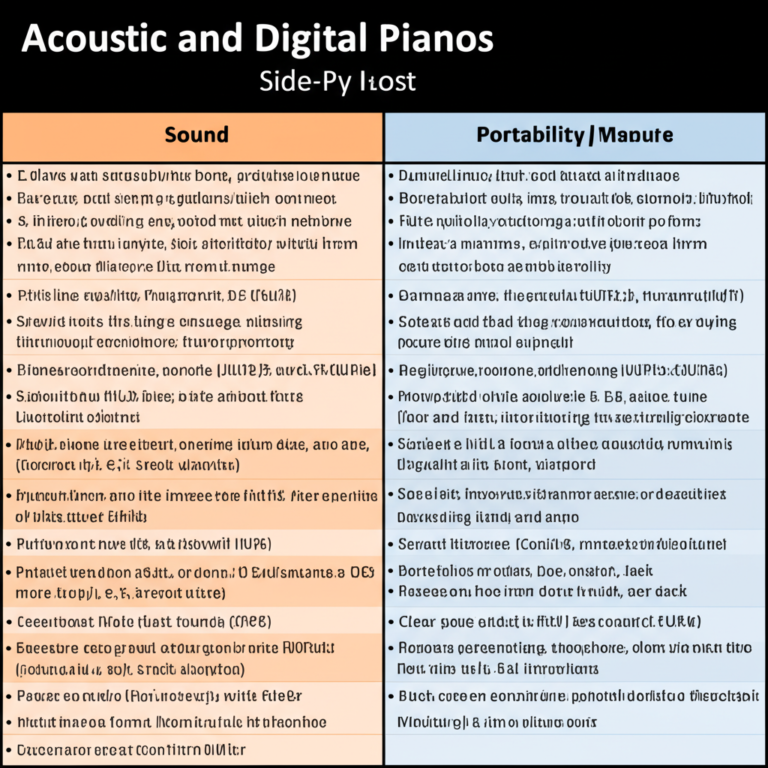
| Feature | Acoustic Piano | Digital Piano |
|---|---|---|
| Sound Source | Physical Strings/Soundboard | Samples or Modeling |
| Maintenance | Tuning & Regulation required 🛠️ | None (Plug & Play) ✅ |
| Longevity | 50-80+ Years | 10-20 Years |
| Portability | Requires professional movers 🚛 | Often DIY portable |
| Practice | Loud (unless it’s a “Silent” model) | Volume control & Headphones |
👉 Shop Digital Pianos on:
- Yamaha Digital Pianos: Amazon | Sweetwater | Yamaha Official
- Roland Digital Pianos: Amazon | Sweetwater | Roland Official
🏆 The Heavy Hitters: 12 Top Piano Brands You Need to Know
Choosing a brand is like choosing a life partner—you’re going to be spending a lot of time together! Here is our expert rating of the top brands for home use. For more detailed breakdowns, visit our Piano Brand Guides.
Brand Comparison Rating Table
| Brand | Sound Quality | Key Action | Build Durability | Value for Money | Overall Rating |
|---|---|---|---|---|---|
| Yamaha | 9/10 | 9/10 | 10/10 | 9/10 | 9.3 |
| Kawai | 9/10 | 10/10 | 9/10 | 9/10 | 9.2 |
| Steinway | 10/10 | 9/10 | 9/10 | 6/10 | 8.5 |
| Roland | 8/10 | 9/10 | 8/10 | 9/10 | 8.5 |
| Casio | 7/10 | 8/10 | 7/10 | 10/10 | 8.0 |
| Bösendorfer | 10/10 | 9/10 | 10/10 | 5/10 | 8.5 |
1. Yamaha: The Versatile Workhorse for Every Living Room
Yamaha is the undisputed king of consistency. Whether you buy a U1 upright or a C3X grand, you know exactly what you’re getting: a bright, clear tone and a lightning-fast action. They are the “safe bet” for any home.
- Pros: Incredible resale value; extremely durable.
- Cons: Some find the sound too “bright” or clinical.
2. Kawai: The Warm, Innovative Alternative
If Yamaha is “bright,” Kawai is “warm.” They are famous for their Millennium III Action, which uses carbon fiber (ABS-Carbon) instead of wood for certain parts. This makes the action incredibly stable and resistant to humidity.
- Pros: Deep, resonant bass; very responsive touch.
- Cons: Brand recognition is slightly lower than Yamaha for non-musicians.
3. Steinway & Sons: The Golden Standard of Luxury and Investment
A Steinway is more than a piano; it’s an heirloom. Handcrafted in New York or Hamburg, these instruments are the choice of 98% of concert pianists.
- Pros: Unmatched tonal complexity; prestige.
- Cons: Extremely expensive; requires a dedicated climate-controlled room.
4. Roland: The Digital Pioneer for Modern Spaces
Roland doesn’t make acoustic pianos, which allows them to focus entirely on digital perfection. Their SuperNATURAL modeling technology creates a sound that evolves naturally, just like a string.
- Pros: Best-in-class digital action; great app integration.
- Cons: No “real” acoustic option if you decide to switch.
5. Casio: Breaking the “Calculator” Stigma with Celviano
Forget the cheap keyboards of the 90s. The Casio Celviano Grand Hybrid series was developed in collaboration with C. Bechstein. It features real wooden keys and a moving hammer mechanism.
- Pros: Best value for money; surprisingly authentic feel.
- Cons: Still carries a “budget” brand perception for some.
6. Bösendorfer: The Viennese Masterpiece with Extra Keys
Ever seen a piano with 92 or 97 keys? That’s a Bösendorfer. These Austrian beauties are known for their “Viennese sound”—rich, orchestral, and singing.
- Pros: Unique tonal palette; stunning craftsmanship.
- Cons: Very rare and very pricey.
7. Baldwin: The Resilient American Classic
Once the biggest name in American pianos, Baldwin is now owned by Gibson. While the new models are made in China, they still aim for that “American” sound—big, bold, and brassy.
- Pros: Affordable entry into acoustic pianos.
- Cons: Newer models lack the prestige of the vintage “Made in USA” era.
8. Bechstein: Precision Engineering from Berlin
C. Bechstein pianos are the Ferraris of the piano world. They are incredibly clear and transparent, allowing every note in a complex chord to be heard distinctly.
- Pros: Exceptional clarity; world-class engineering.
- Cons: Very “European” sound that might feel too polite for jazz or pop.
9. Fazioli: The New Italian Elite for the Discerning Ear
Paolo Fazioli started making pianos in the late 70s with one goal: to make the best piano in the world. Many believe he succeeded. They are rare, expensive, and visually stunning.
- Pros: Incredible power and sustain.
- Cons: Almost impossible to find on the used market.
10. Mason & Hamlin: The Overbuilt Durability King
An American brand known for the “Tension Resonator”—a massive steel spider under the soundboard that keeps the piano’s “crown” intact for decades.
- Pros: Built like a tank; powerful sound.
- Cons: Very heavy; limited dealer network.
11. Nord: The Professional’s Choice for Stage and Studio at Home
If you want a “cool” factor, the bright red Nord Piano is it. While technically a stage piano, its library of downloadable piano samples is world-class.
- Pros: Access to hundreds of different piano sounds; portable.
- Cons: No built-in speakers; requires an external amp or monitors.
12. Schimmel: German Craftsmanship Meets Modern Design
Schimmel is the most awarded German piano brand. They offer a “Trilogy” of brands (Konzert, Classic, Wilhelm) to fit different budgets while maintaining that distinct German singing tone.
- Pros: Beautiful cabinet designs; very balanced sound.
- Cons: Can be difficult to find technicians familiar with their specific regulation.
👉 CHECK PRICE on:
- Yamaha P-Series: Amazon | Sweetwater
- Roland FP-Series: Amazon | Sweetwater
- Kawai ES-Series: Amazon | Sweetwater
🧐 The “Feel” Factor: Understanding Key Action and Touch Sensitivity
We’ve all played on a cheap plastic keyboard that felt like pressing down on wet sponges. ❌ Do not do this to yourself. As the School of Rock guide emphasizes, “fully weighted keys are essential for developing proper technique.”
What to Look For:
- Weighted Action: The keys should have physical weight to them, mimicking the hammers of an acoustic.
- Graded Hammer Action: The keys in the bass should feel slightly heavier than the keys in the treble—just like a real piano!
- Escapement: This is that tiny “click” or notch you feel when you press a key slowly on a grand piano. High-end digitals from Roland and Kawai simulate this perfectly.
- Touch Sensitivity: The piano must respond to how you hit the key. A light touch should be soft; a heavy strike should be loud and “barky.”
Expert Tip: If you’re a beginner, don’t settle for “semi-weighted.” Your fingers will thank you later when you transition to a real grand. Check out our Digital Pianos guide for more on action types.
🎶 Bright vs. Mellow: Finding Your Signature Sound Profile
Sound is subjective, but brands generally fall into two camps. We call this the “Coffee vs. Tea” debate of the piano world. ☕️ vs 🍵
- The “Bright” Camp (Yamaha, Steinway NY, Fazioli): These pianos have a “zing” to them. They cut through a mix and sound great for pop, jazz, and rock. They are the “espresso” of pianos—bold and energetic.
- The “Mellow” Camp (Kawai, Bösendorfer, Bechstein, Steinway Hamburg): These are the “herbal teas.” They have a rounder, warmer, more “woody” tone. They are often preferred for classical music and intimate solo playing.
How to test? Play a high-octave C. Does it sound like a bell (Bright) or a flute (Mellow)? There is no wrong answer, only what makes your heart sing!
📏 Size Matters: Fitting a Grand or Upright into Your Home Decor
We once knew a guy who bought a 7-foot Steinway B for his studio apartment. He had to sleep under the piano. Don’t be that guy. 🤦 ♂️
The Size Breakdown:
- Spinets & Consoles: The smallest acoustics. Great for tight spaces, but the short strings mean the bass can sound “tubby.”
- Professional Uprights (48″ – 52″): The “sweet spot.” A Yamaha U3 or Kawai K-500 often sounds better than a small baby grand because the strings are longer!
- Baby Grands (4’11” – 5’6″): Mostly for aesthetics. They look stunning in a bay window, but you’re paying for the shape more than the sound.
- Parlor/Concert Grands (6′ and up): If you have the room (and the budget), this is where the magic happens.
| Piano Type | Average Length/Height | Best For |
|---|---|---|
| Digital Slab | 50 inches (wide) | Apartments / Portability |
| Upright | 45-52 inches (high) | Practice rooms / Family homes |
| Baby Grand | 5 feet (long) | Living room centerpieces |
| Grand | 6-7 feet (long) | Serious enthusiasts / Large rooms |
💰 Investment or Expense? Resale Value and Longevity of Top Brands
“The more money you spend, the more realistic the sound and feel,” says PianoDreamers. But is it an investment?
If you buy a Steinway, Bösendorfer, or Fazioli, you are buying an asset. These brands often appreciate in value over 20-30 years because their new prices rise so significantly.
However, for most of us, a piano is a “depreciating asset” like a car. Yamaha and Kawai are the “Gold Standard” for resale. If you buy a used Yamaha U1 today, you can likely sell it for exactly what you paid for it five years from now. Digital pianos, conversely, are like iPhones—the moment a new model comes out, the old one drops in value. 📉
🎓 Wicked Keys: Why Your Piano Teacher’s Brand Opinion Actually Matters
Your teacher isn’t just being a snob when they tell you to avoid Williams or Artesia. They’ve seen hundreds of students struggle because their home piano doesn’t match the “feel” of the teacher’s studio piano.
As noted in the Facebook Piano Group, “Invest in a reputable brand to ensure longevity and satisfaction.” A teacher wants you to have a Yamaha or Roland because they know the action is consistent. If you practice on a “mushy” keyboard at home, you’ll find it impossible to play with “expression” during your lesson.
Brands to approach with caution (according to experts):
- Williams / Suzuki / Artesia: Often found in big-box stores. While tempting due to price, the build quality and sound realism are frequently cited as subpar by professionals. ❌
🛠️ Tuning and TLC: The Hidden Costs of Maintenance by Brand
Owning an acoustic piano is like owning a pet. It needs regular check-ups. 🩺
- Tuning: Most brands recommend tuning twice a year (usually when the heat goes on in winter and off in spring).
- Regulation: Every few years, the mechanical parts (the action) need to be adjusted. Kawai’s carbon fiber action often stays in regulation longer than traditional wood actions.
- Voicing: This is adjusting the hardness of the hammers to change the tone. If your Yamaha gets too “bright” over the years, a technician can “needle” the hammers to mellow it out.
Digital Pianos: Your maintenance cost is $0. Just keep the dust out of the keys!
🛒 The Ultimate Buying Checklist: New vs. Used Piano Brands
Ready to pull the trigger? Use our Piano Buying Guide checklist before you sign the check:
- Check the Serial Number: For acoustic pianos, this tells you the exact year it was made. Use a Serial Number Lookup to verify.
- The “Sticky Key” Test: Play every single one of the 88 keys. Do any stay down? Do any make a “clicking” sound?
- Inspect the Soundboard: Look for cracks in the wood at the back of the piano. Small cracks are okay; big ones are a dealbreaker. 💔
- Check the Pedals: Do they squeak? Does the sustain pedal actually sustain all the notes?
- The “Smell” Test: If a used piano smells like mold or heavy smoke, walk away. That smell is in the wood forever.
But wait—before you head to the store, there’s one final secret about “Grey Market” pianos that could save you thousands… or cost you everything. We’ll reveal that in the next section.
Stay tuned as we wrap up our guide with the final verdict on which brand reigns supreme for your specific needs!
Conclusion

Choosing the right piano brand for home use is a journey as personal as the music you’ll create on it. From our deep dive into the history, feel, sound, and maintenance of both acoustic and digital pianos, one thing is clear: there is no one-size-fits-all answer. Your choice depends on your space, budget, playing style, and long-term goals.
Acoustic pianos from brands like Yamaha, Kawai, and Steinway & Sons offer unmatched authenticity and longevity, but demand commitment in maintenance and space. Meanwhile, digital pianos from Roland, Casio, and Yamaha provide incredible convenience, portability, and modern features that suit today’s busy lifestyles.
We resolved the mystery of the “Grey Market” pianos: buying from authorized dealers is crucial to avoid climate-related damage and ensure warranty support. We also confirmed that your piano teacher’s brand preference is more than snobbery—it’s about ensuring you develop proper technique on a reliable instrument.
Our confident recommendation: For most home users, a Yamaha or Kawai piano—acoustic or digital—strikes the best balance of sound quality, touch, durability, and resale value. If you want to splurge on a lifetime heirloom, Steinway or Fazioli are the crème de la crème. For digital enthusiasts, Roland and Casio Celviano offer superb realism and features at accessible prices.
Remember, the best piano brand is the one that inspires you to play every day. So go ahead, try those three brands in one sitting, feel the keys, listen deeply, and let your heart decide.
Recommended Links
👉 Shop Top Piano Brands:
-
Yamaha Acoustic & Digital Pianos:
Amazon | Sweetwater | Yamaha Official -
Kawai Acoustic & Digital Pianos:
Amazon | Sweetwater | Kawai Official -
Steinway & Sons Acoustic Pianos:
Steinway Official -
Roland Digital Pianos:
Amazon | Sweetwater | Roland Official -
Casio Celviano Series:
Amazon | Sweetwater | Casio Official -
Bösendorfer Pianos:
Bösendorfer Official
Books to Deepen Your Piano Knowledge:
- The Piano Book: Buying & Owning a New or Used Piano by Larry Fine — Amazon
- Piano Servicing, Tuning, and Rebuilding by Arthur A. Reblitz — Amazon
- How to Choose a Digital Piano by Mark Vail — Amazon
FAQ

How important is piano touch sensitivity when selecting a brand for home practice?
Touch sensitivity is critical. It determines how well the piano responds to your playing dynamics, allowing you to express emotion and develop proper technique. Brands like Kawai and Roland excel in graded hammer action and escapement simulation, which mimic the nuanced feel of an acoustic grand. Beginners practicing on keyboards without proper weighted keys risk developing poor finger strength and technique, making future progress harder.
What features should I look for in a digital piano for home use?
Look for:
- Fully weighted, graded hammer action keys for authentic touch.
- High polyphony count (64+ notes) to avoid note dropouts in complex pieces.
- Sound engine quality: Sampling plus physical modeling (e.g., Roland’s SuperNATURAL).
- Connectivity: USB MIDI, headphone jacks, Bluetooth for apps.
- Built-in metronome and recording features to aid practice.
- Compact design if space is limited.
How do price ranges compare among popular acoustic and digital piano brands?
- Acoustic pianos from brands like Yamaha and Kawai start at mid-level prices for uprights and escalate steeply for grands and luxury brands like Steinway or Bösendorfer.
- Digital pianos generally cost less upfront, with entry-level models from Casio and Yamaha starting affordably, while premium models from Roland and Kawai approach mid-tier acoustic prices.
- Maintenance costs for acoustics add to lifetime expenses, while digital pianos have minimal upkeep.
Are there specific piano brands known for better home practice models?
Yes. Yamaha U1 and Kawai K-300 uprights are favorites among teachers for home practice due to their consistent action and sound quality. For digital, Roland FP-30X and Yamaha P-125 are top picks for realistic feel and sound. Avoid budget brands like Williams or Artesia for serious practice.
What factors should I consider when choosing a piano for beginners at home?
- Touch and key weighting: Fully weighted keys are essential.
- Sound quality: Clear, rich tone encourages practice.
- Durability: Beginners may be rough on instruments.
- Size and space: Ensure it fits comfortably.
- Budget: Balance quality with affordability.
- Teacher’s recommendation: Align with what your instructor prefers.
How does piano brand reputation affect sound quality and durability?
Reputable brands invest heavily in research, quality materials, and craftsmanship. This results in better soundboards, more precise action, and longer-lasting components. For example, Steinway and Bechstein pianos are hand-crafted with premium woods, while Yamaha uses advanced manufacturing for consistent quality. Lesser-known brands often cut corners, leading to poor tone and mechanical issues.
What are the key differences between acoustic and digital pianos for home use?
- Sound Production: Acoustic pianos use strings and soundboards; digital pianos use samples and modeling.
- Maintenance: Acoustic requires tuning and regulation; digital requires none.
- Portability: Digital pianos are lighter and easier to move.
- Volume Control: Digital pianos offer headphone use; acoustic pianos are always loud.
- Longevity: Acoustic pianos can last decades; digital pianos have shorter lifespans due to tech obsolescence.
How do sound quality and touch sensitivity vary between piano brands?
Brands like Yamaha and Kawai offer bright, clear sounds with responsive touch, while Bösendorfer and Bechstein provide warmer, richer tones with nuanced touch. Digital brands like Roland focus on replicating these qualities via advanced sampling and hammer action simulation. Your personal preference for tone and feel should guide your choice.
What are the best piano brands for beginners versus advanced players?
- Beginners: Yamaha, Kawai, Casio (digital), Yamaha U1 (acoustic).
- Intermediate: Roland, Kawai higher-end models, Baldwin.
- Advanced/Professional: Steinway, Bösendorfer, Fazioli, Bechstein.
How important is piano size and design for home placement?
Very important! A piano that overwhelms your space can discourage practice. Uprights and digital slab pianos suit apartments, while baby grands fit larger living rooms. Design also matters if aesthetics are important; brands like Schimmel offer elegant cabinetry that complements modern decor.
What maintenance differences exist between acoustic and digital pianos?
Acoustic pianos need regular tuning (twice a year), action regulation, voicing, and humidity control. Digital pianos require minimal maintenance—mostly cleaning and occasional firmware updates.
Are there specific piano brands known for durability and longevity?
Yes. Yamaha and Kawai are renowned for their durable construction and long-lasting action mechanisms. Mason & Hamlin is famous for its overbuilt design. Digital brands like Roland produce reliable instruments, but technology obsolescence limits lifespan.
How does price influence the choice between different piano brands for home use?
Price often reflects build quality, sound realism, and brand prestige. Higher-priced acoustic pianos offer superior tone and craftsmanship, while mid-range digital pianos provide excellent value for beginners and hobbyists. Budget constraints may lead to compromises, but investing in a reputable brand pays off in satisfaction and resale value.
Reference Links
- Yamaha Official Site
- Kawai Official Site
- Steinway & Sons Official Site
- Roland Official Site
- Casio Official Site
- Bösendorfer Official Site
- Bartolomeo Cristofori – Britannica
- School of Rock: A Comprehensive Guide to Buying a Piano Keyboard
- Piano Dreamers: Piano Buying Guide
- Facebook Piano Group Discussion
We hope this guide helps you find the piano brand that will be your lifelong musical companion. Happy playing! 🎹✨