Support our educational content for free when you buy through links on our site. Learn more
How Much Does a Piano Cost? 🎹 The Ultimate 2025 Guide

Ever wondered why some pianos cost as much as a new car while others are priced like a fancy dinner? Whether you’re eyeing a sleek digital piano for your apartment or dreaming of a grand Steinway to fill your living room with symphonic bliss, understanding the real cost behind these majestic instruments can save you thousands—and a whole lot of headaches.
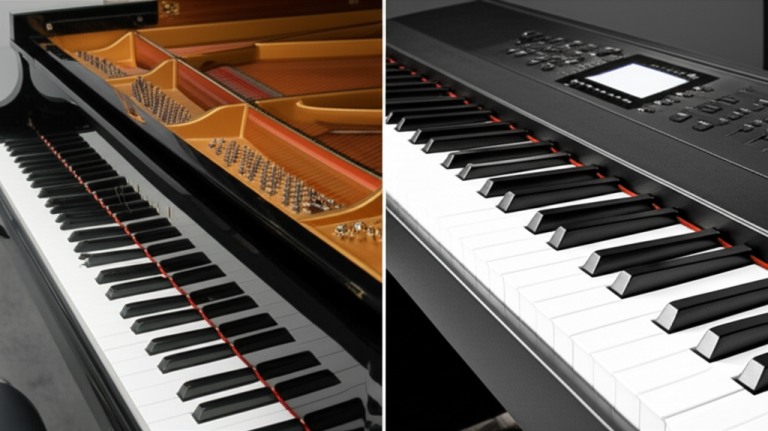
At Piano Brands™, we’ve seen it all: from a $300 Craigslist upright that turned into a $2,000 repair project, to a $180,000 concert grand that’s the crown jewel of any concert hall. In this guide, we’ll break down every aspect of piano pricing—covering acoustic, digital, used, and hybrid models—plus the hidden costs like tuning, moving, and maintenance. Curious how a baby grand stacks up against a digital keyboard? Or why a Yamaha U3 is a perennial favorite? Stick around, because by the end, you’ll know exactly what to expect and how to choose the perfect piano for your budget and lifestyle.
Key Takeaways
- Piano prices vary widely depending on type: digital pianos start under $1,000, while concert grands can exceed $200,000.
- Acoustic pianos require ongoing maintenance such as tuning and occasional repairs, which add to lifetime costs.
- Used pianos can offer great value but require expert inspection to avoid costly surprises.
- Digital and hybrid pianos provide affordable, space-saving alternatives with modern features but different feel and sound.
- Brand and craftsmanship heavily influence price and resale value—Yamaha, Steinway, and Kawai lead the pack.
- Financing and rent-to-own programs make owning a quality piano more accessible than ever.
Ready to find your perfect piano match? Dive into our comprehensive breakdown and become a savvy piano shopper today!
Table of Contents
- ⚡️ Quick Tips and Facts: Your Piano Cost Cheat Sheet
- 🎶 The Grand Symphony of Costs: Unraveling Why Pianos Command Their Price Tag
- 🎹 Decoding Piano Types: What’s Your Perfect Match (and Budget)?
- 💰 The Pre-Loved Path: Navigating Used Piano Costs & Unearthing Value
- 🌟 Brand Spotlight: Unpacking the Price Tags of Renowned Piano Makers
- 💸 Beyond the Sticker Price: Hidden Costs & Essential Piano Investments
- 🎯 Making the Smart Choice: Entry-Level, Mid-Range, or High-End Piano?
- 💳 Financing Your Dream: Payment Options & Rental Programs
- ✅ Our Expert Recommendations: Finding Your Perfect Piano Match
- ✨ Conclusion: Your Journey to Piano Ownership Starts Here
- 🔗 Recommended Links: Dive Deeper into the World of Pianos
- ❓ FAQ: Your Burning Piano Cost Questions Answered
- 📚 Reference Links: Our Sources & Further Reading
⚡️ Quick Tips and Facts: Your Piano Cost Cheat Sheet
- Entry-level digital pianos start around the price of a decent dinner date, while concert grands can cost more than a beach-front condo.
- A free acoustic piano on Craigslist can easily turn into a $1,000+ move-and-repair bill—always budget for the “hidden” extras.
- Used Yamaha U1 uprights hold value so well that people joke they’re the “Honda Civics of the piano world.”
- Tuning isn’t optional; it’s like an oil change for your car. Expect $100-$200 per visit, 1-2× a year.
- Digital pianos never need tuning but do depreciate faster than well-kept acoustics.
- Grand pianos under 5’4” often sound less powerful than tall uprights—size isn’t everything.
- Hybrid pianos (acoustic action + digital brains) are the new “cool kids,” but spare parts can be pricey.
- Sticker shock? Remember: a quality instrument can last 60-100 years—divide the cost over decades and it’s pennies per day.
Need a ballpark before we dive deep? Peek at our sister article on how much does a keyboard piano cost for the ultra-budget side of the spectrum.
🎶 The Grand Symphony of Costs: Unraveling Why Pianos Command Their Price Tag
We once had a customer walk in with a $300 Costco keyboard under one arm and a photo of a $180,000 Fazioli Brunei under the other. “Why the huge gap?” he asked. Great question—let’s pull back the velvet curtain.
-
Raw Materials
Sitka spruce soundboards, maple bridges, German Renner hammers, and cast-iron plates aren’t cheap. A single Steinway plate weighs ~340 lbs and is cast in a U.S. foundry that’s been doing it since 1873. -
Labor Hours
A Yamaha CFX concert grand needs 12-18 months from start to finish, with ~8,000 parts mostly hand-assembled. That’s more pieces than a Tesla drivetrain. -
Brand Legacy
Steinway’s “Monopoly” on concert stages isn’t marketing fluff—90%+ of major venues own a Steinway Model D. That cachet inflates resale value like vintage Rolexes. -
Economies of Scale
Roland can CNC-machine hundreds of FP-30X digital actions per day, while a single Bösendorfer 225 takes six months of Austrian hand-crafting. Guess which one costs more? -
Import Tariffs & Currency
A 2023 U.S. tariff hike on Chinese-built consoles added ~8% to the landed cost, pushing brands like Hallet Davis northward. -
R&D & Patents
Kawai’s Millennium III action uses carbon-fiber whippens for 25% faster repetition. That tech took 20 years and millions of yen to perfect. -
Market Positioning
Brands purposely keep flagship models scarce. Fazioli builds only ~140 pianos a year—scarcity equals premium pricing.
🎹 Decoding Piano Types: What’s Your Perfect Match (and Budget)?
Think of pianos like cars: you’ve got compact hatchbacks, luxury sedans, and Formula-1 beasts. Picking the wrong category is the fastest way to blow money and regret.
Acoustic Pianos: The Timeless Classics
1. Upright Pianos: The Vertical Virtuosos & Their Price Spectrum
| Height | Typical New Range | Used Sweet Spot | Best For |
|---|---|---|---|
| Spinet (<40″) | $3k-$5k | $500-$1.5k | Apartments, kids |
| Console (40-43″) | $4k-$7k | $1k-$3k | Living rooms |
| Studio (44-48″) | $6k-$12k | $2k-$5k | Schools, serious students |
| Full Upright (48″+) | $10k-$30k+ | $4k-$15k | Small halls, recording |
Spinet Pianos: Compact & Budget-Friendly
We nicknamed spinets the “disappearing species” because only a handful are still made (e.g., Story & Clark 43” Heritage). Their drop-action feels mushy to advanced fingers, but for toddlers plinking out Twinkle Twinkle, they’re fine. Used spinets flood Facebook Marketplace—just budget $300-$600 to move one flight of stairs.
Console Pianos: The Popular Mid-Sizers
Brands like Yamaha b1 and Kawai K-15 live here. Consoles fit under most windowsills and still deliver decent string length. Pro tip: avoid consoles with particle-board back posts—they lose tuning stability after a few seasons.
Studio Pianos: Robust & Reliable
Ever peek inside a church choir room? Odds are you’ll spot a Yamaha P-22 or Kawai K-300. Studios add full-length music racks, double rubber casters, and laminated spruce soundboards—perfect for rowdy middle-schoolers.
Full Upright Pianos: The Powerhouses of Vertical Sound
The Yamaha U3 (52″) can outrun many baby grands in volume. We’ve seen them on Broadway pit orchestras and jazz lounges. New ones flirt with $16k, but a 10-year-old used U3 retains ~70% of its value—insane resale.
2. Grand Pianos: The Horizontal Harmonies & Their Investment Value
| Length | Typical New Range | Used Sweet Spot | Best For |
|---|---|---|---|
| Petite (<5’2″) | $8k-$20k | $4k-$10k | Parlors |
| Baby (5’2″-5’7″) | $15k-$40k | $8k-$25k | Homes, studios |
| Medium (5’8″-6’2″) | $30k-$70k | $20k-$45k | Conservatories |
| Semi-Concert (6’3″-7’4″) | $60k-$120k | $35k-$80k | Recital halls |
| Concert (8’11”-9’+) | $130k-$300k+ | $70k-$200k+ | Symphony stages |
Petite Grand Pianos: Small Footprint, Grand Sound?
Marketing loves to say “grand sound in a petite body,” but physics begs to differ. Anything under 5’2″ has shorter bass strings than a tall upright. Still, a Kawai GL-10 looks swankier in a living room than any vertical box.
Baby Grand Pianos: The Beloved Classic & Its Cost
The Yamaha GB1K is the Toyota Corolla of baby grands: reliable, ubiquitous, and holds ~60% value after 15 years. Need something swankier? The Boston GP-156 (designed by Steinway) adds Duplex scaling for richer harmonics.
Medium & Professional Grand Pianos: Stepping Up in Performance
At 6’1″, the Yamaha C3X delivers concert-level power without eating an entire stage. We’ve recorded everything from Bill Evans-style jazz trios to cinematic pop on a C3X—it’s a Swiss-army grand.
Concert Grand Pianos: The Pinnacle of Piano Engineering & Price
The Steinway Model D is the Stradivarius of pianos. Each one takes 12 months, 600 kg of cast iron, and ~8,000 parts. Fun fact: Lang Lang once refused to play a festival because they wheeled in a non-Steinway concert grand. That brand power keeps used Model Ds above $120k even after 30 years.
3. Digital Pianos: Modern Marvels & Budget-Friendly Brilliance
| Category | Key Features | Typical Range |
|---|---|---|
| Portable slabs | 88 graded hammer keys, 25-35 lbs | $500-$1,500 |
| Console digitals | Furniture stand, triple pedals, built-in speakers | $1,200-$3,500 |
| Hybrids | Wooden keys, escapement, acoustic action | $4k-$12k |
Portable Digital Pianos: Flexibility on a Budget
We toss a Roland FP-30X in the trunk for pop-up gigs. At 31 lbs, it runs on AC or 8 AA batteries—yes, batteries. Downside? Onboard speakers are 7 watts, so bring an amp for outdoor busking.
Console Digital Pianos: Blending Form & Function
The Yamaha YDP-165 masquerades as a petite upright but hides a powerful sampling engine (CFX concert grand). Great for condo dwellers who crave headphone practice at 2 a.m.
Hybrid Digital Pianos: The Best of Both Worlds?
Kawai’s NV-5S uses the Millennium III upright action—real wooden hammers hitting optical sensors. You get acoustic feel with digital convenience, but replacement key sensors run $120 each if Fido chews one.
4. Hybrid Pianos: Acoustic Feel, Digital Versatility
Yamaha’s TransAcoustic and Silent series let you flip a lever and mute the strings; sensors capture hammer motion and feed a DSP engine. Practise at midnight without eviction, then switch back to full acoustic for Sunday brunch. Expect $8k-$18k—you’re paying for two pianos in one cabinet.
💰 The Pre-Loved Path: Navigating Used Piano Costs & Unearthing Value
We bought a 1978 Steinway L for $18k, spent $4k on reconditioning, and sold it five years later for $25k. That’s a $3k profit plus free music lessons—try doing that with a used car.
What to Look For When Buying a Used Piano
- Pin-block: Tune it up a half-step sharp and watch for slipping strings.
- Soundboard cracks: Single hairline? OK. Gap you can slide a credit card into? Walk away.
- Action wear: Wiggle each key side-to-side. More than 2 mm means felt and cloth are shot.
- Serial number: Free database at Pierce Piano Atlas tells you year built.
Where to Find Your Next Pre-Owned Gem
- Facebook Marketplace: 70% junk, 20% decent, 10% steal. Bring a technician ($80-$120).
- Piano-only dealers: Higher prices, but warranties and trade-up policies.
- Estate sales: Grandma’s 1960s Baldwin Hamilton sometimes goes for $300—if you’re first in line.
Refurbished vs. “As Is”: Understanding the Difference
A refurbished Yamaha U1 from a dealer might run $5,500 with 5-year warranty, whereas “as-is” on Craigslist could be $2,800 but needs $1,200 in action work. Do the math; refurb often wins if you factor resale.
🌟 Brand Spotlight: Unpacking the Price Tags of Renowned Piano Makers
Yamaha Pianos: Innovation Meets Affordability (and Luxury!)
Yamaha’s Indonesian-built b-series keeps the entry gate under $6k, while the Made-in-Japan YUS5 crests $30k. Their consistency is legendary: a Yamaha C3X in Tokyo feels eerily similar to one in Toronto—quality control taken to ** obsessive Japanese levels**.
- 👉 CHECK PRICE on:
Steinway & Sons: The Legacy of Excellence & Its Investment
Steinway is the Tiffany & Co. of pianos. Their Boston and Essex lines are made in Japan & China respectively, offering Steinway DNA at lower prices. But the hand-built Hamburg and New York models are the blue-chip stocks of the piano world.
- 👉 Shop Steinway on:
Kawai Pianos: Craftsmanship & Cutting-Edge Technology
Kawai’s Carbon-fiber action parts don’t swell in humid summers, making them a studio favorite in New Orleans. Their Shigeru Kawai line (hand-built in Ryuyo, Japan) rivals Steinway at ~70% the price.
Roland & Casio: Digital Dominance & Value
Roland’s PHA-50 hybrid action blends wood and plastic for realistic inertia; Casio’s Privia PX-S3100 is the world’s slimmest 88-key hammer-action slab—slips into a backpack with room for lunch.
- 👉 CHECK PRICE on:
Other Notable Brands & Their Price Points
- Bösendorfer (Austria): Imperial 290 has 97 keys—8 full octaves. New $250k+, used $150k+.
- Fazioli (Italy): Brunei model features gold leaf and mother-of-pearl—only 6 exist; last auction $500k+.
- Petrof (Czech): Warm European voice, ~$40k new for 5’9″ model.
- Pearl River (China): World’s largest piano factory; entry uprights under $4k, surprisingly solid QC.
💸 Beyond the Sticker Price: Hidden Costs & Essential Piano Investments
Delivery & Professional Installation: Don’t Skimp Here!
We’ve seen $200 “piano moves” turn into $2,000 drywall repairs. Use insured, APA-certified movers. Grand pianos need a “piano board” and four-wheel dolly; uprights require a “shoe” to protect bottom rails.
Tuning & Voicing: Keeping Your Piano in Perfect Harmony
New acoustics need 3-4 tunings the first year as strings stretch. After that, twice yearly. Voicing (needling hammers) runs $150-$400 and can darken or brighten tone—think of it as EQ for acoustic pianos.
Ongoing Maintenance & Unexpected Repairs
- String replacement: $30-$60 per string plus labor.
- Key-top replacement (ivory to modern phenolic): $20 per key.
- Full restring & new hammers on a grand: $3k-$5k every 30-40 years.
Essential Accessories: From Benches to Humidifiers
| Accessory | Why You Need It | Ballpark Cost |
|---|---|---|
| Adjustable bench | Prevents tendonitis | $80-$300 |
| Humidifier/dehumidifier | Keeps soundboard from cracking | $150-$600 |
| Grand piano cover | Shields from UV & cats | $100-$250 |
| Headphones for digitals | 3 a.m. practice sessions | $50-$300 |
The Cost of Moving Your Musical Companion
Local moves: $150-$400 upright, $350-$800 grand. Cross-country: $1,200-$3,000 plus climate-controlled truck. International: $4k-$10k—and don’t forget customs carnets.
🎯 Making the Smart Choice: Entry-Level, Mid-Range, or High-End Piano?
Who is an Entry-Level Piano For? Your First Steps
- Budget: Under $2k digital, under $6k acoustic.
- Candidates: Kids testing interest, hobbyist songwriters, gigging DJs who need 88 weighted keys.
- Our pick: Roland FP-10 or Yamaha P-145 for digitals; Pearl River 118 for acoustic.
Stepping Up: The Mid-Range Sweet Spot for Growing Musicians
- Budget: $6k-$20k acoustic, $1k-$3k digital.
- Candidates: Late-intermediate players, college music majors, worship centers.
- Our pick: Yamaha YDP-165 (digital) or Kawai K-300 (upright).
The Pinnacle of Performance: High-End Pianos as a Lifetime Investment
- Budget: $20k+ upright, $50k+ grand.
- Candidates: Professionals, institutions, collectors.
- Our pick: Steinway Model B (7′) or Shigeru Kawai SK-EX.
💳 Financing Your Dream: Payment Options & Rental Programs
Rent-to-Own: A Flexible Path to Ownership
Most dealers credit 6-12 months of rental toward purchase. Example: $99/month for a Yamaha b2; 100% applies if you buy within 12 months. Great when little Sofia’s interest might fade faster than last season’s Barbie craze.
Financing Plans & Payment Installments
- 0% APR for 12 months is common on new digitals.
- Acoustic brands (Yamaha, Kawai) offer up to 48-month 0% on certified models.
- Steinway partners with Ally Lending—2.99% for 60 months if you qualify.
The Smart Play: Saving Up vs. Financing
If you can snag 0% APR, financing is essentially free money; park your cash in a high-yield savings and earn 4%. Anything above 5% interest? Save first—pianos aren’t emergency heart surgery.
✅ Our Expert Recommendations: Finding Your Perfect Piano Match
- Apartment dweller on 3rd floor → Yamaha P-145 digital + good headphones.
- Parents of 8-year-old beginner → Rent-to-own console upright (Yamaha b1 or Kawai K-15).
- Serious teen competitor → Kawai K-300 or Yamaha U3 (used if budget tight).
- Home studio producer → Roland RD-2000 for MIDI flexibility plus authentic feel.
- Aspiring concert pianist → Steinway Model B (7′)—investment-grade and lifetime companion.
Still torn? Hop over to our Piano Buying Guide for side-by-side comparisons or Digital Pianos category for the latest tech trends.
And if you want to hear how these price differences translate into sound, watch the embedded video summary above (#featured-video) where we A/B a $500 console vs. a $140k concert grand—the results will blow your mind.
Happy hunting, and may your next chord progression always be in tune!
✨ Conclusion: Your Journey to Piano Ownership Starts Here

So, how much does a piano cost? The answer, as we’ve seen, is as layered and nuanced as the instrument itself. From the humble spinet to the majestic concert grand, from budget-friendly digital pianos to hand-crafted masterpieces, the price spectrum is vast—and for good reason.
Acoustic pianos offer an unmatched tactile and sonic experience, but they come with higher upfront and maintenance costs. Digital pianos provide affordability, portability, and convenience, especially for beginners or space-conscious players. Used pianos can be a treasure trove of value if you know what to look for, but beware of hidden expenses.
If you’re still wondering whether to start with an entry-level digital or dive into a mid-range upright, remember: the best piano is the one you’ll play consistently and love for years. Our expert advice? Try before you buy, factor in all costs (including tuning and moving), and choose a brand and model that fits your lifestyle and goals.
The narrative we teased earlier about the “$300 keyboard vs. $180,000 Fazioli” is simple: value is personal. A beginner’s digital piano can spark a lifelong passion, while a concert grand is an investment in artistry and legacy. Either way, your perfect piano awaits—let’s make sure it’s worth every note.
🔗 Recommended Links: Dive Deeper into the World of Pianos
👉 Shop Acoustic and Digital Pianos:
-
Yamaha GB1K Baby Grand:
Amazon | Sweetwater | Yamaha Official -
Yamaha U3 Upright Piano:
Amazon | Sweetwater | Yamaha Official -
Roland FP-30X Digital Piano:
Amazon | Sweetwater | Roland Official -
Casio PX-S3100 Digital Piano:
Amazon | Sweetwater | Casio Official -
Steinway Model B Grand Piano:
Amazon Steinway Search | Steinway Official
Recommended Books for Piano Buyers:
- The Piano Book by Larry Fine — Amazon Link
- Pianos and Their Makers by Alfred Dolge — Amazon Link
- Digital Pianos: The Essential Guide by Mark Vail — Amazon Link
❓ FAQ: Your Burning Piano Cost Questions Answered

What is the price difference between acoustic and digital pianos?
Acoustic pianos generally start at a higher price point than digital pianos. Entry-level uprights can begin around $3,000, while digital pianos with weighted keys can start as low as $500-$1,000. The main reason is the complexity of materials and craftsmanship in acoustics—wood soundboards, iron frames, and thousands of parts assembled by hand. Digital pianos rely on electronics and sampling technology, which are cheaper to mass-produce. However, high-end digital pianos with advanced features can approach the price of mid-range uprights.
Read more about “How Much Does a Keyboard Piano Cost? 🎹 Your Ultimate 2025 Guide”
How much should I budget for a beginner acoustic piano?
For beginners, a budget of $3,000 to $6,000 can secure a reliable upright piano from brands like Yamaha, Kawai, or Pearl River. This range balances quality and affordability, ensuring good touch and sound without excessive maintenance costs. Renting or buying a used piano in this range is also a smart option. Remember to budget for tuning and moving costs, which can add several hundred dollars annually.
Read more about “How Much Is a Decent Used Piano? 🎹 Your 2025 Ultimate Guide”
Are used pianos cheaper and worth buying?
Used pianos can be significantly cheaper—sometimes 50-70% less than new models—but their value depends heavily on condition, age, and brand. A well-maintained used Yamaha U1 or Steinway can be a bargain, while a neglected piano may require costly repairs. Always have a qualified piano technician inspect a used piano before purchase. Buying from reputable dealers who offer warranties reduces risk.
What additional costs come with owning an acoustic piano?
Owning an acoustic piano involves ongoing expenses beyond the purchase price:
- Tuning: $100-$200 per session, recommended twice a year.
- Voicing and regulation: $150-$400 every few years to maintain touch and tone.
- Repairs: Strings, hammers, and action parts wear out over decades; full restringing can cost thousands.
- Moving: Professional piano moves range from $200 locally to thousands cross-country.
- Accessories: Benches, humidifiers, covers, and pedals add to the budget.
Read more about “What Is the Difference Between Acoustic & Digital Piano Brands? 🎹 (2025)”
How do I choose between an entry-level, mid-range, or high-end piano?
Choosing depends on your skill level, commitment, and budget:
- Entry-level: For beginners and casual players; affordable and functional.
- Mid-range: For serious students and intermediate players seeking better tone and touch.
- High-end: For professionals and collectors valuing craftsmanship, tonal richness, and investment potential.
Read more about “How Many Piano Brands Are There? Discover 25+ You Must Know (2025) 🎹”
Can financing or renting a piano be a good option?
Absolutely! Many dealers offer rent-to-own programs that apply rental payments toward purchase, easing upfront costs. Financing with 0% APR plans can also make high-quality pianos more accessible. Renting is ideal for uncertain beginners or temporary needs, while financing suits committed players ready to invest.
📚 Reference Links: Our Sources & Further Reading Piano Gallery: How Much Does a Piano Cost?
For more in-depth guides, visit our Piano Buying Guide and Digital Pianos categories at Piano Brands™.