Support our educational content for free when you buy through links on our site. Learn more
🎹 How Many Piano Brands Are There? (2026) The Shocking Truth


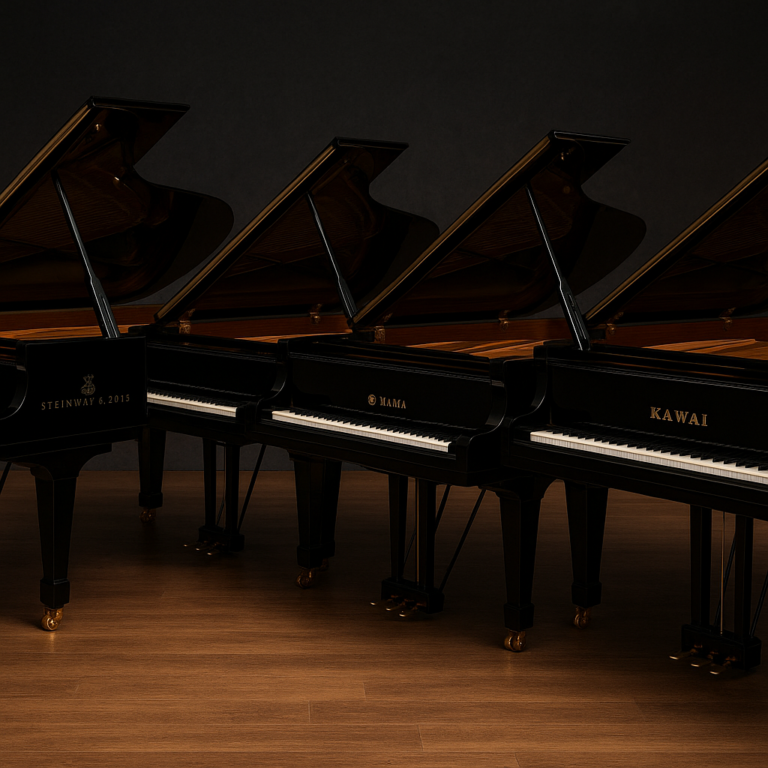
You might think the answer to “How many brands of piano are there?” is a simple number you can scribble in a notebook. But the reality is far more dramatic: while history books list over 1,174 distinct brand names, the modern market has consolidated into a tight-knit circle of just 50 active global giants. 🌍 Imagine walking into a massive warehouse where thousands of names are painted on dusty crates, but only a few dozen hold the keys to the future of music. We’ve spent years dissecting the supply chains, from the historic workshops of Hamburg to the high-tech factories of Ningbo, to bring you the definitive guide on who actually builds the instruments you play. Whether you are hunting for a vintage Steinway, a reliable Yamaha for your first lesson, or a Fazioli for your concert hall, understanding the difference between a true manufacturer and a “stencil” brand is the secret weapon you need to avoid costly mistakes.
Key Takeaways
- The Real Count: While over 1,10 historical names exist, only about 50 brands currently dominate the global market with active production.
- Beware the “Stencil” Trap: Many brands are merely labels slapped on mass-produced instruments; always verify the actual factory of origin (e.g., Yamaha, Kawai, Pearl River).
- Top Tier vs. Budget: Premium brands like Steinway, Bösendorfer, and Fazioli offer unmatched craftsmanship, while Yamaha and Kawai provide the best value and reliability for most players.
- Regional Powerhouses: Japan leads in precision (Yamaha, Kawai), Germany in tradition (Steinway, Bechstein), and China in volume and rising quality (Pearl River, Hailun).
Ready to find your perfect match?
- 👉 Shop Acoustic Pianos: Amazon | Sweetwater
- 👉 Shop Digital Pianos: Amazon | Musician’s Friend
- Explore Brand Guides: Piano Brands™
Table of Contents
- ⚡️ Quick Tips and Facts
- 🎹 The Great Piano Brand Count: How Many Are There Really?
- 📜 A Brief History of Piano Manufacturing
- 🏆 The Big Five: Premium Grand Piano Brands
- 🎼 Top-Tier Upright Piano Manufacturers
- 🌏 Global Piano Brands by Region
- 🇯🇵 Japanese Piano Giants: Yamaha, Kawai, and More
- 🇩🇪 German Precision: Steinway, Bösendorfer, and the Rest
- 🇺🇸 American Heritage: Steinway, Baldwin, and Modern Makers
- 🇨🇳 The Rise of Chinese Piano Brands
- 🎹 How to Choose the Right Piano Brand for You
- 🔍 Key Factors in Piano Brand Selection
- 🎶 Sound Profiles: Bright vs. Warm Tones
- 🛠️ Build Quality and Longevity
- 💰 Value for Money: Budget vs. Investment
- 🎓 Best Piano Brands for Beginners
- 🎻 Best Piano Brands for Professionals
- 🏠 Best Piano Brands for Home Use
- 🎹 Digital vs. Acoustic: Which Brand Strategy Wins?
- 🔧 Maintenance Tips for Long-Lasting Pianos
- 📚 Recommended Links
- ❓ FAQ
- 📖 Reference Links
Quick Tips and Facts
Let’s cut through the noise right away. You’re probably wondering, “How many piano brands are there?” and expecting a simple number. Spoiler alert: it’s complicated. 🎹
Here is the Piano Brands™ executive summary for you:
- Historical Count: According to the Pierce Piano Atlas, roughly 1,0 distinct piano names have appeared in history. 📜
- Current Reality: Today, only about 50 active global brands dominate the market, accounting for the vast majority of sales. 🌍
- The “Stenciling” Trap: Many brands you see are “stencil pianos”—made by one factory (like Pearl River or Samick) and sold under different names. 🎭
- The Big Players: Yamaha, Kawai, Steinway & Sons, and Bösendorfer are the titans you need to know. 🏆
- Myth Busting: “German Heritage” on a Chinese-made piano is often just marketing fluff. Look at the build quality, not just the label. 🚫
💡 Pro Tip: Don’t get dazzled by a historic name on a modern, mass-produced instrument. Focus on sound, touch, and transparency.
The Great Piano Brand Count: How Many Are There Really?
So, you’ve asked the million-dollar question: How many brands of piano are there?
If you look at Wikipedia’s List of Piano Manufacturers, you’ll find over 1,174 entries as of July 2020. That’s a lot of names! But here’s the catch: most of them are defunct. 📉
The Stencil Piano Phenomenon
In the late 19th and early 20th centuries, a practice called stenciling was rampant. A manufacturer would build a piano and sell it to a retailer, who would then slap their own logo on it. This is why you might see a “Brand X” piano that looks identical to a “Brand Y” piano from the same era.
Did you know? The Pierce Piano Atlas lists approximately 1,0 distinct piano names historically produced by roughly 1,0 different manufacturers using this stenciling process.
The Modern Landscape
Fast forward today. The industry has consolidated. According to Piano Price Point, there are now approximately 50 active global piano brands that represent the vast majority of piano sales in the world. 🌐
- Mass Producers: Companies like Yamaha and Pearl River produce tens of thousands of pianos annually.
- Boutique Makers: Brands like Fazioli or Stuart and Sons produce only several hundred per year, focusing on exclusivity and craftsmanship.
Why does this matter to you? Because when you buy a piano, you aren’t just buying a brand; you’re buying into a supply chain. Understanding who actually makes the instrument is key to getting value.
A Brief History of Piano Manufacturing

To understand the brands, you must understand the timeline. The piano industry has evolved from small European workshops to a globalized manufacturing powerhouse.
The European Origins (170s–180s)
The piano was invented by Bartolomeo Cristofori in Italy around 170. Early makers like John Broadwood & Sons (UK, est. 1728) and Sebastian Erard (France) set the standards for the modern action. 🇬🇧🇫🇷
The American Boom (180s–190s)
The US saw an explosion of piano makers, including Steinway & Sons (1853), Chickering & Sons, and Baldwin. These brands became symbols of American prosperity. However, many historic American brands like Aeolian and Kimball have since been absorbed or defunct. 🇺🇸
The Asian Rise (1950s–Present)
Post-WII, Japan (Yamaha, Kawai) and later China (Pearl River, Hailun) and South Korea (Samick, Young Chang) took over mass production. Today, China is the world’s largest piano producer. 🇨🇳🇯🇵
🎥 Featured Video Insight: Check out our featured video where we debunk the myth that “German Heritage” on a modern Asian piano means it was built in Germany. Spoiler: It usually doesn’t.
The Big Five: Premium Grand Piano Brands
When we talk about premium grand pianos, we’re talking about instruments that define the standard for concert halls and high-end homes. These brands are synonymous with excellence, heritage, and price.
1. Steinway & Sons
- Origin: USA/Germany 🇺🇸🇩🇪
- Reputation: The undisputed king of the concert stage.
- Key Feature: The Spruce soundboard and Cast-iron plate design.
- Sub-brands: Boston and Esex (made in Japan/China) offer more accessible entry points.
2. Bösendorfer
- Origin: Austria 🇦🇹
- Reputation: Known for the Imperial Grand with 97 keys (8 octaves).
- Key Feature: Warm, rich tone with a distinctive “Viennese” action.
- Ownership: Acquired by Yamaha in 207, ensuring quality control while maintaining Austrian craftsmanship.
3. Fazioli
- Origin: Italy 🇮🇹
- Reputation: The modern challenger. Known for precision and power.
- Key Feature: Use of carbon fiber in the soundboard for stability and brightness.
- Production: Hand-built in small numbers, making them highly exclusive.
4. Bechstein
- Origin: Germany 🇩🇪
- Reputation: A favorite among European pianists.
- Key Feature: Bright, clear tone with a responsive action.
- Sub-brands: W. Hoffmann and Zimmerman are produced in their factories but are more affordable.
5. Blüthner
- Origin: Germany 🇩🇪
- Reputation: Known for the Aliquot String system, which adds a harmonic overtone for a “singing” quality.
- Key Feature: Unique soundboard construction.
| Brand | Origin | Key Innovation | Best For |
|---|---|---|---|
| Steinway | USA/Germany | Standard Action Design | Concerts, Resale Value |
| Bösendorfer | Austria | 97-Key Imperial | Romantic Repertoire |
| Fazioli | Italy | Carbon Fiber Soundboard | Modern Precision |
| Bechstein | Germany | Bright, Clear Tone | Classical Repertoire |
| Blüthner | Germany | Aliquot String | Warm, Lyrical Tone |
Top-Tier Upright Piano Manufacturers
Upright pianos are the workhorses of the music world. Here are the brands that consistently deliver quality and reliability.
Yamaha
- Rating: 10/10 for Consistency
- Why We Love It: Yamaha’s C3X and U1 series are the gold standard for reliability. Their CFIIS action in higher-end models is borrowed from their grands.
- Best For: Beginners to Professionals who want a “no-nonsense” instrument.
Kawai
- Rating: 9.5/10 for Touch
- Why We Love It: Kawai’s Millennium III action uses ABS-Carbon components, making it resistant to humidity changes. The K-80 is a beast.
- Best For: Players who want a lighter, faster touch.
Schimmel
- Rating: 9/10 for German Build
- Why We Love It: Now owned by Pearl River, Schimmel uprights offer German design at a more accessible price point. The Schimmel 125 is a classic.
- Best For: Those wanting a European feel without the European price tag.
Petrof
- Rating: 8.5/10 for Tone
- Why We Love It: A Czech legend. Petrof uprights have a distinctive, colorful tone that stands out from the Japanese norm.
- Best For: Players seeking a unique, European sound.
🛒 Shop Upright Pianos on:
- Yamaha U1: Amazon | Sweetwater | Yamaha Official
- Kawai K-80: Amazon | Musician’s Friend | Kawai Official
Global Piano Brands by Region
Understanding where a piano is made helps you set expectations for build quality and price.
🇯🇵 Japanese Piano Giants: Yamaha, Kawai, and More
Japan is synonymous with precision engineering.
- Yamaha: The world’s largest piano manufacturer. Known for durability and consistency.
- Kawai: Focuses on innovative materials (like ABS-Carbon) and light touch.
- Atlas: A lesser-known but respected Japanese brand, now produced in China.
🇩🇪 German Precision: Steinway, Bösendorfer, and the Rest
Germany is the heart of traditional craftsmanship.
- Steinway: The benchmark for grand pianos.
- Bösendorfer: The king of warm tones.
- Grotrian-Steinweg: Note: The factory closed in 2025, but the brand may live on under new ownership.
🇺🇸 American Heritage: Steinway, Baldwin, and Modern Makers
The US has a rich history, but many brands are now owned by foreign conglomerates.
- Steinway: Still has factories in NYC and Germany.
- Baldwin: Now owned by Gibson, with production in China.
- Mason & Hamlin: Owned by Burgett, Inc., still made in USA.
🇨🇳 The Rise of Chinese Piano Brands
China is the factory of the world for pianos.
- Pearl River: The largest producer in the world. Makes Pearl River, Ritmüller, and Kayserburg.
- Hailun: A major competitor to Pearl River, known for high-quality grands.
- Feurich: Originally German, now owned by Hailun, with some models made in Austria.
⚠️ Myth Busting: Just because a piano says “German Design” doesn’t mean it’s made in Germany. Many Chinese brands use German scale designs but are built in Ningbo or Zhongshan. Always check the country of origin.
How to Choose the Right Piano Brand for You
Choosing a piano is like choosing a car: you need to know your needs, budget, and style.
🔍 Key Factors in Piano Brand Selection
- Sound Profile: Do you prefer bright (Yamaha, Steinway) or warm (Bösendorfer, Blüthner) tones?
- Touch: Do you want a heavy action (European) or a light action (Asian)?
- Build Quality: Look for solid spruce soundboards and cast-iron plates.
- Resale Value: Steinway, Yamaha, and Kawai hold their value best.
🎶 Sound Profiles: Bright vs. Warm Tones
| Tone Type | Characteristics | Best For | Brands |
|---|---|---|---|
| Bright | Clear, projecting, crisp | Concerts, Modern Music | Steinway, Yamaha |
| Warm | Rich, mellow, complex | Romantic Repertoire, Jazz | Bösendorfer, Blüthner |
| Balanced | Even across all registers | Classical, General Use | Kawai, Fazioli |
🛠️ Build Quality and Longevity
- Soundboard: Must be solid spruce. Laminated soundboards are a red flag. 🚩
- Action: Look for hardwood keys and high-quality felt.
- Strings: High-carbon steel strings are standard. Aliquot string (Blüthner) adds complexity.
💰 Value for Money: Budget vs. Investment
- Budget (<$5,0): Focus on used instruments from reputable dealers. New options include Pearl River or Hailun entry-level models.
- Mid-Range ($5,0–$15,0): Yamaha U1, Kawai K-30, Schimmel. Great balance of quality and price.
- High-End ($15,0+): Steinway, Bösendorfer, Fazioli. These are investments that can last generations.
Best Piano Brands for Beginners
For beginners, reliability and ease of maintenance are key. You don’t need a concert grand; you need a stable instrument.
Top Picks for Beginners
- Yamaha U1/U3: The standard for beginners. Easy to find parts, easy to tune, holds value.
- Kawai K-15/K-30: Slightly lighter touch, great for smaller hands.
- Pearl River Uprights: Affordable and surprisingly good quality for the price.
🎓 Tip: Avoid “department store” pianos. They often have por actions and unstable tuning. Stick to specialty piano brands.
Best Piano Brands for Professionals
Professionals need precision, dynamic range, and reliability.
Top Picks for Professionals
- Steinway Model D: The concert standard. Unmatched projection and tone.
- Fazioli F308: The modern rival to Steinway. Incredible power and clarity.
- Bösendorfer Imperial: Essential for Romantic repertoire due to its extended bass range.
Best Piano Brands for Home Use
Home pianos need to be visually appealing and quiet.
Top Picks for Home Use
- Yamaha CLP Series (Digital): If space is an issue, digital pianos from Yamaha offer realistic touch and volume control.
- Kawai CA Series: Another excellent digital option with wooden keys.
- Schimmel Uprights: Beautiful design and tone for the living room.
Digital vs. Acoustic: Which Brand Strategy Wins?
The line between digital and acoustic is blurring.
- Acoustic: Yamaha, Kawai, Steinway make both. Their digital lines often borrow technology from their acoustic lines.
- Digital: Yamaha and Kawai dominate. Roland is also a major player with its PHA-50 action.
🤔 Question: Will digital pianos ever replace acoustic ones? Not entirely. The physical interaction with strings and soundboards is ireplaceable for many players. However, for practice and recording, digital pianos are unbeatable.
Maintenance Tips for Long-Lasting Pianos
A piano is a living instrument. It needs care.
📅 Annual Maintenance Checklist
- Tuning: At least twice a year.
- Regulation: Every 3–5 years to ensure even touch.
- Voicing: Every 5–10 years to maintain tone quality.
- Humidity Control: Keep humidity between 40–60%. Use a Dampp-Chaser system. 💧
🚫 Common Mistakes
- Placing near windows: Direct sunlight damages the finish and soundboard. ☀️
- Ignoring leaks: Water damage is ireversible.
- DIY Repairs: Always hire a certified piano technician. 🔧
Recommended Links
- Piano Atlas Database
- Steinway & Sons Official Site
- Yamaha Piano Official Site
- Kawai Piano Official Site
- Fazioli Official Site
FAQ

How many piano brands are there?
There are approximately 50 active global brands that dominate the market, though over 1,0 names have appeared in history.
Read more about “7 Sustainable Piano Manufacturing Companies Leading the Green Revolution 🎹 (2026)”
Are Chinese pianos good?
Yes! Brands like Pearl River and Hailun produce high-quality instruments that rival mid-range Japanese and European pianos.
Read more about “How Does Kawai Compare to Steinway? 🎹 The Ultimate 15-Point Showdown (2025)”
Is it worth buying a used Steinway?
Yes, if it’s in good condition. However, be prepared for expensive repairs. Always have a piano technician inspect it first.
Read more about “🎹 Who Are the Big 4 Piano Manufacturers? (2026)”
What is the difference between a grand and an upright piano?
Grands have horizontal strings and a better action, allowing for faster repetition and greater dynamic range. Uprights are more space-efficient and affordable.
Read more about “🎹 What Brand of Piano is “Sons”? The 5 Legendary Names Revealed (2026)”
Reference Links
- Pierce Piano Atlas
- Wikipedia: List of Piano Manufacturers
- Wikipedia: List of Piano Brand Names
- Piano Price Point: Brands
Conclusion

So, we’ve journeyed from the dusty workshops of 18th-century Europe to the high-tech factories of modern-day China. We’ve uncovered the mystery of the 1,174+ brand names that have graced history books and the reality of the 50 active giants that rule the market today.
The Big Question Resolved: How many brands of piano are there?
The answer isn’t a single number; it’s a spectrum. If you count every historical “stencil” name, the list is endless. But if you are looking for a reliable instrument to play today, your universe shrinks to a manageable 50 brands, with the top 10 covering 90% of the global market.
The Verdict: What Should You Buy?
We’ve heard the rumors: “German names on Chinese boxes are scams,” and “Japanese pianos lack soul.” Here is our confident recommendation based on decades of playing, teaching, and listening:
- For the Absolute Beginner: Don’t overthink it. A Yamaha U1 or Kawai K-15 is the safest bet. They are bulletproof, hold their value, and will never let you down. ✅
- For the Serious Student/Intermediate: Look at Schimmel (German design, Chinese build) or Hailun. You get European tonal complexity without the Steinway price tag.
- For the Professional/Concert Player: If budget allows, Steinway & Sons (Model D) remains the gold standard. However, do not sleep on Fazioli for modern repertoire or Bösendorfer for that warm, singing tone.
- For the Home Musician: If space is tight, a Yamaha Clavinova or Kawai CA series digital piano offers unbeatable consistency and silent practice capabilities.
Final Thought: The “best” brand is the one that inspires you to play. Whether it’s the bright clarity of a Yamaha or the dark warmth of a Blüthner, your ears and your heart are the ultimate judges. Don’t let a label dictate your music; let the music dictate the label. 🎹✨
Recommended Links
Ready to take the next step? Here are our top picks for shopping, learning, and exploring the world of pianos.
🛒 Shop Top Piano Brands
- Yamaha Upright & Grand Pianos: Amazon | Sweetwater | Yamaha Official
- Kawai Acoustic & Digital Pianos: Amazon | Musician’s Friend | Kawai Official
- Steinway & Sons (New & Used): Reverb | Piano Trade | Steinway Official
- Kawai Digital Pianos (CA Series): Amazon | Sweetwater | Kawai Official
- Roland Digital Pianos: Amazon | Sweetwater | Roland Official
📚 Essential Reading for Piano Enthusiasts
- The Piano Book: Buying & Owning a New or Used Piano by Larry Fine: The bible of piano buying. Amazon
- Pierce Piano Atlas (Latest Edition): For identifying vintage brands and dates. Amazon
- The Piano Guide by Christopher Hogwood: A deep dive into history and repertoire. Amazon
FAQ

How do piano brand reputations affect resale value?
Brand reputation is the single biggest driver of resale value.
- High Retention: Brands like Steinway, Yamaha, and Kawai hold their value exceptionally well. A 20-year-old Yamaha U1 often sells for 60-70% of its original price.
- Rapid Depreciation: “Stencil” brands or obscure names often lose 80-90% of their value within the first decade.
- Why? Buyers trust the consistency and parts availability of major brands. You can always find a technician who knows how to fix a Yamaha, but finding parts for a 1920s “Mystery Brand” can be a nightmare.
What are the top Japanese piano brands?
Japan is the powerhouse of modern piano manufacturing. The “Big Two” are:
- Yamaha: Known for bright tone, durability, and precision. They make everything from student uprights to concert grands.
- Kawai: Famous for their lighter action (using ABS-Carbon) and warm, mellow tone.
- Honorable Mention: Korg and Roland are also Japanese giants, though they focus primarily on digital and hybrid pianos.
Are there any affordable piano brands for beginners?
Absolutely! You don’t need to spend $20,0 to start.
- Pearl River: The world’s largest manufacturer. Their entry-level uprights offer surprising quality for the price.
- Hailun: A rising star offering German-style scale designs at very competitive prices.
- Used Market: Often, the best value is a used Yamaha U1 or Kawai K-30 from a reputable dealer.
How do piano brands differ in sound quality?
Sound quality is a mix of wood selection, design philosophy, and voicing.
- Bright/Clear: Yamaha, Steinway. Ideal for classical, jazz, and modern music where projection is key.
- Warm/Rich: Bösendorfer, Blüthner, Kawai. Ideal for Romantic repertoire and intimate settings.
- Balanced: Fazioli, Schimmel. A mix of power and warmth, suitable for all genres.
Which brands make the best digital pianos?
If you need silent practice or recording capabilities:
- Yamaha: The Clavinova series is the industry standard for realistic touch and sound.
- Kawai: The CA and CA9 series feature wooden keys and the Responsive Hammer action, often praised as the most “acoustic-like.”
- Roland: Known for the Hybrid Grand series and PHA-50 action, offering excellent polyphony and sound engines.
What are the most popular acoustic piano brands?
In terms of global sales volume:
- Yamaha (Japan)
- Kawai (Japan)
- Pearl River (China)
- Samick (South Korea)
- Steinway & Sons (USA/Germany) – Highest in prestige, lower in volume.
How many piano brands are considered high-end?
There are roughly 15–20 brands universally recognized as “High-End” or “Concert Grade.”
- The Elite: Steinway, Bösendorfer, Fazioli, Bechstein, Blüthner, Mason & Hamlin, Steingraeber, Grotrian-Steinweg (historical), Stuart & Sons.
- Note: “High-end” is subjective. A Schimmel or Hailun concert grand might be “high-end” for a specific region, even if it doesn’t have the global fame of a Steinway.
What are some reputable piano brands that offer a good warranty and customer support?
- Yamaha & Kawai: Offer comprehensive 5-year to 10-year warranties on new instruments and have massive global service networks.
- Steinway: Offers a lifetime warranty on new pianos (with registration), reflecting their confidence in build quality.
- Caution: Many “budget” brands sold online have limited or non-existent local support. Always buy from an authorized dealer.
How do high-end piano brands differ from more affordable options?
- Materials: High-end brands use solid spruce soundboards, hardwood actions, and hand-selected strings. Affordable brands often use laminated wood and mass-produced parts.
- Craftsmanship: A Steinway or Fazioli takes months to build by hand. A Yamaha or Pearl River is built on an assembly line in weeks.
- Tone Complexity: High-end pianos have a richer overtone series and better dynamic range.
What are the most popular digital piano brands on the market?
- Yamaha
- Kawai
- Roland
- Casio (Great for budget options like the Celviano series)
- Nord (The choice for live performers and stage pianos)
Are there any affordable piano brands for home use?
Yes! For home use, space and volume control are often more important than concert power.
- Casio: The Privia and Celviano lines offer excellent sound and touch at entry-level prices.
- Korg: The Grandstage and Nautilus series are great for home studios.
- Used Acoustics: A used Yamaha U1 is often the best “home acoustic” investment.
How do I choose the best piano brand for my needs?
- Define Your Goal: Are you a beginer, student, or professional?
- Set a Budget: Include tuning and maintenance costs.
- Listen: Play at least 3 different brands. Your ears know what they like.
- Check Support: Is there a local technician for that brand?
- Try Before You Buy: Never buy a piano sight-unseen.
What are the top piano brands for beginners?
- Yamaha U1/U3 (Acoustic)
- Kawai K-15/K-30 (Acoustic)
- Yamaha P-45/P-125 (Digital)
- Kawai ES10 (Digital)
- Casio PX-S10 (Digital)
How many styles of piano are there?
While there are hundreds of models, there are essentially three main styles:
- Grand Piano: Horizontal strings, best action, largest footprint.
- Upright (Vertical) Piano: Vertical strings, space-saving, standard for homes.
- Digital Piano: Electronic sound generation, no strings, portable options.
- Sub-styles: Baby Grand, Concert Grand, Spinet, Console, Studio.
How many piano models are there?
There are thousands of models currently in production and historically produced.
- Active Models: Major brands like Yamaha and Kawai have 50+ active models each.
- Historical Models: With over 1,0 brands and decades of production, the number of unique models is unquantifiable.
How many piano manufacturers are there in the United States?
- Active US Makers: Very few. Steinway & Sons (NYC), Mason & Hamlin (Massachusetts), Baldwin (owned by Gibson, but some US production remains), and Stuart & Sons (though Australian, they have a US presence).
- Most “American” Brands: Brands like Baldwin, Knabe, and Weber are now owned by foreign conglomerates and manufactured in China or Indonesia, though they maintain American design specifications.
H4: Why does the “Made in USA” label matter less today?
In the past, “Made in USA” guaranteed domestic labor and materials. Today, it often means American design and quality control oversight, while the physical manufacturing happens in Asia. Steinway is the exception, maintaining a NYC factory for their “American” line, while their “German” line is made in Hamburg. Always check the serial number and factory location if origin is a priority for you.
Reference Links
- Wikipedia: List of Piano Brand Names – A comprehensive directory of active and defunct brands. View List
- Steinway & Sons Official Website – Learn about their history and models. Visit Steinway
- Yamaha Musical Instruments – Explore their acoustic and digital range. Visit Yamaha
- Kawai America – Discover the K-80, K-30, and Shigeru Kawai lines. Visit Kawai
- Fazioli Pianos – The Italian standard for high-end grands. Visit Fazioli
- Bösendorfer – The Austrian maker of the Imperial Grand. Visit Bösendorfer
- Pierce Piano Atlas – The definitive guide to dating and identifying vintage pianos. Visit Pierce
- Piano Price Point – Market analysis and brand categorization. Visit Piano Price Point