Support our educational content for free when you buy through links on our site. Learn more
🎹 Who Are the Big 4 Piano Manufacturers? (2026)

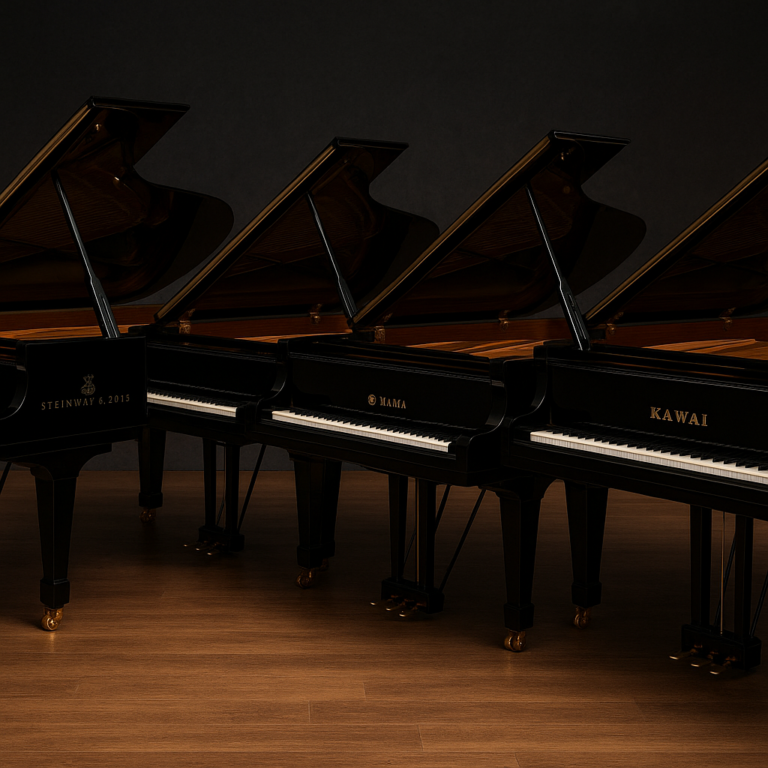
Ever walked into a concert hall and wondered why the same four names seem to dominate every stage, from Carnegie Hall to the Royal Albert Hall? It’s not a coincidence; it’s the result of over a century of industrial evolution, artistic rivalry, and technological breakthroughs. While you might find lists boasting “10 famous makers,” the reality is that the global piano world truly revolves around four titans: Steinway & Sons, Yamaha, Kawai, and Bösendorfer. In this deep dive, we’ll peel back the layers of their history, dissect their unique sound profiles, and reveal the surprising secret behind why a Japanese giant now owns an Austrian imperial legacy. Whether you’re a seasoned pianist hunting for your dream instrument or a curious beginner trying to navigate the used market, understanding these four is the key to unlocking the perfect sound for your soul.
Key Takeaways
- The Big 4 Defined: The industry leaders are Steinway & Sons (American power), Yamaha (Japanese precision), Kawai (action innovation), and Bösendorfer (Austrian warmth).
- Distinct Identities: Despite Yamaha owning Bösendorfer, each brand maintains a unique manufacturing philosophy, with Bösendorfer still hand-crafted in Vienna and Steinway split between Hamburg and New York.
- Technology Mets Tradition: From carbon fiber actions in Kawai to Silent Piano systems in Yamaha, these brands are redefining what an acoustic instrument can do in the modern era.
- Value & Longevity: Steinway and Bösendorfer hold the highest resale value, while Yamaha and Kawai offer the best balance of durability and affordability for students and pros alike.
Ready to find your perfect match?
- 👉 Shop Steinway Pianos: Amazon | Sweetwater | Official Site
- 👉 Shop Yamaha Pianos: Amazon | Musician’s Friend | Official Site
- 👉 Shop Kawai Pianos: Amazon | Sweetwater | Official Site
- 👉 Shop Bösendorfer Pianos: Authorized Dealers | Official Site
Table of Contents
-
🏆 Defining the Elite Four: Steinway, Yamaha, Kawai, and Bösendorfer
-
🔍 Deep Dive: Steinway & Sons – The Gold Standard of Grand Pianos
-
🎼 Deep Dive: Yamaha – The Pioneer of Modern Piano Engineering
-
🎻 Deep Dive: Bösendorfer – The Emperor of Austrian Craftsmanship
-
🎹 Acoustic vs. Digital: How the Big 4 Adapted to the Digital Age
⚡️ Quick Tips and Facts
Before we dive into the deep end of the piano ocean, let’s get the lay of the land with some hard-hitting truths that every aspiring pianist or parent needs to know. The world of pianos is often shrouded in mystique, but the reality is a fascinating blend of industrial engineering, artistic heritage, and global economics.
- The “Big 4” aren’t just a marketing gimmick: While you might hear about Fazioli or Bechstein (and we love them too!), the term “Big 4” specifically refers to the manufacturers that dominate the concert stage, the high-end home market, and the global export volume. These are Steinway & Sons, Yamaha, Kawai, and Bösendorfer.
- Volume vs. Exclusivity: There is a massive disconnect in production numbers. Yamaha and Kawai churn out thousands of instruments annually, making them accessible to students and pros alike. In contrast, Bösendorfer produces a mere 30 to 40 pianos a year. That’s right, you might wait longer for a Bösendorfer than you did for your first car! 🚗🎹
- The Carbon Fiber Revolution: If you think pianos are just wood and wire, think again. Kawai pioneered the use of carbon fiber in their Millennium III action, making their keys resistant to humidity changes that would make a traditional wooden action sticky or sluggish.
- Ownership Matters: Did you know Yamaha owns Bösendorfer? Yes, the Japanese giant acquired the Austrian imperial maker in 208. However, they wisely kept the Austrian factory in Vienna running independently to preserve its hand-crafted soul.
- The “Steinway Standard”: For over a century, if a concert hall doesn’t have a Steinway Model D, it’s often considered a “non-concert” venue. This isn’t just snobery; it’s about the standardized sound orchestras and soloists rely on.
For a deeper look into the legends of the past, check out our guide on 🎹 1930 Piano Manufacturers: The Top 10 Legends & Hidden Gems. It’s a fascinating trip back to when the piano wars were just heating up!
🎹 The Big 4 Piano Manufacturers: A Historical Overview
How did we get here? Why are these four names the titans of the industry? To understand the Big 4, we have to look at the collision of American industrial might, Austrian imperial tradition, and Japanese precision engineering.
The American Titan: Steinway & Sons
Founded in 1853 by Heinrich Engelhard Steinway in New York, this brand didn’t just enter the market; it conquered it. By the late 19th century, Steinway had introduced the cross-string technique and the one-piece cast iron frame, which allowed for higher string tension and a louder, more sustaining tone. This was the sound of the Romantic era.
The Austrian Emperor: Bösendorfer
While Steinway was building skyscrapers of sound in America, Bösendorfer was the court piano of the Habsburg Empire, founded in 1828 in Vienna. They were the first to experiment with extended keyboards, adding extra bass notes to create a deeper, more resonant foundation. Their philosophy was always about tonal warmth and complexity rather than raw power.
The Japanese Rise: Yamaha and Kawai
Fast forward to the 20th century. Post-WII, Japan emerged as a manufacturing powerhouse. Yamaha (founded 187, but pivoted to pianos in 190) and Kawai (founded 1927) brought robotic precision and quality control to a level the Old World couldn’t match. They didn’t just copy; they innovated. Yamaha introduced the Silent Piano system, and Kawai revolutionized the action mechanism with synthetic materials.
Curiosity Check: You might be wondering, “If Yamaha owns Bösendorfer, does that mean they are the same?” Not quite! We’ll dive deep into how they maintain their distinct identities in the sections below. But first, let’s meet the players.
🏆 Defining the Elite Four: Steinway, Yamaha, Kawai, and Bösendorfer
Who exactly makes the cut for the “Big 4”? It’s a title earned through consistency, innovation, and global dominance.
| Brand | Origin | Founded | Key Identity | Production Style |
|---|---|---|---|---|
| Steinway & Sons | USA / Germany | 1853 | The Concert Standard | Hand-crafted, High Tension |
| Yamaha | Japan | 187 | Precision & Reliability | Hybrid of Hand & Machine |
| Kawai | Japan | 1927 | Action Innovation | Carbon Fiber & Synthetic |
| Bösendorfer | Austria | 1828 | Imperial Warmth | 10% Hand-crafted, Low Volume |
Why These Four?
You might ask, “What about Fazioli or Bechstein?” Great questions! While Fazioli is often considered the “Ferrari” of pianos, their production is so low (approx. 10 units/year) that they don’t fit the “Big 4” volume criteria. Bechstein is a historic giant, but their global market share and consistent availability in the modern era place them just outside this specific quartet.
The “Big 4” represent the full spectrum of the piano world:
- Steinway: The benchmark for the concert stage.
- Yamaha: The workhorse for schools, studios, and pros.
- Kawai: The technological leader in action design.
- Bösendorfer: The artistic soul for the conoisseur.
For more on how these brands stack up against others, visit our Piano Comparison category.
🔍 Deep Dive: Steinway & Sons – The Gold Standard of Grand Pianos
When you walk into a concert hall and see a Steinway Model D, you know exactly what you’re going to hear. It’s the sound of the 20th century.
The Steinway Philosophy
Steinway’s secret sauce is their patented design. They use a diagonal string pattern and a hollow rim construction that allows the soundboard to vibrate more freely. Every Steinway is hand-crafted in their factories in Hamburg, Germany (known for a brighter, more singing tone) or New York, USA (known for a darker, more powerful bass).
Key Features
- The Action: The Steinway Repetition Action is legendary for its speed and control. It allows pianists to play rapid trills with ease.
- The Soundboard: Made from solid spruce, selected for its specific grain density.
- The Finish: Steinway offers the Crown Jewel Collection, where pianos are finished with exotic woods like Ebony, Mahogany, and even Gold Leaf.
Pros & Cons
| Aspect | ✅ Pros | ❌ Cons |
|---|---|---|
| Tone | Unmatched projection and dynamic range. | Can be too bright for small rooms. |
| Resale | Holds value incredibly well. | High initial investment. |
| Availability | Widely available worldwide. | Long wait times for custom finishes. |
| Maintenance | Robust construction. | Requires frequent tuning and regulation. |
Musicians’ Note: We’ve seen students fall in love with a Steinway, only to realize the touch weight is heavier than they expected. It’s a powerful instrument that demands strength!
👉 Shop Steinway & Sons on:
- Amazon: Search for Steinway Pianos
- Sweetwater: Steinway Pianos
- Official Site: Steinway & Sons
🎼 Deep Dive: Yamaha – The Pioneer of Modern Piano Engineering
If Steinway is the romantic poet, Yamaha is the enginer. They don’t just make pianos; they make perfectly consistent instruments.
The Yamaha Difference
Yamaha’s rise to the top was fueled by quality control. In the 1960s, while European factories struggled with inconsistency, Yamaha introduced computer-aided manufacturing that ensured every key felt the same, every string was tuned to the exact same tension.
The CFX Concert Grand
The Yamaha CFX is their flagship, designed to compete directly with the Steinway Model D. It features a longer string length and a spruce soundboard that delivers a crystalline treble and a powerful bass.
The Silent Piano™ System
One of Yamaha’s biggest innovations is the Silent Piano™. It allows you to play acoustically, but with the touch of a button, the hammers stop before hitting the strings, and you hear the sound through headphones. This is a game-changer for apartment dwellers!
Pros & Cons
| Aspect | ✅ Pros | ❌ Cons |
|---|---|---|
| Consistency | Every piano is identical. | Can feel “sterile” to some purists. |
| Durability | Built to last decades. | Less “character” than hand-made European pianos. |
| Technology | Leader in Silent and Hybrid tech. | Traditionalists may dislike the synthetic parts. |
| Value | Excellent resale value. | High-end models are pricey. |
Did You Know? Glenn Gould, the famous Bach interpreter, famously switched from Steinway to Yamaha in his later years because he found the Yamaha’s clarity better suited for his contrapuntal playing.
👉 Shop Yamaha Pianos on:
- Amazon: Search for Yamaha Pianos
- Musician’s Friend: Yamaha Pianos
- Official Site: Yamaha Pianos
🎹 Deep Dive: Kawai – The Master of Action Technology
If you ask a piano technician what brand has the most reliable action, they’ll likely say Kawai.
The Millennium III Action
Kawai’s crown jewel is the Millennium III Action. It replaces traditional wooden parts with carbon fiber and ABS Styran. Why? Because wood absorbs moisture and changes shape. Carbon fiber doesn’t. This means your piano stays in regulation longer, even in humid climates.
The Shigeru Kawai Line
For the serious pianist, Kawai offers the Shigeru Kawai line. These are hand-crafted in a separate factory by master builders, using the best wood and the Millennium III action. They are often praised for having a warmer tone than Yamaha, bridging the gap between Japanese precision and European warmth.
Pros & Cons
| Aspect | ✅ Pros | ❌ Cons |
|---|---|---|
| Action | Fast, responsive, and climate-resistant. | Some players prefer the “heavier” feel of Steinway. |
| Value | Often more affordable than Steinway/Yamaha. | Brand prestige is slightly lower in the US. |
| Inovation | Leader in carbon fiber tech. | Aesthetic designs can be conservative. |
| Hybrids | Excellent hybrid digital/acoustic models. |
Real Talk: We’ve had students switch from a Steinway to a Kawai and say, “Wow, my fingers feel lighter!” It’s a great option for those with smaller hands or who play fast, technical pieces.
👉 Shop Kawai Pianos on:
- Amazon: Search for Kawai Pianos
- Sweetwater: Kawai Pianos
- Official Site: Kawai Pianos
🎻 Deep Dive: Bösendorfer – The Emperor of Austrian Craftsmanship
Finally, we arrive at the unicorn of the piano world: Bösendorfer.
The 97-Key Mystery
Why does a Bösendorfer have 97 keys? It started with a request from pianist Ferruccio Busoni in 1909. He wanted more bass notes to play his transcriptions of orchestral works. Bösendorfer said, “Challenge accepted.” The result is the Imperial Grand, which adds 8 extra bass notes (C0 to B0).
The Sound
The Bösendorfer sound is often described as “orchestral” or “singing.” It has a longer sustain and a richer harmonic spectrum than almost any other piano. The extra bass strings actually reinforce the resonance of the entire soundboard, creating a unique acoustic phenomenon.
The Yamaha Connection
Since being acquired by Yamaha in 208, Bösendorfer has maintained its Vienna-only production. Every piano is still hand-made by a small team of artisans. This ensures that the imperial quality remains untouched by mass production.
Pros & Cons
| Aspect | ✅ Pros | ❌ Cons |
|---|---|---|
| Tone | Unrivaled warmth and complexity. | Extremely expensive. |
| Exclusivity | Only ~30 made per year. | Very long wait times. |
| Design | Iconic “Imperial” 97-key model. | 97 keys require special sheet music. |
| Resale | Holds value as a collector’s item. | Hard to find in the used market. |
Fun Fact: The Bösendorfer factory in Vienna is so quiet that you can hear a pin drop. It’s a sanctuary of sound in the middle of a bustling city.
👉 Shop Bösendorfer Pianos:
- Official Site: Bösendorfer
- Authorized Dealers: Find a Dealer
🆚 Head-to-Head: Comparing Tone, Touch, and Build Quality
So, how do they stack up against each other? Let’s break it down.
Tone Profile
- Steinway: Bright, powerful, and projecting. Perfect for large halls.
- Yamaha: Clear, crisp, and balanced. Great for recording and solo work.
- Kawai: Warm, mellow, and singing. A bit darker than Yamaha.
- Bösendorfer: Rich, complex, and orchestral. The ultimate in tonal depth.
Touch and Action
- Steinway: Heavy and responsive. Requires strength.
- Yamaha: Light and consistent. Very easy to play fast.
- Kawai: Light and fast. The carbon fiber action is incredibly smooth.
- Bösendorfer: Soft and deep. The keys feel like they have a “sinking” sensation.
Build Quality
- Steinway: Hand-crafted with traditional methods.
- Yamaha: Hybrid of hand and machine.
- Kawai: High-tech with synthetic materials.
- Bösendorfer: 10% Hand-crafted in Vienna.
Which One is Right for You?
- Concert Pianist: Steinway or Bösendorfer.
- Studio Musician: Yamaha or Kawai.
- Home Player: Kawai or Yamaha (for value and reliability).
- Collector: Bösendorfer or rare Steinway.
For more detailed comparisons, check out our Piano Comparison guides.
🎓 Why Piano Teachers Recommend These Brands
As musicians and teachers, we often get asked: “Which brand should I buy?” The answer usually depends on the student’s goals.
The “Steinway” Argument
Many teachers recommend Steinway because it’s the standard. If a student learns on a Steinway, they can walk into any conservatory or concert hall and feel at home. It teaches dynamic control and strength.
The “Yamaha/Kawai” Argument
For younger students or those in humid climates, Yamaha and Kawai are often the better choice. Their consistent action helps students develop good technique without fighting a sticky key. Plus, the Silent Piano feature from Yamaha is a lifesaver for parents!
The “Bösendorfer” Argument
We rarely recommend Bösendorfer for beginners due to the cost and maintenance. However, for advanced students with a passion for romantic repertoire, a Bösendorfer can be a life-changing instrument.
Teacher’s Tip: Don’t get hung up on the brand. A well-maintained Kawai is better than a neglected Steinway. Always play the specific instrument you are buying!
🏠 Choosing the Right Brand for Your Home Studio
Choosing a piano for your home is a big decision. Here’s a step-by-step guide to help you navigate the Big 4.
Step 1: Assess Your Space
- Small Apartment? Look at Yamaha or Kawai uprights, or consider a Silent Piano.
- Large Living Room? A Steinway or Bösendorfer grand might fit perfectly.
Step 2: Determine Your Budget
- Entry-Level: Yamaha and Kawai offer great entry-level grands.
- Mid-Range: Shigeru Kawai or Yamaha CF series.
- High-End: Steinway Model B or D, Bösendorfer 214 or 25.
Step 3: Test the Action
- Play fast scales to test repetition.
- Play soft passages to test control.
- Play loud chords to test power.
Step 4: Consider Maintenance
- Steinway and Bösendorfer require more frequent tuning and regulation.
- Yamaha and Kawai are generally more stable.
👉 Shop Pianos for Your Home:
- Amazon: Search for Home Pianos
- Sweetwater: Home Pianos
- Official Sites: Steinway | Yamaha | Kawai | Bösendorfer
🎹 Acoustic vs. Digital: How the Big 4 Adapted to the Digital Age
The piano world didn’t ignore the digital revolution; they embraced it.
Yamaha: The Silent Revolution
Yamaha was the first to introduce the Silent Piano™, which allows you to play an acoustic piano with headphones. This is a hybrid solution that keeps the acoustic action but adds digital sound.
Kawai: The Hybrid Master
Kawai’s Novus series is a digital piano that uses a real acoustic action (Millennium III) and real strings (in some models). It’s the closest thing to an acoustic piano without the bulk.
Steinway: The Spirio
Steinway introduced the Spirio, a high-resolution player piano that can record and playback performances with incredible accuracy. It’s like having a concert pianist in your living room.
Bösendorfer: The Digital Integration
Bösendorfer has integrated Yamaha’s digital technology into some of their models, allowing for Silent features while maintaining their acoustic soul.
The Future: The line between acoustic and digital is blurring. The Big 4 are proving that technology can enhance, not replace, the acoustic experience.
For more on digital options, visit our Digital Pianos category.
🛠️ Maintenance Myths: Caring for Your Big 4 Instrument
Owning a Big 4 piano is a commitment. Here are some myths and facts about maintenance.
Myth 1: “I only need to tune it once a year.”
Fact: Twice a year is the minimum. If you play daily, you might need it quarterly.
Myth 2: “Carbon fiber actions don’t need regulation.”
Fact: Kawai’s carbon fiber action is stable, but it still needs regulation to ensure the keys are even.
Myth 3: “Steinways are indestructible.”
Fact: Steinways are robust, but they are sensitive to humidity changes. Keep your piano in a stable environment.
Myth 4: “Bösendorfer pianos never need tuning.”
Fact: No piano is ever out of tune forever. Bösendorfer’s extra bass strings actually require special attention from a technician.
Maintenance Tips
- Control Humidity: Use a piano humidity control system.
- Clean Regularly: Wipe keys with a damp cloth.
- Professional Service: Find a certified technician familiar with your brand.
Find a Technician:
- Piano Technicians Guild: Find a Tech
- Brand Authorized Service: Steinway | Yamaha | Kawai | Bösendorfer
🌍 Global Availability and Resale Value Analysis
Where can you find these pianos, and how well do they hold their value?
Global Availability
- Yamaha & Kawai: Available everywhere. From Tokyo to New York to London, you can find a dealer.
- Steinway: Available in most major cities, but custom orders may take time.
- Bösendorfer: Limited availability. You may need to order from a specialized dealer or the factory in Vienna.
Resale Value
- Steinway: Highest resale value. A well-maintained Steinway can sell for close to its original price.
- Bösendorfer: High resale value due to exclusivity.
- Yamaha & Kawai: Good resale value, especially for the high-end models.
The Used Market
- Steinway: Beware of neglected Steinways. They can be expensive to restore.
- Yamaha/Kawai: Generally reliable even on the used market.
- Bösendorfer: Rare to find, but a steal if you find one in good condition.
Check Prices and Availability:
- Amazon: Search for Used Pianos
- Reverb: Piano Marketplace
- Official Sites: Steinway | Yamaha | Kawai | Bösendorfer
❓ Frequently Asked Questions About the Big 4
Q: Which Big 4 piano is the best for beginners?
A: Yamaha and Kawai are excellent for beginners due to their consistent action and affordability.
Q: Can I play a Bösendorfer with 97 keys if I only know 8-key music?
A: Yes! The extra keys are in the bass register and are not used in standard repertoire. You can ignore them.
Q: Is a Yamaha CFX better than a Steinway Model D?
A: It depends on your taste. The CFX is brighter, while the D is darker. Try both!
Q: How long does it take to get a Bösendorfer?
A: It can take 12 to 24 months due to the hand-crafted nature of the instrument.
Q: Are Kawai pianos really made with plastic?
A: They use carbon fiber and synthetic materials in the action, which are stronger and more stable than wood.
Q: Do I need a special room for a Steinway?
A: A large room is ideal to let the sound project, but a Steinway can work in smaller spaces with proper tuning.
Q: What is the difference between a Yamaha and a Kawai?
A: Yamaha is brighter and more consistent. Kawai is warmer and has a lighter action.
Q: Can I buy a Big 4 piano online?
A: It’s not recommended. Always play the piano before buying. However, you can research and compare online.
Q: Which brand has the best resale value?
A: Steinway and Bösendorfer generally hold their value the best.
Q: Are there any Big 4 pianos made in China?
A: Yamaha and Kawai have factories in China for entry-level models, but the high-end models are made in Japan or Austria.
📚 Recommended Links and Resources
- Piano Brand Guides – Comprehensive guides to all major brands.
- Piano Buying Guide – Tips on how to buy your first piano.
- Piano Comparison – Side-by-side comparisons of top models.
- Piano History – The fascinating history of piano manufacturing.
- Digital Pianos – Explore the world of digital and hybrid pianos.
📖 Reference Links
- Steinway & Sons Official Website
- Yamaha Pianos Official Website
- Kawai Pianos Official Website
- Bösendorfer Official Website
- Piano Technicians Guild
- Reverb Piano Marketplace
Conclusion
So, we’ve journeyed from the coblestone streets of Vienna to the high-tech factories of Hamatsu, and finally to the concert halls of New York. You might still be asking yourself: “Which of the Big 4 is the one for me?”
The answer, as we’ve discovered, isn’t a single name, but a match between your soul and the instrument’s voice.
- If you crave power, projection, and the historic standard of the concert stage, Steinway & Sons is your undisputed champion. It’s the choice for those who want to leave a legacy.
- If you value consistency, clarity, and technological innovation (like the Silent Piano system), Yamaha is the reliable workhorse that never lets you down.
- If you seek a lighter touch, faster repetition, and climate-resistant engineering without breaking the bank, Kawai offers the best balance of performance and value.
- If you desire unrivaled warmth, complexity, and a touch of imperial exclusivity, Bösendorfer is the artist’s dream, offering a sound that feels like a full orchestra.
The Verdict: There is no “best” piano, only the best piano for you. Whether you are a beginner taking your first steps or a virtuoso preparing for Carnegie Hall, the Big 4 offer a path to musical excellence. Don’t let the hype fool you; play them all. Let your fingers decide. As we said earlier, a well-maintained Kawai is infinitely better than a neglected Steinway. Trust your ears, trust your hands, and let the music guide you.
Final Recommendation:
- For the Aspiring Pro: Start with a Yamaha C Series or Kawai K Series upright to build technique, then upgrade to a Shigeru Kawai or Yamaha CF grand.
- For the Serious Conoisseur: If budget allows, audition a Steinway Model B or Bösendorfer 214. The difference in tonal color is worth the investment.
- For the Modern Home: The Yamaha Silent Piano or Kawai Novus series offers the best of both worlds—acoustic feel with digital convenience.
Recommended Links
Ready to take the next step? Here are our top picks for books, resources, and where to shop for the Big 4.
📚 Essential Reading for Piano Enthusiasts
- “The Piano Book” by Larry Fine: The bible for buying used and new pianos. Check Price on Amazon
- “Steinway: The History of a Great American Company” by David A. Hamilton: A deep dive into the American giant. Check Price on Amazon
- “Yamaha: The Story of a Global Brand” by various authors: Understanding the Japanese manufacturing miracle. Check Price on Amazon
🛒 Shop the Big 4 Brands
- Steinway & Sons:
👉 Shop Steinway Pianos: Amazon | Sweetwater | Official Site - Yamaha:
👉 Shop Yamaha Pianos: Amazon | Musician’s Friend | Official Site - Kawai:
👉 Shop Kawai Pianos: Amazon | Sweetwater | Official Site - Bösendorfer:
👉 Shop Bösendorfer Pianos: Authorized Dealers | Official Site
FAQ

Where are the Big 4 piano manufacturers located globally?
- Steinway & Sons: Operates two main factories: Hamburg, Germany (known for a brighter tone) and New York, USA (known for a darker, powerful tone). They also have a facility in China for their entry-level “Spirio” and “Boston” lines, but the “Big 4” core instruments are made in Hamburg or NY.
- Yamaha: Headquartered in Hamatsu, Japan. They have massive manufacturing complexes in Japan, as well as factories in Indonesia, China, and the USA (for specific models), but their high-end concert grands are crafted in Japan.
- Kawai: Headquartered in Hamatsu, Japan. Like Yamaha, they have global production, including facilities in China and Indonesia, but their premium “Shigeru Kawai” line is exclusively hand-built in Shizuoka, Japan.
- Bösendorfer: Exclusively manufactured in Vienna, Austria. Despite being owned by Yamaha, they maintain a small, dedicated factory in Vienna to preserve their traditional hand-crafting methods.
Are the Big 4 piano brands suitable for beginners and professionals?
Yes, absolutely.
- Beginers: Yamaha and Kawai are often the top recommendations for beginners due to their consistent action, durability, and affordability in the upright and entry-level grand categories.
- Professionals: All four brands produce world-class concert grands. Steinway and Bösendorfer are staples on the international concert circuit, while Yamaha (CFX) and Kawai (Shigeru) are increasingly chosen by soloists for their reliability and tonal clarity.
What makes the Big 4 piano manufacturers stand out in the piano industry?
They represent the pinnacle of scale, quality, and innovation.
- Volume & Consistency: Yamaha and Kawai produce thousands of instruments with near-perfect consistency, a feat few can match.
- Historical Prestige: Steinway and Bösendorfer have defined the sound of classical music for over a century.
- Technological Leadership: From Kawai’s carbon fiber actions to Yamaha’s Silent Piano systems, these brands drive the industry forward.
- Global Reach: They have extensive dealer networks and service support worldwide, ensuring you can buy and maintain your instrument anywhere.
Read more about “🎹 7 Best AI-Integrated Piano Brands to Watch in 2026”
How do the Big 4 piano brands compare in digital piano production?
- Yamaha: The undisputed leader in hybrid and digital pianos. Their Clavinova and Silent Piano lines set the standard for realistic key actions and sound engines.
- Kawai: A close second, known for the Novus series which uses real acoustic actions in digital bodies, and the ES and CA series for home use.
- Steinway: Entered the digital/hybrid market with the Spirio (high-resolution player piano) and the Spirio | r (recording player), focusing on the high-end experience rather than mass-market digital keyboards.
- Bösendorfer: Offers the CEUS player system and the Bösendorfer 290 Imperial with digital integration, but they remain primarily an acoustic brand, using Yamaha’s digital tech for their silent features.
Read more about “🎹 Top 10 Professional Studio Digital Pianos to Elevate Your Sound (2026)”
Which Big 4 piano manufacturer produces the best acoustic pianos?
“Best” is subjective and depends on tonal preference:
- For Power & Projection: Steinway & Sons (Model D).
- For Warmth & Complexity: Bösendorfer (Imperial Grand).
- For Clarity & Precision: Yamaha (CFX).
- For Speed & Responsiveness: Kawai (Shigeru Kawai SK-EX).
- Recommendation: Visit a dealer and play the Steinway Model D and Yamaha CFX back-to-back. Your ears will tell you which is “best.”
Read more about “🎹 7 Best Digital Piano Brands for Realistic Acoustic Sound (2026)”
Why are these four piano brands considered the Big 4?
They are considered the Big 4 because they dominate the global market share, hold the highest concert hall presence, and offer the most comprehensive range of instruments from entry-level to concert grand. While brands like Fazioli or Bechstein are exceptional, they do not match the production volume or global availability of these four.
Read more about “🎹 1930 Piano Manufacturers: The Top 10 Legends & Hidden Gems”
What are the names of the Big 4 piano manufacturers?
- Steinway & Sons
- Yamaha
- Kawai
- Bösendorfer
Read more about “What Are the Oldest Piano Companies? 🎹 Discover 7 Legendary Makers (2026)”
What are the advantages and disadvantages of owning a piano from each of the Big 4 manufacturers?
- Steinway:
- ✅ Pros: Unmatched prestige, incredible projection, high resale value.
- ❌ Cons: Expensive, heavy touch, requires frequent maintenance, variable quality between Hamburg and NY models.
- Yamaha:
- ✅ Pros: Consistent quality, bright/clear tone, excellent resale, innovative features (Silent).
- ❌ Cons: Can sound “sterile” to some, less tonal complexity than European brands.
- Kawai:
- ✅ Pros: Fast/light action (carbon fiber), warm tone, great value, climate stable.
- ❌ Cons: Lower brand prestige in the US compared to Steinway, conservative aesthetics.
- Bösendorfer:
- ✅ Pros: Unique 97-key option, orchestral warmth, exclusive craftsmanship.
- ❌ Cons: Extremely expensive, very long wait times, limited availability, extra keys require special sheet music.
How much do pianos from the Big 4 manufacturers typically cost?
- Entry-Level Uprights: $4,0 – $8,0 (Yamaha, Kawai).
- Entry-Level Grands: $10,0 – $20,0 (Yamaha, Kawai).
- Mid-Range Grands: $25,0 – $60,0 (Yamaha CF, Kawai Shigeru, Steinway Model B).
- Concert Grands: $70,0 – $150,0+ (Steinway Model D, Yamaha CFX, Bösendorfer 290).
- Imperial Grand (97 keys): $20,0+.
(Note: Prices vary by region, finish, and dealer.)
Read more about “How much do pianos from the Big 4 manufacturers typically cost?”
What are the key features to look for when buying a piano?
- Action: Test the repetition speed and touch weight.
- Tone: Listen for balance between bass, mid, and treble.
- Sustain: Check how long notes ring out.
- Condition: For used pianos, check for cracks in the soundboard, pin block integrity, and hammer wear.
- Environment: Ensure the room has stable humidity (40-50%).
Read more about “What are the key features to look for when buying a piano?”
Are there any other notable piano manufacturers besides the Big 4?
Yes! The piano world is vast. Other highly respected brands include:
- Fazioli (Italy): The “Ferrari” of pianos, known for extreme exclusivity.
- Bechstein (Germany): Historic German brand with a rich sound.
- Blüthner (Germany): Known for a “singing” tone and the “Aliquot” string system.
- Mason & Hamlin (USA): Famous for the “Tension Resonator” and robust bass.
- Schimmel (Germany): Excellent balance of quality and value.
- Stuart & Sons (Australia): Known for 108-key extended range pianos.
What is the difference between acoustic and digital pianos?
- Acoustic Pianos: Produce sound via hamers striking strings and a soundboard amplifying the vibration. They require tuning, regulation, and are sensitive to climate.
- Digital Pianos: Produce sound via samples of acoustic pianos played through speakers. They use weighted keys to mimic the feel but require no tuning and often include features like headphone jacks and recording.
- Hybrid Pianos: Combine real acoustic actions (and sometimes strings) with digital sound engines (e.g., Yamaha Silent, Kawai Novus).
Read more about “🎹 How to Choose the Best Digital Piano for Your Needs (2026)”
How good are Petrof pianos?
Petrof is a highly respected Czech manufacturer, often considered a “hidden gem.” Founded in 1864, they are known for a warm, singing tone similar to Austrian pianos but at a more accessible price point. While not part of the “Big 4” due to lower global volume, they are excellent instruments, particularly their Model A and Model B grands.
Read more about “How good are Petrof pianos?”
What is the highest quality piano?
“Quality” is subjective, but in terms of craftsmanship and exclusivity, Bösendorfer and Fazioli are often cited as the highest. In terms of consistency and engineering, Yamaha and Kawai are unmatched. For concert dominance, Steinway remains the benchmark.
Read more about “🎹 12 Most Famous Pianos in the World (2026)”
Who is the world’s largest piano producer?
Yamaha is the world’s largest piano manufacturer by volume, producing more instruments annually than any other brand.
Who is the biggest piano maker?
Same as above: Yamaha. They produce thousands of pianos a year, dwarfing the production of European hand-crafters.
Is Bösendorfer the best piano in the world?
It depends on what you value. If you want warmth, complexity, and the unique 97-key experience, many pianists consider it the best. However, for power and projection in a large hall, a Steinway Model D might be preferred. It’s a matter of personal taste.
Read more about “Is Bösendorfer the best piano in the world?”
Who are the best piano manufacturers?
The “best” are the Big 4 (Steinway, Yamaha, Kawai, Bösendorfer) due to their global dominance and quality. However, Fazioli, Bechstein, and Mason & Hamlin are also top-tier manufacturers for specific tastes.
Read more about “Top 7 Silent Piano System Manufacturers You Need to Know in 2026 🎹”
Who is the No 1 piano company?
In terms of market share and volume, Yamaha is No 1. In terms of prestige and concert hall presence, Steinway & Sons is often considered No 1.
Read more about “Which Brand of Piano Is Expensive? Top 12 Luxury Masters (2026) 🎹”
Reference Links