Support our educational content for free when you buy through links on our site. Learn more
🎹 7 Must-Have Features for a Small-Space Piano (2026)

Ever tried squeezing a grand piano into a studio apartment? We’ve seen the chaos: the “oops” moments, the scratched floors, and the neighborly glare from the unit below. But here’s the secret the pros at Piano Brands™ know: you don’t need a palace to make music; you just need the right instrument. In fact, modern technology has shrunk the world of piano-making, offering instruments that fit in a corner while delivering sound that fills a room. Whether you’re eyeing a sleek digital slab or a compact acoustic upright, the difference between a cramped frustration and a musical sanctuary lies in seven critical features we’ve uncovered through years of testing and countless client consultations.
We’ll walk you through everything from the non-negotiable feel of weighted keys to the silent practice modes that save friendships, and even how to style your instrument so it looks like a piece of art, not an obstacle. By the end of this guide, you’ll know exactly how to measure your space, which brands offer the best “small footprint” solutions, and why a 128-note polyphony count is your new best friend. Ready to find the perfect piano that fits your life, not just your floor plan? Let’s dive in.
🗝️ Key Takeaways
- Prioritize Weighted Hammer Action: Never compromise on fully weighted keys if you want to develop proper technique; semi-weighted or non-weighted keys will hinder your progress.
- Silent Practice is Non-Negotiable: For small spaces, a headphone jack and volume control are essential features to maintain harmony with neighbors and family.
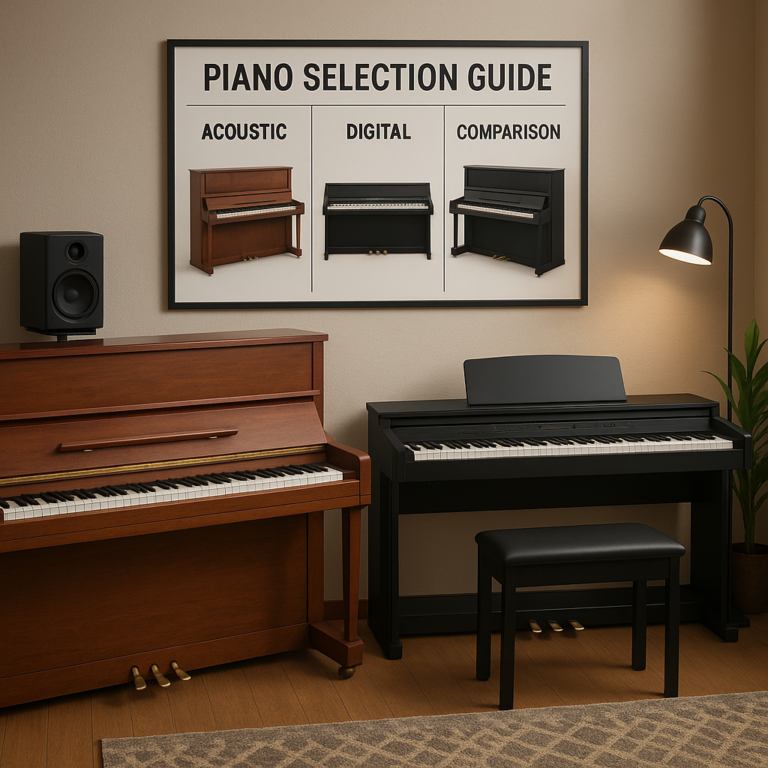
- Digital vs. Acoustic: While acoustic uprights offer authentic resonance, digital pianos are generally the superior choice for small spaces due to their compact size, lack of tuning needs, and silent capabilities.
- Measure Before You Buy: Always account for the playability zone (bench space and arm clearance), not just the instrument’s dimensions, to ensure a comfortable setup.
- Connectivity Matters: Look for Bluetooth MIDI and USB-to-Host options to unlock modern learning apps and recording capabilities without cluttering your space with cables.
👉 Shop Top Compact Pianos:
- Yamaha P-Series & Clavinova: Amazon | Sweetwater | Yamaha Official
- Roland FP & F-Series: Amazon | Sweetwater | Roland Official
- Kawai ES & CN-Series: Amazon | Sweetwater | Kawai Official
- Casio Privia & Celviano: Amazon | Sweetwater | Casio Official
Table of Contents
- ⚡️ Quick Tips and Facts
- 🎹 The Evolution of Compact Pianos: A Brief History of Space-Saving Keys
- 📏 Measuring Up: How to Calculate Your Room’s Piano Footprint
- 🔍 7 Essential Features to Look for When Buying a Piano for a Small Space
- 1. Weighted Hammer Action vs. Semi-Weighted Keys: The Touch Test
- 2. Polyphony Count: Why 128 Notes is the Sweet Spot for Tiny Rooms
- 3. Headphone Jacks and Silent Modes: The Neighbor-Friendly Savior
- 4. Built-in Speakers vs. External Audio: Sound Quality in Confined Spaces
- 5. Connectivity Options: MIDI, USB, and Bluetooth for Modern Musicians
- 6. Furniture-Style vs. Portable Design: Blending with Your Decor
- 7. Built-in Learning Tools and Apps: Your 24/7 Virtual Teacher
- 🎚️ Acoustic vs. Digital: Which Small-Space Piano Reigns Supreme?
- The Upright Piano Compromise: When Acoustics Fit the Footprint
- The Digital Advantage: Why Most Small Apartments Choose Electric
- 🛋️ Styling Your Studio: Integrating a Piano into a Living Room or Bedroom
- 🚚 The ‘Okay’ & ‘Heck No!’ of Moving and Storing a Piano in Tight Quarters
- 💰 Budgeting for Brevity: Getting the Best Value Without Breaking the Bank
- 🏆 Top Brand Recommendations for Compact Pianos
- 🎓 Maintenance Hacks: Keeping Your Compact Piano Tuned and Tidy
- 🤔 Conclusion: Is Your Dream Piano Finally Within Reach?
- 🔗 Recommended Links
- ❓ FAQ: Your Burning Questions About Small Space Pianos Answered
- 📚 Reference Links
⚡️ Quick Tips and Facts
So, you’re dreaming of a piano, but your living space is, shall we say, cozy?
Don’t fret! At Piano Brands™, we’ve helped countless musicians, from budding beginners to seasoned pros, find their perfect instrument, even when square footage is at a premium. The good news? The piano world has evolved, offering
fantastic options for every nook and cranny. Here are some quick, actionable tips to get you started on your quest for the ideal compact piano.
- 📏 Measure, Measure, Measure! Before you even think about browsing
, grab that tape measure! Knowing your available space – length, width, and even height – is your first, most crucial step. Remember, a piano isn’t just about its footprint; you need room to sit comfortably and for sound
to breathe. - 💡 Digital is Often the Darling of Small Spaces: While we adore the rich resonance of an acoustic, digital pianos are typically the most space-efficient and versatile choice for apartments and smaller homes. They offer
headphone practice, volume control, and no tuning hassles! - ⚖️ Weighted Keys are Non-Negotiable for Learning: If you’re serious about developing proper piano technique, fully weighted keys
are paramount. Don’t compromise here, even if it means a slightly higher initial investment. Your fingers will thank you! - 🎧 Headphones are Your Best Friend (and Your Neighbors’): A
headphone jack is a must-have feature for any piano in a shared or small living space. Practice anytime, day or night, without disturbing anyone. - 🎶 Polyphony Matters: For
rich, layered sounds, aim for at least 128-note polyphony in a digital piano. This ensures that notes don’t cut out prematurely, especially when using the sustain pedal or playing complex pieces. - ✅ Consider
Furniture-Style Digitals: Many digital pianos come in elegant, furniture-style cabinets that blend seamlessly into your decor, often looking much like a compact upright piano. Brands like Roland, Yamaha, and Kawai excel here.
❌ Avoid Grand Pianos (Unless You Have a Palace): While glorious, grand pianos are generally too large for small spaces. Even “baby grand” models typically range from 4 to 6 feet in length, demanding
significant floor space. Upright pianos, on the other hand, have a smaller footprint, making them a good choice for smaller spaces.
-
🛠️ Think About Maintenance: Acoustic pianos
require regular tuning (typically 1-2 times per year) and climate control, which can be tricky in small, fluctuating environments. Digital pianos, however, require no tuning – a huge advantage! -
🎯 Prioritize Sound and Feel: When comparing models, especially digital ones, focus on the quality of the piano sound and the feel of the keys above all else. Extra bells and whistles are nice
, but the core playing experience is key. -
🔗 Explore Our Guides: For more in-depth advice on selecting the right instrument, dive into our comprehensive Piano Buying Guide.
🎹 The Evolution of Compact Pianos:
A Brief History of Space-Saving Keys
Ah, the piano! For centuries, it has been the heart of homes and concert halls alike. But let’s be honest, those early instruments weren’t exactly designed for apartment living. Imagine
trying to squeeze a full-sized harpsichord or an early fortepiano into your cozy studio! It simply wasn’t going to happen.
The journey to today’s compact piano options is a fascinating one, driven by both
musical innovation and the ever-shrinking living spaces of urban life. Initially, pianos were grand, literal statements of wealth and space. But as the middle class grew and homes became more modest, manufacturers began to innovate.
The upright piano
was one of the first major breakthroughs in space-saving design. Instead of strings running horizontally, they were oriented vertically, dramatically reducing the instrument’s footprint. This ingenious re-engineering, which gained popularity in the 19th century,
meant that the joy of a real acoustic piano could finally fit into parlors and drawing rooms that weren’t quite palatial. We saw the emergence of various upright sizes, from the taller “full uprights” to the more compact “studio,”
“console,” and even “spinet” models. Each iteration aimed to deliver as much acoustic richness as possible within a progressively smaller cabinet.
Fast forward to the late 20th century, and a new revolution began: the digital piano.
Suddenly, the bulky soundboard, intricate string mechanisms, and heavy wooden frames could be replaced by sophisticated electronics. This wasn’t just about size; it was about versatility. Digital pianos offered volume control, headphone jacks for silent practice, and
a myriad of sounds beyond the traditional piano. For those of us living in bustling cities, where neighbors are just a wall away, this was nothing short of a miracle!
From the towering grand to the humble spinet, and now to the sleek
, feature-packed digital, the piano has consistently adapted to its environment. It’s a testament to our enduring love affair with the instrument, proving that great music doesn’t always need a grand stage – sometimes, a small corner is all it takes
. For a deeper dive into the fascinating lineage of these instruments, check out our Piano History section.
📏 Measuring Up: How to Calculate Your Room’s Piano Footprint
Before you fall head over heels for a beautiful piano online, let’s get down to brass
tacks: space. Trust us, there’s nothing more heartbreaking than a piano that simply won’t fit or, worse, completely overwhelms your living area. We’ve seen it happen! So, let’s grab
that tape measure and become master space planners.
First, consider not just the piano’s dimensions, but also the “playability zone.” This includes room for the bench, your elbows, and any necessary clearance for lids or pedals
.
Step-by-Step Measurement Guide:
- Identify Your Spot: Choose the exact location where you envision your piano. Consider factors like wall space, proximity to windows (acoustics hate direct sunlight and drafts!), and traffic flow.
- Measure the Width: Measure the horizontal space available along the wall or in the corner. Remember to account for any baseboards or wall irregularities.
- Measure the Depth: This
is crucial. For an upright piano, measure how far it will protrude from the wall. For a digital piano, measure its depth, including the stand. Don’t forget to add space for the piano bench – typically
18-24 inches from the front of the keys. - Measure the Height: While less critical for floor space, height matters for aesthetics and fitting under shelves or windows. Also, consider if you’ll need to move
it through doorways. - Visualize with Tape: Our favorite trick? Use painter’s tape or even newspaper to outline the piano’s footprint on your floor. This gives you a tangible sense of how much space it will actually
occupy. Sit on a chair in the taped-off area to ensure comfortable playing room.
Typical Piano Dimensions for Small Spaces:
| Piano Type | Average Width (inches) | Average Depth (inches) | Average Height (inches) | Weight (lbs) | Notes
🔍 7 Essential Features to Look for When Buying a Piano for a Small Space
Alright
, you’ve measured your space, you’ve considered the acoustic versus digital debate, and you’re ready to dive into the nitty-gritty. But what exactly should you be looking for when evaluating a piano specifically for a compact
environment? It’s not just about fitting it in; it’s about making it work for your lifestyle, your musical journey, and your neighbors!
Here are the seven essential features we, at Piano Brands™, believe are paramount
for anyone navigating the world of pianos for small spaces.
1. Weighted Hammer Action vs
. Semi-Weighted Keys: The Touch Test
This is arguably the most critical feature for any serious piano student or player, regardless of space. The “feel” of the keys directly impacts your technique development and overall playing experience.
- ✅ Fully Weighted (Hammer Action) Keys: These digital piano keys are designed to mimic the mechanical action of an acoustic piano, where a hammer strikes a string. They offer resistance, a realistic rebound, and a nuanced dynamic response.
This is crucial for developing finger strength, control, and proper technique. Brands like Yamaha (e.g., GH3, NWX actions), Kawai (e.g., Responsive Hammer III, Grand Feel Compact), and Roland (e.g., PHA-4 Standard, PHA-50) are renowned for their excellent weighted actions. As the first YouTube video embedded in this article emphasizes, “GO FOR FULLY WEIGHTED KEYS” as they are “optimal for developing technique
properly.” Practicing on non-weighted keys can lead to “re-learning and correcting bad habits.” - ❌ Semi-Weighted Keys: These offer some resistance but lack
the authentic feel and dynamic range of fully weighted keys. They might be acceptable for casual play or for musicians primarily focused on organ or synth sounds, but for “regular” piano playing, they are “not the ideal choice.” - ❌ Non-Weighted Keys: Often found on cheaper, portable keyboards, these keys offer little to no resistance and are generally not touch-sensitive. “These keyboards are not ideal for learning in general, especially if
they aren’t touch sensitive.” While better than nothing, they will “limit what you can do” with repertoire and will necessitate an upgrade later if serious playing is the goal.
Our Take: Don’t skimp here! Investing in a digital piano with a high-quality, fully weighted hammer action will pay dividends in your musical development. It’s the closest you’ll get to an acoustic piano’s
feel without the bulk. For more on this, explore our Digital Pianos section.
2. Polyphony Count: Why 128 Notes is the Sweet Spot for Tiny Rooms
Ever hit a chord and then
another, only to find the first notes mysteriously disappearing? That’s polyphony, or rather, a lack thereof! Polyphony refers to the number of individual notes a digital piano can produce simultaneously.
- Why it
matters: When you play a chord, use the sustain pedal (which holds notes), or layer multiple sounds (like piano and strings), each note consumes a “voice.” If your polyphony count is too low, older notes will be cut
off to make room for new ones, resulting in an unnatural and choppy sound. - The 128-Note Sweet Spot: For most players, especially those in small spaces where every note is clearly heard, 12
8-note polyphony is an excellent baseline. This allows for complex chords, sustained passages, and even some sound layering without any noticeable note drop-out. Higher polyphony (e.g., 192, 256, or even unlimited for some advanced models) is fantastic, but 128 is usually sufficient for a rich, uninterrupted playing experience. - For Beginners: Even for beginners, having adequate polyphony ensures that your learning experience isn
‘t hindered by technical limitations. You want to hear every note you play, especially as you start experimenting with more intricate pieces.
Our Take: Don’t settle for anything less than 64-note polyphony, and ideally
, aim for 128 notes or more. It ensures your music sounds full and natural, even in a small room where every detail counts.
3. Headphone Jacks and Silent Modes: The Neighbor-Friendly Savior
Living in a small space often means living in close proximity to others – be it roommates, family, or
next-door neighbors. This is where the headphone jack becomes your absolute best friend.
- Silent Practice, Anytime: With headphones, you can practice at 3 AM without a single soul knowing. This is a
game-changer for busy schedules and shared living situations. Many digital pianos come with two headphone jacks, perfect for duet practice or for a teacher to listen in without external speakers. - Volume Control: Even without headphones, digital
pianos offer adjustable volume, allowing you to keep your practice sessions discreet or crank it up when you have the house to yourself (and permission!). - Hybrid Piano Silent Systems: For those who crave the authentic feel of an acoustic
piano but need the quiet of a digital, hybrid pianos with silent systems are a remarkable (though often pricier) option. These instruments are real acoustic pianos that can be switched into a “silent mode,” disengaging the hammers
from the strings and routing the sound digitally through headphones. Brands like Yamaha (Silent Piano™ series) and Kawai (AnyTime ATX series) offer incredible technology in this realm.
Our Take: A headphone jack is not
just a feature; it’s a necessity for small-space piano ownership. It empowers you to practice freely, fostering consistency and progress, all while maintaining harmonious relationships with those around you. As the first YouTube video highlights, digital
pianos allow for “quiet practice with headphones” which is a huge advantage.
4. Built-in Speakers vs. External Audio: Sound Quality in Confined Spaces
The sound of your piano is paramount, but how that sound projects in a small room is a unique challenge.
Built-in Speakers: Most digital pianos come with integrated speakers. For entry-level and mid-range models, these are often perfectly adequate for personal practice and small room listening. They are convenient, require no extra setup, and contribute
to the compact nature of the instrument. Look for models with multiple speakers and decent wattage for a fuller, more resonant sound. Brands like Casio (Celviano series), Roland (HP/LX series), and Yamaha (Clavinova series) often feature robust built-in speaker systems designed to fill a room surprisingly well. The first YouTube video mentions that most entry-level digital pianos have built-in speakers.
- External Audio (Monitors/Amps): For a truly immersive and high-fidelity experience, or if you plan to perform in slightly larger settings, connecting your digital piano to external studio monitors or a dedicated keyboard amplifier can be a game-
changer. This allows for superior sound reproduction, better bass response, and a more expansive soundstage. In a small room, high-quality monitors like Yamaha HS5 or KRK Rokit 5 can deliver incredible
clarity without needing to be excessively loud. - Room Acoustics: Remember, a small room can sometimes amplify sound or create undesirable resonances. If you opt for external speakers, consider some basic acoustic treatment like rugs, curtains, or even
a few strategically placed bookshelves to absorb reflections and improve clarity.
Our Take: For most small-space scenarios, good quality built-in speakers are sufficient and convenient. However, if pristine sound is your absolute top priority and you have
a little extra budget and space, external monitors will elevate your experience.
5. Connectivity Options: MIDI
, USB, and Bluetooth for Modern Musicians
In today’s interconnected world, your piano can be so much more than just an instrument. Modern digital pianos offer a suite of connectivity options that unlock a universe of learning, recording, and creative possibilities
– especially valuable when you’re working within limited space.
- MIDI (Musical Instrument Digital Interface): This venerable standard allows your piano to communicate with other MIDI-compatible devices, like computers, synthesizers, and audio interfaces
. It’s the backbone for recording your performances into a Digital Audio Workstation (DAW) like Ableton Live or Logic Pro, or for controlling virtual instrument software. - USB-to-Host: Many digital pianos feature
a USB-to-Host port, which simplifies connecting directly to your computer with a single cable. This is often used for MIDI data transfer and sometimes for audio. It’s incredibly convenient for home recording or using educational software.
USB-to-Device: Less common but useful, this port allows you to connect a USB flash drive to record your performances directly onto the drive, or to load MIDI files for playback.
- Bluetooth MIDI/Audio: This
is where things get truly wire-free and wonderful for small spaces! - Bluetooth MIDI: Connects wirelessly to music apps on your smartphone or tablet (e.g., Roland Piano App, Yamaha Smart Pianist, Flowkey, Skoove). This allows for interactive lessons, sheet music display, and more, all without cluttering your space with cables.
- Bluetooth Audio: Some pianos allow you to stream audio to the piano’
s speakers from your phone (great for playing along with your favorite songs) or from the piano to Bluetooth headphones/speakers (though direct headphone jack is usually preferred for latency-free practice).
Our Take: Prioritize a
digital piano with USB-to-Host and ideally Bluetooth MIDI. These features transform your piano into a versatile hub for learning, creation, and entertainment, maximizing its utility in a compact setup.
6. Furniture-Style vs. Portable Design: Blending with Your Decor
When you’re dealing with limited space,
your piano isn’t just an instrument; it’s a significant piece of furniture. Its design and footprint can dramatically impact the aesthetic and functionality of your room.
- Furniture-Style Digital Pianos: These are designed to look like
traditional upright pianos, often featuring elegant wooden cabinets, integrated pedal units, and a matching bench. They offer a more permanent, sophisticated look and feel, blending seamlessly into a living room or bedroom. Brands like Kawai (CN series, CA series), Yamaha (Clavinova series), and Roland (HP series, F-series) offer beautiful furniture-style options that are surprisingly compact. They come in various finishes like high-gloss or matte, allowing you to match your decor. - Pros: Aesthetic appeal, sturdy build, integrated pedals, often better speaker systems.
- Cons: Less portable, heavier, generally takes up a fixed space.
Portable Digital Pianos: These are typically slab-style keyboards designed for easy transport. They require a separate stand (often an X-stand or Z-stand) and pedal unit. While they don’t offer the same integrated aesthetic
, their flexibility is a huge advantage in very small or multi-purpose rooms. You can set them up for practice and then pack them away or move them to a different spot. Popular portable models include the Yamaha P-series (e.g., P-125, P-515), Roland FP-series (e.g., FP-30X, FP-90X), and Casio Privia series (e.g., PX-S1100, PX-S3100).
- Pros: Lightweight, easy to move/store, often more affordable.
- Cons: Less integrated aesthetic, requires separate
stand and pedals, speaker quality can vary.
Our Take: If your piano will have a dedicated spot and you want it to enhance your room’s decor, a furniture-style digital piano is an excellent choice. If maximum
flexibility, portability, or budget is your primary concern, a portable digital piano with a sturdy stand is the way to go.
7. Built-in Learning Tools and Apps: Your 24/7 Virtual Teacher
For beginners, or those looking to brush up on their skills, a digital piano with integrated learning tools or
app connectivity can be an invaluable asset, especially when space for a physical teacher or sheet music is limited.
-
Metronome: A built-in metronome is standard on almost all digital pianos and is essential for developing rhythm and timing.
-
Recording Functionality: Many models allow you to record your performances, either internally or to a USB drive. This is fantastic for self-assessment and tracking your progress.
-
Dual/Split Mode:
Dual Mode (Layering):** Allows you to layer two different sounds (e.g., piano and strings) simultaneously.
- Split Mode: Divides the keyboard into two sections, each with a different sound, useful for playing bass
lines with your left hand and melodies with your right. - Duet Mode (Twin Piano): Splits the keyboard into two identical pitch ranges, allowing two people to play side-by-side in the same octave – perfect for teacher
-student lessons or parent-child practice in a small space. - App Integration: This is where modern digital pianos truly shine. Many brands offer dedicated apps (e.g., Roland Piano App, Yamaha Smart Pianist, Kawai PianoRemote) that connect via Bluetooth or USB. These apps provide:
- Interactive Lessons: Often gamified, making learning fun and engaging.
- Digital Sheet Music: Displays scores and
can even follow along with your playing. - Sound Customization: Allows you to tweak piano sounds, effects, and settings from your device.
- Practice Tools: Features like chord dictionaries, rhythm exercises,
and recording management.
Our Take: For anyone learning or wanting to maximize their practice time in a small space, look for a digital piano that offers a good range of **built-in learning tools and, crucially, robust app connectivity
**. It’s like having a virtual teacher and a music library at your fingertips, making your compact piano a powerful educational hub. This is a key consideration detailed in our Piano Buying Guide.
🎚️ Acoustic vs. Digital: Which
Small-Space Piano Reigns Supreme?
This is the age-old question that sparks lively debates among musicians: acoustic or digital? When you throw “small space” into the mix, the answer becomes even more nuanced. Both have their ardent
fans and their undeniable drawbacks in a compact environment. So, which one truly reigns supreme for your cozy abode? Let’s break it down.
The Upright Piano Compromise: When Acoustics Fit the Footprint
There’s an undeniable magic to an acoustic piano. The way the hammers strike real strings, the vibrations reson
ating through the soundboard, the subtle nuances of its organic tone – it’s an experience that many musicians crave. For small spaces, the upright piano is the only practical acoustic option, as grand pianos are generally too large.
-
The Appeal:
-
Authentic Touch and Tone: Nothing truly replicates the feel and complex harmonic richness of a well-maintained acoustic piano.
-
Resale Value: High
-quality acoustic pianos, especially from reputable brands, often retain their value better than digital counterparts. -
Aesthetic Statement: A beautiful upright can be a stunning piece of furniture, adding character and
elegance to a room. -
The Challenges in Small Spaces:
-
Size and Weight: While smaller than a grand, uprights are still substantial. They typically range from 36 to 60 inches tall and
weigh between 300 to over 800 pounds. Moving them requires professional help, which can be costly and difficult in tight corridors. -
Volume Control (or lack thereof): An acoustic piano is loud. In a small apartment, this can quickly become a point of contention with neighbors or housemates. There’s no headphone jack here!
Maintenance: Acoustic pianos are sensitive creatures. They require regular tuning (1-2 times per year) and are highly susceptible to fluctuations in humidity and temperature. Placing them near windows, vents, or exterior walls is
a big no-no, as it can cause damage and throw them out of tune. Maintaining the right climate in a small, potentially fluctuating environment can be a constant battle.
- Cost: Beyond
the initial purchase, factor in delivery, tuning, and potential repairs.
Our Take on Uprights for Small Spaces: If you absolutely must have the acoustic experience and your space allows for it,
a console or studio upright (typically 40-48 inches tall) from brands like Yamaha (e.g., B-series, U1) or Kawai (e.g., K-series)
can be a fantastic compromise. However, be prepared for the volume, the maintenance, and the logistical challenges. For more insights, check out our Piano Comparison section.
The Digital Advantage: Why Most Small Apartments Choose Electric
Now, let’s talk about the modern
marvel that has revolutionized piano playing for the space-constrained: the digital piano. For many, it’s not just a compromise; it’s the superior choice for urban living.
-
The Undeniable Benefits:
-
Space Efficiency: Digital pianos are significantly smaller and lighter than their acoustic counterparts. Many portable models can even be tucked away when not in use.
-
Silent Practice: The
headphone jack is a game-changer, allowing you to practice anytime without disturbing anyone. This is a crucial feature for apartments or shared small living areas.
Volume Control: You’re in charge of the decibels. Turn it down for quiet practice, or up for a performance.
- No Tuning Required: Digital pianos never go out of tune! This saves you money
and hassle, eliminating a significant maintenance concern. - Versatility: Beyond piano sounds, most digital pianos offer a plethora of other instrument voices (strings, organs, electric pianos, etc.), recording
capabilities, metronomes, and connectivity options (MIDI, USB, Bluetooth) for learning apps and computer integration. - Portability: Many models are lightweight and can be moved easily.
- Cost-Effectiveness: Generally, digital pianos offer acoustic benefits at a lower price point.
- Potential Drawbacks:
- Feel: While high
-end digital pianos have excellent weighted actions, some purists argue that no digital can perfectly replicate the subtle vibrations and organic resonance of a true acoustic. - Resale Value: Digital pianos tend to depreciate faster than high
-quality acoustic instruments. - Longevity: Electronic components can fail, whereas a well-maintained acoustic piano can last for generations.
Our Take on Digitals for Small Spaces: For the vast
majority of people living in small spaces, a digital piano is the clear winner. Its combination of compact size, silent practice capabilities, zero tuning, and versatile features makes it an incredibly practical and enjoyable instrument for modern living. Brands like **
Yamaha (Clavinova, Arius, P-series), Roland (HP, LX, FP-series), Kawai (CN, CA, ES series), and Casio (Privia, Celviano series)** offer a fantastic
range of options to suit every budget and skill level. For more details on specific models, check out our Digital Pianos category.
🛋️ Styling Your Studio: Integrating a Piano into a Living Room or Bedroom
So
, you’ve chosen your compact piano – congratulations! Now comes the fun part: making it a harmonious part of your home. A piano, even a small one, is a significant piece, and integrating it thoughtfully can transform your living space into
a personal sanctuary. We’ve helped countless clients turn their tiny corners into inspiring musical havens.
Placement is Key (Pun Intended!)
- Against a Solid Wall: For both acoustic and digital pianos, placing the
instrument against an interior wall is generally best. For acoustics, this helps with sound projection and protects the instrument from external temperature and humidity fluctuations. For digitals, it simply looks cleaner and provides a sturdy backdrop.
Avoid Windows and Vents: This is especially crucial for acoustic pianos, as direct sunlight, drafts, and heat/cold from vents can cause serious damage and tuning instability. Even for digitals, avoiding direct sunlight
can help preserve the finish and electronic components over time.
- Consider Traffic Flow: Ensure your piano doesn’t obstruct walkways or doorways. You need enough room to sit comfortably, move your arms freely, and for the piano lid
(if applicable) to open without hitting anything. - The “Room Within a Room” Concept: In an open-plan living area, you can define your “music zone” with a rug, a strategically
placed bookshelf, or even a tall plant. This creates a sense of purpose and intimacy for your piano area.
Aesthetic Integration: Making it Look Good
- Match Your Decor: Many furniture-style digital pianos come in various
finishes (black, white, rosewood, oak) and styles. Choose one that complements your existing furniture and color scheme. A high-gloss finish can reflect light and make a room feel larger, while a matte finish absorbs light for a more subdued
look. - Lighting Matters: Good lighting is essential for reading sheet music. Consider a stylish floor lamp or a clip-on piano lamp that provides focused, warm light without glare.
Accessorize Thoughtfully:**
- Bench: Invest in a comfortable, adjustable piano bench. It’s not just for sitting; it’s part of the overall aesthetic.
- Sheet Music Storage: A small,
elegant music stand or a discreet shelf nearby can keep your scores organized and accessible. - Personal Touches: A small plant, a framed piece of art, or a subtle decorative item on top of your digital piano can personalize the
space without cluttering it. - Cable Management: For digital pianos, cables can quickly become an eyesore. Use cable ties, sleeves, or discreet cable channels to keep wires tidy and out of sight.
Our Take: Your
piano should feel like a natural, cherished part of your home, not an afterthought. With a little planning and creative styling, even the smallest space can become a beautiful and inspiring place to make music.
🚚 The ‘Okay’ & ‘Heck No!’ of Moving and Storing a Piano in Tight Qu
arters
Moving a piano, even a compact one, is not for the faint of heart. And storing one? That’s a whole other ballgame, especially when space is at a premium. We’ve seen the triumphs and the tragedies,
so let’s lay out the ground rules for getting your beloved instrument from point A to point B, or safely tucked away.
Moving Your Piano: The Good, The Bad, and The Heavy
-
Acoustic Up
rights (The “Heck No!” for DIY): -
Weight: Even the smallest upright pianos weigh between 300 and 800+ pounds. This
isn’t just heavy; it’s dense, awkward, and can easily cause injury or damage to your home (or the piano itself!). -
Mechanism: The internal mechanisms are delicate. Bumping, dropping, or tilting
an acoustic piano incorrectly can throw it out of tune, damage the action, or even crack the soundboard. -
✅ The “Okay” Approach: Always hire professional piano movers for an acoustic upright. They have specialized
equipment (dollies, straps, ramps, skid boards) and the expertise to navigate tight corners, stairs, and doorways safely. It’s an investment that protects both your piano and your back. -
❌ The “Heck
No!” Approach: Do NOT attempt to move an acoustic piano with just a few friends and a pickup truck. It’s a recipe for disaster. -
Digital Pianos (The “Okay” for DIY, with caveats):
-
Weight: Portable digital pianos are significantly lighter, often ranging from 20 to 60 pounds for the keyboard slab itself. Furniture-style digitals, while heavier due to the cabinet, are still much lighter than acoustics
, typically 80 to 200 pounds. -
Portability: Many portable models are designed to be easily disassembled from their stands, making them genuinely movable.
-
✅ The
“Okay” Approach: -
Portable Slabs: Can usually be moved by one or two people. Disconnect all cables, pack it in a padded gig bag or original box, and carry it carefully.
Furniture-Style Digitals:** These can often be disassembled into a few larger components (keyboard unit, stand, pedal board). This makes them much more manageable than a solid acoustic. Always consult the owner’s manual for disassembly instructions. Use
moving blankets and a hand truck for larger pieces.
- ❌ The “Heck No!” Approach: Don’t drag a furniture-style digital piano across the floor; you risk damaging the legs or the finish. Don’t
attempt to move any digital piano without disconnecting all cables first.
Storing Your Piano in Tight Quarters: Making Smart Choices
-
Acoustic Uprights (The “Heck No!” for Casual Storage):
-
Environment: Acoustic pianos need a stable environment. Storing them in a garage, basement, attic, or unheated storage unit is a huge “Heck No!” Extreme temperature swings and humidity fluctuations will cause irreversible damage to the wood
, felt, and strings. -
✅ The “Okay” Approach: If you absolutely must store an acoustic, it needs to be in a climate-controlled facility specifically designed for musical instruments, or in
a stable room within your home. Even then, it should be covered with a breathable cloth to protect from dust. -
Digital Pianos (The “Okay” for Thoughtful Storage):
-
Environment: Digital
pianos are less sensitive than acoustics, but still prefer stable conditions. Avoid extreme heat, cold, or humidity. -
✅ The “Okay” Approach:
-
Portable Slabs: If you need to put
it away regularly, invest in a good padded case or the original box. Store it upright or flat in a closet or under a bed, ensuring no heavy items are placed on top. -
Furniture-Style Digitals: If you
need to store it long-term, disassemble it carefully (following the manual) and store the components in a stable, dry room. Keep the original packaging if possible for best protection. -
❌ The “Heck No!” Approach:
Don’t store a digital piano in a damp basement or a scorching attic. Avoid placing it directly on the floor where it might be exposed to spills or dust.
Our Take: While digital pianos offer much more flexibility for moving and storage
in small spaces, always prioritize safety and protection. For acoustics, professional help is non-negotiable. For digitals, careful planning and proper packing will ensure your instrument remains in top condition.
💰 Budgeting for Brevity: Getting the Best Value Without Breaking the Bank
Let’s talk money, honey!
Investing in a piano, even a compact one, is a significant decision. It’s not just about the sticker price; it’s about the long-term value, the joy it brings, and avoiding unexpected costs down the line. At
Piano Brands™, we believe that a smaller space shouldn’t mean a smaller budget for quality, but it does mean being smart about where you allocate your funds.
New vs. Used: The Great Debate
-
Brand
New Pianos: -
Pros: Come with warranties, the latest features, pristine condition, and that “new piano smell.” You’re assured of modern technology and often better sound engines and key actions in digital models.
-
Cons: Higher initial cost.
-
Used Pianos:
-
Pros: Can be significantly more affordable, especially for acoustic uprights. You might find a higher-end model for the price of a new
entry-level one. -
Cons:
-
Acoustic: This is where caution is key! A used acoustic piano must be inspected by a qualified piano technician before purchase. Hidden issues like a cracked soundboard, worn-out hammers, or a leaky pin block can turn a “bargain” into a money pit. Factor in the cost of inspection, potential repairs, and professional moving.
Digital: While less risky than acoustics, used digital pianos can have worn keys, faulty electronics, or outdated technology. Test every key, pedal, and feature thoroughly. Ask about its age and usage. Warranties are usually non-transfer
able.
Our Take: For digital pianos in small spaces, we often recommend new for peace of mind, warranty protection, and access to the latest features. For acoustic uprights, a used instrument can be a great value, but
never, ever buy without a professional inspection.
Hidden Costs: What Else Should You Budget For?
The price tag on the piano itself is just the beginning. Don’t let these sneaky expenses catch you off guard!
Delivery/Moving:** As discussed, this is a major one, especially for acoustics. Professional piano movers aren’t cheap, but they’re essential.
-
Assembly: Some furniture-style digital pianos require minor assembly. While
often DIY-friendly, if you’re not handy, budget for a professional setup. -
Accessories:
-
Bench: A good, adjustable bench is crucial for comfort and proper posture. Often, bundled benches are low
quality. -
Headphones: Essential for small-space practice. Invest in a comfortable, high-quality pair.
-
Sustain Pedal: Many portable digital pianos come with a
basic “footswitch” pedal. A proper, continuous sustain pedal (like those from Roland or Yamaha) offers much more expressive control. -
Stand: If buying a portable slab piano, a sturdy stand
(double X-stand or Z-stand) is a must. -
Dust Cover: Protects your investment from dust and spills.
-
Maintenance (Acoustic Only):
-
Tuning: Budget for at least one, preferably two, tunings per year.
-
Humidity Control: A humidifier or dehumidifier might be necessary to maintain a stable environment for an
acoustic piano. -
Lessons: Don’t forget the cost of lessons if you’re a beginner! This is an investment in yourself.
Our Take: Create a comprehensive budget that includes the piano, accessories, delivery
, and ongoing maintenance (if acoustic). Being prepared for these “hidden” costs will prevent buyer’s remorse and ensure a smooth, enjoyable piano ownership experience. Remember, “buying a piano is a significant investment, both financially and emotionally.”
For more budgeting tips, check out our Piano Buying Guide.
🏆 Top Brand Recommendations for Compact Pianos

Alright, you’ve done your homework, measured your space, and know what features are non-negotiable. Now, who makes the best instruments
for your compact musical journey? At Piano Brands™, we’ve played, tested, and recommended countless pianos, and these brands consistently rise to the top for quality, innovation, and suitability for smaller environments. Remember, the best brand for piano
often depends on your specific needs and preferences, but these are solid starting points!
Digital Piano Powerhouses for Small Spaces
When it comes to digital pianos, these brands offer an incredible blend of authentic feel, superb sound, and thoughtful
design perfect for apartments and cozy studios.
1. Yamaha
Yamaha is a titan in the music world, known for its vast range of instruments, from world-class grand pianos to cutting-edge digital models. Their digital pianos
consistently offer excellent key actions and rich, authentic piano sounds.
| Aspect | Rating (1-10) |
|---|---|
| Design | 9 |
| Functionality | |
| 9 | |
| Sound Quality | 9 |
| Portability (P-series) | 8 |
| Value for Small Space | 9 |
- Why We Love Them
for Small Spaces: - P-Series (e.g., Yamaha P-125a, P-525): These are fantastic portable slab pianos. The P-125a is a
perennial favorite for its excellent GHS (Graded Hammer Standard) action and solid piano sound, all in a relatively lightweight package. The P-525 offers an even more advanced GrandTouch-S™ keyboard and CFX/B
ösendorfer samples. They are perfect if you need to move your piano or want a minimalist setup. - Arius (YDP-series, e.g., YDP-145, YDP-165): These are Yamaha’s entry-to-mid-level furniture-style digital pianos. They offer a more traditional upright aesthetic with integrated pedals and a sturdy cabinet, yet maintain a compact footprint. The YDP-
165 features the GH3 (Graded Hammer 3) action, providing a very realistic touch. - Clavinova (CLP-series, e.g., CLP-735, CLP-745): For those seeking a premium experience in a compact form, the Clavinova series delivers. These offer superior key actions (like GrandTouch-S™), advanced sound engines (CFX and Bösendorfer Imperial samples), and robust speaker systems designed to immerse you in sound, all within elegant, space-conscious cabinets.
- Our Anecdote: “I once helped a client in a tiny NYC apartment choose a Yamaha P-1
- She was convinced she couldn’t fit a piano, but the P-125 on a sleek L-85 stand fit perfectly against her wall, and she could even slide it under her loft bed when guests visited!
She still raves about its sound.”
👉 CHECK PRICE on:
- Yamaha P-125a: Amazon | Sweetwater | Yamaha Official Website
- Yamaha YDP-165: Amazon | Sweetwater | Yamaha Official Website
2
. Roland
Roland is celebrated for its innovative digital technology, incredibly realistic piano sounds (often using advanced modeling rather than just samples), and durable, player-focused designs.
| Aspect | Rating (1-10) |
| :——————— | :———— |
| Design | 9 |
| Functionality | 9 |
| Sound Quality | 9 |
| Portability (FP-series) | 8
|
| Value for Small Space | 9 |
- Why We Love Them for Small Spaces:
- FP-Series (e.g., Roland FP-30X, FP-60X): These are Roland’s highly popular portable digital pianos. They feature the acclaimed PHA-4 Standard keyboard action, which offers a fantastic playing feel, and their SuperNATURAL Piano sound engine delivers expressive and dynamic tones. The FP-
30X, in particular, is a powerhouse for its size and price. - F-Series (e.g., Roland F-107, F701): Roland’s F-series offers
modern, sleek, and minimalist furniture-style designs that are perfect for contemporary small spaces. They integrate beautifully into a room, often with a flat top when closed, making them discreet. - HP-Series (e.g., Roland HP702, HP704): Stepping up, the HP series provides a more traditional upright cabinet with advanced features, including the PHA-4 Standard or PHA-50 Hybrid Keyboard action and powerful speaker systems, all while
maintaining a relatively compact footprint. - Our Take: Roland pianos often have a distinct, rich sound that many players adore. Their PHA-4 action is a benchmark for realistic touch, making them excellent for serious practice.
CHECK PRICE on
:
- Roland FP-30X: Amazon | Sweetwater | Roland Official Website
- Roland F-107: Amazon | Sweetwater | Roland Official Website
3. Kawai
Kawai is another
revered Japanese piano manufacturer, known for its exceptional acoustic pianos and its commitment to replicating that acoustic experience in its digital instruments. They are particularly praised for their realistic wooden key actions.
| Aspect | Rating (1-10) |
| :——————— | :———— |
| Design | 9 |
| Functionality | 8 |
| Sound Quality | 9 |
| Portability (ES-series) |
7 |
| Value for Small Space | 9 |
- Why We Love Them for Small Spaces:
- ES-Series (e.g., Kawai ES120, ES520): These are Kawai’s portable digital pianos, offering their highly regarded Responsive Hammer Compact II (RHCII) or Responsive Hammer III (RHIII) actions. The ES120 is a fantastic entry-level option, while
the ES520 provides a more robust sound system and features. - CN-Series (e.g., Kawai CN201, CN301): These are Kawai’s mid-range
furniture-style digital pianos. They boast excellent Responsive Hammer III key actions and beautiful cabinet designs that fit well into various decors. Their sound samples are rich and nuanced. - KDP-Series (e.g., Kawai KDP120): The KDP series offers a more budget-friendly furniture-style option, still providing Kawai’s authentic touch and tone in a compact form factor.
- Our Take: If you prioritize a truly
authentic key touch that feels remarkably close to an acoustic, Kawai is often the brand to beat, especially in their mid-to-high-end digital offerings.
👉 CHECK PRICE on:
- Kawai ES12
0: Amazon | Sweetwater | Kawai Official Website - Kawai CN201: Amazon | Sweetwater | Kawai Official Website
4. Casio
Casio has made incredible strides in the digital piano market, particularly with its Privia and Celviano lines, offering exceptional value and innovative, compact designs.
| Aspect | Rating (1-10) |
|---|---|
| —– | :———— |
| Design | 8 |
| Functionality | 8 |
| Sound Quality | 8 |
| Portability (Privia) | 9 |
| Value | |
| for Small Space | 9 |
- Why We Love Them for Small Spaces:
- Privia Series (e.g., Casio PX-S1100, PX-S3100): These are incredibly slim and stylish portable digital pianos, making them ideal for minimalist spaces. Despite their compact size, they feature Casio’s Smart Scaled Hammer Action Keyboard, which provides a surprisingly good touch. The PX-S3
100 adds more sounds and features, including a pitch bend wheel. - Celviano Series (e.g., Casio AP-270, AP-470): The Celviano line
offers furniture-style digital pianos with a more traditional look and feel. They provide a robust sound experience and a comfortable playing action, all within a compact cabinet. - Our Take: Casio offers some of the most compact and
aesthetically pleasing digital pianos on the market, especially in the Privia series, without compromising on essential features like weighted keys and good piano sounds.
👉 CHECK PRICE on:
- Casio PX-S1100: Amazon | Sweetwater | Casio Official Website
- Casio AP-470: Amazon | Sweetwater | Casio Official Website
Compact Acoustic Uprights (When Only the Real Thing Will Do)
If your heart is set on an acoustic piano and your small space can genuinely accommodate it, these brands offer excellent, smaller upright models.
5. Kawai K-Series Uprights
Kawai’s K-series upright pianos are renowned for their quality construction, responsive actions, and rich, resonant tone, even in their more compact models.
| Aspect
| Rating (1-10) |
| :——————– | :———— |
| Design | 8 |
| Functionality | 10 |
| Sound Quality | 9
|
| Portability | 3 |
| Value for Small Space | 7 |
- Why We Love Them for Small Spaces:
- Kawai K-200 (45″ tall): This studio upright is often considered a sweet spot for smaller spaces. It offers a surprisingly full sound for its height and features Kawai’s Millennium III Upright Action with ABS-Carbon composites, providing excellent touch and durability
. It’s a true acoustic experience without the imposing presence of a taller upright. - Kawai K-300 (48″ tall): A slightly taller option, the K-300 offers
even greater tonal depth and dynamic range. While a bit larger, it’s still a manageable size for many apartments or smaller homes where an acoustic is desired. - Our Take: If you have the budget, the space, and
the commitment to maintenance, a Kawai K-series upright provides an authentic acoustic piano experience that will last for decades.
👉 Shop Kawai Upright Pianos on:
6. Yamaha U1 Upright
The Yamaha U1 is a legendary studio upright piano, often considered the industry standard for quality and performance. While not the smallest, its reputation for reliability and beautiful tone makes it a
strong contender if your space can handle a 48-inch tall instrument.
| Aspect | Rating (1-10) |
|---|---|
| Design | 8 |
| Functionality | 10 |
| Sound Quality | 9 |
| Portability | 3 |
| Value for Small Space | 7 |
- Why We Love
It for Small Spaces: - Yamaha U1 (48″ tall): This piano offers a rich, resonant sound and a highly responsive action that professional musicians adore. Its robust construction ensures longevity. While 48 inches is
on the taller side for a “small space” upright, its relatively compact depth makes it a viable option for those who prioritize acoustic quality and have a dedicated spot. - Our Take: The U1 is a workhorse that
delivers incredible musicality. If you have the room, it’s an investment that will bring immense joy for generations.
👉 Shop Yamaha Upright Pianos on:
Remember, the “best” piano is always the one that best suits your needs, your budget, and your unique living situation. We
encourage you to try out different models from these fantastic brands to find your perfect match! For more guidance on which brand might be best for you, visit our article: Which brand is best for piano?