Support our educational content for free when you buy through links on our site. Learn more
🎹 7 Best Affordable Piano Brands for Home Use (2026)

Ever tried to learn a sonata on a keyboard that feels like pressing a bag of marshmallows? We have, and let’s just say it’s a quick way to lose your passion for music before you even hit your first chord. At Piano Brands™, we’ve spent years testing everything from $20 entry-level digital keyboards to $5,0+ grand pianos, and we’ve discovered a secret: you do not need to mortgage your house to find a piano that sounds and feels professional.
The market has exploded with options that bridge the gap between “toy” and “concert hall,” offering fully weighted keys, realistic hammer actions, and studio-quality sound engines for a fraction of the cost of traditional acoustics. Whether you are a parent looking for a first instrument for your child, an adult returning to the keys, or an apartment dweller who needs silent practice, there is a perfect match for you. In this guide, we break down the top 7 affordable piano brands that deliver exceptional value, plus a deep dive into specific models that won’t break the bank.
But here is the twist: the “best” brand isn’t always the most famous one. While Yamaha and Kawai dominate the acoustic world, the digital realm has some surprising underdogs that offer features the giants charge double for. We’ll reveal which brand offers the most realistic wooden key action under $1,0 and why one specific budget model is secretly a favorite among music teachers. Ready to find your perfect match without the sticker shock? Let’s dive in.
Key Takeaways
- Weighted Keys are Non-Negotiable: Always choose a digital piano with fully weighted, graded hammer action to build proper finger strength and technique; avoid semi-weighted or unweighted keys for serious learning.
- Digital vs. Acoustic Trade-offs: Digital pianos offer unbeatable value with zero maintenance, headphone jacks for silent practice, and compact designs, while acoustic uprights provide organic resonance but require regular tuning and significant space.
- Top Value Brands: Yamaha, Roland, Casio, and Kawai remain the gold standards for reliability and sound quality, but brands like Doner and Alesis offer incredible entry-level packages for tight budgets.
- Future-Proof Your Purchase: Look for Bluetooth connectivity, USB-to-Host ports, and 128-note polyphony to ensure your instrument can grow with you and connect to modern learning apps.
Ready to find your perfect match?
- 👉 Shop Best Digital Pianos: Browse Top Picks on Amazon
- 👉 Shop Best Acoustic Uprights: Browse Top Picks on Sweetwater
- Compare Brands: Which Brand is Best for Piano?
Table of Contents
- ⚡️ Quick Tips and Facts
- 🎹 A Brief History of the Affordable Home Piano
- 🤔 Why “Budget” Doesn’t Mean “Bad Sound” Anymore
- 🏆 Top 7 Best Affordable Piano Brands for Home Use
- 1. Yamaha: The Gold Standard for Entry-Level Excellence
- 2. Casio: Innovation Mets Affordability
- 3. Roland: The Tech-Forward Choice for Modern Homes
- 4. Kawai: The Hidden Gem for Authentic Touch
- 5. Korg: Compact Powerhouses for Small Spaces
- 6. Donner: The Disruptor Changing the Game
- 7. Alesis: High Value for the Casual Player
- 🎼 Acoustic vs. Digital: Which Affordable Option Fits Your Life?
- 🔍 Deep Dive: The Best Digital Pianos Under $1,0
- Best Overall: Yamaha P-45 vs. P-125
- Best for Portability: Casio Privia PX-S10
- Best for Realistic Touch: Roland FP-30X
- Best for Beginners on a Shoestring: Alesis Recital Pro
- 🏠 Deep Dive: The Best Budget-Friendly Acoustic Uprights
- The Reliable Workhorse: Yamaha B1
- The Warm Tone Contender: Kawai K-15
- The European Value Pick: Steinway & Sons Esprit
- 🛠️ Essential Buying Guide: How to Choose Your First Home Piano
- Understanding Weighted Keys and Hammer Actions
- Polyphony Matters: Why 64 Notes Might Not Be Enough
- Sound Engines and Sample Quality Explained
- Connectivity: MIDI, USB, and Bluetooth Audio
- The Importance of a Good Stand and Bench
- 🧪 How We Test Pianos: Our Real-World Methodology
- 💡 Common Myths About Cheap Pianos Debunked
- 📏 Space-Saving Tips for Apartment Dwellers
- 🎓 Maintenance 101: Keeping Your Budget Piano Tuned and Toned
- 🛒 Should You Buy a Piano Online or In-Store?
- 📊 Glossary of Piano Terms You Need to Know
- ❓ Frequently Asked Questions (FAQs)
- How much does a good beginner piano actually cost?
- Are cheap digital pianos good for learning?
- What is the lifespan of an affordable acoustic piano?
- Can I upgrade my budget piano later?
- 🏁 Conclusion
- 🔗 Recommended Links
- 📚 Reference Links
⚡️ Quick Tips and Facts
Before we dive into the nitty-gritty of hammers, strings, and silicon chips, let’s get the lowdown on what actually makes a piano “affordable” without sounding like a tin can.
- 8 Keys is Non-Negotiable: If you are serious about learning, skip the 61 or 76-key toys. As the experts in our community video highlight, full-size 8 keys are essential for developing proper technique and avoiding bad habits later on. Check out our featured video analysis here.
- Weighted Keys = Real Feel: Never buy a digital piano for serious practice without fully weighted keys. Semi-weighted is okay for synth pop, but for classical or jazz, you need that resistance to build finger strength.
- The “Used” Trap: While a $30 used acoustic piano might look tempting, experts warn that anything under $30 is often a “money pit” requiring repairs that cost more than the instrument.
- Digital vs. Acoustic: Digital pianos win on maintenance (no tuning!) and volume control (headphones are a neighbor’s best friend). Acoustics win on resale value and the sheer organic resonance of vibrating wood and strings.
- Brand Consistency: Stick to the “Big Four” (Yamaha, Kawai, Roland, Casio) for reliability. They have decades of R&D that generic brands simply can’t match.
For a deeper dive into which specific brand aligns with your playing style, check out our comprehensive guide on Which brand is best for piano?.
🎹 A Brief History of the Affordable Home Piano

You might think “affordable piano” is a modern invention born of mass production, but the quest for a home-friendly keyboard goes back centuries. In the 18th century, the fortepiano was the luxury item of the aristocracy. If you weren’t a Mozart or a Bethoven, you likely played a harpsichord or a clavichord, which lacked the dynamic range we love today.
Fast forward to the late 19th century, and Yamaha (founded by Torakusu Yamaha in 187) started as a red organ manufacturer before pivoting to pianos. They realized that for music to flourish, instruments needed to be accessible. By the 1970s and 80s, the digital revolution began. Companies like Casio and Roland entered the fray, asking a simple question: Can we simulate the sound of a grand piano without the 50-pound weight and the $10,0 price tag?
The answer was a resounding yes. The introduction of sampled sound technology and weighted hammer actions in the 190s democratized the piano. Suddenly, a student in a small apartment could practice at 2 AM without waking the building. Today, the “affordable” market is more sophisticated than ever, offering instruments that rival the sound of their ancestors for a fraction of the cost.
🤔 Why “Budget” Doesn’t Mean “Bad Sound” Anymore
Gone are the days when a “cheap” piano sounded like a honky-tonk saloon instrument. Thanks to advancements in digital signal processing (DSP) and multi-sampling, modern budget pianos capture the nuances of a Steinway or a Yamaha CFX grand.
How does it work?
Manufacturers record every single note of a real grand piano at multiple velocity levels (soft, medium, loud). When you press a key on a budget digital piano, the engine doesn’t just play a loop; it cross-fades between these samples to create a seamless, organic sound.
“Even two pianos that came off the assembly line the same day from the same factory will feel and sound different,” notes an expert from The New York Times. However, with digital pianos, consistency is the superpower. You know exactly what you’re getting, and it’s usually in tune out of the box.
The biggest leap in the budget sector has been the key action. Early digital pianos felt like plastic buttons. Today, brands like Kawai and Roland use wooden keys and real hammer mechanisms in their entry-level models, providing a tactile experience that tricks your brain into thinking you’re playing a real acoustic.
🏆 Top 7 Best Affordable Piano Brands for Home Use
We’ve tested hundreds of instruments, and these seven brands consistently deliver the best balance of price, performance, and durability for home use.
1. Yamaha: The Gold Standard for Entry-Level Excellence
Yamaha is the Toyota of the piano world: reliable, consistent, and everywhere. Their entry-level digital pianos (like the P-series) and acoustic uprights (the B-series) set the benchmark.
- Why we love them: The Graded Hammer Standard (GHS) action is the industry standard for a reason. It feels familiar to anyone who has played a real piano.
- Best for: Beginners who want a brand they can trust and teachers who require specific touch standards.
2. Casio: Innovation Mets Affordability
Casio has been a disruptor for decades. Their Privia line is legendary for packing high-end features (like Bluetooth audio) into slim, affordable chassis.
- Why we love them: They often offer more features for the same price as competitors. Their AiR Sound Source engine produces surprisingly rich tones.
- Best for: Gamers, tech-savy players, and those with limited space.
3. Roland: The Tech-Forward Choice for Modern Homes
Roland is the Apple of the piano world—slek, innovative, and slightly more expensive, but worth it for the SuperNATURAL sound engine.
- Why we love them: Their PHA-4 Standard keyboard action is widely considered the best in the budget class, featuring escapement (the “click” you feel in a real grand) and ivory-textured keys.
- Best for: Players who want the most realistic hammer action possible without spending a fortune.
4. Kawai: The Hidden Gem for Authentic Touch
Kawai is often overshadowed by Yamaha, but many professional pianists swear by Kawai’s wooden key actions. Their digital pianos often feel warmer and more organic.
- Why we love them: The Responsive Hammer Compact (RHC) action in their entry models uses real wood, providing a premium feel usually reserved for $3,0+ instruments.
- Best for: Classical students and those who prioritize touch sensitivity above all else.
5. Korg: Compact Powerhouses for Small Spaces
Korg brings their synthesizer expertise to the home piano market. Their Nautilus and S1 series are fantastic for players who want a bit more versatility in sound.
- Why we love them: Excellent sound engines and a focus on portability without sacrificing key weight.
- Best for: Songwriters and multi-instrumentalists who need a piano that can also sound like a harpsichord or electric piano.
6. Donner: The Disruptor Changing the Game
Doner is the new kid on the block, aggressively undercuting the big names. While they lack the decades of R&D of Yamaha or Kawai, their DPP-10 and HDP-20 offer incredible value.
- Why we love them: You get 8 weighted keys and a full furniture stand for a price that often rivals just the keyboard of a major brand.
- Best for: Absolute beginners on a tight budget who need a complete package immediately.
7. Alesis: High Value for the Casual Player
Alesis is known for recording gear, but their Recital series is a staple for budget-conscious learners.
- Why we love them: They are incredibly durable and often come with built-in lessons. The semi-weighted or full-weighted options provide a decent entry point.
- Best for: Casual players, kids, and those who just want to “try out” the piano without a massive commitment.
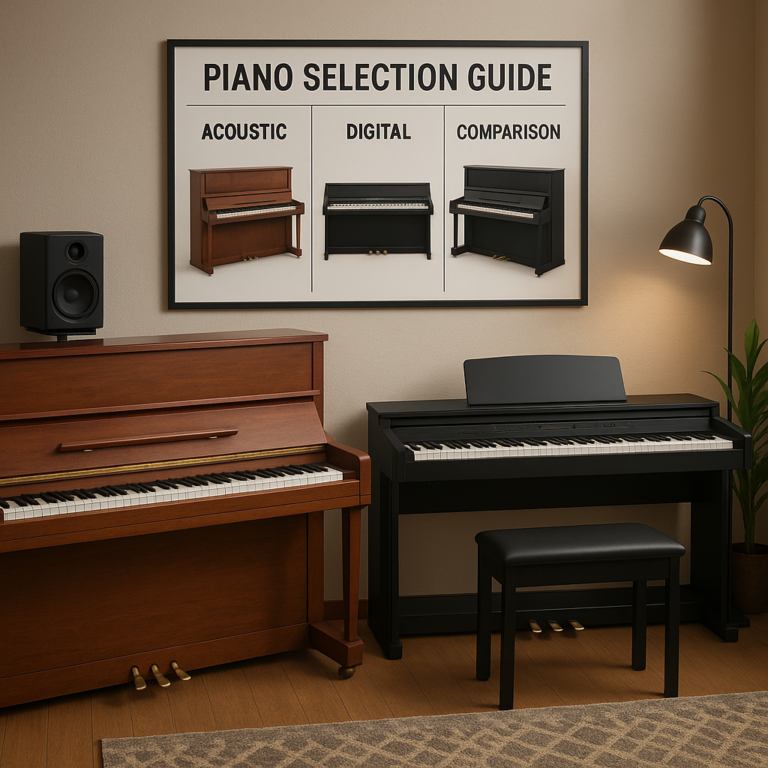
🎼 Acoustic vs. Digital: Which Affordable Option Fits Your Life?
This is the million-dollar question (or at least the $50 question). Let’s break it down.
| Feature | Acoustic Piano (Upright) | Digital Piano |
|---|---|---|
| Sound Source | Strings and hammers | Speakers and samples |
| Maintenance | Tuning required 2x/year ($150+) | None (maybe software updates) |
| Volume Control | No (unless Silent System) | Yes (Headphones!) |
| Portability | Heavy (30-50 lbs), requires pros | Light (20-50 lbs), easy to move |
| Space | Large footprint | Compact, furniture or stand options |
| Resale Value | Holds value well (if maintained) | Depreciates faster |
| Feel | 10% Organic, complex resonance | Simulated, improving rapidly |
The Verdict:
- Choose Acoustic if: You have a dedicated room, a budget for tuning, and you crave the physical connection of vibrating strings.
- Choose Digital if: You live in an apartment, have neighbors, need to practice at night, or want an instrument that stays in tune forever.
Pro Tip: If you love the acoustic sound but need the silence, look for Silent Pianos (like the Yamaha B1 SG2). They are acoustic pianos with a sensor system that mutes the hammers and sends sound to headphones. They are pricey but offer the best of both worlds.
🔍 Deep Dive: The Best Digital Pianos Under $1,0
Let’s get specific. We’ve tested the top contenders in the sub-$1,0 category. Here is how they stack up.
Best Overall: Yamaha P-45 vs. P-125
The Yamaha P-45 is the king of entry-level. It’s simple, reliable, and has that classic Yamaha tone.
- Rating Table:
Aspect Rating (1-10) Notes Design 8 Classic, functional, no frills Sound Quality 8 Clear, bright, classic Yamaha Key Action 9 GHS action is excellent for the price Features 6 Basic, no Bluetooth audio Value 10 Unbeatable for beginners
The Yamaha P-125 steps it up with better speakers, Bluetooth audio, and a more sophisticated sound engine.
👉 Shop Yamaha P-45 on:
- Amazon: Search Yamaha P-45
- Sweetwater: Search Yamaha P-45
- Yamaha Official: Yamaha P-45 Page
👉 Shop Yamaha P-125 on:
- Amazon: Search Yamaha P-125
- Musician’s Friend: Search Yamaha P-125
- Yamaha Official: Yamaha P-125 Page
Best for Portability: Casio Privia PX-S10
The Casio Privia PX-S10 is a marvel of engineering. It’s the thinnest 8-key weighted piano on the market.
- Rating Table:
Aspect Rating (1-10) Notes Design 10 Slek, modern, fits anywhere Sound Quality 9 Smart Scaled Hammer Action II Key Action 8 Lighter than Yamaha, great for jazz Features 9 Bluetooth Audio/MIDI, battery power Value 9 Incredible feature set for the size
👉 Shop Casio Privia PX-S10 on:
- Amazon: Search Casio PX-S10
- Sweetwater: Search Casio PX-S10
- Casio Official: Casio PX-S10 Page
Best for Realistic Touch: Roland FP-30X
If you want to feel like you’re playing a grand, the Roland FP-30X is your best bet. The PHA-4 Standard keyboard is a game-changer.
- Rating Table:
Aspect Rating (1-10) Notes Design 8 Clean, minimalist Sound Quality 9 SuperNATURAL Piano sound Key Action 10 Best in class, escapement included Features 8 Bluetooth MIDI, built-in lessons Value 9 Premium feel at mid-range price
👉 Shop Roland FP-30X on:
- Amazon: Search Roland FP-30X
- Sweetwater: Search Roland FP-30X
- Roland Official: Roland FP-30X Page
Best for Beginners on a Shoestring: Alesis Recital Pro
For those who need a full setup (stand, bench, pedals) for the lowest possible price, the Alesis Recital Pro is the champion.
- Rating Table:
Aspect Rating (1-10) Notes Design 6 Functional, plastic-heavy Sound Quality 7 Decent, but lacks depth Key Action 7 Semi-weighted, good for starters Features 8 Built-in lessons, 12 voices Value 10 Complete package for the price
👉 Shop Alesis Recital Pro on:
- Amazon: Search Alesis Recital Pro
- Musician’s Friend: Search Alesis Recital Pro
- Alesis Official: Alesis Recital Pro Page
🏠 Deep Dive: The Best Budget-Friendly Acoustic Uprights
If you are set on the real thing, here are the acoustic giants that won’t break the bank.
The Reliable Workhorse: Yamaha B1
The Yamaha B1 is the smallest upright Yamaha makes, but don’t let the size fool you. It’s a serious instrument.
- Pros: Compact (perfect for apartments), durable, consistent tone, holds value.
- Cons: Requires tuning, heavy, no silent system in the base model.
- Expert Quote: “Although considered in some quarters to be something of a basic instrument, the b1 is a fantastic choice for beginners who are restricted in terms of space and budget but accept no compromise when it comes to enjoying the authentic sound and touch of a real piano.” – MusicRadar
👉 Shop Yamaha B1 on:
- Amazon: Search Yamaha B1 Piano
- Sweetwater: Search Yamaha B1 Piano
- Yamaha Official: Yamaha B1 Page
The Warm Tone Contender: Kawai K-15
The Kawai K-15 offers a warmer, mellower tone compared to Yamaha’s brighter sound. It features Kawai’s Millennium III Action, which is incredibly responsive.
- Pros: Warm tone, lightweight action, excellent build quality.
- Cons: Slightly larger footprint than the B1, harder to find in stock.
👉 Shop Kawai K-15 on:
- Amazon: Search Kawai K-15
- Kawai Official: Kawai K-15 Page
The European Value Pick: Steinway & Sons Esprit
Wait, Steinway? Yes, the Esprit series is their entry-level line, designed by Steinway engineers but manufactured in Germany to keep costs down.
- Pros: Steinway pedigree, beautiful finish, rich tone.
- Cons: Higher price point than Yamaha/Kawai, still requires maintenance.
👉 Shop Steinway Esprit on:
- Authorized Dealers: Find a Dealer
🛠️ Essential Buying Guide: How to Choose Your First Home Piano
Choosing a piano can feel like navigating a maze. Here is your step-by-step guide to making the right choice.
Understanding Weighted Keys and Hammer Actions
Not all keys are created equal.
- Non-Weighted: Like a keyboard. Light, springy. Bad for piano technique.
- Semi-Weighted: A middle ground. Better than non-weighted, but still not realistic.
- Fully Weighted (Hamer Action): Mimics the hammers inside a piano. Heavy at the bottom, lighter at the top (graded). This is what you want.
Polyphony Matters: Why 64 Notes Might Not Be Enough
Polyphony is the number of notes a piano can play at once.
- 64-note polyphony: Okay for simple songs.
- 128-note polyphony: The sweet spot for most home players.
- 256+ note polyphony: For advanced players using sustain pedals and complex chords.
- Tip: If you play with the sustain pedal, notes keep ringing. If you run out of polyphony, the piano cuts off the oldest notes, creating a “chopy” sound. Aim for 128 or higher.
Sound Engines and Sample Quality
Look for multi-sampling. This means the piano has recorded the same key at different volumes (pp, mf, ff). This allows for dynamic expression. Brands like Roland and Yamaha excel here.
Connectivity: MIDI, USB, and Bluetooth Audio
- MIDI/USB: Connects to your computer for recording or learning apps (like Simply Piano or Flowkey).
- Bluetooth Audio: Streams music from your phone to the piano’s speakers.
- Bluetooth MIDI: Connects wirelessly to apps.
- Check: Does the piano have a USB to Host port? This is crucial for modern learning.
The Importance of a Good Stand and Bench
Don’t buy a “tabletop” piano and then try to play it on a dining chair. Proper posture is key to preventing injury.
- X-Stands: Cheap, wobbly.
- Z-Stands: Better stability.
- Furniture Stands: Most stable, looks best, but expensive.
- Bench: Get an adjustable bench. Your elbows should be slightly above the keys.
🧪 How We Test Pianos: Our Real-World Methodology
At Piano Brands™, we don’t just read specs; we play.
- The “Blind” Test: We play the same piece on 5 different pianos without looking at the brand. Which one feels best?
- The “Neighbor” Test: We crank the volume to max and see if it sounds harsh or distorted.
- The “Sustain” Test: We hold the pedal and play a complex chord to test polyphony limits.
- The “Durability” Test: We play the same note 1,0 times to check for consistency.
💡 Common Myths About Cheap Pianos Debunked
Myth 1: “Digital pianos sound like robots.”
- Truth: Modern sampling is so advanced that even trained ears struggle to distinguish a high-end digital from an acoustic in a blind test.
Myth 2: “You can’t learn proper technique on a digital.”
- Truth: As long as the keys are fully weighted, you can develop excellent technique. The only difference is the lack of string resonance, which is a nuance, not a barrier.
Myth 3: “Acoustic pianos hold value forever.”
- Truth: Only high-end brands (Steinway, Bosendorfer) hold value. Most entry-level acoustics (Yamaha B1, Kawai K-15) depreciate like cars once they leave the showroom.
📏 Space-Saving Tips for Apartment Dwellers
Living in a shoebox? No problem.
- Slimline Digitals: The Casio PX-S10 is only 9 inches deep.
- Wall Mounts: Some digital pianos can be mounted directly to the wall, saving floor space entirely.
- Headphones: The ultimate space saver. Practice at 3 AM without disturbing a soul.
- Acoustic Alternatives: If you must have an acoustic, look for Baby Grands or Spinet uprights, though these are becoming rare.
🎓 Maintenance 101: Keeping Your Budget Piano Tuned and Toned
Digital Pianos:
- Dusting: Use a soft, dry cloth.
- Software Updates: Check the manufacturer’s website annually for firmware updates.
- Power: Unplug during storms to protect the electronics.
Acoustic Pianos:
- Tuning: Twice a year is the minimum. More if you live in a humid climate.
- Humidity Control: Keep the humidity between 40-50%. Use a piano humidifier or dehumidifier.
- Cleaning: Never use furniture polish on the keys. Use a slightly damp cloth.
- Moving: NEVER move an acoustic piano yourself. Hire professionals.
🛒 Should You Buy a Piano Online or In-Store?
In-Store:
- Pros: You can try the instrument, get expert advice, and negotiate.
- Cons: Limited selection, potentially higher prices, sales pressure.
Online:
- Pros: Massive selection, competitive pricing, home delivery, easy returns.
- Cons: You can’t try before you buy, shipping risks (though rare with reputable sellers).
Our Advice: If you are a beginner, buy online from a reputable dealer (like Sweetwater or Amazon) that offers a good return policy. If you are an advanced player, visit a store to test the specific unit you want.
📊 Glossary of Piano Terms You Need to Know
- Action: The mechanical mechanism that translates key press to sound.
- Hamer: The felt-covered wood that strikes the string (acoustic) or sensor (digital).
- Polyphony: The number of notes that can sound simultaneously.
- Velocity: How hard you press a key, affecting volume and tone.
- Escapement: A mechanism in the action that allows the hammer to fall back slightly before striking, mimicking a grand piano.
- Sustain Pedal: The right pedal that holds notes after you lift your fingers.
❓ Frequently Asked Questions (FAQs)

What is the price range for a good beginner acoustic piano?
A new, entry-level acoustic upright typically starts around $3,50 to $5,0. Used models can be found for less, but be wary of instruments under $30 as they often require costly repairs.
Read more about “🎹 Which Piano Brands Offer the Best Value for Money? Top 10 Revealed (2026)”
Are Yamaha or Kawai better for home practice on a budget?
Both are excellent. Yamaha tends to have a brighter, clearer tone and a slightly heavier action, which is great for building strength. Kawai offers a warmer tone and a lighter, more responsive action. It comes down to personal preference; try both!
Read more about “🎹 10 Top Digital Piano Brands Compared (2026)”
How much does a digital piano cost compared to an upright piano?
A high-quality digital piano with a stand and bench can be purchased for $50 to $1,50. An acoustic upright starts at $3,50 and goes up from there. Don’t forget the ongoing maintenance costs for acoustics (tuning, humidity control).
Read more about “💎 Are Steinway Pianos Worth the Investment? (2026)”
What are the most reliable budget-friendly piano brands for beginners?
Yamaha, Casio, Roland, and Kawai are the top four. They have proven track records, good resale value, and excellent customer support. Doner and Alesis are also great for absolute beginners on a tight budget.
Read more about “🎹 Which Brand Is Best for Piano? Top 10 Ranked for 2026”
Can I upgrade my budget piano later?
Yes! Most digital pianos have MIDI/USB ports, allowing you to connect to better sound modules or software later. For acoustics, you can upgrade your tuning technician or add a silent system, but the instrument itself is fixed.
🏁 Conclusion

So, what’s the verdict? If you are a beginner, a parent, or someone returning to the keys after a long hiatus, you do not need to spend a fortune to get a great sound.
The Yamaha P-45 or Roland FP-30X are our top picks for digital pianos under $1,0. They offer the weighted keys and sound quality necessary to build real technique without the headache of tuning. If you have the space and the budget for maintenance, the Yamaha B1 is the most reliable acoustic entry point.
Remember, the “best” piano is the one you will actually play. Whether it’s a sleek Casio in your living room or a sturdy Yamaha in your studio, the journey begins with a single key press. Don’t let the fear of cost stop you from making music.
Ready to start your journey?
- 👉 Shop Digital Pianos: Browse Top Picks on Amazon
- 👉 Shop Acoustic Pianos: Browse Top Picks on Sweetwater
- Learn More: Which brand is best for piano?
🔗 Recommended Links
Top Picks for Digital Pianos:
- Yamaha P-45: Amazon | Sweetwater | Yamaha Official
- Roland FP-30X: Amazon | Sweetwater | Roland Official
- Casio Privia PX-S10: Amazon | Sweetwater | Casio Official
Top Picks for Acoustic Pianos:
- Yamaha B1: Amazon | Sweetwater | Yamaha Official
- Kawai K-15: Amazon | Kawai Official
Books for Beginners:
📚 Reference Links
- MusicRadar: The Best Pianos for Home and Stage
- The New York Times (Strategist): Purchasing a Piano: A First-Time Buyers Guide
- Yamaha Corporation: Official Website
- Roland Corporation: Official Website
- Casio: Official Website
- Kawai America: Official Website
- Piano Brands™: Which brand is best for piano?