Support our educational content for free when you buy through links on our site. Learn more
🎹 Acoustic vs. Digital Pianos: The Ultimate 2026 Showdown


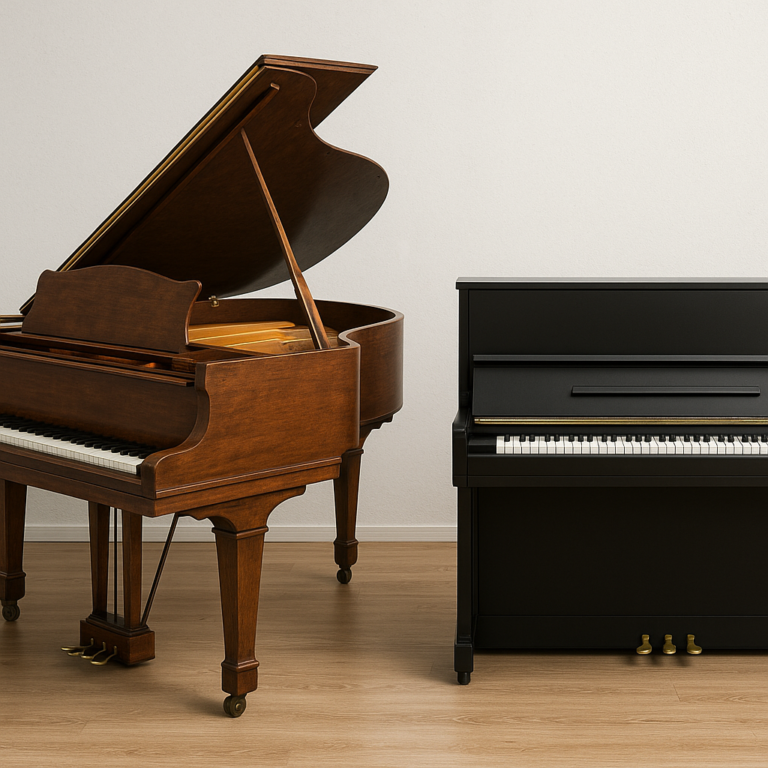
Ever walked into a music store, sat on a bench, and felt torn between the organic soul of a wooden grand and the silent precision of a digital marvel? You aren’t alone. The debate between acoustic and digital piano brands isn’t just about sound; it’s a clash of philosophies. On one side, you have the centuries-old tradition of hammers striking strings, a living instrument that breathes, warms, and demands care. On the other, the cutting-edge world of silicon chips, sampled perfection, and the freedom to play at 3 AM without waking the neighbors.
We’ve spent years testing everything from the legendary Steinway Model D to the high-tech Yamaha Clavinova and Kawai CA series, and the gap between them is closing faster than you think. But here’s the twist: neither is objectively “better.” The right choice depends entirely on your life, your goals, and your wallet. In this deep dive, we’ll uncover the hidden mechanics that make an acoustic piano sing, expose the surprising technology inside a digital piano that can fool even concert pianists, and help you decide which instrument deserves a spot in your home. By the end, you’ll know exactly why a $5,0 digital might be a smarter buy than a $10,0 acoustic for your specific situation.
Key Takeaways
- Sound Generation: Acoustic pianos create sound through physical vibration (hamers hitting strings), offering infinite nuance and natural resonance, while digital pianos use sampled audio or modeling technology to replicate that sound electronically.
- Maintenance & Cost: Acoustic pianos require regular tuning (2-4 times/year) and climate control, adding significant long-term costs, whereas digital pianos are virtually maintenance-free and offer silent practice via headphones.
- Feel & Touch: High-end digital pianos now feature graded hammer actions and wooden keys that closely mimic the feel of an acoustic, though they still lack the subtle mechanical feedback of a real string action.
- Versatility vs. Tradition: Choose digital for connectivity, portability, and versatility; choose acoustic for investment value, authentic tone, and the ultimate classical training experience.
Ready to find your perfect match?
- 👉 Shop Top Acoustic Brands: Yamaha | Kawai | Steinway
- 👉 Shop Top Digital Brands: Yamaha Clavinova | Kawai CA Series | Roland
Table of Contents
- ⚡️ Quick Tips and Facts
- 🎹 A Brief History: From Hammer Action to Silicon Chips
- 🔨 The Core Distinction: How Acoustic and Digital Pianos Generate Sound
- 🔍 Deep Dive: The Mechanics of Acoustic Piano Brands
- The String and Soundboard Symphony
- The Action: Hammers, Felt, and Gravity
- Why Brand Heritage Matters in Acoustics
- 💻 Deep Dive: The Technology Behind Digital Piano Brands
- Sampled vs. Modeled Sound Engines
- Weighted Keys and Hammer Action Simulations
- The Role of Speakers and Amplification
- 🆚 Head-to-Head: Acoustic vs. Digital Piano Comparison
- 1. Touch and Feel: Real Wood vs. Plastic and Springs
- 2. Tone Quality: Organic Resonance vs. Digital Fidelity
- 3. Volume Control and Headphone Jacks
- 4. Maintenance Costs and Tuning Requirements
- 5. Portability and Space Efficiency
- 6. Connectivity and Modern Features
- 7. Resale Value and Longevity
- 🏆 Top Contenders: Leading Acoustic Piano Brands Reviewed
- Steinway & Sons: The Gold Standard
- Yamaha and Kawai: The Japanese Powerhouses
- Bösendorfer and Fazioli: The European Elite
- Budget-Friendly Acoustic Options
- 🎧 Top Contenders: Leading Digital Piano Brands Reviewed
- Yamaha Clavinova Series: The Benchmark
- Kawai CA and MP Series: The Hammer Action Kings
- Roland and Nord: The Tech Innovators
- Casio and Yamaha Entry-Level Models
- 🤔 Which One Should You Choose? A Buyer’s Guide
- Scenario A: The Serious Classical Student
- Scenario B: The Apartment Dweller and Night Owl
- Scenario C: The Songwriter and Producer
- Scenario D: The Beginner on a Budget
- 🛠️ Care and Maintenance: Keeping Your Instrument Alive
- Tuning, Regulation, and Voicing for Acoustics
- Software Updates and Cleaning for Digitals
- Environmental Factors: Humidity and Temperature
- 💡 Common Myths and Trivia About Piano Brands
- 🏁 Conclusion: The Final Verdict
- 🔗 Recommended Links
- ❓ Frequently Asked Questions (FAQ)
- 📚 Reference Links
⚡️ Quick Tips and Facts
Before we dive into the deep end of the piano pool, let’s hit the surface with some essential truths that every aspiring pianist needs to know. Whether you’re a parent looking for a first instrument or a seasoned pro considering an upgrade, these facts will save you time, money, and a lot of confusion.
- Sound is King (But Volume is Queen): The acoustic piano produces sound through physical vibration (strings hitting wood), while the digital piano uses sampled audio or modeling technology. One is organic; the other is electronic.
- The “Silent” Secret: If you live in an apartment or have neighbors who hate noise, a digital piano with a headphone jack is your best friend. You can practice at 3 AM without waking the dead. 🤫
- Maintenance Matters: An acoustic piano is a living organism. It needs tuning 1–2 times a year (sometimes more!) and climate control. A digital piano? Plug it in, and it’s ready to go forever (until the electronics die, which is rare).
- The Weight Factor: Moving an acoustic piano requires a team of professionals and a dolly. Moving a digital piano often requires just you and a friend.
- Resale Reality: Acoustic pianos (especially from top brands like Steinway or Yamaha) often hold their value or even appreciate. Digital pianos depreciate quickly, much like a new car.
- The “Feel” Myth: Not all digital pianos feel the same. High-end models with graded hammer action can fool even advanced players, but cheap ones feel like plastic toys.
For a deeper dive into the history of these magnificent instruments, check out our comprehensive guide on Piano Brands.
🎹 A Brief History: From Hammer Action to Silicon Chips

The story of the piano is a tale of two eras: the age of wood and wire, and the age of silicon and code.
The Acoustic Era: The Industrial Revolution of Sound
The piano wasn’t always the king of the keyboard. Before Bartolomeo Cristofori invented the gravicembalo col piano e forte (harpsichord with soft and loud) around 170, keyboards were limited. The harpsichord plucked strings, meaning you couldn’t change the volume with your touch. The piano changed everything by using hamers to strike strings.
By the 19th century, the acoustic piano had evolved into the instrument we know today. Brands like Steinway & Sons in New York and Bösendorfer in Vienna began crafting instruments that could fill concert halls with a sound so rich it could make grown men wep. The action mechanism—the complex system of levers that transfers your finger pressure to the hammer—became a marvel of engineering, containing thousands of precision parts.
The Digital Revolution: The Silicon Age
Fast forward to the 1970s. The world was getting smaller, and people wanted music that was portable and quiet. Enter the digital piano. Early models were clunky and sounded like beps. But as technology advanced, companies like Yamaha and Roland began sampling real acoustic pianos.
By the 190s, digital pianos were no longer just toys. They featured weighted keys to mimic the feel of an acoustic action and stereo speakers that could fill a room. Today, we have hybrid pianos that combine the best of both worlds, featuring real acoustic actions but digital sound engines.
Want to explore the timeline of these innovations? Read our detailed article on Piano History.
🔨 The Core Distinction: How Acoustic and Digital Pianos Generate Sound
Here is the million-dollar question: How do they actually make noise?
The Acoustic Symphony
When you press a key on an acoustic piano, a mechanical chain reaction occurs:
- The Key: Your finger pushes the key down.
- The Action: A lever system lifts a hammer covered in felt.
- The Strike: The hammer strikes one or more steel strings stretched across a cast-iron frame.
- The Resonance: The strings vibrate, transferring energy to the soundboard (a large wooden diaphragm).
- The Sound: The soundboard amplifies the vibration, projecting the sound into the room.
Crucial Insight: The sound is continuous. As long as the string vibrates, the sound exists. The timbre changes based on how hard you hit the key, the age of the strings, and the humidity of the room. It is a living, breathing sound.
The Digital Simulation
When you press a key on a digital piano:
- The Sensor: A sensor detects the speed and depth of your key press.
- The Processor: A microchip calculates which note to play and how loud it should be.
- The Sample: The processor retrieves a pre-recorded audio file (sample) of a real piano note from its memory.
- The Output: The sound is sent to speakers or headphones.
Crucial Insight: The sound is discrete. It is a recording. Even with advanced modeling technology (which calculates sound in real-time rather than just playing a file), the sound is generated electronically. It is consistent and perfect every time, but it lacks the chaotic beauty of a vibrating string.
🔍 Deep Dive: The Mechanics of Acoustic Piano Brands
Let’s get our hands dirty with the mechanics that make acoustic pianos the gold standard for expression.
The String and Soundboard Symphony
The heart of an acoustic piano is its string and soundboard system.
- Strings: Made of high-carbon steel, these strings are under immense tension (up to 20 tons in a grand piano!). The length and thickness determine the pitch.
- Soundboard: Usually made of spruce, this acts as the amplifier. A high-quality soundboard is the difference between a “thin” sound and a “rich, resonant” tone.
- Inharmonicity: In lower-end acoustic pianos, shorter strings can produce “inharmonic” overtones, making octaves sound slightly out of tune. High-end brands like Fazioli use longer strings to minimize this.
The Action: Hammers, Felt, and Gravity
The action is the soul of the piano. It contains roughly 5,50 parts in a grand piano.
- Gravity: In a grand piano, gravity pulls the hammer back down after a strike, allowing for rapid repetition.
- Springs: In an upright piano, springs reset the action. This is why uprights can feel slightly “sluggish” compared to grands.
- Regulation: Over time, the felt on the hammers compresses, and the wood shrinks or expands. This requires regulation (adjusting the mechanics) to keep the touch consistent.
Why Brand Heritage Matters in Acoustics
Not all wood is created equal. Steinway & Sons has spent over 150 years perfecting their Lipmann and Rener actions. Kawai uses Carbon Fiber in their newer actions for stability. Yamaha is famous for its consistent, bright tone. When you buy an acoustic piano, you aren’t just buying an instrument; you’re buying a legacy of craftsmanship.
For more on specific brands, visit our Piano Brand Guides.
💻 Deep Dive: The Technology Behind Digital Piano Brands
If acoustics are about wood, digital pianos are about code and circuits.
Sampled vs. Modeled Sound Engines
There are two main ways digital pianos create sound:
- Sampling: The manufacturer records a real piano (like a Steinway D) at different velocities. When you play a key, the computer plays back the corresponding recording.
Pros: Extremely accurate to the source.
Cons: Can sound “looped” if the sample isn’t long enough; lacks the infinite nuance of a real string. - Modeling: The computer generates the sound mathematically in real-time. It simulates how a string vibrates, how the soundboard resonates, and how the hammers interact.
Pros: Infinite expressiveness; no looping.
Cons: Requires massive processing power; can sound “synthetic” if the algorithm isn’t perfect.
Brands: Roland (PureAcoustic Modeling) and Kawai (Harmonic Imaging) are leaders here.
Weighted Keys and Hammer Action Simulations
The key action is the most critical part of a digital piano.
- Weighted Keys: These have weights inside to mimic the heaviness of an acoustic action.
- Graded Hammer Action: Lower keys are heavier (like a bass string), and higher keys are lighter (like a treble string).
- Ivory/Ebony Feel: High-end models use textured plastic to mimic the moisture-absorbing properties of real ivory and ebony.
The Role of Speakers and Amplification
A great sound engine is useless without good speakers.
- Stereo vs. Mono: Cheap digital pianos often have mono speakers. High-end models use stereo or even multi-speaker systems (like Yamaha’s AWM system) to project sound from different angles, mimicking the way sound radiates from an acoustic piano.
- Cabinet Design: Some digital pianos (like the Yamaha Clavinova series) are built into wooden cabinets with open backs to allow sound to resonate, just like an acoustic.
🆚 Head-to-Head: Acoustic vs. Digital Piano Comparison
Let’s put them in the ring. Here is how they stack up across the most critical categories.
1. Touch and Feel: Real Wood vs. Plastic and Springs
- Acoustic: The touch is organic. You feel the resistance of the hammer and the return of the key. It is unpredictable and responsive.
- Digital: The touch is enginered. High-end models (like Kawai CA9) are incredibly close, but they lack the “give” of a real string.
- Verdict: For classical training, acoustic wins. For pop/rock, digital is often sufficient.
2. Tone Quality: Organic Resonance vs. Digital Fidelity
- Acoustic: The tone is complex. It has overtones, sympathetic resonance (when one string vibrates another), and a “bloom” that lasts.
- Digital: The tone is consistent. It sounds the same every time. While high-end models are amazing, they still lack the sympathetic resonance of a real piano.
3. Volume Control and Headphone Jacks
- Acoustic: You cannot turn it down. If you play loud, the whole building hears it.
- Digital: You have a volume knob and a headphone jack. You can practice silently at 2 AM.
- Verdict: Digital wins for apartment dwellers.
4. Maintenance Costs and Tuning Requirements
- Acoustic: Requires tuning 2-4 times a year ($150-$30 per tuning). Also needs regulation and voicing every few years.
- Digital: Zero maintenance. No tuning, no humidity control. Just dust the keys.
- Verdict: Digital wins on cost and convenience.
5. Portability and Space Efficiency
- Acoustic: Heavy (30-10 lbs). Requires a dedicated room.
- Digital: Lightweight (30-10 lbs). Can fit in a corner or be moved easily.
- Verdict: Digital wins for small spaces.
6. Connectivity and Modern Features
- Acoustic: No connectivity. Just you and the piano.
- Digital: MIDI, USB, Bluetooth, and apps. You can record directly to a computer, play along with backing tracks, or learn with apps like Simply Piano.
- Verdict: Digital wins for tech-savy musicians.
7. Resale Value and Longevity
- Acoustic: Can last 10+ years. Holds value well.
- Digital: Lasts 15-20 years. Depreciates fast as technology improves.
- Verdict: Acoustic is a better investment.
🏆 Top Contenders: Leading Acoustic Piano Brands Reviewed
Let’s look at the titans of the acoustic world.
Steinway & Sons: The Gold Standard
- Rating: 10/10
- Design: Timeless, hand-crafted in Hamburg or New York.
- Functionality: Unmatched dynamic range and tonal complexity.
- Durability: Built to last centuries.
- Analysis: Steinway is the Ferrari of pianos. If you are a concert pianist, this is your instrument. The Model D is the standard for concert halls worldwide.
Pros: Incredible touch, rich tone, high resale value.
Cons: Extremely expensive, requires expert maintenance.
Yamaha and Kawai: The Japanese Powerhouses
- Rating: 9/10
- Design: Modern, consistent, and reliable.
- Functionality: Bright tone (Yamaha) vs. Warm tone (Kawai).
- Durability: Excellent build quality.
- Analysis: Yamaha (e.g., YUS5) offers a bright, clear tone perfect for pop and classical. Kawai (e.g., K-50) offers a warmer, mellower sound with their Millennium III action. Both are fantastic choices for serious students.
Bösendorfer and Fazioli: The European Elite
- Rating: 10/10
- Design: Exquisite craftsmanship, often with extra keys (Bösendorfer has 92 keys!).
- Functionality: Deep, resonant bass and singing treble.
- Durability: Heirloom quality.
- Analysis: Bösendorfer is known for its “Imperial” model with a massive bass range. Fazioli is the modern rival to Steinway, known for its clarity and power. These are for the ultra-serious.
Budget-Friendly Acoustic Options
- Brands: Young Chang, Samick, Kawai BL series.
- Analysis: These offer decent sound and touch for a fraction of the price of a Steinway. They are great for beginners who want an acoustic feel without the $50k price tag.
👉 Shop Acoustic Pianos on:
- Yamaha: Amazon | Yamaha Official
- Kawai: Amazon | Kawai Official
- Steinway: Steinway Official
🎧 Top Contenders: Leading Digital Piano Brands Reviewed
Now, let’s look at the kings of the digital realm.
Yamaha Clavinova Series: The Benchmark
- Rating: 9.5/10
- Design: Elegant wooden cabinets that look like real pianos.
- Functionality: GrandTouch keyboard, Binaural Sampling (for headphones).
- Analysis: The Clavinova CLP-795GP is a masterpiece. It feels and sounds incredibly close to an acoustic. The GrandTouch keys are heavy and responsive.
Pros: Realistic feel, great sound, beautiful design.
Cons: Expensive, heavy for a digital.
Kawai CA and MP Series: The Hammer Action Kings
- Rating: 9.5/10
- Design: Slek, modern, often with wooden keys.
- Functionality: RHIII and Grand Feel actions. Harmonic Imaging sound engine.
- Analysis: Kawai is often praised for having the best key action in the digital world. The CA9 feels more like a real piano than almost any other digital.
Pros: Best-in-class touch, warm sound, wooden keys.
Cons: Sound can be too warm for some; interface can be complex.
Roland and Nord: The Tech Innovators
- Rating: 9/10
- Design: Modern, often portable (Nord) or cabinet-style (Roland).
- Functionality: PureAcoustic Modeling, PHA-50 keys.
- Analysis: Roland uses modeling to create infinite sound. The HP704 is a fantastic home digital. Nord is the choice for stage performers, known for its red aesthetic and incredible sound library.
Pros: Incredible sound modeling, portable options, great for live performance.
Cons: Nord can be expensive; Roland’s sound can feel “too perfect.”
Casio and Yamaha Entry-Level Models
- Rating: 8/10
- Design: Compact, plastic cabinets.
- Functionality: Tri-Sensor Scaled Hammer Action (Casio), GHS (Yamaha).
- Analysis: The Casio Privia PX-S10 and Yamaha P-515 are great for beginners. They are portable and affordable, though the keys feel lighter than high-end models.
👉 Shop Digital Pianos on:
- Yamaha: Amazon | Yamaha Official
- Kawai: Amazon | Kawai Official
- Roland: Amazon | Roland Official
- Casio: Amazon | Casio Official
🤔 Which One Should You Choose? A Buyer’s Guide
Still torn? Let’s break it down by your specific situation.
Scenario A: The Serious Classical Student
- Recommendation: Acoustic Piano.
- Why: You need the nuance and dynamic range of a real string to develop proper technique. A digital piano, no matter how good, cannot fully replicate the sympathetic resonance required for advanced repertoire.
- Top Pick: Yamaha U1 or Kawai K-30.
Scenario B: The Apartment Dweller and Night Owl
- Recommendation: Digital Piano.
- Why: You need headphones and volume control. An acoustic piano in an apartment is a recipe for eviction.
- Top Pick: Yamaha Clavinova CLP-735 or Kawai CA79.
Scenario C: The Songwriter and Producer
- Recommendation: Digital Piano (or Hybrid).
- Why: You need MIDI connectivity, multiple sounds (strings, organs, etc.), and the ability to record directly to your DAW.
- Top Pick: Roland RD-20 or Nord Stage 3.
Scenario D: The Beginner on a Budget
- Recommendation: Digital Piano.
- Why: You don’t want to spend $5,0+ on a piano you might quit in a year. A good digital piano under $1,0 is a fantastic starting point.
- Top Pick: Casio Privia PX-S10 or Yamaha P-45.
🛠️ Care and Maintenance: Keeping Your Instrument Alive
Tuning, Regulation, and Voicing for Acoustics
- Tuning: Must be done by a professional RPT (Registered Piano Technician) at least twice a year.
- Regulation: Adjusting the mechanical parts to ensure even touch.
- Voicing: Needling the hammers to change the tone from bright to mellow.
- Cost: Expect to spend $30-$60 per year on maintenance.
Software Updates and Cleaning for Digitals
- Updates: Check the manufacturer’s website for firmware updates to improve sound or fix bugs.
- Cleaning: Use a soft, dry cloth. Never use chemical cleaners on the keys.
- Humidity: While less sensitive, extreme humidity can still damage the wood cabinet or electronics.
Environmental Factors: Humidity and Temperature
- Acoustic: Ideal humidity is 40-50%. Too dry = cracks; too wet = rust and sticky keys. Use a Dampp-Chaser system.
- Digital: Can handle a wider range, but avoid extreme heat or cold.
💡 Common Myths and Trivia About Piano Brands
- Myth: “All digital pianos sound the same.”
Fact: The difference between a $50 Casio and a $5,0 Nord is night and day. - Myth: “Acoustic pianos never go out of tune.”
Fact: They go out of tune constantly due to temperature and humidity changes. - Trivia: Did you know the Bösendorfer Imperial has 92 keys? The extra 8 keys in the bass range are used for sympathetic resonance, even if you don’t play them!
- Trivia: The Yamaha Clavinova series was the first digital piano to feature a wooden key action that mimicked the feel of a grand piano.
🏁 Conclusion: The Final Verdict

So, we’ve journeyed from the hammer-striking strings of the 18th century to the silicon chips of the 21st. We’ve explored the organic resonance of the acoustic piano and the technological marvel of the digital piano.
The blunt truth? There is no “better” instrument, only the better instrument for you.
If you are a serious classical pianist with the space and budget, the acoustic piano is your only choice. Its expressive potential is limitless, and its resale value is a sound investment.
However, if you are an apartment dweller, a songwriter, or a beginer on a budget, the digital piano is a miracle of modern engineering. It offers silence, versatility, and convenience that an acoustic simply cannot match. And let’s be honest: with the weighted keys and modeling technology available today, the gap is closing faster than ever.
Final Recommendation:
- Go Acoustic if you value tradition, investment, and the ultimate touch.
- Go Digital if you value convenience, silence, and modern features.
Don’t let the decision paralyze you. The best piano is the one you actually play. Whether it’s a Steinway or a Yamaha Clavinova, the music comes from you.
Ready to find your perfect match? Check out our Piano Comparison guide for side-by-side specs.
🔗 Recommended Links
- 👉 Shop Acoustic Pianos:
Steinway & Sons: Steinway Official Website
Yamaha Uprights: Amazon Search
Kawai Grand Pianos: Kawai Official Website - 👉 Shop Digital Pianos:
Yamaha Clavinova: Amazon Search
Kawai CA Series: Amazon Search
Roland HP Series: Sweetwater Search - Books:
The Piano Book by Larry Fine: Amazon
Piano: The Definitive Visual Guide by DK: Amazon
❓ Frequently Asked Questions (FAQ)

What are the advantages of owning a digital piano over an acoustic piano?
Digital pianos offer volume control, headphone jacks for silent practice, no tuning requirements, portability, and connectivity (MIDI/USB) for recording and learning apps. They are also generally more affordable upfront.
Read more about “🎹 Acoustic vs Digital Piano Brands: The Ultimate 2026 Showdown”
Can digital pianos replicate the feel of an acoustic piano?
High-end digital pianos with graded hammer action and wooden keys (like the Kawai CA9 or Yamaha Clavinova CLP-795GP) can replicate the feel of an acoustic piano very closely. However, they still lack the subtle mechanical nuances of a real string action.
Read more about “🎹 Which Brand Is Best for Piano? Top 10 Ranked for 2026”
What are the price differences between acoustic and digital piano brands?
Acoustic pianos typically start around $3,0 for entry-level uprights and go up to $10,0+ for concert grands. Digital pianos range from $40 for portable models to $10,0+ for high-end cabinet models.
Read more about “🎹 What to Look for When Choosing a Piano Brand: 12 Critical Factors (2026)”
How do the key actions compare between acoustic and digital pianos?
Acoustic actions use a complex system of levers and gravity (in grands) or springs (in uprights) to move hammers. Digital actions use weights and sensors to simulate this feel. While advanced digital actions are impressive, they are still a simulation.
Read more about “🎹 10 Top Digital Piano Brands Compared (2026)”
Which piano type is better for beginners, acoustic or digital?
For most beginners, a digital piano is the better starting point due to lower cost, silent practice options, and built-in learning tools. However, if the budget allows and space is available, an acoustic upright provides the best foundation for technique.
Read more about “🎹 Digital vs. Acoustic Piano Action: The Ultimate 2026 Showdown”
What are the maintenance requirements for acoustic versus digital pianos?
Acoustic pianos require tuning 2-4 times a year, regulation, and voicing. Digital pianos require almost no maintenance other than cleaning and occasional software updates.
Read more about “🎹 Digital vs. Acoustic Pianos: The Ultimate Tech Showdown (2026)”
How do acoustic and digital pianos differ in sound quality?
Acoustic pianos produce a rich, complex sound with natural resonance and overtones. Digital pianos produce a consistent, clear sound based on samples or modeling. While high-end digitals are excellent, they lack the “bloom” of a real string.
Read more about “Digital vs Acoustic Pianos: Sound & Performance Compared (2026) 🎹”
How do hybrid pianos, which combine elements of acoustic and digital pianos, fit into the market and what are their benefits and drawbacks?
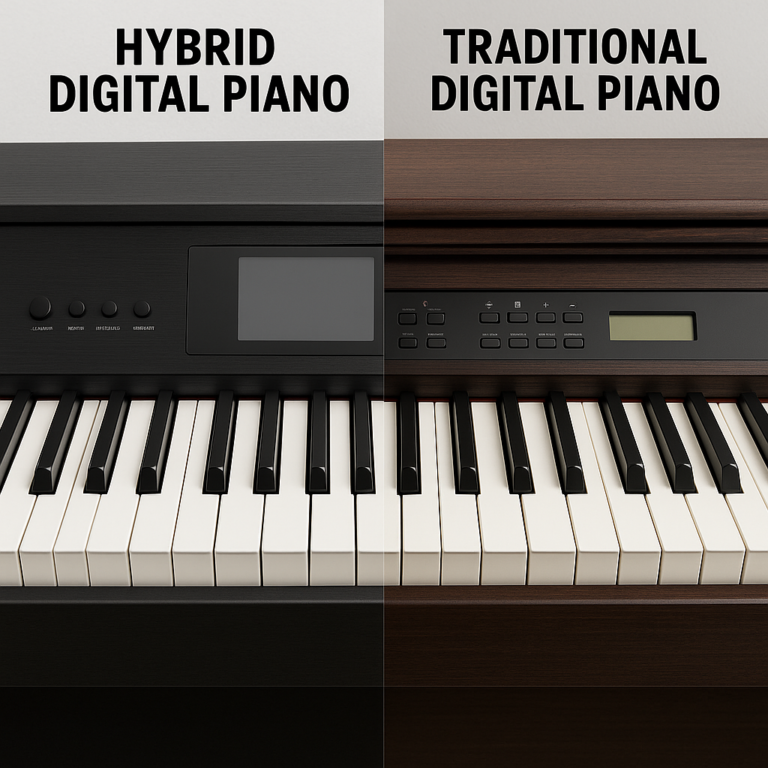
Hybrid pianos (like the Yamaha NU1 or Kawai AnyTime) feature a real acoustic action but use digital sound generation.
- Benefits: Real touch, silent practice, no tuning.
- Drawbacks: Very expensive (often $5,0-$10,0), complex mechanics.
Can digital pianos be used for professional recording and performance, or are acoustic pianos still the preferred choice?
Digital pianos are widely used in professional recording and live performance due to their MIDI capabilities, consistency, and versatility. However, for classical solo recordings, acoustic pianos are still the preferred choice for their unique tonal depth.
What are the environmental and space considerations when choosing between an acoustic and digital piano?
Acoustic pianos require a large, climate-controlled space (45-50% humidity). Digital pianos are compact, portable, and can be played in any environment without risk of damage from humidity.
What are the price differences between acoustic and digital pianos, and which option offers the best value for the money?
Digital pianos offer better imediate value for beginners and casual players due to lower cost and zero maintenance. Acoustic pianos offer better long-term value due to their longevity and resale potential.
Do digital pianos have the same dynamic range and expressiveness as acoustic pianos?
High-end digital pianos have a wide dynamic range, but they still lack the infinite expressiveness of an acoustic piano, where the timbre changes subtly with every touch.
How much maintenance and upkeep is required for acoustic pianos compared to digital pianos?
Acoustic pianos require significant upkeep (tuning, regulation, climate control). Digital pianos require minimal upkeep (cleaning, occasional updates).
What are the top digital piano brands for beginners and hobbyist players, and what features do they offer?
Casio (Privia series) and Yamaha (P-series) are top choices for beginners. They offer weighted keys, built-in metronomes, and headphone jacks at affordable prices.
How do different acoustic piano brands, such as Steinway and Yamaha, compare in terms of tone and quality?
Steinway is known for a rich, complex, and warm tone. Yamaha is known for a bright, clear, and consistent tone. Both are world-class, but they have distinct sonic signatures.
Can digital pianos replicate the authentic feel and playability of acoustic pianos?
They can come very close, especially models with wooden keys and real hammer mechanisms, but they cannot perfectly replicate the mechanical feedback of a real string action.
What are the advantages and disadvantages of owning a digital piano compared to an acoustic piano?
- Advantages: Silent practice, no tuning, portability, connectivity, lower cost.
- Disadvantages: Depreciation, shorter lifespan, less authentic sound/feel.
Read more about “🎹 Who Are the Big 4 Piano Manufacturers? (2026)”
Which brands offer the best acoustic pianos for professional musicians and serious players?
Steinway & Sons, Bösendorfer, Fazioli, Yamaha (CF Series), and Kawai (Shigeru Kawai) are the top brands for professionals.
How do acoustic and digital pianos differ in terms of sound quality and resonance?
Acoustic pianos have natural resonance and sympathetic vibration. Digital pianos simulate this through sampling or modeling, but the effect is not as organic.
What are the key features to consider when choosing between an acoustic and digital piano?
Consider budget, space, noise constraints, maintenance willingness, musical goals, and resale value.
Read more about “🎹 How Many Piano Brands Are There? (2026) The Shocking Truth”
📚 Reference Links
- Yamaha Musical Instrument Guide: Acoustic vs. Digital Pianos
- Liberty Park Music: Digital Piano vs. Acoustic Piano Guide
- Steinway & Sons: About Steinway
- Yamaha: Digital Pianos
- Kawai: Acoustic Pianos
- Roland: Digital Pianos
- Facebook Group Discussion: What are the differences between Clavinova Yamaha and acoustic…