Support our educational content for free when you buy through links on our site. Learn more
🎹 Digital vs. Acoustic Pianos: The Ultimate Tech Showdown (2026)


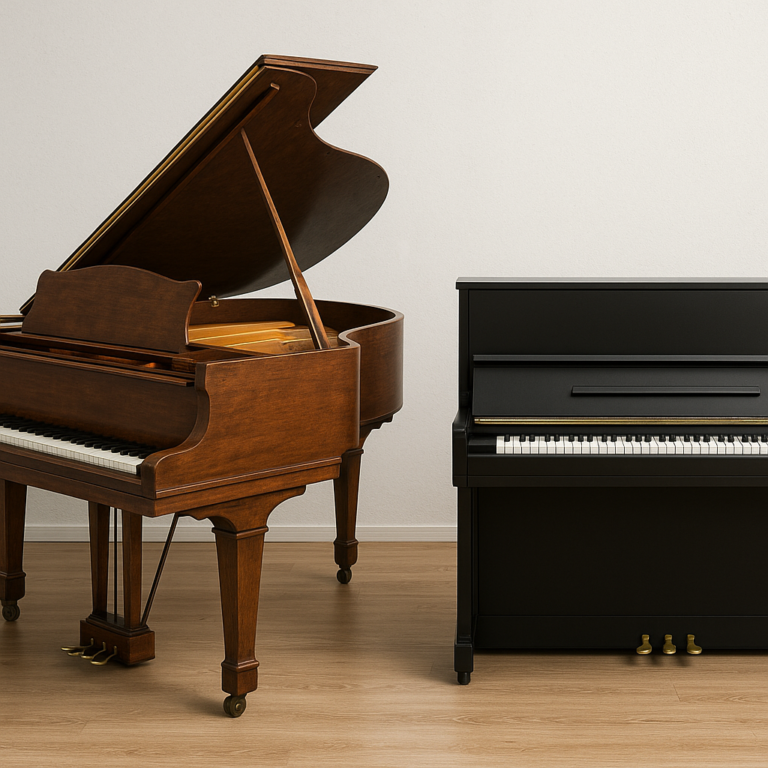
Imagine standing between a towering Steinway grand and a sleek Roland digital, the air thick with the scent of polished wood on one side and the hum of silent circuitry on the other. Which one sings to your soul? We’ve all been there, paralyzed by the choice between the timeless resonance of strings and the limitless versatility of chips. Did you know that while 90% of new buyers now prioritize silent practice, the acoustic piano remains the undisputed king of dynamic expression? In this deep dive, we’ll strip away the marketing fluff to reveal exactly how modern physical modeling stacks up against centuries-old hammer action, helping you decide if you need the maintenance of a living instrument or the plug-and-play freedom of a digital powerhouse.
Key Takeaways
- Sound Generation: Acoustic pianos create sound through physical vibration of strings and a soundboard, offering infinite nuance, while digital pianos use multi-sampling and physical modeling to replicate that sound electronically.
- Maintenance & Cost: Acoustics require professional tuning 2–4 times a year and climate control, whereas digital pianos need zero tuning and are immune to humidity, making them more budget-friendly long-term.
- Portability & Silence: Digital pianos win on portability and silent practice via headphones, essential for apartments, while acoustics are heavy, stationary, and always audible.
- Touch & Feel: High-end digital pianos now feature wooden keys and graded hammer actions that closely mimic the feel of an acoustic, though purists still prefer the organic feedback of a real mechanical action.
- Future-Proofing: If you value connectivity, learning apps, and sound variety, a digital is the clear choice; if you seek investment value and authentic performance, an acoustic remains superior.
Table of Contents
- ⚡️ Quick Tips and Facts
- 🎹 The Evolution of Keys: A Brief History of Acoustic and Digital Piano Technology
- 🔍 The Core Showdown: Hammer Action vs. Weighted Keys and Sound Generation
- 🎚️ 7 Critical Factors to Consider When Choosing Between Digital and Acoustic Pianos
- 1. Budget and Long-Term Value Retention
- 2. Space Constraints and Portability Needs
- 3. Volume Control and Noise Sensitivity
- 4. Maintenance Requirements and Climate Sensitivity
- 5. Connectivity Features and Modern Learning Tools
- 6. Touch Sensitivity and Dynamic Range Capabilities
- 7. Aesthetic Appeal and Home Decor Integration
- 🎻 The Sound of Reality: How Sampling and Modeling Bridge the Gap
- 🖐️ Mastering the Keys: How Touch, Feel, and Pedaling Differ Across Instruments
- 🏭 From Wood to Wire: The Manufacturing Process of Acoustic vs. Digital Pianos
- 🛠️ Keeping It Tuned: Essential Care and Maintenance for Acoustic and Digital Instruments
- 🎓 Learning Curve Showdown: Which Instrument is Easier for Beginners?
- 🎧 The Silent Revolution: Headphone Usage and Practice Scenarios
- 🌐 The Future of Piano: AI, Cloud Integration, and Hybrid Instruments
- 🤔 Trivia: Did You Know? Fascinating Facts About Piano History and Tech
- 🏆 Conclusion: Which Piano Reigns Supreme for Your Musical Journey?
- 🔗 Recommended Links
- ❓ FAQ: Your Burning Questions About Digital vs. Acoustic Pianos Answered
- 📚 Reference Links
⚡️ Quick Tips and Facts
Before we dive into the deep end of the piano pool, let’s hit the surface with some rapid-fire truths that might save you a fortune (or a lot of heartache). We’ve seen too many students buy the wrong instrument because they missed these nuances.
- The “Silent” Secret: Did you know that 90% of new piano buyers now consider headphone capability a dealbreaker? If you live in an apartment or have a sleeping toddler, a digital piano isn’t just a luxury; it’s a survival tool. 🤫
- The Resale Reality Check: Acoustic pianos are like vintage cars; a well-maintained Steinway or Yamaha can hold its value for decades. Digital pianos? They depreciate like a new car the moment you drive it off the lot. Electronics get obsolete; wood and strings get better with age. 📉
- The “Weight” Myth: Not all weighted keys are created equal. A $300 keyboard might have “weighted” keys that feel like lifting a feather in a wind tunnel compared to the 88-key hammer action of a real piano. Always test the touch sensitivity before buying!
- Maintenance Math: An acoustic piano needs tuning 2–4 times a year (yes, really!). A digital piano needs… well, a power cord and maybe a dusting. That’s a massive difference in long-term effort and cost.
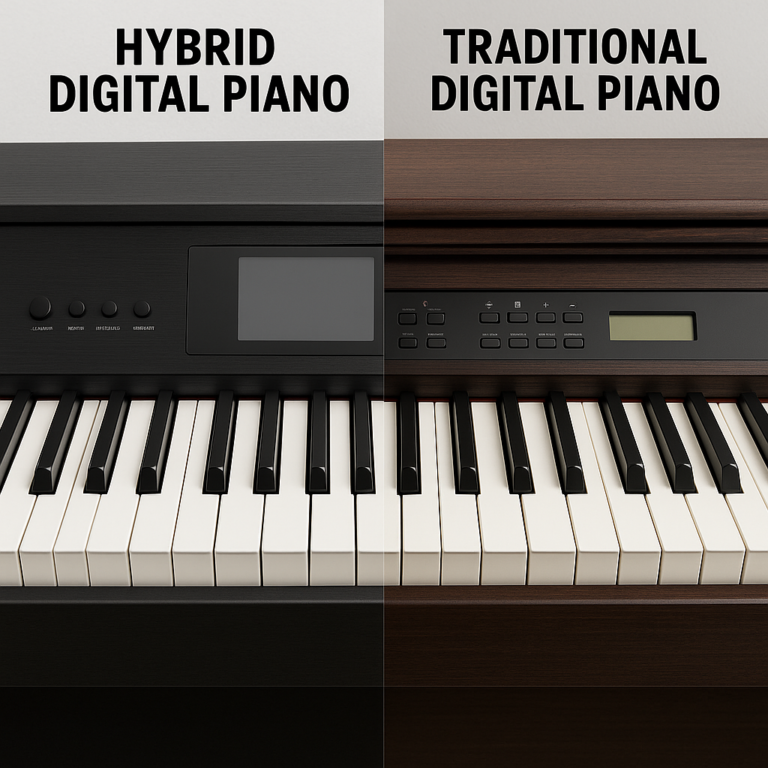
- The Hybrid Middle Ground: If you can’t decide, look for Hybrid Pianos. These beasts have real wooden keys and hammers but use digital sound engines. They are the “best of both worlds,” though they come with a price tag to match. 🤝
For a deeper dive into how these two worlds collide in the real world, check out our guide on How do digital piano brands compare to acoustic piano brands in terms of sound and performance?.
🎹 The Evolution of Keys: A Brief History of Acoustic and Digital Piano Technology

To understand where we are, we have to look at where we started. The story of the piano is a tale of two distinct eras: the Age of Wood and Wire and the Age of Silicon and Sound.
The Acoustic Legacy: From Cristofori to Steinway
It all began in 1700 when Bartolomeo Cristofori, an Italian instrument maker, got tired of harpsichords that couldn’t play softly or loudly based on touch. He invented the gravicembalo col piano e forte (harpsichord with soft and loud). This was the birth of the hammer action.
For centuries, the design remained relatively static. The magic lies in the mechanics:
- You press a key.
- A complex lever system (the action) flings a felt-covered hammer at a string.
- The string vibrates against a soundboard, amplifying the sound.
- The entire wooden cabinet acts as a resonator.
This process is purely mechanical. There are no batteries, no chips, just physics. As noted by Yamaha, this mechanism allows for “limitless musical expression” where the tone varies infinitely based on the pianist’s touch.
The Digital Revolution: From Synthesizers to Sampling
Fast forward to the 1980s. Electronics were taking over the music world. The first digital pianos were clunky, sounding like 8-bit video game music. But the goal was clear: reproduce the acoustic experience without the bulk.
The technology evolved rapidly:
- Early Days: Simple samples triggered by switches.
- The 90s: Introduction of weighted keys to mimic the resistance of real hammers.
- The 2000s: Multi-sampling (recording every key at different velocities) and Polyphony (the ability to play many notes at once without cutting off).
- Today: Physical Modeling and AI integration, where the piano calculates sound in real-time rather than just playing a recording.
As Liberty Park Music points out, while early digital pianos lacked nuance, modern technology has made it possible to “reproduce sounds very close to those of an acoustic piano.”
🔍 The Core Showdown: Hammer Action vs. Weighted Keys and Sound Generation
Here is the million-dollar question: How do they actually make noise? This is where the rubber meets the road, or rather, where the hammer meets the string.
The Acoustic Mechanism: A Symphony of 5,500 Parts
An acoustic piano action is a marvel of engineering. It consists of approximately 5,500 individual precision parts. When you press a key:
- The jack pushes the hammer up.
- The escapement allows the hammer to fly free just before hitting the string (preventing a “double strike”).
- The damper lifts off the string to let it vibrate.
- The repetition lever allows you to play the same note rapidly without fully releasing the key.
This mechanical chain reaction creates a dynamic range that is impossible to fully replicate digitally. The sound isn’t just the string; it’s the vibration of the frame, the resonance of the soundboard, and the sympathetic vibration of other strings.
The Digital Mechanism: Sensors and Samples
Digital pianos don’t have strings. Instead, they rely on:
- Sensors: Optical or mechanical sensors under the keys detect how fast and how far you press.
- Sound Engine: This data triggers a pre-recorded audio file (sample) or a mathematical algorithm (modeling).
- Amplification: The sound is sent to high-fidelity speakers.
The Critical Difference:
- Acoustic: The sound is generated by the physical impact.
- Digital: The sound is reproduced from a file.
While high-end digital pianos like the Roland LX-708 use PureAcoustic Modeling to simulate string resonance in real-time, they are still simulating a physical event, not creating one. As Roland explains, digital pianos utilize “seamless lifelike hammers” to simulate the feel, but the sound generation is fundamentally different.
🎚️ 7 Critical Factors to Consider When Choosing Between Digital and Acoustic Pianos
Choosing a piano is like choosing a life partner; you have to look beyond the surface. Here are the 7 non-negotiable factors you must weigh before signing on the dotted line.
1. Budget and Long-Term Value Retention
- Acoustic: High upfront cost ($3,000 to $100,000+). However, a quality acoustic piano (like a Steinway Model B or Yamaha U1) can hold its value for decades. It’s an asset.
- Digital: Lower entry barrier ($500 to $10,000). However, technology moves fast. A $5,000 digital piano from 2015 sounds dated today. It’s a depreciating asset.
2. Space Constraints and Portability Needs
- Acoustic: A grand piano needs a massive footprint. Even an upright takes up significant floor space and is incredibly heavy (400–900 lbs). Moving one requires professionals.
- Digital: Compact and lightweight. A Casio Privia or Kawai ES120 can be carried by one person. Many are even battery-operated for outdoor gigs! 🎸
3. Volume Control and Noise Sensitivity
- Acoustic: You cannot turn down the volume. If you live in an apartment, playing at 8 PM might get you evicted (or at least a very angry neighbor).
- Digital: Headphone jack is the ultimate game-changer. Practice at 3 AM without disturbing a soul. Some models even have dual headphone jacks for duets.
4. Maintenance Requirements and Climate Sensitivity
- Acoustic: Wood expands and contracts with humidity. You need tuning 2–4 times a year and occasional regulation. Extreme humidity can crack the soundboard.
- Digital: Zero tuning. Just keep it dry and dust-free. It’s virtually immune to climate changes.
5. Connectivity Features and Modern Learning Tools
- Acoustic: It’s an analog instrument. To record, you need microphones. To learn, you need a teacher or sheet music.
- Digital: MIDI/USB connectivity allows you to connect to apps like Simply Piano, Skoove, or GarageBand. You can record your performance instantly, split the keyboard for bass and melody, and access hundreds of instrument sounds.
6. Touch Sensitivity and Dynamic Range Capabilities
- Acoustic: Infinite dynamic range. You can play a whisper or a roar. The touch is organic and responsive.
- Digital: Most have velocity sensitivity (harder press = louder sound), but the range is finite. High-end models (like Kawai CA99) use wooden keys and real hammer mechanisms to bridge this gap, but purists still argue it’s not quite the same.
7. Aesthetic Appeal and Home Decor Integration
- Acoustic: A statement piece. A polished ebony grand or a rustic upright adds timeless elegance to a room.
- Digital: Often looks like a piece of furniture or a slab of plastic. While some (like the Yamaha Clavinova) mimic the look of an upright, they lack the “soul” of a wooden instrument.
🎻 The Sound of Reality: How Sampling and Modeling Bridge the Gap
We’ve established that digital pianos use technology to mimic acoustics. But how good is the mimicry?
The Art of Sampling
In the past, digital pianos recorded a single note at a specific volume. If you played it softly, it sounded the same as if you played it loudly, just quieter. That’s bad.
Modern Multi-Sampling records every key at multiple velocity levels (e.g., very soft, medium, loud, very loud).
- The Result: When you play gently, the piano triggers the “soft” sample. When you strike hard, it triggers the “loud” sample.
- The Limit: There are still “seams” where the transition happens, though they are getting harder to detect.
The Magic of Physical Modeling
This is the cutting edge. Instead of playing a recording, the piano uses mathematical algorithms to generate sound in real-time.
- How it works: The computer calculates how a string would vibrate based on your touch, the length of the string, and the room acoustics.
- The Benefit: Infinite dynamic range and sympathetic resonance (when you hold the sustain pedal, other strings vibrate naturally).
- The Leader: Roland is famous for this with their SuperNATURAL engine. As mentioned in the featured video, this technology creates complex harmonics and overtones that traditional sampling struggles to replicate.
Expert Insight: “A high-end digital piano could sound better than a low-end acoustic piano,” notes Liberty Park Music. A $4,000 digital piano will often sound more consistent and “in tune” than a $2,000 upright that hasn’t been tuned in two years.
🖐️ Mastering the Keys: How Touch, Feel, and Pedaling Differ Across Instruments
If sound is the soul of the piano, touch is the body. This is where the biggest divide lies for serious pianists.
The Action: Weighted vs. Hammer
- Acoustic Action: Uses gravity (in grands) or springs (in uprights) to reset the keys. It has a “break point” where the hammer escapes. This gives the pianist control over the note’s onset.
- Digital Action:
- Graded Hammer Action: Keys are heavier in the low end and lighter in the high end, mimicking a grand piano.
- Wooden Keys: High-end models (e.g., Kawai Novus NV10) use real wood keys to replicate the weight and texture of an acoustic.
- Plastic Keys: Entry-level models use plastic, which can feel slippery and light.
The Pedals: The Unsung Heroes
- Acoustic: Three pedals (Soft, Sostenuto, Sustain) with mechanical linkages. The half-pedaling technique (pressing the sustain pedal halfway to blur the sound slightly) is a crucial expressive tool.
- Digital:
- Entry-level: Often just a simple on/off switch for the sustain pedal. No half-pedaling.
- Mid-to-High-end: Features continuous pedal sensors that detect exactly how far you press, allowing for nuanced half-pedaling.
- The Gap: Even the best digital pedals can feel “mushy” compared to the crisp mechanical feedback of an acoustic.
The “Feel” of the Room
When you play an acoustic, you feel the vibration in the floor, the soundboard, and your chest. With a digital, you feel the vibration of the speakers (if any) and the keys. It’s a sensory disconnect that some players never get over.
🏭 From Wood to Wire: The Manufacturing Process of Acoustic vs. Digital Pianos
Ever wonder how these beasts are born? The manufacturing processes are worlds apart.
Acoustic: The Craftsmanship of Wood
- Sourcing: High-quality spruce for soundboards, hard rock maple for pinblocks, and steel for strings.
- Curing: Wood must be dried for years to prevent warping.
- Assembly: Skilled craftsmen hand-fit over 10,000 parts. The action is regulated by hand.
- Finishing: Multiple layers of lacquer, polished to a mirror shine.
- Tuning: The piano is tuned by a technician before it leaves the factory.
Source: Yamaha notes that the acoustic action consists of approximately 5,500 precision parts, each requiring careful assembly.
Digital: The Precision of Electronics
- Circuitry: PCBs (Printed Circuit Boards) are designed and populated with chips.
- Sampling: Top-tier pianos (like Bösendorfer or Steinway) are recorded in anechoic chambers to capture pure sound.
- Assembly: Robots and assembly lines put together the keyboard, speakers, and casing.
- Calibration: Software is flashed to ensure the touch sensitivity is calibrated correctly.
- Testing: Automated tests check for dead keys, volume consistency, and connectivity.
The Environmental Impact: Acoustic pianos use massive amounts of wood and require significant energy for drying. Digital pianos use rare earth metals and plastics, creating e-waste concerns at the end of their life.
🛠️ Keeping It Tuned: Essential Care and Maintenance for Acoustic and Digital Instruments
You bought the piano. Now, how do you keep it alive?
Acoustic Piano Maintenance
- Tuning: 2–4 times per year. Even if you don’t play, the piano goes out of tune due to humidity changes.
- Regulation: Every 5–10 years, the action needs adjustment to ensure even touch.
- Voicing: Need to soften or brighten the tone? A technician can needle the hammers.
- Climate Control: Keep humidity between 40% and 50%. Use a Dampp-Chaser system to protect the wood.
- Cleaning: Dust the keys with a soft cloth. Never use chemical cleaners on the wood finish.
Digital Piano Maintenance
- Tuning: Never. The pitch is digital.
- Cleaning: Wipe keys with a slightly damp cloth. Avoid alcohol-based cleaners as they can damage the plastic texture.
- Software Updates: Check the manufacturer’s website for firmware updates to improve sound or fix bugs.
- Power Protection: Use a surge protector. A power spike can fry the motherboard.
- Storage: If you have a portable model, store it in a case when not in use to prevent dust buildup in the keys.
Pro Tip: If you own an acoustic, invest in a piano cover to protect it from dust and sunlight. For digital, a key cover is essential to prevent accidental presses and dust accumulation.
🎓 Learning Curve Showdown: Which Instrument is Easier for Beginners?
Is it easier to learn on a digital or an acoustic? The answer depends on who you are.
The Case for Digital for Beginners
- Instant Gratification: Built-in metronomes, recording features, and apps make learning fun.
- No Frustration: You don’t have to worry about the piano being out of tune.
- Silence: You can practice without guilt.
- Affordability: Lower cost means less pressure if you quit after a few months.
The Case for Acoustic for Beginners
- Real Technique: You learn to control the touch from day one. If you can play an acoustic, you can play anything.
- Discipline: The lack of “cheat buttons” forces you to focus on the music.
- Resale: If you decide to quit, you can sell the acoustic for a decent amount.
The Verdict: For a child or a casual adult, a digital piano with 88 weighted keys is the perfect starting point. For a serious student aiming for conservatory, starting on an acoustic is highly recommended.
🎧 The Silent Revolution: Headphone Usage and Practice Scenarios
Let’s talk about the superpower of the digital piano: Headphones.
Imagine it’s 2 AM. Your baby is asleep. Your neighbors are in the next room. You have a difficult piece to master.
- Acoustic: You can’t play. You have to wait until morning.
- Digital: You plug in your headphones, and the world disappears. You are alone with the music.
The Psychological Impact:
- Confidence: Beginners often feel self-conscious playing loudly. Headphones provide a safe space to make mistakes.
- Focus: Without external distractions, you can focus entirely on your technique.
- Duet Practice: Many digital pianos have two headphone jacks, allowing a teacher and student to play together silently.
The Downside:
- Isolation: You miss the resonance of the room. You don’t feel the sound vibrating in your body.
- Hearing Safety: Be careful with volume! Long-term exposure to high volumes through headphones can damage hearing.
🌐 The Future of Piano: AI, Cloud Integration, and Hybrid Instruments
Where is the piano going next? The future is hybrid and connected.
Hybrid Pianos: The Best of Both Worlds
Hybrid pianos combine the real action of an acoustic with the sound engine of a digital.
- Yamaha NU1: Uses a real upright action but mutes the hammers and uses digital sound.
- Kawai AnyTime: Allows you to switch between acoustic and digital modes instantly.
- Steinway Spirio: A high-tech acoustic piano that can record and play back performances with incredible precision.
AI and Cloud Integration
- Smart Learning: AI analyzes your playing and suggests exercises to improve weak spots.
- Cloud Sheet Music: Access thousands of scores instantly via an app.
- Collaboration: Play with musicians around the world in real-time (with low-latency connections).
The Role of the Acoustic
Despite all this tech, the acoustic piano remains the gold standard. As the featured video suggests, “The experience of an acoustic piano is impossible to perfectly replicate.” The future isn’t about replacing the acoustic; it’s about augmenting the musical experience with technology.
🤔 Trivia: Did You Know? Fascinating Facts About Piano History and Tech

Let’s lighten the mood with some piano trivia that will impress your friends at the next party.
- The Tallest Piano: The tallest acoustic piano ever made was 9 feet tall! (Most grands are 5–9 feet).
- The Heaviest Note: The lowest note on a piano (A0) has a string that is over 8 feet long in a concert grand.
- Digital vs. Analog: The first digital piano, the Casio VL-1, was released in 1981 and cost around $200. Today, a $200 digital piano sounds better than the original $200 one!
- The Soundboard: A single piano soundboard is made from a single piece of spruce, often chosen for its specific grain pattern.
- Inharmonicity: In upright pianos, the shorter strings cause “inharmonicity,” meaning the overtones are slightly sharp. This is why uprights often sound “brighter” than grands.
- The 88 Keys: Why 88? It was standardized in the late 19th century to cover the full range of the human voice and most orchestral instruments.
Fun Fact: Did you know that some digital pianos can simulate the sound of a harpsichord, organ, and strings all at once? Try that on an acoustic! 🎻🎹🎺
🏆 Conclusion: Which Piano Reigns Supreme for Your Musical Journey?

So, we’ve journeyed from the hammer-striking strings of the 18th century to the silicon chips of the 21st. We’ve weighed the infinite expressiveness of wood and wire against the unmatched versatility of digital sound. But the question that started this whole adventure remains: Which one is right for you?
Let’s resolve the tension. There is no single “best” piano, only the best piano for your specific life.
- Choose an Acoustic Piano if: You are a serious classical student, you have a dedicated music room, you crave the physical vibration of sound in your bones, and you view the piano as a long-term investment. You are willing to commit to regular tuning and accept that you cannot play at 2 AM without waking the neighborhood.
- Choose a Digital Piano if: You live in an apartment, you need to practice silently, you want to explore genres beyond classical (pop, jazz, electronic), you need portability, or you are on a tighter budget. You value connectivity, zero maintenance, and the ability to switch sounds with a single button.
- Choose a Hybrid Piano if: You have the budget and want the authentic touch of a real action with the silent practice capabilities of a digital.
The Final Verdict:
If you are just starting out and unsure if you’ll stick with it, start with a high-quality digital piano (like the Yamaha P-525 or Kawai ES120). It removes the barriers of cost and noise. If you find yourself falling in love with the instrument, you can always upgrade to an acoustic later. However, if you know you are destined for the conservatory or you simply cannot imagine life without the organic resonance of a real instrument, save up for an acoustic.
Remember, the “perfect” piano is the one you actually play. Whether it’s the mechanical precision of a Steinway or the digital brilliance of a Roland, the magic happens when your fingers meet the keys. Don’t let the technology debate paralyze you; let it guide you to the instrument that makes you want to sit down and play.
🔗 Recommended Links
Ready to take the plunge? Here are our top picks for instruments, accessories, and educational resources to get you started.
🎹 Top Digital Pianos (Best for Beginners & Intermediates)
- Yamaha P-525: Amazon | Sweetwater | Yamaha Official
- Kawai ES120: Amazon | Musician’s Friend | Kawai Official
- Roland FP-90X: Amazon | Sweetwater | Roland Official
🎻 Top Acoustic Pianos (Best for Serious Students & Professionals)
- Yamaha U1 Upright: Amazon | Sweetwater | Yamaha Official
- Kawai K-300: Amazon | Musician’s Friend | Kawai Official
- Steinway & Sons Model O Grand: Amazon | Steinway Official
📚 Essential Books & Learning Tools
- “The Piano Book” by Larry Fine: The ultimate guide to buying and maintaining acoustic pianos. Amazon
- “Alfred’s Basic Adult Piano Course”: Perfect for beginners starting on either instrument. Amazon
- Simply Piano App Subscription: Interactive learning for digital piano users. Apple App Store | Google Play
🛠️ Essential Accessories
- Piano Bench (Adjustable): Amazon | Sweetwater
- Dampp-Chaser Piano Life Saver System (For Acoustics): Amazon | Piano Life Saver Official
- High-Quality Headphones (Closed-Back): Amazon | Sweetwater
❓ FAQ: Your Burning Questions About Digital vs. Acoustic Pianos Answered

How do maintenance and tuning requirements differ between digital and acoustic pianos?
Acoustic pianos are living instruments made of wood, felt, and metal. They require professional tuning 2–4 times a year to stay in pitch, as changes in humidity and temperature cause the wood to expand and contract. They also need regulation (adjusting the mechanical action) every 5–10 years and voicing to maintain tone quality.
Digital pianos, conversely, require zero tuning. Their sound is generated electronically and remains perfectly in tune forever. Maintenance is limited to cleaning the keys, dusting the exterior, and occasionally updating the firmware. They are immune to climate fluctuations, making them ideal for unstable environments.
What are the advantages of using a digital piano over an acoustic piano?
The primary advantages of a digital piano are versatility and convenience.
- Silent Practice: Headphone jacks allow for 24/7 practice without disturbing others.
- Portability: Most digital pianos are lightweight and can be moved by one person.
- Cost: High-quality digital pianos are significantly cheaper than comparable acoustic instruments.
- Features: Built-in metronomes, recording capabilities, split/layer functions, and connectivity to learning apps.
- No Maintenance: No tuning or regulation costs.
Read more about “🎹 Top 10 Professional Studio Digital Pianos to Elevate Your Sound (2026)”
Which type of piano is better for beginners: digital or acoustic?
For most beginners, a digital piano is the superior starting point. It offers a lower financial barrier to entry, allows for silent practice (crucial for building confidence), and includes built-in learning tools. However, if a beginner is seriously committed to classical performance and has the space and budget, starting on an acoustic piano builds better technique and touch sensitivity from day one.
Read more about “Acoustic vs Digital Piano Brands: Which Reigns Supreme in 2025? 🎹”
What are the maintenance requirements for digital pianos versus acoustic pianos?
Digital pianos require minimal care: wipe with a soft, dry cloth; avoid liquids; keep away from extreme heat; and use a surge protector. Acoustic pianos require a rigorous regimen: tuning 2–4 times yearly, annual professional inspection, humidity control (40–50% RH), and occasional regulation and voicing. Neglecting acoustic maintenance can lead to costly repairs or irreversible damage.
Read more about “Which Piano Brand Offers the Best Sound & Durability? 🎹 (2026)”
How does the sound quality of digital pianos compare to acoustic pianos?
Acoustic pianos produce sound through physical vibration, creating a rich, complex tone with natural sympathetic resonance and infinite dynamic nuance. Digital pianos use samples or modeling to replicate this sound. While high-end digital pianos (like those from Roland or Kawai) sound incredibly realistic, they still lack the organic depth and the feeling of sound vibrating through the floor. However, a high-end digital piano often sounds more consistent and “in tune” than a poorly maintained low-end acoustic.
Read more about “Top 7 Bluetooth MIDI Piano Brands You Need to Know in 2026 🎹”
What are the main differences between digital piano technology and traditional acoustic pianos?
The fundamental difference lies in sound generation.
- Acoustic: Mechanical. Hammers strike strings, which vibrate against a soundboard.
- Digital: Electronic. Sensors detect key velocity and trigger digital samples or algorithms played through speakers.
Other differences include portability (digital wins), maintenance (digital wins), expressiveness (acoustic wins), and cost (digital wins for entry-level).
How does digital piano technology compare to acoustic piano touch and feel?
Acoustic actions use a complex system of levers and gravity (in grands) or springs (in uprights) to provide a natural, weighted feel with a “break point” for control. Digital actions simulate this using weighted keys and graded hammer mechanisms. High-end digital pianos now feature wooden keys and real hammer mechanisms to mimic the feel almost perfectly, but entry-level models often feel lighter and less responsive.
What are the maintenance differences between digital and acoustic pianos?
Digital pianos are “set and forget” regarding sound stability. They need no tuning, no regulation, and are unaffected by humidity. Acoustic pianos are high-maintenance; they must be tuned regularly, kept in a stable climate, and serviced by a technician to ensure the mechanical action functions correctly.
Read more about “How Do Yamaha and Kawai Pianos Compare? 🎹 The Ultimate 9-Point Showdown (2026)”
Can digital pianos accurately replicate the sound of a grand piano?
Yes, to a remarkable degree. Modern physical modeling and multi-sampling technologies allow top-tier digital pianos to replicate the tone, resonance, and even the mechanical noises of a grand piano with startling accuracy. However, they cannot fully replicate the physical sensation of the sound waves hitting your body or the infinite micro-variations in tone that occur on a real acoustic instrument.
Read more about “Top 12 Hybrid Piano Brands You Need to Know in 2026 🎹”
Is it better to buy a digital or acoustic piano for a beginner?
It depends on the lifestyle of the beginner.
- Digital: Best for apartments, shared spaces, budget-conscious learners, and those who want to explore various sounds.
- Acoustic: Best for those with dedicated space, a commitment to classical training, and the budget for ongoing maintenance.
- Hybrid: The perfect middle ground for those who want the feel of an acoustic with the features of a digital.
What is the “half-pedaling” technique, and do digital pianos support it?
Half-pedaling is a technique where the sustain pedal is pressed only partially to create a blurred, resonant sound without fully sustaining all notes.
- Acoustic Pianos: Naturally support this via mechanical linkage.
- Digital Pianos: Entry-level models often only support “on/off” pedal switching. Mid-to-high-end digital pianos (e.g., Yamaha Clavinova, Kawai CA series) feature continuous pedal sensors that accurately detect and replicate half-pedaling nuances.
Can I connect a digital piano to a computer for recording?
Absolutely. Most digital pianos feature USB-MIDI or Audio interfaces that allow you to connect to a computer. This enables you to record your performances as MIDI data (which can be edited) or audio files, use virtual instruments, and integrate with learning software like GarageBand or Logic Pro. Acoustic pianos require external microphones and audio interfaces to achieve similar results.
Read more about “🎹 What Are the 10 Best Piano Brands for Beginners? (2026)”
📚 Reference Links
For further reading and verification of the facts presented in this article, we recommend the following authoritative sources:
- Yamaha Musical Instrument Guide: A comprehensive look at the mechanics and selection of acoustic vs. digital pianos.
- Yamaha: Digital Piano Technology vs. Traditional Acoustic Pianos
- Roland Blog: Expert advice on choosing the right instrument based on your needs.
- Roland: How to choose between digital and acoustic when buying a piano
- Liberty Park Music: Detailed comparisons of sound quality, maintenance, and user profiles.
- Liberty Park Music: Acoustic vs. Digital Piano Guide
- Steinway & Sons: Information on the history and craftsmanship of acoustic pianos.
- Steinway & Sons Official Site
- Kawai America: Details on hybrid and digital piano technologies.
- Kawai Official Site
- Casio Musical Instruments: Insights into portable digital piano features.
- Casio Official Site
- Piano Technicians Guild: Resources on the maintenance and regulation of acoustic pianos.
- Piano Technicians Guild