Support our educational content for free when you buy through links on our site. Learn more
🎹 Grand vs. Upright Pianos: The Ultimate 2026 Showdown

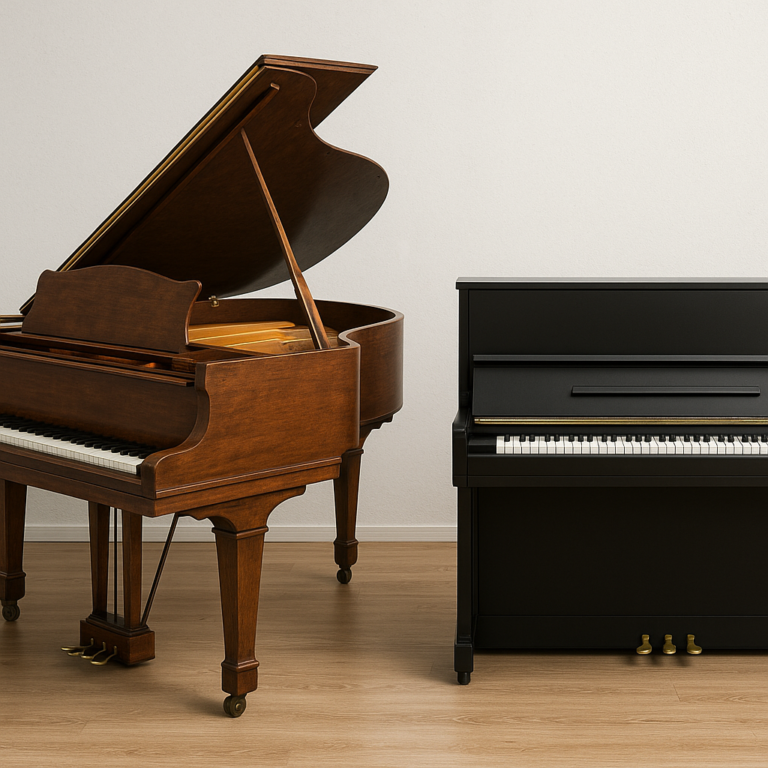
Ever walked into a concert hall and felt the floor vibrate with a thunderous chord, only to wonder how a tiny apartment piano manages to whisper a melody without sounding like a tin can? We’ve all been there. At Piano Brands™, we’ve spent decades tuning, teaching, and tinkering with everything from tiny spinets to 9-foot concert monsters, and let us tell you: the difference between a grand piano and an upright piano isn’t just about the shape of the lid. It’s about gravity, physics, and the very soul of the music you create.
You might think the choice is simple: big room, buy a grand; small room, grab an upright. But hold your horses! There’s a hidden world of action mechanisms and string tension that dictates whether your fingers will feel like they’re dancing on air or wading through molasses. We’ll reveal why a 5-foot baby grand often outperforms a 5-foot upright, and share a secret about repetition speed that could change your practice routine forever. By the time you finish reading, you’ll know exactly which instrument deserves a spot in your living room (or why you might need to rethink your entire musical destiny).
Key Takeaways
- Gravity is the Game-Changer: The horizontal action of a grand piano allows hammers to fall back into place faster than the vertical springs of an upright, enabling superior repetition speed and dynamic control.
- Size Dictates Sound: Longer strings and larger soundboards in grand pianos produce richer tone quality and deeper bass, while upright pianos offer a more compact, space-saving solution with a focused, direct sound.
- Space vs. Performance: While upright pianos are ideal for small spaces and beginners, grand pianos are the undisputed kings of projection and nuance for advanced players and performance venues.
- Maintenance Matters: Both require regular tuning, but grand pianos often demand more frequent regulation due to their complex mechanics, whereas uprights are generally more forgiving and easier to move.
Ready to dive deeper into the mechanics? Let’s explore the history and science behind these magnificent instruments.
Table of Contents
- ⚡️ Quick Tips and Facts
- 🎹 The Grand vs. Upright Piano Showdown: A Brief History of Keys and Strings
- 🔍 The Core Difference: How Action Mechanisms Shape Your Sound
- 📏 Size Matters: Comparing Grand Piano Sizes vs. Upright Piano Dimensions
- 🎵 Tone Quality and Projection: Why Gravity Wins the Sound Battle
- 🚀 Responsiveness and Touch: Understanding Repetition Speed and Dynamic Control
- 💰 Cost Analysis: Is a Grand Piano Worth the Investment Over an Upright?
- 🏠 Space Planning: Finding the Perfect Fit for Your Home or Studio
- 🛠️ Maintenance and Tuning: Why Verticals and Horizontals Need Different Care
- 🎓 Who Should Choose What? Matching Your Skill Level to the Right Instrument
- 🏆 Top Brands to Watch: Steinway, Yamaha, Kawai, and More Compared
- 🤔 Frequently Asked Questions About Grand and Upright Pianos
- 🔗 Recommended Links for Piano Enthusiasts
- 📚 Reference Links and Sources
- 🏁 Conclusion: Making Your Final Decision
Quick Tips and Facts
To choose the best acoustic piano for your home, consider reading our related article about 🎹 How to Choose the Best Acoustic Piano for Your Home (2026). Here are some key differences between grand and upright pianos:
- Grand pianos offer better sound quality and resonance due to their larger soundboards and longer strings.
- Upright pianos are more compact and affordable, making them ideal for small spaces and beginners.
- Grand pianos have a more responsive touch and allow for faster key repetition.
- Upright pianos are easier to maintain and transport.
The Grand vs. Upright Piano Showdown: A Brief History of Keys and Strings

The history of pianos dates back to the early 18th century, with the first grand pianos appearing nearly 30 years before the invention of upright pianos. According to Yamaha, grand pianos retain the original horizontal string design, while upright pianos feature a vertical string design. This fundamental difference in design affects the sound quality and playability of each type of piano.
The Core Difference: How Action Mechanisms Shape Your Sound
The action mechanism of a piano refers to the system of hammers, strings, and dampers that produce sound. Grand pianos have a horizontal action mechanism, which allows for smoother and more nuanced playability. Upright pianos, on the other hand, have a vertical action mechanism that can feel different and may not offer the same level of responsiveness. As noted by Piano Gallery, the horizontal mechanism in grand pianos typically allows for a smoother, more nuanced touch.
Size Matters: Comparing Grand Piano Sizes vs. Upright Piano Dimensions
Grand pianos come in a range of sizes, from baby grands (around 5 feet long) to concert grands (over 9 feet long). Upright pianos, on the other hand, are generally more compact, with sizes ranging from spinet (around 3 feet wide) to studio (around 5 feet wide). When choosing a piano, consider the space you have available and the sound quality you want to achieve. For more information on piano sizes and types, visit our Piano Brand Guides.
Tone Quality and Projection: Why Gravity Wins the Sound Battle
The tone quality and projection of a piano are affected by its soundboard and string design. Grand pianos have a larger soundboard and longer strings, which produce a richer and more resonant sound. Upright pianos, with their shorter strings and smaller soundboards, tend to produce a less rich and less immersive sound. As explained in the first YouTube video embedded above, the horizontal soundboard in grand pianos allows sound to project more openly and immersively.
Responsiveness and Touch: Understanding Repetition Speed and Dynamic Control
The responsiveness and touch of a piano are critical factors to consider when choosing an instrument. Grand pianos have a more responsive touch and allow for faster key repetition, making them ideal for professional musicians and advanced players. Upright pianos, while still playable, may not offer the same level of responsiveness and dynamic control. For more information on piano action and touch, visit our Piano Comparison page.
Cost Analysis: Is a Grand Piano Worth the Investment Over an Upright?
The cost of a piano is a significant factor to consider when choosing an instrument. Grand pianos are generally more expensive than upright pianos, due to their larger size and more complex design. However, the superior sound quality and playability of grand pianos may make them worth the investment for serious musicians. As noted by Yamaha, grand pianos offer a wide dynamic range, rich resonance, and diverse tonality, making them the choice of professional musicians.
Space Planning: Finding the Perfect Fit for Your Home or Studio
When choosing a piano, consider the space you have available and the sound quality you want to achieve. Grand pianos require more space than upright pianos, but offer superior sound quality and playability. Upright pianos, on the other hand, are more compact and affordable, making them ideal for small spaces and beginners. For more information on piano placement and acoustics, visit our Piano Buying Guide.
Maintenance and Tuning: Why Verticals and Horizontals Need Different Care
The maintenance and tuning of a piano are critical factors to consider when choosing an instrument. Grand pianos require more maintenance than upright pianos, due to their larger size and more complex design. However, the superior sound quality and playability of grand pianos may make them worth the extra maintenance. As noted by Piano Gallery, upright pianos are easier to maintain and transport, making them a practical choice for many musicians.
Who Should Choose What? Matching Your Skill Level to the Right Instrument
When choosing a piano, consider your skill level and the sound quality you want to achieve. Grand pianos are ideal for professional musicians and advanced players, due to their superior sound quality and playability. Upright pianos, on the other hand, are more suitable for beginners and intermediate players, due to their affordability and compact size. For more information on piano selection and skill level, visit our Digital Pianos page.
Top Brands to Watch: Steinway, Yamaha, Kawai, and More Compared
When choosing a piano, consider the brand and model that best suits your needs. Steinway, Yamaha, and Kawai are top brands to consider, due to their reputation for quality and craftsmanship. For more information on piano brands and models, visit our Piano Brand Guides page. You can also check out the following products:
- Steinway Grand Piano: Amazon | Musician’s Friend | Steinway Official Website
- Yamaha Upright Piano: Amazon | Musician’s Friend | Yamaha Official Website
- Kawai Grand Piano: Amazon | Musician’s Friend | Kawai Official Website
Frequently Asked Questions About Grand and Upright Pianos
Which piano type is better for small spaces?
Upright pianos are generally more suitable for small spaces, due to their compact size and affordability. However, grand pianos can also be a good choice if you have a larger room and want to achieve superior sound quality.
How does the sound projection differ between grand and upright pianos?
Grand pianos have a more immersive and resonant sound, due to their larger soundboard and longer strings. Upright pianos, on the other hand, tend to produce a less rich and less immersive sound.
Are upright pianos as durable as grand pianos?
Upright pianos are generally less durable than grand pianos, due to their more compact design and simpler construction. However, they can still provide many years of reliable service with proper maintenance and care.
What are the maintenance costs for grand versus upright acoustic pianos?
The maintenance costs for grand pianos are generally higher than for upright pianos, due to their larger size and more complex design. However, the superior sound quality and playability of grand pianos may make them worth the extra maintenance.