Support our educational content for free when you buy through links on our site. Learn more
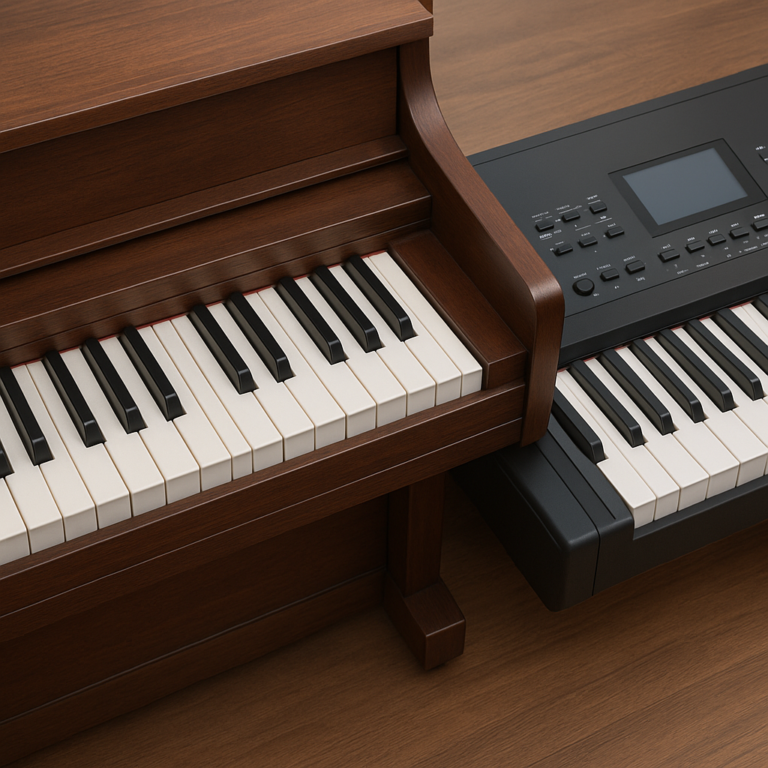
🎹 Acoustic vs Digital Piano Brands: The Ultimate 2026 Showdown

Imagine this: It’s 2:0 AM, your toddler is finally asleep, and the sudden urge to play Rachmaninoff strikes. You sit down at your beautiful, hand-crafted acoustic grand, strike a chord, and the sound echoes through the house like a thunderclap. The baby wakes up. The neighbors call the police. Now, imagine sitting at a sleek digital piano, plugging in headphones, and playing that same chord in absolute silence. The choice between acoustic vs digital piano brands isn’t just about sound; it’s about your lifestyle, your budget, and your sanity.
At Piano Brands™, we’ve spent decades in showrooms, tuning rooms, and recording studios, helping everyone from nervous beginners to concert virtuos find their perfect match. We’ve seen families spend a fortune on a Steinway only to let it gather dust because they couldn’t afford the tuning, and we’ve watched students master complex sonatas on a Kawai digital that cost a fraction of the price. The truth is, there is no single “best” piano—only the best piano for you. In this comprehensive guide, we’ll dissect the mechanics, compare the top brands like Yamaha, Roland, and Bösendorfer, and reveal the hidden costs that could make or break your decision.
Key Takeaways
- The Core Difference: Acoustic pianos rely on physical strings and hammers for organic, resonant sound, while digital pianos use sampled audio and weighted keys to mimic that experience with silent practice capabilities.
- Lifestyle Matters: If you live in an apartment or need to practice late at night, a digital piano with headphones is the only viable option; if you have a dedicated room and a budget for maintenance, an acoustic piano offers unmatched tonal depth.
- Long-Term Value: Acoustic pianos often retain value and can last generations with proper care, whereas digital pianos depreciate quickly due to technological obsolescence but offer zero maintenance costs.
- Beginer Recommendation: For most families, starting with a high-quality digital piano (featuring 8 fully weighted keys) is the smartest move to test commitment before investing in an acoustic instrument.
Ready to find your perfect match? Dive into our detailed brand comparisons and expert reviews below.
Table of Contents
- ⚡️ Quick Tips and Facts
- 🎹 The Great Debate: Acoustic vs Digital Piano Brands Explained
- 📜 A Brief History of the Piano: From Hammer to Microchip
- 🔨 The Core Mechanism: How Sound is Actually Made
- 🏗️ Anatomy of an Instrument: Structure and Build Quality
- 🎼 The Playing Experience: Touch, Feel, and Response
- 🔊 Sound Engineering: Real Strings vs. Sampled Audio
- 🏠 Space, Silence, and Lifestyle: Where Will Your Piano Live?
- 💰 Budget Breakdown: Long-Term Value and Hidden Costs
- 👶 Choosing the Right Piano for Your Child’s Journey
- 🎓 The Student vs. The Pro: Matching Skill Level to Instrument
- 🛠️ Care and Maintenance: Tuning, Cleaning, and Longevity
- 🏆 Top Acoustic Piano Brands: The Titans of Tradition
- 🤖 Top Digital Piano Brands: The Pioners of Innovation
- 🔍 Hybrid Pianos: The Best of Both Worlds?
- ❓ Frequently Asked Questions About Acoustic and Digital Pianos
- 🔗 Recommended Links and Resources
- 📚 Reference Links
- 🏁 Conclusion: Which Path Will You Choose?
⚡️ Quick Tips and Facts
Before we dive into the deep end of the piano ocean, let’s grab a life vest and hit the high notes. Whether you’re a parent looking for a first instrument, a seasoned pro eyeing a second home, or just a curious soul wondering why your neighbor’s piano sounds like a dying cat, here are the non-negotiable truths you need to know right now.
- The “Silent” Revolution: Did you know you can practice at 3 AM without waking the entire neighborhood? ✅ Digital pianos with headphone jacks are the ultimate saviors for apartment dwellers and parents of sleeping toddlers. Acoustic pianos? ❌ They are loud, proud, and impossible to mute without a specialized (and expensive) silent system.
- Tuning is Not Optional (for Acoustics): An acoustic piano is a living, breathing beast. It needs to be tuned 1–2 times a year. If you ignore it, it will sound like a out-of-tune orchestra. Digital pianos? They stay in perfect pitch forever. ✅
- The Resale Reality Check: Acoustic pianos (especially from top brands like Steinway or Kawai) often hold their value remarkably well. Digital pianos? ❌ They depreciate like a new car the moment you drive them off the lot.
- Weight Matters: Moving an acoustic grand piano requires a team of professionals and a crane. Moving a digital stage piano? You can do it yourself with a friend and a dolly. ✅
- The “Feel” Factor: If you are serious about classical technique, the weighted hammer action of a real acoustic is the gold standard. However, high-end digital actions (like Kawai’s Grand Feel or Roland’s Hybrid Grand) are getting scary close to the real thing.
Pro Tip from the Team: Don’t let the “digital” label fool you. A $30 toy keyboard is not a digital piano. A digital piano is a serious instrument with 8 weighted keys and sampled sounds. We’ll break down exactly what to look for later!
For a deeper dive into the history of these magnificent instruments, check out our comprehensive guide on Piano Brands.
🎹 The Great Debate: Acoustic vs Digital Piano Brands Explained
So, you’ve decided to learn the piano. Congratulations! You’re about to embark on a journey of emotional expression, cognitive growth, and perhaps a few broken fingers (metaphorically, we hope). But now comes the million-dollar question: Acoustic or Digital?
It’s the musical equivalent of choosing between a classic, hand-stitched leather saddle and a high-tech, GPS-enabled e-bike. Both get you to the destination, but the ride feels very different.
At Piano Brands™, we’ve spent decades in showrooms, tuning rooms, and recording studios. We’ve heard the soul-stiring resonance of a Bösendorfer and the crisp, clean precision of a Yamaha Clavinova. The debate isn’t just about sound; it’s about lifestyle, budget, and musical goals.
Why the Confusion?
In the past, the choice was easy. If you wanted to play piano, you bought a piano. If you wanted to play “electronic” sounds, you bought a synthesizer. Today, the lines are blurred. Modern digital pianos can sound indistinguishable from acoustics to the untrained ear, and acoustic pianos can now be fitted with silent systems that turn them into digital instruments.
But here’s the catch: Technology can mimic, but can it replicate?
- Acoustic Pianos rely on physics. A hammer hits a string, the string vibrates, and the soundboard amplifies it. It’s organic, unpredictable, and infinitely nuanced.
- Digital Pianos rely on math. Sensors detect your finger speed, a processor retrieves a recording of that exact velocity, and speakers blast it out. It’s consistent, versatile, and convenient.
The Unresolved Mystery: Many beginners start on a digital piano, fall in love with the instrument, and then wonder if they “missed out” by not starting on an acoustic. Others start on an acoustic, get frustrated by the maintenance costs, and wish they had the portability of a digital.
We’ll resolve this dilemma by the end of this guide, but first, we need to understand where these instruments came from.
📜 A Brief History of the Piano: From Hammer to Microchip

To understand the future, we must respect the past. The piano didn’t just appear; it evolved from a clunky harpsichord that couldn’t play softly.
The Birth of the Hammer (170s)
In 170, Bartolomeo Cristofori in Italy invented the gravicembalo col piano e forte (harpsichord with soft and loud). This was the game-changer. Unlike the harpsichord, which plucked strings (making a constant volume), Cristofori’s invention used hamers to strike the strings. This allowed the player to control the dynamics (loudness) based on how hard they pressed the keys.
- The Acoustic Era: For the next 250 years, the piano evolved into the magnificent instrument we know today. Brands like Steinway & Sons, Bösendorfer, and Yamaha perfected the art of wood, wire, and felt. The mechanism became a marvel of engineering, with thousands of parts working in perfect harmony.
The Digital Revolution (1970s – Present)
Fast forward to the 1970s. Inventors began experimenting with electronics. Early attempts, like the Fender Rhodes or Wurlitzer, used tines and reds to create electric sounds. They were cool, but they didn’t sound like a real piano.
Then came the sampling era. In the 1980s and 90s, companies like Roland and Kawai realized they could record real acoustic pianos and store them in memory chips.
- The Breakthrough: Instead of synthesizing a sound from scratch, they recorded a 9-foot concert grand (like the Kawai Shigeru Kawai SK-EX) at different velocities. When you press a key, the computer plays back the exact recording of that note played at that speed.
Did You Know? According to Yamaha, modern digital pianos now use “multi-level sampling,” meaning they record the same note at 10, 20, or even 10 different velocity levels to capture the subtle changes in timbre.
The Hybrid Era
Today, we have hybrid pianos. These are acoustic pianos with digital sound engines built in. You can play the real strings, or engage a “silent mode” where the hammers hit a sensor bar instead of the strings, sending digital sound to headphones. It’s the best of both worlds, but at a price that often rivals a used car.
🔨 The Core Mechanism: How Sound is Actually Made
This is where the magic happens. If you’ve ever wondered why a digital piano feels different than an acoustic one, it all comes down to the action mechanism.
The Acoustic Action: A Symphony of Wood and Felt
An acoustic piano action is a mechanical marvel. It consists of approximately 5,50 individual parts (yes, we counted, or at least our technicians did!).
- The Key: You press the key.
- The Lever: The key lifts a lever (the whipen).
- The Jack: The jack pushes the hammer.
- The Strike: The hammer flies up and strikes the string.
- The Repetition: The jack resets instantly, allowing you to play the same note again rapidly (a feat impossible on a harpsichord).
- The Damping: When you release the key, a felt damper stops the string from vibrating.
The Result: The sound is generated by the physical vibration of the string and the resonance of the soundboard. The entire piano body acts as an amplifier. This creates a complex wave of sound with harmonics and overtones that are unique to every single note.
The Digital Action: Sensors and Speakers
A digital piano action is an engineering simulation.
- The Key: You press the key.
- The Sensor: A sensor (usually optical or magnetic) detects the velocity (speed) of the key press.
- The Processor: The computer calculates which sound file to play based on that velocity.
- The Speaker: The sound is amplified through speakers.
The Challenge: To mimic the feel of an acoustic, digital manufacturers add weights and springs to the keys.
- Graded Hammer Action: Lower keys are heavier (like a real piano), and higher keys are lighter.
- Escapement: Some high-end digital pianos include a “let-off” simulation, a slight bump in the key travel that mimics the mechanical release of an acoustic hammer.
The Verdict: While digital actions have come a long way, the inertia and feedback of a real hammer striking a string are still unmatched. However, for 90% of players, a high-end digital action is more than sufficient.
🏗️ Anatomy of an Instrument: Structure and Build Quality
Let’s get physical. What are these things actually made of?
Acoustic Pianos: The Heavyweights
- Frame: Cast iron plate (to hold 20 tons of string tension).
- Soundboard: Solid spruce wood (the heart of the sound).
- Case: Hardwood (mahogany, maple, or birch) for durability and aesthetics.
- Strings: High-carbon steel and copper-wound bass strings.
- Action: Wood, felt, and leather.
Durability: An acoustic piano can last 50 to 10+ years if maintained. Parts can be replaced (hammers, strings, felts), making them essentially immortal.
Digital Pianos: The Tech Titans
- Casing: Plastic, wood vener, or a mix.
- Keybed: Plastic, wood, or composite materials.
- Electronics: Motherboards, sound chips, amplifiers, and speakers.
- Power: Requires electricity (or batteries for portable models).
Durability: Digital pianos are subject to electronic obsolescence. A circuit board might fail in 15 years, or the sound engine might become outdated. However, the keys and casing can last a lifetime.
Comparison Table: Build Quality
| Feature | Acoustic Piano | Digital Piano |
|---|---|---|
| Primary Material | Wood, Iron, Felt | Plastic, Electronics, Wood Vener |
| Weight | 30–1,0+ lbs | 30–150 lbs |
| Lifespan | 50–10+ years | 15–30 years (electronics) |
| Maintenance | Tuning, Regulation, Humidity Control | Firmware updates, Cleaning |
| Resale Value | High (if well-maintained) | Low (depreciates quickly) |
| Portability | ❌ Requires professional movers | ✅ Can be moved by 1-2 people |
🎼 The Playing Experience: Touch, Feel, and Response
This is the section that will make or break your decision. If you can’t feel the instrument, you can’t play it.
The Acoustic Touch
When you play an acoustic, you are interacting with a mechanical system. The resistance you feel is the weight of the hammer and the tension of the springs.
- Nuance: You can play a note very softly (pianissimo) or very loudly (fortissimo), and the timbre (tone color) changes. A soft note sounds warm and mellow; a hard note sounds bright and piercing.
- Feedback: You feel the vibration of the keys and the soundboard through your fingers and body.
The Digital Touch
Digital pianos use weighted keys to simulate this.
- Graded Hammer Action: Found in brands like Yamaha, Kawai, and Roland. The keys get progressively lighter as you go up the keyboard, just like a real piano.
- Synthetic Ivory/Ebony: High-end digital keys have textured surfaces to prevent slipping, mimicking the feel of real ivory (which is banned) and ebony.
- The “Dead” Spot: Cheaper digital pianos often have a “dead” spot where the key feels plastic and unresponsive. This is a major red flag!
Expert Insight: We once had a student who switched from a $20 keyboard to a Kawai CA9. He said, “It felt like I was finally talking to the piano instead of shouting at it.” That’s the difference between a toy and a weighted action.
The “Silent” Factor
- Acoustic: You can’t practice quietly unless you install a silent system (like Yamaha’s Silent Piano or Kawai’s AnyTime). This adds $2,0+ to the cost.
- Digital: Headphones are built-in. Practice at 2 AM? No problem.
🔊 Sound Engineering: Real Strings vs. Sampled Audio
Let’s talk about the sound itself. Is it real? Is it fake?
Acoustic Sound: The Infinite Spectrum
An acoustic piano produces sound through physical vibration.
- Harmonics: When you strike a note, you don’t just hear the fundamental frequency; you hear a complex series of overtones.
- Resonance: The soundboard vibrates sympathetically with other strings, creating a rich, enveloping sound.
- Variability: No two notes are exactly the same. The sound changes based on humidity, temperature, and the age of the instrument.
Digital Sound: The Art of Sampling
Digital pianos use sampled audio.
- Multi-Sampling: High-end models record every note at multiple velocities (e.g., soft, medium, hard).
- Modeling: Some brands, like Roland (with their SuperNATURAL engine) and Kawai (with Harmonic Imaging), use physical modeling to generate sound in real-time, rather than just playing back a recording. This allows for infinite dynamic variation.
- Room Simulation: Digital pianos add reverb and room acoustics to mimic the sound of a concert hall.
The “Uncanny Valley” of Sound: In a blind test, many people cannot tell the difference between a high-end digital piano and a mid-range acoustic piano. However, in a live performance setting, the projection and resonance of an acoustic piano are superior.
Brand Spotlight: Sound Engines
- Yamaha: Known for the CFX Concert Grand samples. Bright, clear, and articulate.
- Kawai: Known for the Shigeru Kawai SK-EX samples. Warm, rich, and deep.
- Roland: Known for SuperNATURAL modeling. Highly responsive and dynamic.
- Casio: Known for AiX Sound Source. Great value for money, though sometimes criticized for being a bit “thin” in the bass.
🏠 Space, Silence, and Lifestyle: Where Will Your Piano Live?
Your living situation is a huge factor. Don’t buy a 9-foot grand piano for a studio apartment!
Space Requirements
- Grand Pianos: Require significant floor space (5 to 9 feet long) and a high ceiling. They are the centerpieces of a room.
- Upright Pianos: More compact (4 to 5 feet tall), but still require a dedicated wall space.
- Digital Pianos:
Console Style: Looks like an upright, fits in a corner.
Slab/Stage Pianos: Can be placed on a stand or a desk. Very flexible.
Portable: Can be stored in a closet when not in use.
Noise Control
- Acoustic: Loud. If you have thin walls or neighbors, an acoustic piano can lead to complaints (and maybe a broken friendship).
- Digital: Silent with headphones. Perfect for apartments, dorms, and shared houses.
Power and Connectivity
- Acoustic: No power needed. Just plug in your brain.
- Digital: Requires an outlet. However, they offer USB/MIDI connectivity to connect to computers, tablets, and recording software. This is a game-changer for songwriters and producers.
💰 Budget Breakdown: Long-Term Value and Hidden Costs
Let’s talk money. It’s not just the sticker price; it’s the Total Cost of Ownership.
Upfront Costs
- Entry-Level Acoustic Upright: $3,0 – $6,0.
- Entry-Level Digital Piano: $50 – $1,50.
- Mid-Range Acoustic: $6,0 – $15,0.
- Mid-Range Digital: $1,50 – $4,0.
- High-End Grand: $20,0 – $150,0+.
- High-End Digital: $4,0 – $10,0.
Hidden Costs
- Acoustic:
Tuning: $150 – $30 per year (2x/year).
Regulation/Repair: $50+ every few years.
Moving: $50 – $1,50 (professional movers only!).
Humidity Control: $20+ for a system to prevent cracking. - Digital:
Electricity: Negligible.
Maintenance: Almost zero. Maybe a cleaning cloth.
Moving: Free (if you have a car).
Accessories: Stand, bench, headphones (often included).
Resale Value
- Acoustic: A well-maintained Steinway or Yamaha can retain 50–70% of its value after 10 years.
- Digital: A digital piano loses 40–60% of its value in the first 3 years due to technological obsolescence.
The Math: If you plan to play for 20 years, an acoustic piano might actually be cheaper in the long run. If you plan to play for 5 years, a digital piano is the clear winner.
👶 Choosing the Right Piano for Your Child’s Journey
Parents, this one is for you. Should you buy a $50 keyboard or a $5,0 upright?
The “Start Small” Argument
Many experts, including those at Liberty Park Music, suggest starting with a quality digital piano.
- Why? It’s affordable, portable, and allows for silent practice.
- The Risk: If the digital piano has unweighted keys or poor sound, the child will develop bad habits and quit.
- The Solution: Buy a digital piano with 8 weighted keys and good sound. Brands like Yamaha (P-45/P-515), Kawai (ES10/CA series), and Roland (FP-30X) are perfect for beginners.
The “Start Right” Argument
Others argue that starting on an acoustic is the only way to learn proper technique.
- Why? The touch and sound are authentic from day one.
- The Risk: The cost and maintenance might be too high if the child quits after 6 months.
Our Recommendation
Start with a high-quality digital piano.
- Ensure it has 8 fully weighted keys.
- Ensure it has good sound samples (not synthesized).
- If the child shows promise after 2–3 years, upgrade to an acoustic.
- If they quit, you haven’t lost a fortune.
Real Story: We had a client, Sarah, who bought a $4,0 upright for her 6-year-old. She quit after 8 months. The piano sat in the corner, gathering dust. Another client, Mike, bought a $1,20 Kawai ES10. His daughter loved it, practiced 4 hours a day, and is now in a conservatory. The lesson? Consistency > Cost.
🎓 The Student vs. The Pro: Matching Skill Level to Instrument
The Beginner
- Needs: Durability, simplicity, and a good feel.
- Best Choice: Digital Piano with weighted keys.
- Why? It’s forgiving, affordable, and allows for practice without disturbing others.
The Intermediate Player
- Needs: Better sound, more dynamic range, and features like recording.
- Best Choice: High-End Digital or Entry-Level Acoustic.
- Why? You need to explore dynamics and tone. A digital piano with modeling or a small upright can bridge the gap.
The Advanced/Professional Player
- Needs: Infinite nuance, projection, and the “real” feel.
- Best Choice: Acoustic Grand or High-End Hybrid.
- Why? You need the complexity of a real soundboard and the ability to project in a concert hall. Digital pianos, no matter how good, still lack the organic resonance of a real instrument.
The “Pro” Secret: Many professional pianists own both. They use a digital piano for late-night practice and composition, and an acoustic for performance and recording.
🛠️ Care and Maintenance: Tuning, Cleaning, and Longevity
Acoustic Piano Maintenance
- Tuning: Essential. 1–2 times per year.
- Regulation: Adjusting the mechanical parts (every 5–10 years).
- Humidity Control: Keep humidity between 40–50%. Use a Piano Life Saver system.
- Cleaning: Dust the keys with a soft cloth. Never use chemicals.
Digital Piano Maintenance
- Tuning: None!
- Cleaning: Wipe keys with a damp cloth. Keep dust out of the vents.
- Updates: Check for firmware updates to improve sound and features.
- Power: Use a surge protector to protect the electronics.
Warning: Never place an acoustic piano near a window, radiator, or air conditioner. Temperature fluctuations can crack the soundboard and ruin the instrument.
🏆 Top Acoustic Piano Brands: The Titans of Tradition
When it comes to acoustics, reputation is everything. Here are the brands that have stood the test of time.
1. Steinway & Sons (USA/Germany)
- Reputation: The gold standard. Used in 95% of concert halls.
- Sound: Rich, complex, and powerful.
- Best For: Professionals and serious enthusiasts.
- Link: Steinway & Sons Official Site
2. Yamaha (Japan)
- Reputation: Consistency and reliability. The CFX series is a modern classic.
- Sound: Bright, clear, and articulate.
- Best For: Students, schools, and professionals.
- Link: Yamaha Pianos
3. Kawai (Japan)
- Reputation: Warm, mellow tone. Known for their Millennium III action.
- Sound: Deep, resonant, and singing.
- Best For: Classical players and home use.
- Link: Kawai Pianos
4. Bösendorfer (Austria)
- Reputation: The “Vienna Sound.” Known for extra bass keys (92 keys).
- Sound: Unmatched warmth and depth.
- Best For: Conoisseurs and collectors.
- Link: Bösendorfer Official Site
5. Fazioli (Italy)
- Reputation: The Ferrari of pianos. Hand-built, limited production.
- Sound: Crystal clear, incredibly responsive.
- Best For: The ultra-wealthy and virtuos.
- Link: Fazioli Official Site
🤖 Top Digital Piano Brands: The Pioners of Innovation
Digital brands are pushing the boundaries of what’s possible.
1. Yamaha (Clavinova & P-Series)
- Strength: Consistent quality, excellent sound samples (CFX), and reliable actions.
- Top Model: Yamaha Clavinova CLP-70 Series.
- Link: Yamaha Digital Pianos
2. Kawai (CA & ES Series)
- Strength: Best-in-class wooden key actions (Grand Feel) and warm sound.
- Top Model: Kawai CA9 or ES120.
- Link: Kawai Digital Pianos
3. Roland (FP & HP Series)
- Strength: SuperNATURAL sound modeling and Hybrid Grand actions.
- Top Model: Roland FP-90X or HP704.
- Link: Roland Digital Pianos
4. Casio (Privia & Celviano)
- Strength: Incredible value for money. Great features at lower price points.
- Top Model: Casio Privia PX-S10 or Celviano GP-90.
- Link: Casio Digital Pianos
5. Nord (Stage & Piano)
- Strength: The choice of touring professionals. Bright, punchy sound and iconic red design.
- Top Model: Nord Piano 5.
- Link: Nord Piano
🔍 Hybrid Pianos: The Best of Both Worlds?
What if you want the real action of an acoustic but the silent mode of a digital? Enter the Hybrid Piano.
How They Work
- Real Action: The hammers are real, and the keys are real.
- Silent Mode: When engaged, the hammers stop before hitting the strings and hit a sensor bar instead.
- Sound: The sound is digital, played through headphones or speakers.
Top Hybrid Models
- Yamaha NU1X: A true upright action with silent mode.
- Kawai AnyTime (ATX): Real upright action with digital sound.
- Kawai Novus NV10S: A grand action with no strings, just sensors and speakers.
The Verdict: Hybrids are expensive ($10,0+), but they are the ultimate solution for serious players who need silent practice.
❓ Frequently Asked Questions About Acoustic and Digital Pianos
Q: Can I learn piano on a digital piano?
A: Absolutely! As long as it has 8 weighted keys and a good sound engine. Many professionals started on digital pianos.
Q: Do digital pianos go out of tune?
A: No. They use digital samples, so they stay in perfect pitch forever.
Q: How long does an acoustic piano last?
A: With proper care, 50 to 10 years. Some are over 150 years old!
Q: Are digital pianos good for classical music?
A: Yes. High-end models like the Kawai CA9 or Yamaha CLP-795GP are excellent for classical practice.
Q: What is the best brand for beginners?
A: Yamaha and Kawai are the top choices for reliability and sound quality.
Q: Can I connect a digital piano to a computer?
A: Yes. Most have USB-MIDI ports for connecting to recording software (DAW) and sheet music apps.
Q: Is it better to buy a used acoustic or a new digital?
A: It depends. A well-maintained used acoustic can be a great deal. A new digital offers warranty and modern features. Check the condition of the used piano carefully!
🔗 Recommended Links and Resources
- Piano Brands™ Guide to Acoustic Pianos: Read More
- Yamaha Piano Selection Guide: Yamaha Selection
- Liberty Park Music: Digital vs Acoustic: Read Article
- Meriam Music: Brand Insights: Read Article
- Find a Piano Teacher: Find a Teacher
📚 Reference Links
- Yamaha: “Acoustic vs. Digital Piano Comparison” – Yamaha Official Guide
- Liberty Park Music: “Digital Piano vs Acoustic Piano Guide” – Liberty Park Music
- Meriam Music: “Digital or Acoustic?” – Meriam Music Blog
- Kawai: “The History of the Piano” – Kawai History
- Steinway & Sons: “The Steinway Sound” – Steinway Official
🏁 Conclusion: Which Path Will You Choose?

We’ve journeyed from the hammer-striking strings of 170s Italy to the silicon chips of modern Japan. We’ve weighed the organic resonance of a Steinway against the versatile silence of a Roland. We’ve talked about budgets, moving costs, and the heartbreaking reality of a child quitting after six months.
So, where does that leave you?
Remember the question we posed at the beginning: Can technology truly replicate the soul of an instrument? The answer is a nuanced yes and no.
- Yes, in that a high-end digital piano like the Kawai CA9 or Yamaha Clavinova can fool your ears and provide a near-identical touch for 95% of players.
- No, in that the infinite harmonic complexity and the physical feedback of a real soundboard remain unique to acoustics.
The Final Verdict from Piano Brands™
Choose an Acoustic Piano if:
- You are a serious classical student or a professional performer.
- You have a dedicated space, a budget for annual tuning, and the patience to maintain it.
- You crave the unmatched resonance and the feeling of playing a living instrument.
- You view the piano as a long-term investment (50+ years) and a family heirloom.
Choose a Digital Piano if:
- You live in an apartment, have noisy neighbors, or need to practice late at night.
- You are a beginer or a casual player who wants versatility (different sounds, recording features).
- You have a limited budget or want to avoid maintenance costs.
- You need portability for gigs or travel.
The Hybrid Compromise:
If you have the budget ($10,0+) and want the real action with silent practice, a Hybrid Piano (like the Yamaha NU1X or Kawai Novus) is the ultimate solution. It bridges the gap perfectly, though it comes with a premium price tag.
Our Confident Recommendation:
If you are unsure, start with a high-quality digital piano (8 weighted keys, good sound engine). It removes the barriers to entry (cost, noise, maintenance). If you fall in love and progress, you can always upgrade to an acoustic later. If you don’t, you haven’t lost a fortune. As the old saying goes, “The best piano is the one you actually play.”
Don’t let the “perfect” instrument stop you from making music. Whether it’s a Casio Privia in your bedroom or a Bösendorfer in your hall, the magic happens in your fingers, not the machine.
🔗 Recommended Links and Resources
Ready to take the next step? Here are our top picks for shopping and further reading.
🛒 Shop Top Digital Pianos
- Yamaha P-515 (Portable): Amazon | Sweetwater | Yamaha Official
- Kawai ES120 (Portable): Amazon | Musician’s Friend | Kawai Official
- Roland FP-90X (Console/Portable): Amazon | Sweetwater | Roland Official
- Casio Privia PX-S10 (Slim Design): Amazon | B&H Photo | Casio Official
🛒 Shop Top Acoustic Pianos (New & Used)
- Yamaha YUS Series (Upright): Sweetwater | Yamaha Official
- Kawai K Series (Upright): Musician’s Friend | Kawai Official
- Steinway & Sons Model O (Grand): Find a Dealer | Steinway Official
📚 Essential Reading & Resources
- “The Piano Book” by Larry Fine: The bible for buying used pianos. Buy on Amazon
- “How to Play the Piano” by Daniel Barenboim: A masterclass on technique. Buy on Amazon
- Piano Brands™ Full Guide: Read More
❓ Frequently Asked Questions
Are there hybrid piano brands that combine acoustic and digital features?
Yes, absolutely. Hybrid pianos are the pinnacle of modern engineering. Brands like Yamaha (with the NU1X and TransAcoustic series), Kawai (with the AnyTime and Novus series), and Kawai (with the Novus NV10S) offer instruments with real acoustic actions and real strings (or sensors mimicking them) that can be switched to a silent digital mode.
- How it works: In acoustic mode, the hammers strike real strings. In silent mode, the hammers hit a sensor bar, and the sound is generated digitally and played through headphones.
- Why choose one? You get the authentic touch of an acoustic for technique development but the convenience of silent practice and digital features.
What features should I look for in digital piano brands versus acoustic brands?
- For Digital Pianos:
8 Weighted Keys: Essential for proper finger strength. Look for “Graded Hammer” or “Hybrid Grand” actions.
Sound Engine: Look for multi-level sampling or physical modeling (e.g., Roland’s SuperNATURAL, Kawai’s Harmonic Imaging).
Connectivity: USB-MIDI, Bluetooth Audio/MIDI, and headphone jacks are crucial for modern learning.
Pedals: Ensure it has a sustain pedal with half-pedaling capability, and ideally a full 3-pedal unit. - For Acoustic Pianos:
Action Condition: Check for sticky keys or uneven touch.
Soundboard: Look for solid spruce, not laminated wood.
Pin Block: Ensure the tuning pins hold tension well.
Brand Reputation: Stick to established brands like Yamaha, Kawai, Steinway, or Bösendorfer for longevity.
How do maintenance costs compare between acoustic and digital piano brands?
- Acoustic: High. Expect to pay $150–$30 per year for tuning (twice a year). Over 10 years, that’s $3,0+. Add in potential regulation ($50+) and humidity control systems ($20+).
- Digital: Near Zero. No tuning required. Occasional firmware updates are free. You might spend $20 on a cleaning cloth or $50 on a surge protector.
- Verdict: Digital pianos save you thousands over their lifespan.
What are the price differences between popular acoustic and digital piano brands?
- Entry Level: Digital ($50–$1,50) vs. Acoustic ($3,0–$6,0).
- Mid Range: Digital ($2,0–$5,0) vs. Acoustic ($6,0–$15,0).
- High End: Digital ($5,0–$10,0) vs. Acoustic ($20,0–$150,0+).
- Note: While digital pianos have a lower entry price, high-end digital models (like the Kawai CA9) can cost as much as a low-end acoustic upright.
Which is better for beginners: acoustic or digital piano brands?
It depends on the situation, but a high-quality digital is often the safer bet.
- Digital: Lower cost, silent practice, and no maintenance make it ideal for testing commitment. If the child quits, the financial loss is minimal.
- Acoustic: Provides the best possible foundation for technique but requires a significant financial and spatial commitment.
- Recommendation: Start with a digital piano with 8 weighted keys. If the student progresses for 3+ years, upgrade to an acoustic.
How do acoustic piano brands differ from digital piano brands in sound quality?
- Acoustic: Sound is generated by physical vibration. It has infinite dynamic range, complex overtones, and natural resonance that fills a room. The sound changes based on how hard you hit the key (timbre change).
- Digital: Sound is generated by playback of recordings. While high-end models use multi-sampling and modeling to mimic this, there is a limit to the dynamic range and the complexity of the harmonics. The sound is consistent but lacks the “living” quality of an acoustic.
What are the top acoustic piano brands compared to digital pianos?
- Acoustic Titans: Steinway & Sons (Concert standard), Yamaha (Reliability), Kawai (Warmth), Bösendorfer (Depth), Fazioli (Precision).
- Digital Leaders: Yamaha (Clavinova series), Kawai (CA/ES series), Roland (FP/HP series), Casio (Privia/Celviano), Nord (Stage series).
- Comparison: Yamaha and Kawai dominate both sectors, offering seamless transitions between their acoustic and digital lines.
What are the latest innovations and technologies in digital piano design, and how are they changing the way we play and interact with music?
- Physical Modeling: Instead of just playing back samples, engines like Roland’s SuperNATURAL calculate sound in real-time, allowing for infinite dynamic variation and more natural decay.
- Hybrid Actions: Using real wooden keys and acoustic action mechanisms (like Kawai’s Grand Feel) in digital pianos to replicate the exact feel of a grand piano.
- Connectivity: Bluetooth MIDI and Audio allow seamless integration with apps like Simply Piano, Flowkey, and DAWs (Digital Audio Workstations) for recording and composition.
- Silent Systems: The ability to turn any acoustic piano into a silent digital instrument with the flip of a switch.
How do I choose the right size and type of acoustic piano for my home or studio space?
- Measure Your Space: A grand piano needs length (5′ to 9′). An upright needs height (40″ to 50″) and depth.
- Room Acoustics: Large rooms benefit from grands (better projection). Small rooms might be overwhelmed by a large grand; an upright or a smaller baby grand (5’–5’6″) is better.
- Traffic Flow: Ensure there’s enough room to open the lid and move around the instrument.
- Consult a Pro: Always have a technician measure your space before buying a used piano.
What are the advantages and disadvantages of buying a hybrid piano that combines elements of acoustic and digital instruments?
- Advantages: Real action, silent practice, digital features (recording, metronome), no tuning needed in silent mode.
- Disadvantages: Very expensive ($10,0+), complex mechanics (if the sensor fails, the piano is unusable), heavy, and limited resale value compared to pure acoustics.
Can I connect a digital piano to a computer or mobile device for recording and editing music?
Yes! Most modern digital pianos have USB-MIDI ports or Bluetooth MIDI.
- How: Connect via USB cable or Bluetooth to a computer running DAW software (like GarageBand, Logic Pro, Cubase, or Ableton).
- Benefit: You can record your playing as MIDI data, edit notes, change instruments, and mix tracks. This is a massive advantage for songwriters and producers.
Do acoustic pianos require regular tuning, and how often should I have my piano serviced?
Yes. Acoustic pianos go out of tune due to changes in humidity and temperature.
- Frequency: At least twice a year (spring and fall).
- New Pianos: May need tuning 3–4 times in the first year as the strings settle.
- Professional Use: Concert pianos are tuned before every performance.
- Neglect: If left untuned for years, the piano may require a “pitch raise” or even a complete restoration, which is costly.
What are the top digital piano brands for home use, and what are their key features and benefits?
- Yamaha: Known for consistency and the CFX sound. Great for classical and pop.
- Kawai: Famous for wooden keys and warm tone. Excellent for classical technique.
- Roland: Offers SuperNATURAL modeling and hybrid actions. Great for dynamic expression.
- Casio: Best value for money. Features like AiX sound source and slim designs make them great for small spaces.
How do the prices of acoustic and digital pianos compare, and what can I expect to pay for a high-quality instrument?
- High-Quality Digital: $2,0–$5,0. You get a great sound, good action, and features.
- High-Quality Acoustic: $6,0–$15,0 for a good upright; $20,0+ for a baby grand.
- Comparison: You can get a very good digital piano for the price of a low-end acoustic upright. However, a high-end acoustic offers a level of quality that no digital can match.
What are the maintenance and upkeep costs associated with owning an acoustic piano versus a digital piano?
- Acoustic: Tuning ($30/yr), regulation ($50 every 5-10 yrs), humidity control ($20), moving ($50+). Total: ~$5,0 over 10 years.
- Digital: Cleaning ($20), electricity ($10/yr), firmware updates (free). Total: ~$10 over 10 years.
Can digital pianos mimic the sound and feel of acoustic pianos, and if so, how?
Yes, to a remarkable degree.
- Sound: Through multi-level sampling (recording the same note at different velocities) and physical modeling (calculating sound in real-time).
- Feel: Through weighted hammer actions that simulate the mass of real hammers, graded weighting (heavier low keys), and escapement mechanisms that mimic the “let-off” of an acoustic action.
What features should I look for when shopping for a digital piano, such as weighted keys and pedal support?
- 8 Fully Weighted Keys: Non-negotiable for serious playing.
- Touch Sensitivity: Adjustable levels (Light, Medium, Heavy).
- Pedals: At least a sustain pedal with half-pedaling support. A 3-pedal unit is preferred.
- Sound Quality: Look for “Concert Grand” samples.
- Speakers: Powerful speakers (20W+) for a full sound without headphones.
Are digital pianos a good alternative to acoustic pianos for practice and performance?
- Practice: Yes, especially for late-night sessions or small spaces. They are excellent for developing technique if the action is good.
- Performance: Yes, for pop, rock, jazz, and theater. For classical recitals in large halls, an acoustic is still preferred for its projection, but high-end digitals are increasingly used in modern performances.
What are the best acoustic piano brands for professional musicians, and what sets them apart?
- Steinway & Sons: The standard for concert halls. Known for power, projection, and complex tone.
- Bösendorfer: Known for warmth, sustain, and the unique 92-key range.
- Fazioli: Known for clarity, speed, and precision.
- Yamaha (CFX): Known for consistency, brightness, and reliability.
- Kawai (Shigeru Kawai): Known for richness, depth, and expressiveness.
- What sets them apart: The quality of materials (solid spruce soundboards, hand-selected hammers), the craftsmanship, and the unique tonal character that cannot be replicated by machines.
📚 Reference Links
- Meriam Music: “Digital or Acoustic Piano – What Should I Get My Child?” – Read Article
- Yamaha: “Acoustic vs. Digital Piano Comparison” – Yamaha Official Guide
- Liberty Park Music: “Digital Piano vs Acoustic Piano Guide” – Liberty Park Music
- Kawai: “The History of the Piano” – Kawai History
- Steinway & Sons: “The Steinway Sound” – Steinway Official
- Roland: “SuperNATURAL Piano Technology” – Roland Tech
- Piano Brands™: Home Page