Support our educational content for free when you buy through links on our site. Learn more
🎹 What to Look for When Choosing a Piano Brand: 12 Critical Factors (2026)


Ever walked into a showroom, heard a single note from a Steinway, and felt your soul vibrate, only to turn around and hear a Samick that sounded like a tin can? We’ve all been there. Choosing a piano brand isn’t just about picking a logo; it’s about finding an instrument that will grow with you, withstand decades of practice, and perhaps even appreciate in value. But with “German-sounding” names popping up everywhere and the line between acoustic and digital blurring, how do you separate the diamonds from the duds?
In this comprehensive guide, we’re skipping the fluff and diving straight into the 12 critical factors that actually matter. From the hidden dangers of “ghost brands” to the secret differences between solid spruce and laminate soundboards, we’ll reveal the insider secrets that dealers often keep quiet. We’ll also share a story about a “bargain” 1980s grand that cost more to fix than it was worth, and explain why a 5’2″ baby grand might actually be a worse investment than a 48-inch upright. By the end, you’ll know exactly which brand fits your space, your budget, and your musical soul.
Key Takeaways
- Size Dictates Sound: A longer string equals a richer tone; never buy a grand piano that is too small for your room, as a high-end 48-inch upright often outperforms a tiny 5’2″ baby grand.
- Beware of “Ghost” Brands: Many brands with German names are actually mass-produced in Asia; always verify the country of origin before falling for the marketing.
- The Action is King: The feel of the keys (action) matters more than the brand name; Kawai’s carbon fiber and Yamaha’s consistent actions are industry benchmarks for reliability.
- Resale Value Matters: Steinway, Yamaha, and Kawai hold their value best, while most entry-level brands depreciate rapidly once they leave the showroom.
- Used Pianos Rarely Improve: Unlike violins, pianos are machines that wear out; a 20-year-old piano is rarely a better deal than a new one unless it is a rare, pristine gem.
👉 Shop Top Piano Brands:
- Yamaha: Amazon | Yamaha Official
- Kawai: Amazon | Kawai Official
- Steinway & Sons: Steinway Official
- Bösendorfer: Bösendorfer Official
Table of Contents
- ⚡️ Quick Tips and Facts
- 🎹 The Grand History of Piano Manufacturing: From Cristofori to Modern Giants
- 🔍 12 Critical Factors to Evaluate When Choosing a Piano Brand
- 1. Soundboard Material and Tone Quality
- 2. Action Mechanism and Key Response
- 3. Craftsmanship and Build Quality Standards
- 4. Brand Heritage and Reputation in the Industry
- 5. Resale Value and Long-Term Investment Potential
- 6. Warranty Coverage and After-Sales Support
- 7. Available Sizes: Upright vs. Grand Piano Dimensions
- 8. Aesthetic Design and Finish Options
- 9. Tuning Stability and Climate Adaptability
- 10. Digital vs. Acoustic Hybrid Capabilities
- 1. Dealer Network and Service Accessibility
- 12. Price-to-Performance Ratio Analysis
- 🏆 Top Piano Brands Ranked by Category and Budget
- 👑 The Elite Tier: Steinway & Sons, Bösendorfer, and Fazioli
- 💎 The Professional Tier: Yamaha, Kawai, and Bechstein
- 🏠 The Home Player Tier: Baldwin, Young Chang, and Samick
- 🌏 The Value Tier: Used Market Gems and Emerging Brands
- 🛠️ New vs. Used: Navigating the Second-Hand Piano Market
- 📏 Measuring Your Space: A Guide to Piano Dimensions and Room Acoustics
- 🎚️ Digital Pianos vs. Acoustic Pianos: Which Brand Ecosystem Fits You?
- 🚫 15 Common Mistakes to Avoid When Buying a Piano
- 🔧 Maintenance Essentials: Keeping Your Brand’s Piano in Top Shape
- 🎓 Conclusion
- 🔗 Recommended Links
- ❓ FAQ: Your Burning Questions About Piano Brands Answered
- 📚 Reference Links
⚡️ Quick Tips and Facts
Before we dive into the deep end of the piano ocean, let’s grab a life preserver. Here are the non-negotiable truths we’ve learned after testing thousands of keys, hammers, and soundboards at Piano Brands™:
- Size Matters More Than You Think: A longer string equals a richer tone. If you’re eyeing a grand, bigger is almost always better for sound quality, even if it fits “just barely” in your room.
- The “German Sound” Myth: Not all German-sounding brands are actually made in Germany. Many are “ghost brands” assembled in Asia with German names slapped on. Always check the country of origin, not just the logo.
- Used Pianos Rarely “Improve”: Unlike violins, pianos are machines under constant tension. They do not get better with age; they wear out. A 20-year-old piano is rarely as good as a new one unless it’s a rare, untouched gem.
- The 50% Discount Trap: If a brand lists an MSRP that is 50% higher than the selling price, the MSRP is likely fake. Steinway & Sons and Estonia are famous for having minimal gaps between list and street price.
- The “Donkey” Factor: Never buy a piano without playing it with at least 5-6 contrasting pieces of music. If it fails one, walk away. You don’t want to end up with a “complete donkey” that makes you want to throw sheet music across the room!
For a deeper dive into the ecosystem of manufacturers, check out our comprehensive guide on Piano Brands.
🎹 The Grand History of Piano Manufacturing: From Cristofori to Modern Giants

To understand what makes a brand “good,” you have to understand where they came from. The piano wasn’t invented in a garage; it was born in a workshop in Florence, Italy, around 170 by Bartolomeo Cristofori. He wanted an instrument that could play both soft (piano) and loud (forte), unlike the harpsichord which only plucked.
Fast forward to the 19th century, and the Industrial Revolution changed everything. Brands like Steinway & Sons in New York and Bösendorfer in Vienna began mass-producing pianos with iron frames, allowing for higher string tension and louder volumes. This era created the “Golden Age” of piano manufacturing.
Today, the landscape is split between heritage brands that still hand-craft instruments in Europe (like Fazioli or Bechstein) and modern giants (like Yamaha and Kawai) that utilize robotics and precision engineering to create consistent, high-quality instruments at scale.
Did you know? The “American Sound” isn’t just one thing. While Steinway is known for a powerful, complex tone, Baldwin (once the largest American manufacturer) had a distinct, warmer sound. Meanwhile, Mason & Hamlin is renowned for its tension-resonant design, offering a unique sustain.
If you’re curious about how these brands evolved over the centuries, explore our Piano History category.
🔍 12 Critical Factors to Evaluate When Choosing a Piano Brand
Choosing a piano brand is like choosing a life partner: you need to look beyond the surface. Here are the 12 critical factors we at Piano Brands™ use to separate the diamonds from the duds.
1. Soundboard Material and Tone Quality
The soundboard is the heart of the piano. It amplifies the vibrations of the strings.
- Solid Spruce: The gold standard. Brands like Steinway and Bösendorfer use solid spruce, which ages beautifully and offers a rich, complex tone.
- Laminate: Often found in entry-level brands. It’s durable and stable but lacks the dynamic range and resonance of solid wood.
- The Test: Play a low C and listen. Does it sustain? Does it have a “bloom” to the sound, or does it die out quickly?
2. Action Mechanism and Key Response
The action is the engine. It’s the complex system of levers that translates your finger press into a hammer strike.
- Repetition Speed: How fast can you play the same note twice? Kawai is famous for their Millennium III action, which uses carbon fiber for speed and stability.
- Weight and Touch: Some prefer a heavy, “grand-like” touch (common in Yamaha), while others prefer a lighter, more responsive feel (often found in Bösendorfer).
- Consistency: Every key should feel the same. If the bass feels heavy and the treble feels light, the action is poorly regulated.
3. Craftsmanship and Build Quality Standards
This is where the rubber meets the road.
- Hand-Finished vs. Robot-Asembled: Fazioli builds every piano by hand, resulting incredible uniqueness but higher costs. Yamaha uses advanced robotics for perfect consistency. Neither is “better”; it depends on what you value.
- Fit and Finish: Look at the gaps between the keys. Are they even? Is the lacquer smooth? These details often reflect the internal quality.
4. Brand Heritage and Reputation in the Industry
A brand’s history matters, but don’t be fooled by marketing.
- Real Heritage: Steinway, Bösendorfer, Kawai, and Yamaha have centuries (or decades) of proven track records.
- Ghost Brands: Be wary of names like “Bechstein” (unless it’s the German C. Bechstein) or “Steinberg.” These are often rebranded Asian pianos with no connection to the original German makers.
5. Resale Value and Long-Term Investment Potential
Pianos depreciate, but some hold value better than others.
- The Big Three: Steinway, Yamaha, and Kawai generally hold their value best in the used market.
- The “Barn Find” Myth: As noted in our quick tips, a 20-year-old piano is rarely worth more than a new one unless it’s a rare, high-end model in pristine condition.
6. Warranty Coverage and After-Sales Support
A great piano is useless if you can’t get it fixed.
- Dealer Network: Does the brand have authorized dealers near you? Yamaha and Kawai have massive global networks.
- Warranty Length: Look for a 10-year to lifetime warranty on the soundboard and action for new pianos.
7. Available Sizes: Upright vs. Grand Piano Dimensions
Size dictates sound.
- Uprights: A 48-inch upright is the standard for serious players, but excellent 43-inch models exist (like the Yamaha U1).
- Grands: A 5’2″ baby grand sounds very different from a 9′ concert grand. Never buy a grand just because it’s a grand; ensure the size fits your room and your musical needs.
8. Aesthetic Design and Finish Options
You’ll be looking at this thing every day.
- Finishes: High-gloss polyester (durable, reflective) vs. satin wood (natural, warm). Steinway offers a stunning array of custom finishes.
- Legs and Pedals: Are the legs sturdy? Do the pedals feel smooth?
9. Tuning Stability and Climate Adaptability
Pianos are sensitive to humidity.
- Stability: Brands like Yamaha are renowned for holding their tune well in varying climates due to their rigorous manufacturing processes.
- Climate Control: Some high-end models come with built-in humidity control systems (like Steinway’s Spirio or Kawai’s Silent System).
10. Digital vs. Acoustic Hybrid Capabilities
The line is blurring.
- Hybrid Pianos: Brands like Kawai (Novus series) and Yamaha (AvantGrand) offer acoustic actions with digital sound engines.
- Silent Systems: Many acoustic pianos can be fitted with silent systems, allowing you to play with headphones.
1. Dealer Network and Service Accessibility
You can’t buy a piano online without seeing it first.
- Local Support: Ensure there’s a qualified technician in your area who knows the brand. A Bösendorfer needs a specialist, not just any piano tuner.
12. Price-to-Performance Ratio Analysis
Is it worth the price?
- Value Leaders: Kawai and Yamaha often offer the best performance per dollar in the mid-range.
- Premium Investment: Steinway and Fazioli are investments in art and history, not just instruments.
🏆 Top Piano Brands Ranked by Category and Budget
We’ve tested them all. Here is our breakdown of the top brands by category.
👑 The Elite Tier: Steinway & Sons, Bösendorfer, and Fazioli
These are the Rolls Royces of the piano world.
| Brand | Origin | Key Feature | Best For |
|---|---|---|---|
| Steinway & Sons | USA/Germany | Complex, powerful tone; “Lipstick” finish | Concert halls, serious professionals |
| Bösendorfer | Austria | Extra keys (92 keys); warm, singing tone | Classical repertoire, intimate settings |
| Fazioli | Italy | Precision engineering; bright, clear tone | Modern repertoire, technical virtuosity |
Pros: Unmatched tonal complexity, incredible resale value, status symbol.
Cons: Extremely expensive, heavy maintenance requirements, overkill for beginners.
👉 Shop Steinway & Sons on: Amazon | Steinway Official
👉 Shop Bösendorfer on: Amazon | Bösendorfer Official
👉 Shop Fazioli on: Fazioli Official
💎 The Professional Tier: Yamaha, Kawai, and Bechstein
The workhorses of the music industry.
| Brand | Origin | Key Feature | Best For |
|---|---|---|---|
| Yamaha | Japan | Bright, clear tone; consistent action | Pop, jazz, recording studios |
| Kawai | Japan | Carbon fiber action; warm, mellow tone | Classical, home practice |
| C. Bechstein | Germany | Traditional German sound; hand-crafted | Professionals seeking a German alternative |
Pros: Excellent build quality, great resale value, widely available service.
Cons: Can be pricey for entry-level models, less “character” than elite brands.
👉 Shop Yamaha on: Amazon | Yamaha Official
👉 Shop Kawai on: Amazon | Kawai Official
👉 Shop C. Bechstein on: C. Bechstein Official
🏠 The Home Player Tier: Baldwin, Young Chang, and Samick
Great for students and hobbyists.
| Brand | Origin | Key Feature | Best For |
|---|---|---|---|
| Baldwin | USA | Warm, American sound; sturdy | Home practice, schools |
| Young Chang | South Korea | Good value; reliable | Budget-conscious buyers |
| Samick | South Korea | High volume production; affordable | Beginners, first-time buyers |
Pros: Affordable, durable, good for learning.
Cons: Lower resale value, less tonal complexity, may need more frequent regulation.
👉 Shop Baldwin on: Amazon | Baldwin Official
👉 Shop Young Chang on: Amazon
👉 Shop Samick on: Amazon
🌏 The Value Tier: Used Market Gems and Emerging Brands
Don’t ignore the used market! A well-maintained Yamaha U1 or Kawai K-30 can be a steal. However, be wary of “barn finds” that have been neglected.
🛠️ New vs. Used: Navigating the Second-Hand Piano Market
Buying a used piano is like buying a used car: it can be a great deal or a money pit.
The Reality Check:
As mentioned in our quick tips, used pianos generally perform at a level “markedly lower” than new counterparts. A 20-year-old piano is rarely as good as a new one.
What to Inspect:
- Keys: Check for side-to-side play. If a key wobbles more than 1-2mm, the bushings are worn.
- Hammers: Look for deep groves or hard, compacted felt. This indicates the need for re-felting (expensive!).
- Strings: Rust or corrosion is a red flag.
- Soundboard: Cracks are not always deal-breakers, but if they cross a rib or cause buzzing, stay away.
The Ultimate Test:
Sit down and play. If you don’t enjoy the sound and feel, walk away. No amount of “potential” matters if you hate playing it.
For more on this, check out our Piano Buying Guide.
📏 Measuring Your Space: A Guide to Piano Dimensions and Room Acoustics
You wouldn’t buy a sofa without measuring your living room, right? Same goes for pianos.
Upright Pianos:
- 43-45 inches: Good for small rooms, but bass may be weak.
- 48 inches: The sweet spot for most homes.
- 52+ inches: Near-grand quality, but requires a large room.
Grand Pianos:
- Baby Grand (5’0″ – 5’6″): Great for small rooms, but bass is limited.
- Medium Grand (5’7″ – 6’0″): The standard for serious players.
- Concert Grand (9’0″+): Only for large halls.
Room Acoustics:
A small room with a 9′ grand will sound bomy. A large room with a 4′ upright will sound thin. Match the piano to the room.
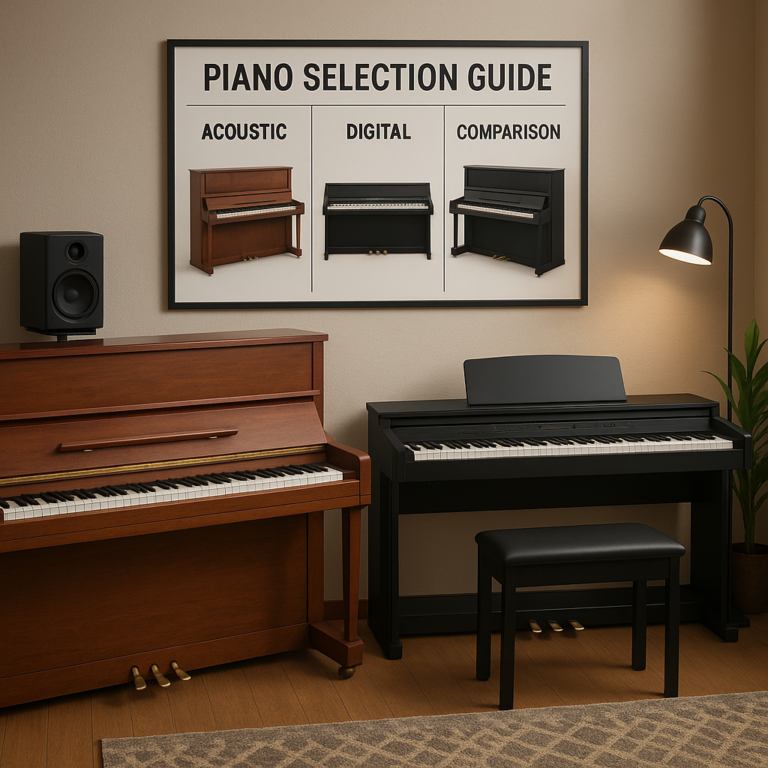
🎚️ Digital Pianos vs. Acoustic Pianos: Which Brand Ecosystem Fits You?
The debate rages on. Here’s the breakdown:
Acoustic Pianos:
- Pros: Real sound, real touch, no batteries, investment value.
- Cons: Expensive, heavy, requires tuning, loud.
- Best Brands: Steinway, Yamaha, Kawai.
Digital Pianos:
- Pros: Headphone use, volume control, no tuning, portable, affordable.
- Cons: No real acoustic sound, plastic keys (usually), lower resale value.
- Best Brands: Roland, Nord, Yamaha, Kawai.
Hybrid Pianos:
- Pros: Best of both worlds (real action, digital sound).
- Cons: Very expensive.
- Best Brands: Kawai Novus, Yamaha AvantGrand.
For a deep dive into the digital world, visit our Digital Pianos category.
🚫 15 Common Mistakes to Avoid When Buying a Piano
Based on our experience and the insights from Lee Varney’s “Cross Eyed Pianist” article, here are the 15 mistakes you must avoid:
- Buying the first piano you see: Always test multiple units of the same model.
- Ignoring the size: Don’t buy a grand that’s too small for your room.
- Falling for “German” names: Check the country of origin.
- Ignoring the action: If the keys feel heavy or inconsistent, walk away.
- Not playing with test pieces: Use contrasting music to test the dynamic range.
- Buying a “bargain” used piano: A 20-year-old piano is rarely a bargain.
- Overlooking the dealer: Ensure they have good service and warranty support.
- Ignoring the room acoustics: A piano sounds different in every room.
- Buying for someone else: The player should have the final say.
- Focusing only on price: Cheap pianos often cost more in repairs.
- Ignoring the finish: High-gloss shows scratches; satin hides them.
- Not checking the warranty: Read the fine print.
- Assuming all grands are better: A high-end upright can outperform a low-end grand.
- Forgetting about maintenance: Budget for tuning and regulation.
- Not bringing a friend: A second opinion can save you from a bad purchase.
🔧 Maintenance Essentials: Keeping Your Brand’s Piano in Top Shape
A piano is a living instrument. It needs care.
Tuning:
- Frequency: At least twice a year, ideally four times.
- Why: Strings stretch, wood swells, and the piano goes out of tune.
Regulation:
- What: Adjusting the action for consistency.
- When: Every 5-10 years, or when the touch feels uneven.
Voicing:
- What: Needling the hammers to change the tone (brighter or darker).
- When: When the tone becomes too harsh or too dull.
Climate Control:
- Humidity: Keep humidity between 40-50%. Use a humidifier or dehumidifier.
- Temperature: Avoid direct sunlight and drafts.
🎓 Conclusion

Choosing a piano brand is a journey, not a destination. Whether you’re drawn to the powerful, complex tone of a Steinway, the consistent reliability of a Yamaha, or the warm, singing quality of a Kawai, the right piano is the one that inspires you to play.
Our Final Recommendation:
- For the serious professional: Go for a Steinway or Bösendorfer.
- For the dedicated student: A Yamaha U1 or Kawai K-30 is unbeatable.
- For the budget-conscious beginner: Look for a well-maintained used Samick or Young Chang, or a new entry-level Yamaha or Kawai.
Remember, size matters, play before you buy, and never trust a 50% discount. If you follow these rules, you’ll find “the one” that connects with you effortlessly.
🔗 Recommended Links
👉 Shop Top Brands:
- Yamaha Pianos: Amazon | Yamaha Official
- Kawai Pianos: Amazon | Kawai Official
- Steinway & Sons: Steinway Official
- Bösendorfer: Bösendorfer Official
Recommended Books:
- The Piano Book: Buying & Selling New & Used Pianos by Larry Fine
- Piano: The Definitive Guide to the World’s Most Popular Instrument by DK
❓ FAQ: Your Burning Questions About Piano Brands Answered

Are there specific brands known for excellent digital piano features?
Yes. Yamaha and Kawai are leaders in hybrid technology, offering realistic key actions and high-quality sound engines. Roland is also renowned for its SuperNATURAL sound modeling and PHA-50 hybrid keys.
Read more about “Digital vs Acoustic Pianos: Sound & Performance Compared (2026) 🎹”
What should I consider regarding piano maintenance and warranty?
Always check the warranty length (look for 10+ years on soundboards) and the availability of local technicians. A piano is only as good as its maintenance.
How important is the touch and feel of piano keys when choosing a brand?
Extremely important. The action is the interface between you and the music. If the keys feel heavy, light, or inconsistent, it will hinder your progress. Always test the action with your own repertoire.
Read more about “🎹 Which Brand Is Best for Piano? Top 10 Ranked for 2026”
Which piano brands are best for beginners?
Yamaha and Kawai are top choices for beginners due to their durability, consistent action, and availability of affordable models. Samick and Young Chang also offer great value.
Read more about “🎹 Acoustic vs Digital Piano Brands: The Ultimate 2026 Showdown”
What factors affect the durability of an acoustic piano?
Humidity control, regular tuning, and quality of materials (solid wood vs. laminate) are the main factors. A well-maintained piano can last 50+ years.
Read more about “🎹 10 Top Digital Piano Brands Compared (2026)”
How does the sound quality vary among different piano brands?
Steinway offers a complex, powerful sound. Yamaha is bright and clear. Kawai is warm and mellow. Bösendorfer is rich and singing. The “sound” is subjective, so listen for yourself.
Read more about “🎹 12 Most Famous Pianos in the World (2026)”
What are the top-rated piano brands for beginners?
Yamaha U1, Kawai K-30, and Samick are highly rated for beginners due to their reliability and affordability.
Read more about “🎹 8 Best Smart Learning Piano Brands for 2026: Master Keys Fast!”
How does the price of a piano brand affect its longevity?
Higher-priced brands often use better materials (solid wood, better actions) which can lead to longer life. However, maintenance is the biggest factor in longevity, regardless of price.
Read more about “How Long Does a Piano Last? The Truth! 🕰️”
What is the difference between acoustic and digital piano brands?
Acoustic brands focus on soundboard and string quality, while digital brands focus on sound engines and key actions. Some brands, like Yamaha and Kawai, excel in both.
Read more about “What is the difference between acoustic and digital piano brands?”
Which piano brands hold their value the best over time?
Steinway, Yamaha, and Kawai hold their value best. Bösendorfer and Fazioli also retain value due to their rarity and prestige.
Read more about “How Do Yamaha and Kawai Pianos Compare? 🎹 The Ultimate 9-Point Showdown (2026)”
Are there specific piano brands known for superior sound quality?
Steinway, Bösendorfer, Fazioli, and C. Bechstein are often cited as having the “best” sound, but this is subjective.
Read more about “Which Piano Brand Offers the Best Sound & Durability? 🎹 (2026)”
What maintenance requirements vary between different piano brands?
All pianos need tuning, but high-end brands may require more frequent regulation and voicing due to their complex actions. Digital pianos need less maintenance but may require software updates.
Read more about “Top 7 Silent Piano System Manufacturers You Need to Know in 2026 🎹”
How do I choose a piano brand based on my available space?
Measure your room. For small rooms, a 48-inch upright or a 5’2″ grand is ideal. For large rooms, a 6′ grand or larger is better. Never buy a piano that is too big for your room.
Read more about “Kawai and Yamaha Digital Piano Reviews: 8 Models Compared (2025) 🎹”
📚 Reference Links
- Meriam Music: Piano Buying Tips – 10 Common Mistakes When Buying A Piano
- Steinway & Sons Official Site
- Yamaha Pianos Official Site
- Kawai Pianos Official Site
- Bösendorfer Official Site
- Fazioli Official Site
- C. Bechstein Official Site
- Cross Eyed Pianist: Looking for the One – Insights from Lee Varney