Support our educational content for free when you buy through links on our site. Learn more
💸 What Is the Cost of Basic Piano? (2026 Price Guide)

The honest answer to what is the cost of basic piano is that a functional, quality instrument starts around $50 for a digital or $3,0 for a new acoustic upright, though used options can dip lower if you’re willing to take a calculated risk. We’ve seen too many students quit because they bought a $20 “piano” that felt like a toy, only to realize they needed to buy a real one six months later.
If you are wondering why the price tag varies so wildly, it comes down to materials, craftsmanship, and the hidden costs of maintenance. A “basic” piano isn’t just about the sticker price; it’s about the minimum investment required to learn proper technique without hitting a dead end.
Did you know? The average family spends over $1,50 in the first three years on a piano when you include tuning, moving, and repairs, often more than the initial purchase price of a budget acoustic!
One of our team members once bought a “free” upright from a garage sale, only to spend $80 on moving and repairs before it even held a tune. Don’t let that be your story.
Key Takeaways
- Minimum Viable Cost: A quality digital piano starts at $50, while a new acoustic upright begins around $3,0.
- Hidden Expenses: Always budget an extra 15-20% for moving, tuning, and essential accessories like benches and pedals.
- The “Free” Trap: Avoid free or ultra-cheap used pianos unless a certified technician inspects them first; repair costs often exceed the value.
- Digital vs. Acoustic: Digital pianos offer the best long-term value for beginners due to zero maintenance and consistent tuning.
👉 Shop Top-Rated Digital Pianos:
- Casio CDP-S10: Amazon | Sweetwater
- Yamaha P-45: Amazon | Musician’s Friend
- Roland FP-30X: Amazon | Sweetwater
👉 Shop Top-Rated Acoustic Uprights:
- Yamaha U1: Sweetwater | Yamaha Official
- Kawai K-15: Musician’s Friend | Kawai Official
Table of Contents
- ⚡️ Quick Tips and Facts
- 🎹 A Brief History of Piano Pricing: From Fortepiano to Modern Market
- 💰 The Real Cost of Basic Pianos: Breaking Down the Numbers
- 📊 1. Entry-Level Digital Pianos: The Budget-Friendly Starter
- 📊 2. Mid-Range Digital Pianos: When You Need Weighted Keys
- 📊 3. Portable Keyboards: Fun, But Is It a Real Piano?
- 📊 4. Used Upright Pianos: The Thrill of the Hunt
- 📊 5. New Upright Pianos: The Standard for Home Practice
- 📊 6. Baby Grand Pianos: Luxury on a (Slightly) Smaller Scale
- 📊 7. Full-Size Grand Pianos: The Ultimate Investment
- 🔍 New vs. Used: Is the Savings Worth the Risk?
- 🏷️ How Brand Reputation Drives Piano Costs
- 🛠️ Hidden Costs You Didn’t See Coming: Tuning, Moving, and Maintenance
- 🏠 Where to Buy: Online Retailers, Local Dealers, or Private Sellers?
- 🧐 How to Choose the Right Piano for Your Budget and Space
- 🎼 Top 50 Most Popular Piano Brands Ranked by Value and Quality
- 📧 All Things Piano… Straight to Your Email!
- 🔗 Quick Links
- ❓ FAQs About Piano Prices
- 📚 Reference Links
- ✅ Conclusion
⚡️ Quick Tips and Facts
Before we dive into the deep end of the piano pricing ocean, let’s grab a life preserver. Here are the absolute non-negotiables you need to know before you even think about opening your wallet:
- Weighted Keys are King: If you are serious about learning, never buy a piano without weighted keys. Non-weighted keys feel like typing on a calculator, and they will ruin your technique before you even play your first scale. As our team often says, “You can’t learn to swim on a trampoline.”
- The “Free” Piano Trap: That free upright piano on Facebook Marketplace? It’s likely a money pit. Moving it costs money, tuning it costs money, and fixing the broken action costs a lot of money.
- Digital vs. Acoustic: A decent digital piano can last a decade, while a neglected acoustic can become a $5,0 paperweight in five years.
- Hidden Costs: The sticker price is just the tip of the iceberg. Always budget an extra 15-20% for moving, tuning, and essential accessories like a proper bench and sustain pedal.
If you are wondering exactly how much you should be saving up for that first instrument, check out our detailed breakdown on 💰 How Much Should You Pay for a Beginner Piano? (2026 Guide).
🎹 A Brief History of Piano Pricing: From Fortepiano to Modern Market

You might think the price of a piano is just a number on a tag, but it’s actually a story of craftsmanship, materials, and market demand spanning centuries.
Back in the early 170s, Bartolomeo Cristofori invented the gravicembalo col piano e forte (harpsichord with soft and loud). These weren’t mass-produced; they were bespoke masterpieces for royalty. If you could afford one, you were basically a king. Fast forward to the 19th century, and the Industrial Revolution changed everything. Companies like Steinway & Sons and Yamaha began standardizing production, making pianos accessible to the middle class.
However, the cost has never been linear. In the 1920s, a new upright could cost a month’s wages. Today, inflation and the rising cost of sustainable wood and labor have pushed prices up, yet technology has simultaneously created a new, affordable category: the digital piano.
Did you know? The price of a high-end Steinway Grand has increased by over 30% in the last 30 years, outpacing inflation significantly, while digital pianos have actually become more affordable relative to their performance capabilities.
For a deeper dive into how we got here, explore our Piano History category.
💰 The Real Cost of Basic Pianos: Breaking Down the Numbers
So, what does “basic” actually mean? To us at Piano Brands™, a “basic” piano isn’t the cheapest junk you can find; it’s the minimum viable instrument that allows a student to progress without hitting a technical ceiling.
We’ve seen too many students quit because their $20 keyboard couldn’t handle dynamics, or their “free” upright was so out of tune it sounded like a dying cat.
Let’s break down the real cost across the spectrum, from the entry-level digital to the humble upright.
The Digital Spectrum
Digital pianos have democratized music. You can get a weighted 8-key instrument for a fraction of the cost of an acoustic.
- Entry-Level: Great for absolute beginners testing the waters.
- Mid-Range: The sweet spot for serious students.
- High-End: Approaching the feel of an acoustic.
The Acoustic Spectrum
- Used Uprights: High risk, high reward.
- New Uprights: The reliable workhorse.
- Grands: The dream, but rarely “basic” in price.
For a comprehensive look at Piano Buying Guide, keep reading.
📊 1. Entry-Level Digital Pianos: The Budget-Friendly Starter
These are the “beaters” of the digital world, but they are legitimate instruments. They are perfect for children under 10 or adults who aren’t sure if they’ll stick with it.
Rating Table: Entry-Level Digital Pianos
| Feature | Rating (1-10) | Notes |
|---|---|---|
| Design | 7 | Functional, often plastic-heavy. |
| Sound Quality | 6 | Decent samples, but lacks depth. |
| Key Action | 5 | Often semi-weighted or light; not ideal for advanced technique. |
| Durability | 7 | Built to last, but keys can wear out faster. |
| Value | 9 | Unbeatable for the price. |
The Good, The Bad, and The Plastic
✅ Pros:
- Affordability: You can find these for very low prices.
- Portability: Lightweight and easy to move.
- Silence: Headphone jacks save your neighbors (and your sanity).
❌ Cons:
- Touch: The keys often feel “springy” rather than heavy.
- Sound: The speakers are small, and the soundboard doesn’t resonate like wood.
- Growth: You will likely outgrow this within 1-2 years.
Top Picks:
- Casio CDP-S10: A compact beast that fits in tiny apartments.
- Yamaha P-45 (or P-125): The industry standard for entry-level.
👉 CHECK PRICE on:
- Casio CDP-S10: Amazon | Sweetwater | Casio Official
- Yamaha P-45: Amazon | Musician’s Friend | Yamaha Official
📊 2. Mid-Range Digital Pianos: When You Need Weighted Keys
This is where the magic happens. If you are serious about learning, this is the category you want. These instruments feature fully weighted, graded hammer action keys that mimic the heavy feel of the lower notes and lighter feel of the higher notes on an acoustic piano.
Rating Table: Mid-Range Digital Pianos
| Feature | Rating (1-10) | Notes |
|---|---|---|
| Design | 8 | Slek, furniture-style or sturdy portable. |
| Sound Quality | 8 | Multi-layer sampling, rich resonance. |
| Key Action | 9 | Excellent simulation of acoustic touch. |
| Durability | 9 | Built to withstand daily practice. |
| Value | 10 | The best bang for your buck. |
Why You Should Upgrade Here
The difference between a $30 keyboard and a $60 digital piano is like the difference between a bicycle and a motorcycle. The weighted keys allow you to develop proper finger strength and dynamic control. Without them, you’ll struggle to play expressively later on.
Top Picks:
- Roland FP-30X: Known for its superior SuperNATURAL sound engine.
- Kawai ES120: Features the Responsive Hammer Compact action, widely praised for its realism.
👉 CHECK PRICE on:
- Roland FP-30X: Amazon | Sweetwater | Roland Official
- Kawai ES120: Amazon | Musician’s Friend | Kawai Official
📊 3. Portable Keyboards: Fun, But Is It a Real Piano?
Let’s be honest: Portable keyboards are great for parties, synth sounds, and playing “Chopsticks” with one finger. But if your goal is to learn the piano, they are a dead end.
Rating Table: Portable Keyboards
| Feature | Rating (1-10) | Notes |
|---|---|---|
| Design | 6 | Colorful, fun, but flimsy. |
| Sound Quality | 5 | Synthesized, often tiny. |
| Key Action | 2 | Unweighted, “bouncy” keys. |
| Durability | 6 | Prone to damage if moved often. |
| Value | 4 | Cheap, but leads to bad habits. |
The “Toy” Trap
Many parents buy these thinking they are saving money. But if a child learns on unweighted keys, they will have to relearn their entire technique when they finally switch to a real piano. It’s like learning to drive on a go-kart and then trying to drive a Ferrari.
Our Advice: If you must buy a keyboard, ensure it has at least 61 keys and semi-weighted action, but plan to upgrade to a digital piano ASAP.
📊 4. Used Upright Pianos: The Thrill of the Hunt
Ah, the used market. It’s a wild west of hidden gems and money pits. You can find a beautiful Yamaha U1 from the 1970s for a fraction of its new price, or you can buy a 1920s Steinway that needs a $10,0 restoration.
Rating Table: Used Upright Pianos (Condition Dependent)
| Feature | Rating (1-10) | Notes |
|---|---|---|
| Design | 9 | Often beautiful wood finishes. |
| Sound Quality | 7-9 | Can be amazing if well-maintained. |
| Key Action | 6-9 | Highly variable; depends on wear. |
| Durability | 5 | Unknown history; parts may be worn. |
| Value | 8 | High risk, but potentially high reward. |
The Golden Rule: Inspect Before You Buy
Never, ever buy a used acoustic piano without a certified piano technician inspecting it. They will check for:
- Cracked soundboards (fatal flaw).
- Worn hammers (need replacement).
- Pin block integrity (can it hold tuning?).
Common Brands to Hunt For:
- Yamaha (U1, U3): The gold standard for used uprights.
- Kawai (K-1, K-3): Excellent value, often cheaper than Yamaha.
- Baldwin: American classic, but check the condition carefully.
👉 CHECK PRICE on:
📊 5. New Upright Pianos: The Standard for Home Practice
If you want the authentic acoustic experience without the risk of the used market, a new upright is the way to go. These are the workhorses of the music world, found in schools, studios, and homes everywhere.
Rating Table: New Upright Pianos
| Feature | Rating (1-10) | Notes |
|---|---|---|
| Design | 9 | Classic, elegant furniture. |
| Sound Quality | 9 | Rich, resonant, and dynamic. |
| Key Action | 9 | Responsive and consistent. |
| Durability | 10 | Built to last 50+ years. |
| Value | 7 | High upfront cost, but long-term value. |
Why Choose New?
- Warranty: You get a full manufacturer’s warranty.
- Tuning Stability: New pianos hold their tuning better initially.
- Customization: You can choose finishes, heights, and even interior colors.
Top Brands:
- Yamaha B Series: The entry-level new upright.
- Kawai K Series: Known for smooth action.
- Baldwin L Series: A classic American sound.
👉 CHECK PRICE on:
- Yamaha B1: Sweetwater | Yamaha Official
- Kawai K-15: Musician’s Friend | Kawai Official
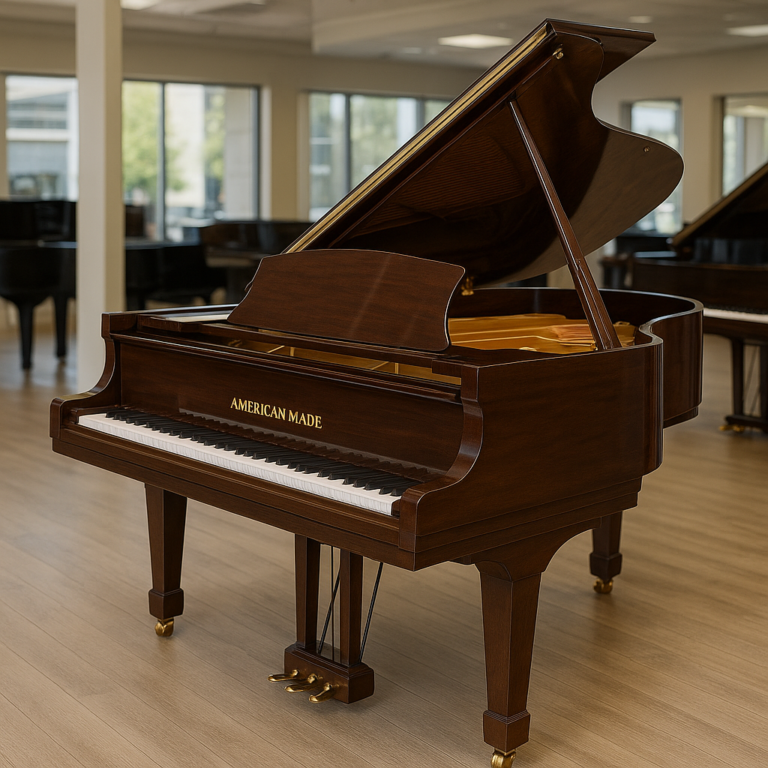
📊 6. Baby Grand Pianos: Luxury on a (Slightly) Smaller Scale
Thinking about a grand? A baby grand (usually 5′ to 5’6″) is the smallest grand, but it offers a horizontal string and a larger soundboard than an upright, resulting in a richer tone and better action.
Rating Table: Baby Grand Pianos
| Feature | Rating (1-10) | Notes |
|---|---|---|
| Design | 10 | The ultimate statement piece. |
| Sound Quality | 9 | Fuller, more resonant than uprights. |
| Key Action | 10 | Superior repetition and control. |
| Durability | 9 | Excellent, but requires climate control. |
| Value | 6 | High cost, slower depreciation than uprights. |
The Space Issue
Don’t let the name fool you; a baby grand still takes up a lot of space. You need at least 6 feet of clearance for the lid to open fully. If your living room is small, an upright might be the smarter choice.
👉 CHECK PRICE on:
- Yamaha GB1K: Sweetwater | Yamaha Official
- Kawai GL-10: Musician’s Friend | Kawai Official
📊 7. Full-Size Grand Pianos: The Ultimate Investment
This is the pinnacle of piano manufacturing. A full-size grand (7′ and up) is what you hear in concert halls. The longer strings and larger soundboard produce a powerful, complex tone that no upright can match.
Rating Table: Full-Size Grand Pianos
| Feature | Rating (1-10) | Notes |
|---|---|---|
| Design | 10 | Majestic and imposing. |
| Sound Quality | 10 | Unmatched depth and projection. |
| Key Action | 10 | The fastest, most responsive action. |
| Durability | 10 | Heirloom quality. |
| Value | 5 | High cost, but holds value well. |
Is It Worth It?
Unless you are a professional performer or have a very large room, a full-size grand might be overkill. The cost difference between a baby grand and a full-size is significant, and the space requirements are massive.
👉 CHECK PRICE on:
- Steinway Model B: Steinway Official | Reverb
- Yamaha C7: Sweetwater | Yamaha Official
🔍 New vs. Used: Is the Savings Worth the Risk?
We’ve touched on this, but let’s settle the debate once and for all.
The Case for New:
- Peace of Mind: No hidden cracks, no worn hammers.
- Warranty: You are covered for repairs.
- Tuning: Holds tune longer out of the box.
The Case for Used:
- Value: You can get a higher-end brand for the price of a new entry-level.
- Character: Older pianos often have a “warmer” sound due to the wood settling.
- Depreciation: New pianos lose value the moment you buy them; used ones have already taken that hit.
Our Verdict: If you have a trusted technician, a used piano from a reputable brand (Yamaha, Kawai, Steinway) is often the smartest financial move. If you are risk-averse or buying for a child, new is the safer bet.
🏷️ How Brand Reputation Drives Piano Costs
Why does a Steinway cost 10x more than a Casio? It’s not just the logo.
- Materials: Steinways use spruce from the Black Forest and hand-selected ivory (historically) or high-quality synthetic keys.
- Labor: A Steinway takes one year to build by hand. A mass-produced digital piano takes minutes on an assembly line.
- R&D: Brands like Roland and Kawai invest millions in developing new key actions and sound engines.
Brand Tiers:
- Concert/High-End: Steinway, Bosendorfer, Fazioli.
- Professional: Yamaha, Kawai, Bechstein.
- Mid-Range: Baldwin, Samick, Young Chang.
- Entry-Level: Casio, Roland (digital), various OEM brands.
For a deep dive into Piano Brand Guides, check out our extensive reviews.
🛠️ Hidden Costs You Didn’t See Coming: Tuning, Moving, and Maintenance
You bought the piano. Now what? The real costs are just starting.
1. Tuning
Acoustic pianos go out of tune due to humidity changes.
- Frequency: At least twice a year.
- Cost: $10 – $20 per tuning.
- New Pianos: May need 3-4 tunings in the first year to settle.
2. Moving
You cannot just pick up a piano.
- Upright: $20 – $50.
- Grand: $50 – $1,50+.
- Why? They are heavy, awkward, and easily damaged.
3. Accessories
- Bench: $10 – $50 (adjustable is best).
- Humidifier: $10 – $30 (crucial for acoustic longevity).
- Pedal: $50 – $150 (if not included).
Don’t forget: Digital pianos also need stands and pedals, though they are cheaper and easier to move.
🏠 Where to Buy: Online Retailers, Local Dealers, or Private Sellers?
Where you buy is just as important as what you buy.
- Local Dealers:
Pros: Try before you buy, professional setup, warranty, trade-in options.
Cons: Higher prices, sales pressure. - Online Retailers (Sweetwater, Musician’s Friend):
Pros: Great prices, detailed specs, good return policies.
Cons: Can’t try the specific unit, shipping risks. - Private Sellers (Craigslist, Facebook):
Pros: Lowest prices.
Cons: No warranty, high risk, no support.
Our Recommendation: For your first acoustic piano, buy from a local dealer. The setup and warranty are worth the extra cost. For digital pianos, online retailers are often the best value.
🧐 How to Choose the Right Piano for Your Budget and Space
Still confused? Let’s simplify.
- Assess Your Space: Measure your room. Do you have 6 feet of depth for a grand? If not, stick to an upright or digital.
- Determine Your Goal: Are you a hobbyist or a future concert pianist?
- Set a Budget: Include the cost of moving and tuning.
- Try Before You Buy: Play the keys. Do they feel heavy? Is the sound pleasant?
Quick Decision Matrix:
| Goal | Best Option | Estimated Budget |
|---|---|---|
| Absolute Beginner | Entry-Level Digital | Low |
| Serious Student | Mid-Range Digital or Used Upright | Medium |
| Home Musician | New Upright or Baby Grand | High |
| Professional | Full-Size Grand | Very High |
🎼 Top 50 Most Popular Piano Brands Ranked by Value and Quality
We’ve compiled a list of the top 50 brands based on market presence, quality, and value. While we can’t list all 50 in detail here, here are the top contenders you should know:
- Steinway & Sons (The Gold Standard)
- Yamaha (Reliability King)
- Kawai (Smooth Action)
- Bosendorfer (Austrian Excellence)
- Fazioli (Italian Masterpiece)
- Baldwin (American Classic)
- Casio (Digital Leader)
- Roland (Tech Innovator)
- Korg (Synth & Digital)
- Samick (Value Uprights)
…and 40 more!
For the full list and detailed reviews, visit our Piano Comparison section.
📧 All Things Piano… Straight to Your Email!
Don’t want to miss out on the latest deals, maintenance tips, and brand reviews? Subscribe to our newsletter! We send out exclusive content, discounts, and expert advice directly to your inbox.
🔗 Quick Links
❓ FAQs About Piano Prices

Are there any affordable piano options for beginners, such as keyboard pianos or used instruments?
Yes! The most affordable options are entry-level digital pianos (like the Casio CDP-S10) which offer weighted keys for a fraction of the cost of an acoustic. Used uprights can also be affordable, but only if inspected by a technician. Avoid non-weighted keyboards for serious learning.
What features should I look for in a digital piano to get the best value for my money?
Look for 8 fully weighted keys, graded hammer action, and high-quality sound sampling. Brands like Roland and Kawai excel here. Avoid features like “Bluetooth speakers” if they compromise the key action or sound quality.
How much does it cost to maintain an acoustic piano over time?
Expect to spend $20-$40 per year on tuning (twice a year). Over 10 years, that’s $2,0-$4,0. Add in occasional regulation or voicing, and the cost increases.
Read more about “🎹 Kawai BL71 vs Yamaha U3: The Ultimate 2026 Showdown”
What is the difference in cost between an acoustic and digital piano?
A basic acoustic upright starts around $3,0-$5,0 new, while a basic digital piano starts around $50-$80. However, the long-term maintenance costs of an acoustic can narrow this gap over time.
Read more about “🎹 Kawai vs. Yamaha: Which One is Better in 2026?”
How much should you spend on a piano?
This depends on your commitment. For a beginner, $50-$1,0 for a digital is sufficient. For a serious student, $3,0-$6,0 for a used or new upright is ideal.
Read more about “🏆 The Most Expensive Steinway Piano: 15 Record-Breaking Giants (2026)”
What is the standard piano for beginners?
The Yamaha P-45 (or P-125) is widely considered the standard entry-level digital piano. For acoustic, a Yamaha U1 or Kawai K-15 (used or new) is the gold standard.
Read more about “🎹 Digital Piano Brand Comparison 2026: The 7 Truths They Won’t Tell You”
How much does a basic piano cost?
A “basic” piano that is actually good for learning starts at $50 for a digital and $3,0 for a new upright. Anything cheaper is likely a compromise on quality.
Read more about “💰 How Much Should You Pay for a Beginner Piano? (2026 Guide)”
How much does a beginner acoustic piano cost?
A new beginner acoustic upright costs $3,0-$5,0. A used one can be found for $1,50-$3,0, but requires inspection.
Read more about “💸 Is Owning a Piano Expensive? The Shocking Truth (2026)”
What is the price range for entry-level digital pianos?
Entry-level digital pianos range from $40 to $80. This includes models from Casio, Yamaha, and Roland.
Read more about “🎹 Casio & Nord vs. Yamaha & Kawai: The 2026 Digital Piano Showdown”
Are there affordable used pianos worth buying?
Yes, but only if inspected. A well-maintained Yamaha U1 from the 1980s can be a fantastic deal for $2,50-$4,0. Avoid pianos older than 50 years unless they are from a top-tier brand and in pristine condition.
Read more about “🎹 How to Choose the Right Digital Piano: 2026 Buyer’s Guide”
What factors affect the cost of a basic piano?
- Brand reputation
- Materials used (wood quality, metal parts)
- Labor costs (hand-made vs. mass-produced)
- Condition (new vs. used)
- Size (upright vs. grand)
Read more about “🎹 25 Best & 21 Worst Piano Brands: The Ultimate 2026 Guide”
✅ Conclusion

So, what is the cost of a basic piano? It’s a question with many answers, but the best answer depends on your goals, space, and budget.
If you are just starting out, a mid-range digital piano like the Roland FP-30X or Kawai ES120 offers the best balance of price, quality, and longevity. It provides the weighted keys you need to learn properly without the hidden costs of an acoustic.
If you are ready for the real deal, a used Yamaha U1 or a new Kawai K-15 is the smartest investment. Just remember: never buy a used acoustic without a technician.
And if you dream of a grand? Save up for a baby grand like the Yamaha GB1K, but make sure your living room can handle it.
The bottom line: Don’t let price be the only factor. A cheap piano that sounds bad and feels wrong will kill your motivation. Invest in an instrument that inspires you to play every day.
Ready to find your perfect match? Check out our Piano Buying Guide for more detailed advice.
Recommended Links
👉 Shop Digital Pianos:
- Casio CDP-S10: Amazon | Sweetwater
- Roland FP-30X: Amazon | Sweetwater
- Kawai ES120: Amazon | Musician’s Friend
👉 Shop Acoustic Pianos:
- Yamaha U1 (New): Sweetwater | Yamaha Official
- Kawai K-15 (New): Musician’s Friend | Kawai Official
Recommended Books:
- “The Piano Book” by Larry Fine: Amazon – The ultimate guide to buying and maintaining pianos.
- “Piano For Dummies” by Blake Nely: Amazon – A great starter guide for beginners.
Reference Links