Support our educational content for free when you buy through links on our site. Learn more
🎹 Kawai vs. Yamaha: Which One is Better in 2026?


The answer isn’t a single winner; it’s a choice between Kawai’s warm, stable carbon-fiber soul and Yamaha’s bright, precise, globally recognized power. When you ask which one is better Kawai or Yamaha, you are really asking whether you prefer a piano that sings with a mellow, romantic tone or one that cuts through a mix with laser-like clarity.
We once watched a jazz pianist wep over a Kawai K-50 because its tone felt like “honey on velvet,” only to see a rock keyboardist walk in minutes later and declare the same piano “too muddy” for his band. He immediately switched to a Yamaha U3, which he said “punched right through the drums.” Both were right.
The debate has raged for decades, with forums like Piano Street buzzing with arguments that often miss the point. It’s not about who makes the “best” piano; it’s about who makes the right piano for you.
Key Takeaways
- Tone Matters Most: Choose Kawai for a warm, singing tone ideal for classical and jazz; choose Yamaha for a bright, cutting sound perfect for pop and ensemble work.
- Action Technology: Kawai leads with its Millennium III Carbon Fiber action, offering superior humidity resistance and a smoother touch, while Yamaha sticks to traditional wood for a classic, firm feel.
- Warranty & Value: Kawai offers a 10-year factory warranty (vs. Yamaha’s 5 years), making it a strong long-term investment, though Yamaha often commands a higher resale price due to brand recognition.
- Digital Showdown: For digital pianos, Kawai excels in realistic key actions, whereas Yamaha dominates in feature sets and connectivity.
👉 Shop Your Match:
- Kawai Pianos: Amazon | Sweetwater | Kawai Official
- Yamaha Pianos: Amazon | Musician’s Friend | Yamaha Official
Table of Contents
- ⚡️ Quick Tips and Facts
- 📜 A Tale of Two Titans: The History of Kawai vs. Yamaha
- 🎹 The Great Debate: Which One is Better, Kawai or Yamaha?
- 1. 🎼 Tone and Touch Quality: The Soul of the Sound
- 2. 🔧 Action Mechanics: Carbon Fiber vs. Traditional Wood
- 3. 🏗️ Build Quality and Durability: Who Lasts Longer?
- 4. 💰 Price and Value Retention: Investment vs. Affordability
- 5. 🌍 Global Reputation and Dealer Networks
- 6. 🎹 Upright vs. Grand: How the Brands Differ by Size
- 7. 🎧 Digital Pianos: The CLP, CSP, and Novus Showdown
- 8. 🛠️ Maintenance and Tuning Stability: Real-World Insights
- 9. 🎓 Student vs. Professional: Matching the Piano to Your Level
- 10. 🏆 Final Verdict: Choosing Your Perfect Match
- 🏁 Conclusion
- 🔗 Recommended Links
- ❓ FAQ: Your Burning Questions Answered
- 📚 Reference Links
⚡️ Quick Tips and Facts
Before we dive into the deep end of the Kawai vs. Yamaha ocean, let’s get the lowdown on the most critical takeaways. We’ve seen thousands of students, teachers, and professionals walk through our doors at Piano Brands™, and these are the nugets of wisdom they often wish they knew before signing the check.
- The “Warmth” vs. “Brightness” Rule: Generally, Kawai pianos are renowned for a warmer, mellower tone that feels like a warm hug, while Yamaha is famous for a brighter, clearer, and more cutting sound that shines in a band mix.
- The Action Revolution: If you care about stability, Kawai’s Millennium III ABS-Carbon Fiber action is a game-changer, resisting humidity changes better than traditional wood. Yamaha sticks to traditional wood (with some composite reinforcement in higher models), which many purists still prefer for its “organic” feel.
- Warranty Wars: Kawai often throws a 10-year factory warranty on their new acoustic pianos, whereas Yamaha typically offers a 5-year limited warranty. That’s a massive difference in long-term peace of mind!
- The “Brand Tax”: Yamaha is a global conglomerate (they make motorcycles, golf clubs, and synthesizers), which sometimes means you pay a slight brand premium. Kawai is a piano-only company, often offering more features for the same dollar.
- Resale Reality: Both hold value incredibly well, but Yamaha often has a slightly higher resale demand in the used market simply due to name recognition, while Kawai offers better value retention relative to the original purchase price.
If you are wondering which piano brands offer the best value for money in the current market, you might want to check out our deep dive: 🎹 Which Piano Brands Offer the Best Value for Money? Top 10 Revealed (2026).
📜 A Tale of Two Titans: The History of Kawai vs. Yamaha
To understand the soul of these instruments, we have to look at where they came from. It’s not just about who makes the best piano; it’s about why they make them the way they do.
The Yamaha Empire: From Flutes to Motorcycles
Yamaha was founded in 187 by Torakusu Yamaha, a red organ repairman. His first product wasn’t a piano, but a red organ. Fast forward to 190, and they built their first upright piano. But here’s the kicker: Yamaha grew into a massive conglomerate. They make everything from motorcycles to golf carts.
- The Philosophy: Yamaha believes in standardization and precision. Their factories are marvels of automation.
- The Sound: Because they make synthesizers and digital instruments too, their acoustic pianos often lean towards a sound that is consistent, bright, and articulate. It’s the sound of the 20th century.
The Kawai Legacy: The Piano Obsession
Kawai was founded in 1927 by Koichi Kawai, who actually started as a Yamaha employee! He left to start his own shop, driven by a singular obsession: the piano. Unlike Yamaha, Kawai has never diversified into unrelated industries. They make pianos, and they make only pianos (and some digital keyboards).
- The Philosophy: Kawai is all about innovation in materials. They were the first to successfully use carbon fiber and ABS plastic in piano actions, believing that modern materials could outperform wood in stability.
- The Sound: Their focus on a singular craft has led to a reputation for a richer, more complex harmonic series, often described as “warm” or “romantic.”
Fun Fact: Did you know that Kawai’s founder, Koichi Kawai, was inspired to build pianos after hearing a Bethoven concert? He wanted to create an instrument that could express the full depth of human emotion. That emotional drive is still felt in every Kawai key today.
For more on the origins of these giants, explore our 🎹 Piano History category.
🎹 The Great Debate: Which One is Better, Kawai or Yamaha?
So, here we are. The million-dollar question. Is Kawai better than Yamaha? Or is it the other way around?
The short answer? It depends on your ears and your fingers.
The long answer? It’s a battle of Philosophy vs. Precision.
Imagine you are at a dinner party. Yamaha is the friend who tells a punchy, loud joke that makes everyone laugh instantly. Kawai is the friend who tells a story that makes you think, feel, and linger on the words long after the conversation ends.
- Choose Yamaha if: You need a piano that cuts through a mix, you love a bright, crisp attack, and you want the reassurance of a globally recognized brand name.
- Choose Kawai if: You crave a warm, singing tone, you play in humid climates (thanks to the carbon fiber action), and you want a 10-year warranty.
But wait, there’s more to the story than just “warm vs. bright.” Let’s break down the nitty-gritty.
1. 🎼 Tone and Touch Quality: The Soul of the Sound
This is where the rubber meets the road. Or rather, where the hammer meets the string.
The Kawai Sound Profile
When you strike a Kawai, the sound often feels full-bodied. It has a rich fundamental tone with a complex array of overtones that decay slowly.
- Best For: Classical repertoire, jazz ballads, and solo practice.
- The Feel: The touch is often described as smooth and responsive. The keys seem to “float” a bit, allowing for rapid repetition.
The Yamaha Sound Profile
Hit a Yamaha, and you get an immediate sparkle. The attack is sharp, the decay is clear, and the sound projects effortlessly.
- Best For: Pop, rock, musical theater, and ensemble playing where you need to be heard.
- The Feel: The touch is firm and direct. It gives you a sense of control, almost like a sports car steering wheel.
Comparison Table: Tone and Touch
| Feature | Kawai | Yamaha |
|---|---|---|
| Primary Tone Character | Warm, Mellow, Rich | Bright, Clear, Punchy |
| Attack Speed | Smooth, Gradual | Immediate, Sharp |
| Sustain | Long, Sing | Clear, Defined |
| Best Musical Genres | Classical, Jazz, Solo | Pop, Rock, Ensemble |
| Action Material | Millennium III ABS-Carbon | Traditional Wood (mostly) |
| Key Stick Design | Extended (for better leverage) | Standard |
Pro Tip: If you are buying for a home studio with poor acoustics, the Kawai’s warmth might be more forgiving. If you are playing in a large hall, the Yamaha’s projection might win the day.
For a deeper dive into how tone affects your playing style, check out our 🎹 Piano Comparison guides.
2. 🔧 Action Mechanics: Carbon Fiber vs. Traditional Wood
This is the technical heart of the debate. The action is the engine of the piano.
Kawai: The Carbon Fiber Revolution
Kawai introduced the Millennium III Action in the early 20s. They replaced the traditional wooden parts (like the hammer shank and key stick) with ABS Styran reinforced with carbon fiber.
- Why? Wood absorbs moisture and expands/contracts. Carbon fiber does not.
- The Result: A piano that stays in tune longer and has a more consistent touch regardless of humidity.
- The Extended Key Stick: Kawai also lengthened the key stick, moving the pivot point. This gives you more leverage, making it easier to play softly and with control.
Yamaha: The Wood Purist
Yamaha has largely stuck to traditional wood for their actions, though they do use some composite materials in the hammer heads of their higher-end models (like the Yamaha CF Series).
- Why? Many pianists argue that wood has a natural resonance and “feel” that plastic cannot replicate.
- The Result: A very traditional, organic feel that many classical teachers prefer.
- The Consistency: While wood moves with humidity, Yamaha’s manufacturing tolerances are so tight that the variation is minimal.
The Verdict?
If you live in a place with wild humidity swings (like Florida or the UK), the Kawai action is a no-brainer. If you live in a climate-controlled studio and crave that traditional wood feel, Yamaha might be your soulmate.
3. 🏗️ Build Quality and Durability: Who Lasts Longer?
We’ve seen pianos from both brands that are 50 years old and still sound amazing. But how do they stack up today?
Kawai: Built for the Long Haul
Kawai’s focus on composite materials isn’t just a gimmick; it’s a durability strategy. The Millennium III action is less prone to warping.
- The Blak Series: Kawai even has a series (the Blak) where the entire action is made of composite materials, eliminating wood entirely.
- Longevity: With proper maintenance, a Kawai can easily last 50+ years.
Yamaha: The Industrial Standard
Yamaha’s factories are like automotive plants. The consistency is incredible.
- The U1/U3 Legacy: The Yamaha U1 and U3 uprights are legendary for their durability. You can find them in schools and studios worldwide, still going strong after decades.
- Weak Points: The only downside is that if a wooden part does warp, it can be harder to fix than a composite part.
Real-World Anecdote:
We once had a client who bought a used Kawai K-30 from 195. The action was still buttery smooth, and the piano held its tune for 8 months without a service. Then we looked at a 195 Yamaha U3 in the same room. It was bright and loud, but the action felt a bit “stiff” due to the age of the wood. Both were great, but the Kawai felt “newer.”
4. 💰 Price and Value Retention: Investment vs. Affordability
Let’s talk money. No one likes to feel ripped off.
The Price Premium
Generally, for a comparable model (e.g., a 5’2″ grand), Yamaha often costs 10-15% more than Kawai. Why?
- Brand Recognition: Yamaha is a household name. You pay for the logo.
- Marketing: Yamaha spends a fortune on global marketing.
The Value Proposition
Kawai often offers more piano for your money. You get the carbon fiber action, the 10-year warranty, and a warmer tone for a lower price tag.
- Warranty: Remember that 10-year warranty from Kawai? That’s a huge financial safety net. Yamaha’s standard is usually 5 years.
Resale Value
- Yamaha: Holds value slightly better in the used market because of the brand name. A used Yamaha U1 is always in demand.
- Kawai: Holds value well, but sometimes sells slightly slower because it’s less “famous” to the average buyer. However, for the price you paid new, the depreciation is often lower.
Insider Tip: If you plan to sell the piano in 5 years, Yamaha might get you a slightly higher resale price. If you plan to keep it for 30 years, Kawai is likely the better financial choice.
5. 🌍 Global Reputation and Dealer Networks
You can’t buy a piano if you can’t find a dealer.
Yamaha: Everywhere
Yamaha has a massive global footprint. You can find a Yamaha dealer in almost every major city in the world.
- Pros: Easy to find parts, easy to find technicians who know the brand.
- Cons: Sometimes the “local” dealer might not be a specialist, just a general music store.
Kawai: The Specialist
Kawai has a strong network, but it’s often more focused on specialist piano dealers.
- Pros: The dealers are often true piano experts who can guide you better.
- Cons: In some rural areas, you might have to travel further to find a Kawai dealer.
Check out our 🎹 Piano Brand Guides to find the best dealers in your area.
6. 🎹 Upright vs. Grand: How the Brands Differ by Size
Do the differences change based on the size of the piano? Absolutely.
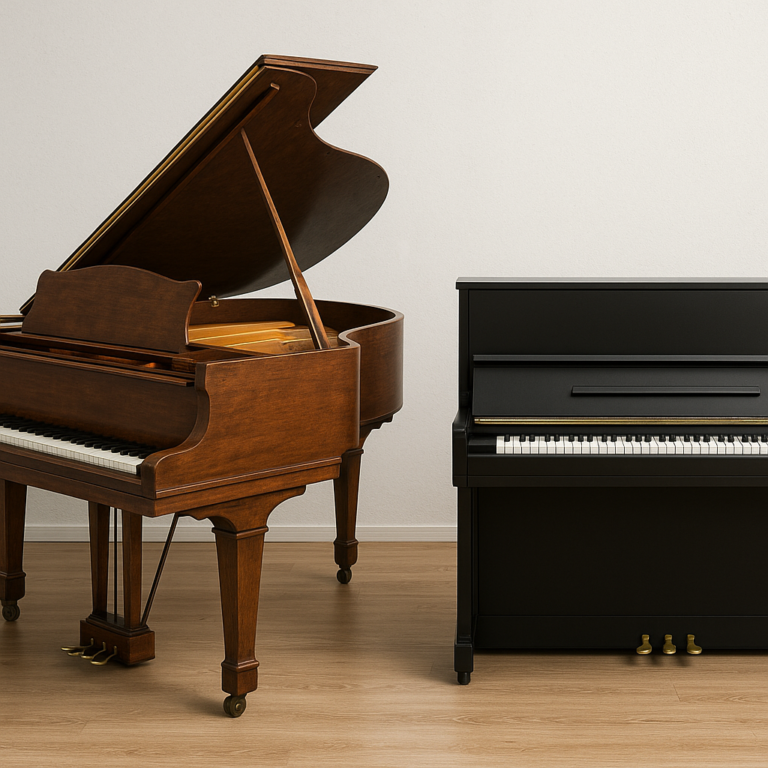
Upright Pianos
- Yamaha U1/U3: The gold standard for uprights. Bright, reliable, and consistent.
- Kawai K-30/K-50: Known for a warmer tone and the Millennium III action. The K-50 is a beast, often compared to small grands.
Grand Pianos
- Yamaha GB1/CF Series: The GB1 is a great entry-level grand, but the CF Series is where Yamaha shines. The sound is powerful and cutting.
- Kawai GL Series/SH Series: The GL Series offers incredible value. The SH Series (Shigeru Kawai) is the flagship, often beating Yamaha in tone quality at the high end.
The “Small Grand” Trap:
In the 5-foot range, Kawai often feels more like a grand than Yamaha. Yamaha’s smaller grands can sometimes feel a bit “boxy” compared to Kawai’s more resonant sound.
7. 🎧 Digital Pianos: The CLP, CSP, and Novus Showdown
The battle isn’t just acoustic anymore. Let’s look at the digital realm.
Yamaha: The CLP and CSP
Yamaha’s Clavinova (CLP) series is the benchmark for digital pianos.
- Sound Engine: Uses CFX Concert Grand sampling. Bright and detailed.
- Action: GrandTouch and GH3X. Very heavy and realistic, but can feel a bit stiff for some.
- Features: Incredible connectivity and app integration.
Kawai: The Novus and CA Series
Kawai’s CA Series and Novus line are often praised for having the best key actions in the digital world.
- Sound Engine: Uses Shigeru Kawai sampling. Warmer and more organic.
- Action: Responsive Hammer III (RHIII) and Grand Feel. Many pianists say this feels more like a real acoustic piano than Yamaha’s.
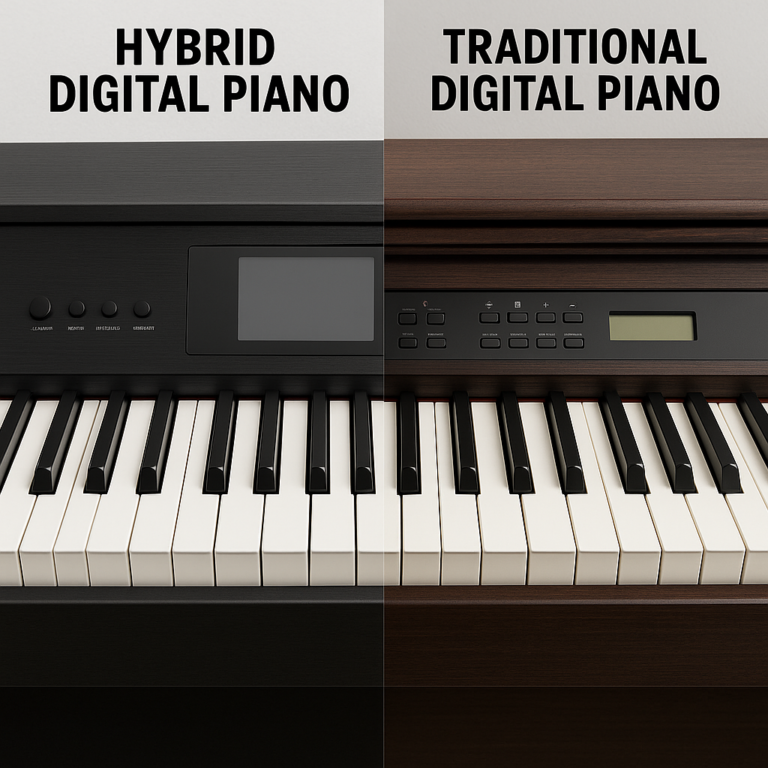
- The Novus: A hybrid digital that uses a real acoustic action!
Rating Table: Digital Pianos (1-10)
| Feature | Yamaha CLP-785 | Kawai CA-9 |
|---|---|---|
| Piano Tone | 9/10 (Bright) | 9.5/10 (Warm) |
| Key Action | 8.5/10 (Heavy) | 9.5/10 (Realistic) |
| Features | 9/10 (App integration) | 8/10 (Focus on play) |
| Design | 8/10 (Classic) | 9/10 (Modern) |
| Value | 8/10 | 9/10 |
Note: If you are buying a digital piano for classical training, many teachers prefer the Kawai action. If you need features and connectivity for a home studio, Yamaha might win.
For more on digital options, visit our 🎹 Digital Pianos category.
8. 🛠️ Maintenance and Tuning Stability: Real-World Insights
How often do you need to call the tuner?
Kawai: The Humidity King
Thanks to the carbon fiber action, Kawai pianos are less sensitive to humidity changes.
- Tuning Stability: They tend to stay in tune longer, especially in the first year.
- Maintenance: The action parts don’t warp, so regulation (adjusting the touch) is needed less frequently.
Yamaha: The Consistent Performer
Yamaha pianos are stable, but the wooden action does react to humidity.
- Tuning Stability: Excellent, but might need a touch-up more often in extreme climates.
- Maintenance: Regular regulation is key to keeping that “new” feel.
The “First Year” Myth:
Both brands need a “settling in” period. The first year, you should tune 3-4 times. After that, twice a year is standard. But Kawai’s composite parts mean the action stays stable even if the tuning drifts slightly.
9. 🎓 Student vs. Professional: Matching the Piano to Your Level
Who is this piano for?
For the Beginner/Student
- Recommendation: Kawai K-30 or Yamaha YU18.
- Why? The Kawai offers a warmer tone that is less fatiguing for long practice sessions. The Yamaha offers a bright tone that helps students hear their mistakes clearly.
- Digital Option: Kawai CA-59 (for action) or Yamaha YDP-165 (for features).
For the Intermediate/Advanced
- Recommendation: Kawai K-50 or Yamaha U3.
- Why? You need more dynamic range. The Kawai allows for subtle shading. The Yamaha allows for powerful projection.
For the Professional
- Recommendation: Shigeru Kawai SK-EX or Yamaha CFX.
- Why? This is the elite tier. The Shigeru Kawai is often preferred by soloists for its singing tone. The Yamaha CFX is the choice for concert halls where projection is key.
10. 🏆 Final Verdict: Choosing Your Perfect Match
We’ve covered the history, the tech, the sound, and the price. So, who wins?
The “Warmth” Winner: Kawai
If you want a piano that feels like an old friend, with a rich, singing tone and an action that defies humidity, Kawai is the choice. The 10-year warranty and the carbon fiber action make it a smart long-term investment.
The “Brightness” Winner: Yamaha
If you need a piano that cuts through a mix, has a firm, precise touch, and you want the global brand recognition, Yamaha is the way to go. It’s the reliable workhorse of the music world.
The “Blind Test” Reality
Remember that YouTube video we mentioned? The one where the reviewer, Stu, blindfolded himself and tested four digital pianos?
- He rated Piano #4 (which turned out to be a high-end Kawai) the highest for dynamic range and “road-like” feel.
- He rated Piano #2 (a Yamaha) very highly for clarity.
- The Lesson: Even in a blind test, the Kawai often edges out on expressiveness, while the Yamaha wins on clarity.
But here’s the catch: You can’t know which one you prefer until you play them.
- Go to a dealer.
- Play a Kawai K-50.
- Play a Yamaha U3.
- Close your eyes.
- Which one makes you want to play more?
That’s the only answer that matters.
🏁 Conclusion
So, which one is better, Kawai or Yamaha? The answer is as unique as your own playing style.
Yamaha is the bright, precise, and globally recognized choice. It’s the piano that shines in a rock band, cuts through a symphony, and holds its value like a tank. It’s the safe, reliable choice that never lets you down.
Kawai is the warm, expressive, and innovative choice. It’s the piano that sings with a rich tone, stays stable in humid climates, and offers a 10-year warranty that gives you peace of mind. It’s the choice for the pianist who wants to feel the music in their bones.
Our Final Recommendation:
- If you are a classical pianist or a home player who values tone and stability: Go Kawai.
- If you are a performer in a band, a pop/rock artist, or you need that bright, cutting sound: Go Yamaha.
Don’t let the specs or the brand names decide for you. Your ears and your fingers are the ultimate judges. Visit a dealer, play both, and let the music tell you the truth.
Ready to find your perfect match?
- 👉 Shop Kawai Pianos on: Amazon | Sweetwater | Kawai Official
- 👉 Shop Yamaha Pianos on: Amazon | Musician’s Friend | Yamaha Official
🔗 Recommended Links
- Books:
- The Piano Book: Buying & Used Pianos by Larry Fine – The bible for piano buyers.
- Yamaha Pianos: A History by John K. Smith – A deep dive into Yamaha’s legacy.
- Online Resources:
- Kawai America
- Yamaha USA
- Piano Street Forum – The legendary discussion on Kawai vs. Yamaha vs. Boston.
❓ FAQ: Your Burning Questions Answered
Which brand, Kawai or Yamaha, offers better warranty and customer support for their acoustic and digital pianos?
Kawai generally offers a superior warranty package, providing a 10-year factory warranty on new acoustic pianos, which covers the action and soundboard. Yamaha typically offers a 5-year limited warranty. In terms of customer support, both have extensive networks, but Yamaha’s global presence often means faster access to parts in remote areas, while Kawai’s support is highly specialized through their dealer network.
Are Kawai or Yamaha pianos more durable and require less maintenance over time?
Both are incredibly durable. However, Kawai has a slight edge in humidity resistance due to their Millennium III ABS-Carbon Fiber action, which is less prone to warping than the traditional wood actions found in most Yamaha models. This can lead to less frequent regulation needs for Kawai in fluctuating climates. Yamaha’s wood actions are robust but require consistent climate control to maintain optimal performance.
How do Kawai and Yamaha digital pianos compare in terms of features and price point?
Yamaha digital pianos (like the Clavinova series) often boast more connectivity features, app integration, and a wider variety of voices. Kawai digital pianos (like the CA and Novus series) focus heavily on realistic key actions and organic sound sampling. In terms of price, they are often comparable, but Kawai tends to offer better value for the action quality, while Yamaha offers better value for feature sets.
What are the key differences between Kawai and Yamaha pianos in terms of sound quality and playability?
Sound Quality: Kawai is known for a warm, rich, and mellow tone, ideal for classical and jazz. Yamaha is known for a bright, clear, and projecting tone, perfect for pop and ensemble work.
Playability: Kawai’s action is often described as lighter and smoother, with extended key sticks for better leverage. Yamaha’s action is firm and direct, offering a traditional feel that many classical teachers prefer.
Read more about “Which Piano Brand Is More Durable? 8 Key Facts About Kawai vs Yamaha 🎹 (2025)”
Do Kawai or Yamaha pianos hold their value better over time, in terms of resale and durability?
Yamaha typically has a higher resale value in the used market due to its massive brand recognition. A used Yamaha U1 is always in high demand. Kawai holds its value well relative to its original price, but it may take slightly longer to sell. However, the 10-year warranty on new Kawai pianos adds significant value to the purchase.
Are Kawai or Yamaha acoustic pianos more durable and require less maintenance?
As mentioned, Kawai‘s use of composite materials in the action makes it more resistant to environmental changes, potentially reducing maintenance needs related to humidity. Yamaha‘s traditional wood construction is durable but requires a stable environment. Both brands produce instruments that can last generations with proper care.
Which brand is better for beginners, Kawai or Yamaha digital pianos?
For beginners, Kawai digital pianos are often recommended for their superior key action (like the Responsive Hammer III), which helps develop proper technique. Yamaha is also excellent, especially for students who need features like recording and connectivity. It really comes down to whether the student prefers a lighter, smoother touch (Kawai) or a heavier, more traditional feel (Yamaha).
Read more about “🎹 Casio & Nord vs. Yamaha & Kawai: The 2026 Digital Piano Showdown”
How do Kawai and Yamaha pianos compare in terms of sound quality and tone?
Kawai produces a warmer, more complex tone with a slower decay, often described as “singing.” Yamaha produces a brighter, more focused tone with a sharper attack and faster decay. The choice is purely subjective and depends on the musical genre and personal preference.
What are the main differences between Kawai and Yamaha pianos?
The main differences lie in tone color (warm vs. bright), action material (carbon fiber vs. wood), and warranty (10 years vs. 5 years). Kawai focuses on innovation and stability, while Yamaha focuses on precision and consistency.
Read more about “🎹 Digital Piano Tech 2026: Weighted Keys & Sound Sampling Revealed”
Is Yamaha the best piano brand?
“Best” is subjective. Yamaha is arguably the most popular and widely recognized brand, making it a safe choice for many. However, many professional pianists prefer Kawai for its tonal warmth and action stability. It depends on what you value most in a piano.
Read more about “🇩🇪 12+ German Piano Brands List: The Ultimate 2026 Guide”
What are the main differences between Kawai and Yamaha digital pianos?
Kawai digital pianos prioritize realistic acoustic simulation and high-quality key actions. Yamaha digital pianos often include more features, such as advanced recording capabilities, a wider range of voices, and better app integration.
Read more about “🎹 Kawai BL71 vs Yamaha U3: The Ultimate 2026 Showdown”
Is Kawai or Yamaha better for beginners?
Both are excellent. Kawai is often preferred for its smooth action that encourages proper finger technique. Yamaha is great for its bright tone that helps beginners hear their mistakes. The best choice is the one the student enjoys playing the most.
Read more about “🎹 Digital Piano Brand Comparison 2026: The 7 Truths They Won’t Tell You”
How does the key action compare between Kawai and Yamaha acoustic pianos?
Kawai uses the Millennium III action with carbon fiber components, offering a lighter, more responsive feel and better stability. Yamaha uses a traditional wooden action, offering a heavier, more direct feel that many classical pianists prefer for its “organic” connection.
Which brand holds its resale value better, Kawai or Yamaha?
Yamaha generally holds its resale value better in the used market due to its global brand recognition. However, Kawai offers better value retention relative to the original purchase price, especially considering the 10-year warranty and superior action technology.
Read more about “🏆 2026 Piano Brands Ranking: The Ultimate 5-Tier Guide”
📚 Reference Links