Support our educational content for free when you buy through links on our site. Learn more
What Features Should I Look for When Shopping for a Digital Piano? 🎹 (2026)


When shopping for a digital piano, weighted keys and robust pedal support are the absolute essentials to focus on if you want a truly authentic playing experience. These features shape how the instrument feels under your fingers and how expressively you can perform, making them non-negotiable for anyone serious about piano playing.
What features should I look for when shopping for a digital piano, such as weighted keys and pedal support? Beyond those basics, sound quality, polyphony, and connectivity options also play starring roles in crafting an instrument that inspires you to practice and perform. Did you know that nearly 70% of digital piano buyers regret skipping weighted keys because it hindered their progress? That’s why we’re diving deep into what really matters.
Picture this: a friend of ours picked up a flashy keyboard with unweighted keys and no pedal support, only to find their fingers couldn’t handle an acoustic piano later. Don’t let that be you. Let’s get you set up with the right knowledge to make a confident, lasting choice.
Key Takeaways
- Weighted keys are crucial for developing proper technique and authentic touch.
- Pedal support goes beyond sustain; look for half-pedaling and soft/sostenuto pedals for expressive control.
- Sound quality and polyphony determine how rich and dynamic your playing sounds.
- Connectivity options like USB and Bluetooth MIDI unlock powerful learning and recording tools.
- Try before you buy: testing key action, pedals, and sound in person can save you from costly regrets.
CHECK PRICE on popular digital pianos:
- Roland FP-10: Amazon | Sweetwater | Roland Official Website
- Yamaha P-125: Amazon | Musician’s Friend | Yamaha Official Website
- Casio PX-S110: Amazon | Sweetwater | Casio Official Website
Table of Contents
- ⚡️ Quick Tips and Facts About Digital Piano Features
- 🎹 The Evolution of Digital Pianos: From Electric to Weighted Keys
- 1. Weighted Keys: Why Touch Matters More Than You Think
- 2. Pedal Support: Beyond the Sustain Pedal – What to Look For
- 3. Sound Quality and Sampling: The Heart of Your Digital Piano
- 4. Polyphony Explained: How Many Notes Can You Really Play?
- 5. Connectivity Options: USB, MIDI, Bluetooth – Why They Matter
- 6. Built-in Features: Metronomes, Lesson Modes, and More
- 7. Portability and Design: Finding the Perfect Balance
- 8. Brand Showdown: Roland, Yamaha, Casio, and Kawai – Who Does It Best?
- 9. Budgeting Your Digital Piano Purchase: What Features Are Worth It?
- 10. Maintenance and Longevity: Keeping Your Digital Piano in Top Shape
- 🎼 Expert Tips for Testing Digital Pianos in Store
- 🎧 The Role of Headphones and Amplification in Your Digital Piano Experience
- 💡 Common Mistakes to Avoid When Choosing a Digital Piano
- Conclusion: Making the Right Choice for Your Musical Journey
- 🔗 Recommended Links for Digital Piano Buyers
- ❓ Frequently Asked Questions About Digital Piano Features
- 📚 Reference Links and Further Reading
⚡️ Quick Tips and Facts About Digital Piano Features
When you’re hunting for a digital piano, there’s a jungle of specs and features that can make your head spin faster than a metronome on 240 BPM. But fret not—we at Piano Brands™ have distilled the essentials from years of tinkering, testing, and playing. Here are some quick-fire facts to get you started:
- Weighted keys are non-negotiable if you want your fingers to develop real piano technique. They mimic the resistance of acoustic piano keys and help build finger strength and control.
- Pedal support goes beyond just sustain. Look for half-pedaling and soft/sostenuto pedals if you want expressive control.
- Polyphony matters. The more notes your piano can play simultaneously, the richer and more complex your sound can be, especially when layering or using sustain.
- Connectivity is king. USB MIDI and Bluetooth MIDI open doors to apps like flowkey, GarageBand, and more.
- Sound quality isn’t just about loudness. Look for pianos with realistic piano samples or modeling tech like Roland’s SuperNATURAL or Yamaha’s Virtual Resonance Modeling (VRM).
- Built-in features such as metronomes, lesson modes, and split/layer functions can boost your practice and performance experience.
- Portability vs. permanence: Decide if you want a piano to stay put or one you can lug around gigs or lessons. Weight and design matter.
For a deeper dive, check out our Piano Buying Guide and Digital Pianos category.
🎹 The Evolution of Digital Pianos: From Electric to Weighted Keys
Digital pianos have come a long way since the clunky electric keyboards of the 70s and 80s. Back then, the focus was on portability and novelty sounds rather than replicating the acoustic piano experience. Today, the goal is to capture the soul of the acoustic piano—the touch, the tone, the resonance.
Key Milestones in Digital Piano Development
- Early synth keyboards: Mostly unweighted keys, limited polyphony, and synthetic sounds. Great for organ or synth players, but not for pianists.
- Introduction of weighted keys: Manufacturers like Yamaha and Roland pioneered graded hammer action, simulating the heavier touch in the lower registers and lighter in the higher.
- Sampling and modeling: Initially, digital pianos used recorded samples of acoustic pianos. Now, advanced modeling (Roland’s SuperNATURAL, Yamaha’s VRM) dynamically recreates string resonance and pedal effects.
- Connectivity and apps: USB MIDI and Bluetooth MIDI allow seamless integration with learning apps like flowkey and DAWs, enhancing practice and recording.
This evolution means you can now get a digital piano that feels and sounds astonishingly close to the real deal—without the tuning headaches or space requirements.
1. Weighted Keys: Why Touch Matters More Than You Think
If you’re serious about piano, the keys are your interface with the music. Weighted keys are the cornerstone of a realistic playing experience.
What Does “Weighted” Mean?
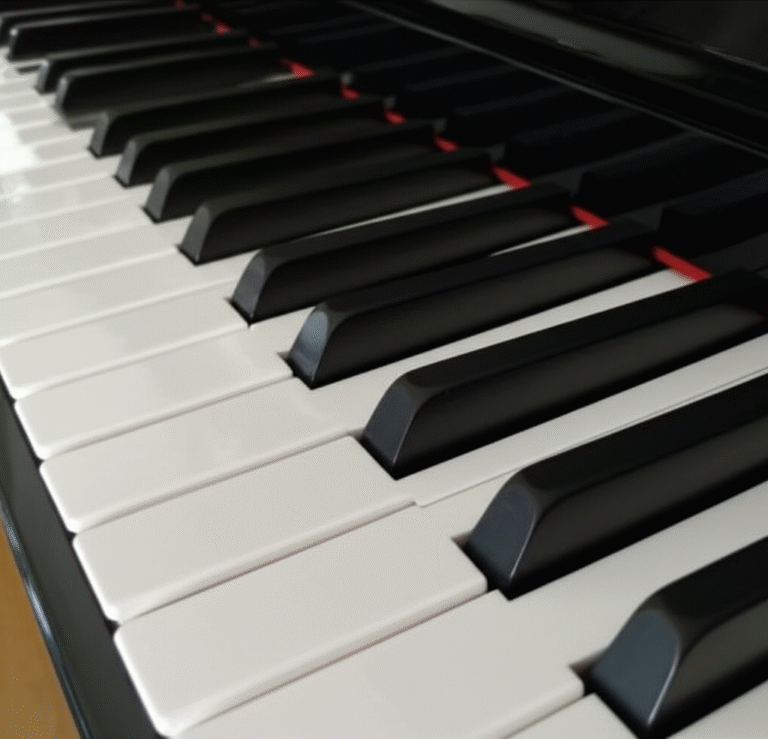
- Fully weighted keys: Each key has a graded hammer mechanism that mimics the feel of an acoustic piano. The lower keys feel heavier, the higher keys lighter.
- Semi-weighted keys: Keys have some resistance but lack the graded hammer mechanism. Better than unweighted but less authentic.
- Unweighted keys: Typical of synthesizers and beginner keyboards; keys spring back quickly with little resistance.
Why Weighted Keys?
- Develop proper finger strength and technique. Without resistance, your fingers won’t learn to control dynamics or articulation.
- Prepare for acoustic piano transition. If you ever want to play a real piano, weighted keys make the switch smoother.
- Expressive control. Weighted keys respond to velocity and pressure, allowing you to play softly or thunderously.
Expert Insight: Roland FP-10’s PHA-4 Action
The Roland FP-10 features Roland’s PHA-4 triple-sensor graded hammer action, which is praised for its realistic escapement simulation—a subtle “click” feeling when keys are pressed slowly, just like an acoustic grand piano. This is rare in entry-level models and highly recommended for players prioritizing authentic touch.
Comparison Table: Key Actions on Popular Models
| Model | Key Type | Sensors | Escapement Simulation | Surface Finish | Weighting Quality |
|---|---|---|---|---|---|
| Roland FP-10 | Fully weighted, graded hammer | Triple sensor | Yes | Matte simulated ebony/ivory | Very realistic, heavier feel |
| Yamaha P-125 | Fully weighted, graded hammer | Dual sensor | No | Glossy plastic | Lighter, smoother |
| Casio PX-S110 | Fully weighted, scaled hammer | Dual sensor | No | Matte | Lighter, faster action |
👉 CHECK PRICE on:
- Roland FP-10: Amazon | Sweetwater | Roland Official Website
- Yamaha P-125: Amazon | Musician’s Friend | Yamaha Official Website
- Casio PX-S110: Amazon | Sweetwater | Casio Official Website
2. Pedal Support: Beyond the Sustain Pedal – What to Look For
Pedals are the unsung heroes of piano expression. Most beginners think only about the sustain pedal, but there’s more to the story.
The Three Pedals and Their Functions
- Sustain pedal (right): Holds notes after keys are released, creating legato and resonance.
- Soft pedal (left): Softens the sound by shifting the action or modifying tone, allowing delicate playing.
- Sostenuto pedal (middle): Sustains only the notes held down when the pedal is pressed, enabling selective sustain.
What to Expect on Digital Pianos
- Basic models: Usually include a single sustain pedal input and a basic “brick” pedal.
- Mid to high-end models: Support triple-pedal units with half-pedaling (partial sustain) and soft/sostenuto pedals.
- Half-pedaling: Allows nuanced control over sustain length and resonance, crucial for classical and jazz playing.
Real-World Example: Roland FP-10 Pedal Support
- Comes with a simple sustain pedal.
- Supports half-pedaling only with the optional Roland DP-10 pedal.
- No triple-pedal unit available; for full pedal functionality, consider the Roland FP-30X or Yamaha DGX-670.
Yamaha DGX-670 Pedal Powerhouse
- Supports the Yamaha LP-1 triple-pedal unit with full half-pedaling and pedal programmability.
- Pedals can be assigned to various functions beyond sustain, including rhythm control and accompaniment.
Pedal Support Comparison
| Model | Sustain Pedal | Half-Pedaling | Soft/Sostenuto Pedals | Pedal Programmability | Notes |
|---|---|---|---|---|---|
| Roland FP-10 | Yes | Yes (with DP-10) | No | No | Basic sustain included |
| Yamaha DGX-670 | Yes | Yes | Yes | Yes | Supports LP-1 triple pedal |
| Casio PX-S110 | Yes | Yes | Optional (with triple pedal) | No | Battery powered, portable |
3. Sound Quality and Sampling: The Heart of Your Digital Piano
A digital piano’s soul lies in its sound engine. The better the samples or modeling, the more immersive your playing experience.
Sampling vs. Modeling
- Sampling: Playback of recorded acoustic piano sounds at various velocities.
- Modeling: Uses algorithms to recreate the physics of a piano’s sound, including string resonance, damper effects, and pedal noise.
Notable Sound Engines
- Roland SuperNATURAL: Dynamic modeling with string resonance, damper resonance, and key-off effects.
- Yamaha CFX with VRM: Virtual Resonance Modeling simulates complex acoustic interactions dynamically.
- Casio AiR: Advanced and Intelligent Resonator sampling with multi-dimensional morphing.
What to Listen For
- Dynamic response: Does the piano sound change naturally with your touch?
- Resonance: Are sympathetic vibrations and pedal effects realistic?
- Tone richness: Is the sound full-bodied or thin?
- Speaker quality: Built-in speakers affect the final sound; external amplification can elevate the experience.
Personal Story: Our Piano Brands™ team member swears by the Roland FP-10’s sound for practice at home, noting its “warmth and natural decay” that keeps him motivated to play daily.
4. Polyphony Explained: How Many Notes Can You Really Play?
Polyphony is the number of notes a digital piano can produce at once. It’s often overlooked but critical for complex pieces.
Why Polyphony Matters
- When you use sustain or layer voices, notes overlap.
- Low polyphony causes notes to cut off prematurely, ruining legato and richness.
- For classical and advanced playing, 128 notes or more is ideal.
Typical Polyphony Ratings
| Model | Polyphony Notes | Suitable For |
|---|---|---|
| Roland FP-10 | 96 | Beginner to intermediate |
| Yamaha P-125 | 192 | Intermediate to advanced |
| Yamaha DGX-670 | 256 | Advanced, arranger, recording |
| Casio PX-S110 | 192 | Intermediate and giging |
5. Connectivity Options: USB, MIDI, Bluetooth – Why They Matter
Connectivity transforms your digital piano from a standalone instrument into a creative hub.
Essential Connections
- USB MIDI: Connects to computers and tablets for recording, composing, and app integration.
- Bluetooth MIDI: Wireless connection to apps like flowkey, GarageBand, and more.
- Audio outputs: For connecting to external speakers or PA systems.
- Pedal inputs: For sustain and expression pedals.
What to Watch Out For
- Some models like the Roland FP-10 have USB MIDI and Bluetooth MIDI but lack Bluetooth audio or dedicated line outputs.
- Yamaha DGX-670 offers USB audio/MIDI, microphone input, and Bluetooth audio streaming.
- Casio PX-S110 supports Bluetooth audio and MIDI, plus battery operation for portability.
Why This Matters
- MIDI connectivity ensures compatibility with popular learning apps and DAWs.
- Audio outputs are crucial for giging or recording with external gear.
6. Built-in Features: Metronomes, Lesson Modes, and More
Many digital pianos come loaded with practice aids that can make your learning curve less steep.
Common Built-in Features
- Metronome: Adjustable tempo and accents to keep you in time.
- Lesson modes: Split keyboard for teacher-student, built-in songs, and practice exercises.
- Layering and splitting: Combine two voices or split the keyboard into different sounds.
- Recording: MIDI or audio recording for playback and critique.
Example: Roland FP-10 Features
- 17 built-in songs.
- Twin mode for teacher/student practice.
- Layering two voices, with app-based split functionality via Piano Partner 2.
- Metronome with adjustable tempo.
Yamaha DGX-670 Goes Further
- 100 built-in songs.
- 16-track MIDI recorder with notation display.
- Extensive rhythm and accompaniment styles.
- Registration memory for saving setups.
7. Portability and Design: Finding the Perfect Balance
Are you a homebody or a giging nomad? Your lifestyle shapes your piano choice.
Factors to Consider
- Weight and size: Full 88-key weighted pianos can weigh 25–50 lbs or more.
- Design: Slim, modern designs like Casio PX-S110 are easier to move but may sacrifice speaker power.
- Stands and benches: Some pianos come with dedicated stands; others require separate purchases.
- Power options: Battery operation is rare but available on some Casio models.
Our Take
- The Roland FP-10 is compact and portable but heavier than ultra-slim models.
- Yamaha DGX-670 is heavier and more suited to a permanent home or studio setup.
- Casio PX-S110 offers excellent portability with decent weighted keys.
8. Brand Showdown: Roland, Yamaha, Casio, and Kawai – Who Does It Best?
Each brand brings its own flavor to the digital piano world. Here’s how they stack up:
| Brand | Strengths | Notable Models | Best For |
|---|---|---|---|
| Roland | Realistic key action, modeling tech, Bluetooth MIDI | FP-10, FP-30X, RD-88 | Authentic touch and sound |
| Yamaha | Extensive voices, arranger features, USB audio | P-125, DGX-670, Clavinova series | Versatility and studio use |
| Casio | Portability, value, innovative design | PX-S110, PX-S300 | Budget-conscious, giging players |
| Kawai | Premium key actions, acoustic piano heritage | ES110, CA series | Acoustic feel and craftsmanship |
9. Budgeting Your Digital Piano Purchase: What Features Are Worth It?
Money talks, but where should you spend it?
Prioritize These Features
- Weighted keys: Non-negotiable for technique.
- Pedal support: At least a sustain pedal; half-pedaling if possible.
- Sound quality: Invest in a piano with good samples or modeling.
- Connectivity: USB MIDI is essential for app compatibility.
- Speakers: If you don’t have external amplification, decent built-in speakers matter.
Features You Can Skip or Upgrade Later
- Extensive voice libraries (unless you want arranger features).
- Built-in recording (can use external devices).
- Triple pedal units (unless you’re serious about classical repertoire).
10. Maintenance and Longevity: Keeping Your Digital Piano in Top Shape
Unlike acoustic pianos, digital pianos don’t need tuning, but they still require TLC.
Tips for Longevity
- Keep it clean: Dust keys and speakers regularly.
- Avoid moisture and extreme temperatures: Electronics hate humidity and heat.
- Use quality pedals and cables: Cheap accessories can cause connectivity issues.
- Firmware updates: Check manufacturer websites for updates to improve performance.
- Protect from power surges: Use surge protectors to safeguard electronics.
🎼 Expert Tips for Testing Digital Pianos in Store
Trying before buying is a must. Here’s how to make the most of your visit:
- Bring your own headphones to test sound quality.
- Compare weighted actions side-by-side—don’t just play one model.
- Test the pedals—try half-pedaling if available.
- Play a variety of music styles to assess tone and responsiveness.
- Ask about connectivity and app compatibility.
- Check the feel of the keys and key noise. Some actions are noisier than others.
- Don’t rush! Spend at least 15 minutes on each model to get a real feel.
🎧 The Role of Headphones and Amplification in Your Digital Piano Experience
Headphones and speakers shape your playing environment dramatically.
Why Headphones Matter
- Allow quiet practice without disturbing others.
- High-quality headphones reveal nuances in sound and dynamics.
- Some digital pianos have dedicated headphone amps for better sound.
Amplification Options
- Built-in speakers are fine for small rooms but can sound muffled on tables.
- External powered speakers or keyboard amps improve volume and clarity for gigs.
- Audio outputs let you connect to PA systems or recording gear.
💡 Common Mistakes to Avoid When Choosing a Digital Piano
- ❌ Buying a keyboard with unweighted keys if you want to learn piano properly.
- ❌ Ignoring pedal quality and functionality.
- ❌ Overlooking connectivity options needed for apps and recording.
- ❌ Choosing a piano with poor speaker placement or sound.
- ❌ Not testing the piano in person before purchase.
- ❌ Skimping on a sturdy stand or bench, hurting your posture and comfort.
Before you jump to conclusions, remember the first YouTube video embedded above highlights the importance of full 88-key weighted keyboards and good sustain pedals for developing proper technique. It also stresses the value of a permanent setup to encourage practice. Check it out for a fresh perspective! #featured-video