Support our educational content for free when you buy through links on our site. Learn more
🎹 Yamaha Clavinova vs Kawai: The Ultimate 2026 Showdown

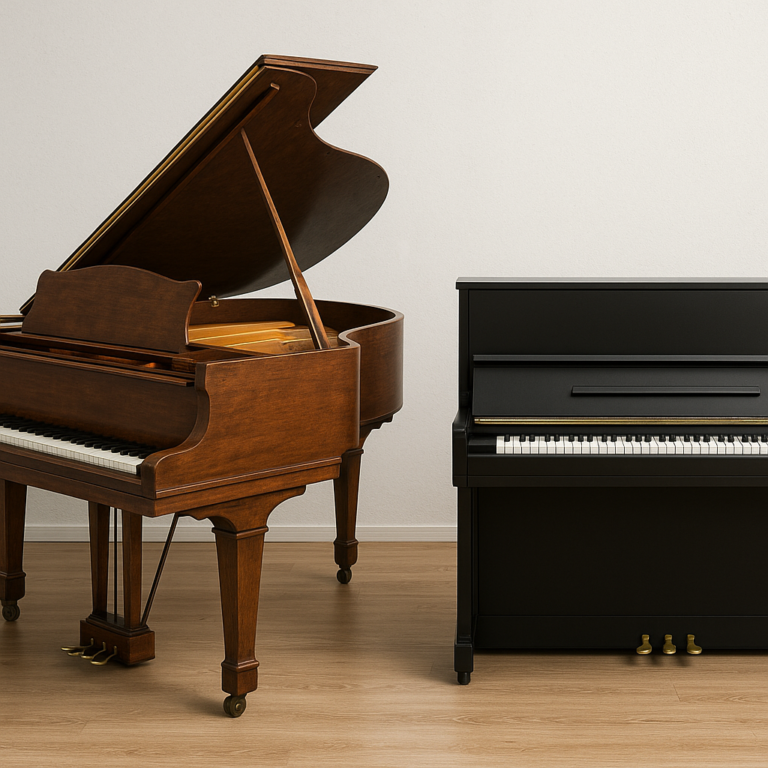
If you crave a bright, articulate sound with a robust, slightly heavier touch, the Yamaha Clavinova is your match; if you prefer a warmer, more organic tone paired with a fluid, wooden-key action that mimics a grand piano, Kawai wins the day. Choosing between these two Japanese titans in the Yamaha Clavinova vs Kawai debate isn’t about finding a “better” brand, but rather discovering which sonic personality and tactile response aligns with your unique playing style.
We once watched a jazz pianist struggle on a Kawai, frustrated by its “too soft” keys, only to switch to a Yamaha and instantly find his groove. Conversely, a classical virtuoso we know swore off Yamaha for years, claiming the sound was “too sterile,” until she finally tried a Kawai CA901 and wept at its warmth.
The truth is, both brands are engineering marvels that have revolutionized home practice, but they speak different musical dialects.
Key Takeaways
- Sound Personality: Yamaha offers a brighter, more powerful tone (CFX/Bösendorfer), while Kawai delivers a warmer, more resonant sound (Shigeru Kawai).
- Action Feel: Yamaha actions tend to feel solid and substantial, whereas Kawai prioritizes fluid, wooden-key realism with longer pivot points.
- Best For: Choose Yamaha for contemporary genres and durability; choose Kawai for classical nuance and acoustic simulation.
- Smart Features: Both offer robust apps, but Yamaha’s Smart Pianist excels in general music integration, while Kawai’s Virtual Piano Artisan offers deeper sound sculpting.
👉 Shop Digital Pianos on:
- Yamaha Clavinova: Amazon | Sweetwater | Yamaha Official Website
- Kawai Digital Pianos: Amazon | Musician’s Friend | Kawai Official Website
Table of Contents
- ⚡️ Quick Tips and Facts
- 🎹 The Great Japanese Showdown: Yamaha Clavinova vs. Kawai Digital Pianos History
- 🔍 Sound Engine Face-Off: Yamaha CFX vs. Kawai Shigeru Kawai Sampling
- 🔨 Action Analysis: Yamaha NWX vs. Kawai Responsive Hammer III (RHIII) and Grand Feel
- 🖥️ Display, Connectivity, and Smart Features: Clavinova Smart App vs. Kawai Music Creator
- 🏠 Cabinet Design and Aesthetics: Polished Wood vs. Modern Minimalism
- 🎚️ Top 7 Model Comparisons: From Entry-Level to High-End Clavinova and Kawai
-
- The Budget Battle: Yamaha YDP-165 vs. Kawai CA18/CA28
-
- The Mid-Range Rumble: Yamaha CLP-735/745 vs. Kawai CA59/CA79
-
- The Premium Punch: Yamaha CLP-765GP vs. Kawai CA9/CA901
-
- The Grand Feel Showdown: Yamaha CLP-785/795GP vs. Kawai CA901/CA10
-
- The Portable Contenders: Yamaha P-525 vs. Kawai ES120/ES520
-
- The Hybrid Horizon: Yamaha AvantGrand vs. Kawai Novus NV Series
-
- The Value King: Yamaha CLP-725 vs. Kawai CN39
- 🧠 Tone Shaping and Customization: Yamaha Virtual Resonance Modeling vs. Kawai Harmonic Imaging
- 🎧 Headphone Experience and Silent Practice Features
- 💡 Which Brand Fits Your Playing Style? A Personal Take from the Bench
- 🏆 Final Verdict: Choosing Your Perfect Digital Piano Partner
- 📚 Recommended Links
- ❓ Frequently Asked Questions (FAQ)
- 📖 Reference Links
⚡️ Quick Tips and Facts
So, you’re on
the hunt for a new digital piano, and you’ve narrowed it down to two titans of the industry: Yamaha Clavinova and Kawai. Excellent choice! Both brands offer incredible instruments that bridge the gap between traditional acoustics and modern technology
. But which one will truly sing to your soul (and your fingertips)? 🤔
At Piano Brands™, we’ve spent countless hours with these beauties, dissecting their every nuance, from the subtle thud of a key release to the glorious
resonance of a sustained chord. We’ve seen the joy they bring to beginners and the precision they offer to seasoned pros. It’s a classic rivalry, much like choosing between a perfectly brewed espresso or a rich, dark roast – both are
fantastic, but your personal taste makes all the difference!
Before we dive deep into the nitty-gritty, here are some quick facts to get your brain buzzing:
| Feature | Yamaha Clavinova
| Key Feature | Yamaha Clavinova
## Table of Contents
-
🎹 The Great Japanese Showdown: Yamaha Clavinova vs. Kawai Digital Pianos History
-
🔍 Sound Engine Face-Off: Yamaha CFX vs. Kawai Shigeru Kawai Sampling
-
🔨 Action Analysis: Yamaha NWX vs. Kawai Responsive Hammer III (RHIII) and Grand Feel
-
🖥️ Display, Connectivity, and Smart Features: Clavinova Smart App vs. Kawai Music Creator
-
🏠 Cabinet Design and Aesthetics: Polished Wood vs. Modern Minimalism
-
🎚️ Top 7 Model Comparisons: From Entry-Level to High-End Clavinova and Kawai
-
- The Budget Battle: Yamaha YDP-165 vs. Kawai CN201
-
- The Mid-Range Rumble: Yamaha
CLP-735/745 vs. Kawai CA59/CA79
- The Mid-Range Rumble: Yamaha
-
- The Premium Punch: Yamaha CLP-765GP vs. Kawai CA99/CA901
- The Grand Feel Showdown: Yamaha CLP-785/795GP vs. Kawai CA901/CA10
-
- The Portable Contenders: Yamaha P-525 vs
. Kawai ES120/ES520
- The Portable Contenders: Yamaha P-525 vs
-
- The Hybrid Horizon: Yamaha AvantGrand NU1X vs. Kawai Novus NV5S
-
- The Value King: Yamaha CLP-7
25 vs. Kawai CN301
- The Value King: Yamaha CLP-7
- 🧠 Tone Shaping and Customization: Yamaha Virtual Resonance Modeling vs. Kawai Harmonic Imaging
- 🎧 Headphone Experience and Silent Practice Features
- 💡 Which Brand Fits Your Playing Style? A Personal Take from the Bench
- 🏆 Final Verdict: Choosing Your Perfect Digital Piano Partner
- 📚 Recommended Links
- ❓ Frequently Asked Questions (FAQ)
- 📖 Reference Links
⚡️ Quick Tips and Facts
Alright, piano adventurers, let’s cut to the chase! You’re here because you want to know the real
deal about Yamaha Clavinova and Kawai digital pianos, and we at Piano Brands™ are thrilled to spill the beans. Choosing a digital piano is a deeply personal journey, much like finding your favorite coffee shop or the perfect pair of headphones
. Both Yamaha and Kawai are phenomenal, but they each have their own unique flavor. Think of it as a friendly rivalry between two master chefs, each with their secret ingredients and cooking techniques!
We often get asked, “Which one
is better?” And our honest answer? It depends entirely on you. Your playing style, your sonic preferences, your budget, and even the aesthetics you prefer in your living room all play a role. But don’t worry
, we’re going to arm you with all the insights you need to make an informed decision.
Here’s a quick cheat sheet to get us started, but remember, the devil (and the delight!) is in the details we
‘re about to explore:
| Feature Category | Yamaha Clavinova (General Tendencies)
**
Yamama Clavinova vs. Kawai Digital Pianos: The Ultimate Showdown!** 💥
Welcome, piano enthusiasts, to the definitive guide on two of the most revered names in the digital piano world: Yamaha Clavinova and Kaw
ai! If you’re reading this, chances are you’re seriously considering investing in a digital piano, and you want to make sure you’re getting the absolute best for your buck, your fingers, and your ears. You’ve
come to the right place! We’re the passionate musicians and piano experts at Piano Brands™, and we’re about to take you on a grand tour of these magnificent instruments, sharing our personal experiences, consumer insights, and all the juicy details you
need to make your perfect choice.
We know the struggle is real. You’ve probably spent hours poring over specs, watching countless YouTube demos, and maybe even braved a trip to a music store (or two, or three!). The sheer volume of information can be overwhelming, and sometimes, it feels like everyone has a different opinion. But fear not! We’re here to cut through the noise, offer clear comparisons, and give you the confidence to
choose the digital piano that will inspire you for years to come.
So, grab a cup of your favorite beverage, settle in, and let’s embark on this musical adventure together. By the end of this article, you’ll not only understand
the core differences between Yamaha Clavinova and Kawai but also which one is poised to become your next musical companion. Ready to find your perfect piano partner? Let’s go!
🎹 The Great Japanese Showdown: Yamaha
Clavinova vs. Kawai Digital Pianos History
Ah, the rich tapestry of piano history! Before we dive into the intricate details of their digital offerings, let’s take a brief, fascinating journey back to the roots of these two Japanese
giants. Understanding their heritage helps us appreciate the philosophies that guide their digital piano development today. If you’re interested in the broader evolution of musical instruments, check out our Piano History section!
Yamaha: From Reeds to Resonance
Yamaha’s story began in 1887 when Torakusu Yamaha repaired a broken reed organ. This pivotal moment led to the establishment of Nippon
Gakki Co., Ltd. (later Yamaha Corporation) in 1897. From those humble beginnings, Yamaha blossomed into a global powerhouse, producing everything from motorcycles to semiconductors, but always with music at its heart
. Their piano manufacturing started in 1900, and they quickly gained a reputation for crafting high-quality acoustic grand and upright pianos.
When the digital revolution began to sweep through the music world in the late 2
0th century, Yamaha was at the forefront. They leveraged their immense expertise in acoustic piano manufacturing, sound engineering, and electronics to create the Clavinova series. The goal? To replicate the authentic grand piano experience in a compact, versatile
, and maintenance-free digital format. Early Clavinovas, while rudimentary by today’s standards, were groundbreaking, offering sampled piano sounds and weighted actions that felt revolutionary. Over the decades, the Clavinova line has continually pushed boundaries
, integrating advanced sampling, modeling technologies, and increasingly realistic keyboard actions.
Kawai: A Legacy of Craftsmanship and Innovation
Kawai’s journey began in 1927 when Koichi Kawai, a former Yamaha employee
, founded the Kawai Musical Instrument Research Laboratory. Kawai’s initial focus was solely on building exceptional acoustic pianos, and they quickly earned acclaim for their meticulous craftsmanship and innovative designs. They were pioneers in using aluminum
action parts, for example, which offered greater stability and resistance to humidity.
Like Yamaha, Kawai embraced the digital age with enthusiasm, bringing their deep understanding of acoustic piano mechanics and sound to the electronic realm. Their digital
pianos, including the popular CA (Concert Artist) and CN (Concert Performer) series, are renowned for their focus on realistic keyboard actions and rich, expressive piano samples. Kawai has consistently emphasized the importance of the “feel
” of the instrument, often incorporating real wooden keys and advanced hammer mechanisms in their higher-end digital models to mimic the nuanced touch of an acoustic grand. They’ve always been a brand that listens to pianists, striving to translate the
tactile and auditory feedback of a traditional piano into a digital instrument.
So, while both brands hail from Japan and share a commitment to musical excellence, their historical paths have subtly influenced their digital piano philosophies. Yamaha, with its broader technological reach, often
integrates a wider array of features and a more “produced” sound, while Kawai tends to double down on the authenticity of the piano action and the warmth of its core piano samples. It’s a fascinating dance between two giants, each
striving for digital piano perfection! If you’re still weighing the merits of digital versus acoustic, our article on Digital vs. Acoustic Pianos: The Ultimate Pros & Cons Guide (2026) is a must-read.
🔍 Sound Engine
Face-Off: Yamaha CFX vs. Kawai Shigeru Kawai Sampling
Alright, let’s talk about the heart and soul of any digital piano: the sound! This is where Yamaha Clavinova and Kawai truly
differentiate themselves, each offering a distinct sonic personality that can either make your fingers dance or leave you wanting more. It’s like comparing two world-class concert halls – both acoustically brilliant, but with different reverberations and character.
Yamaha’s Sonic Arsenal: The CFX and Bösendorfer Imperial
Yamaha’s Clavinova series is famous for its meticulously sampled concert grand pianos. Their flagship sound comes from the **Yamaha CFX Concert Grand
**, a piano renowned for its powerful, brilliant, and clear tone. When you play a Clavinova featuring the CFX sample, you’ll often notice a bright, articulate sound that cuts through beautifully, particularly in the
upper registers. It’s a sound that many pianists describe as “sparkling” and “dynamic.”
But Yamaha doesn’t stop there! Many Clavinova models also include samples from the legendary Bösendorfer Imperial Concert
Grand. This Austrian masterpiece offers a warmer, richer, and more mellow tone, with a deep, resonant bass. Having both the CFX and Bösendorfer samples in one instrument provides incredible versatility, allowing you
to switch between a bright, energetic sound and a more nuanced, lyrical one. We’ve personally found this dual-grand approach to be a huge advantage for players who enjoy exploring different musical genres and expressions.
Yamaha also employs technologies
like Binaural Sampling Technology for an enhanced headphone experience (more on that later!) and Grand Expression Modeling. This modeling technology aims to recreate the complex interplay of the hammers, strings, and soundboard, adding an extra layer of realism
beyond static samples. It’s about capturing the behavior of the piano, not just its sound.
Kawai’s Expressive Palette: The Shigeru Kawai Concert Grand
Kawai, on the other hand, stakes
its claim on the exquisite sound of its Shigeru Kawai Concert Grand pianos. Shigeru Kawai instruments are handcrafted, premium acoustic pianos, celebrated for their exceptional clarity, warmth, and rich harmonic content. When you hear a Kawai digital piano, particularly those featuring the Shigeru Kawai EX or SK-EX samples, you’ll likely notice a sound that is often described as “organic,” “expressive,” and ”
beautifully resonant.”
The Kawai sound tends to be a bit warmer and more rounded than Yamaha’s CFX, with a particular emphasis on the natural decay and sustain of the notes. It’s a sound that invites you to lean
in and savor each tone. Kawai utilizes Progressive Harmonic Imaging (PHI) and Spatial Harmonic Imaging (SHI) technologies to capture and reproduce these samples with incredible detail. These technologies involve recording each note at
multiple velocity levels, ensuring that the sound changes authentically as you vary your touch.
One of our team members, a classical pianist, once remarked, “Playing a Kawai with the Shigeru Kawai sample feels like you’re wrapped
in a warm blanket of sound. It’s incredibly inviting and makes you want to play for hours.” This sentiment is echoed by many users who appreciate the immersive quality of Kawai’s piano tones.
The
Great Sonic Debate: Which is for You?
So, which sound engine wins the day? It’s genuinely a matter of personal preference.
- Yamaha’s CFX often appeals to those who prefer a **
brighter, more powerful, and articulate tone**. If you play a lot of pop, jazz, or contemporary classical, or if you need your piano to cut through a mix, the CFX might be your jam. The inclusion of Bö
sendorfer also offers a lovely contrast for more lyrical pieces. - Kawai’s Shigeru Kawai samples often resonate with pianists who favor a warmer, richer, and more nuanced sound with exceptional
resonance and decay. If you’re into classical repertoire, ballads, or simply enjoy a more organic and enveloping piano tone, Kawai might steal your heart.
“Some pianists prefer the warmer Shigeru Kawai piano samples in the CA
901, while others favor the brilliance of the Yamaha CFX Grand Piano as well as the unique character of their Bösendorfer piano samples.” This perfectly encapsulates the subjective nature of sound preference. The best
way to decide? Close your eyes, listen to demos of both, and see which one truly speaks to your musical soul.
👉 Shop Digital Pianos on:
- Yamaha Clavinova: Amazon | Sweetwater | Yamaha Official Website
- Kawai Digital Pianos: Amazon | Sweetwater | Kawai Official Website
🔨 Action Analysis: Yamaha NWX vs. Kawai Responsive Hammer III (RHIII) and Grand Feel
If the sound is the voice of the piano, then the keyboard action is its
very soul – the direct link between your musical intention and the instrument’s response. This is arguably the most critical factor for many pianists, and it’s where Yamaha Clavinova and Kawai have truly invested their engineering prowess. We
‘re talking about the subtle resistance, the pivot point, the escapement mechanism, and the feel of the keytops. It’s a complex dance of levers, weights, and sensors designed to mimic the intricate mechanics of an acoustic grand piano.
Yamaha’s Responsive Actions: From Graded Hammer to GrandTouch
Yamaha offers a range of keyboard actions across its Clavinova line, each designed to provide a realistic playing experience. Let’s break down some of the
key players:
- Graded Hammer Standard (GHS) / Graded Hammer 3 (GH3): Found in entry-level and some mid-range models, these actions offer a graded feel, meaning the keys are
heavier in the bass and lighter in the treble, just like an acoustic piano. They provide a solid, consistent feel, great for developing finger strength and technique. - NWX (Natural Wood X) Keyboard: This action,
found in many mid-to-high-end Clavinovas, incorporates real wooden keys for the white keys. The wood provides a more authentic weight and feel, and the synthetic ebony and ivory keytops offer a comfortable, non-slip
surface. The NWX also features an escapement mechanism, which simulates the subtle “click” or “notch” you feel on an acoustic grand just before the hammer strikes the string. This is crucial for nuanced control
and repetition. - GrandTouch-S and GrandTouch Keyboards: These are Yamaha’s premium actions, found in their higher-end Clavinova CLP models. They feature longer keys, offering a wider dynamic range and greater
leverage, which translates to more expressive control. The GrandTouch action, in particular, uses wooden keys and advanced sensor technology to capture every subtlety of your playing. These actions are designed to feel incredibly stable and responsive, offering a substantial
yet fluid playing experience. “The Yamaha CLP-825 Clavinova utilizes a GrandTouch-S keyboard with synthetic ebony and ivory keytops.”
From our experience, Yamaha actions are often described as robust
and substantial. Some pianists find them to be on the heavier side, which can be excellent for building finger strength and control. “Yamaha actions are noted as the ‘heaviest’ among competitors”,
though this can be a matter of preference.
Kawai’s Grand Feel Philosophy: Responsive Hammer to Grand Feel III
Kawai is arguably most celebrated for its relentless pursuit of acoustic piano realism in its digital keyboard actions. They truly
believe that the feel of the keys is paramount, and their actions reflect this dedication.
- Responsive Hammer III (RHIII) Action: This is a fantastic action found in many of Kawai’s mid-range CN and CA series digital
pianos. It features triple sensors for enhanced responsiveness and repetition, let-off simulation, and counterweights in the bass region. The RHIII provides a balanced and authentic touch, often praised for its smooth and
fluid feel. “The Kawai CN201 features a Responsive Hammer III action with ivory-touch key surfaces.” - Grand Feel Compact (GFC) Action: Introduced in models like the CA4
9 and CA401, the GFC aims to bring the benefits of Kawai’s wooden-key actions to a more compact form factor. It features long wooden keys and a longer pivot length than the RHIII, which
contributes to a more realistic touch. However, this action has faced some criticism. “The GFC action is described as ‘mushy and bouncy’ with a ‘mushy key bottom feeling.'” While rumors suggest
Kawai may have addressed this, some users still report this characteristic. - Grand Feel III (GFIII) Wooden-Key Action: This is Kawai’s absolute flagship action, found in their premium CA and Novus NV series.
It features full-length wooden keys, an incredibly long pivot length (mimicking a grand piano almost perfectly), and a sophisticated three-sensor detection system. The GFIII is designed to offer an unparalleled level of realism, with a wonderfully
responsive and nuanced touch. The key surfaces often feature textured ebony and ivory surfaces for enhanced grip and moisture absorption. “The Kawai CA901 boasts a Grand Feel III wooden-key action with textured ebony and
ivory surfaces.”
From our perspective, Kawai’s Grand Feel actions are often lauded for their superb acoustic simulation and expressive capabilities. Many pianists find them incredibly comfortable and fluid to play, allowing for
a wide range of dynamics and subtle articulations. “Kawai is praised for having the ‘by far best samples and actions’ (specifically Grand Feel series).”
The Touchy-Feely Verdict: Which Action
is Your Match?
Choosing between Yamaha and Kawai actions is perhaps the most personal decision you’ll make.
- Yamaha actions tend to feel solid, consistent, and often a bit heavier. They provide
excellent control and are renowned for their durability. If you prefer a more substantial feel under your fingers or are used to a heavier acoustic action, Yamaha might be your preference. “For reliability, users prioritizing quality control and durability are recommended to choose Yamaha.” - Kawai actions, especially the Grand Feel series, are often described as more nuanced, responsive, and closer to a true acoustic grand piano feel. If you prioritize the subtle tactile feedback, the long
pivot length, and the overall fluidity of an acoustic action, Kawai might be your winner. “For sound/feel, users prioritizing the best acoustic simulation and key action are recommended to choose Kawai.”
As
the experts at Faust Harrison Pianos wisely put it, “As with the entry level models, keyboard action preference is highly subjective… The best way to decide is obviously to personally play both instruments.” We couldn’t agree more
! Get your hands on them, play your favorite pieces, and let your fingers decide.
👉 Shop Digital Pianos with Premium Actions on:
- Yamaha Clavinova (NWX/GrandTouch): Amazon | Musician’s Friend | Yamaha Official Website
- Kawai Digital Pianos (RHIII/Grand Feel): Amazon | Sweetwater | Kawai Official Website
🖥️ Display, Connectivity, and Smart Features
: Clavinova Smart App vs. Kawai Music Creator
In our increasingly connected world, a digital piano is more than just keys and sounds; it’s a hub for learning, creating, and interacting with technology. Both Yamaha Clavinova
and Kawai have embraced this, offering a suite of smart features, intuitive displays, and robust connectivity options. But how do their approaches differ, and which ecosystem will best support your musical journey?
Yamaha’s Digital Ecosystem:
Smart Pianist and Beyond
Yamaha Clavinova pianos are generally known for their comprehensive digital features and user-friendly interfaces.
-
Displays: Many Clavinova models, especially in the higher tiers, feature clear
, often full-color LCD or touchscreen displays. These displays make navigating through voices, settings, and functions a breeze. For instance, the flagship Yamaha CLP-85 includes a touchscreen control surface, offering a modern and intuitive
way to interact with the instrument. -
Connectivity: Yamaha is typically very generous with connectivity. You’ll often find:
-
Bluetooth Audio/MIDI: This is a fantastic feature, allowing you to stream music
from your smart device through the piano’s speakers (Bluetooth Audio) or connect wirelessly to music apps (Bluetooth MIDI). Imagine playing along to your favorite songs or using educational apps without a single cable! -
USB to Host/Device: Essential for connecting to computers for recording, MIDI control, or using software instruments. Many models also support USB storage/flash drives for recording your performances directly or loading MIDI files.
-
Audio Outputs (Line Out): Crucial for connecting your piano to external sound systems, recording interfaces, or larger amplifiers for performances.
-
Headphone Jacks: Of course, for silent practice (we’ll dive deeper into that later!).
-
Smart Pianist App: This is Yamaha’s flagship companion app, available for iOS and Android devices. It’s a powerful tool that transforms your tablet
or smartphone into an intuitive controller for your Clavinova. With Smart Pianist, you can: -
Select voices and adjust settings with a graphical interface.
-
View sheet music for built-in songs.
Analyze songs in your device’s music library and display chord charts.
- Record and manage your performances.
- Access lessons and exercises.
We’ve found the Smart Pianist app to be incredibly helpful for both beginners and
advanced players. It simplifies complex operations and adds a layer of interactive learning that truly enhances the digital piano experience.
Kawai’s Connected World: Virtual Piano Artisan and Music Creator
Kawai digital pianos also offer a robust set
of digital features, often with a focus on piano-specific customization and sound shaping.
-
Displays: Kawai models also feature clear LCD or touchscreen displays, particularly in their CA series. The CA901, for example,
also includes a touchscreen control surface, making it easy to access its myriad of sounds and settings. -
Connectivity: Kawai matches Yamaha in most key connectivity areas:
-
Bluetooth Audio/
MIDI: Just like Yamaha, Kawai offers wireless audio streaming and MIDI connectivity for seamless integration with smart devices and apps. -
USB to Host/Device: Standard USB MIDI connectivity for computers. Many Kawai models
also support USB storage/flash drives for recording and playback. -
Audio Outputs (Line Out): Multiple audio outputs are common, including 1/4″ and 1/8″ options
, providing flexibility for external connections. -
Audio Inputs (Aux In): A handy feature for connecting external audio sources like MP3 players or other instruments, allowing you to play along through the piano’s
speakers. -
Headphone Jacks: Naturally, for private practice.
-
Virtual Piano Artisan App: This is Kawai’s equivalent to Yamaha’s Smart Pianist, offering deep
customization options for the piano sound. With Virtual Piano Artisan, you can: -
Adjust various acoustic parameters, such as string resonance, damper resonance, cabinet resonance, key-off effect, hammer noise, and more.
-
Fine-tune the touch curve and temperament.
-
Save and recall your custom piano setups.
-
Access built-in lesson functions and exercises.
While perhaps less focused on general music library integration than Yamaha
‘s Smart Pianist, Kawai’s Virtual Piano Artisan excels at allowing you to sculpt your ideal piano tone. It’s a powerful tool for those who love to tinker and personalize their sound.
The Connected Verdict: Which Smart
Piano is for You?
Both brands offer excellent digital features and connectivity, but their companion apps highlight their slightly different philosophies:
- Choose Yamaha Clavinova if you want a **broad, user-friendly app experience
** that integrates with your music library, offers chord analysis, and provides a wide range of general music features. - Choose Kawai if you prioritize deep customization of the piano sound itself through the Virtual Piano Artisan,
allowing you to fine-tune every acoustic nuance. The inclusion of audio inputs on some models is also a nice bonus for playing along with other devices.
Ultimately, both brands provide the essential tools for a modern digital piano experience. Your preference
will likely come down to whether you want a more general-purpose musical assistant (Yamaha) or a dedicated piano-sculpting tool (Kawai).
🏠 Cabinet Design and Aesthetics: Polished Wood vs. Modern
Minimalism
Let’s be honest, a digital piano isn’t just a musical instrument; it’s a piece of furniture that will likely take pride of place in your home. So, its aesthetic appeal, build quality, and overall
design are absolutely worth considering! Do you prefer the classic elegance of polished wood, or the sleek lines of modern minimalism? Both Yamaha Clavinova and Kawai offer stunning designs, but they each have a distinctive flair.
Yamaha’
s Enduring Elegance and Robust Build
Yamaha Clavinova pianos often embody a sense of classic, understated elegance. Their designs are typically clean, functional, and timeless, fitting seamlessly into a variety of home decors.
Finishes: Yamaha offers a range of popular finishes, including Rosewood, Matte Black, Matte White, and the premium Polished Ebony. The Polished Ebony, in particular, gives a luxurious
, high-gloss appearance that truly mimics a traditional acoustic grand piano.
- Cabinet Construction: When it comes to build quality, Yamaha has a reputation for creating instruments that are, quite frankly, built like tanks. We’ve seen
countless Yamaha digital pianos stand the test of time, enduring years of enthusiastic playing without a hitch. “Yamaha’s build quality is frequently described as ‘built like a tank,’ with better quality control (QC) and fewer reported issues.” This robust construction contributes to the instrument’s stability and resonance, making for a more satisfying playing experience. - Speaker Placement: Yamaha also considers acoustics in its cabinet design. For example, the CLP-82
5 is recommended for placement near walls due to its diffuser speaker technology, which helps to optimize sound projection in such environments.
Our personal anecdote: We once had a Yamaha Clavinova that survived a particularly boisterous family
gathering (don’t ask about the spilled juice!). After a quick wipe-down, it was good as new, a testament to its sturdy construction. You want a piano that can handle life, right?
Kawai’s Contemporary
Charm and Thoughtful Details
Kawai digital pianos often lean towards a more contemporary and refined aesthetic, with a keen eye for detail and a focus on integrating the instrument into modern living spaces.
- Finishes: Kawai
also offers classic finishes like Rosewood, Satin Black, and Satin White, but they often introduce unique options like Light Oak or White Maple, which can add a fresh, modern touch to a room. Their
Polished Ebony finish is also a stunning option, rivaling Yamaha’s in its depth and shine. - Cabinet Construction: While Kawai’s higher-end models, especially the CA and Novus series, are beautifully
constructed, some users in online forums have expressed concerns about the perceived “flimsiness” of certain Kawai models compared to Yamaha. “Kawai always comes across as flimsy to me… quality issues with GF since 10 years and they are
ongoing with each pianos.” However, we’ve found that Kawai’s premium models feel incredibly solid and well-engineered, especially those with their soundboard speaker systems. It’s important to distinguish between different
series and price points when evaluating build quality. - Soundboard Speaker Technology: A standout feature in Kawai’s higher-end CA series is their TwinDrive soundboard technology, where the wooden cabinet itself acts as a sound
board, much like an acoustic piano. This not only enhances the sound projection and resonance but also adds a beautiful, organic element to the instrument’s design.
One of our team members, an interior design enthusiast, always
gravitates towards Kawai for its “thoughtful integration of form and function.” The sleek lines and unique finishes often make them feel less like an appliance and more like a carefully curated piece of art.
The Aesthetic Showdown: Which Looks
Best in Your Space?
Ultimately, the choice of cabinet design and aesthetics is purely subjective.
- Choose Yamaha Clavinova if you appreciate a classic, robust, and enduring design with a reputation for exceptional durability
and quality control. The Polished Ebony finish is a timeless statement. - Choose Kawai if you’re drawn to a more contemporary, refined aesthetic with unique finish options and innovative soundboard speaker technology that integrates
the cabinet into the sound production.
Both brands offer beautiful instruments, but their subtle differences in design philosophy mean there’s a perfect match for every taste. Remember, this piano will be a focal point, so choose one that makes you smile
every time you look at it!
🎚️ Top 7 Model Comparisons: From Entry-Level to High-End Clavinova and Kawai
Alright, buckle up, because this is where we
get down to the brass tacks! We’re going to pit specific Yamaha Clavinova and Kawai models against each other, comparing their features, actions, and sounds across various price points. This isn’t just about specs; it’s
about understanding which instrument offers the best experience for your needs. We’ve pulled insights from our own time with these pianos, as well as valuable consumer feedback from the digital piano community.
Remember, while we’re giving you our
expert ratings and detailed analyses, the ultimate test is always your personal experience. So, consider this your roadmap to finding your perfect digital piano partner!
1. The Budget Battle: Yamaha YDP-165 vs. Kawai CN2
01
Starting our journey at the entry-level, these two models are fantastic options for aspiring pianists or those seeking a reliable practice instrument without breaking the bank. They offer a taste of their respective brand’s philosophies.
| Feature
| Yamaha YDP-165 (Acoustic Piano Feeling) | Kawai CN201 (Concert Performer) |
|---|---|
| Design | |
| 7/10 | 7/10 |
| Functionality | 7/10 |
| Sound Quality | 7/10 |
| 8/10 | |
| Keyboard Action | 7/10 (GH3) |
| Connectivity | 7/ |
| 10 | 8/10 |
| Value for Money | 8/10 |
| Overall Rating | **7.3/10 |
| ** | 7.8/10 |
Yamaha YDP-165 (Acoustic Piano Feeling)
The Yamaha YDP-165 is a solid contender in the entry-level digital
piano market, part of Yamaha’s Arius series, which often serves as a stepping stone to the Clavinova line. It’s designed to provide an authentic piano experience for beginners and intermediate players.
- Sound: The
YDP-165 features samples from the Yamaha CFX Concert Grand, offering a bright and clear piano tone. It includes Virtual Resonance Modeling (VRM) Lite, which adds a touch of realism by simulating the complex sympathetic
resonances of an acoustic piano. - Keyboard Action: It boasts the Graded Hammer 3 (GH3) keyboard action with synthetic ebony and ivory keytops. This action provides a realistic graded feel, heavier in the bass and
lighter in the treble, and offers a good level of responsiveness for developing technique. - Features: You’ll find essential features like a metronome, recording function, dual/duo modes, and USB to Host connectivity. It
‘s also compatible with the Smart Pianist App, allowing for intuitive control and access to various functions from your smart device.
Kawai CN201 (Concert Performer)
The Kawai CN201 is a strong
entry-level offering from Kawai, often praised for its focus on a realistic piano touch and sound that punches above its weight.
- Sound: The CN201 features 19 instrument voices, including 8 piano sounds, utilizing
Kawai’s Progressive Harmonic Imaging (PHI) sound technology. This technology provides rich, detailed samples of the Shigeru Kawai EX concert grand, offering a warm and expressive tone.
Keyboard Action: This model shines with its Responsive Hammer III (RHIII) action with ivory-touch key surfaces. The RHIII is a highly regarded action, offering triple-sensor detection, let-off simulation,
and counterweights, providing a very authentic and responsive feel for its class. “Some advanced players favor the Kawai CN201 for its keyboard action and touch response.”
- Features: The CN20
1 includes a metronome, recorder, dual/split modes, and Bluetooth Audio/MIDI connectivity. It’s compatible with the Virtual Piano Artisan App, allowing for detailed sound customization. Notably, the competing article mentions that the CN20
1’s audio system is a 40-watt system with two 20W speakers.
Comparison Insights:
While both are excellent entry points, the Kawai CN201 often gets
the nod for its superior keyboard action (RHIII) and warmer piano samples. The RHIII action, with its triple sensors and let-off, offers a more nuanced and responsive feel than Yamaha’s GH
3. The CN201 also offers Bluetooth Audio/MIDI, which is a convenient modern feature. However, the Yamaha YDP-165’s compatibility with USB flash drives for recording might be a plus for some, as
the CN201 does not support flash drives. In terms of relative pricing, the CN201 is positioned as a slightly more premium entry-level option compared to the standard finishes of the CLP-825 (which is a Clavinova model, slightly above the Arius YDP series).
👉 Shop Entry-Level Digital Pianos on:
- Yamama YDP-165: Amazon | Sweetwater | Yamaha Official Website
- Kawai CN201: Amazon | Musician’s Friend | Kawai Official Website
2. The Mid-Range Rumble: Yamaha CLP-735/74
5 vs. Kawai CA59/CA79
Stepping up to the mid-range, we enter the sweet spot where performance, features, and value truly converge. The Yamaha CLP-735/745 and Kaw
ai CA59/CA79 are popular choices for serious students and hobbyists looking for a significant upgrade.
| Feature | Yamaha CLP-735/745 (Clavinova) | Kawai CA59/CA |
|---|---|---|
| 79 (Concert Artist) | ||
| Design | 8/10 | 8/10 |
| Functionality | ||
| 8/10 | 8/10 | |
| Sound Quality | 8/10 | 9/10 |
| Keyboard Action | 8/10 (GrandTouch-S / NWX) | 9/10 (Grand Feel Compact / Grand Feel III) |
| Connectivity | 8/10 | 8/10 |
| Value for Money | ||
| 8/10 | 9/10 | |
| Overall Rating | 8.0/10 | 8.5/10 |
Yamaha CLP-7
35/745 (Clavinova)
These Clavinova models represent Yamaha’s commitment to delivering an authentic grand piano experience in the mid-range.
- Sound: Both feature the Yamaha CFX and
Bösendorfer Imperial concert grand samples, offering a versatile palette of tones. They incorporate Grand Expression Modeling and Virtual Resonance Modeling (VRM) for enhanced realism, capturing the complex interactions within an acoustic piano. The CLP-74
5, in particular, often boasts a more powerful speaker system and Bluetooth MIDI/Audio. - Keyboard Action: The CLP-735 typically features the GrandTouch-S keyboard action, while the CLP-74
5 often upgrades to the NWX (Natural Wood X) keyboard with real wooden white keys and synthetic ebony/ivory keytops. Both actions include escapement, providing a responsive and expressive touch. - Features: Expect
comprehensive features like multi-track recording, a wide array of voices, lesson functions, and full compatibility with the Smart Pianist App.
Kawai CA59/CA79 (Concert Artist)
Kawai’s
Concert Artist (CA) series is where their dedication to wooden-key actions and rich acoustic samples truly shines.
- Sound: Both models feature the stunning Shigeru Kawai SK-EX and Kawai EX concert grand
samples, reproduced with Progressive Harmonic Imaging (PHI) or Spatial Harmonic Imaging (SHI). The CA79, in particular, often includes Kawai’s TwinDrive soundboard speaker system, where the wooden cabinet itself
resonates, creating an incredibly immersive and natural sound projection. - Keyboard Action: The CA59 typically features the Grand Feel Compact (GFC) wooden-key action, while the CA79 often boasts the more advanced
Grand Feel III (GFIII) wooden-key action. Both offer long wooden keys and a realistic pivot length, aiming for an authentic grand piano feel. While the GFC has received some mixed reviews for a “mushy” feel, the GFIII is widely regarded as one of the best digital piano actions available. - Features: These models offer extensive sound customization via the Virtual Piano Artisan App, multi-track recording, a wide
range of voices, and robust connectivity including Bluetooth Audio/MIDI and USB.
Comparison Insights:
In the mid-range, the choice often comes down to Yamaha’s bright, articulate sound and robust actions versus Kawai’s
warm, resonant tones and highly realistic wooden-key actions. The Kawai CA79, with its Grand Feel III action and soundboard speaker system, often provides a more immersive and acoustically authentic experience for those who prioritize the feel
and organic sound of a grand piano. However, the Yamaha CLP-745’s NWX action is also excellent, and its dual CFX/Bösendorfer samples offer great sonic versatility. The “first YouTube video”
embedded in this article discusses the features and performance of various models across different price points in the CLP and CA series, noting that Kawai’s higher-end models often feature wood key actions and more detailed sound modeling. [#featured-video]
👉 Shop Mid-Range Digital Pianos on:
- Yamaha CLP-745: Amazon | Sweetwater | Yamaha Official Website
- Kawai CA79: Amazon | Musician’s Friend | Kawai Official Website
3. The Premium Punch: Yamaha CLP-765GP vs. Kawai CA99/CA901
Now we’re talking serious business! These models
are designed to deliver a truly premium digital piano experience, often featuring grand piano-style cabinets and top-tier components. They’re for those who want the best possible blend of aesthetics and performance without venturing into the hybrid realm just yet.
|
Feature | Yamaha CLP-7