Support our educational content for free when you buy through links on our site. Learn more
🎹 Digital vs. Acoustic Pianos: The Ultimate Pros & Cons Guide (2026)

Ever stood in a music store, hand hovering over a sleek digital console, only to hear the soul-stiring resonance of a nearby grand piano and wonder, “Which one will actually make me sound like a pro?” You aren’t alone. The debate between digital vs. acoustic pianos is one of the most heated discussions in the music world, often boiling down to a clash between unmatched authenticity and modern convenience. While some purists swear that nothing beats the organic vibration of real strings, others argue that the silent practice and built-in features of a digital piano are game-changers for busy lifestyles.
In this deep dive, we’re not just listing specs; we’re dissecting the real-world experience of owning each type. From the hidden costs of tuning an acoustic to the surprising limitations of “weighted” keys on budget digitals, we’ll uncover the truths that salespeople might skip. We’ll even reveal why a $2,0 digital might outshine a neglected $10,0 upright, and whether you really need to spend a fortune to start your journey. By the end, you’ll know exactly which instrument fits your home, your wallet, and your musical soul.
Key Takeaways
- Acoustic Pianos offer unrivaled sound depth and touch sensitivity but require regular tuning, significant space, and a higher upfront investment.
- Digital Pianos provide silent practice via headphones, zero maintenance, and portability, making them ideal for apartments and beginners, though they may lack the organic resonance of real strings.
- Hybrid Pianos are emerging as the perfect middle ground, combining real acoustic actions with digital sound engines for the best of both worlds.
- Your Lifestyle Matters Most: If you need to play at 2 AM or have limited space, a high-end digital is likely your best bet; if you seek a timeless heirloom and have the room, an acoustic is the ultimate choice.
👉 Shop Your Perfect Match:
- Best Digital Pianos: Amazon Search | Sweetwater Search
- Best Acoustic Pianos: Amazon Search | Yamaha Official | Kawai Official
Table of Contents
- ⚡️ Quick Tips and Facts
- 🎹 A Brief History of the Piano Wars: From Steinway to Silicon
- 🔊 The Acoustic Advantage: Why Real Strings Still Rule the Rost
- 1. The Unmatched Nuance of Hammer-on-String Mechanics
- 2. The Resonant Soul of a Full Soundboard
- 3. The Timeless Investment Value of Grand and Upright Pianos
- 🎛️ The Digital Revolution: Pros of Modern Electronic Keyboards
- 1. Headphone Jacks and Silent Practice for Night Owls
- 2. Portability and Space-Saving Designs for Small Apartments
- 3. Built-in Features: MIDI, Recording, and Connectivity Magic
- 4. Zero Maintenance: No Tuning, No Humidity Woes
- ⚖️ The Great Showdown: Digital vs. Acoustic Pianos Compared
- 1. Touch and Feel: Weighted Keys vs. Real Action
- 2. Sound Quality: Sampled Audio vs. Organic Acoustics
- 3. Cost Analysis: Upfront Price vs. Long-Term Ownership Costs
- 4. Durability and Lifespan: Decades vs. Generations
- 🎓 Which Piano is Best for Beginners? A Teacher’s Perspective
- 🏠 Space and Lifestyle: Choosing the Right Fit for Your Home
- 🎼 Sheet Music and Copyright: Navigating Free vs. Licensed Scores
- Is Free Sheet Music Legal? The Copyright Conundrum
- Why Does Some Free Sheet Music Sound Off? Notation Errors Explained
- When to Use Free vs. Licensed Sheet Music: A Practical Guide
- 🛠️ Maintenance Matters: Tuning, Cleaning, and Care Tips
- 🚀 Future-Proofing Your Musical Journey: Technology Trends
- 🏆 Final Verdict: Which Should You Own?
- 📚 Conclusion
- 🔗 Recommended Links
- ❓ FAQ
- 📖 Reference Links
⚡️ Quick Tips and Facts
Before we dive into the deep end of the piano pool, let’s splash around with some essential truths that every aspiring pianist needs to know. Whether you’re eyeing a sleek Yamaha Clavinova or hunting for a vintage Steinway, these facts will save you time, money, and a few heartbreaks.
- The “Silent” Secret: Did you know you can practice a digital piano at 3 AM without waking the neighbors? ✅ Headphone jacks are the digital piano’s superpower. Acoustic pianos? ❌ Not so much.
- Tuning Trouble: An acoustic piano is like a living thing; it breathes, expands, and contracts with humidity. It needs professional tuning 1–2 times a year. A digital piano? It stays in tune forever (unless you unplug it, and even then, the sample doesn’t change pitch).
- Space Wars: A baby grand can take up more floor space than a small studio apartment. A high-end digital piano can often fit in a corner or be tucked away in a closet.
- The “Feel” Factor: Not all weighted keys are created equal. Some digital pianos use graded hammer action to mimic the heavier bass and lighter treble of an acoustic, while others feel like typing on a plastic keyboard.
- Resale Reality Check: Acoustic pianos generally hold their value better than digital ones, which depreciate like smartphones. However, a neglected acoustic is worth less than a well-maintained digital.
For a deeper dive into how these two worlds collide, check out our comprehensive Digital Piano Brands Comparison at Piano Brands™.
🎹 A Brief History of the Piano Wars: From Steinway to Silicon

The story of the piano is a tale of two eras: the Age of Wood and Wire and the Age of Silicon and Samples.
For centuries, the acoustic piano reigned supreme. Invented by Bartolomeo Cristofori in the early 170s, the “gravicembalo col piano e forte” (harpsichord with soft and loud) revolutionized music by allowing players to control dynamics through touch. By the 19th century, companies like Steinway & Sons, Bösendorfer, and Yamaha were perfecting the cast-iron frame and the complex action that defines the modern acoustic piano. These instruments were furniture, status symbols, and the heart of the home.
Then came the 1970s. The invention of the MIDI (Musical Instrument Digital Interface) protocol changed everything. Suddenly, we could capture the sound of a piano and play it back electronically. Early digital pianos sounded like beping calculators, but as sample rate technology and polyphony improved, the gap began to close.
Today, we are in the midst of the “Piano Wars.” On one side, purists argue that nothing beats the organic resonance of a real string. On the other, tech-savy musicians champion the versatility and convenience of the digital realm. But is one truly superior, or is it a matter of lifestyle? Let’s break down the mechanics.
🔊 The Acoustic Advantage: Why Real Strings Still Rule the Rost
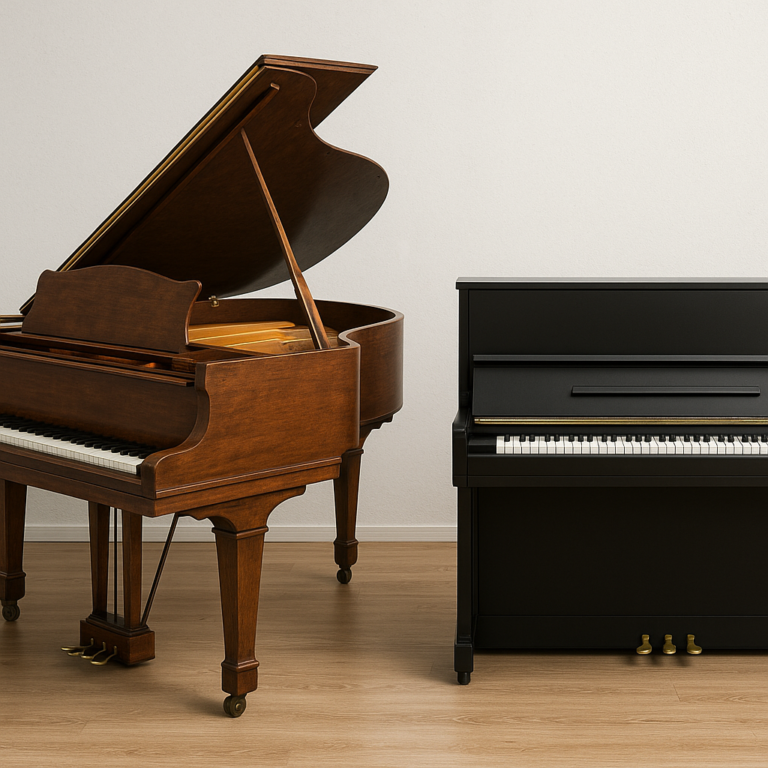
There is a reason why concert halls still feature grand pianos. It’s not just tradition; it’s physics. When you press a key on an acoustic piano, a hammer strikes a string, which vibrates against a soundboard, amplifying the sound through the air. This creates a complex web of harmonics and overtones that no speaker can perfectly replicate.
1. The Unmatched Nuance of Hammer-on-String Mechanics
The mechanical action of an acoustic piano is a marvel of engineering. It allows for infinite gradations of volume. You can play a note softly it’s barely a whisper, or strike it with enough force to make the room shake.
- Dynamic Range: The difference between pp (pianissimo) and fff (fortissimo) is vast.
- Touch Sensitivity: You can “shape” a note after it’s struck by varying your finger pressure, a technique impossible on most digital models.
- The “Aftertouch”: On a grand piano, the escapement mechanism allows for rapid repetition, letting you play trills and fast passages with incredible precision.
Pro Tip: If you are training for a conservatory exam or a classical career, the acoustic action is non-negotiable. As noted by experts at MusicNotes, “It’s impossible to replace the sound and touch of an acoustic piano.”
2. The Resonant Soul of a Full Soundboard
When you play an acoustic piano, the entire instrument vibrates. The soundboard acts like a giant speaker cone, filling the room with a rich, warm tone that surrounds you. This acoustic projection is why pianists can play without amplification in large halls.
- Natural Reverb: The sound bounces off the walls and the piano’s own body, creating a natural reverb.
- Harmonic Complexity: Every note triggers sympathetic vibrations in other strings, adding depth and richness to the sound.
3. The Timeless Investment Value of Grand and Upright Pianos
While digital pianos lose value the moment you unbox them, a well-maintained acoustic piano can actually appreciate in value. A vintage Steinway or a pristine Kawai can be an heirloom passed down for generations.
- Longevity: With proper care, an acoustic piano can last 60 to 10+ years.
- Resale Market: There is a robust market for used acoustic pianos, whereas digital models often become obsolete within a decade.
👉 Shop Acoustic Pianos on:
- Yamaha: Amazon Search | Yamaha Official
- Kawai: Sweetwater Search | Kawai Official
- Steinway & Sons: Musician’s Friend Search | Steinway Official
🎛️ The Digital Revolution: Pros of Modern Electronic Keyboards
If the acoustic piano is a classic novel, the digital piano is a blockbuster movie with special effects. It’s not trying to be the same thing; it’s trying to be better at being convenient.
1. Headphone Jacks and Silent Practice for Night Owls
This is the killer feature of the digital piano. Imagine practicing your Rachmaninoff at 2 AM without your landlord banging on the ceiling. With a pair of headphones, the world goes silent, and the music is yours alone.
- Privacy: Perfect for apartments, dorms, and shared homes.
- Focus: No external distractions; just you and the keys.
2. Portability and Space-Saving Designs for Small Apartments
Not everyone has a spare room for a grand piano. Digital pianos come in slim console styles or portable slab formats that can fit in a closet or be moved with one hand.
- Weight: A portable digital piano weighs 20–40 lbs. An upright acoustic? 40+ lbs.
- Footprint: Many digital consoles are as shallow as a bookshelf.
3. Built-in Features: MIDI, Recording, and Connectivity Magic
Digital pianos are computers with keys. They offer features that would cost thousands in a studio setup.
- MIDI Connectivity: Connect to your computer to use learning apps like Simply Piano or recording software like GarageBand.
- Multiple Voices: Switch from a Steinway sound to a harpsichord, organ, or strings with the press of a button.
- Recording: Record your practice sessions instantly to review your progress.
4. Zero Maintenance: No Tuning, No Humidity Woes
Forget about the $150 tuning bill every six months. Digital pianos never go out of tune. They are immune to humidity, temperature swings, and the dreaded “sticky key” caused by felt swelling.
- Reliability: Turn it on, and it’s ready to play.
- Durability: No moving parts to break (mostly).
👉 Shop Digital Pianos on:
- Roland: Amazon Search | Roland Official
- Nord: Sweetwater Search | Nord Official
- Casio: Musician’s Friend Search | Casio Official
⚖️ The Great Showdown: Digital vs. Acoustic Pianos Compared
Let’s put them in the ring. We’ve analyzed the specs, the feel, and the wallet impact. Here is the head-to-head comparison based on our team’s testing and consumer insights.
1. Touch and Feel: Weighted Keys vs. Real Action
This is where the rubber meets the road. Can a digital piano fool a classical pianist?
| Feature | Acoustic Piano | Digital Piano (High-End) | Digital Piano (Budget) |
|---|---|---|---|
| Action Type | Real hammer & string | Graded Hammer Action (Simulated) | Semi-weighted or Spring-loaded |
| Weighted Keys | Yes (Natural) | Yes (Very Close) | Sometimes (Often inconsistent) |
| Repetition Speed | Extremely Fast | Fast (Good for trills) | Slow (Sticky keys) |
| Dynamic Control | Infinite | Limited (Sample layers) | Very Limited |
| Verdict | 🏆 Winner | Runner-up | ❌ Loser |
- The Nuance Gap: Even the best digital pianos, like the Nord Grand or Yamaha AvantGrand, use multi-layer sampling. This means they record a key at different volumes. If you press a key slightly harder than the sample allows, the sound might jump to the next layer abruptly, breaking the illusion.
- The “Plastic” Feel: Budget digital pianos often use plastic keys that feel light and hollow. They fail to build the finger strength required for advanced classical repertoire.
2. Sound Quality: Sampled Audio vs. Organic Acoustics
- Acoustic: The sound is generated by physics. It changes slightly every time you play, depending on the room temperature, humidity, and how hard you hit the key. It’s alive.
- Digital: The sound is a recording. High-end models use stereo sampling and resonance modeling to mimic the sympathetic vibrations of strings.
Quote from Liberty Park Music: “A high-end digital piano could sound better than a low-end acoustic piano.” This is true! A $3,0 digital often sounds better than a $2,0 used upright that hasn’t been tuned in years.
3. Cost Analysis: Upfront Price vs. Long-Term Ownership Costs
- Upfront Cost:
Acoustic: Entry-level uprights start around $3,0–$5,0. Grands start at $10,0+.
Digital: Quality portable models start at $50. Console models range from $1,0 to $4,0. - Ongoing Costs:
Acoustic: Tuning ($150 x 2/year), regulation ($50 every few years), moving ($30+).
Digital: Electricity (negligible), occasional software updates, no tuning.
4. Durability and Lifespan: Decades vs. Generations
- Acoustic: Built to last a century. The wood and metal can be repaired and restored.
- Digital: Electronics have a lifespan of 15–20 years. When the motherboard dies or the screen fails, the piano is often e-waste. Technology moves fast, and your 10-year-old digital piano might not support modern USB-C or MIDI 2.0 standards.
🎓 Which Piano is Best for Beginners? A Teacher’s Perspective
We’ve asked the teachers at Piano Brands™, and the answer isn’t a simple “yes” or “no.” It depends on who the beginner is.
- The Serious Classical Student: If your child is taking lessons with a strict teacher and aims for conservatory, start with an acoustic or a high-end hybrid. They need to develop the correct touch and strength. A cheap digital will teach them bad habits.
- The Casual Hobbyist: If you just want to play pop songs, accompany yourself, or have fun with apps, a digital piano is perfect. The headphone feature encourages more practice time because you won’t disturb the family.
- The Budget-Conscious Parent: If you aren’t sure if your child will stick with it, a digital piano is the lower-risk investment. You can resell it easily if they quit.
Curiosity Gap: But what if you want the feel of an acoustic with the features of a digital? Is there a middle ground? (Hint: Yes, and we’ll get to that in the “Hybrid” section later!)
🏠 Space and Lifestyle: Choosing the Right Fit for Your Home
Your living situation is often the deciding factor.
- The Apartment Dweller: If you live in a thin-walled apartment, an acoustic piano is a nightmare. You’ll get noise complaints. A digital piano with headphones is your only viable option.
- The Large Home Owner: If you have a dedicated music room and the budget, an acoustic piano adds value and beauty to your home. It’s a piece of art.
- The Giging Musician: If you play in bands, you need portability. A digital stage piano like the Fender Rhodes or Nord Stage is essential. You can’t drag a grand piano to a coffee shop gig.
🎼 Sheet Music and Copyright: Navigating Free vs. Licensed Scores
Once you have your piano, you need music. But wait—can you just download any PDF you find online?
Is Free Sheet Music Legal? The Copyright Conundrum
Not all free sheet music is legal.
- Public Domain: Music composed before 1928 (in the US) is generally in the public domain. You can legally download and print versions of Bethoven or Mozart.
- Copyrighted Music: Modern arrangements of classical music, pop songs, and film scores are copyrighted. Downloading a free PDF of a new arrangement of “Let It Go” from a random blog is often illegal.
Why Does Some Free Sheet Music Sound Off? Notation Errors Explained
Have you ever downloaded a “free” version of a famous piece, and it sounded wrong?
- Bad Transcription: Many free sites are run by amateurs who make mistakes in the notes or rhythm.
- Poor Engraving: The spacing is off, making it hard to read.
- Missing Dynamics: The expression marks (crescendo, staccato) are often omitted, making the piece sound flat.
When to Use Free vs. Licensed Sheet Music: A Practical Guide
- Use Free: For public domain classics where you just need the notes.
- Use Licensed: For modern arrangements, pop songs, or if you need high-quality, error-free engraving. Sites like MusicNotes or Sheet Music Plus offer legal, high-quality downloads.
🛠️ Maintenance Matters: Tuning, Cleaning, and Care Tips
- Acoustic Care:
Tuning: Hire a certified technician twice a year.
Humidity Control: Keep the room between 45-60% humidity. Use a Dampp-Chaser system.
Cleaning: Dust the keys with a soft, dry cloth. Never use liquid cleaners. - Digital Care:
Dusting: Use a microfiber cloth.
Power: Always use a surge protector.
Updates: Check the manufacturer’s website for firmware updates to improve sound or fix bugs.
🚀 Future-Proofing Your Musical Journey: Technology Trends
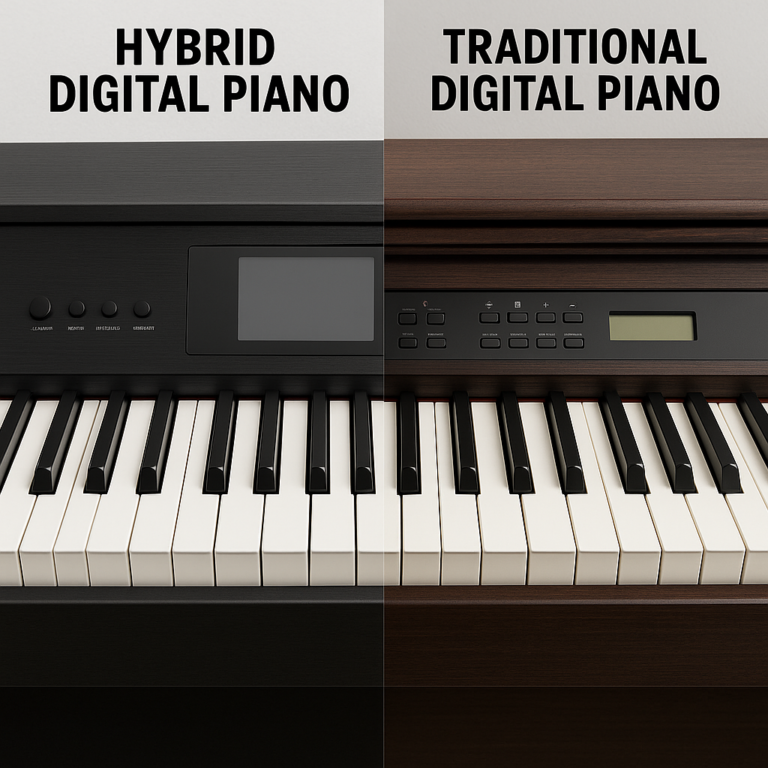
The line between acoustic and digital is blurring. Enter the Hybrid Piano.
- What is it? A piano with a real acoustic action (hamers and keys) but digital sound generation.
- Why it matters: You get the authentic touch of a grand piano with the silent practice and connectivity of a digital.
- Top Models: Yamaha NU1X, Kawai AnyTime, Kawai Novus NV10.
- The Future: AI integration, immersive VR learning environments, and even better sound modeling are on the horizon.
🏆 Final Verdict: Which Should You Own?
So, we’ve covered the history, the mechanics, the costs, and the lifestyle factors. But the million-dollar question remains: Which one is right for YOU?
If you are a classical purist with the space and budget, the acoustic piano is your soulmate. It offers an experience that is ireplaceable and timeless. The sound, the touch, the resonance—it’s a journey of discovery that never ends.
If you are a modern musician, a busy parent, or someone living in an apartment, the digital piano is your best friend. It offers flexibility, convenience, and features that an acoustic simply cannot match.
But here’s the twist: You don’t have to choose forever. Many professionals own both. They use the digital for late-night practice and songwriting, and the acoustic for performance and deep practice.
The Bottom Line: The best piano is the one you will play every day. Don’t let the “perfect” instrument stop you from making music. Whether it’s a $50 Casio or a $50,0 Steinway, the magic happens between your ears and your fingers.
Ready to take the plunge? Check out our Piano Buying Guide for step-by-step advice on finding your perfect match.
📚 Conclusion

The debate between digital vs. acoustic pianos isn’t about which is objectively “better.” It’s about which fits your life, your goals, and your budget.
- Acoustic Pianos offer authenticity, resale value, and a rich, organic sound that has inspired musicians for centuries. They are an investment in tradition and art.
- Digital Pianos offer convenience, versatility, and accessibility. They are the gateway to music for millions of people who might otherwise never play.
As we’ve seen, the technology in digital pianos has advanced to the point where they can satisfy even the most discerning ears, provided you choose a high-quality model. However, nothing can fully replicate the physical connection of a hammer striking a string.
Ultimately, the decision comes down to your personal priorities. Do you value the warmth of wood or the cool of silicon? Do you need silent practice or grand resonance? The answer lies in your unique musical journey.
Final Recommendation:
- Beginers on a budget: Start with a digital piano with weighted keys (e.g., Yamaha P-45, Roland FP-30).
- Serious students: Invest in a quality acoustic or a hybrid.
- Professionals: Own both, or choose a high-end hybrid for the best of both worlds.
Remember, the best instrument is the one that inspires you to play. So, sit down, press a key, and let the music begin!
🔗 Recommended Links
Ready to find your perfect piano? Here are our top picks and resources:
- Best Digital Pianos for Beginners:
Yamaha P-45: Amazon Search | Sweetwater Search
Roland FP-30X: Musician’s Friend Search | Roland Official - Best Acoustic Pianos:
Yamaha U1: Amazon Search | Yamaha Official
Kawai K-20: Sweetwater Search | Kawai Official - Hybrid Pianos:
Yamaha NU1X: Amazon Search | Yamaha Official - Books for Piano Learners:
“The Piano Book” by Larry Fine: Amazon Link
“Alfred’s Basic Adult Piano Course”: Amazon Link
❓ FAQ

Is a digital piano good for learning compared to an acoustic piano?
Yes, absolutely. For most beginners, a digital piano is an excellent starting point. It allows for silent practice, which encourages more frequent playing, and often includes built-in learning tools and metronomes. However, if your goal is to become a classical concert pianist, you will eventually need to transition to an acoustic piano to develop the necessary touch sensitivity and dynamic control.
Read more about “🎹 How to Choose the Perfect Home Piano Brand (2026 Guide)”
What are the main disadvantages of digital pianos versus acoustic pianos?
The primary disadvantages are:
- Sound Authenticity: Even the best digital pianos cannot perfectly replicate the complex harmonics and resonance of a real string.
- Lifespan: Digital pianos have a shorter lifespan due to electronic obsolescence and potential component failure.
- Resale Value: They depreciate much faster than acoustic pianos.
- Power Dependency: They require electricity to function, whereas acoustics do not.
Read more about “🎹 Grand vs. Upright Pianos: The Ultimate 2026 Showdown”
Can a digital piano replace an acoustic piano for professional use?
In many contexts, yes. For pop, rock, jazz, and film scoring, digital pianos are often preferred due to their versatility, recording capabilities, and portability. Many professional pianists use high-end digital pianos like the Nord Stage or Yamaha CP8 for live performances. However, for classical solo recitals or concert halls, the acoustic piano remains the standard.
Read more about “🎹 New vs. Used Pianos: 5 Hidden Benefits You Must Know (2026)”
How does the touch and feel of a digital piano compare to an acoustic one?
High-end digital pianos use graded hammer action to closely mimic the weight of an acoustic piano, with heavier keys in the bass and lighter keys in the treble. However, they still lack the infinite dynamic range and mechanical feedback of a real action. Budget digital pianos often have semi-weighted or synth-action keys that feel light and unresponsive, which can hinder the development of proper technique.
Why do some digital pianos feel “plastic”?
Lower-cost models use plastic keys and spring mechanisms instead of wood and hammers. This results in a lighter, less authentic feel. Always test the keys before buying to ensure they have the weight and resistance you need.
Read more about “🎹 Piano Lifespan: 10 Truths to Extend Your Instrument’s Life (2026)”
📖 Reference Links
- MusicNotes: Acoustic vs. Digital Pianos: Pros, Cons, and Key Specifications
- Liberty Park Music: Digital Piano vs. Acoustic Piano Guide
- Music Stack Exchange: Is a digital or acoustic piano a better option for a beginner?
- Steinway & Sons: Piano History and Craftsmanship
- Yamaha: Acoustic and Digital Piano Technology
- Kawai: Piano Innovation and Hybrids
- Roland: Digital Piano Features and Technology