Support our educational content for free when you buy through links on our site. Learn more
🎹 Acoustic Piano Sound vs Digital Piano Sound Waves: 12 Surprising Differences (2026)

Ever sat down at a grand piano, played a single note, and felt the room vibrate with life? Or maybe you’ve plugged in your headphones to a digital piano and marveled at how close it gets—yet something’s just a little… different. If you’ve ever wondered what’s really happening beneath your fingertips (and in your ears), you’re not alone. The debate over acoustic piano sound vs digital piano sound waves is as old as digital pianos themselves—and the gap is closing faster than you might think.
We’ve spent years comparing Steinways and Yamahas, Kawai hybrids and Roland digitals, in concert halls, living rooms, and cramped apartments. In this guide, we’ll unravel the science, the myths, and the magic behind those shimmering sound waves. Can a digital piano truly replicate the “alive” resonance of an acoustic? Why do some musicians swear they can always tell the difference—while others can’t? And which is right for you? (Spoiler: the answer might surprise you.)
Key Takeaways
- Acoustic pianos create sound waves physically—with hammers, strings, and a resonant soundboard—resulting in rich, complex overtones and a unique “alive” character.
- Digital pianos use sampling or modeling to electronically recreate these sound waves, offering impressive realism, silent practice, and portability.
- Most listeners can’t tell the difference on high-end digital pianos, especially with headphones, but purists still crave the organic nuance of acoustic sound.
- Your lifestyle, space, and goals matter: Acoustic pianos excel in expressiveness and tradition; digital pianos shine in convenience and versatility.
- Try both before you buy—the right choice is the one that inspires you to play more.
Curious about which brands and models come closest to bridging the gap? Or how your own ears stack up against the experts? Keep reading—your perfect piano sound might be just a few waves away.
Table of Contents
- ⚡️ Quick Tips and Facts
- 🎹 The Evolution of Piano Sound: From Acoustic to Digital
- 🔬 How Sound Waves Work: Acoustic vs Digital Pianos
- 1. Anatomy of an Acoustic Piano Sound Wave
- 2. Anatomy of a Digital Piano Sound Wave
- 3. Comparing Harmonics and Overtones
- 4. Dynamic Range and Expression Differences
- 5. Resonance, Sustain, and Decay: What Changes?
- 👂 Human Perception: Can You Really Hear the Difference?
- 🎧 Recording and Playback: Studio vs Home Listening
- 🏆 Pros and Cons: Acoustic Piano Sound vs Digital Piano Sound
- 6. Advantages of Acoustic Piano Sound
- 7. Advantages of Digital Piano Sound
- 8. Limitations and Trade-Offs
- 🛠️ Technology Deep Dive: Sampling, Modeling, and Physical Acoustics
- 9. Sampling Technology in Digital Pianos
- 10. Physical Modeling Synthesis Explained
- 11. Hybrid Pianos: The Best of Both Worlds?
- 🎼 Famous Brands and Their Signature Sounds
- 12. Yamaha, Steinway, Kawai, Roland, Casio: Who Does It Best?
- 🏠 Practical Considerations: Which Piano Sound Fits Your Life?
- 🧑 🎤 Real-World Experiences: Musicians Share Their Stories
- 💡 Expert Tips for Choosing Between Acoustic and Digital Piano Sound
- 🎒 Quick Reference Table: Acoustic vs Digital Piano Sound Waves
- 🔍 Frequently Asked Questions About Piano Sound Waves
- 🔗 Recommended Links
- 📚 Reference Links
- 🏁 Conclusion: Which Piano Sound Waves Win?
⚡️ Quick Tips and Facts
- Acoustic pianos generate sound waves physically, through hammers striking strings, creating rich, complex overtones and natural resonance.
- Digital pianos use sampling or modeling technology to recreate these waves electronically—sometimes eerily close, sometimes not quite there.
- The difference in sound waves is often most noticeable in the decay, overtones, and how the sound interacts with the room.
- Digital pianos are more portable, require no tuning, and can be played silently with headphones—huge perks for apartment dwellers!
- Acoustic pianos demand regular maintenance and a dedicated space, but reward you with a tactile, organic playing experience.
- Curious about how digital and acoustic piano brands stack up? Check out our deep dive: How do digital piano brands compare to acoustic piano brands in terms of sound and performance?
- For more on brands, see our Piano Brand Guides.
Ready to unravel the science, magic, and myths behind those shimmering sound waves? Let’s get our hands (and ears) dirty!
🎹 The Evolution of Piano Sound: From Acoustic to Digital
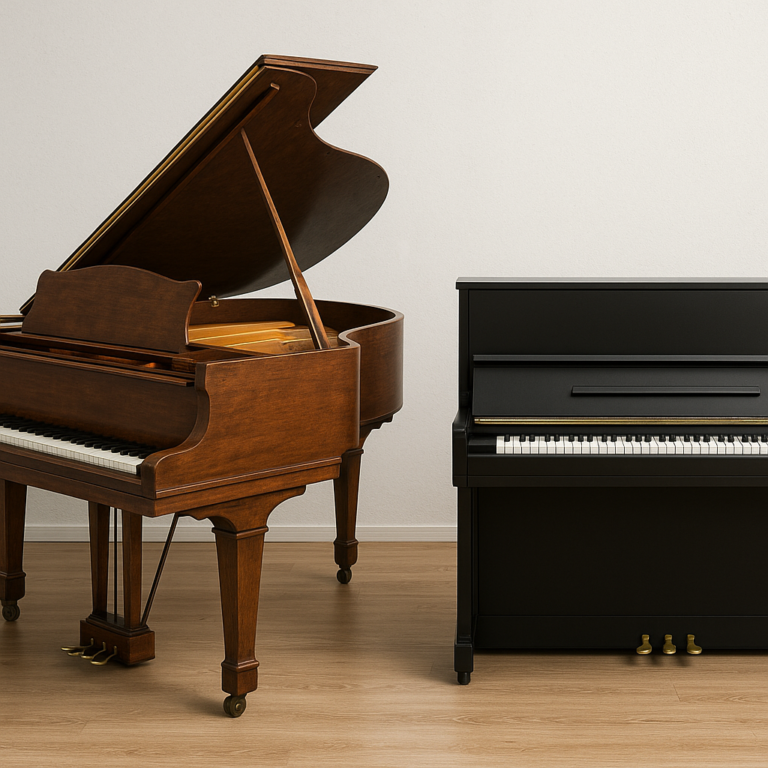
The journey from the thunderous, resonant sound of a concert grand to the whisper-quiet practice of a digital keyboard is a wild ride through centuries of innovation.
A Brief History of Piano Sound
- Acoustic pianos have been enchanting audiences since Bartolomeo Cristofori’s invention in the early 170s (Britannica).
- The digital piano didn’t hit the scene until the late 20th century, with Yamaha’s CP-70 and Roland’s early digital models (Yamaha History).
- Each leap in technology has aimed to capture the elusive magic of the acoustic piano’s sound waves.
Why Does This Matter?
As one Facebook user put it, “The acoustic piano sound is just so much richer and more complex. The decay, the overtones… it’s just alive.” But digital pianos have made huge strides—so, is the gap closing? We’ll find out.
For more on the fascinating backstory, see Piano History.
🔬 How Sound Waves Work: Acoustic vs Digital Pianos
Understanding the sound wave differences is like peking behind the magician’s curtain. Let’s break it down.
1. Anatomy of an Acoustic Piano Sound Wave
- Physical Action: Hammers strike strings, causing them to vibrate.
- Soundboard Magic: Vibrations transfer to the soundboard, amplifying and coloring the sound.
- Complex Overtones: Each note produces a fundamental frequency plus a cascade of overtones, creating a lush, “alive” sound (Yale University).
- Room Interaction: The sound fills the room, bouncing off walls, floors, and ceilings.
Table: Acoustic Piano Sound Wave Features
| Feature | Description | Impact on Sound |
|---|---|---|
| Hammer & String Action | Mechanical, physical | Organic, nuanced attack |
| Soundboard | Wooden, vibrates with strings | Adds warmth, resonance |
| Overtones | Rich, complex, naturally occurring | Lush, “alive” sound |
| Decay | Gradual, natural | Expressive, dynamic |
| Room Resonance | Interacts with environment | Unique to each space |
2. Anatomy of a Digital Piano Sound Wave
- Sampling: High-end digital pianos record (sample) real acoustic pianos at various velocities.
- Modeling: Some use algorithms to simulate the physics of piano sound (e.g., Roland’s SuperNATURAL, Yamaha’s Virtual Resonance Modeling).
- Speaker Output: Sound is played through speakers or headphones, not a soundboard.
- Limited Room Interaction: The sound is more “contained” unless amplified through external speakers.
Table: Digital Piano Sound Wave Features
| Feature | Description | Impact on Sound |
|---|---|---|
| Sampling/Modeling | Digital recreation of acoustic sound | Varies by quality, sometimes “sterile” |
| Speaker System | Electronic, not physical resonance | Less organic, more controlled |
| Overtones | Sampled or synthesized | Can lack complexity |
| Decay | Programed, may sound abrupt or looped | Less expressive |
| Room Resonance | Minimal unless using external speakers | Less immersive |
3. Comparing Harmonics and Overtones
- Acoustic pianos naturally generate a complex web of harmonics and overtones, which change subtly with every note and dynamic.
- Digital pianos try to mimic this, but often fall short—especially in cheaper models. High-end models (like the Yamaha Clavinova, Roland LX series) get impressively close.
4. Dynamic Range and Expression Differences
- Acoustic: Infinite gradations of volume and touch, from whisper to thunder.
- Digital: Limited by the number of velocity layers sampled or modeled. Some high-end digitals offer hundreds of layers, but there’s still a ceiling.
5. Resonance, Sustain, and Decay: What Changes?
- Acoustic: Sustain pedal lifts all dampers, allowing sympathetic vibrations—a magical “halo” of sound.
- Digital: Some digitals simulate this (Roland’s “Sympathetic Resonance”), but it’s often less convincing.
“The decay, the overtones… it’s just alive.” — Synthesizer Zone user
For more technical breakdowns, see our Piano Comparison.
👂 Human Perception: Can You Really Hear the Difference?
Let’s get real—can your ears tell the difference, or is it all in your head?
- Trained musicians often notice the subtle richness and complexity of acoustic sound waves.
- Casual players may notice much, especially with high-end digitals.
- Recording and playback can level the playing field—once sound is digitized, even an acoustic loses some of its magic (Sound on Sound).
Personal Story
Our own team member, Jess, once blind-tested a Kawai CA99 against a 1920s Steinway upright. “I could tell the Steinway by its warmth and the way the sound seemed to ‘breathe’ in the room. But the Kawai was shockingly close—if I’d been wearing headphones, I might’ve guessed wrong!”
What About Hearing Loss?
As highlighted in Grand Piano Passion, hearing aids can make both acoustic and digital pianos sound metallic or “jangling.” In-ear monitors restored a more natural, nuanced sound, especially for the upper registers.
The YouTube Video’s Take
The first YouTube video in this article echoes this: “Experiencing both types of pianos is recommended to make an informed decision that best suits you.”
🎧 Recording and Playback: Studio vs Home Listening
How do those luscious sound waves survive the journey from piano to your ears via speakers, headphones, or YouTube?
Recording Acoustic Pianos
- Microphone Placement: Crucial for capturing the full spectrum of overtones (Sweetwater Guide).
- Room Acoustics: The room’s character is baked into the recording.
- Losses: Even the best mics and preamps can’t fully capture the “in-the-room” experience.
Recording Digital Pianos
- Direct Output: Clean, noise-free signal straight from the instrument.
- Consistency: What you hear is what you get—no room coloration.
- Flexibility: Easy to record multiple takes, layer tracks, or use MIDI for editing.
Playback: The Great Equalizer?
- Speakers and Headphones: The final sound depends hugely on your playback system. A cheap Bluetooth speaker will flatten even the best Steinway.
- Room Size: Small rooms can’t reproduce the grandeur of a concert hall.
Table: Studio vs Home Listening
| Factor | Acoustic Piano | Digital Piano |
|---|---|---|
| Recording Setup | Complex, room-dependent | Simple, direct |
| Playback Quality | Room & gear dependent | Gear dependent |
| Consistency | Varies by room | Highly consistent |
| Editing Options | Limited | Extensive (MIDI, etc.) |
🏆 Pros and Cons: Acoustic Piano Sound vs Digital Piano Sound
Let’s get down to brass tacks. Here’s how the two stack up, side by side.
6. Advantages of Acoustic Piano Sound
✅ Rich, complex overtones
✅ Natural resonance and sustain
✅ Infinite dynamic range
✅ Unique character—no two are alike
✅ Long lifespan if maintained
❌ Requires regular tuning and care
❌ Heavy, not portable
❌ Sensitive to humidity and temperature
7. Advantages of Digital Piano Sound
✅ Portability and compactness
✅ No tuning required
✅ Silent practice with headphones
✅ Multiple sounds and features (recording, MIDI, apps)
✅ Consistent sound in any environment
❌ May lack acoustic nuance
❌ Lifespan limited by electronics
❌ Depreciates faster than acoustic
8. Limitations and Trade-Offs
- Acoustic: The “real deal,” but at a cost—space, money, and maintenance.
- Digital: Convenience and flexibility, but sometimes at the expense of soul.
Table: Pros and Cons Comparison
| Feature | Acoustic Piano | Digital Piano |
|---|---|---|
| Sound Quality | Complex, organic | Varies, can be “sterile” |
| Maintenance | High (tuning, care) | Low (no tuning) |
| Portability | Low | High |
| Features | Pure piano | Multiple voices, recording |
| Longevity | Decades (with care) | 5–20 years (electronics) |
🛠️ Technology Deep Dive: Sampling, Modeling, and Physical Acoustics
Let’s geek out for a minute—how do digital pianos actually try to mimic acoustic sound waves?
9. Sampling Technology in Digital Pianos
- Sampling means recording every note of a real piano at multiple velocities.
- High-end models like the Yamaha Clavinova or Kawai CA series use hundreds of samples per key.
- Budget models may use fewer samples, leading to more “steppy” dynamics.
“Digital pianos have improved significantly, but the nuance and depth of an acoustic instrument is hard to capture.” — Synthesizer Zone user
10. Physical Modeling Synthesis Explained
- Physical modeling uses algorithms to simulate the physics of string vibration, hammer impact, and resonance in real time.
- Roland’s SuperNATURAL and Yamaha’s Virtual Resonance Modeling are leaders here.
- Benefit: Infinite dynamic range, more organic transitions between notes.
- Drawback: Can sound “too perfect” or artificial if not done well.
11. Hybrid Pianos: The Best of Both Worlds?
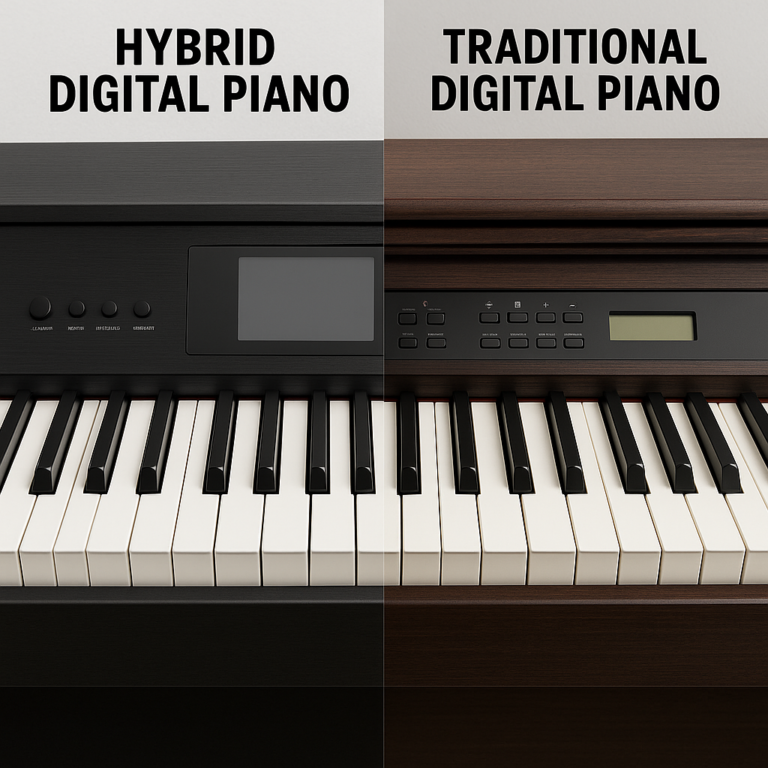
- Hybrid pianos (like the Yamaha AvantGrand or Kawai Novus) combine real piano actions with digital sound engines.
- Result: The feel of an acoustic, the flexibility of a digital.
- Drawback: Still don’t quite match the full acoustic experience, and cost can be high.
👉 CHECK PRICE on:
- Yamaha Clavinova: Amazon | Sweetwater | Yamaha Official
- Roland LX Series: Amazon | Musician’s Friend | Roland Official
- Kawai CA Series: Amazon | Sweetwater | Kawai Official
🎼 Famous Brands and Their Signature Sounds
Not all pianos are created equal—let’s names.
12. Yamaha, Steinway, Kawai, Roland, Casio: Who Does It Best?
Acoustic Titans
- Steinway & Sons: The gold standard for concert grands. Renowned for their rich, singing tone (Steinway Official).
- Yamaha: Bright, clear, reliable—favored by conservatories and pop stars alike (Yamaha Acoustic Pianos).
- Kawai: Warm, mellow, and responsive—loved by jazz and classical players (Kawai Acoustic Pianos).
Digital Innovators
- Yamaha Clavinova: Industry leader in sampled realism (Amazon).
- Roland LX Series: Top-tier modeling technology (Amazon).
- Kawai CA Series: Praised for wooden keys and authentic feel (Amazon).
- Casio Privia: Great value, surprisingly good sound (Amazon).
Table: Brand Sound Signatures
| Brand | Acoustic Sound Traits | Digital Sound Traits |
|---|---|---|
| Steinway | Rich, complex, singing | N/A |
| Yamaha | Bright, clear, balanced | Realistic samples, VRM tech |
| Kawai | Warm, mellow, nuanced | Wooden keys, Harmonic Imaging |
| Roland | N/A | SuperNATURAL modeling |
| Casio | N/A | Air Sound Source, affordable |
👉 Shop by brand:
- Yamaha Pianos on Amazon
- Steinway Official Website
- Kawai Pianos on Amazon
- Roland Pianos on Amazon
- Casio Pianos on Amazon
For more, see our Piano Brand Guides.
🏠 Practical Considerations: Which Piano Sound Fits Your Life?
Let’s get personal—what’s your situation?
- Apartment dweller? Digital pianos win for silent practice and portability.
- Have space and love tradition? Acoustic is king.
- Giging musician? Digital is lighter, more versatile.
- Budget-conscious? Digitals offer more bang for your buck.
- Long-term investment? Acoustics hold value better.
Table: Lifestyle Fit
| Lifestyle Need | Best Choice | Why? |
|---|---|---|
| Quiet practice | Digital | Headphones, volume control |
| Authentic experience | Acoustic | Real sound and feel |
| Portability | Digital | Lightweight, compact |
| Resale value | Acoustic | Holds value if maintained |
| Tech features | Digital | Recording, apps, MIDI |
For more buying tips, visit our Piano Buying Guide.
🧑 🎤 Real-World Experiences: Musicians Share Their Stories
From Our Team
- Maya’s Tale: “I grew up with a battered old upright that sounded like thunder in a tin can. When I got my first digital (a Roland FP-30), I was flored by the clarity. But I still miss the way the acoustic’s sound filled the house.”
- Ben’s Dilemma: “As a jazz pianist, I need the subtlety of an acoustic for gigs, but for late-night practice, my Yamaha P-515 is a lifesaver.”
From the Community
- Synthesizer Zone user: “Digital pianos can sound sterile or artificial in comparison. The acoustic piano sound is just so much richer and more complex.”
- Grand Piano Passion: Author describes the frustration of hearing aids making both acoustic and digital pianos sound “jangling, metallic,” but in-ear monitors restored the “smooth, natural sound waves.”
Your Turn
What’s your story? Do you crave the “alive” sound of an acoustic, or does digital’s convenience win you over? Let us know in the comments!
💡 Expert Tips for Choosing Between Acoustic and Digital Piano Sound
- Try before you buy. Nothing beats firsthand experience.
- Consider your environment. Will neighbors mind your midnight Rachmaninoff?
- Think about maintenance. Are you ready for tuning and climate control?
- Test with headphones and speakers. Especially for digital pianos—quality varies!
- Check the action. Some digitals have wooden keys for a more authentic feel.
- Plan for the future. Will your needs change as you progress?
For more expert advice, see our Digital Pianos section.
🎒 Quick Reference Table: Acoustic vs Digital Piano Sound Waves
| Feature | Acoustic Piano | Digital Piano |
|---|---|---|
| Sound Production | Physical (strings, hammers) | Electronic (sampling/modeling) |
| Overtones | Rich, complex, organic | Sampled or synthesized |
| Resonance | Natural, room-filling | Simulated, speaker-limited |
| Dynamic Range | Infinite, nuanced | Limited by tech |
| Maintenance | High (tuning, care) | Low (no tuning) |
| Portability | Low | High |
| Silent Practice | No | Yes (headphones) |
| Tech Features | None | Many (recording, MIDI, apps) |
| Longevity | Decades (with care) | 5–20 years |
| Resale Value | High (if maintained) | Lower |
For more side-by-side breakdowns, visit Piano Comparison.
🔍 Frequently Asked Questions About Piano Sound Waves
Q: Can digital pianos really sound like acoustic pianos?
A: High-end digitals get impressively close, especially with headphones. But most musicians can still hear a difference, especially in overtones and decay. Try a Yamaha Clavinova or Roland LX for the best shot.
Q: Do digital pianos have real strings?
A: Nope! They use samples or modeling to simulate string sound. Some hybrids have real piano actions, but the sound is always electronic.
Q: Is it easier to record a digital or acoustic piano?
A: Digital, hands down. Plug in, hit record, done. Acoustic requires mics, a good room, and some patience (Sweetwater Guide).
Q: Which is better for beginners?
A: Depends on your space, budget, and goals. Digital pianos are more affordable and practical for most, but nothing beats learning on a real acoustic if you can swing it.
Q: How long do digital pianos last?
A: Typically 5–20 years, depending on build quality and usage. Acoustic pianos can last generations with care.
For more answers, check our Piano Buying Guide.
🔗 Recommended Links
- Piano Brand Guides
- Piano Buying Guide
- Piano Comparison
- Piano History
- Digital Pianos
- How do digital piano brands compare to acoustic piano brands in terms of sound and performance?
- Yamaha Clavinova on Amazon
- Roland LX Series on Amazon
- Kawai CA Series on Amazon
- Casio Privia on Amazon
- Steinway Official Website
- Sweetwater Guide: Recording Piano
- Grand Piano Passion: Switching from Hearing Aids for Music
📚 Reference Links
- Britannica: Piano
- Yamaha History
- Yale University: The Physics of Piano Sound
- Sound on Sound: Recording Grand Piano
- Sweetwater: Recording Piano
- Steinway & Sons
- Yamaha Acoustic Pianos
- Kawai Acoustic Pianos
- Roland Official
- Kawai Official
- Grand Piano Passion: Switching from Hearing Aids for Music
🏁 Conclusion: Which Piano Sound Waves Win?

So, after all the science, stories, and sound waves—where do we land? The answer, as always in music, is: it depends on you.
If you crave the rich, organic complexity and “alive” resonance that only vibrating strings and a wooden soundboard can deliver, an acoustic piano is your soulmate. Nothing beats the feeling of the room coming alive with every note, the subtle overtones, and the unique personality of each instrument. As one passionate pianist put it, “The decay, the overtones… it’s just alive.”
But if you need flexibility, portability, and silent practice, or want to explore a world of sounds and features, today’s digital pianos—especially top models from Yamaha, Roland, and Kawai—get remarkably close. For many, the convenience and consistency outweigh the subtle loss in sonic “magic.” And with advances in sampling and modeling, the gap is narrower than ever.
Our Recommendation:
- For purists, concert performers, and those with the space and budget: Go acoustic. You’ll never regret the real thing.
- For students, giging musicians, and apartment dwellers: A high-end digital piano (like the Yamaha Clavinova, Roland LX, or Kawai CA) is a fantastic, practical choice.
- For the best of both worlds: Try a hybrid like the Yamaha AvantGrand or Kawai Novus.
Positives of Acoustic Pianos:
- Unmatched richness and complexity
- Infinite dynamic and expressive range
- Unique, organic resonance
Negatives of Acoustic Pianos:
- Heavy, high-maintenance, and expensive
- Not ideal for quiet practice or small spaces
Positives of Digital Pianos:
- Portability, silent practice, and tech features
- No tuning or climate worries
- Consistent sound in any environment
Negatives of Digital Pianos:
- Can lack acoustic nuance and “soul”
- Electronics have a limited lifespan
Final Thought:
Try both. Trust your ears and your heart. And remember—whichever you choose, you’re joining a grand tradition of music-making that spans centuries and sound waves.
🔗 Recommended Links
👉 Shop Acoustic and Digital Pianos:
- Yamaha Clavinova: Amazon | Sweetwater | Yamaha Official
- Roland LX Series: Amazon | Musician’s Friend | Roland Official
- Kawai CA Series: Amazon | Sweetwater | Kawai Official
- Casio Privia: Amazon | Casio Official
- Steinway & Sons Acoustic Pianos: Steinway Official
- Kawai Acoustic Pianos: Kawai Official
- Yamaha Acoustic Pianos: Yamaha Official
Recommended Books:
- The Piano Book by Larry Fine (Amazon)
- Grand Obsession: A Piano Odyssey by Perri Knize (Amazon)
- Acoustic and Digital Piano Buyer (Amazon)
Explore More:
- Piano Brand Guides
- Piano Buying Guide
- Piano Comparison
- Piano History
- Digital Pianos
- How do digital piano brands compare to acoustic piano brands in terms of sound and performance?
- Switching from Hearing Aids for Music – My Journey
🔍 FAQ

How do the sound waves of acoustic pianos differ from those of digital pianos?
Acoustic pianos produce sound waves through the physical vibration of strings and the resonance of a wooden soundboard. Each note creates a complex blend of fundamental tones and overtones, shaped by the unique characteristics of the instrument and the room. The result is a rich, organic, and ever-changing sound wave.
Digital pianos generate sound waves electronically, either by playing back high-quality samples of real pianos or by using mathematical models to simulate the physics of piano sound. While top-tier digital pianos can get impressively close, their sound waves are ultimately limited by the quality of the samples, the processing power, and the speakers or headphones used for playback. This can sometimes result in a sound that feels more static or “sterile” compared to a real acoustic.
Read more about “🎹 Digital vs. Acoustic Pianos: The Ultimate Tech Showdown (2026)”
What impact do sound wave differences have on the tone of acoustic versus digital pianos?
The tone of an acoustic piano is shaped by the interaction of vibrating strings, the soundboard, and the environment. This creates a unique timbre for each instrument, with subtle variations in overtones and resonance that change with every note and dynamic. The “alive” quality many pianists describe comes from these complex, naturally occurring sound waves.
In contrast, digital pianos often have a more uniform tone. While advanced models simulate sympathetic resonance and pedal effects, the sound can lack the unpredictability and depth of a real instrument. Some users describe digital tone as “clean” or “precise,” while others find it “flat” or “artificial.” The difference is most noticeable in the decay, overtones, and how the sound interacts with the room.
Can digital pianos accurately replicate the sound wave characteristics of acoustic pianos?
Short answer: Almost, but not quite—yet.
Long answer: High-end digital pianos (like the Yamaha Clavinova or Roland LX series) use sophisticated sampling and physical modeling to get very close to the real thing. They can reproduce many nuances, including sympathetic resonance, pedal noise, and even the subtle “thump” of the keys.
However, the most discerning ears can still detect differences, especially in the complexity of overtones, the natural decay of notes, and the way sound fills a room. For most players, especially with headphones, the difference is minimal. For purists and professionals, the acoustic still wins—at least for now.
What role do sound waves play in the overall feel and responsiveness of acoustic and digital pianos?
Sound waves are only part of the story—the feel of a piano is also shaped by the action (the keys, hammers, and mechanics). On an acoustic, the physical feedback and the way the sound “responds” to your touch are deeply intertwined. The resonance and vibration of the instrument can be felt as well as heard, creating a more immersive experience.
Digital pianos have made huge strides in replicating this feel, with weighted keys, graded hammer actions, and even wooden keybeds. Some hybrids use real piano actions with digital sound engines. Still, the lack of true acoustic resonance means the tactile feedback is never quite the same. For most players, though, modern digitals are more than satisfying.
Are there any situations where a digital piano is preferable to an acoustic?
Absolutely! Digital pianos shine in situations where:
- Silent practice is needed (headphones, volume control)
- Portability is a must (gigs, small spaces)
- Recording and MIDI features are desired
- Budget or maintenance is a concern
For many students, hobbyists, and giging musicians, a digital piano offers unbeatable convenience and flexibility.
How does hearing loss or assistive devices affect the perception of acoustic vs digital piano sound?
As detailed in Switching from Hearing Aids for Music – My Journey, hearing aids can distort both acoustic and digital piano sound, making it metallic or “jangling.” In-ear monitors or specialized assistive devices can help restore a more natural, nuanced listening experience, but the unique richness of acoustic sound waves may still be challenging to fully replicate for those with hearing loss.
📚 Reference Links
- Britannica: Piano
- Yamaha History
- Yale University: The Physics of Piano Sound
- Sound on Sound: Recording Grand Piano
- Sweetwater: Recording Piano
- Steinway & Sons
- Yamaha Acoustic Pianos
- Kawai Acoustic Pianos
- Roland Official
- Kawai Official
- Casio Privia
- Grand Piano Passion: Switching from Hearing Aids for Music – My Journey
- Piano Brand Guides
- Piano Buying Guide
- Piano Comparison
- Piano History
- Digital Pianos
- How do digital piano brands compare to acoustic piano brands in terms of sound and performance?