Support our educational content for free when you buy through links on our site. Learn more
🇺🇸 How Many Piano Manufacturers Are There in the US? (2026)


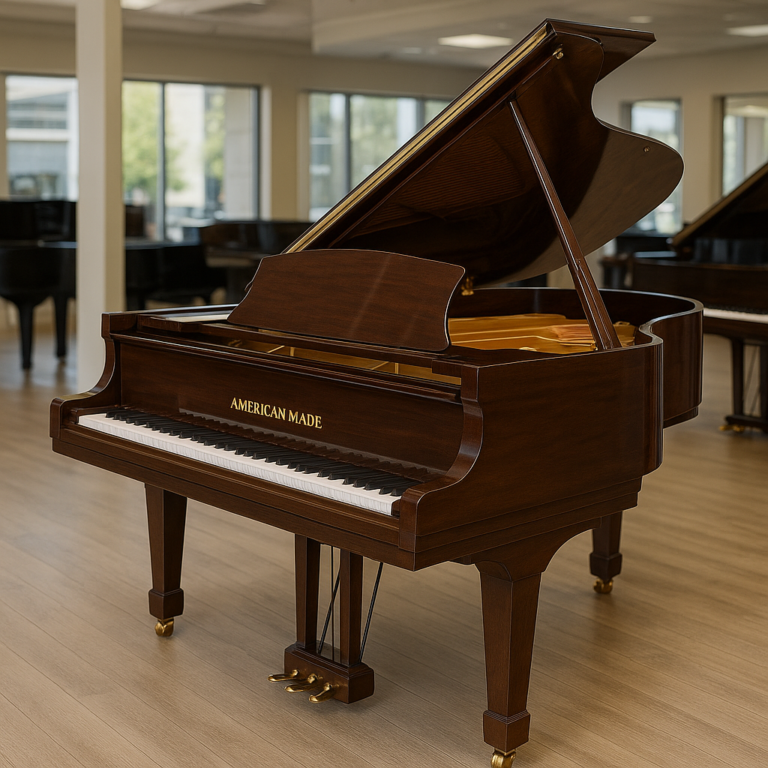
The hard truth is that only five to seven companies truly manufacture acoustic pianos on American soil today, a stark drop from the dozens that once dominated the industry. When you ask how many piano manufacturers are there in the US, the answer isn’t a simple number but a story of survival, consolidation, and the enduring spirit of craftsmanship.
Most “American” brands you see in stores are actually ghosts of the past, with their instruments built in factories across Asia. We once walked into a showroom in Ohio, expecting to see a row of newly built Baldwins, only to find a single grand piano and a stack of shipping crates from China.
In the early 190s, the US was the global capital of piano production, boasting over 30 active factories in cities like Cincinnati and Boston. Today, that legacy lives on in the quiet workshops of Steinway, Mason & Hamlin, and a few boutique builders who refuse to let the American sound die.
Key Takeaways
- The Real Count: Only 5–7 active manufacturers (like Steinway, Mason & Hamlin, and Baldwin Grands) build acoustic pianos entirely in the US.
- The “Brand” Trap: Many famous American names (Knabe, Weber, Cunningham) are now imported brands owned by foreign conglomerates.
- Value Matters: Genuine US-made instruments often hold resale value better and offer a unique, warmer tonal character compared to mass-produced imports.
- Verification is Key: Always check the serial number and the metal plate to confirm if a piano was truly “Made in USA” or just “Designed in USA.”
👉 Shop Top US-Made Pianos:
- Steinway & Sons: Amazon Search | Steinway Official
- Mason & Hamlin: Amazon Search | Mason & Hamlin Official
- Baldwin Grands: Amazon Search | Baldwin Official
Table of Contents
- ⚡️ Quick Tips and Facts
- 📜 A Brief History of American Piano Manufacturing: From Boom to Bust
- 🇺🇸 How Many Piano Manufacturers Are Actually Operating in the US Today?
- 🏭 The Big Three: American-Owned Brands Still Building Pianos Stateside
- 🌍 The Global Giants: International Brands with US Assembly or Distribution Hubs
- 🔨 Custom Builders and Boutique Luthiers: The Hidden Gems of US Piano Craft
- 📉 The Rise and Fall: A Look at Defunct American Piano Brands
- 🏷️ Understanding Brand Ownership: Who Really Makes Your Piano?
- 🛠️ Made in USA vs. Asembled in USA: What the Label Really Means
- 💰 How to Spot a Genuine American-Made Piano in the Used Market
- 🎹 Why Buying American Still Matters for Tone, Resale, and Craftsmanship
- 🔮 The Future of Piano Manufacturing in the United States
- ✅ Conclusion
- 🔗 Recommended Links
- ❓ FAQ: Common Questions About US Piano Manufacturers
- 📚 Reference Links
⚡️ Quick Tips and Facts
Before we dive into the dusty archives and gleaming showrooms of American piano history, let’s cut through the noise with some hard-hitting truths you won’t find in a glossy brochure.
- The “Made in USA” Myth: Just because a piano says “Steinway” or “Baldwin” on the fallboard doesn’t mean it was born in America. Supply chains are global, and many “American” brands now assemble their uprights in China or Korea.
- The Real Count: If you’re looking for a single number, you’ll get a headache. There are roughly 5 to 7 active entities truly manufacturing pianos on US soil today, but over 60 defunct brands once called the US home.
- The “Big Three” Distinction: Only Steinway & Sons, Mason & Hamlin, and Baldwin (for grands) maintain significant US-based production lines for their flagship instruments.
- Vintage Value: A pre-1970s American piano often holds its value better than a modern import, provided it’s been professionally restored.
- The “Ghost” Brands: Many names you see on eBay (like Weber or Knabe) are now just labels slapped on instruments made by Asian conglomerates like Samick or Young Chang.
Pro Tip: If you hear a salesperson say, “It’s an American brand,” ask immediately: “Where is the factory?” If they hesitate, you’ve found a ghost.
For those of you eyeing a portable solution while you hunt for the perfect acoustic, don’t miss our deep dive into the 🎹 8 Best Digital Stage Pianos for Live Performances (2026). Sometimes, the “American-made” sound you crave is actually a high-end digital emulation!
📜 A Brief History of American Piano Manufacturing: From Boom to Bust

To understand how many piano manufacturers are there in the US today, we have to look at the sheer scale of what used to be. Imagine a time when the Midwest wasn’t just corn and soy; it was the Silicon Valley of the 19th century, but for wood, iron, and felt.
The Golden Age: When Every Town Had a Piano Factory
In the late 180s, the US was the undisputed world leader in piano production. By 1910, there were over 30 piano manufacturing companies operating in the United States. Cities like Cincinnati, Chicago, and Boston were buzzing with the sound of hammers striking strings.
- The Railroad Effect: As noted in our research, the concentration of factories in the Midwest wasn’t accidental. Railroads allowed for the cheap transport of hardwood from the Appalachians and the finished instruments to the coasts.
- The “House Brand” Explosion: Major retailers like Sears, Roebuck & Co. didn’t just sell pianos; they commissioned them. You could buy a Silvertone or a Wurlitzer at the general store, but they were often built by the same factory making a Chickering or a Steinway.
“The manufacturing of pianos, believe it or not, was a massive industry, and many of them were manufactured in the Midwest, Cincinnati and Chicago.” — Historical Industry Analysis
The Great Consolidation and The Great Depression
The 1920s brought the radio, and the 1930s brought the Great Depression. Suddenly, the demand for a $1,0 instrument (a fortune back then) plummeted.
- The Aeolian Merger: In 1932, the Aeolian Company, a giant of the industry, merged with the American Piano Company. This was the beginning of the end for many independent builders.
- Survival of the Fittest: Only the most robust companies survived. Steinway and Chickering held on, but hundreds of smaller regional makers folded. As one source noted, Steger & Sons was one of the few to survive the Depression without being absorbed, a rare feat in an industry defined by consolidation.
The Modern Era: Globalization Hits Home
Post-WII, the industry faced a new enemy: affordable imports. Japanese manufacturers like Yamaha and Kawai entered the market with consistent quality and lower prices.
- The Acquisition Wave: In the 1980s and 90s, foreign conglomerates began buying American brands. Samick bought Knabe and Weber. Young Chang bought Weber. Gibson bought Baldwin.
- The Result: Today, when you see a “Baldwin” upright, it’s likely made in China. When you see a “Steinway,” the grands are still made in New York and Hamburg, but the Esex and Boston lines are made in Asia.
For a deeper dive into the evolution of these giants, check out our Piano History category.
🇺🇸 How Many Piano Manufacturers Are Actually Operating in the US Today?
So, here is the million-dollar question: How many piano manufacturers are there in the US?
If you ask a casual observer, they might say “Steinway, Baldwin, and… uh, maybe Yamaha?” If you ask a piano technician, they might laugh and say, “It depends on what you mean by ‘manufacturing’.”
The Hard Numbers
According to the most recent industry data and the Wikipedia List of Piano Manufacturers, the landscape is surprisingly small:
| Category | Count | Notes |
|---|---|---|
| Active US-Made Manufacturers | 5-7 | Companies with factories physically located in the US. |
| Active US Brands (Global Mfg) | 15+ | Brands owned by US entities but manufactured overseas. |
| Defunct US Manufacturers | 60+ | Historical brands no longer in production. |
The “Big Five” (or Six) of US Manufacturing:
- Steinway & Sons (New York, NY)
- Mason & Hamlin (Boston, MA)
- Baldwin Piano Company (Cincinnati, OH – Grands only)
- Walter Piano Company (Elkhart, IN)
- Ravenscroft (Scottsdale, AZ)
- (Honorable Mention) Charles R. Walter (Often grouped with Walter, but distinct in branding)
Wait, what about the others?
You might hear about Schimmel or Kawai having a presence in the US. While they have distribution centers or assembly hubs (like Kawai’s California facility for some digital models), they are not considered “American manufacturers” in the traditional sense of building the core acoustic instrument from scratch on US soil.
The Confusion: Many people count Baldwin as a full US manufacturer. While Baldwin is American-owned (by Gibson), their uprights are made in China. Their grand pianos, however, are still built in the US. This distinction is crucial when answering “how many.”
For more on navigating these distinctions, see our Piano Buying Guide.
🏭 The Big Three: American-Owned Brands Still Building Pianos Stateside
Let’s get down to brass tacks. These are the companies that still have lathes, saws, and voicers working on American soil. If you want a piano that was born, raised, and tuned in the USA, these are your only real options.
1. Steinway & Sons: The Goliath
- Location: Astoria, Queens, New York (and Hamburg, Germany).
- The Vibe: The Rolls Royce of pianos.
- What They Make: The legendary Model D concert grand, along with the Model B, C, and smaller grands.
- The Catch: They also own Boston and Esex, which are designed by Steinway but built in Asia. Don’t confuse the two!
- Why They Matter: Steinway holds over 130 patents and uses a Diaphragmatic Soundboard that gives their instruments a unique, singing tone. It takes nearly one year to build a single Steinway grand.
👉 CHECK PRICE on:
- Steinway & Sons: Amazon Search | Steinway Official
2. Mason & Hamlin: The Artisan
- Location: Boston, Massachusetts.
- The Vibe: The underdog with a cult following.
- What They Make: The Model BB (7-foot grand) and other grands.
- The Secret Sauce: The Tension Resonator System (TRS). This is a steel ring inside the rim that keeps the piano in tune longer and provides a richer bass.
- Why They Matter: While Steinway is the choice of 95% of concert pianists, Mason & Hamlin is the choice of those who want something distinctive. They are often described as having a “darker, more complex” tone compared to Steinway’s “brighter” sound.
👉 CHECK PRICE on:
- Mason & Hamlin: Amazon Search | Mason & Hamlin Official
3. Baldwin: The Workhorse
- Location: Cincinnati, Ohio.
- The Vibe: The reliable friend who shows up to every gig.
- What They Make: Grand pianos (L, R, S models) are made in the US. Uprights are imported.
- The History: Founded in 1862, Baldwin was once the largest piano manufacturer in the world. They are famous for the Acrosonic upright, which was the best-selling piano of its era.
- Why They Matter: Baldwin offers a warm, American tone that is slightly darker than the European sound. They are a favorite in churches and schools for their durability.
👉 CHECK PRICE on:
- Baldwin: Amazon Search | Baldwin Official
🌍 The Global Giants: International Brands with US Assembly or Distribution Hubs
Not all “American” pianos are made in America, but some international giants have set up shop here. This section clarifies the gray area of US piano manufacturing.
The “Designed in USA, Made in Asia” Model
Many brands you recognize are actually licensing deals.
- Boston (by Steinway): Designed in New York, built in Indonesia/China.
- Esex (by Steinway): Designed in New York, built in China.
- Cunningham: A brand revived by Steinway, but built by Hailun in China.
The “Assembly in USA” Model
Some brands bring parts from overseas and assemble them in the US.
- Kawai: Has a facility in California, but it primarily focuses on digital pianos and service, not full acoustic grand manufacturing.
- Yamaha: Similar to Kawai, they have a massive US presence, but their acoustic grands are made in Japan or Indonesia.
The Verdict: If you are looking for a piano that says “Made in USA” on the plate, these brands do not qualify for the acoustic grands. They are excellent instruments, but they are not “American-made” in the traditional sense.
For a comparison of these global vs. domestic options, visit our Piano Comparison section.
🔨 Custom Builders and Boutique Luthiers: The Hidden Gems of US Piano Craft
Beyond the big names, there is a thriving world of boutique builders. These are small workshops, often run by a single luthier or a tiny team, crafting instruments with obsessive attention to detail.
Ravenscroft 275
- Location: Scottsdale, Arizona.
- The Story: Founded by Michael Spreman in 2012 (though the brand has roots in the 20s), Ravenscroft is dedicated to recreating the sound of the 1920s Steinway Model D.
- The Craft: They don’t just copy; they innovate. They use carbon fiber in the action and custom-hammered strings to achieve a specific tonal profile.
- The Price: These are ultra-high-end instruments, often costing more than a standard Steinway.
Walter Piano Company
- Location: Elkhart, Indiana.
- The Story: Founded by Charles R. Walter, this company focuses on smaller grands and uprights that are built entirely in the US.
- The Craft: They are known for stability and a clear, bright tone. They are a favorite for home studios and smaller performance spaces.
The “One-Man Band” Builders
There are smaller, less famous builders like Hoffman (though now largely defunct as a brand, the spirit lives on in custom shops) and various independent luthiers who build reproduction grands or custom uprights. These are often found at local piano shows or through word-of-mouth.
👉 Shop Custom Pianos on:
- Ravenscroft: Ravenscroft Official
- Walter: Walter Piano Official
📉 The Rise and Fall: A Look at Defunct American Piano Brands
The graveyard of American piano brands is vast. Over 60 companies have ceased operations, leaving behind a treasure trove of vintage instruments.
The Titans That Fell
- Chickering & Sons (Boston, MA): Founded in 1823, they were the first American company to mass-produce pianos. They invented the one-piece iron frame. Acquired by American Piano Company in 1908, the brand faded by the 1980s.
- Knabe & Co. (Baltimore, MD): Known as the “official piano of the Metropolitan Opera.” They had a warm, lyrical sound that is still sought after by collectors.
- Wurlitzer (Cincinnati, OH): Famous for jukeboxes, but also a major piano maker. They produced the Spinet and Console models that filled American living rooms in the 1950s.
- Aeolian Company: The king of player pianos. They owned dozens of brand names to cover every price point.
The Regional Heroes
- Simpson & Son (Albuquerque, NM): The only piano manufacturer west of the Mississippi for a time. A true pioneer.
- Starr Piano Company (Richmond, IN): Founded Gennett Records, recording early jazz and blues legends.
- Steger & Sons (Chicago, IL): Survived the Great Depression without being absorbed, a rare feat.
Collector’s Note: If you find a piano with one of these names, check the serial number. A pre-1950s Chickering or Knabe can be a goldmine if restored, but a post-1980s one might just be a rebranded import.
For more on identifying these vintage gems, see our Piano Brand Guides.
🏷️ Understanding Brand Ownership: Who Really Makes Your Piano?
This is where things get tricky. The label on the piano fallboard is often a lie (or at least, a half-truth).
The “Brand vs. Factory” Disconnect
- Scenario A: You buy a Baldwin. The label says “Cincinnati, OH.” You assume it’s made there.
Reality: If it’s an upright, it was made in Zhongshan, China. If it’s a grand, it was made in Cincinnati. - Scenario B: You buy a Weber. The label says “New York, NY.”
Reality: The brand is owned by Young Chang (Korea), and the piano is made in Korea. The “New York” refers to the original company, not the current factory.
The “Ghost” Brands
Many brands are shell companies.
- Samick (Korea) owns Knabe, Weber, and Hazelton.
- Young Chang (Korea) owns Weber (in some markets) and Samick.
- Pearl River (China) owns Baldwin (uprights) and Cunningham.
The Golden Rule: Always check the serial number and the factory location on the plate. If the plate says “Made in China” but the brand is “Steinway,” you are looking at a Boston or Esex, not a real Steinway.
🛠️ Made in USA vs. Asembled in USA: What the Label Really Means
The Federal Trade Commission (FTC) has strict rules about what “Made in USA” means.
- “Made in USA”: Requires that all or virtually all of the product be made in the US. This applies to Steinway grands and Mason & Hamlin.
- “Asembled in USA”: Means the final assembly happened here, but the parts (strings, hammers, wood) might be imported. This is common for digital pianos and some uprights.
- “Designed in USA”: A marketing term with no legal weight. It just means the drawings were made in the US.
How to Verify
- Look at the Plate: The metal plate inside the piano usually states the country of origin.
- Check the Serial Number: Use an online database to trace the factory.
- Ask the Dealer: A reputable dealer should be able to tell you exactly where the piano was built.
💰 How to Spot a Genuine American-Made Piano in the Used Market
Buying a used American piano is a gamble, but a rewarding one if you know the rules.
Step-by-Step Guide
- Identify the Brand: Is it a Steinway, Mason & Hamlin, Baldwin, or a defunct brand?
- Check the Serial Number:
Steinway: Pre-1970s are almost certainly US-made. Post-1970s grands are US-made; uprights are not.
Baldwin: Pre-190s are likely US-made. Post-190s uprights are often Chinese.
Knabe/Weber: Pre-1980s are US-made. Post-1980s are likely Korean. - Inspect the Action: American actions (like Rener or Baldwin’s own) have a distinct feel.
- Listen to the Tone: American pianos generally have a warmer, darker tone compared to the brighter, metallic tone of many Asian imports.
Warning: Be wary of “restored” pianos that have been re-bushed with cheap parts. A genuine American piano deserves a professional restoration to maintain its value.
🎹 Why Buying American Still Matters for Tone, Resale, and Craftsmanship
Why should you care about American-made pianos in a globalized world?
1. The Tone
American pianos, particularly Steinway and Mason & Hamlin, have a unique sonic signature. They are known for a rich, complex bass and a singing treble. This is due to the wood selection, hammer felt density, and construction techniques that have been refined over 150 years.
2. The Resale Value
A well-maintained Steinway Model D will hold its value remarkably well. In fact, some vintage Steinways appreciate over time. A generic import, on the other hand, will likely depreciate rapidly.
3. The Craftsmanship
American manufacturing emphasizes hand-crafting. While automation is used, the final voicing, regulation, and assembly are done by skilled technicians. This results in a piano that feels responsive and alive.
The Trade-off: You pay a premium. A new American-made grand can cost $50,0 to $20,0+. An imported grand might cost $10,0 to $30,0. But for the tone and longevity, many musicians argue it’s worth it.
🔮 The Future of Piano Manufacturing in the United States
Is the American piano industry dead? Absolutely not. But it is evolving.
The Boutique Boom
As mass production moves overseas, the boutique market is thriving. Builders like Ravenscroft and Walter are proving that there is a demand for high-quality, hand-crafted instruments.
The Digital Shift
Many American companies are pivoting to digital pianos and hybrid instruments. Steinway has the Spirio, a high-resolution player piano that blends acoustic and digital technology.
The Challenge
The biggest challenge is labor costs. It is expensive to pay American workers to build pianos. To survive, American manufacturers must focus on luxury and customization, not volume.
The Outlook: The future of American piano manufacturing is niche. We won’t see 30 factories again, but we will see world-class instruments made by a handful of dedicated artisans.
✅ Conclusion

So, how many piano manufacturers are there in the US? The answer is a nuanced 5 to 7 for true acoustic manufacturing, with a handful of others assembling or designing in the US.
We started this journey wondering if the American piano industry was a ghost of the past. The truth is, it’s a living, breathing entity that has adapted to survive. From the glittering halls of Steinway to the quiet workshops of Ravenscroft, American craftsmanship is still alive and well.
Our Recommendation:
- For the Purist: Go for a Steinway or Mason & Hamlin. They are the gold standard.
- For the Value Seeker: Look for a vintage Baldwin or Knabe that has been professionally restored.
- For the Modernist: Consider a Ravenscroft or a high-end digital hybrid.
Don’t let the “Made in USA” label fool you. Do your homework, check the serial numbers, and listen to the instrument. The right piano isn’t about where it was born; it’s about how it speaks to you.
🔗 Recommended Links
If you’re ready to take the plunge, here are some trusted resources and shopping destinations:
- Steinway & Sons: Shop Steinway on Amazon | Steinway Official Site
- Mason & Hamlin: Shop Mason & Hamlin on Amazon | Mason & Hamlin Official Site
- Baldwin: Shop Baldwin on Amazon | Baldwin Official Site
- Ravenscroft: Ravenscroft Official Site
- Walter Piano Company: Walter Official Site
- Books: The Piano Book: Buying & Used Pianos on Amazon.
❓ FAQ: Common Questions About US Piano Manufacturers

What is the difference between American-made and imported pianos?
American-made pianos are typically hand-crafted in the US using domestic and imported materials, resulting in a warmer, more complex tone. Imported pianos (often from Asia) are frequently mass-produced with a focus on consistency and affordability, often resulting in a brighter, more metallic tone.
Read more about “🎹 25 Best & 21 Worst Piano Brands: The Ultimate 2026 Guide”
Are there any small or boutique piano manufacturers in the US?
Yes! Ravenscroft (Arizona) and Walter Piano Company (Indiana) are prime examples of boutique builders. They focus on high-end, custom instruments rather than mass production.
Read more about “🏆 Who Sells the Most Pianos? The 10 Brands Dominating 2026”
How do I choose the right piano manufacturer for my needs?
- Beginers: Look for reliable, affordable options like a restored Baldwin or a high-quality import.
- Advanced Players: Invest in a Steinway or Mason & Hamlin for the best tonal range.
- Collectors: Seek out vintage American brands like Chickering or Knabe.
Read more about “🎹 The Ultimate Guide to Piano Brands (2026): 30+ Top Makers Ranked”
What are the top piano brands made in the US?
The top brands are Steinway & Sons, Mason & Hamlin, Baldwin (grands), Ravenscroft, and Walter.
Read more about “🎹 8 Best Digital Stage Pianos for Live Performances (2026)”
What piano brands are made in the US?
Only Steinway, Mason & Hamlin, Baldwin (grands), Ravenscroft, and Walter are currently manufacturing acoustic pianos in the US.
Read more about “🎹 Hybrid Digital Pianos vs Traditional Digital Pianos: The 2026 Verdict”
Are there any pianos made in USA?
Yes, but they are rare. Most “American” brands now manufacture overseas. Always verify the factory location.
Read more about “🇺🇸 Is Steinway Owned by China? The 2026 Truth Revealed”
How many piano companies are there?
There are roughly 5-7 active US manufacturers and 60+ defunct brands.
Read more about “🏆 2026 Piano Brands Ranking: The Ultimate 5-Tier Guide”
What are the top piano brands made in the USA?
Steinway, Mason & Hamlin, and Baldwin (grands) are the top choices.
Read more about “Which Piano Brands Hold Their Value? Top 8 in 2025 🎹”
Are there any new piano manufacturers starting in the US?
New entrants are rare due to high costs, but boutique builders like Ravenscroft have emerged in the 21st century.
Read more about “🎹 How to Choose the Perfect Home Piano Brand (2026 Guide)”
How does the quality of American-made pianos compare to imported ones?
American-made pianos generally offer superior tonal complexity and craftsmanship, but imported pianos offer better value and consistency.
Which US piano manufacturers offer both acoustic and digital models?
Steinway offers the Spirio (hybrid). Baldwin offers digital models, but they are often manufactured by partners.
📚 Reference Links
- Wikipedia: List of Piano Manufacturers
- Superprof: US Piano Manufacturers
- Mason & Hamlin: How One of America’s Last Piano Manufacturers Stays Alive
- Steinway & Sons: Official Website
- Baldwin Piano Company: Official Website
- Mason & Hamlin: Official Website
- Ravenscroft Pianos: Official Website
- Walter Piano Company: Official Website