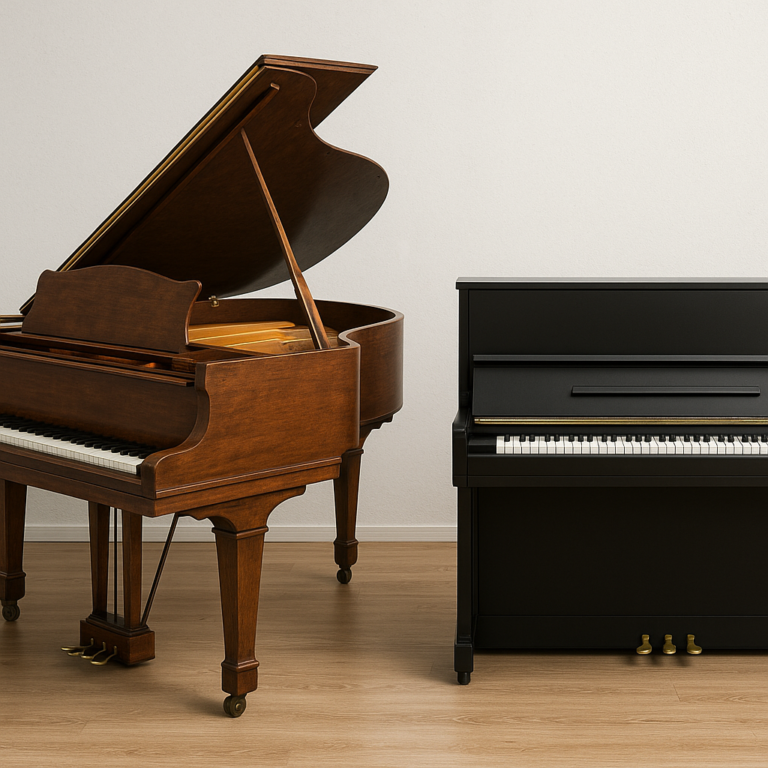
Support our educational content for free when you buy through links on our site. Learn more
🎹 Acoustic vs Digital Pianos: The Ultimate 2026 Showdown

Is the soul of music found in the vibration of a real string or the precision of a digital sample? For decades, pianists have been locked in a heated debate: Acoustic vs. Digital Pianos. One offers the timeless, organic resonance of a Steinway or Yamaha grand; the other provides the silent, versatile convenience of a Roland or Kawai digital. But here’s the twist that might surprise you: you don’t have to choose based on “better,” but on “what fits your life.”
Imagine this: It’s 2 AM, and you’re finally inspired to practice that tricky Chopin nocturne. On an acoustic, you’d wake the entire building. On a digital, you slip on headphones and play in total silence. Yet, when you finally step onto a concert stage, that same digital sound might feel flat compared to the living, breathing roar of a real grand piano. In this comprehensive guide, we dissect every nuance—from the physics of hammer actions to the hidden costs of tuning—so you can stop guessing and start playing. We’ll reveal why a $2,0 digital might outperform a neglected $10,0 acoustic, and exactly which instrument will launch your musical journey.
Key Takeaways
- Sound & Feel: Acoustic pianos offer infinite dynamic range and organic resonance, while digital pianos provide consistent, high-fidelity samples with the convenience of silent practice.
- Maintenance Matters: Acoustics require annual tuning and climate control, whereas digitals need zero tuning and minimal upkeep.
- Beginer Friendly: For most beginners, a digital piano with fully weighted keys is the superior starting point due to affordability, space efficiency, and built-in learning tools.
- Long-Term Value: Acoustic pianos generally hold their resale value better and can last generations, while digital pianos depreciate faster due to technological obsolescence.
- The Verdict: Choose acoustic for the ultimate artistic experience and legacy; choose digital for flexibility, modern features, and apartment living.
Ready to find your perfect match?
- 👉 Shop Acoustic Pianos: Yamaha Uprights | Kawai Uprights | Steinway & Sons
- 👉 Shop Digital Pianos: Yamaha Clavinova | Kawai CA Series | Roland HP Series | Nord Piano
Table of Contents
- ⚡️ Quick Tips and Facts
- 🎹 The Great Debate: Acoustic vs. Digital Pianos Explained
- 📜 A Brief History of the Piano: From Hammer to Silicon Chip
- 🔍 Deep Dive: How Sound is Actually Created in Each Instrument
- 🔨 The Acoustic Advantage: Why Real Strings Still Rule
- 💻 The Digital Revolution: Polyphony, Sampling, and Smart Features
- 🆚 Head-to-Head Comparison: 7 Critical Factors for Buyers
- 1. Touch and Key Action: Weighted vs. Unweighted Keys
- 2. Sound Quality and Dynamic Range
- 3. Portability and Space Requirements
- 4. Maintenance Costs and Tuning Needs
- 5. Volume Control and Headphone Practice
- 6. Connectivity and Learning Apps
- 7. Resale Value and Longevity
- 🎓 Which Piano is Best for Beginners? A Definitive Guide
- 🎼 Advanced Players: When to Switch from Digital to Acoustic
- 🏠 Space-Saving Solutions: Uprights, Grand Pianos, and Digital Alternatives
- 💰 Budgeting for Your Dream Piano: Hidden Costs Revealed
- 🛠️ Care and Maintenance: Keeping Your Keys in Top Shape
- 🤔 Common Myths About Digital and Acoustic Pianos Debunked
- 🏆 Top Brand Showdown: Steinway, Yamaha, Kawai, Roland, and More
- 🎁 Final Verdict: Making the Right Choice for Your Musical Journey
- 📝 Conclusion
- 🔗 Recommended Links
- ❓ Frequently Asked Questions (FAQ)
- 📚 Reference Links
⚡️ Quick Tips and Facts
Before we dive into the deep end of the piano pool, let’s splash around with some essential truths that every aspiring pianist needs to know. Whether you’re eyeing a majestic Steinway or a sleek Roland, these facts will save you from buyer’s remorse later.
- The “Silent” Secret: Did you know you can practice at 3 AM without waking the neighbors? ✅ Digital pianos win this round hands down with headphone jacks. Acoustic pianos? ❌ They scream for attention, even when played softly.
- The Tuning Trap: An acoustic piano is a living organism. It breathes, expands, and contracts with humidity. It needs tuning 1–2 times a year (sometimes 4 for new ones!). A digital piano? It stays in tune forever. 🎵
- The Weight Factor: Moving an acoustic upright is a two-person job; a grand piano needs a team of professionals and a forklift. A digital piano? You can carry it to a gig in your trunk. 🚗
- The “Good Enough” Myth: A $20 keyboard is not a piano. It’s a toy. If you want to learn proper technique, you need 8 weighted keys with hammer action.
- Resale Reality: Acoustic pianos (especially brands like Yamaha and Kawai) often hold their value for decades. Digital pianos depreciate like smartphones. 📉
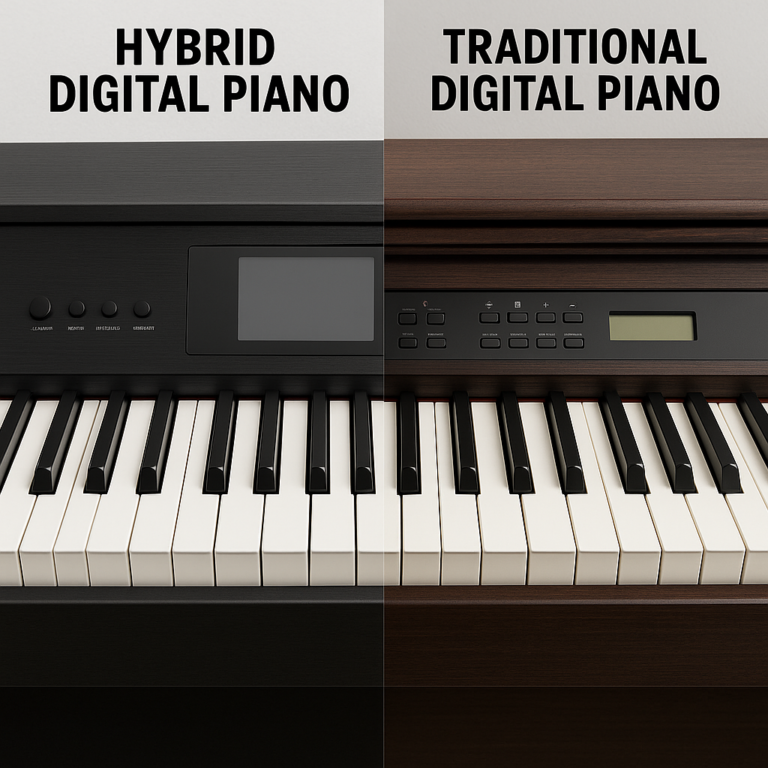
- The Hybrid Revolution: There’s a middle ground! Hybrid pianos combine real acoustic actions with digital sound engines. They are the best of both worlds, but they come with a price tag to match.
For a deeper dive into the specific brands that make these instruments, check out our comprehensive guide to Piano Brands.
🎹 The Great Debate: Acoustic vs. Digital Pianos Explained
So, you’ve decided to learn the piano. Congratulations! 🎉 But now comes the million-dollar question: Acoustic or Digital?
It’s the musical equivalent of choosing between a classic, hand-stitched leather saddle and a high-tech, GPS-enabled e-bike. Both get you from A to B, but the experience is worlds apart.
At Piano Brands™, we’ve spent decades in showrooms, concert halls, and dusty attics. We’ve heard the soul-stiring resonance of a 1920s Steinway and the crystal-clear samples of a modern Nord. The truth? There is no “better” instrument, only the “better” instrument for you.
But why is this debate so heated? Because it touches on the very soul of music. Is music about the perfect reproduction of sound, or is it about the physical connection between human and machine?
In the next sections, we’ll peel back the layers of history, mechanics, and sound to help you find your perfect match. But first, let’s take a trip down memory lane to see how we got here.
📜 A Brief History of the Piano: From Hammer to Silicon Chip

To understand the future, we must respect the past. The piano didn’t just appear; it evolved.
The Birth of the Hammer
Before Bartolomeo Cristofori invented the gravicembalo col piano e forte (harpsichord with soft and loud) in the early 170s, keyboards were limited. Harpsichords plucked strings (loud or soft, but no dynamic control), and organs pushed air (no touch sensitivity).
Cristofori’s genius was the hammer mechanism. By allowing hammers to strike strings and immediately rebound, he gave the player control over volume based on how hard they pressed the key. This was the birth of expressive dynamics.
The Industrial Revolution
Fast forward to the 19th century. The piano became the centerpiece of the Victorian parlor. Companies like Steinway & Sons and Bösendorfer refined the cast-iron frame, allowing for higher string tension and a richer, louder tone. The upright piano was born, making the instrument accessible to the middle class.
The Digital Dawn
The 20th century brought electricity. In the 1970s and 80s, companies like Yamaha and Roland began experimenting with sampling. They recorded real pianos and played them back through speakers. It was clunky at first, but by the 190s, weighted key actions and polyphony (the number of notes that can sound at once) had improved dramatically.
Today, we stand at a crossroads. We have instruments that mimic the past with uncanny accuracy, and instruments that push the boundaries of what a piano can do.
Want to explore the full timeline of these majestic instruments? Read our detailed Piano History article.
🔍 Deep Dive: How Sound is Actually Created in Each Instrument
This is where the magic happens. Or rather, the physics.
The Acoustic Symphony: Physics in Action
When you press a key on an acoustic piano, a complex chain reaction occurs:
- The Key: A lever system amplifies your finger pressure.
- The Action: A wooden mechanism (often called the “action”) throws a felt-covered hammer toward the string.
- The Strike: The hammer hits the string, causing it to vibrate.
- The Resonance: The vibration travels to the soundboard, a large wooden diaphragm that amplifies the sound.
- The Decay: The sound fades naturally as the energy dissipates.
Crucial Insight: The sound isn’t just the string vibrating. It’s the entire piano vibrating. The wood, the frame, the lid, even the floor beneath it. This creates a complex web of overtones and harmonics that no speaker can perfectly replicate. As Yamaha notes, the acoustic piano offers “limitless musical expression” because the tone varies infinitely based on your touch.
The Digital Simulation: Math and Memory
On a digital piano, the process is entirely different:
- The Sensor: Pressing a key triggers a sensor (optical or mechanical) that detects velocity (how fast the key was pressed).
- The Sample: The processor looks up a pre-recorded audio file (sample) of a real piano note played at that specific velocity.
- The Amplification: The digital signal is sent to speakers.
- The Modeling: Advanced models use physical modeling to simulate the resonance of strings and the soundboard in real-time, rather than just playing a static file.
The Catch: While high-end digital pianos (like the Nord Grand or Kawai MP1SE) use multiple samples for different velocities, they are still limited by the finite number of recordings they contain. If you play a note in a way that doesn’t match a sample exactly, the computer has to interpolate, which can sometimes sound “stepped” rather than smooth.
🔨 The Acoustic Advantage: Why Real Strings Still Rule
Let’s be honest: Nothing beats the feeling of an acoustic piano.
The “Infinite” Dynamic Range
On an acoustic piano, the difference between a pianissimo (very soft) and a fortissimo (very loud) is not just volume; it’s timbre. A soft note sounds warm and mellow; a hard note sounds bright and brilliant. This is because the hammer strikes the string with different speeds, exciting different harmonics.
Digital pianos try to mimic this, but they often struggle with the micro-dynamics. As Liberty Park Music points out, “The acoustic piano is more touch-sensitive. The strength and movement of your fingers determine the tone of the sound.”
The Pedal Power
The sustain pedal on an acoustic piano doesn’t just hold notes; it lifts all the dampers, allowing other strings to resonate sympathetically. This creates a lush, shimmering sound that fills the room. While digital pianos have “half-pedaling” features, the sympathetic resonance of a real piano is a physical phenomenon that is incredibly hard to simulate perfectly.
Durability and Legacy
A well-maintained acoustic piano can last 30 to 10 years. It’s an heirloom. You can pass it down to your grandchildren. A digital piano, on the other hand, has a lifespan dictated by its electronic components. In 15 years, the circuit board might fail, or the software might become obsolete.
Pro Tip: If you buy a used acoustic piano, always have it inspected by a technician. A cheap piano in bad condition is a money pit.
💻 The Digital Revolution: Polyphony, Sampling, and Smart Features
Don’t count the digital piano out just yet! This is the era of innovation.
Polyphony: The Note Limit
Polyphony is the maximum number of notes a digital piano can play simultaneously.
- Old Digital Pianos: 32 or 64 notes. (You’d run out of notes if you played a complex piece with the sustain pedal!)
- Modern Digital Pianos: 128, 256, or even 512 notes. (You’ll never run out.)
The “Smart” Piano
Digital pianos are computers. This means:
- Connectivity: USB-MIDI, Bluetooth Audio, and Bluetooth MIDI allow you to connect to apps like Simply Piano, Flowkey, or GarageBand.
- Recording: Record your practice sessions instantly and share them.
- Variety: One instrument can be a piano, a harpsichord, a string section, or a synth.
- Silent Practice: The ultimate feature for apartment dwellers.
The Hybrid Era
Brands like Yamaha (with the NU1X) and Kawai (with the AnyTime series) have created hybrid pianos. These have real acoustic actions (so the touch is 10% authentic) but use digital sound engines (so you can practice silently). They are expensive, but they bridge the gap perfectly.
🆚 Head-to-Head Comparison: 7 Critical Factors for Buyers
Ready to make a decision? Let’s break it down into the 7 factors that matter most.
1. Touch and Key Action: Weighted vs. Unweighted Keys
This is the most important factor for technique.
- Acoustic: The gold standard. The keys are heavy, with a natural resistance that builds finger strength.
- Digital: Look for fully weighted hammer action. Avoid “semi-weighted” or “synth-action” keys if you want to learn classical piano.
Top Tier: Kawai’s Responsive Hammer III (RHIII) and Yamaha’s GrandTouch are widely considered the best digital actions.
Mid Tier: Roland’s PHA-4 Standard is excellent for the price.
2. Sound Quality and Dynamic Range
- Acoustic: Rich, complex, and alive. The sound changes as you move around the room.
- Digital: Consistent and clear. High-end models use multi-sampling (recording every key at multiple velocities) and resonance modeling to mimic the acoustic experience.
Verdict: In a quiet room, a high-end digital (like a Nord Grand) can sound better than a low-end, out-of-tune acoustic. But a top-tier acoustic (like a Steinway Model D) will always outshine a digital in terms of depth.
3. Portability and Space Requirements
- Acoustic: Heavy, bulky, and permanent. An upright needs 5-6 sq ft; a grand needs 15+ sq ft.
- Digital: Portable. You can fit a Roland FP-90X or Yamaha P-525 in a small apartment or take it to a gig.
4. Maintenance Costs and Tuning Needs
- Acoustic: $150–$30 per tuning, 2x a year. Plus potential regulation costs ($50+).
- Digital: $0 for tuning. Occasional dusting and software updates.
5. Volume Control and Headphone Practice
- Acoustic: You cannot turn it down. If you live in an apartment, this is a dealbreaker.
- Digital: Volume knob and headphone jack. Practice at 2 AM without guilt.
6. Connectivity and Learning Apps
- Acoustic: None. You need a separate microphone to record.
- Digital: Built-in USB, Bluetooth, and app integration. Perfect for self-learners.
7. Resale Value and Longevity
- Acoustic: Holds value well (50–70% of original price after 10 years for good brands).
- Digital: Depreciates quickly (30–50% after 5 years) due to tech obsolescence.
| Feature | Acoustic Piano | Digital Piano |
|---|---|---|
| Sound Source | Strings & Soundboard | Speakers & Samples |
| Maintenance | Tuning (2x/year) | None |
| Portability | ❌ Heavy, Fixed | ✅ Light, Moveable |
| Volume Control | ❌ No | ✅ Yes (Headphones) |
| Key Action | ✅ Real Hammer | ✅ Simulated (High-end) |
| Price Range | $$$ – $$$ | $ – $$$ |
| Lifespan | 50+ Years | 15-20 Years |
🎓 Which Piano is Best for Beginners? A Definitive Guide
The age-old question: Should a beginner start on acoustic or digital?
The answer depends on your lifestyle and goals.
The Case for Digital for Beginners
If you are:
- Living in an apartment or shared housing.
- On a tight budget.
- Unsure if you will stick with it.
- Interested in pop, rock, or electronic music.
Then a Digital Piano is the winner. 🏆
Start with a model like the Yamaha P-525 or Kawai ES120. They have excellent weighted keys, so you develop proper technique, but they offer the flexibility to practice silently and connect to learning apps.
Myth Buster: “You must start on an acoustic to learn properly.”
Truth: You can learn proper technique on a high-quality digital piano. The key is weighted keys, not the sound source.
The Case for Acoustic for Beginners
If you are:
- Comitted to classical piano.
- Have a dedicated space and budget.
- Want to develop a deep connection with the instrument’s resonance.
- Have a supportive family who won’t mind the noise.
Then an Acoustic Upright is the way to go. 🎹
Look for a used Yamaha U1 or Kawai K-30. These are the workhorses of the piano world. They are durable, hold their value, and provide the authentic experience from day one.
🎼 Advanced Players: When to Switch from Digital to Acoustic
So, you’ve been playing on a digital for a few years. You’ve mastered the scales and are tackling Chopin. Is it time to switch?
Here are the signs:
- You crave the “breath” of the instrument. You feel like your playing is flat because the digital sound doesn’t respond to your subtle dynamic shifts.
- You are preparing for exams or auditions. Most conservatories require you to play on an acoustic.
- You want to explore the full range of the piano’s resonance.
The Transition:
Don’t panic! If you’ve been playing on a weighted digital action, the switch to acoustic will feel natural, though the keys might feel slightly heavier. The biggest adjustment will be the sound. You’ll need to learn to listen to the room and the instrument’s natural decay.
Expert Tip: If you can’t afford an acoustic yet, consider a hybrid piano. It gives you the acoustic action you need for advanced technique without the full acoustic sound (or the noise).
🏠 Space-Saving Solutions: Uprights, Grand Pianos, and Digital Alternatives
Not everyone has a mansion. Let’s talk space.
The Acoustic Upright
The vertical piano is the space-saver of the acoustic world. It takes up about 5-6 square feet.
- Pros: Authentic sound, smaller footprint.
- Cons: Still heavy, still needs tuning, still loud.
- Best Brands: Yamaha U1, Kawai K-30, Steinway K-52.
The Digital Console
These look like traditional uprights but are actually digital pianos.
- Pros: No tuning, headphone jack, often includes a cabinet.
- Cons: Less portable than a slab, still takes up floor space.
- Best Brands: Roland HP704, Kawai CA9.
The Portable Digital
The slab style. No cabinet, just the keys and a stand.
- Pros: Fits in a closet, easy to move.
- Cons: Requires a separate stand and bench.
- Best Brands: Yamaha P-525, Nord Piano 5, Casio Celviano GP-50 (Hybrid).
💰 Budgeting for Your Dream Piano: Hidden Costs Revealed
You think you know the price? Think again.
Acoustic Piano Hidden Costs
- Tuning: $150–$30 per session.
- Moving: $20–$60 (requires professionals).
- Humidity Control: A Piano Life Saver system (Dampp-Chaser) costs $30–$50 but is essential for stability.
- Regulation: Every 5–10 years, the action needs adjustment ($50+).
Digital Piano Hidden Costs
- Stand and Bench: Often sold separately ($10–$30).
- Headphones: Good studio headphones are a must ($10+).
- Software/Apps: Some learning apps require subscriptions.
- Power: It needs an outlet (and a surge protector).
The Verdict: Over 10 years, an acoustic piano will cost significantly more in maintenance. A digital piano’s cost is mostly upfront.
🛠️ Care and Maintenance: Keeping Your Keys in Top Shape
Acoustic Piano Care
- Tuning: Schedule it twice a year.
- Humidity: Keep it between 40%–50%. Use a humidifier/dehumidifier.
- Cleaning: Dust the keys with a soft, dry cloth. Never use chemicals.
- Placement: Keep it away from windows, heaters, and drafts.
Digital Piano Care
- Dusting: Use a microfiber cloth.
- Power: Unplug during storms.
- Software: Keep firmware updated.
- Keys: Clean with a slightly damp cloth (never wet).
🤔 Common Myths About Digital and Acoustic Pianos Debunked
Let’s bust some myths that have been floating around the internet.
Myth 1: “Digital pianos sound like toys.”
- Fact: Modern high-end digital pianos use multi-sampling and physical modeling to sound incredibly realistic. A $3,0 digital piano often sounds better than a $3,0 used acoustic that hasn’t been tuned in 5 years.
Myth 2: “You can’t learn dynamics on a digital piano.”
- Fact: If the digital piano has weighted hammer action and velocity sensitivity, you can absolutely learn dynamics. The key is the action, not the sound.
Myth 3: “Acoustic pianos are always better for classical music.”
- Fact: While true for the ultimate expression, a high-quality digital is perfectly capable of teaching classical technique. Many conservatories now accept digital pianos for preliminary exams.
Myth 4: “Digital pianos break down quickly.”
- Fact: While electronics can fail, modern digital pianos are built to last 15–20 years. Acoustic pianos can last longer, but they require constant maintenance to survive.
🏆 Top Brand Showdown: Steinway, Yamaha, Kawai, Roland, and More
Who makes the best? It depends on what you value.
The Acoustic Giants
- Steinway & Sons: The gold standard. Unmatched resonance and craftsmanship. Expensive.
- Yamaha: Consistent, reliable, and widely available. The Yamaha C3 is a benchmark for mid-range grands.
- Kawai: Known for their Millennium III action (carbon fiber parts). Smooth and responsive.
- Bösendorfer: The “Viennese sound.” Deep, rich, and unique.
The Digital Leaders
- Nord: The choice of touring professionals. Incredible sound engines and vibrant red aesthetics.
- Yamaha: The Clavinova series is the benchmark for home digital pianos.
- Kawai: The CA and CN series offer some of the best key actions in the industry.
- Roland: Known for their Hybrid technology and excellent sound modeling.
- Casio: Great value. The Celviano and Privia lines offer amazing features for the price.
The Hybrid Heroes
- Yamaha NU1X: Real upright action, digital sound.
- Kawai Novus NV10: Real grand action, digital sound.
- Kawai CA9: A digital console that feels like an acoustic.
🎁 Final Verdict: Making the Right Choice for Your Musical Journey
So, we’ve covered the mechanics, the history, the costs, and the brands. But the question remains: Which one is right for you?
If you value authenticity, resonance, and legacy, and you have the space and budget, the Acoustic Piano is your soulmate. It’s an investment in your musical soul.
If you value flexibility, silence, and technology, and you need to fit your practice into a busy life, the Digital Piano is your perfect partner. It’s the instrument of the modern world.
But here’s the secret: The best piano is the one you actually play.
Don’t let the “perfect” choice paralyze you. If you’re on the fence, try a hybrid. Or start with a high-end digital and upgrade to an acoustic later. The most important thing is to start playing.
Remember: As the first video in our series mentioned, “The experience of an acoustic piano is impossible to perfectly replicate.” But a digital piano can get you 90% of the way there, with 10% of the convenience.
Ready to take the plunge? Check out our Piano Buying Guide for specific model recommendations based on your budget.
📝 Conclusion

The debate between acoustic vs. digital pianos is not about which is superior, but which is superior for your specific needs.
Acoustic Pianos offer an unparalleled, organic experience. They are living instruments that respond to your touch with infinite nuance, offering a depth of sound and resonance that technology struggles to replicate. They are an investment that can last generations, holding their value and serving as a centerpiece in your home. However, they demand maintenance, space, and a tolerance for noise.
Digital Pianos have evolved from simple toys to sophisticated instruments that offer incredible versatility. With weighted hammer actions, high-fidelity sampling, and silent practice capabilities, they are the ideal choice for beginners, apartment dwellers, and modern musicians who need connectivity. While they may lack the infinite dynamic range of a grand piano, they provide a consistent, reliable, and accessible path to musical mastery.
Our Recommendation:
- For the serious classical student with a dedicated space: Go Acoustic.
- For the beginner, the apartment dweller, or the pop/rock musician: Go Digital.
- For the best of both worlds: Consider a Hybrid.
Don’t let the fear of making the “wrong” choice stop you. Whether you choose the warm embrace of a Steinway or the sleek precision of a Nord, the journey begins with a single key press.
🔗 Recommended Links
👉 Shop Acoustic Pianos:
- Yamaha Uprights: Amazon Search | Yamaha Official
- Kawai Uprights: Amazon Search | Kawai Official
- Steinway & Sons: Steinway Official
👉 Shop Digital Pianos:
- Yamaha Clavinova: Amazon Search | Yamaha Official
- Kawai CA Series: Amazon Search | Kawai Official
- Roland HP Series: Amazon Search | Roland Official
- Nord Piano: Amazon Search | Nord Official
Books & Resources:
- The Piano Book by Larry Fine: Amazon Link
- Piano For Dummies: Amazon Link
❓ Frequently Asked Questions (FAQ)

What are the advantages of choosing an acoustic piano over a digital one?
The primary advantage is authenticity. Acoustic pianos produce sound through physical strings and a soundboard, creating a complex, rich tone with infinite dynamic variation. They offer a superior touch response and pedal action that is difficult to replicate digitally. Additionally, they hold their resale value better and can last for decades with proper care.
Read more about “🎹 Digital vs. Acoustic Piano: Which Do You Really Need? (2026)”
What are the maintenance requirements for acoustic vs digital pianos?
Acoustic pianos require professional tuning 1–2 times per year (or more for new ones), plus occasional regulation and voicing. They are sensitive to humidity and temperature changes. Digital pianos require no tuning. Maintenance is limited to cleaning, occasional software updates, and ensuring the power supply is stable.
Read more about “🎹 14 Most Affordable Acoustic Piano Brands (2026)”
How does the sound quality of acoustic pianos compare to digital pianos?
Acoustic pianos produce a natural, resonant sound with complex overtones that fill a room. The sound changes based on where you sit and how the room acoustics interact with the instrument. Digital pianos use samples or modeling to reproduce this sound. While high-end digital pianos sound incredibly realistic, they lack the organic complexity and sympathetic resonance of a real acoustic instrument.
Read more about “🎹 12 Acoustic Piano Brands with the Best Sound Quality (2026)”
Which is better for beginners, acoustic or digital pianos?
It depends on the beginner’s situation. Digital pianos are often better for beginners due to their lower cost, silent practice capabilities (headphones), and built-in learning tools. However, if the beginner has the space and budget, an acoustic upright provides the best foundation for developing proper technique and touch.
Read more about “🎹 12 Leading Digital Keyboard Brands Ranked (2026)”
What are the main differences between acoustic and digital pianos?
The main difference is the sound generation mechanism. Acoustic pianos use hamers and strings, while digital pianos use sensors and speakers. Acoustic pianos require tuning and are heavy; digital pianos are portable, require no tuning, and offer features like volume control and connectivity.
Read more about “🎹 Grand vs. Upright Pianos: The Ultimate 2026 Showdown”
What are the main differences in sound quality between acoustic and digital pianos?
Acoustic sound is continuous and organic, with infinite dynamic gradations. Digital sound is discrete, based on pre-recorded samples. While modern digital pianos use multiple samples to smooth this out, they cannot perfectly replicate the harmonic complexity of a vibrating string and soundboard.
Read more about “🎹 How to Choose the Best Acoustic Piano for Your Home (2026)”
Is a digital piano a good substitute for an acoustic piano for beginners?
Yes, absolutely. A digital piano with 8 fully weighted keys and hammer action is an excellent substitute for a beginner. It allows the student to develop proper finger strength and technique without the noise or maintenance issues of an acoustic. Many professional pianists started on digital instruments.
Read more about “7 Best Smart Piano Brands for Beginners in 2026 🎹”
How does the key action differ between acoustic and digital pianos?
Acoustic actions are mechanical, using levers and springs to throw a hammer. They are heavy and have a natural “bounce.” Digital actions simulate this weight using weights and springs (or sometimes real acoustic actions in hybrids). High-end digital actions (like Kawai’s RHIII or Yamaha’s GrandTouch) are very close to the real thing, but lower-end models may feel “plastic” or unresponsive.
Read more about “🎹 Top 10 Affordable Upright Piano Brands for Families (2026)”
What are the maintenance costs of acoustic pianos compared to digital pianos?
Acoustic pianos cost $30–$60 per year for tuning and potential repairs. Digital pianos have near-zero maintenance costs, aside from electricity and occasional cleaning. Over 10 years, the cost difference can be significant.
Read more about “🎹 7 Best Affordable Piano Brands for Home Use (2026)”
Can digital pianos replicate the touch and feel of an acoustic piano?
High-end digital pianos can replicate the touch and feel very closely, especially those with graded hammer action and real wood keys. However, the mechanical feedback of a real acoustic action is unique and cannot be perfectly simulated. For most players, a high-quality digital action is sufficient.
Read more about “🏆 7 Top Rated Digital Piano Companies for 2026”
Which type of piano holds its value better over time, acoustic or digital?
Acoustic pianos generally hold their value much better. A well-maintained Yamaha or Kawai upright can retain 50–70% of its value after 10 years. Digital pianos depreciate quickly, often losing 50% of their value within 5 years due to technological obsolescence.
Are digital pianos loud enough for live performances compared to acoustic pianos?
Yes, digital pianos are often preferred for live performances because they can be amplified through a PA system, ensuring consistent volume regardless of the venue size. Acoustic pianos can be drowned out in large venues unless they are specifically miked, and their volume is fixed by the instrument’s size.
How do I choose between a grand and an upright acoustic piano?
Grand pianos offer better sound quality and faster key repetition due to their horizontal action. They are ideal for serious players and large spaces. Upright pianos are more compact and affordable, making them suitable for homes and smaller studios. If space allows, a grand is superior, but a high-quality upright is a fantastic choice for most players.
What is the role of polyphony in digital pianos?
Polyphony refers to the number of notes a digital piano can play simultaneously. A low polyphony (32 or 64) can cause notes to cut off when using the sustain pedal. Modern digital pianos offer 128 to 256 notes of polyphony, ensuring that complex pieces with heavy pedal use sound smooth and uninterrupted.
Read more about “🎹 Acoustic vs Digital Piano Brands: The Ultimate 2026 Showdown”
📚 Reference Links
- Yamaha Musical Instrument Guide: Acoustic vs. Digital Pianos
- Liberty Park Music: Digital Piano vs. Acoustic Piano Guide
- Music Stack Exchange: Is a digital or acoustic piano a better option for a beginner?
- Steinway & Sons: The Art of Piano Making
- Kawai Pianos: Technology & Innovation
- Roland Corporation: Digital Piano Technology
- Nord Keyboards: Product Overview